Musée Rodin: Rodin's Sculptures, His Garden, and the Hôtel Biron
Housed in the 18th-century Hôtel Biron near Les Invalides, the Musée Rodin brings together more than 6,800 sculptures and a three-hectare garden where The Thinker, The Burghers of Calais, and The Gates of Hell stand in open air. It is one of the most rewarding museum visits in Paris, combining world-class art with one of the city's finest historic gardens.
Quick Facts
- Location
- 77 rue de Varenne, 75007 Paris (7th arrondissement)
- Getting There
- Métro Varenne (Line 13) – 2-minute walk
- Time Needed
- 90–120 minutes (add 30 min for a slow garden visit)
- Cost
- €13 full price; free for under-18s, EU residents under 26, and first Sundays Oct–Mar
- Best for
- Art lovers, slow travelers, couples, architecture fans, return visitors to Paris
- Official website
- www.musee-rodin.fr/en
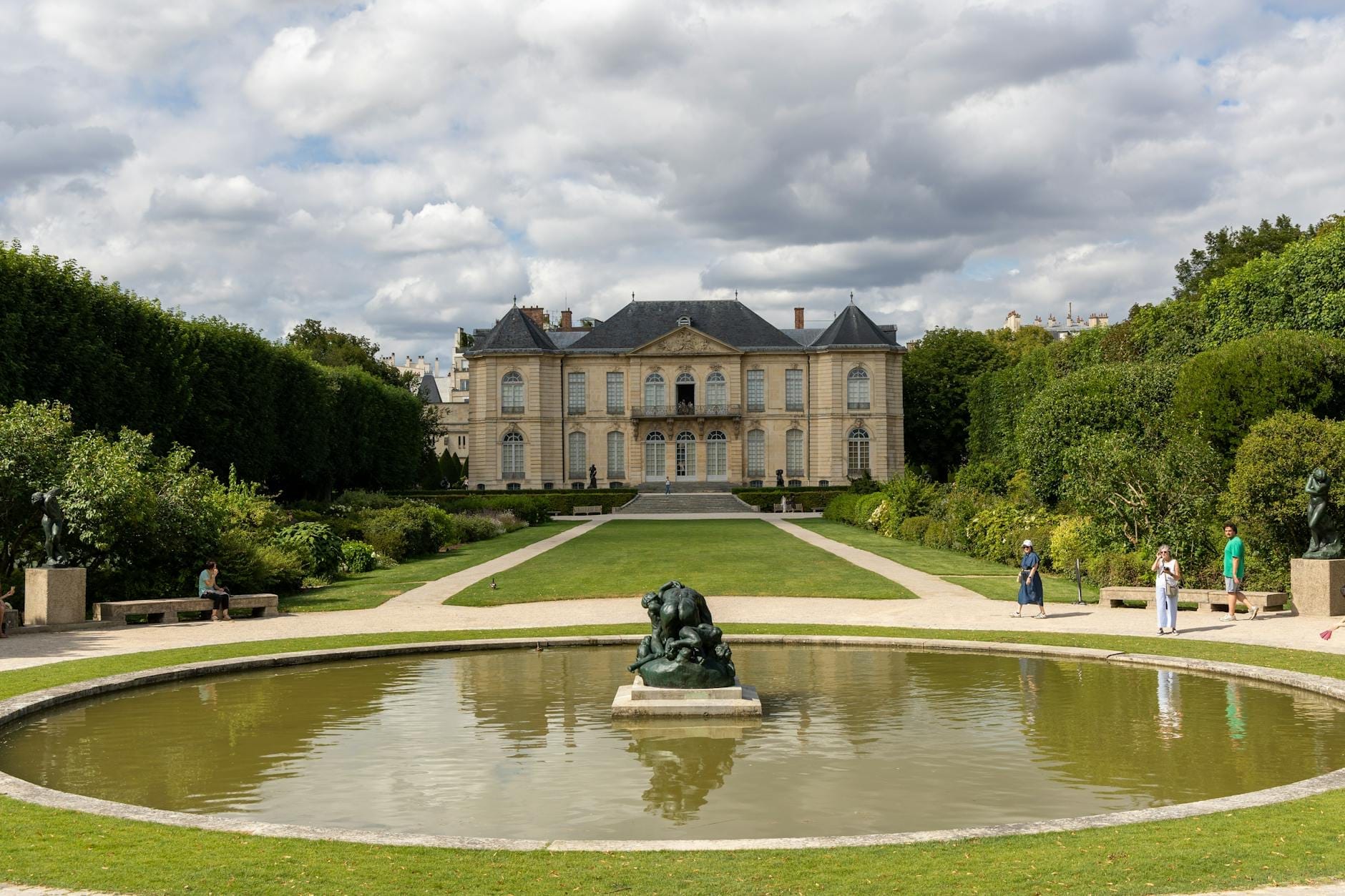
What the Musée Rodin Actually Is
The Musée Rodin is not a conventional gallery. It is the former private home and studio of Auguste Rodin, donated by the sculptor to the French state in 1916 on the condition that it become a public museum. The result is a space that feels less like an institution and more like a sustained encounter with a single, obsessive artistic mind.
The building is the Hôtel Biron, a stone mansion built between 1727 and 1732 and inhabited by Rodin starting in 1908; he took over the entire building in 1917 before his death later that year. Walking through its high-ceilinged salons, past plaster studies and carved marble blocks, you understand why he refused to leave: the light from the tall garden-facing windows falls across surfaces exactly as he needed it to. The permanent collection includes over 6,000 sculptures by Rodin (with the full holdings exceeding 6,800 sculptures), 8,000 drawings, and 10,000 photographs. For context on how it compares across the city, see the best museums in Paris guide.
💡 Local tip
Book tickets online in advance, especially April through June when the garden is in full bloom and queues can stretch 20–30 minutes. Timed-entry tickets are available on the official site (musee-rodin.fr).
The Sculpture Garden: Start Here
Most visitors move straight toward the building. Resist that instinct. The three-hectare garden holds some of Rodin's most famous works, and your energy is better spent outdoors first. The Thinker sits on a raised plinth facing the Hôtel Biron façade, exactly as Rodin intended. Arrive shortly after 10:00 AM on a weekday to see it without a crowd forming; by 11:30 on any warm day, it becomes the centrepiece of a continuous photo rotation.
The Burghers of Calais rewards slower looking. Rodin placed the six figures at ground level rather than on a pedestal so visitors would stand among them as equals — it is a deliberate subversion of commemorative sculpture convention. The Gates of Hell, a towering bronze relief containing over 180 figures, stands toward the rear of the garden and is routinely overlooked by visitors hurrying inside. Give it ten minutes.
The rose garden along the south edge of the grounds peaks in colour from late May through June. In winter, the garden closes at dusk, sometimes as early as 4:30 PM — the bare branches and grey light give the sculpture surfaces a heavier, more weathered quality that has its own appeal for visitors willing to visit in the off-season.
⚠️ What to skip
The sculpture garden closes at dusk during winter months, well before the museum's official closing time. Visiting between November and February? Arrive by 3:00 PM to see the garden in daylight.
Tickets & tours
Hand-picked options from our booking partner. Prices are indicative; availability and final rates are confirmed when you complete your booking.
Skip-the line guided tour of Musee Rodin
From 89 €Instant confirmationSkip-the-line ticket to the Rodin Museum
From 15 €Instant confirmationMusee d'Orsay Skip-the-Line Tickets and Guided Tour
From 59 €Instant confirmationFree cancellationMusee d'Orsay entrance ticket with Seine river cruise
From 45 €Instant confirmation
Inside the Hôtel Biron: The Permanent Collection
The interior galleries span two floors. Ground-floor salons trace Rodin's early career through his studies of movement, gesture, and human anatomy, followed by portrait commissions of figures including Victor Hugo and Honoré de Balzac. The Kiss, one of his most reproduced works, occupies its own room, which gives the marble the breathing space it needs. In person, the piece is larger than most visitors expect — the seated figures approach life-size — and the smoothness of the carved stone is something no photograph communicates.
One room is dedicated entirely to Camille Claudel, Rodin's student, collaborator, and companion. It contains a focused selection of her sculptures alongside contextual material that explains the complexity of their professional and personal relationship without excessive dramatisation. Other rooms display paintings and objects from Rodin's personal collection, including works by Renoir, Monet, and Van Gogh.
Temporary exhibitions rotate through the upper floor galleries and are included in the standard admission price. An audio guide (€6, available on-site in six languages) provides over two hours of commentary with archive images and expert interviews. If you plan to combine this visit with nearby landmarks, Les Invalides is a five-minute walk north and the Musée d'Orsay is about 15 minutes on foot along the Seine.
Hours, Prices, and Getting Here
The Musée Rodin (officially Musée National Auguste Rodin) is open Tuesday through Sunday from 10:00 AM to 6:30 PM. Last entry is at 5:45 PM. The museum is closed on Mondays and on January 1, May 1, and December 25, with early closure at 5:30 PM on December 24 and 31. Several French public holidays also trigger closures, including July 14, August 15, and November 11.
Full admission is €13, covering the permanent collection, the sculpture garden, and any temporary exhibitions in progress. Admission is free for visitors under 18, EU residents under 26, teachers, job seekers, and people with disabilities with one companion. The first Sunday of each month from October through March is free for all visitors, though crowd levels rise noticeably on those days. Combined tickets with nearby museums like the Musée d'Orsay are available; check the official site for current pricing and savings. The combined ticket is typically valid at both museums within three months.
The nearest metro stop is Varenne on Line 13, a two-minute walk from the main entrance on rue de Varenne. Bus lines 87 and 92 stop on Boulevard des Invalides. Arriving from the Eiffel Tower, the walk takes around 25 minutes through the 7th arrondissement's quiet residential streets.
Accessibility: The museum provides ramp access, wheelchairs at the cloakroom, accessible toilets, and tactile tours. Adapted tours in French Sign Language (LSF) and lip-reading formats are offered by arrangement. The accessible entrance is at 21 Boulevard des Invalides, and admission is free for visitors with disabilities on presentation of valid documentation.
ℹ️ Good to know
The Paris Museum Pass covers entry to the Musée Rodin. If you plan to visit three or more major museums in a short trip, the pass frequently pays for itself. Verify current pass pricing before your visit.
Best Time to Visit and Photography Tips
The garden is best from late May through June, when rose beds are in full colour and the evening light is long. Weekday mornings between 10:00 and 11:00 AM are consistently the calmest. Autumn (September to October) offers good light and thinner crowds than summer. For Paris's broader travel seasonality, the best time to visit Paris guide covers the full picture.
For photography, the garden's best light falls in the early morning and the hour before closing in summer. Inside, flash and tripods are prohibited. The Thinker shoots cleanest from slightly below eye level facing south, with the Hôtel Biron façade softly out of focus behind it. The interior rooms near the garden-facing windows produce the most natural-light portraits of the marble works.
Facilities and Neighbourhood
The café-restaurant L'Augustine operates inside the sculpture garden, serving light meals and seasonal daily specials. It fills quickly at midday in summer, so plan accordingly. The museum shop, open Tuesday to Sunday from 10:00 AM to 6:00 PM, carries sculpture reproductions, art books, jewellery, and textiles across a range of budgets. A free cloakroom operates at the gallery entrance; backpacks must be checked in.
The Musée Rodin sits inside the Eiffel Tower-Invalides neighbourhood, a primarily residential and governmental quarter. Rue de Varenne is one of the 7th arrondissement's most handsome streets, lined with embassies and relatively free of tourist-trap restaurants. For post-visit dining, Saint-Germain-des-Prés offers far more choice and is a 15-minute walk east.
Who Should Visit — and Who Might Want to Skip
The Musée Rodin works best for visitors comfortable with a slower pace. Its scale is manageable — most people cover the essentials in 90 minutes — and the relative quiet of the interior rooms allows for conversation in a way the Louvre or Orsay rarely do. Couples find the garden particularly appealing. First-time visitors to Paris on a tight schedule may find the single-artist focus too narrow: if you have not yet seen the Louvre, the Orsay, or the Impressionist works at the Orangerie, those institutions cover more ground. The Musée Rodin rewards return visitors and those with a genuine interest in 19th-century sculpture or the relationship between art and biography.
Insider Tips
- The first Sunday of each month from October through March is free for all visitors — but crowds increase significantly. If you qualify for a standing exemption (under 18, EU resident under 26, teacher, or disability card), you get the same benefit on any day.
- Combined tickets with nearby museums like the Musée d'Orsay are available; check the official site for current pricing and savings. The combined ticket is typically valid at both museums within three months. If your Paris trip includes the Orsay, this is almost always the better purchase.
- The audio guide (€6 on-site, available in six languages) includes over two hours of content with archive images and curator interviews — considerably more depth than the printed gallery labels.
- The sculpture garden has two thematic routes: the Garden of Sources and the Garden of Orpheus. Neither is heavily signposted, so pick up the free printed map at the entrance rather than navigating by instinct alone.
- The Gates of Hell at the rear of the garden is one of Rodin's most ambitious works and is routinely overlooked by visitors heading straight for The Thinker. Budget ten minutes there before entering the building.
Who Is Musée Rodin For?
- Art lovers with a focused interest in Rodin, 19th-century sculpture, or the Camille Claudel story
- Couples seeking a refined, unhurried experience with a genuinely beautiful garden setting
- Return visitors to Paris who have already covered the Louvre, Orsay, and the major collections
- Families with older children: the interactive tablet game (iPad mini, €6) adds engagement for ages 6 and up
- Architecture enthusiasts drawn to the 18th-century Hôtel Biron and its relationship to French private mansion design
Nearby Attractions
Other things to see while in Eiffel Tower & Les Invalides:
- Eiffel Tower
Standing 330 metres above the 7th arrondissement, the Eiffel Tower is the world's most visited paid monument. This guide covers everything you need to know before you go: ticket tiers, best visiting times, transit options, and honest advice on what the experience actually delivers.
- Les Invalides
L'Hôtel National des Invalides is far more than a single monument. Spread across a 15-courtyard complex in the 7th arrondissement, it combines Napoleon's tomb beneath a 110-metre gilded dome, the vast Musée de l'Armée, and a working veterans' institution that has stood since Louis XIV commissioned it in 1670.
- Musée d'Orsay
Housed in a converted 1900 railway station on the Seine's left bank, the Musée d'Orsay holds the world's most comprehensive collection of Impressionist and Post-Impressionist art. From Monet's water lilies studies to Van Gogh's self-portraits, the building itself competes with its contents for your attention.
- Pont Alexandre III
Pont Alexandre III is the most elaborately decorated bridge in Paris, a single-arch steel span dripping in gilded statues, winged horses, and Belle Époque lampposts. Free to cross at any hour, it doubles as an open-air sculpture museum with some of the finest views of the Eiffel Tower and Invalides along the Seine.