Palais de Tokyo: Paris's Most Unconventional Art Space
Part art center, part social experiment, the Palais de Tokyo runs noon to midnight and refuses to behave like a typical museum. With 22,000 square metres of raw, ever-changing exhibition space in a landmark 1937 building near the Seine, it is the largest site dedicated to contemporary art in Europe and one of Paris's most genuinely surprising cultural addresses.
Quick Facts
- Location
- 13 Avenue du Président Wilson, 75116 Paris (16th arrondissement)
- Getting There
- Métro Line 9 (Iéna or Alma-Marceau); RER C (Pont de l'Alma); Bus 32, 42, 63, 72, 80, 92
- Time Needed
- 2–3 hours for a focused visit; up to 4 hours if you attend an evening event
- Cost
- Varies by exhibition (check official site); free after 7pm on Thursdays until midnight
- Best for
- Contemporary art lovers, architecture enthusiasts, late-night cultural outings
- Official website
- palaisdetokyo.com/en
What the Palais de Tokyo Actually Is
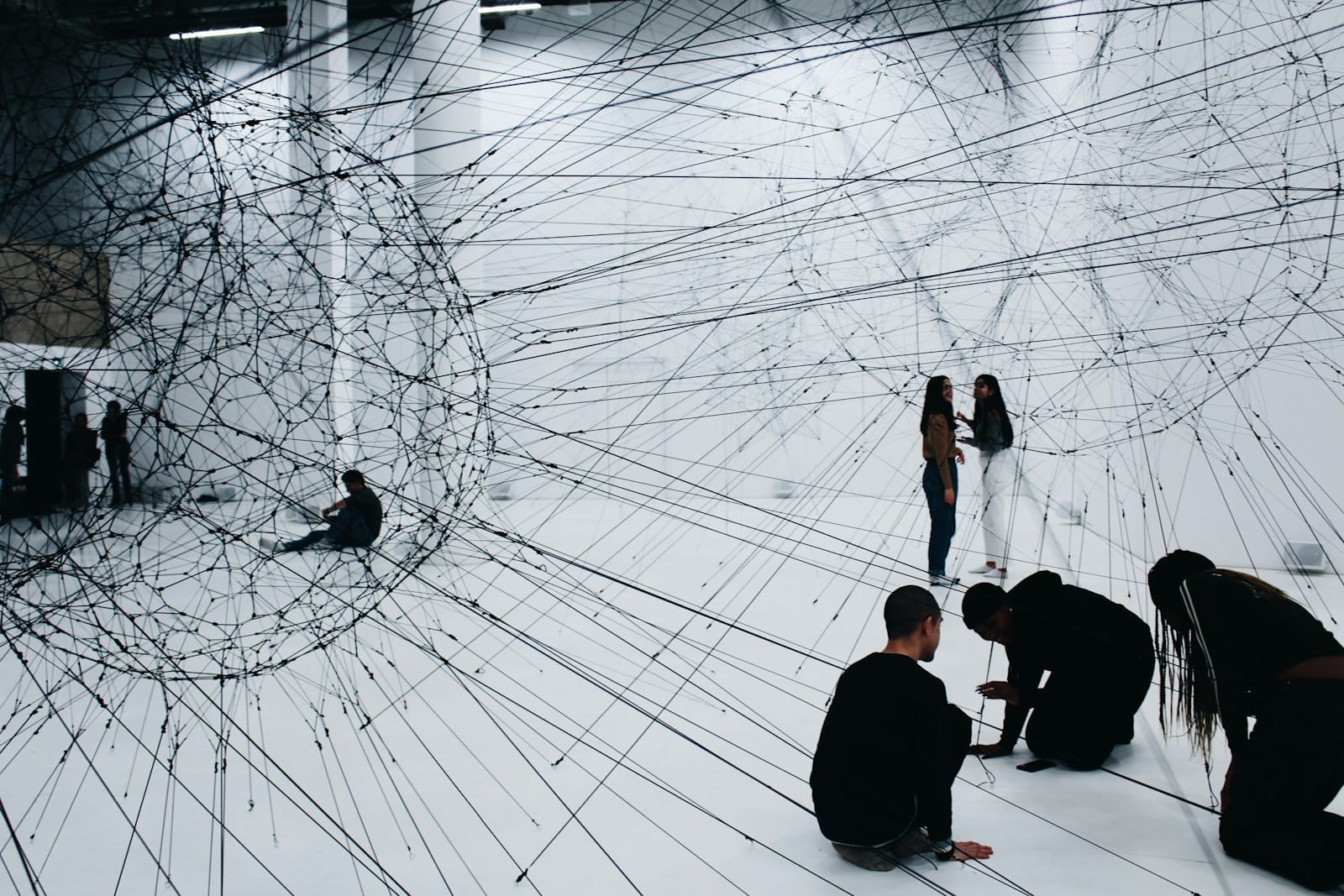
The Palais de Tokyo is not a museum in any conventional sense. There is no permanent collection to work through, no chronological hang, no velvet ropes keeping you at a careful distance from canonical masterpieces. What you find instead is a sprawling, deliberately rough-edged space that hosts rotating commissions, installations, performances, and experiments by living artists. The building throws them into its exposed-concrete shell and stands back.
It occupies the west wing of the monumental 1937 building on Avenue du Président Wilson, constructed for the Exposition Internationale as the Palais des Musées d'Art Moderne. The east wing became the Musée d'Art Moderne de Paris, run by the City of Paris. The west wing had a longer, more turbulent road: it sat underused for decades before reopening in January 2002 as a dedicated site for contemporary creation. A major expansion completed in 2012 brought it to 22,000 square metres, making it the largest contemporary art center in Europe.
ℹ️ Good to know
Hours: Open Wednesday to Monday, noon to midnight (until 9pm on Mondays). Closed Tuesdays. Also closed January 1, May 1, and December 25. Hours may shorten on December 24 and 31. Check the official site before your visit.
The Building Itself: 1937 Monumentalism Meets Controlled Decay
The exterior is imposing in the way that 1930s French state architecture always is: a long neoclassical colonnade facing the Seine, stone the color of old bone, and a low-slung profile that defers to the skyline without competing with it. Inaugurated on May 24, 1937, the structure sits between the Eiffel Tower and the Champs-Élysées, which means it is surrounded by two of the heaviest tourist corridors in the world, yet somehow feels like it belongs to neither of them.
Step inside and the tone shifts immediately. The interior is raw: concrete, steel, exposed ducting, unfinished floors in places. This is not neglect; it is curatorial intent. The building's roughness is treated as a canvas, not a flaw. Artists working at the Palais de Tokyo often respond directly to the architecture, and the results can feel more alive than anything you would encounter at a more manicured venue. If you appreciate the interplay between space and artwork, pair this visit with a look at the Fondation Louis Vuitton, which takes the opposite approach: a pristine Frank Gehry jewel box roughly 20 minutes away.
Tickets & tours
Hand-picked options from our booking partner. Prices are indicative; availability and final rates are confirmed when you complete your booking.
World War II in Paris private walking tour
From 26 €Instant confirmationFree cancellationPalais Royal and the Covered Galleries: walking audio tour
From 9 €Instant confirmationGuided walking tour of the Covered Passages of Paris
From 125 €Instant confirmationFree cancellationPrivate tour of the Opera Garnier and the Covered Passages
From 187 €Instant confirmationFree cancellation
What a Visit Actually Feels Like, Hour by Hour
Arrive at noon, when the doors open, and you will often have the galleries to yourself. The light inside is artificially controlled regardless of time of day, so morning versus evening makes little difference to what you see, but it makes a significant difference to what you share the space with. Early afternoon is the quietest window, good for photography and unhurried looking.
By late afternoon the building starts to fill with students, art-world professionals, and the kind of Parisians who treat cultural institutions as social infrastructure rather than tourist attractions. The atmosphere loosens. Conversations happen near installations. The café on-site becomes genuinely lively. If you want the Palais de Tokyo to feel like it belongs to the city rather than to visitors, come after 5pm.
After 9pm, the crowd self-selects: people who came specifically for a performance, a late screening, or simply because the midnight closing time is one of the great practical freedoms Paris offers a cultural tourist. The building's scale means even busy evenings rarely feel cramped, and the far galleries can feel genuinely isolated.
💡 Local tip
Photographer's note: Natural light does not reach the interior galleries, but the exterior colonnade and the terrace facing the Seine offer excellent afternoon light from roughly 3pm onward. The building's stone facade photographs cleanest in the hour before sunset.
Exhibitions: What to Expect and How to Prepare
The Palais de Tokyo runs no permanent collection. Every visit is determined by what happens to be on, and the programming shifts frequently. Exhibitions here are typically large-scale commissions rather than retrospectives; artists are given space and resources to make new work, often work that could not exist anywhere else. This means quality is consistent in ambition but variable in accessibility. Some shows are immediately gripping; others demand patience or context.
Check the official website before you go, not just to confirm hours and prices, but to read about the current exhibitions. Admission is charged per visit and varies depending on the programming. Reduced rates apply to visitors aged 18–25, students, those over 60, and several other categories; bring proof of eligibility. Under-18s enter free. The Tokyopass annual membership is worth considering if you plan more than two visits.
The Palais also hosts performances, film screenings, talks, and late-night events throughout the year. On Thursdays, admission after 7pm is free, a genuinely good deal that draws large crowds. For more on navigating Paris's museum landscape, including whether a pass makes financial sense for your itinerary, see the guide to the Paris Museum Pass.
⚠️ What to skip
The Paris Museum Pass does NOT cover the Palais de Tokyo. Admission must be purchased separately, and prices vary by exhibition. Always verify current pricing on the official website before your visit.
Getting There and Getting Around Once Inside
The most direct Metro approach is Line 9 to Iéna, which deposits you directly on Avenue du Président Wilson, a two-minute walk from the entrance. Alma-Marceau on the same line is slightly further but gives you a pleasant riverside approach along the Quai. From the RER C, Pont de l'Alma is a short walk. Bus connections are extensive: lines 32, 42, 63, 72, 80, and 92 all serve the area.
The building is large enough that you should plan your route before going in. Pick up a free floor plan at the reception desk; exhibitions are often distributed across multiple levels and wings with no obvious logical sequence. If this is your first visit, allow at least 90 minutes just to orient yourself to the scale. The surrounding neighborhood offers easy continuation, starting with the Musée de l'Orangerie and the Palais Royal, both reachable within a 20-minute journey if you want to combine visits.
Honest Assessment: Who Should and Should Not Visit
The Palais de Tokyo rewards intellectual curiosity and a tolerance for ambiguity. If you want an authoritative survey of art history, clear wall labels explaining what you are looking at, or the reassurance of seeing things that are already famous, this is not your place. The work here is current, often challenging, and sometimes unresolved in ways that feel intentional.
Visitors who are new to contemporary art and want context first will get more from anchoring their Paris art visit at the Musée d'Orsay or the Louvre before coming here. The Palais de Tokyo works best as a second or third act, when you have already seen what Paris looks like through the lens of its historical collections and want to see what its artists are doing right now.
Families with young children may struggle with the programming, which is rarely designed for small audiences. The spaces can also be loud during performances and acoustically challenging throughout. Visitors with mobility concerns should note that the building is large and multi-level; contact the Palais de Tokyo directly for current accessibility information before your visit.
Insider Tips
- The café inside the building (Tokyo Eat) is a functioning restaurant with a serious kitchen and an interesting wine list. It is significantly better than what you would expect from a museum café, and you do not need an exhibition ticket to dine there.
- On free Thursday evenings after 7pm, arrive at or just before 7pm if you want to explore without the later rush. By 9pm these evenings can be very busy.
- Grab the bilingual (French/English) exhibition notes at the front desk; they are free and go deeper than the wall labels, which are sometimes sparse or in French only.
- The terrace area facing the Seine is accessible and worth using as a decompression space between gallery sections. It is also one of the better free viewpoints in this stretch of the 16th arrondissement.
- If an exhibition features a performance or live event, book in advance through the website. Many are free with admission but require a reservation, and they fill quickly, especially anything on weekend evenings.
Who Is Palais de Tokyo For?
- Contemporary art enthusiasts who want to see what European artists are making right now, not what they made a century ago
- Architecture admirers interested in how 1930s monumental design functions as a live creative space
- Night owls and late-dinner planners who want cultural programming that runs well past the 6pm closing times common elsewhere in Paris
- Repeat Paris visitors who have covered the canonical sites and are looking for something that reflects the city's current cultural life
- Students and under-25s who benefit from reduced admission and the center's deliberately accessible, non-hierarchical atmosphere
Nearby Attractions
Other things to see while in Champs-Élysées & Trocadéro:
- Arc de Triomphe
Standing 49.5 metres above Place Charles de Gaulle, the Arc de Triomphe de l'Étoile anchors the grandest axis in Paris. Its rooftop terrace delivers one of the city's great panoramas, while the base houses the Tomb of the Unknown Soldier — a living memorial renewed by flame every evening.
- Champs-Élysées
Stretching 1.91 km from Place de la Concorde to the Arc de Triomphe, the Avenue des Champs-Élysées is at once Paris's grandest promenade and its most debated street. Here is what to expect, when to go, and how to make the most of it.
- Crazy Horse Paris
Crazy Horse Paris has staged its distinctive blend of dance, light, and visual design on Avenue George V since 1951. The current show, 'Totally Crazy!', runs approximately 90 minutes and draws a mix of curious first-timers and loyal returning guests who appreciate its position between cabaret tradition and contemporary performance art.
- Grand Palais
Built for the 1900 Universal Exhibition and freshly reopened after a landmark renovation, the Grand Palais is one of the most spectacular public buildings in Europe. Its iron-and-glass nave stretches 240 metres and shelters world-class art exhibitions, cultural events, and the Palais de la Découverte science museum beneath a single soaring roof.