Avenue des Champs-Élysées: Beyond the Postcard
Stretching 1.91 km from Place de la Concorde to the Arc de Triomphe, the Avenue des Champs-Élysées is at once Paris's grandest promenade and its most debated street. Here is what to expect, when to go, and how to make the most of it.
Quick Facts
- Location
- Avenue des Champs-Élysées, 75008 Paris (8th arrondissement)
- Getting There
- Charles de Gaulle-Étoile (lines 1, 2, 6), George V (line 1), Franklin D. Roosevelt (lines 1, 9), Champs-Élysées-Clémenceau (lines 1, 13)
- Time Needed
- 1 to 2 hours for the full walk; half a day if you stop at attractions along the way
- Cost
- Free to walk; individual attractions, cafés, and shops charge separately
- Best for
- First-time visitors, architecture lovers, evening strollers, Bastille Day and New Year's Eve crowds
What the Champs-Élysées Actually Is
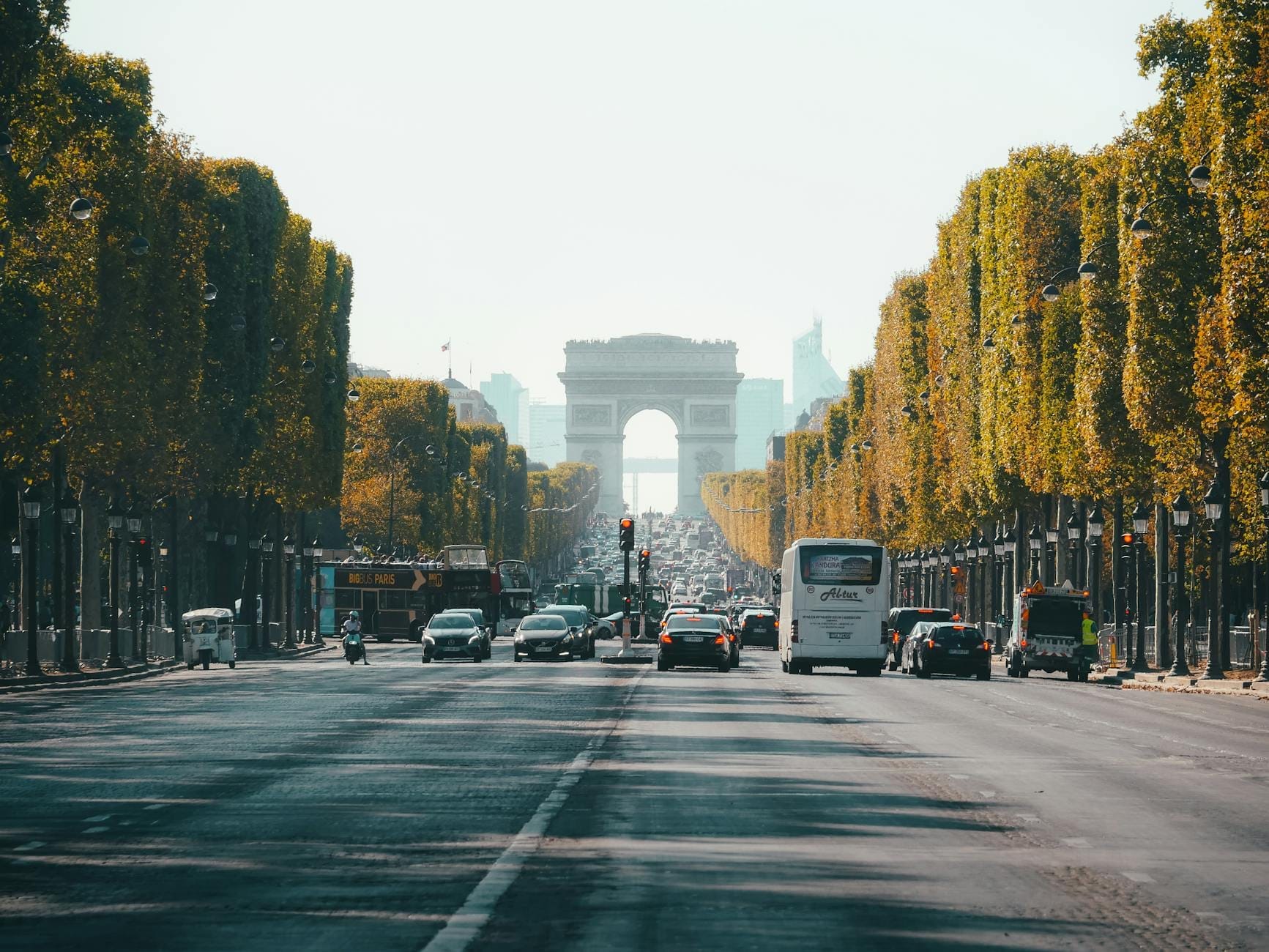
The Avenue des Champs-Élysées is a 1.91-kilometre (1.19-mile) boulevard cutting through the 8th arrondissement of Paris, running in a straight line from Place de la Concorde in the east to the Arc de Triomphe at Place Charles de Gaulle in the west. Its name translates as 'Elysian Fields', a reference to the paradise of Greek mythology, and the scale of the avenue does carry a certain theatrical grandeur: eight lanes of traffic, double rows of clipped chestnut trees, immense flagstone pavements. It is a street designed for ceremony as much as commerce.
It is also, by any honest reckoning, one of the most polarising streets in the city. Parisians are often ambivalent about it, dismissing the global chain stores and tourist-trap cafés that dominate much of its length. But to write it off entirely would be a mistake. The sheer architectural scale, the historical weight, and the physical experience of walking an avenue this wide under a canopy of trees still deliver something no photograph quite prepares you for.
💡 Local tip
The avenue is open 24 hours, 7 days a week, and entry is completely free. The best light for photography is in the hour before sunset, when the western sun aligns almost perfectly with the axis toward the Arc de Triomphe.
A Short History of the World's Most Famous Avenue
The avenue's origins lie in 1674, when André Le Nôtre, the landscape architect behind the gardens of Versailles, extended the central axis of the Tuileries Garden westward across what was then open marshland. Louis XIV approved the project, and the broad promenade quickly became fashionable as a place for the aristocracy to stroll and take the air beyond the city walls. The name 'Champs-Élysées' was officially applied in 1698.
The avenue's current urban form took shape during the 19th century. In 1833, the Prefect Rambuteau improved its infrastructure, and Baron Haussmann's sweeping renovation of Paris in the 1850s and 1860s reinforced the boulevard's role as the ceremonial spine of the capital. Twelve grand avenues were laid out radiating from the Arc de Triomphe, creating the famous star-shaped junction (the Étoile) that gives the surrounding place its formal name.
The 20th century gave the avenue its heaviest symbolic weight. German troops marched down it during the occupation of Paris in June 1940; Charles de Gaulle led the Liberation parade along the same route in August 1944. Today, that same axis carries the Bastille Day military parade every 14th of July, confirming the avenue's role as the literal stage of French national identity. For more on how Paris uses its public spaces, the guide on things to do in Paris offers useful context.
Tickets & tours
Hand-picked options from our booking partner. Prices are indicative; availability and final rates are confirmed when you complete your booking.
Paris panoramic bus tour with an on-board lunch from Champs-Elysees
From 70 €Instant confirmationFree cancellationParisian dinner on a panoramic bus from Champs-Elysees
From 90 €Instant confirmationFree cancellationParis by night panoramic bus tour with dinner from Champs-Elysees
From 110 €Instant confirmationFree cancellationChamps-Elysees self-guided walking tour with audio app
From 7 €Instant confirmation
Walking the Avenue: What You Will Actually See
The avenue divides naturally into two distinct halves. The lower section, from Place de la Concorde up to the Rond-Point des Champs-Élysées, is the quieter and more pleasant stretch. Here, the wide pavements give way to green gardens on both sides, with lawns, flowerbeds, and mature trees creating an almost parklike atmosphere. This is where Parisians jog in the early morning and where families sit on benches in the afternoon. The Grand Palais stands just off to the south, its extraordinary iron-and-glass roof visible between the trees. The neighbouring Petit Palais sits just across Avenue Winston Churchill.
The upper section, from the Rond-Point to the Arc de Triomphe, is the commercially dense stretch most visitors picture. Flagship stores for global luxury brands sit alongside cinemas, car showrooms, and some of the most expensive café terraces in the city. The pavement is wide enough that even during peak summer hours the crowds spread out more than expected. At the far western end, the Arc de Triomphe anchors the view with real monumental force, especially when framed by the avenue's double row of trees.
Underfoot, the stone pavement has a quality that signals civic seriousness. The trees are London planes and horse chestnuts, and in spring they produce a canopy that softens the hard urban geometry considerably. In late autumn, once the leaves have turned gold and begun to fall, the avenue takes on a completely different atmosphere, less grand and more intimate.
How the Avenue Changes Through the Day
Early morning, before 8am, the Champs-Élysées is almost unrecognisable from its daytime self. Street cleaners move in teams along the pavements, the characteristic smell of wet stone rising in the air. Joggers use the wide pavements as an impromptu running track. The shuttered shop fronts and the low angle of morning light give the avenue an emptiness that feels genuinely rare for a street this famous.
Midday to late afternoon is peak tourist time, and the upper half in particular can feel crowded around the major retail entrances. This is when the café terraces fill to capacity and a single coffee can cost upwards of 8 euros. The experience is not unpleasant, but it is unambiguously commercial. If your main goal is to photograph the avenue itself, come back in the evening.
From around 6pm onward, a different energy settles over the street. Office workers and residents move through, the tourist density drops, and the illumination of the avenue comes into its own. The streetlights along both sides create a warm corridor of light pointing toward the Arc de Triomphe, which is floodlit from dusk. On clear evenings, this is one of the most photogenic urban views in Europe, and it costs nothing.
ℹ️ Good to know
On Bastille Day (14 July) and New Year's Eve, the avenue is closed to traffic and fills with hundreds of thousands of people. Both events are extraordinary to witness but require arriving very early to secure a good viewing position, and bag checks at access points add significant wait times.
Getting There and Moving Around
The avenue is served by four metro stations covering much of its length, which makes arrival straightforward from almost anywhere in Paris. Charles de Gaulle-Étoile (lines 1, 2, 6) deposits you directly at the Arc de Triomphe end, which is the most dramatic entry point if you are walking toward Place de la Concorde with the grand perspective opening before you. George V (line 1) sits roughly in the commercial middle section. Franklin D. Roosevelt (lines 1 and 9) and Champs-Élysées-Clémenceau (lines 1 and 13) serve the lower, greener half and are closest to the Grand Palais.
If you are arriving from Charles de Gaulle Airport, the RER B train connects to Châtelet-Les Halles in central Paris, where you can transfer to Metro line 1 running directly along the Champs-Élysées axis. The full journey takes around 45 to 55 minutes. For a broader look at navigating the city, the guide on getting around Paris covers all transport options in detail.
The avenue's wide pavements are generally accessible for pushchairs and wheelchairs, though the high volume of pedestrian traffic at peak hours can make navigation slow. Metro stations on lines 1 and 9 are among the more accessible in the network, though the older stations on lines 2, 6, and 13 have limited lift access. Check RATP accessibility information before travel if this is a priority.
The Transformation Project: Paris 2030
The Champs-Élysées is in the middle of a major long-term transformation. The 'Re-enchanting the Champs-Élysées' project, backed by the City of Paris and targeted for completion around 2030, aims to reduce the avenue from six traffic lanes to four, plant over a hundred new trees, significantly widen pedestrian areas, and introduce new green spaces. The ambition is to return the boulevard closer to the leafy promenade Le Nôtre originally envisioned, reversing decades of car-centric design.
For visitors arriving in the next few years, this means the avenue is in a state of gradual transition. Some sections may show construction activity, and the eventual result should make the whole street considerably more pleasant to walk. It is, in a sense, a good moment to visit: you are seeing the last version of the avenue in its current form before a significant reinvention.
What to Do Beyond the Walk
The Arc de Triomphe at the western end is worth the entrance fee for the view from the roof terrace alone. On clear days, you can see the La Défense business district to the west and trace the full Voie Royale axis back toward the Louvre. Tickets must be reserved in advance. At the eastern end, Place de la Concorde is one of the largest public squares in Europe, with the Luxor Obelisk at its centre and clear sightlines toward the Eiffel Tower to the south.
Just off the avenue, the Grand Palais is a landmark of French Belle Époque architecture worth pausing at even if you do not enter. Its iron-and-glass barrel-vaulted roof, visible above the trees from several angles, represents a period when Paris was building for world exhibitions with deliberate extravagance. The adjacent Jardin des Tuileries stretches east from Place de la Concorde all the way to the Louvre, offering a logical and pleasant continuation of any visit to this part of the city.
Shopping along the avenue runs from the ultra-luxury (Louis Vuitton maintains one of its flagship stores here) to international mid-market brands. If you are specifically interested in French retail, the side streets off the Rond-Point and the area around Avenue Montaigne nearby offer a less crowded and more curated experience.
⚠️ What to skip
Café and restaurant prices on the avenue itself are among the highest in Paris. A coffee at a terrace can cost 7 to 10 euros, and a simple lunch can easily reach 30 to 40 euros per person. Walk one block off the main avenue to find more reasonably priced alternatives.
Insider Tips
- Walk the avenue from east to west, starting at Champs-Élysées-Clémenceau and finishing at the Arc de Triomphe. This route keeps the Arc in view for much of the upper half, giving you the full cinematic perspective the avenue was designed to create.
- The lower, garden section between Place de la Concorde and the Rond-Point is where the genuine Parisian daily life still shows up. Go on a weekday morning and you will find joggers, dog walkers, and office workers, not tourists.
- For photographs of the avenue with minimal people, visit on a Sunday morning before 9am. Traffic is lighter, the light is softer, and even in summer the pavement crowds are manageable.
- The rooftop terrace of the Arc de Triomphe offers the only truly unobstructed aerial view of the avenue's full length. No telephoto lens needed: the geometry of the straight line and the star junction of twelve avenues is stunning with a standard lens or even a phone camera.
- During the Christmas season, the avenue is strung with white lights from late November through January. The illumination runs the full 1.91 km and is best seen just after dark from somewhere midway along the upper section.
Who Is Champs-Élysées For?
- First-time visitors to Paris who want to understand the city's ceremonial scale and history
- Architecture and urban planning enthusiasts interested in Haussmann's legacy and the 2030 redesign project
- Evening strollers and photographers looking for one of the great illuminated urban perspectives in Europe
- Shoppers targeting luxury flagships, particularly in the Louis Vuitton and Chanel tier
- Visitors on Bastille Day (14 July) or New Year's Eve seeking a major public celebration
Nearby Attractions
Other things to see while in Champs-Élysées & Trocadéro:
- Arc de Triomphe
Standing 49.5 metres above Place Charles de Gaulle, the Arc de Triomphe de l'Étoile anchors the grandest axis in Paris. Its rooftop terrace delivers one of the city's great panoramas, while the base houses the Tomb of the Unknown Soldier — a living memorial renewed by flame every evening.
- Crazy Horse Paris
Crazy Horse Paris has staged its distinctive blend of dance, light, and visual design on Avenue George V since 1951. The current show, 'Totally Crazy!', runs approximately 90 minutes and draws a mix of curious first-timers and loyal returning guests who appreciate its position between cabaret tradition and contemporary performance art.
- Grand Palais
Built for the 1900 Universal Exhibition and freshly reopened after a landmark renovation, the Grand Palais is one of the most spectacular public buildings in Europe. Its iron-and-glass nave stretches 240 metres and shelters world-class art exhibitions, cultural events, and the Palais de la Découverte science museum beneath a single soaring roof.
- Jardin des Tuileries
Stretching approximately 800 metres between the Louvre and Place de la Concorde, the Jardin des Tuileries is one of the oldest and most significant public gardens in France. Designed by André Le Nôtre in 1664 and free to enter year-round, it offers formal French geometry, open terraces, historic sculptures, and a rare patch of calm in the middle of central Paris.