Getting Around Paris: The Complete Transport Guide
Paris has one of the most comprehensive urban transport networks in the world. From the 16-line Métro to river buses and Vélib' bikes, this guide covers every realistic option — with real fares, practical advice, and honest warnings about what to avoid.
Plan and book this trip
Tools from our partner Travelpayouts help you compare flights and hotels. If you book through them, we may earn a commission at no extra cost to you.
Flights
Hotels map
TL;DR
- The Paris Métro covers virtually every major attraction across 16 lines and 300+ stations — it's the fastest and cheapest way to get around central Paris, with a single ticket at €2.55 as of 2026.
- From Charles de Gaulle airport, take the RER B (€14, 30–40 min) — avoid taxis during peak hours unless you're in a group of 3+.
- A Navigo Easy card or weekly Navigo pass saves money if you're staying more than 3 days and plan to use public transport regularly.
- Walking is genuinely underrated: the 1st to 6th arrondissements are compact enough that many top attractions are 10–20 minutes apart on foot. See our guide to Paris for first-timers for a walkable intro to the city.
- Uber and Bolt work well in Paris but surge during evening rush (6–8pm) and after midnight on weekends — factor this into plans.
The Paris Métro: Your Default Mode of Transport

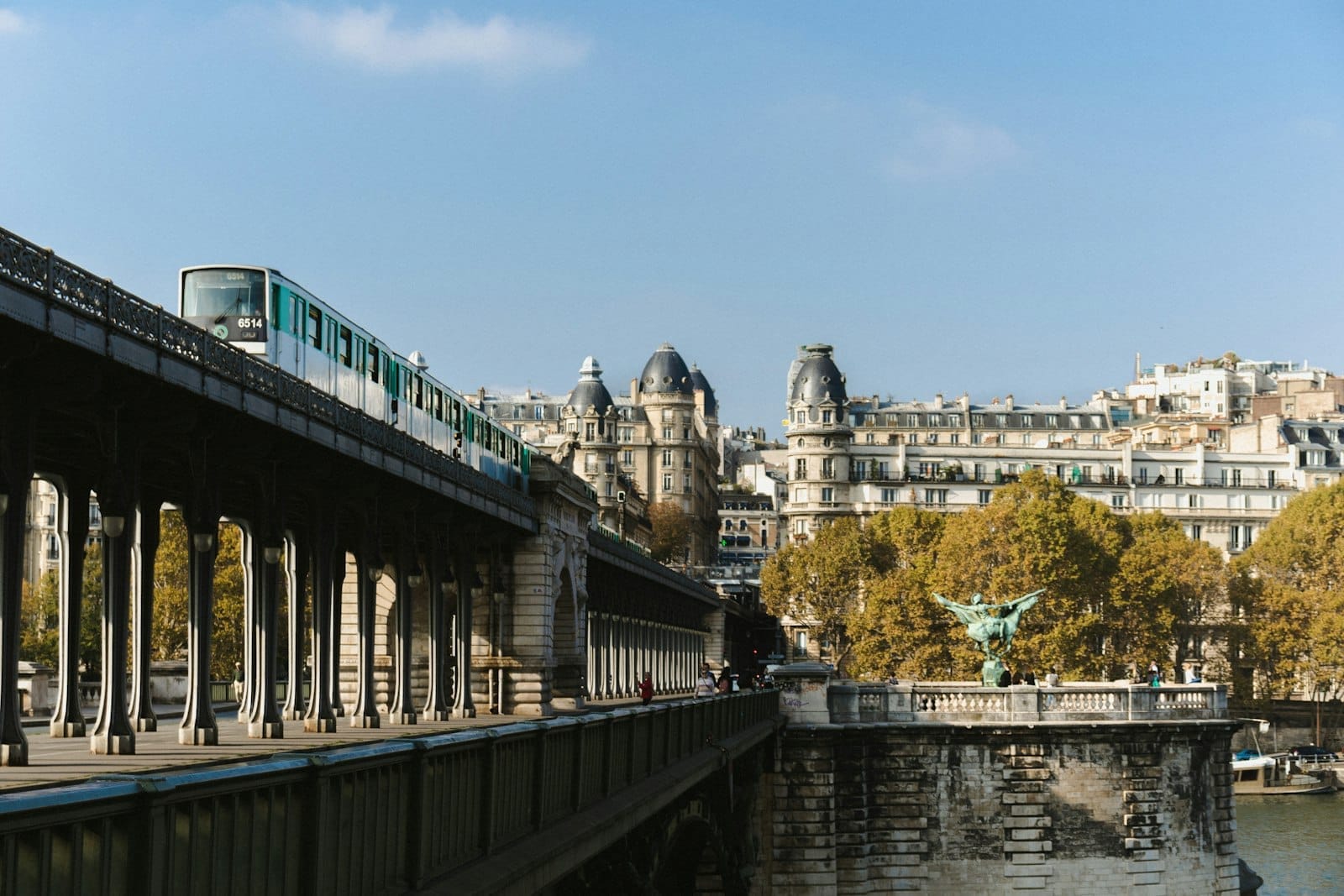
The RATP Métro is the backbone of Paris transport. With 16 lines, over 300 stations, and trains running every 2–5 minutes during peak hours, it connects almost every corner of the city. Operating hours are 5:30am to 12:30am Sunday through Thursday, and until 1:30am on Friday and Saturday nights. The system is colour-coded and numbered, and once you understand the direction logic (trains are identified by their terminus station), navigation becomes intuitive quickly.
As of 2026, ticketing has been simplified significantly. A single Métro/Train/RER ticket (valid for one journey across Île-de-France) costs €2.55, while a single bus/tram ticket costs €2.05. Zones 1–2 cover all central Paris attractions — the Eiffel Tower, Louvre, Marais, Montmartre, Bastille — so most visitors never need a more expensive zone ticket. The old carnet (book of 10) has been phased out in favour of the Navigo Easy contactless card, which you load with credit at any station machine. Tap in, tap out on the RER; just tap in on the Métro.
💡 Local tip
Download the Bonjour RATP app or use Citymapper before your trip. Both give real-time departures, service alerts, and step-by-step navigation. Google Maps works fine too but occasionally misses service disruptions.
If you're staying 4+ days and plan to use public transport daily, a weekly Navigo pass (loaded Monday–Sunday) offers unlimited travel on all zones for €32.40. It doesn't align to your arrival day — it's calendar-week only — so buying it on a Wednesday means you're paying for Monday and Tuesday you can't use. Plan accordingly. For a deeper look at how to budget your trip overall, check the Paris on a budget guide.
RER Regional Rail: When to Use It (and When Not To)
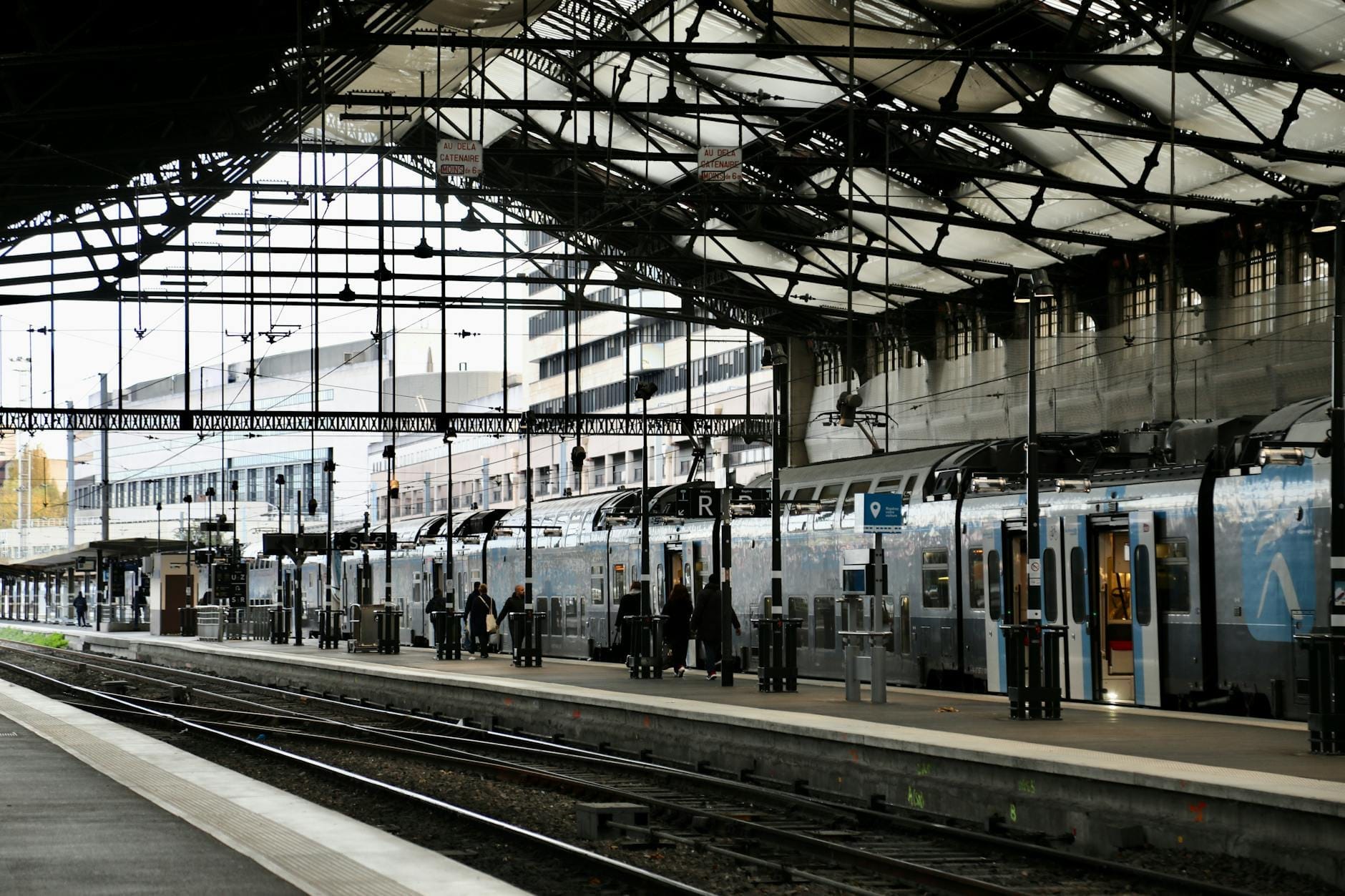
The RER is a network of 5 rapid transit lines (A through E) that cuts across central Paris and extends into the suburbs and beyond. Inside the city centre, RER trains stop less frequently than the Métro but move faster — the RER A crosses Paris in under 15 minutes. Within Zones 1–2, your standard €2.55 ticket covers RER travel too, which many visitors overlook.
The RER becomes essential for specific destinations: Versailles (RER C from Champ de Mars or Invalides, around 35–40 minutes), Disneyland Paris (RER A, around 40 minutes from central Paris), and both airports. Keep in mind that once you travel beyond Zone 2, you need a zone-specific ticket or Navigo pass. Using a Zone 1–2 ticket on a longer RER journey is technically fare evasion and inspectors do check.
⚠️ What to skip
RER B to CDG airport requires a dedicated Paris Region <> Airports ticket (€14 in 2026), not a standard €2.55 Métro/RER ticket. Buy it before you board — station staff check frequently on this line, and the fine is substantial.
The RER is also the fastest way to reach some of the best day trips from Paris. The Palace of Versailles is straightforward on the RER C, and the journey itself is pleasant. Just avoid peak weekend hours in summer when trains can be standing-room only.
Getting from the Airport to Central Paris

Paris has two main airports: Charles de Gaulle (CDG), about 25 km north of the city centre, and Orly (ORY), around 13 km to the south. The right transfer option depends on where you're staying, how much luggage you have, and what time you arrive.
- CDG via RER B €14 (Paris Region <> Airports ticket, 2026), 30–40 minutes to central Paris (Gare du Nord, Châtelet-Les Halles). Best value option if you're comfortable with luggage on public transport. Trains run every 10–15 minutes. Buy the dedicated airport ticket, not a standard €2.55 Métro/RER ticket.
- CDG via Taxi Regulated flat rate of €56 to the Right Bank or €65 to the Left Bank, with comparable Uber pricing. Fastest option when traffic is clear, worthwhile for groups of 3–4 splitting costs. (Note: the RoissyBus to Opéra was discontinued on 1 March 2026.)
- ORY via Métro line 14 Standard €2.55 Métro/RER fare, around 25 minutes to Châtelet–Les Halles. Since the line 14 extension to Orly opened in June 2024 this is the simplest, fastest, and cheapest public-transport option.
- ORY via Paris Region <> Airports ticket €14 in 2026 if you'd rather use the dedicated airport fare valid on Métro 14 or OrlyVal + RER B. The standard €2.55 fare is usually the better deal unless you're combining with other airport-only services.
- ORY via Taxi Regulated flat rate of €36 to the Left Bank or €44 to the Right Bank. More reasonable than CDG due to shorter distance.
✨ Pro tip
Avoid unlicensed taxis at CDG arrivals halls. Only use official taxis (white cars with a light on the roof) from designated taxi ranks outside the terminal, or pre-book Uber/Bolt through the app. The fixed-rate taxi fares to Paris are regulated and should be displayed in the cab.
Buses, Trams, and Other Surface Options

Paris has an extensive bus and tram network covering all 20 arrondissements. A bus/tram ticket is €2.05 (cheaper than the €2.55 Métro/RER ticket). Buses are slower than the Métro due to traffic, but they're invaluable for neighbourhoods with limited Métro coverage and — crucially — they let you see the city. Line 69 (Champs-Élysées to Père Lachaise) and Line 72 (along the Seine) are particularly scenic.
Trams are modern, air-conditioned, and run largely around the outer ring of Paris (the périphérique boundary). They're excellent for reaching peripheral neighbourhoods but not particularly useful for tourist itineraries focused on central attractions. Night buses (Noctilien) run when the Métro closes, covering major routes until around 5am — they use standard tickets and are a reasonable alternative to late-night taxis.
Cycling, Walking, and Shared Mobility
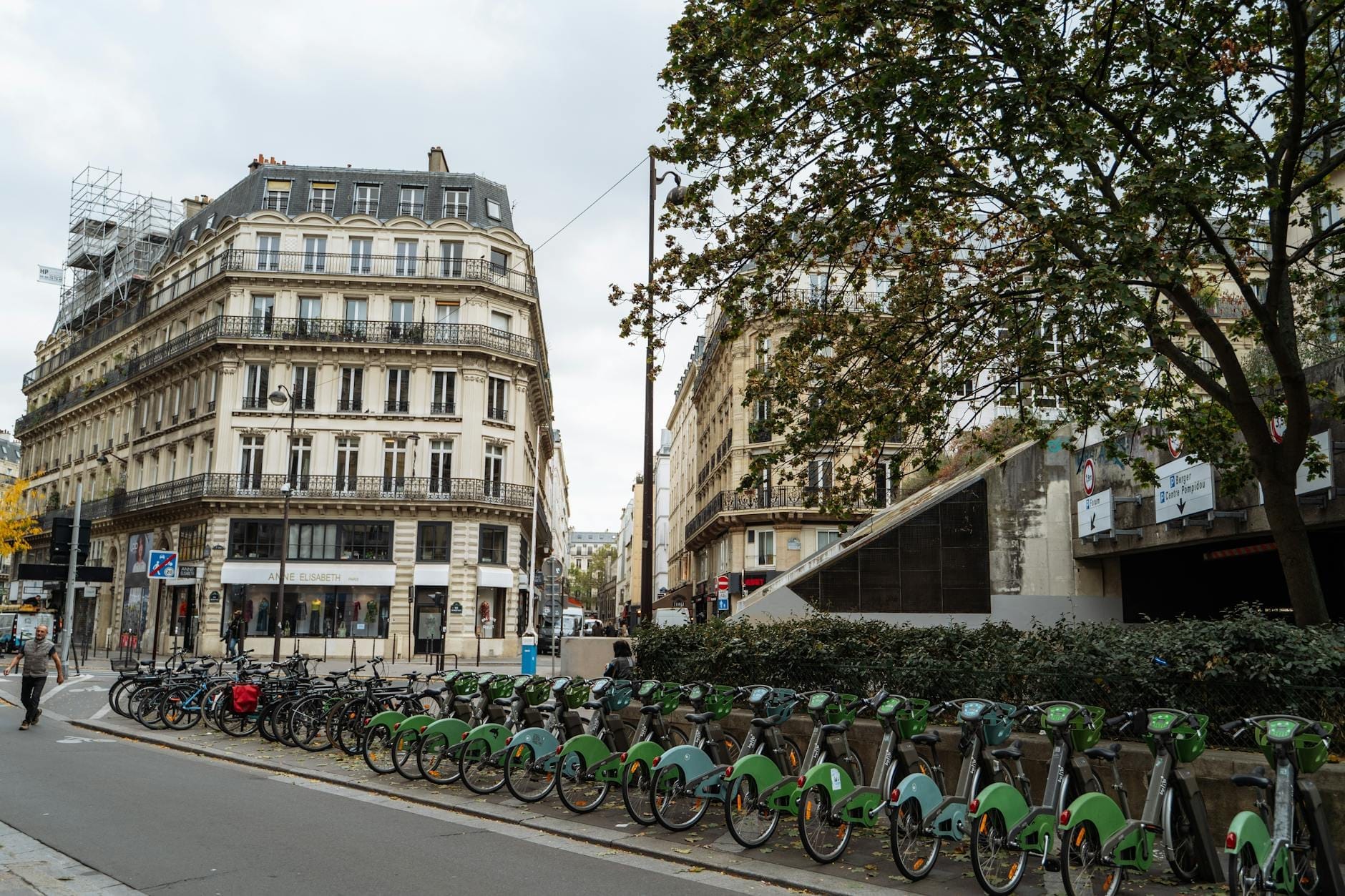
Paris has invested heavily in cycling infrastructure since 2020. The Vélib' Métropole bike-share scheme operates across the city with over 20,000 bikes (mechanical and electric) at 1,400+ docking stations. A 45-minute mechanical bike ride costs around €3; e-bikes cost slightly more. It's ideal for distances of 2–5 km across flat central arrondissements. The dedicated cycling lanes along the Seine and through Le Marais make cycling genuinely safe and pleasant, particularly on weekend mornings when traffic is light.
Electric scooters from operators like Lime and Dott are available but have faced ongoing regulation. As of 2024, personal scooter rentals on public roads require riding in designated areas — check current rules as they change frequently. For casual tourists, Vélib' is more straightforward and better value.
Walking remains one of the best ways to experience central Paris. The city is compact: the distance from the Louvre to Notre-Dame is roughly 1.5 km. From the Eiffel Tower to Musée d'Orsay is a 10-minute walk along the Seine. Building in 20–30 minute walks between Métro rides gives you the texture of Paris that no transport map can provide.
- Vélib' app or website: register before arriving to save time at docking stations
- Paris is largely flat in the centre — hills only really appear in Montmartre (18th) and Belleville (20th)
- Seine riverbanks (Voie Georges-Pompidou on the Right Bank) are car-free on Sundays, perfect for cycling or walking
- Carry a compact umbrella — Paris averages 110 rainy days per year with no real dry season
Taxis, Uber, and Ride-Hailing in Paris

Official Paris taxis are metered white vehicles with a roof light. They cannot be hailed from anywhere except official taxi ranks (tête de station) — you won't find them stopping mid-street like in London or New York. The major apps available are Uber, Bolt, and Le Cab. All three work reliably in central Paris.
Taxis charge a minimum fare of around €7.30, with additional per-km and per-minute rates varying by time of day and whether you're on a highway. For a cross-city trip (say, Marais to Montparnasse), expect €12–18 during normal hours, and €20–30 during evening peak. For airport runs, the fixed rates (€35–50 for Orly, €50–70 for CDG) actually protect you from the meter running in bad traffic.
ℹ️ Good to know
Tipping is not expected in Paris taxis. Bills include service by default (service compris). Rounding up the fare by a euro or two is a polite gesture for good service, but there's no cultural pressure to add 15–20% as in North America.
Practical Tips for Navigating Paris Like a Local

Paris's 20 arrondissements spiral clockwise outward from the 1st (Louvre area) in the centre. The numbering tells you roughly how central a location is: 1st–6th are core tourist areas, 7th–10th are slightly outer but still central, 11th–18th cover areas like Bastille and Montmartre. Knowing which arrondissement your hotel and top sights are in helps you choose the most useful Métro lines.
If your itinerary includes major museums, it's worth checking whether the Paris Museum Pass makes sense financially. It doesn't directly cover transport, but combining it with a weekly Navigo pass is the most cost-efficient setup for a busy 4–5 day visit.
- Validate your ticket every time you board — even on the Métro where barriers are sometimes open, inspectors board trains and spot-check. Fines start at €50.
- Peak hours on the Métro are 8–9:30am and 5:30–7:30pm weekdays. Lines 13 and 4 are particularly crowded — leave extra time.
- The Métro can get very hot in summer (no air conditioning on older rolling stock). Lines 1 and 14 use newer automated trains with climate control.
- Station exits matter: many large stations have multiple exits several hundred metres apart. Check which sortie (exit) is closest to your destination on the RATP app before you surface.
- Keep your ticket until you exit on the RER — barriers check on exit, not just entry.
- For Seine river cruises, Bateaux Parisiens and Bateaux-Mouches depart near the Eiffel Tower and Pont de l'Alma respectively — these are tourist experiences, not commuter transport, but a worthwhile perspective on the city.
FAQ
What is the cheapest way to get from CDG airport to central Paris?
The RER B train is the best value at €14 for a dedicated Paris Region <> Airports ticket (2026 rate). It takes 30–40 minutes to Gare du Nord or Châtelet-Les Halles and runs every 10–15 minutes. Do not use a standard €2.55 Métro/RER ticket for this journey — you need to buy the airport-specific fare at the station machine or ticket window.
How much does a single Métro ticket cost in Paris in 2026?
A single Métro/RER ticket valid across Île-de-France costs €2.55 as of 2026. The bus/tram ticket is cheaper at €2.05. The old carnet of 10 tickets has been discontinued — buy credit on a Navigo Easy card instead.
Is the Paris Metro safe at night?
Generally yes, though some stations and late-night trains can feel uncomfortable, particularly on Lines 2, 4, and 13 in outer sections. The Métro closes around 12:30am (1:30am on weekends), so you'll need night buses (Noctilien) or a ride-hailing app after that. Staying alert with your phone out of view is standard city common sense.
Is it worth buying a weekly Navigo pass in Paris?
Yes, if you're arriving on or near a Monday and staying 4+ days with plans to use public transport daily. The weekly Navigo covers all zones (Métro, RER, buses, trams) for €32.40 and is valid Monday through Sunday — it doesn't pro-rate from your arrival day. If you arrive mid-week, calculate whether individual tickets or a day pass might be better value for the remaining days.
Can I walk between major Paris attractions?
Absolutely. Central Paris is compact enough that walking is often the most enjoyable option. The Louvre to Notre-Dame is about 1.5 km. The Eiffel Tower to Musée d'Orsay is roughly 10 minutes on foot. Musée d'Orsay to Saint-Germain-des-Prés is another 5 minutes. Building walking into your itinerary reveals details — covered passages, street markets, neighbourhood cafés — that you miss entirely underground.