Bastille and Bercy form one of Paris's most layered neighborhoods, where a working-class revolutionary past meets contemporary urban reinvention. Spread across the eastern 11th and 12th arrondissements, the area runs from the iconic Place de la Bastille to the former wine warehouses of Bercy, connected by one of the world's first elevated greenways.
Bastille and Bercy sit at the point where Paris stops performing for tourists and starts living for itself. The neighborhood pairs the electric energy of the Bastille square and its nightlife corridor with the unhurried, almost village-like calm of Bercy's converted wine warehouses and riverside parks. It is a place where revolutionary history, working-class grit, and thoughtful urban renewal exist on the same block.
Orientation
The Bastille and Bercy area straddles the boundary between Paris's 11th and 12th arrondissements on the Right Bank of the Seine. Most visitors orient around Place de la Bastille, the broad circular square on the border of the 4th, 11th, and 12th arrondissements. From there, the neighborhood fans out east and southeast: east toward the Canal Saint-Martin and the 11th's bar-and-restaurant streets, and southeast along Avenue Daumesnil into the quieter, greener 12th.
The 12th arrondissement is one of Paris's larger and more undervisited districts. Its western anchor is Gare de Lyon, the city's main station for trains to the south of France and to Italy. Moving east from the station along the Seine, you reach the Bercy district, which stretches to the Bois de Vincennes at the city's eastern edge. The spine of the arrondissement is Avenue Daumesnil, a wide boulevard that runs beneath the brick arches of the Viaduc des Arts and doubles as the ground-level route below the elevated Promenade Plantée.
Immediately to the north is Le Marais, accessible on foot across the Place de la Bastille in under ten minutes. To the west, the Île de la Cité and the Latin Quarter are a short metro ride away. To the east, the Bois de Vincennes provides some of the largest green space within Paris's city limits, making Bastille and Bercy an unusually well-rounded base for both urban exploration and outdoor escapes.
Character & Atmosphere
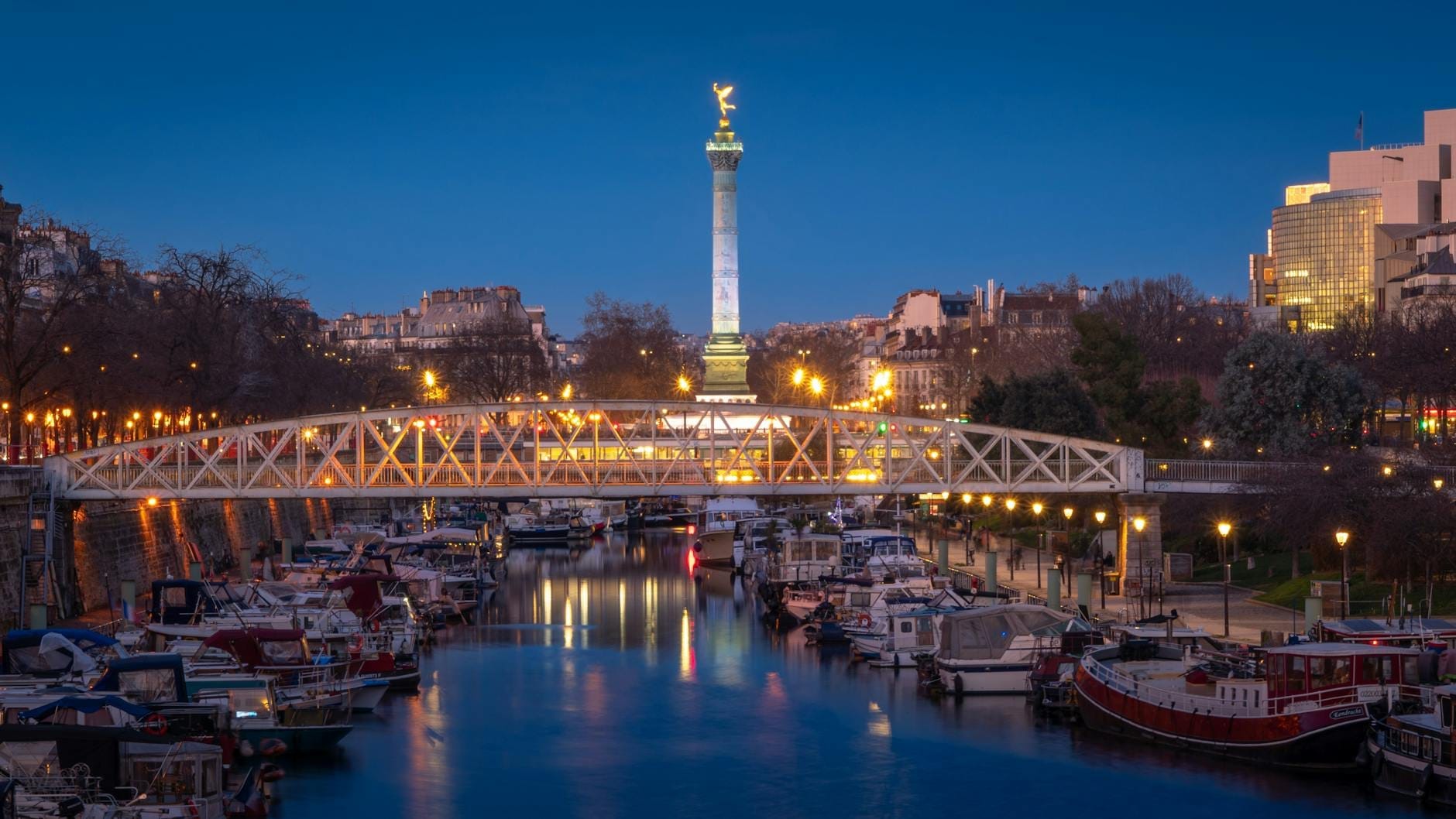
The neighborhood shifts character depending on where exactly you are and what time of day it is. Place de la Bastille itself is always on, always loud: motorbikes circle the column at the center of the square, terraces fill up by early afternoon, and the streets radiating north into the 11th pulse with music and foot traffic well past midnight. The rue de la Roquette and rue de Lappe corridors are among the most reliably animated bar streets in Paris, drawing a younger, local crowd rather than the tourist-heavy terraces you'd find nearer the Marais.
Walk south from the Bastille column along Avenue Daumesnil, however, and the register drops almost immediately. The Viaduc des Arts stretches along the right side of the avenue, its 71 brick arches sheltering boutique workshops: luthiers, antique restorers, fabric designers, glassmakers. On a weekday morning, you can peer into open studios and watch craftspeople at work while the city hums quietly around you. Above this, the Promenade Plantée is a world entirely removed from the streets below, all rustling plane trees, flowering shrubs, and the companionable silence of walkers and runners who know they've found something the tourist maps underplay.
Bercy, at the eastern end of the 12th, has its own distinct personality. The old wine warehouses that once made this the central trading hub for wine entering Paris have been converted into a pedestrianised open-air complex called Bercy Village, with restaurants and shops set around cobblestone courtyards and vine-covered facades. On weekend afternoons it fills with families and couples strolling between lunch and ice cream, with none of the frantic pace of the city centre. The adjacent Parc de Bercy, which runs along the Seine, is the kind of place where locals read on the grass on Sunday mornings while the rest of Paris queues for museums.
💡 Local tip
The Promenade Plantée is genuinely quieter on weekday mornings, when you'll mostly share it with joggers and dog walkers. On sunny weekend afternoons, it draws more visitors but rarely feels crowded. Summer hours run approximately 7am to 9:30pm; winter hours are approximately 8am to 5:45pm.
What to See & Do
The Promenade Plantée is the neighborhood's single most distinctive experience. Stretching 4.7 kilometres from the Opéra Bastille to the Bois de Vincennes, it was built on the bed of an old railway line decommissioned in the 1960s and opened as a public walkway in 1993, making it the world's first elevated urban park. The New York High Line, which opened in 2009, was directly inspired by it. The walk is free, accessible from multiple staircases along Avenue Daumesnil, and passes through a sequence of planted gardens that change with the seasons: roses in early summer, dahlias in September, bare branches silvered with frost in January.
At ground level beneath the promenade, the Viaduc des Arts is worth an hour of slow exploration. The 71 brick arches have been occupied since the 1990s by artisan businesses: upholsterers, violin makers, fashion designers, architects, and gallery owners. It is not a shopping mall; most workshops welcome visitors but are focused on their work, which makes the experience feel genuinely different from typical retail browsing. The avenue ends at the Opéra Bastille, the modernist glass-and-granite opera house that opened in 1989 and is one of the largest opera venues in the world. Guided tours and performances are both available, with tickets ranging widely depending on the programme.
In Bercy itself, the Parc de Bercy is one of the most thoughtfully designed parks in Paris, divided into themed gardens including a vineyard, a rose garden, and a kitchen garden, all laid out along the Seine riverbank. Just east of the park, the Bercy Village complex occupies the renovated wine-trading warehouses called the Chais de Bercy, where wine was stored before distribution into the city. The architecture is genuinely interesting, with 19th-century stone and brick preserved alongside modern glasswork.
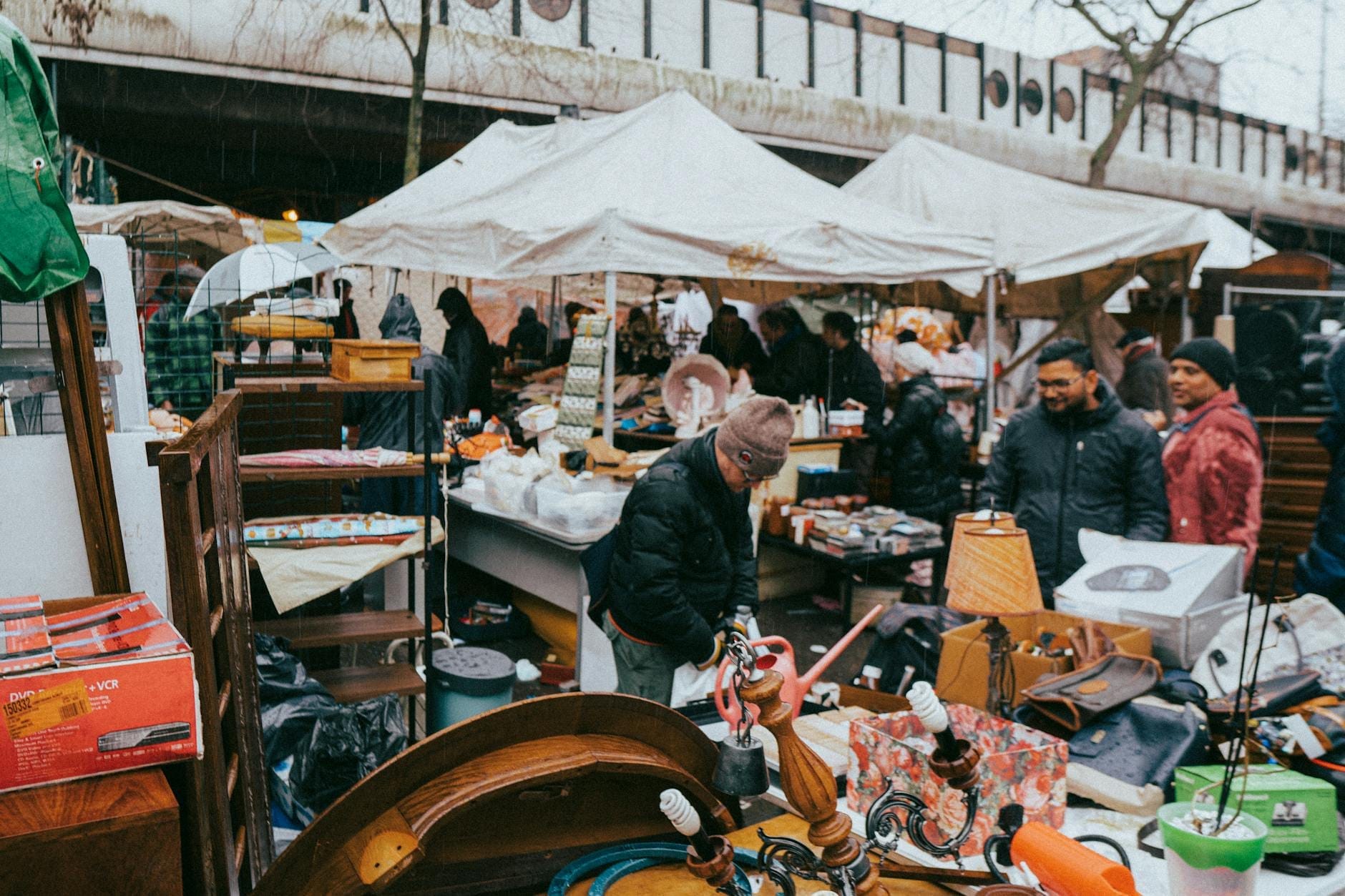
For one of the neighborhood's best-kept practical secrets, the Marché d'Aligre on Place d'Aligre is among the most atmospheric markets in Paris. Open every morning except Monday, it combines an indoor covered hall (the Beauvau market) selling cheese, charcuterie, and specialty groceries with an outdoor flea-and-produce market that spreads across the square. The crowd is local, the prices are reasonable, and the atmosphere at 9am on a Saturday morning, with vendors calling out prices and neighbours stopping to talk, captures something that the city's more photographed markets have largely lost. The market is a short walk north from Ledru-Rollin metro station.
Promenade Plantée (Coulée Verte René-Dumont): free, 4.7km elevated walk, best on weekday mornings
Viaduc des Arts: 71 artisan workshops beneath the railway arches on Avenue Daumesnil
Opéra Bastille: one of Europe's largest opera houses, guided tours and performances available
Parc de Bercy: riverside park with a vineyard, rose garden, and kitchen garden
Bercy Village: pedestrianised complex in converted 19th-century wine warehouses
Marché d'Aligre: local market open daily except Monday, indoor and outdoor sections
Bois de Vincennes: vast woodland park accessible from the eastern end of the arrondissement
ℹ️ Good to know
The Opéra Bastille and the Opéra Garnier share the same booking platform and some productions alternate between venues. If you're planning to attend a performance, check the Paris Opera website well in advance as popular productions sell out months ahead.
Eating & Drinking
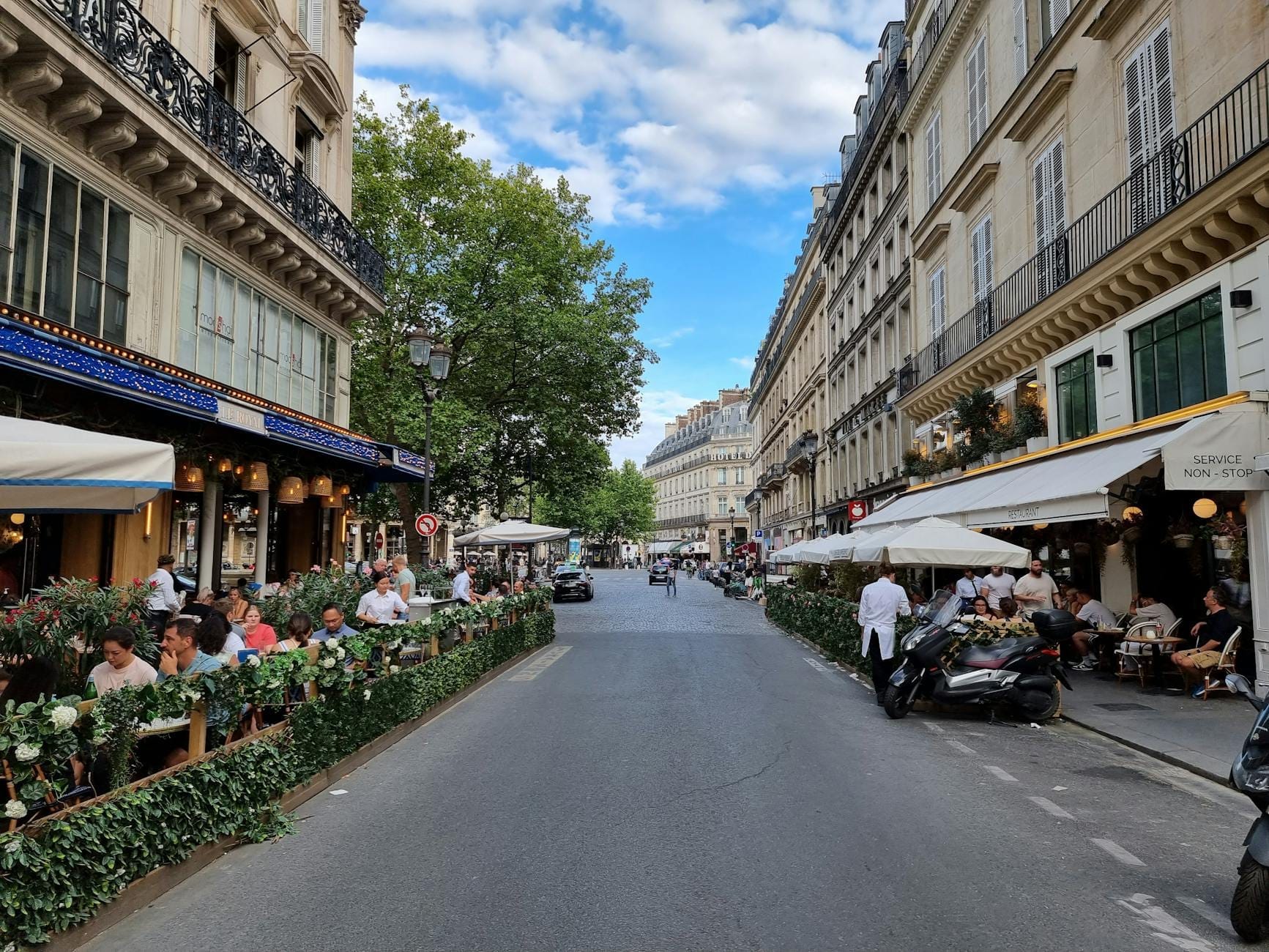
The food scene in Bastille and Bercy rewards exploration more than it rewards simply following a list. The area around Place de la Bastille and the streets running northeast into the 11th arrondissement, particularly rue de la Roquette, rue de Charonne, and rue Keller, contain a dense concentration of neighbourhood bistros, natural wine bars, and casual restaurants that have collectively made this one of the more interesting corners of Paris for eating and drinking. The clientele is mostly local, prices are mid-range, and the atmosphere is a good deal more relaxed than comparable establishments in Saint-Germain. For broader guidance on where to eat across Paris, see the where to eat in Paris guide.
The natural wine movement has strong roots here. Several bars and wine shops in the Bastille corridor operate on the same model: bottles you can drink on-site or take away, simple food (charcuterie, cheese, a daily special). The blocks around rue de la Roquette and the quieter streets east of Bastille are the right place to start walking.
Around Bercy Village, restaurants skew more casual and family-friendly, with a mix of French brasseries, Italian and Asian options, and a cinema nearby that draws evening crowds. The quality is consistent rather than exceptional, but the outdoor seating in the cobblestone courtyards is genuinely pleasant in good weather. For markets and food shopping, Marché d'Aligre remains the standout, with its indoor Beauvau hall offering excellent cheese and charcuterie from specialist vendors.
One neighbourhood detail worth knowing: the rue du Faubourg Saint-Antoine, which runs northwest from Place de la Bastille toward the Marais, has long been associated with the furniture trade and still has several showrooms alongside its cafés and food shops. The cafés here tend to open early and close late, making them reliable options across a long day.
⚠️ What to skip
The bar strip on rue de Lappe, immediately behind Place de la Bastille, draws loud weekend crowds into the early hours. If you value quiet evenings, this is useful to know before booking accommodation anywhere within a few blocks of the square.
Getting There & Around
The neighborhood is extremely well served by the Paris Métro. Place de la Bastille is served by lines 1, 5, and 8, putting it within a single change of anywhere on the network. Gare de Lyon, at the western edge of the 12th, is served by lines 1 and 14 as well as the RER A and RER D regional trains, making it one of the most connected nodes in the city. For practical advice on navigating Paris's transit system, the getting around Paris guide covers all transport options in detail.
Within the neighborhood, the key metro stations are: Bastille (lines 1, 5, 8) for the square and the northern streets; Ledru-Rollin (line 8) for Marché d'Aligre and rue de la Roquette; Gare de Lyon (lines 1, 14) for the western 12th; Bercy (lines 6, 14) for the Parc de Bercy and the riverside; Cour Saint-Émilion (line 14) for Bercy Village directly; and Daumesnil (lines 6, 8) for the mid-section of the Promenade Plantée and Viaduc des Arts.
Walking is the best way to understand this neighborhood because the distances between its main points are deceptive on a map. From Place de la Bastille to the start of the Promenade Plantée is a five-minute walk along Avenue Daumesnil. From there, a full end-to-end walk on the promenade to the Bois de Vincennes takes roughly an hour at a comfortable pace. Bercy Village is about 25 minutes on foot from Place de la Bastille, following the Seine, or six minutes on line 14 from Gare de Lyon to Cour Saint-Émilion. Cycling along the Seine riverbank path is also practical and connects this area to central Paris without traffic.
Where to Stay
For travelers wondering whether Bastille and Bercy is the right base, the short answer is: it suits independent travelers who prioritise value, convenience, and local atmosphere over proximity to Paris's most photographed sights. It is not the right choice if your primary goal is to walk out the door and immediately be at the Louvre or Sacré-Cœur. For a broader overview of accommodation options across the city, the where to stay in Paris guide maps out each neighborhood's strengths.
The streets around Place de la Bastille and rue du Faubourg Saint-Antoine offer the densest concentration of hotels, ranging from budget options to mid-range boutique properties. These are ideal for travelers who want easy access to nightlife and restaurants, and who don't mind some street noise, particularly on weekend nights. The blocks east of Ledru-Rollin metro, between Aligre and Daumesnil, tend to be quieter and offer good value for longer stays.
The Bercy end of the neighborhood is calmer and better suited to families or travelers who want a quieter base. Hotels near Bercy and Cour Saint-Émilion are typically modern, reasonably priced, and close to the Seine riverbank and the Parc de Bercy. The trade-off is a slightly longer journey to central Paris, though with line 14 running frequently and quickly, Châtelet and the Louvre are under fifteen minutes away.
Honest Drawbacks
Bastille and Bercy is not Paris at its most polished. The area around Gare de Lyon can feel transient and worn, as major train stations in most cities tend to. Bercy Village is pleasant, but it is essentially a commercial development: visitors expecting the spontaneous energy of the Marais or the classical grandeur of Saint-Germain will not find it here.
The Bastille nightlife strip is genuinely loud on Friday and Saturday nights. Rue de Lappe and the surrounding streets are busy until 3am or later, and if you're staying close to the square, earplugs are a sensible precaution. The neighborhood is not unsafe at night, but the crowds around the square can be boisterous, and the usual city-centre precautions around pickpocketing apply at busy spots.
For first-time visitors to Paris with only a few days, Bastille and Bercy may not be the highest-priority neighborhood. The major landmarks that define Paris in the imagination, from the Eiffel Tower to Notre-Dame, require transit time from here. However, for returning visitors, for those on longer trips who want to see Paris beyond its postcard version, and for travelers who connect more with living cities than set-piece attractions, this neighborhood offers something genuine. A useful starting point for planning a broader visit is the 3-day Paris itinerary, which helps prioritize the city's essential experiences before venturing further afield.
TL;DR
Best for: independent travelers, returning visitors, nightlife seekers, walkers, and anyone interested in urban reinvention over postcard Paris.
The Promenade Plantée (Coulée Verte René-Dumont) is the neighborhood's standout experience: a free, 4.7km elevated park that preceded and inspired the New York High Line.
Bercy Village offers a relaxed, pedestrianised alternative to busier tourist zones, though it functions primarily as a commercial development within beautifully converted wine warehouses.
Excellent transit connections (Métro lines 1, 5, 6, 8, 14, plus RER A and D at Gare de Lyon) make the neighborhood a practical base even though it sits east of the traditional tourist centre.
Noise around Place de la Bastille on weekend nights is a real consideration for accommodation choices. The Bercy end of the neighborhood is noticeably calmer.
Paris has over 130 museums, which makes choosing badly very easy. This guide cuts through the noise with a ranked, honest breakdown of the best museums in Paris, covering art, history, science, and design, with practical details on tickets, timing, and what to skip.
Paris has over 400 parks and gardens, ranging from formal French-style classics to wild woodland escapes. This guide covers the best green spaces across the city, with practical details on what to expect, when to go, and how to get the most out of each one.
Paris is one of the most photographed cities on earth, which means most visitors return home with the same ten images. This guide goes beyond Trocadéro to cover lesser-known vantage points, specific timing advice, and honest assessments of which spots are genuinely worth the effort.
Paris rewards visitors year-round, but the experience shifts dramatically depending on when you go. This guide breaks down each season honestly, covering temperatures, crowd levels, pricing, and the specific events and landscapes that make each period worth considering.
Paris rewards those who look down at it as much as those who walk through it. This guide covers every serious viewpoint in the city, from the famous towers to free terraces most visitors walk past, with honest advice on which are worth the queue and which are overrated.
Paris rewards those who venture beyond the périphérique. Whether you want royal grandeur at Versailles, Monet's living canvases at Giverny, or medieval forests at Fontainebleau, these are the best day trips from Paris — all reachable in under two hours.
Paris has one of the most comprehensive urban transport networks in the world. From the 16-line Métro to river buses and Vélib' bikes, this guide covers every realistic option — with real fares, practical advice, and honest warnings about what to avoid.
Paris rewards the curious traveler. Beyond the Eiffel Tower and Louvre queue, the city holds Roman ruins, forgotten neighborhoods, candlelit sewers, and park temples that most visitors never find. This guide covers 20 genuinely underrated experiences, with practical details on when to go, what to expect, and what to skip.
Planning your first trip to Paris? This guide covers everything you actually need: which arrondissements to stay in, how to get around without overpaying, which passes are worth buying, and how to avoid the most common rookie mistakes. Specific, honest, and built for real travelers.
Three days in Paris is enough to cover the iconic highlights, eat well, and still leave room to wander. This guide breaks down each day by neighborhood, flags what to pre-book, and tells you what to skip so you spend less time in queues and more time in the city.
The Paris Museum Pass covers 50+ museums and monuments, but it's not automatically the right choice for every visitor. This guide breaks down the real costs, savings thresholds, booking rules, and the cases where individual tickets beat the pass.
Paris has a reputation for draining wallets, but the reality is more nuanced. This guide breaks down real 2026 costs across transport, food, accommodation, and attractions, with practical strategies for visiting Paris on a budget without sacrificing the experience.
Paris works brilliantly for families, but only if you plan it right. This guide covers the best kid-friendly attractions, parks, museums, transport logistics, and honest advice on what to skip, so you can enjoy the city without the meltdowns.
Paris rewards visitors who go beyond the obvious itinerary. This guide covers the best things to do in Paris across every interest and budget, from world-class museums and Seine river cruises to neighbourhood markets, immersive art installations, and day trips worth the train fare.
Paris has more restaurants per square kilometer than almost any city on earth, which makes choosing one genuinely hard. This guide cuts through the noise with neighborhood-by-neighborhood recommendations, honest budget breakdowns, booking advice, and the dishes you should actually order.
Choosing where to stay in Paris shapes your entire trip. This guide breaks down the city's key neighborhoods by character, price, metro access, and who they suit best, so you can book with confidence rather than guesswork.