Bercy Village: Paris's Most Atmospheric Open-Air Precinct (Inside Historic Wine Warehouses)
Bercy Village transforms 42 stone wine storehouses, classified as Historic Monuments, into a pedestrian-only courtyard of boutiques, restaurants, and terraces in the 12th arrondissement. Free to enter and open daily, it draws around 12 million visitors a year yet feels quieter and more local than much of central Paris.
Quick Facts
- Location
- 28 Rue François Truffaut, 75012 Paris (12th arrondissement)
- Getting There
- Cour Saint-Émilion (Metro Line 14) – direct station access
- Time Needed
- 1.5 to 3 hours for a relaxed visit; more if dining
- Cost
- Free entry. Individual shops and restaurants priced separately.
- Best for
- Architecture lovers, casual shoppers, relaxed weekend lunches, evening drinks
- Official website
- www.bercyvillage.com
What Bercy Village Actually Is
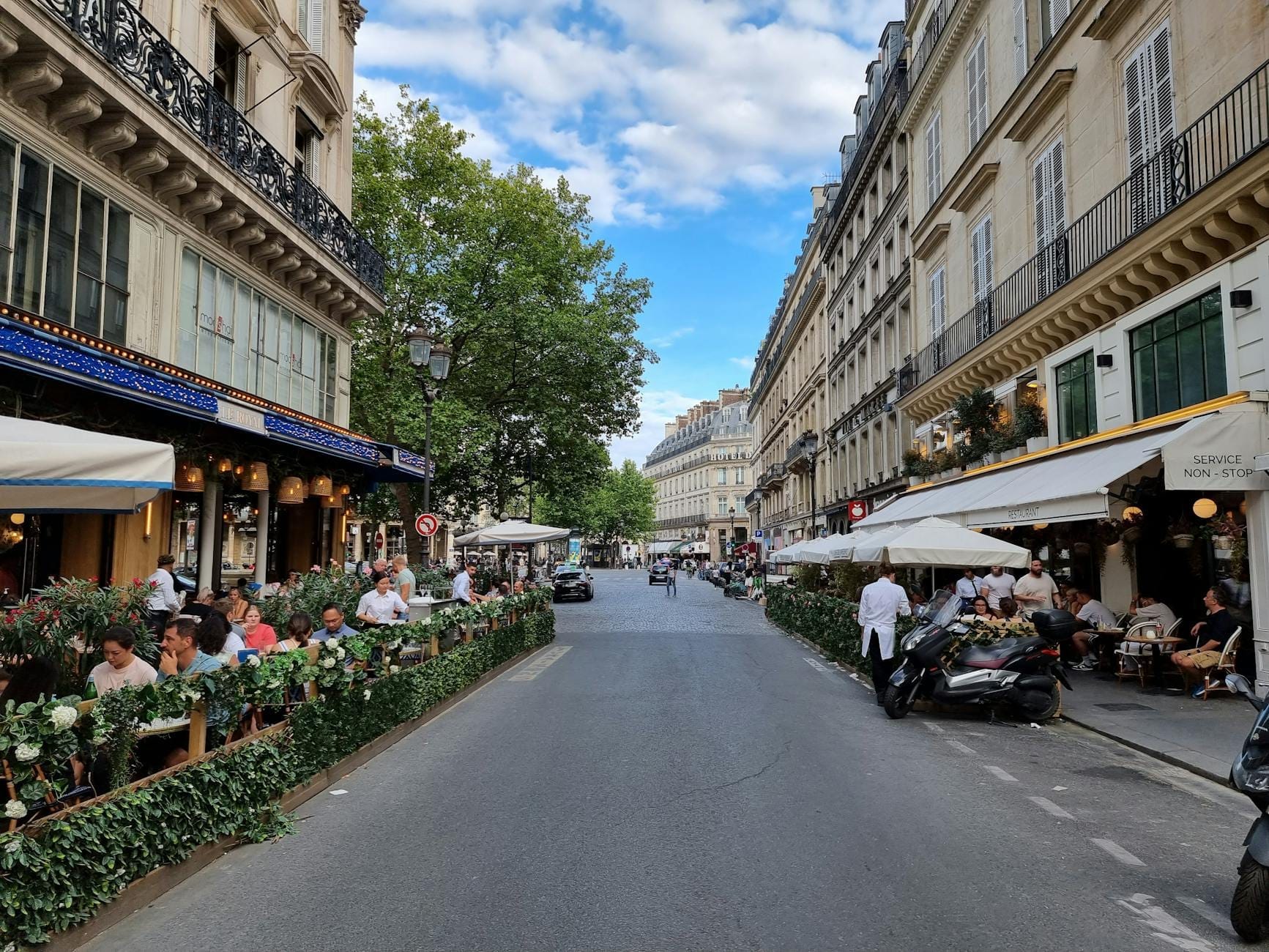
Bercy Village is an open-air leisure and shopping precinct built inside the Cour Saint-Émilion, a row of 42 white limestone wine storehouses in the eastern 12th arrondissement. The buildings are classified on the French supplementary list of Historic Monuments, and they look it: thick stone walls, heavy timber beams, and arched doorways that once received barrels from the world's largest wine market. Today those same arches frame shop windows and restaurant terraces, creating a juxtaposition that is genuinely striking rather than merely cosmetic.
The complex opened in 2000–2001 after conversion by architects who left the exterior stonework largely intact while inserting contemporary steel, wood, and glass fitments inside. The result is a single traffic-free courtyard roughly 400 metres long that most tourists on the right bank never reach. That distance from the tourist circuit is both its appeal and its limit: Bercy Village rewards a slow afternoon, not a rushed stop.
ℹ️ Good to know
Entry to Bercy Village is free. The courtyard is open daily from 11:00 AM to 11:00 PM. Shops open from 11:00 AM to 9:00 PM (Mon-Sat) or 8:00 PM (Sun); restaurants from 11:00 AM to 11:00 PM.
The Historical Weight of the Cour Saint-Émilion
For more than a century the Bercy district was the commercial heart of the French wine trade. Wine arriving by river barge from the Loire, Burgundy, and Bordeaux was unloaded at the Seine quays and moved into vast storage warehouses along what is now the Cour Saint-Émilion. At its peak the Bercy entrepôt handled millions of hectolitres annually, with négociants, coopers, and blenders operating out of the surrounding streets. The market closed in 1960 as road haulage made river logistics obsolete, and the site sat largely derelict until the city's 1990s eastern-Paris redevelopment programme brought it back to life.
The name Cour Saint-Émilion references the famous Bordeaux appellation, a direct nod to the premium wines that passed through these warehouses. The 1986 Historic Monuments classification protected the storehouses from demolition, ensuring the conversion that followed would work with the existing architecture rather than replace it. The same redevelopment also produced Parc de Bercy and the Cinémathèque Française immediately next door.
If the industrial and commercial history of Paris interests you, Bercy pairs naturally with the Musée des Arts et Métiers on the right bank, which documents France's technological heritage with the depth that Bercy Village itself does not attempt.
Tickets & tours
Hand-picked options from our booking partner. Prices are indicative; availability and final rates are confirmed when you complete your booking.
Paris Essential dinner cruise at 6.15pm
From 99 €Instant confirmationFree cancellationEiffel Tower reserved elevator entrance to 2nd floor with walking tour and Seine cruise
From 94 €Instant confirmationFree cancellationBest of Paris city tour with Eiffel Tower lunch and Seine cruise
From 144 €Instant confirmationFree cancellationBike tour of Versailles Palace with skip-the-line tickets
From 109 €Instant confirmationFree cancellation
How the Courtyard Changes Through the Day
Morning at Bercy Village, from around 10:00 to 11:00 AM, belongs almost entirely to locals: parents with pushchairs using the paved courtyard as a cut-through to Parc de Bercy, delivery vans completing their rounds before restaurants open, and the occasional early visitor photographing limestone facades in flat, soft light. The stonework catches a warm low-angle glow at this hour that disappears by noon, and the smells are of ground coffee and damp cobblestones rather than food.
Midday to early afternoon is the busiest window. Office workers from the surrounding Bercy business district fill the terraces, and the restaurants draw a steady lunch crowd from nearby Parc de Bercy and the Cinémathèque. The conversations around you are mostly in French, the pace unhurried. By 3:00 PM the lunchtime crowd disperses and the boutiques get their quietest hour, the best time to browse without pressure or background noise.
Evening changes the atmosphere most completely. Warm spotlights illuminate the stone facades from below as dusk settles, and the restaurant terraces fill again with a dinner crowd that lingers well past 10:00 PM. Several bars run until 2:00 AM on weekends, giving Bercy Village a low-key after-dark identity that contrasts sharply with the louder nightlife of the nearby Bastille area.
Shopping and Dining: What to Expect
The roughly 30 boutiques lean toward mid-market lifestyle: homewares, fashion, cosmetics, books, and a few wine and food specialists that feel appropriate given the site's history. There are no luxury flagships and no fast-fashion chains, which keeps the commercial atmosphere low-pressure. Some shops occupy single converted storehouses; others span two arches. The retail mix changes periodically, so check the official website before making Bercy Village the focus of a shopping day.
The food and drink offer is broader and more reliable than the retail. Restaurants range from casual French brasseries to Italian and Japanese concepts, with outdoor terrace seating along both sides of the courtyard. On warm evenings in June or September the terraces fill quickly after 7:30 PM. A reservation for dinner is worth making if you have a specific restaurant in mind.
For a more market-oriented food experience in the same arrondissement, Marché d'Aligre is a 15-minute bus ride away and offers fresh produce, antiques, and covered market stalls in a context that feels considerably more rooted in everyday Parisian life.
The Cinema and Free Cultural Events
The UGC Ciné Cité multiplex anchors the western end of the precinct. It screens mainstream French and international releases, with original-language showings (version originale, VO) alongside dubbed versions. Check the UGC website for the VO schedule before arriving. The cinema makes Bercy Village a practical evening destination even when the weather is poor.
Bercy Village also runs a programme of free outdoor cultural events throughout the year: summer film screenings in the courtyard, seasonal markets, and guided tours of the historic storehouses. The guided tours are the most worthwhile free activity on the site for anyone interested in the wine trade history. Dates and registration are available on the official Bercy Village website and the Paris Je t'aime tourism portal.
Getting There and Getting Around
Metro Line 14 stops directly below Bercy Village at Cour Saint-Émilion station, one of the most convenient transit connections of any attraction in Paris. Line 14 is fully automated, runs at high frequency, and connects without transfers to Châtelet, Gare Saint-Lazare, and Saint-Denis-Pleyel. The station has lifts at platform level and no gap between train and platform, making it one of the better Metro options for visitors with mobility aids or prams.
Buses 24, 109, and 111 stop at Terroirs de France, immediately in front of the main courtyard entrance. Bus 64 (Dijon-Lachambaudie stop) provides a useful connection from the Bastille area. Bercy Village is a natural add-on for anyone exploring the broader Bastille-Bercy neighbourhood, which stretches from Place de la Bastille in the west to the Seine riverbank in the south.
For drivers, 3,000 parking spaces are available across Bercy Village's own car parks and additional facilities on Rue de Bercy. Driving is rarely faster than the Metro from central Paris, but it is practical for visitors arriving from the suburbs or making a day trip from further afield.
💡 Local tip
Photography tip: The best light on the stone facades falls in the early morning (10:00–11:00 AM) and after sunset when the buildings are lit from below. Midday light is flat and the courtyard is at its most crowded.
Parc de Bercy and the Cinémathèque: Natural Companions
Parc de Bercy begins immediately behind Bercy Village and runs along the Seine for 13.5 hectares, including a working vineyard, a rose garden, and open lawns. It takes roughly 45 minutes to walk in full and is free. The Cinémathèque Française, housed in Frank Gehry's distinctive silver-panelled building next door, maintains a permanent collection on the history of cinema alongside its screening programme. Together these three sites make up a coherent half-day in eastern Paris. For broader planning, the things to do in Paris guide covers how the Bercy area fits into a wider itinerary.
Honest Assessment: Who This Is For, and Who Should Skip It
Bercy Village draws around 12 million visitors a year, but the atmosphere rarely feels that busy. The courtyard is long and open, the restaurants distribute crowds across multiple terraces, and the scale of the storehouses absorbs foot traffic well. It works particularly well for families with young children: the paved, traffic-free space is flat, safe, and easy to navigate with a pushchair.
It is less suited to visitors whose priority is deep cultural immersion or serious art. The historic architecture is real and significant, but the conversion prioritises commerce over interpretation. There is no museum-quality engagement with the wine trade history beyond a few information panels. Visitors on tight schedules who have not yet seen the major Paris attractions should plan accordingly: Bercy Village is a complement to a Paris trip, not a centrepiece.
⚠️ What to skip
Shops close around 8:00 PM. If retail browsing is your main goal, arrive well before that. Evening visits are best oriented around dining and drinks, not shopping.
Insider Tips
- Arrive on a weekday morning before noon to have the courtyard almost to yourself and catch the best natural light on the limestone facades.
- The free guided tours of the historic storehouses run periodically throughout the year. Check the Bercy Village website or the Paris Je t'aime portal for dates before your visit.
- The UGC Ciné Cité screens films in version originale (VO). Check the schedule online if you want to watch a film in its original language rather than a French dub.
- Parc de Bercy, directly behind the precinct, includes a small working vineyard. In autumn the vines turn golden and the park receives far less foot traffic than any park in central Paris.
- Metro Line 14 runs every 85 seconds at peak times and is fully automated. It is one of the fastest and most reliable Metro lines in Paris, with no transfer required from Châtelet or Gare Saint-Lazare.
Who Is Bercy Village For?
- Relaxed shoppers who prefer a calm, open-air setting over crowded department stores
- Architecture and industrial heritage enthusiasts interested in adaptive reuse
- Families with young children, thanks to the flat, traffic-free cobblestone courtyard
- Evening diners looking for terrace restaurants in an atmospheric setting without central-Paris noise levels
- Visitors building a half-day itinerary around Parc de Bercy and the Cinémathèque Française
Nearby Attractions
Other things to see while in Bastille & Bercy:
- Bibliothèque François Mitterrand (BNF)
The Bibliothèque nationale de France's François-Mitterrand site is one of Paris's boldest architectural statements: four L-shaped glass towers framing a vast sunken forest garden on the Seine. Open to visitors and readers alike, it rewards curiosity whether you come to study, see an exhibition, or simply stand on the esplanade and absorb the scale of a building that reshaped an entire district.
- Marché d'Aligre
Marché d'Aligre is one of Paris's oldest and most authentic markets, occupying Place d'Aligre in the 12th arrondissement since the late 18th century. It combines an open-air produce market, the historic covered Beauvau hall, and a small flea market into a single square that locals treat as a Saturday morning ritual rather than a tourist stop.
- Opéra Bastille
Rising above Place de la Bastille, the Opéra Bastille is one of the world's largest and most technically advanced opera houses. Whether you're attending a performance or taking a guided tour, this modernist landmark rewards curiosity at every level.
- Rue Crémieux
A 144-metre pedestrianized lane in the 12th arrondissement, Rue Crémieux is lined with pastel-painted townhouses dating to the 1860s. Free to visit and open at any hour, it rewards early risers with quiet cobblestones and vivid colour, while weekend afternoons can feel genuinely overcrowded.