Marché d'Aligre: The Market Paris Actually Shops At
Marché d'Aligre is one of Paris's oldest and most authentic markets, occupying Place d'Aligre in the 12th arrondissement since the late 18th century. It combines an open-air produce market, the historic covered Beauvau hall, and a small flea market into a single square that locals treat as a Saturday morning ritual rather than a tourist stop.
Quick Facts
- Location
- Place d'Aligre & Rue d'Aligre, 75012 Paris (12th arrondissement)
- Getting There
- Métro Line 8: Ledru-Rollin (8 min walk) or Faidherbe-Chaligny; RER A/D: Gare de Lyon; Bus 86: Crozatier stop
- Time Needed
- 45–90 minutes for a relaxed visit; longer if you plan to eat and browse the flea stalls
- Cost
- Free entry; produce and goods priced competitively — one of the more affordable markets in central Paris
- Best for
- Food lovers, self-caterers, antique hunters, and anyone wanting a genuinely local Paris morning
- Official website
- www.paris.fr/equipements/marches-alimentaires/tous-les-horaires
What Marché d'Aligre Actually Is
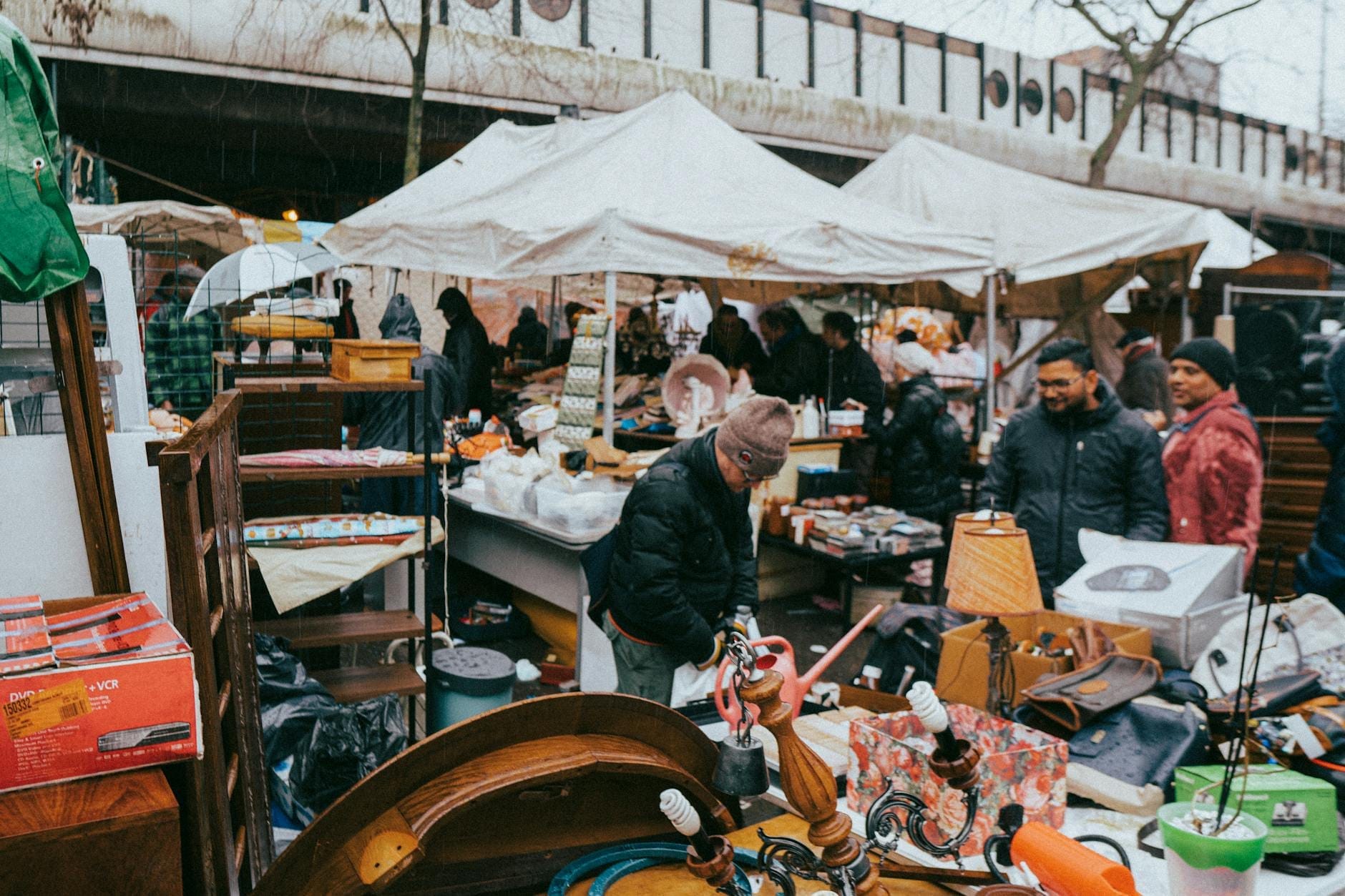
Marché d'Aligre is not one market but three overlapping ones sharing the same square in the 12th arrondissement. There is the open-air produce market on Place d'Aligre and Rue d'Aligre, where vendors set up wooden crates of vegetables, fruit, herbs, and cut flowers from early morning. There is the Beauvau covered market (Marché couvert Beauvau), a handsome 18th-century iron-and-stone hall that houses specialist food merchants: cheesemongers, butchers, fishmongers, bakers, and fine grocers. And then there is the flea market that spills along Rue d'Aligre itself, selling secondhand clothing, bric-a-brac, North African spices, vinyl records, and objects whose provenance is sometimes unclear and always interesting.
Understanding this three-part structure helps you plan the visit. If your goal is fresh food for a picnic or a self-catered apartment dinner, the open-air stalls and the covered hall are the priority. If you want to browse for vintage finds or cheap produce with a flea-market atmosphere, the Rue d'Aligre section rewards patience. Most visitors move between all three zones in a single circuit that takes no more than 90 minutes at a relaxed pace.
ℹ️ Good to know
Opening hours differ by section. Outdoor market: Tue–Fri 7:30am–1:30pm; Sat–Sun 7:30am–2:30pm; closed Monday. Covered Beauvau hall: Tue–Sat 9am–1pm and 4pm–7:30pm; Sun 9am–1:30pm. The outdoor stalls wind down noticeably after 1pm — come before noon to see the market at full capacity.
A Brief History: Revolution, Commerce, and the Beauvau Hall
The market's roots go back to the late 18th century. The covered Beauvau hall was constructed in 1843, making it one of the oldest surviving covered market structures in Paris. The market takes its name from Étienne François d'Aligre, a nobleman associated with the area during that period. Place d'Aligre sits in what was the faubourg Saint-Antoine, a working-class district that played a central role in the 1789 Revolution. Local legend holds that barricades were erected in these streets during the uprising — the same cobblestones that now hold market stalls.
That working-class character never fully disappeared. Unlike many Parisian markets that have been gentrified into expensive theatre, Aligre retained a genuinely mixed clientele through much of the 20th century, partly because the surrounding 12th arrondissement remained more residential than touristic. The arrival of North African and Middle Eastern immigrants in the area from the 1950s onward added another layer to the market's identity, visible today in the spice vendors, the dried fruit displays, and the multilingual haggling that still happens at the flea market end of the street.
Tickets & tours
Hand-picked options from our booking partner. Prices are indicative; availability and final rates are confirmed when you complete your booking.
Food tour of the Marche d'Aligre in Paris
From 70 €Instant confirmationFree cancellationParis Essential dinner cruise at 6.15pm
From 99 €Instant confirmationFree cancellationEiffel Tower reserved elevator entrance to 2nd floor with walking tour and Seine cruise
From 94 €Instant confirmationFree cancellationBest of Paris city tour with Eiffel Tower lunch and Seine cruise
From 144 €Instant confirmationFree cancellation
The Outdoor Market: Produce, Flowers, and Atmosphere
The open-air section is where the market earns its reputation for affordability. Prices here are lower than at most Paris markets of comparable quality, a fact that explains why you will see professional cooks, neighborhood residents with wheeled trolleys, and young renters from the surrounding streets all shopping side by side. The stalls stock seasonal French produce alongside imported goods: Moroccan preserved lemons, Turkish figs, crates of overripe tomatoes sold cheaply for sauce-making, and bunches of herbs priced per handful rather than per gram.
The sensory experience is direct and unfiltered. Vendors call out to passing shoppers in French, Arabic, and occasionally broken English. The smell shifts from wet earth and cut greens near the vegetable stalls to something sweeter and floral closer to the flower sellers. The ground is often damp from washing down crates, and the narrow passages between stalls require patience on weekend mornings when foot traffic thickens considerably.
On Saturday mornings between 9am and noon, the square reaches its peak intensity. If you prefer a calmer experience with equally good stock, Tuesday and Wednesday mornings are noticeably quieter. For the full social spectacle of a Parisian market morning, Saturday is worth tolerating the crowds. Pair it with a visit to the broader Bastille and Bercy neighborhood and you have the foundation of an excellent half-day itinerary.
Inside the Beauvau Hall: The Covered Market
Step through the doors of the Beauvau hall and the temperature drops, the light changes, and the noise from the square outside becomes a background murmur. The building is a proper mid-19th-century market structure with cast-iron pillars, a high roof that lets in diffuse light, and a permanent roster of specialist traders who have occupied their stalls for years, in some cases for generations.
The quality inside skews higher than the outdoor stalls. The fromagerie carries a serious selection of aged and fresh cheeses. The bakery produces proper sourdough loaves and viennoiseries. Butchers here stock cuts beyond the supermarket standard, and the fishmonger displays whole fish on ice with the sort of eye contact that suggests they will judge your cooking plans. If you are assembling a serious picnic or planning to cook, the covered hall gives you everything you need in one compact circuit.
The covered hall keeps afternoon hours on weekdays (4pm–7:30pm), which means it is the only part of the Aligre complex accessible after lunch on a Tuesday through Friday. This makes it a practical stop for those who cannot arrive in the morning — though the energy in the afternoon is quieter and more transactional than the sociable weekend rush.
💡 Local tip
Photography tip: The Beauvau hall's iron structure and natural overhead light make for strong interior shots, especially in the first hour after opening on weekend mornings when sunlight still comes in at an angle. Ask vendors before photographing them directly — most are accommodating if you make eye contact and smile first.
The Flea Market on Rue d'Aligre
The street-level flea market runs along Rue d'Aligre and operates on the same schedule as the outdoor produce market. It is small by flea market standards — nothing like the vast Saint-Ouen flea market to the north — but it has a specific character worth noting. Stalls lean heavily toward household goods, secondhand clothing, vintage kitchenware, and African or Middle Eastern textiles and spices. Prices are low and negotiation is standard practice, though aggressive bargaining is not the local custom.
Serious antique hunters may find this section underwhelming; the goods are more flea market than antique fair. For comparison, the Saint-Ouen flea market is the destination for genuine antiques and higher-end vintage. Aligre's flea market is better understood as an extension of the neighborhood's mixed-income character than as a curated shopping experience.
Getting There, Getting Around, and Practical Details
The market is straightforward to reach by public transport. The most direct Métro option is Line 8 to Ledru-Rollin, from which the market is about an 8-minute walk southeast. Faidherbe-Chaligny (also Line 8) is a comparable distance from the other direction. The RER A and D stop at Gare de Lyon, from which the walk is around 15 minutes or you can connect to Bus 86 and alight at the Crozatier stop. Entry to the market itself is free; bring cash for purchases, as many of the outdoor vendors and flea market traders do not accept cards.
The market sits in a residential corner of the 12th arrondissement, two arrondissements east of the more tourist-heavy Bastille area. If you are exploring the broader neighborhood, you can combine the market with a walk along the Promenade Plantée, the elevated garden walkway that begins nearby at the Opéra Bastille end and continues east above Rue de Lyon. The two make a natural morning pairing: market first, then a quieter elevated walk above the city.
⚠️ What to skip
The market is closed every Monday without exception. Arrive before 1pm on weekdays or before 2pm on weekends to see it properly. Arriving after 1:30pm on a weekday means the outdoor stalls will be packing up or already gone.
Accessibility is limited by the nature of the market. The outdoor square and covered hall are navigable at ground level, but the narrow passages between produce stalls on busy mornings can be difficult with a wheelchair or pushchair. The covered Beauvau hall itself has a flat stone floor without steps at the main entrance. Cobblestones on the square and wet surfaces are a factor in wet weather — wear flat, closed shoes.
Honest Assessment: Who This Market Is For (and Who Should Skip It)
Marché d'Aligre rewards visitors who want the market to feel like a functional part of a neighborhood rather than a curated attraction. It is not polished. Stalls are not uniformly beautiful, the square is not designed for photography, and the atmosphere is shaped by commerce and local routine rather than by tourism. That is precisely what makes it interesting.
Travelers looking for a photogenic, perfectly styled market experience should know that Rue Mouffetard in the 5th arrondissement has more visual polish, though it is also more expensive and more tourist-facing. Aligre is better for those who want to buy actual food at fair prices, watch Paris residents do their weekly shopping, and leave with a basket full of things they will actually eat.
Travelers on very tight time schedules should note that there is not a long list of things to see here. The market is the thing. If you are not interested in food, produce, or the social dynamics of a neighborhood square, 45 minutes will feel sufficient and possibly more than enough. But if food culture is a reason you travel, Aligre is the kind of market that stays with you.
For a broader picture of Paris's outdoor food and social culture, the parks and gardens guide pairs well with a market morning — several of the 12th arrondissement's quiet green spaces are within walking distance for a post-market rest. Or if you are thinking about a full food-focused day, the where to eat in Paris guide can help you build an itinerary around the neighborhood's bistros and wine bars.
Insider Tips
- The stalls with the longest queues of older local women are almost always the best value on produce. If a vendor has a line of regulars, that is not a reason to avoid them — it is a reason to join.
- The covered Beauvau hall's afternoon hours (4pm–7:30pm, Tue–Fri) are almost never mentioned in travel guides. If you cannot do mornings, this is your window — quieter and with none of the crowds.
- Bring a canvas shopping bag or a wheeled trolley if you plan to buy seriously. There are no market bags for sale, and juggling multiple paper cones of tomatoes while browsing the flea stalls is as difficult as it sounds.
- The cafés and wine bars on the edges of Place d'Aligre open early on weekend mornings and fill with market vendors and shoppers taking a break. A glass of wine at 11am at a terrace table while watching the market square is an entirely normal thing to do here.
- If you buy fish or meat from the covered hall and are cooking the same day, ask vendors directly for cooking advice. Many are forthcoming with suggestions — and in a market of this age and character, the recommendations are usually sound.
Who Is Marché d'Aligre For?
- Self-catering travelers who want to cook with fresh, affordable seasonal French produce
- Food enthusiasts looking for an authentic neighborhood market rather than a tourist-facing spectacle
- Antique and secondhand browsers who enjoy low-stakes flea market hunting
- Travelers interested in the social and cultural layers of a working Parisian neighborhood
- Early risers who want a local start to a day exploring the Bastille and 12th arrondissement
Nearby Attractions
Other things to see while in Bastille & Bercy:
- Bercy Village
Bercy Village transforms 42 stone wine storehouses, classified as Historic Monuments, into a pedestrian-only courtyard of boutiques, restaurants, and terraces in the 12th arrondissement. Free to enter and open daily, it draws around 12 million visitors a year yet feels quieter and more local than much of central Paris.
- Bibliothèque François Mitterrand (BNF)
The Bibliothèque nationale de France's François-Mitterrand site is one of Paris's boldest architectural statements: four L-shaped glass towers framing a vast sunken forest garden on the Seine. Open to visitors and readers alike, it rewards curiosity whether you come to study, see an exhibition, or simply stand on the esplanade and absorb the scale of a building that reshaped an entire district.
- Opéra Bastille
Rising above Place de la Bastille, the Opéra Bastille is one of the world's largest and most technically advanced opera houses. Whether you're attending a performance or taking a guided tour, this modernist landmark rewards curiosity at every level.
- Rue Crémieux
A 144-metre pedestrianized lane in the 12th arrondissement, Rue Crémieux is lined with pastel-painted townhouses dating to the 1860s. Free to visit and open at any hour, it rewards early risers with quiet cobblestones and vivid colour, while weekend afternoons can feel genuinely overcrowded.