Best Parks & Gardens in Paris: A Complete Guide
Paris has over 400 parks and gardens, ranging from formal French-style classics to wild woodland escapes. This guide covers the best green spaces across the city, with practical details on what to expect, when to go, and how to get the most out of each one.
Plan and book this trip
Tools from our partner Travelpayouts help you compare flights and hotels. If you book through them, we may earn a commission at no extra cost to you.
Flights
Hotels map
TL;DR
- Nearly all Paris parks and gardens are free to enter; exceptions include the greenhouses and zoo enclosures at Jardin des Plantes.
- Spring (April to June) is the best time to visit, with flowers in bloom and long daylight hours; see our best time to visit Paris guide for full seasonal breakdowns.
- Jardin du Luxembourg and Jardin des Tuileries are the most iconic, but Parc des Buttes-Chaumont and Bois de Vincennes offer far more space and a local atmosphere.
- Most large parks open at 7 a.m. on weekdays and 8 a.m. on weekends, with extended summer hours from late April through late September.
- Avoid arriving at the Tuileries or Luxembourg on a sunny Saturday afternoon in July — both get extremely crowded by midday.
Why Paris Parks Are Worth Your Time
Paris covers just 105 square kilometres, making it one of the most densely populated capitals in Europe. Green space is not a luxury here — it is a deliberate, centuries-old feature of the city's design. The best parks and gardens in Paris range from the perfectly manicured, symmetrical formality of Jardin des Tuileries (a masterpiece by royal landscape architect André Le Nôtre) to the deliberately romantic, rocky cliffs of Parc des Buttes-Chaumont in the 19th arrondissement.
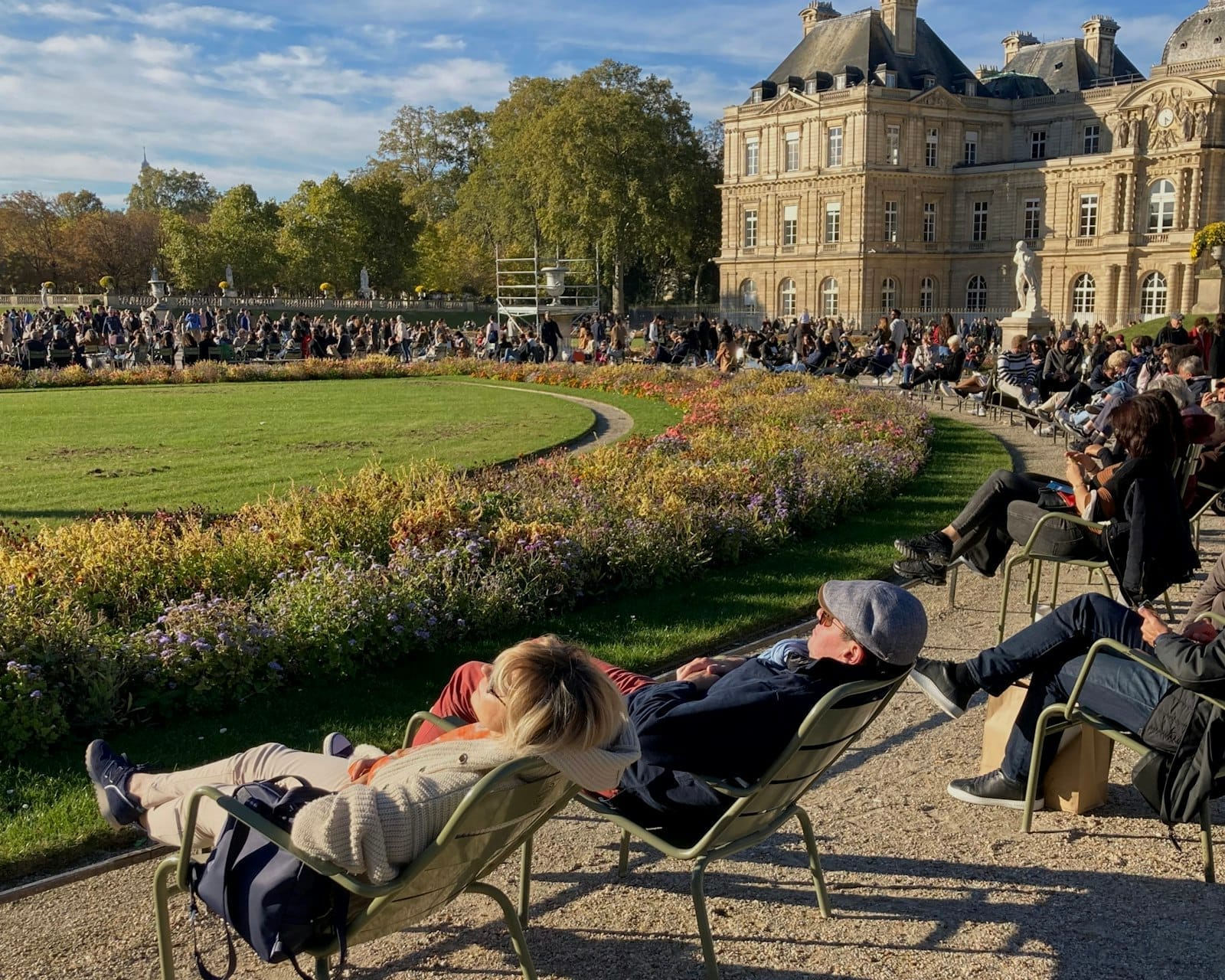
What makes Paris green spaces unusual is how actively they are used. On any weekday morning, you will find Parisians jogging the gravel paths of the Luxembourg, reading on iron chairs beside the Medici Fountain, or playing pétanque in the corners of neighbourhood squares. This is not a city where parks are decorative afterthoughts. They are part of daily life, and visiting them properly gives you access to a side of Paris that the standard tourist circuit rarely reaches.
ℹ️ Good to know
Paris parks follow different seasonal schedules. The city officially implements summer opening hours (with some gates opening as early as 7 a.m. on weekdays) for the period April 28 to September 30. Check paris.fr for the specific schedule of any garden you plan to visit.
The Most Famous Gardens: Tuileries and Luxembourg
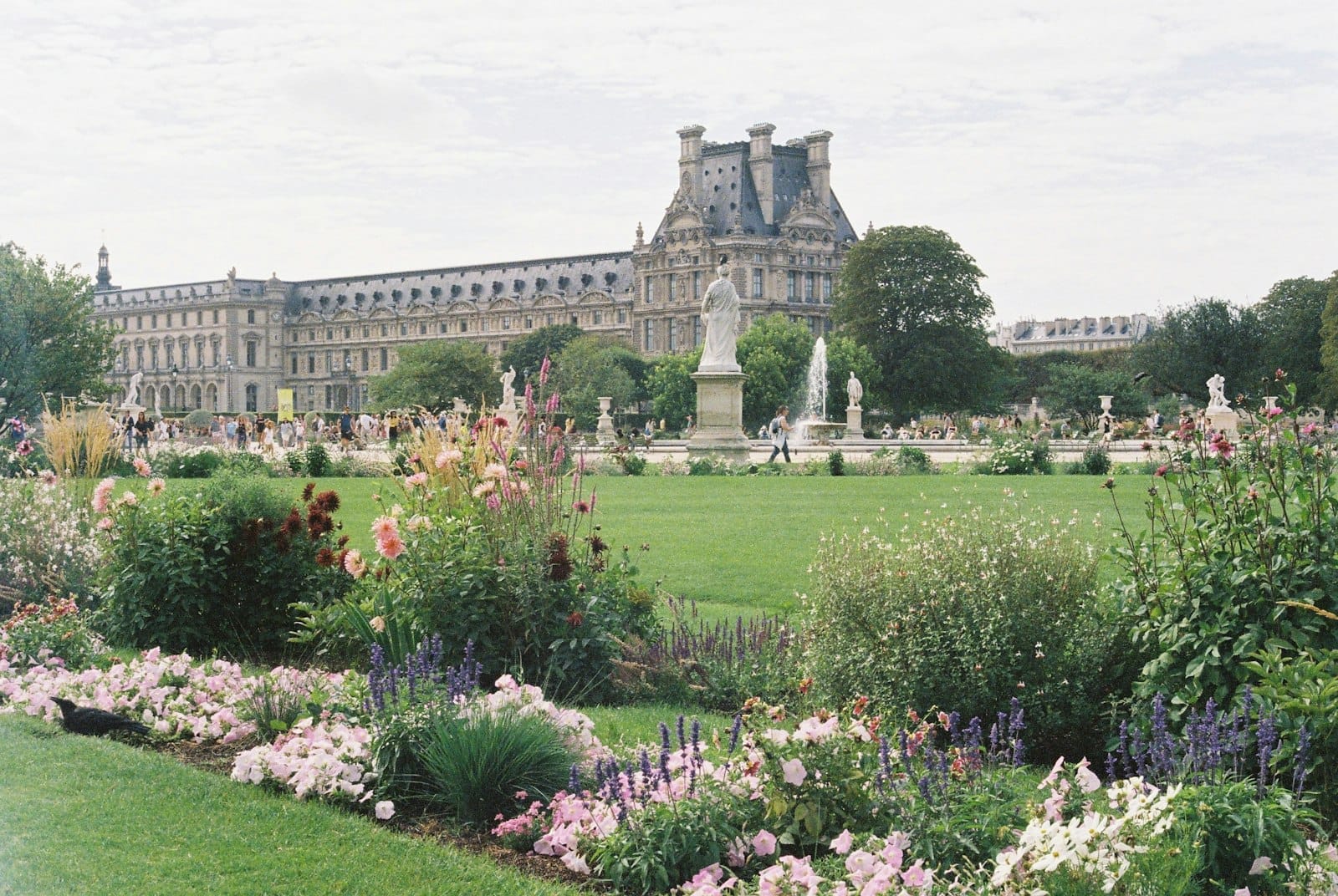
The Jardin des Tuileries sits between the Louvre and Place de la Concorde, occupying a prime strip of the Right Bank that has been a public garden since 1667. Le Nôtre's design is unmistakable: long axial paths, geometric flowerbeds, clipped trees, and reflecting pools. Two things make this garden genuinely worthwhile beyond its photogenic appeal. The Orangerie museum sits at its western end, housing Monet's Water Lilies murals in purpose-built oval rooms — one of the most underrated art experiences in Paris. The garden also has a seasonal funfair, a merry-go-round for children, and a boating lake where kids can rent toy wooden sailboats.
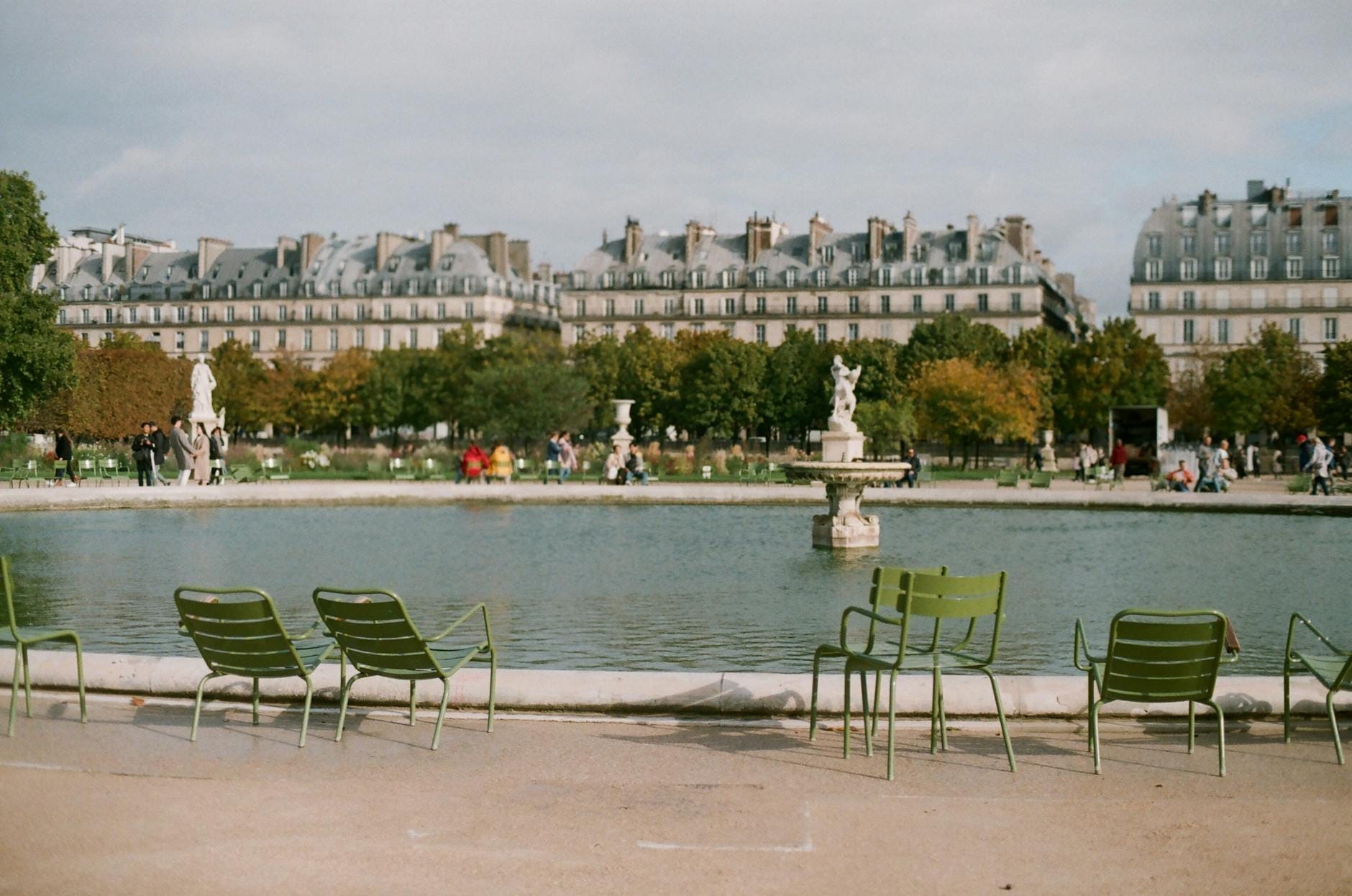
Jardin du Luxembourg, run by the French Senate and covering around 25 hectares (60 acres) in the 6th arrondissement, is the more beloved of the two among Parisians. The central octagonal pond is its heart — green metal chairs ring the edge, and children rent small wooden sailboats to nudge across the water with long poles. There are pony rides, a puppet theatre (Théâtre des Marionnettes du Jardin du Luxembourg), beehives, an orchard, and more than 100 statues scattered through the grounds. It connects naturally to the literary atmosphere of Saint-Germain-des-Prés, just a few minutes' walk north.
⚠️ What to skip
Both the Tuileries and Luxembourg gardens lose much of their appeal in winter. Bare trees, empty fountains, and grey skies make them feel hollow between December and February. If you are visiting in winter, prioritise the covered greenhouses at Jardin des Plantes or an indoor museum instead.
Jardin des Plantes: Science, Nature, and a Real Zoo
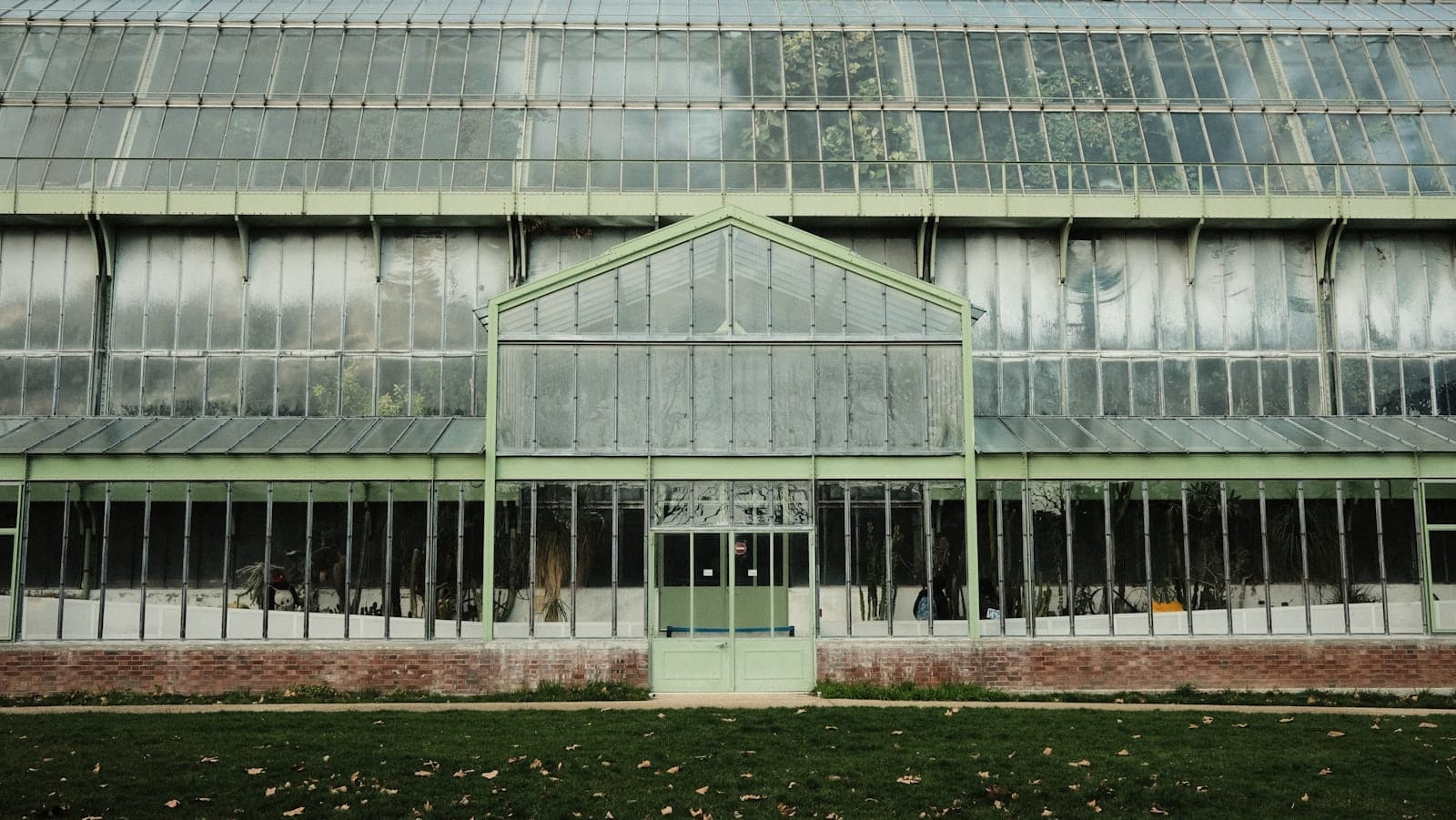
The Jardin des Plantes in the 5th arrondissement is Paris's oldest botanical garden, founded in 1626 as a medicinal herb garden for Louis XIII. It now covers 25 hectares and contains a full zoological park (La Ménagerie du Jardin des Plantes, one of the world's oldest zoos), several natural history museums, and a series of large greenhouses showcasing tropical and arid ecosystems.
This is the only major Paris green space where you should budget for ticket costs. The zoo and greenhouses both charge entry (prices vary by attraction — verify current rates at mnhn.fr before visiting). The zoo holds a particular conservation significance: it has served as a refuge for endangered species and maintains breeding programs for several rare animals. It is compact by modern zoo standards, which makes it walkable in 90 minutes, but the enclosures reflect an older design philosophy that is not to everyone's taste. For families with children under 12, the combination of the garden, zoo, and a quick stop at the natural history galleries can fill a full morning comfortably.
Beyond the Postcard Parks: Buttes-Chaumont, Montsouris, and Vincennes
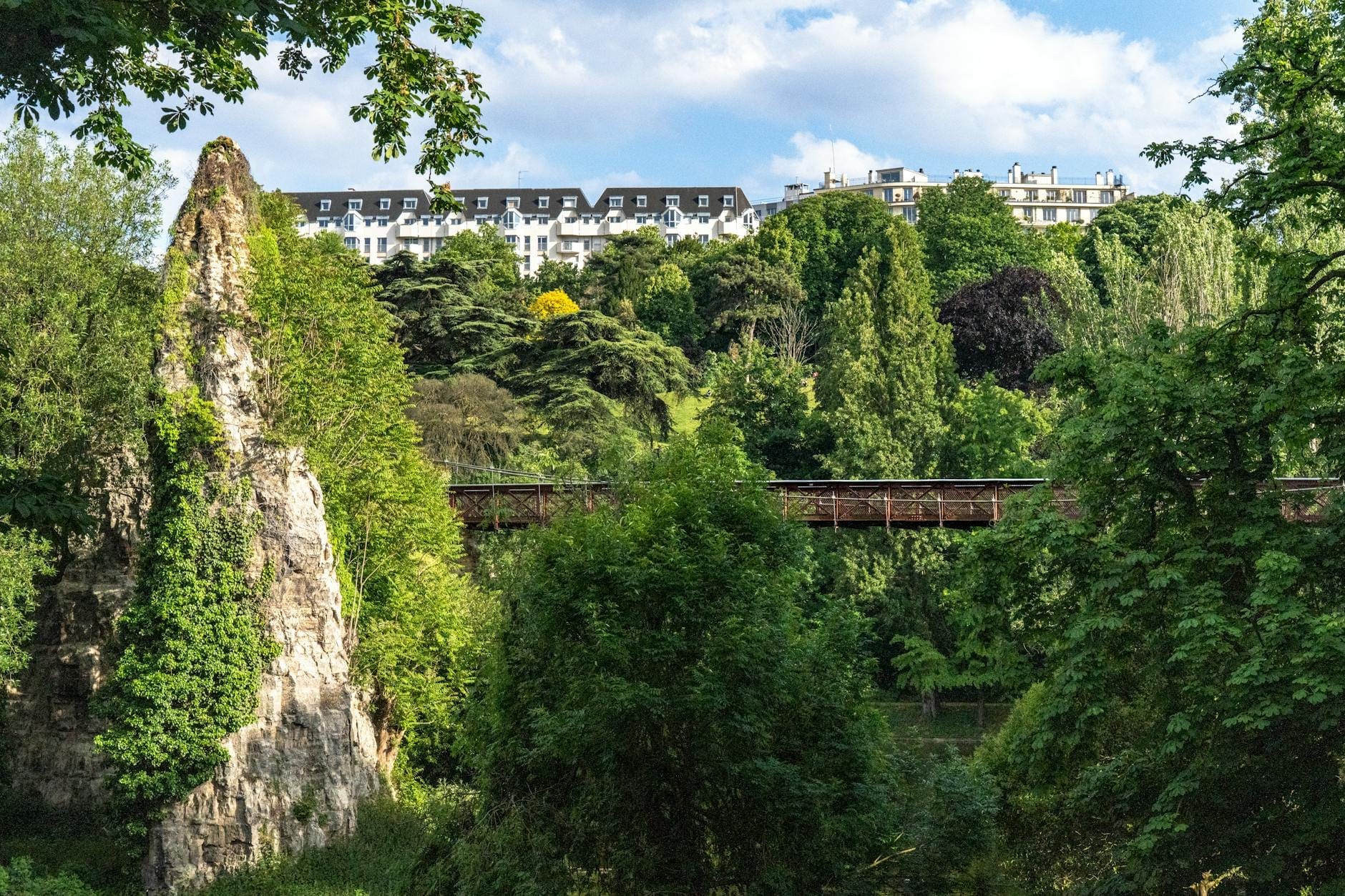
If the Luxembourg and Tuileries are the Paris that visitors expect, Parc des Buttes-Chaumont is the Paris that actually surprises people. Built on the site of a former gypsum quarry and rubbish dump in the 19th arrondissement, it opened in 1867 under Haussmann's urban renovation program. The terrain is dramatically uneven: there are steep hills, a central lake, a suspension bridge, a Roman-style temple perched on a rocky island, and cliff faces up to 50 metres high. It is the closest thing Paris has to a landscape park in the English tradition, and the local neighbourhood gives it a genuinely non-touristy atmosphere.
In the south, Parc Montsouris serves the 14th arrondissement in a similar role: English-landscape style, a large lake, rolling lawns, and tree-shaded paths that feel miles from the city centre. It borders the Cité Internationale Universitaire, giving it a youthful, relaxed energy on weekday afternoons. Neither park makes it onto most tourist itineraries, which is precisely why they are worth seeking out.
For pure scale, nothing in Paris compares to the Bois de Vincennes to the east. Covering roughly 1,000 hectares, it is the largest public green space in the Paris city limits. It contains four lakes, a Buddhist temple, a horse racing track (Hippodrome de Vincennes), a floral park (Parc Floral de Paris), and the medieval Château de Vincennes on its northern edge. Reaching it via Métro Line 1 (Château de Vincennes station) takes about 20 minutes from the city centre. The Bois is best visited on a weekday morning if you want genuine quiet; weekend afternoons draw large crowds of Parisian families.
- Parc des Buttes-Chaumont (19th arr.) Rocky hills, suspension bridge, lake, and temple island. Best for a long walk or picnic. Open from 7 a.m. year-round. Free entry.
- Parc Montsouris (14th arr.) English-style landscape park near the Cité Universitaire. Peaceful, local atmosphere. Open from 7 a.m. on weekdays. Free entry.
- Bois de Vincennes (12th arr.) Paris's largest green space at nearly 1,000 hectares. Lakes, cycling paths, floral park. Métro Line 1 to Château de Vincennes. Free to enter the woodland; Parc Floral charges seasonal entry.
- Champ de Mars (7th arr.) The long lawn stretching south from the Eiffel Tower. Best for picnics with a view, though heavily patrolled and not ideal for ball games. Free entry.
- Parc de la Villette (19th arr.) Modern park surrounding the science museum complex. Features themed gardens, a concert meadow, and children's play areas. Particularly good for families.
Champ de Mars and the Palais Royal: Parks with Iconic Backdrops
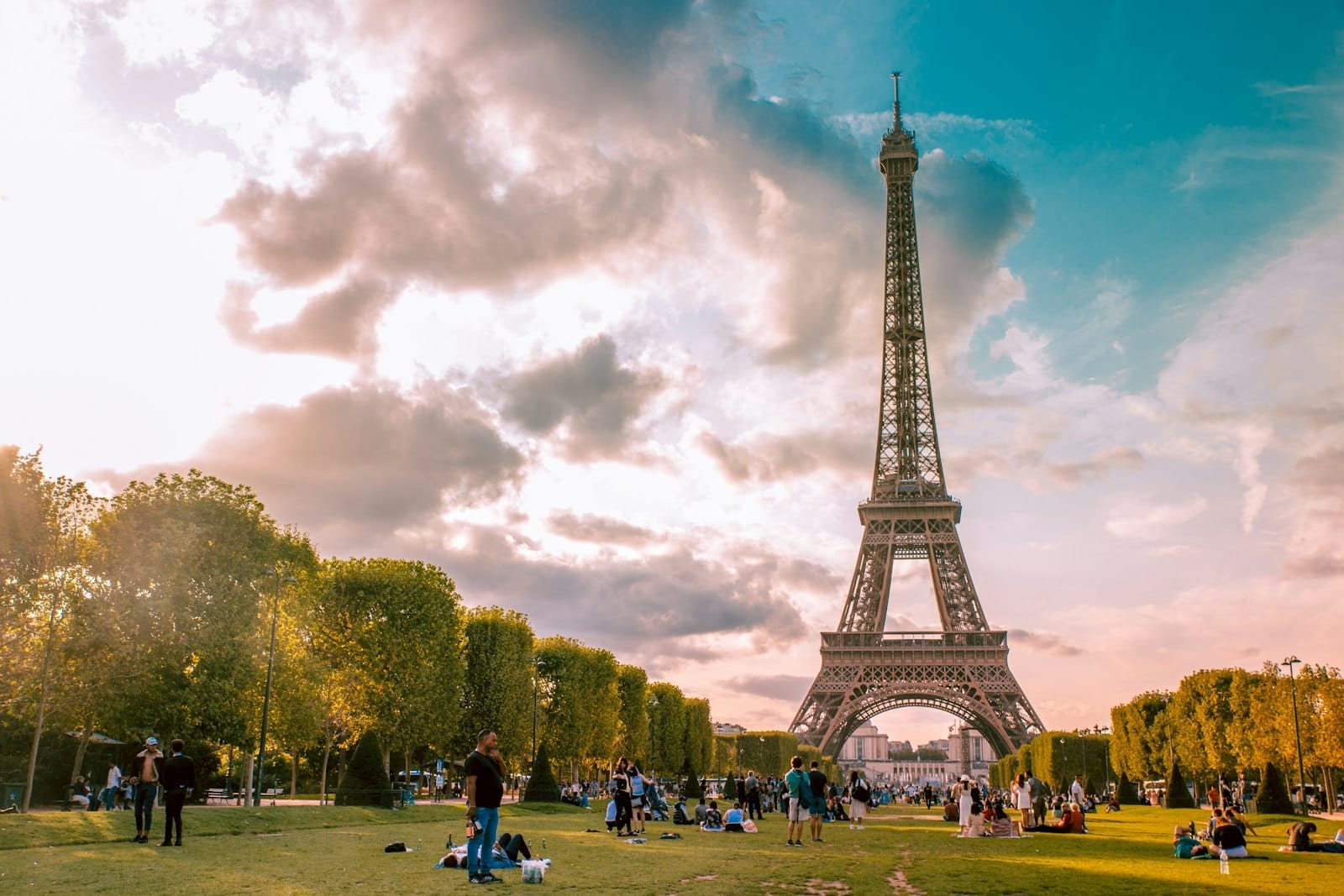
The Champ de Mars is less a garden than a ceremonial lawn, stretching 780 metres from the Eiffel Tower to the École Militaire. It is the default location for summer picnics under the tower, and on clear evenings the light display at the top draws large crowds at 10 p.m. (summer) and 8 p.m. (winter). Practically speaking, the Champ de Mars is best enjoyed in the morning, before the crowd of tour groups arrives. Pickpocketing around its perimeter is a real concern — keep bags secured.
The gardens of the Palais Royal in the 1st arrondissement offer a completely different experience: a formal, enclosed garden surrounded by arcaded galleries housing galleries, restaurants, and specialist shops. It is quieter than the Tuileries, feels more intimate, and the Daniel Buren striped columns in the courtyard make it one of the more photographed spots in Paris. Worth 30 minutes on any itinerary that includes the Louvre, just a five-minute walk away.
Practical Information: Hours, Prices, and Best Visiting Times
The overwhelming majority of Paris parks and gardens charge no entry fee. This is one of the genuinely great things about spending time outdoors in the city. The main exceptions are specific attractions within the parks: the zoo and greenhouses at Jardin des Plantes, the Parc Floral de Paris inside Bois de Vincennes (small seasonal charge), and any temporary exhibitions held in park orangeries or pavilions.
Guided group tours of Paris parks are available through the city's official service. Rates as of 2025 are around €198 for a full-price group booking (maximum 30 people, 1.5 to 2 hours), with a reduced rate of approximately €132, and a surcharge of roughly €55 for Sunday, public holiday, or evening sessions after 6 p.m. These are not tours you would book as an individual traveller — they are designed for organised groups. For independent visitors, the parks are entirely self-guided, and most have free maps at the main entrances.
- Most parks open at 7 a.m. on weekdays and 8 a.m. on weekends year-round.
- Summer hours (April 28 to September 28, 2025) extend access at some gates from as early as 7 a.m. daily.
- Closing times vary seasonally from around 5:30 p.m. in winter to 9:30 p.m. in summer.
- April to June is the best window: flowers in bloom, manageable crowds, temperatures between 12°C and 20°C.
- July and August are warm and sunny but very crowded at the iconic gardens; consider arriving before 9 a.m.
- Autumn (September to November) brings good colour at Bois de Vincennes and Buttes-Chaumont, with noticeably thinner crowds.
✨ Pro tip
The Medici Fountain in Jardin du Luxembourg is one of the most serene spots in the city — a long, shaded reflecting pool flanked by plane trees and a baroque sculptural group at one end. Visit on a weekday morning before 9 a.m. and you may have it almost entirely to yourself. It is not well-signposted from the main entrances, so follow the eastern edge of the garden from the Rue de Médicis gate.
If you are planning a broader Paris trip and want to structure your time efficiently, the Paris 3-day itinerary pairs several of the major gardens with nearby attractions. The Tuileries links naturally with the Louvre and Musée de l'Orangerie; Luxembourg sits beside the Latin Quarter and Saint-Germain; Buttes-Chaumont combines well with a morning in Canal Saint-Martin and Belleville.
FAQ
Are Paris parks free to enter?
Yes, almost all Paris parks and gardens are free. The main exceptions are the zoo and greenhouses inside Jardin des Plantes, and the Parc Floral de Paris in the Bois de Vincennes, which charges a small seasonal fee. Versailles gardens are technically free on most days but the Palace charges separately — it is outside the city limits.
What is the best park in Paris for families with children?
Jardin du Luxembourg is the most popular choice, with toy sailboats on the central pond, pony rides, a puppet theatre, and dedicated play areas. Jardin des Plantes is good if your children want to see animals — the compact zoo on site is walkable in under two hours. For older children who want space to run, Parc des Buttes-Chaumont with its hills and lake is a better option.
When is the best time to visit Paris parks?
April through June is ideal: spring flowers are out, temperatures are comfortable (12–20°C), and the summer crowds have not yet arrived. September and October offer golden-leaf scenery at woodland parks like Bois de Vincennes. Avoid Saturday and Sunday afternoons at Luxembourg and the Tuileries in July — both can feel uncomfortably packed.
Can you picnic in Paris parks?
Yes, picnicking is widely accepted across Paris parks. The Champ de Mars under the Eiffel Tower is the most famous spot. Jardin du Luxembourg and Parc des Buttes-Chaumont are also popular. Note that Luxembourg prohibits lying on most lawns, though specific grass areas are designated for sitting. Bois de Vincennes has the most open space for a proper spread.
How do I get to Parc des Buttes-Chaumont?
Take Métro Line 7bis to Botzaris or Buttes-Chaumont stations, or Line 5 to Jaurès and walk 10 minutes northeast. The park is in the 19th arrondissement, roughly 30 minutes by Métro from central Paris. It is not on the standard tourist circuit, so the journey itself gives you a sense of the city beyond the historic core.