Canal Saint-Martin and Belleville together form one of Paris's most compelling zones for travelers who want the city without the performance of tourism. The canal corridor through the 10th arrondissement trades grand monuments for iron footbridges, lock-side terraces, and independent boutiques, while Belleville, spreading across four arrondissements to the northeast, delivers a street art scene, a genuine Chinatown, and some of the best cheap eats in the city.
Canal Saint-Martin is where Parisians go to have the afternoon they actually want: a bench beside a lock, a cold drink, and nowhere in particular to be. Belleville, rising just northeast, is rougher-edged and more cosmopolitan, a neighborhood still shaped by waves of immigration and an art scene that refuses to move indoors.
Orientation
Canal Saint-Martin occupies the eastern side of the 10th arrondissement, running roughly 4.5 kilometres from the Bassin de la Villette in the north to the Port de l'Arsenal near Bastille. The canal's surface follows Quai de Jemmapes on the east bank and Quai de Valmy on the west, but the southern third disappears underground, tunnelled beneath Boulevard Richard-Lenoir to Place de la Bastille. Travellers who walk south expecting continuous water will find only a tree-lined boulevard. The visible section, between Rue de la Grange-aux-Belles and the Bassin, is the one worth your time.
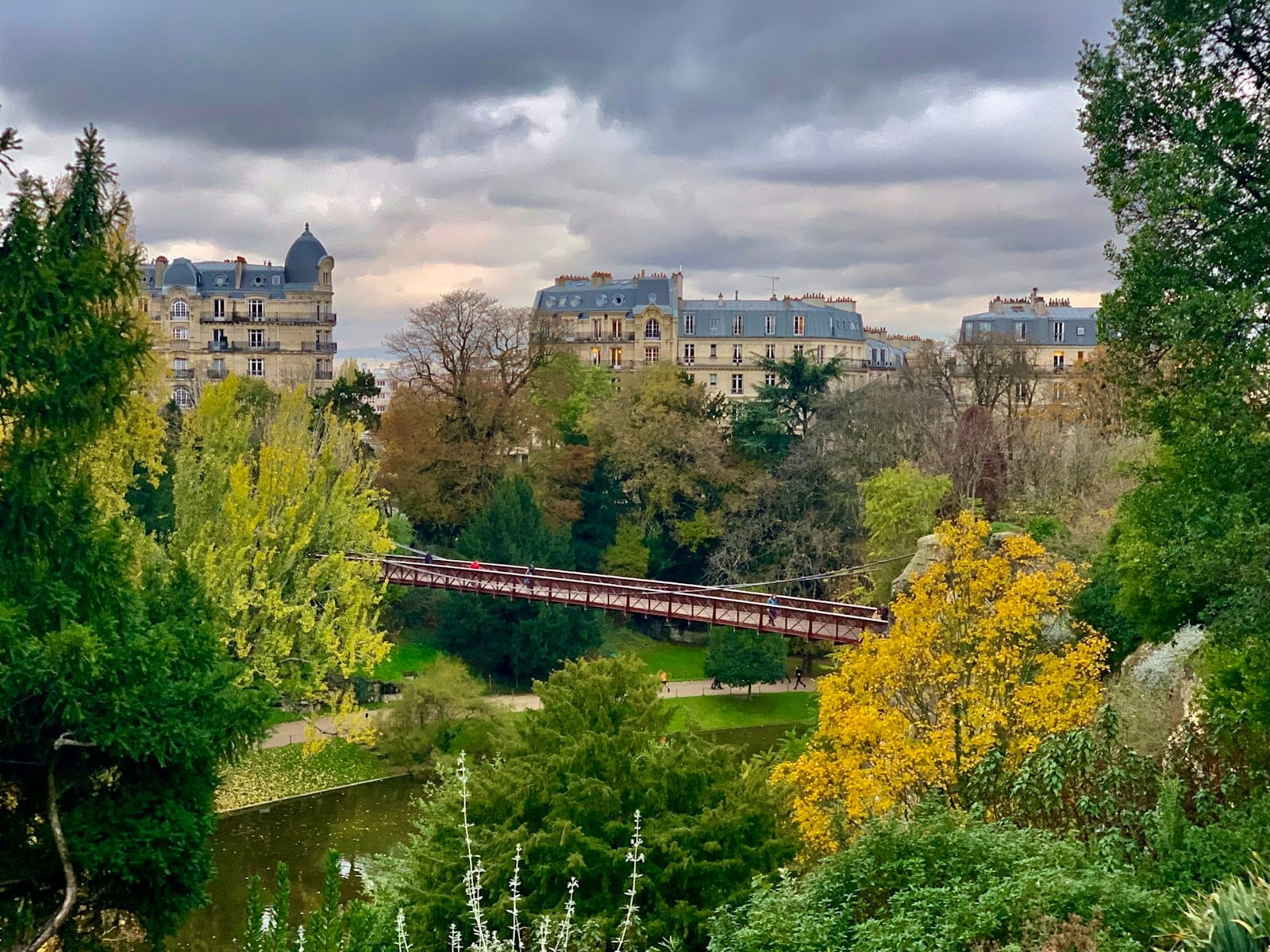
From the canal, the natural path northeast leads up Rue du Faubourg du Temple and into Belleville, a neighbourhood whose boundaries are genuinely contested. The Belleville Métro station sits at the junction of four arrondissements: the 10th, 11th, 19th, and 20th. Most visitors experience Belleville as the stretch along Boulevard de Belleville and the streets climbing uphill from it, particularly Rue Dénoyez and Rue Ramponeau. Further north, the neighbourhood transitions toward Parc des Buttes-Chaumont, one of Paris's most dramatic parks, whose rocky outcrops and suspension bridge feel nothing like the manicured gardens of the city's more famous green spaces. Père-Lachaise cemetery marks the southeastern boundary. The whole zone is bounded loosely by République to the west and La Villette to the north, making it a logical extension of a day that also takes in the Canal Saint-Martin waterway.
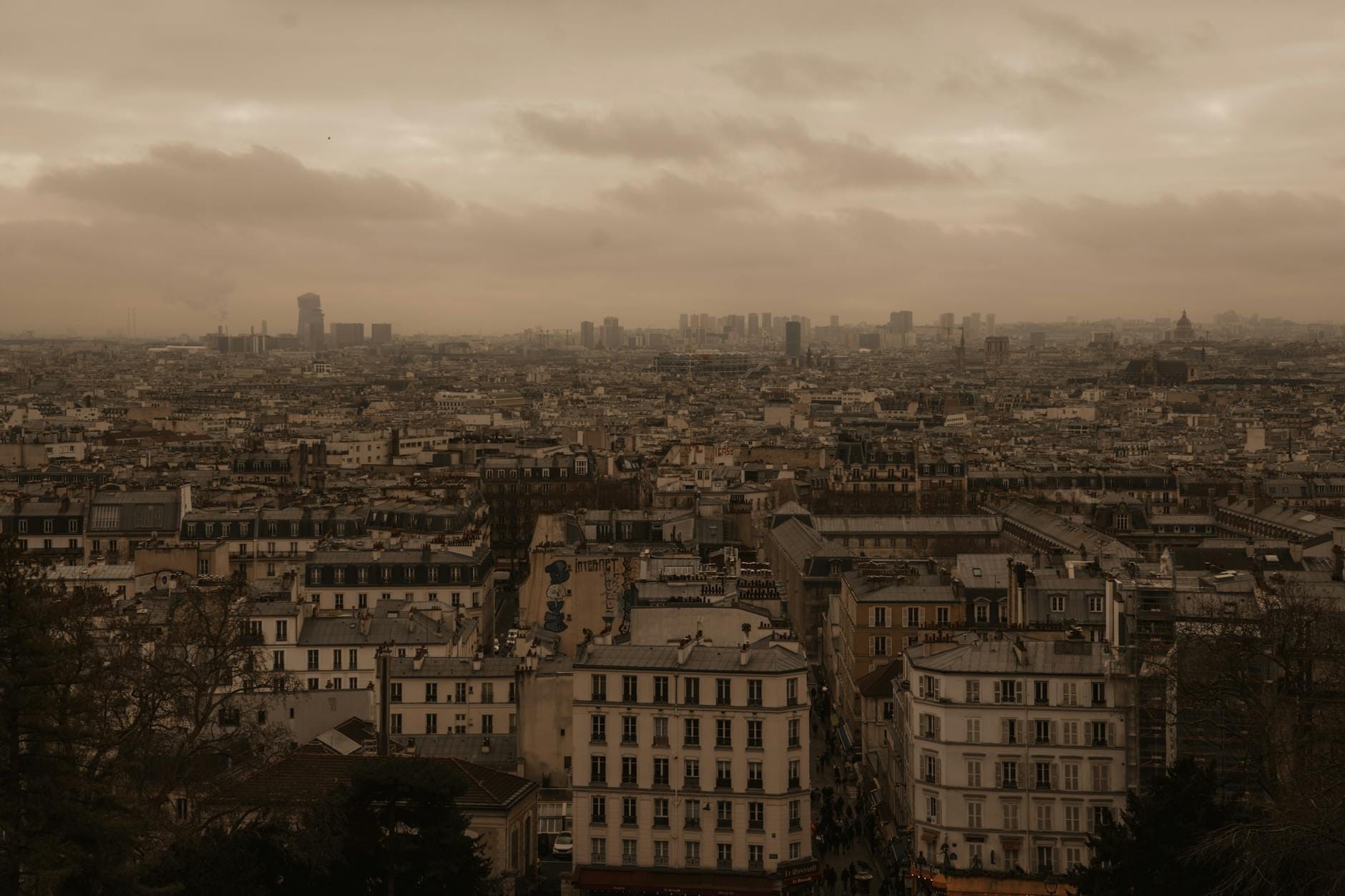
Geographically, this area sits on the northeastern plateau. Streets that feel flat along the canal begin to slope noticeably as you move into Belleville, and the elevation pays off: from Belleville Park, the Sacré-Cœur sits to the northwest and the Eiffel Tower marks the horizon to the southwest.
Character & Atmosphere
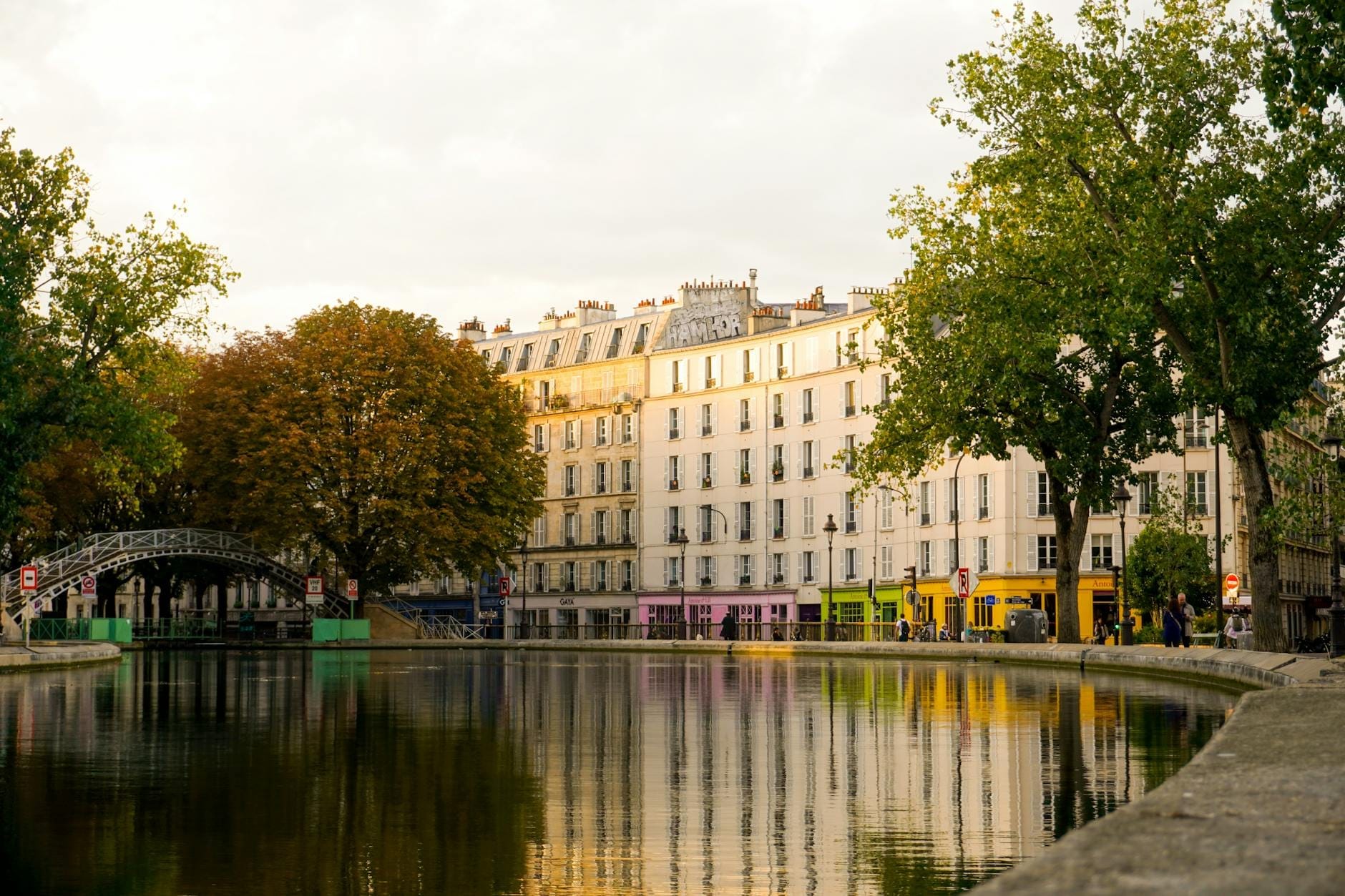
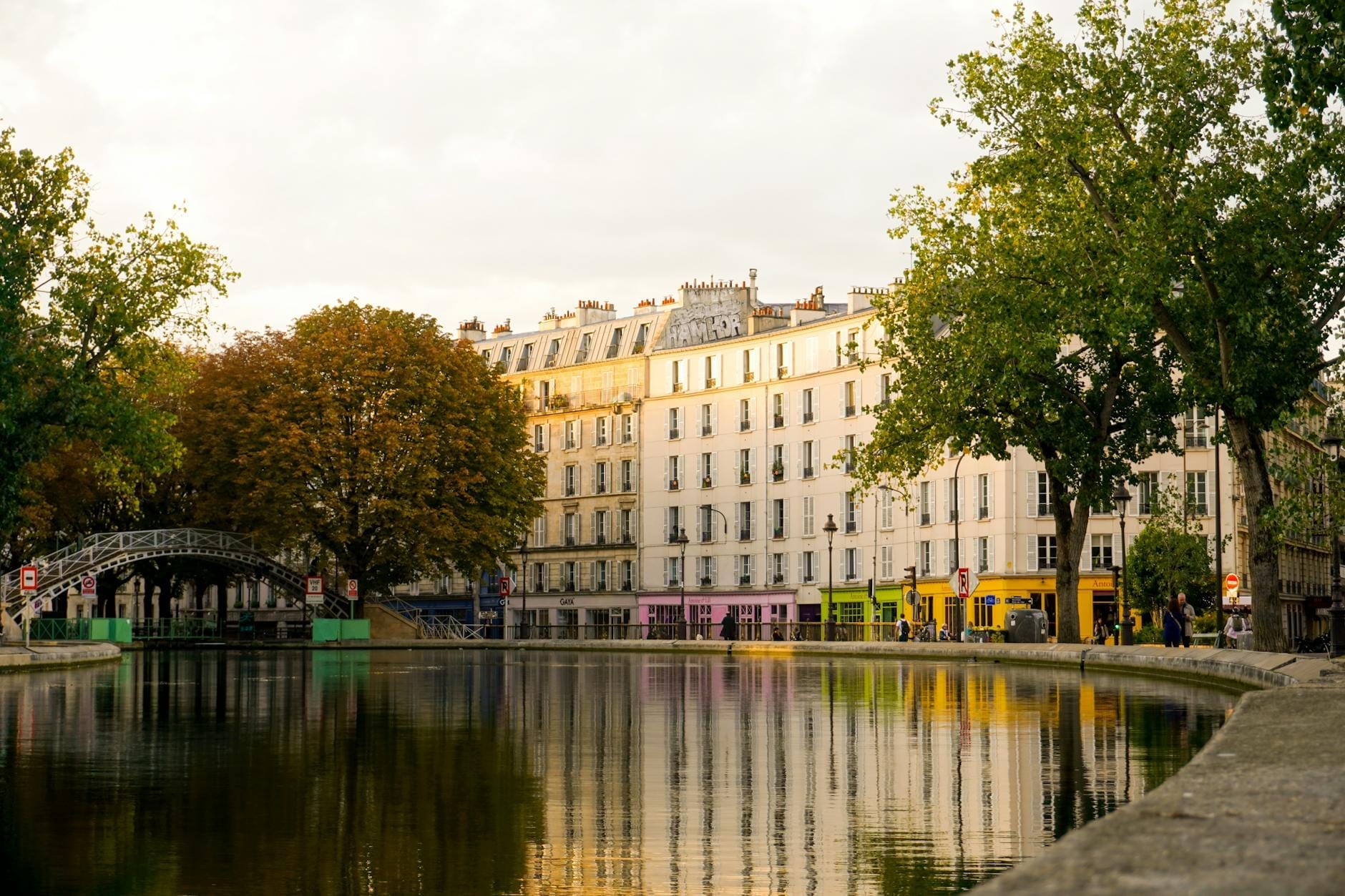
On a weekday morning, the canal corridor feels like a functioning neighbourhood rather than a destination. Café owners stack chairs on terraces along Quai de Valmy, cyclists use the dedicated lanes as a commute route, and the canal's nine locks hold the water in quiet tiers. The iron footbridges cast long shadows across the surface. This is not the Paris of formal gardens and symmetrical perspectives; it is deliberate, lived-in, and somewhat proud of its difference.
By early afternoon on weekends, especially in spring and summer, the towpath and surrounding streets shift considerably. Groups gather on the lock-side steps, the café terraces on Rue de Marseille and Rue Bichat fill completely, and the mood becomes something between street festival and extended picnic. The canal provides a natural gathering spine that prevents crowds from concentrating in any single bottleneck. This is one of the few Paris neighbourhoods where the street scene itself is the main attraction: no museum queue, no famous facade, just canal, bridge, and the pleasure of watching a barge navigate a lock.
Belleville operates on different rhythms. The lower boulevard, around the Métro station, is one of the city's genuinely multicultural main streets, with fruit stalls, Vietnamese traiteurs, halal butchers, and Chinese grocery stores running continuously from mid-morning until late evening. The street art is concentrated further up the hill: Rue Dénoyez, a narrow lane near Rue Ramponeau, is covered floor-to-ceiling in graffiti and rotating paste-ups, making it the most painted street in Paris and a reliable stop for anyone interested in the city's outdoor art scene. After dark, Belleville's bar scene on Rue Julien-Lacroix and the streets nearby is genuinely local, with low prices and crowds that skew young and international without being tourist-focused.
💡 Local tip
For the best canal atmosphere, time your visit for a Saturday or Sunday afternoon in spring. The lock at Rue de la Grange-aux-Belles is a particularly good vantage point: barges still navigate the canal regularly, and watching the locks fill and empty is one of those simple pleasures that holds attention longer than expected.
What to See & Do
The canal itself is the organising experience. Walk the full exposed section from the Bassin de la Villette south to where the water disappears underground near Place de la République: about 2.5 kilometres and 45 minutes at a relaxed pace. Boat trips also operate along the canal, passing through the underground tunnel section to emerge near the Arsenal, revealing the lock engineering from water level. The Bassin itself, Paris's largest artificial lake, connects northward to Canal de l'Ourcq and the cultural complex at Parc de la Villette.
In Belleville, the street art circuit is the primary draw for most visitors. Rue Dénoyez is the obvious centrepiece, but the surrounding streets repay slower exploration: murals appear on building ends, courtyard walls, and the shutters of closed shops. For green space, Parc des Buttes-Chaumont in the 19th arrondissement, a ten-minute walk north from Belleville Métro, was constructed from a former quarry in the 1860s and features a lake, a 50-metre rocky island with a small temple, and a suspension bridge. It is heavily used by local families rather than tourists, which gives it a different atmosphere from the Tuileries or Luxembourg.
Walk Quai de Valmy and Quai de Jemmapes: the west and east banks of the canal have different characters; Valmy is quieter, Jemmapes has more cafés and shop fronts
Cross the canal at multiple points using the swing bridges and footbridges: each offers a different angle on the locks
Rue Dénoyez street art walk: the lane is short but changes with every visit as artists paint over previous works
Parc des Buttes-Chaumont: climb to the Temple de la Sibylle on the island for views across northeastern Paris
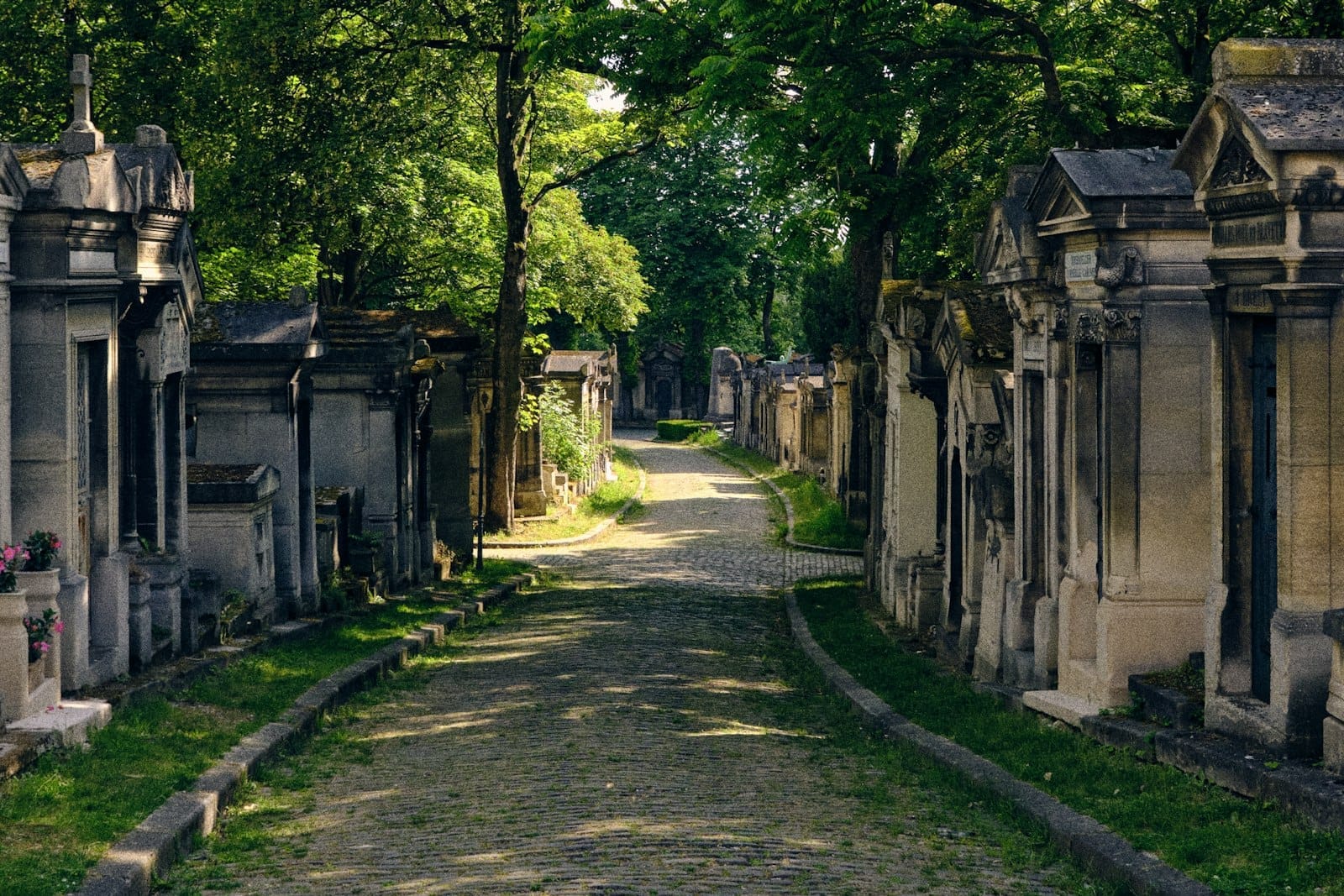
Père-Lachaise Cemetery: the world's most visited cemetery and the southeastern anchor of the Belleville area, with the graves of Édith Piaf, Jim Morrison, Frédéric Chopin, and Marcel Proust
If you are putting together a broader Paris itinerary, this neighbourhood pairs well with a morning in Le Marais, which sits 15 minutes' walk to the southwest. The contrast is instructive: the Marais is polished and increasingly commercial, while the canal corridor retains more of the texture of a working neighbourhood. Travellers who want to understand why Paris remains compelling beyond its famous monuments tend to find this comparison one of the more useful ones the city offers.
Eating & Drinking
The canal neighbourhood has one of Paris's better concentrations of independent restaurants and bars in the affordable-to-mid-range bracket. The streets immediately off the water, particularly Rue de Lancry, Rue Beaurepaire, and Rue Marie et Louise, hold a mix of natural wine bars, small bistrots, and international options: Japanese, Thai, and Middle Eastern kitchens all appear within a short walk of each other. This is a neighbourhood where a good meal at a genuinely interesting restaurant costs 25 to 40 euros per head rather than the 60 to 90 you might spend for equivalent quality near the Palais Royal or Saint-Germain. For an overview of where to eat across the city, the Paris dining guide covers price ranges and neighbourhood breakdowns in detail.
Canal-side drinking culture is its own category. In the warmer months, terraces and lock steps fill from mid-afternoon onward, with the preferred format being a glass of wine or a beer from a nearby épicerie consumed outdoors. Chez Prune, at the corner of Rue Beaurepaire, is the most famous bar in the neighbourhood: a relaxed spot with canal views that has drawn creative-industry crowds since the late 1990s without becoming a caricature of itself.
Belleville's food scene is cheaper, more diverse, and less curated. The lower boulevard delivers Vietnamese pho, Chinese dumplings, and North African pastries at prices that feel incongruous with Paris's general cost of living. Moving uphill, the neighbourhood has developed a layer of more ambitious restaurants in recent years, where cooking is rooted in local immigrant traditions but executed with deliberate technique. Les Bières de Belleville, a craft brewery with a tap room, is a solid stop after the street art walk.
ℹ️ Good to know
Belleville's Chinatown along the lower boulevard is distinct from the larger Chinatown in the 13th arrondissement. It is smaller and more integrated into a mixed neighbourhood, with Vietnamese and Chinese shops alongside Maghrebi and Kurdish businesses. Weekend mornings are the best time to see it at full activity.
Getting There & Around
The canal area is well-served by Métro and easy to approach from multiple directions. République station (lines 3, 5, 8, 9, and 11) is the most useful hub for reaching the southern end of the canal: from the Place de la République, it is a five-minute walk east along Rue Beaurepaire or Rue de Lancry to reach Quai de Jemmapes. For the northern section of the canal and the Bassin de la Villette, Jaurès station (lines 2, 5, and 7bis) drops you directly at the waterside. Goncourt station (line 11) serves the mid-section of the canal near Rue de la Grange-aux-Belles.
Belleville is served by the Belleville station (lines 2 and 11), which sits at the bottom of the main boulevard, and Pyrénées station (line 11) for the upper reaches of the neighbourhood. Couronnes station (line 2) is useful for the middle section of Boulevard de Belleville. For Père-Lachaise, take line 2 to Philippe Auguste or line 3 to Gambetta. Parc des Buttes-Chaumont is best reached via Botzaris or Buttes-Chaumont stations on line 7bis.
Cycling is a practical option throughout this area. Vélib' bike-share stations are positioned along both sides of the canal and on the main Belleville streets, and the dedicated cycle path along Quai de Valmy is one of the more pleasant urban cycling routes in Paris. Walking between Canal Saint-Martin and Belleville takes around 20 minutes following Rue du Faubourg du Temple. For broader transit planning across the city, the Paris transport guide covers Métro, RER, and Vélib' in detail.
⚠️ What to skip
The canal goes underground south of Square de la Grange-aux-Belles and does not re-emerge until the Port de l'Arsenal near Bastille. If you plan to walk the full length, be aware that the southern stretch follows Boulevard Richard-Lenoir above ground, which is a pleasant tree-lined boulevard but has no water in sight. Most visitors focus on the northern exposed section.
Where to Stay
Canal Saint-Martin is one of the better neighbourhoods in Paris for accommodation that feels local rather than central. Hotels and short-term rentals along or just off the canal tend to be priced below equivalent quality in the 1st, 4th, or 6th arrondissements, while still placing you within a 20-minute Métro or walk from the Marais and a 30-minute journey from the main monuments. The streets around Rue de Lancry, Rue des Vinaigiers, and Rue Beaurepaire have a good mix of small hotels and apartments. For a broader comparison of Paris neighbourhoods for accommodation, the Paris accommodation guide is the most useful starting point.
Staying in Belleville suits travellers who prioritise price and proximity to the street art and bar scene over monument-hopping. It takes 25 to 35 minutes by Métro to reach the Louvre or the Eiffel Tower, which matters if your itinerary is landmark-heavy. For a first Paris visit, the canal section of the 10th offers similar neighbourhood character with less logistical distance from the centre.
First-time visitors to Paris who want to stay somewhere with genuine local texture but still within comfortable reach of the major sites should consider this neighbourhood alongside options in the 11th arrondissement to the south. For general orientation advice on the city, the Paris first-timers guide explains which arrondissements work best depending on your priorities.
Honest Assessment: What This Neighbourhood Is and Isn't
Canal Saint-Martin and Belleville are often labelled the 'real Paris', which is both true and misleading. The canal area has been well-known as a cool neighbourhood for at least two decades, and parts of it, particularly around Chez Prune and the boutiques on Rue de Marseille, are aware of their own reputation. It has crossed the threshold from discovery to establishment without quite becoming a theme park of itself.
Belleville is a more honest proposition: it has not been polished. The lower boulevard can feel chaotic and loud, and the neighbourhood's charms require willingness to explore without a clear destination. But it is also one of the most genuinely diverse urban environments in Paris. If you want to eat extraordinarily well for very little money and walk streets that look nothing like the Paris of guidebook covers, Belleville delivers. For ideas on structuring a broader Paris visit, the Paris things to do guide covers the full range of the city's options.
TL;DR
Canal Saint-Martin suits travellers who want neighbourhood texture over monuments: the canal corridor through the 10th arrondissement is one of Paris's best areas for cafés, independent boutiques, and outdoor socialising.
Belleville adds genuine multicultural depth: Vietnamese and Chinese restaurants, North African bakeries, and one of the city's most active street art scenes, all at prices well below the city average.
Transit is good but not central: République (lines 3, 5, 8, 9, 11) and Belleville (lines 2, 11) are the main hubs; central Paris monuments are 25 to 35 minutes away.
Best for: return visitors to Paris, travellers prioritising food and street culture, those wanting affordable accommodation with a genuinely local feel.
Not ideal for: first-timers whose itinerary is monument-focused, or anyone who needs to be within walking distance of the Louvre, Notre-Dame, or the Eiffel Tower.
Top Attractions in Canal Saint-Martin & Belleville
Paris has over 130 museums, which makes choosing badly very easy. This guide cuts through the noise with a ranked, honest breakdown of the best museums in Paris, covering art, history, science, and design, with practical details on tickets, timing, and what to skip.
Paris has over 400 parks and gardens, ranging from formal French-style classics to wild woodland escapes. This guide covers the best green spaces across the city, with practical details on what to expect, when to go, and how to get the most out of each one.
Paris is one of the most photographed cities on earth, which means most visitors return home with the same ten images. This guide goes beyond Trocadéro to cover lesser-known vantage points, specific timing advice, and honest assessments of which spots are genuinely worth the effort.
Paris rewards visitors year-round, but the experience shifts dramatically depending on when you go. This guide breaks down each season honestly, covering temperatures, crowd levels, pricing, and the specific events and landscapes that make each period worth considering.
Paris rewards those who look down at it as much as those who walk through it. This guide covers every serious viewpoint in the city, from the famous towers to free terraces most visitors walk past, with honest advice on which are worth the queue and which are overrated.
Paris rewards those who venture beyond the périphérique. Whether you want royal grandeur at Versailles, Monet's living canvases at Giverny, or medieval forests at Fontainebleau, these are the best day trips from Paris — all reachable in under two hours.
Paris has one of the most comprehensive urban transport networks in the world. From the 16-line Métro to river buses and Vélib' bikes, this guide covers every realistic option — with real fares, practical advice, and honest warnings about what to avoid.
Paris rewards the curious traveler. Beyond the Eiffel Tower and Louvre queue, the city holds Roman ruins, forgotten neighborhoods, candlelit sewers, and park temples that most visitors never find. This guide covers 20 genuinely underrated experiences, with practical details on when to go, what to expect, and what to skip.
Planning your first trip to Paris? This guide covers everything you actually need: which arrondissements to stay in, how to get around without overpaying, which passes are worth buying, and how to avoid the most common rookie mistakes. Specific, honest, and built for real travelers.
Three days in Paris is enough to cover the iconic highlights, eat well, and still leave room to wander. This guide breaks down each day by neighborhood, flags what to pre-book, and tells you what to skip so you spend less time in queues and more time in the city.
The Paris Museum Pass covers 50+ museums and monuments, but it's not automatically the right choice for every visitor. This guide breaks down the real costs, savings thresholds, booking rules, and the cases where individual tickets beat the pass.
Paris has a reputation for draining wallets, but the reality is more nuanced. This guide breaks down real 2026 costs across transport, food, accommodation, and attractions, with practical strategies for visiting Paris on a budget without sacrificing the experience.
Paris works brilliantly for families, but only if you plan it right. This guide covers the best kid-friendly attractions, parks, museums, transport logistics, and honest advice on what to skip, so you can enjoy the city without the meltdowns.
Paris rewards visitors who go beyond the obvious itinerary. This guide covers the best things to do in Paris across every interest and budget, from world-class museums and Seine river cruises to neighbourhood markets, immersive art installations, and day trips worth the train fare.
Paris has more restaurants per square kilometer than almost any city on earth, which makes choosing one genuinely hard. This guide cuts through the noise with neighborhood-by-neighborhood recommendations, honest budget breakdowns, booking advice, and the dishes you should actually order.
Choosing where to stay in Paris shapes your entire trip. This guide breaks down the city's key neighborhoods by character, price, metro access, and who they suit best, so you can book with confidence rather than guesswork.