Paris with Kids: The Definitive Family Travel Guide
Paris works brilliantly for families, but only if you plan it right. This guide covers the best kid-friendly attractions, parks, museums, transport logistics, and honest advice on what to skip, so you can enjoy the city without the meltdowns.
Plan and book this trip
Tools from our partner Travelpayouts help you compare flights and hotels. If you book through them, we may earn a commission at no extra cost to you.
Flights
Hotels map
TL;DR
- Paris has genuine family infrastructure: playgrounds in most parks, free entry for under-18s at national museums, and wide pavements along the Seine that handle prams without issue.
- The Jardin du Luxembourg, Jardin des Plantes, and Jardin des Tuileries are the three parks that should anchor any family itinerary.
- Book Louvre and Versailles tickets well in advance; queue times with tired kids are brutal without a reservation.
- Spring (April-June) is the sweet spot for families: school crowds are manageable, outdoor activities are in full swing, and the weather rarely demands a full rain kit. See our best time to visit Paris guide for a full seasonal breakdown.
- The Paris Métro is usable with kids but has almost no escalators or lifts on older lines; plan for stairs or use buses and trams instead.
Why Paris Actually Works for Families
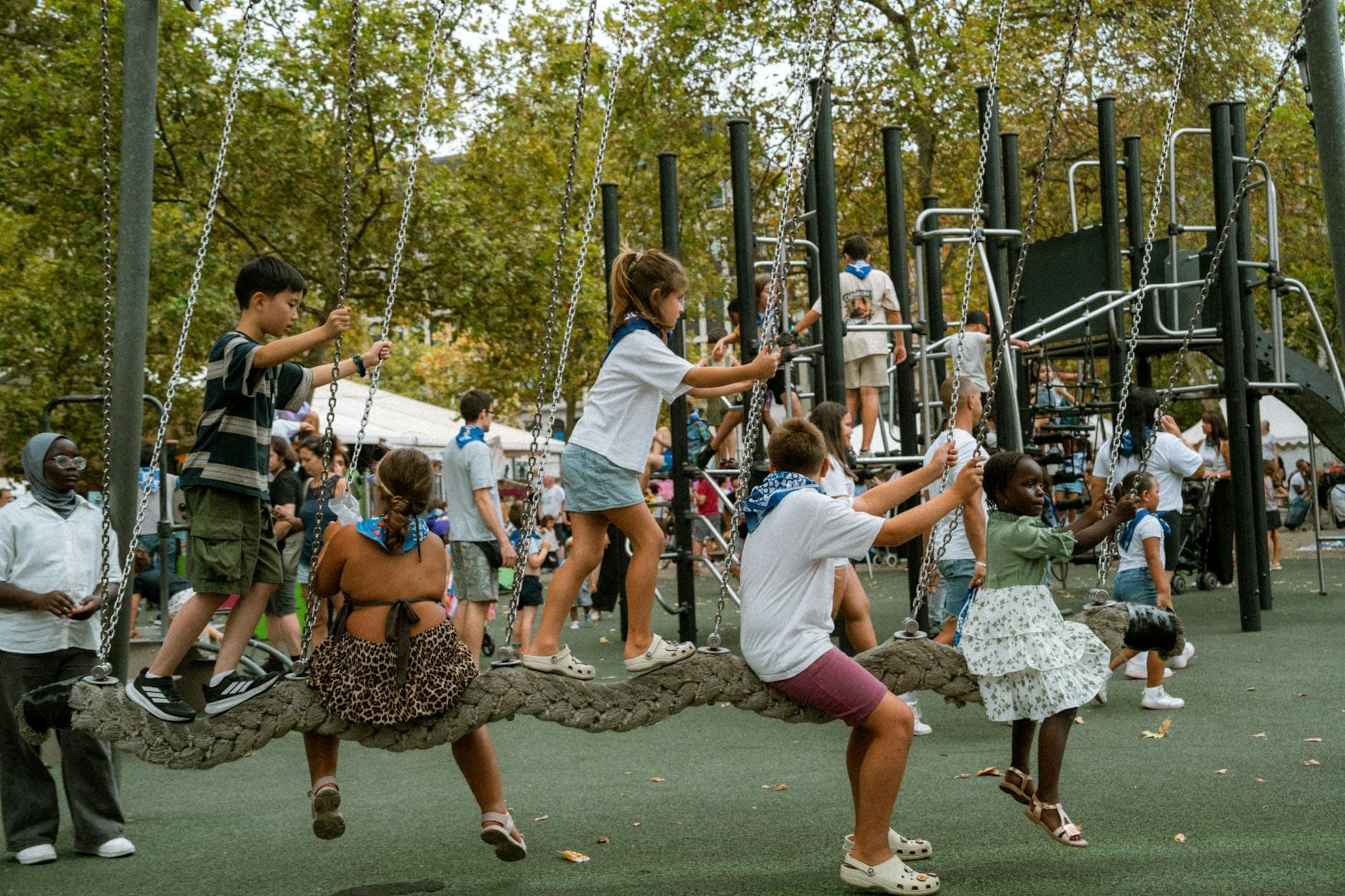
The reputation of Paris as an adult-only city is mostly a myth perpetuated by people who visited without children and assumed it couldn't be otherwise. The reality is that French culture is deeply oriented around children being present in public life: kids eat at proper restaurants, play in formal gardens, and sit in on classical concerts designed for younger audiences. The infrastructure confirms it.
Under-18s get free entry to all permanent collections at French national museums, including the Louvre, Musée d'Orsay, and Versailles (temporary exhibitions may charge). That alone removes a significant budget pressure. Parks are well-maintained and often have dedicated children's zones with carousels, puppet theatres, and sandpits that cost just a few euros. Crêpe stands are everywhere and are universally acceptable as emergency child-feeding stations.
ℹ️ Good to know
Free museum entry applies to all under-18s regardless of nationality at French national museums. EU residents aged 18-25 also get free entry. Bring proof of age for teenagers who might be questioned at the door.
That said, Paris rewards planning more than most cities when you're travelling with children. The Metro's lack of step-free access on older lines is a genuine obstacle with a pram. Crowds at the Eiffel Tower and the Louvre are legitimately overwhelming in peak summer without a strategy. And restaurant service can be slow by international standards, which tests patience at the end of a long day. None of these are dealbreakers; they're just variables to manage.
Best Parks and Outdoor Spaces for Kids
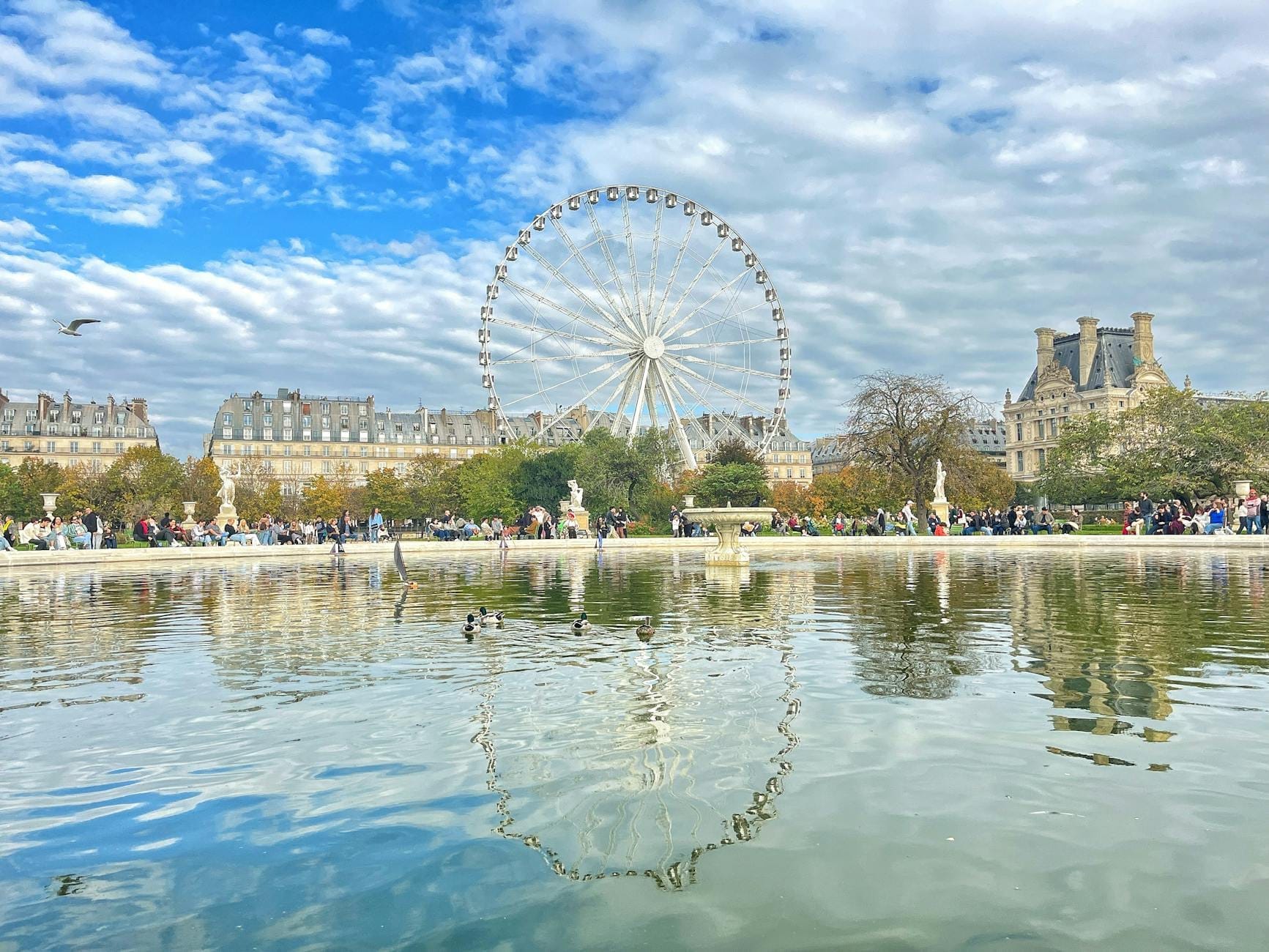
Paris's formal gardens are a core part of the family experience, and they punch well above their weight compared to city parks in most European capitals.
- Jardin du Luxembourg (6th arrondissement) The top family park in Paris, full stop. Renting a small wooden sailboat for the octagonal pond costs around €3.50 for 30 minutes. There's a puppet theatre (Théâtre du Luxembourg) running traditional Guignol shows on weekends and school holidays, pony rides on Wednesday and weekend afternoons, a large adventure playground (payable, around €3), and an antique carousel. The orchard and beehives are quieter corners worth exploring with older kids.
- Jardin des Tuileries (1st arrondissement) The long central pond with its own rental boats is the main draw for small children. The garden connects the Louvre to Place de la Concorde, so it's easy to weave into a museum day. In summer, a funfair sets up along the rue de Rivoli edge with rides and games.
- Jardin des Plantes (5th arrondissement) Home to the Ménagerie zoo (one of the oldest in the world, entry around €15 for adults, €12 for children), the Grande Galerie de l'Évolution with its stunning parade of taxidermied wildlife, and a small carousel. A solid half-day or full-day destination for animal-obsessed children.
- Place des Vosges (4th arrondissement) The arcaded square in Le Marais has a small playground in the central garden with sandpits, a slide, and enough space to kick a ball. It's low-key compared to the major parks, but ideal if you're exploring the Marais neighbourhood.
- Parc des Buttes-Chaumont (19th arrondissement) A dramatic, hilly park with a lake, suspension bridges, a puppet theatre, and one of Paris's best playgrounds near the southern entrance. Less touristy than Luxembourg but entirely worth the Métro ride for families staying multiple nights.
💡 Local tip
Most Paris parks with paid playgrounds or attractions only accept cash on site. Bring €10-15 in small notes and coins if you're visiting the Luxembourg playground, pony rides, or puppet theatres. Card readers are increasingly common but not universal.
Museums Worth Doing With Children (and How to Do Them)

The key with Paris museums and kids is to be selective and move fast. A full-day Louvre visit is a recipe for misery with under-10s. Instead, pick one or two rooms with genuine wow factor: the Winged Victory of Samothrace, the Egyptian antiquities, and the Richelieu wing's Renaissance sculpture court are all visceral and quick. The Louvre also runs a dedicated family programme through its website (kids.louvre.fr) with activity sheets, trails, and workshops. Check availability before you go. For a broader approach to Paris's museums, the best museums in Paris guide covers every major institution.
- Grande Galerie de l'Évolution (5th arrondissement) Housed inside the Muséum National d'Histoire Naturelle, this is consistently one of the best museum experiences in Paris for children aged 4-14. A theatrical parade of life-size taxidermied mammals from across the world, presented under dramatic lighting. Entry is around €10 for adults; under-4s free. No need to book in advance for most visits.
- Cité des Sciences et de l'Industrie (19th arrondissement) Europe's largest science museum, located in Parc de la Villette. The Cité des Enfants section is divided into two zones: ages 2-7 and ages 5-12. Hands-on, immersive, and designed specifically for children. Sessions are ticketed and timed, so book ahead at cite-sciences.fr. Allow at least 3-4 hours for the full site.
- Musée en Herbe A small, genuinely child-focused art museum near Les Halles. Rotating interactive exhibitions bridge contemporary art and child-accessible experiences. Tickets are modest (around €7-9 per person). It's not a place adults will linger without children, but it's excellent for the age range it serves (roughly 3-12).
- Musée d'Orsay (7th arrondissement) Better for families than the Louvre because it's smaller and the Impressionist paintings are immediately legible to children. Focus on the fifth floor for Monet, Renoir, Degas, and Van Gogh. Visit on the first Sunday of the month for free entry regardless of age.
⚠️ What to skip
The Eiffel Tower is thrilling for kids but operationally demanding. Queues for lifts to the summit regularly exceed 2 hours in July and August without a reserved ticket. Book summit tickets at least 2-3 weeks in advance via the official site (toureiffel.paris). If you only have a reserved ticket for the second floor, the summit lift queue is separate and often still very long on arrival.
Getting Around Paris with Children
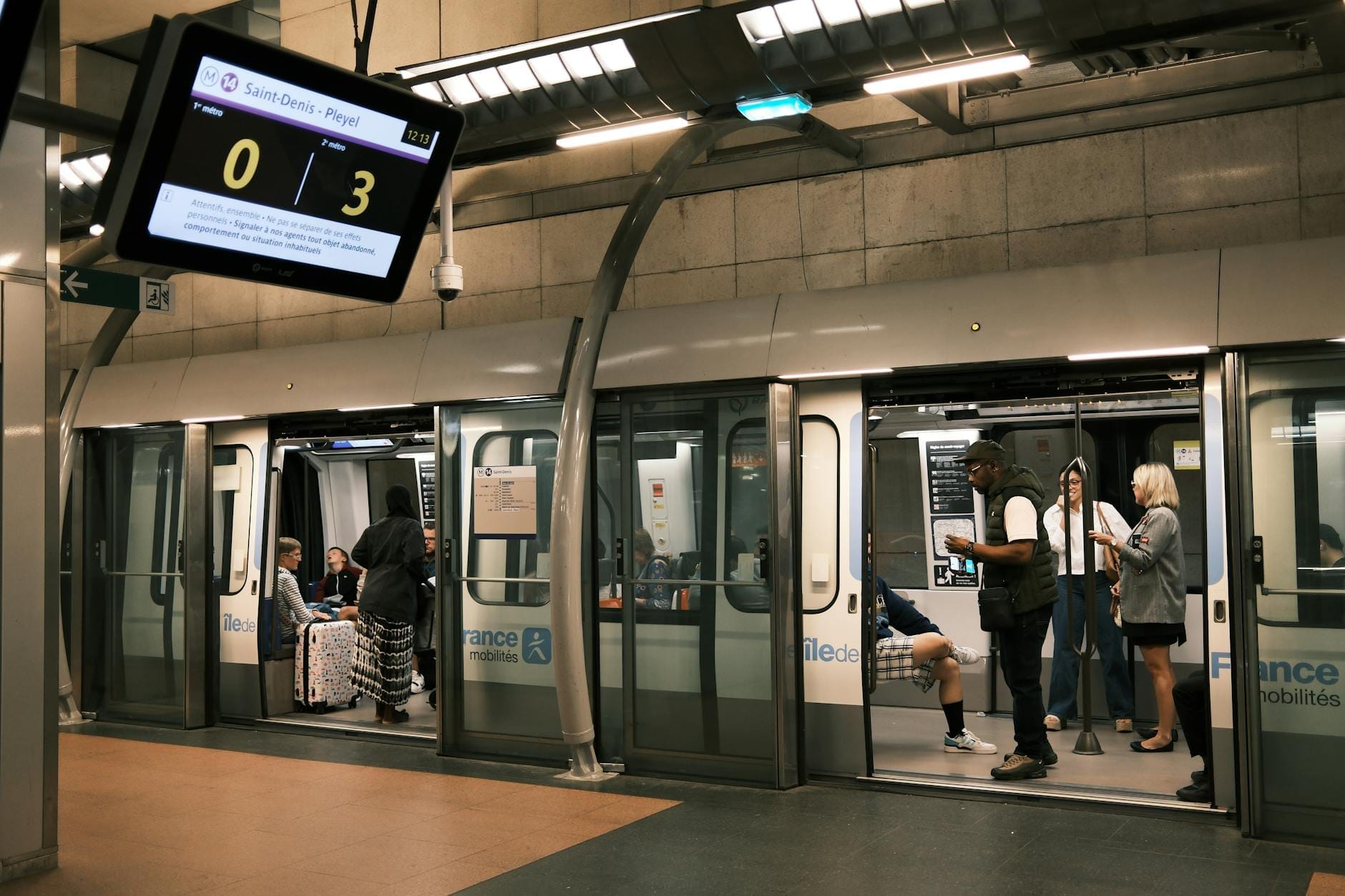
Transport logistics are one of the biggest practical challenges of Paris with kids, and they deserve honest coverage rather than the usual breezy reassurance.
The Métro is fast and comprehensive but largely inaccessible with prams. Of the 16 lines, only Line 14 is fully step-free throughout. Other lines involve staircases at nearly every interchange, and many stations have no escalators. The RER lines are marginally better in places but inconsistent. For families with buggies or young children who can't walk significant distances, the city's bus network is far more practical: every bus is accessible, routes are clear on the Bonjour RATP app, and children travel free under age 4. For a comprehensive look at all options, the getting around Paris guide covers every mode of transport in detail.
Taxis and Uber work well for end-of-day situations when children are exhausted and the Métro feels impossible. Official taxis can legally take up to 4 passengers; for larger families, book a VTC (private hire vehicle) via the Uber XL or Bolt options. Fares from CDG airport into central Paris run around €62 by taxi; Orly to central Paris is roughly €40. These are significantly more restful arrivals than negotiating RER trains with luggage and children.
- Vélib' bike-share bikes are for ages 14+, so not directly useful for young children, but cargo bike and child-seat rental companies operate in the city.
- Seine river buses (Batobus) stop at 9 key points including the Eiffel Tower, Musée d'Orsay, Notre-Dame, and Louvre. Day passes run €23 for adults and are a genuinely pleasant way to move between sites.
- Walking between arrondissements is often quicker than it looks on a map: the 1st to 7th (Louvre to Eiffel Tower) is about 3.5 km, manageable for children over 6 with a stop at Tuileries.
- Under-4s ride free on all public transport. Children aged 4-9 pay half fare on the Métro, RER, and buses.
Top Experiences Kids Actually Remember
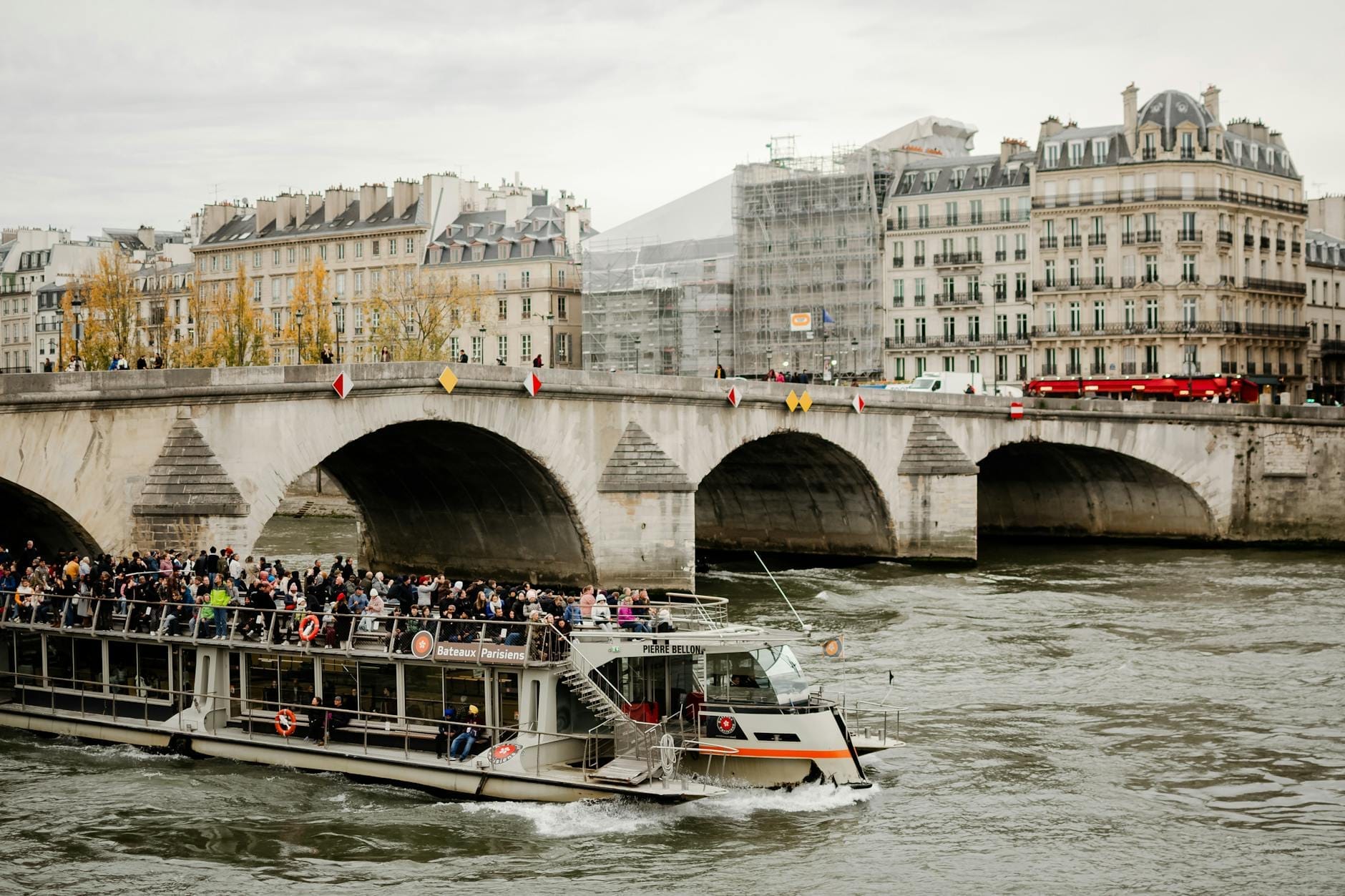
Beyond the headline attractions, Paris has a set of experiences that consistently land well with children across different ages. A Seine river cruise is one of them: Bateaux Mouches runs frequent departures from Pont de l'Alma and most trips last around an hour with multilingual audio commentary. It's an easy, low-effort way to orient the whole family geographically while staying off your feet.
Notre-Dame Cathedral reopened on December 7, 2024 after the 2019 fire, and queues are currently lightest at opening time (around 9am). The scale of the interior is genuinely impressive for children who haven't experienced Gothic architecture before. Combine it with a walk across to Île Saint-Louis for ice cream from Berthillon, the most famous glaciers in Paris (expect queues on summer weekends).
For older children (roughly 10+), the Catacombs of Paris in the 14th arrondissement are a reliable hit: the ossuary holding the remains of around 6 million people is macabre in exactly the way teenagers find compelling. Book timed entry online in advance; walk-up queues routinely stretch beyond 2 hours. Not suitable for young children or anyone claustrophobic.
Disneyland Paris is 40 minutes by RER A from central Paris and is a credible day trip rather than a separate holiday destination. The park now includes Marvel Avengers Campus, World of Frozen, and the original Fantasyland area. Book tickets via the official site (disneylandparis.com) and expect to spend a full day. It is expensive by Paris standards but genuinely excellent for ages 4-12. For other options further afield, the day trips from Paris guide covers Versailles, Fontainebleau, and Giverny, all of which work well for families with older children.
Practical Logistics: Food, Accommodation, and Budgeting
French restaurants generally welcome children, but they operate on their own schedule. Lunch service runs roughly 12:00-14:30 and dinner from 19:30 onwards. Arriving at 18:00 expecting a full meal is a common tourist mistake; most kitchens are simply not open. For early-eating families, brasseries and American-style restaurants in tourist zones are the exception. Alternatively, charcuterie, cheese, baguettes, and fruit from a market or Monoprix supermarket make an excellent picnic, and Paris's parks mean you'll always have somewhere to eat it. Tap water is safe to drink throughout the city.
For accommodation, families almost always do better with an apartment rental than a standard hotel room, which in Paris is often genuinely small. Arrondissements 6, 7, and 4 (Le Marais) put you within walking distance of multiple major sites, but come at a premium. The 11th and 15th arrondissements offer better value while remaining well-connected by public transport. The where to stay in Paris guide breaks down each neighbourhood with honest assessments of who they suit.
Budgeting realistically: free national museum entry for under-18s is a significant saving, but parks with activities (Luxembourg playground, pony rides, puppet shows) add up quickly. A day at Disneyland Paris for a family of four can easily reach €400-500 including transport, food, and tickets. Factor in that children often walk less distance than planned, which means more transport spend than adults-only trips. Building in a slow afternoon every two or three days prevents the accumulated exhaustion that derails family holidays.
✨ Pro tip
The Paris Museum Pass covers adult entry to over 50 sites but does not benefit children under 18 who already enter free. For families, calculate whether an adult pass saves money based on which sites you actually plan to visit. Two adults visiting the Louvre, Versailles, Sainte-Chapelle, and Musée d'Orsay in two days will typically come out ahead with a 2-day pass (€90 per adult in 2026), since combined individual entry to those four sites runs around €100-130.
FAQ
What age is Paris suitable for with kids?
Paris works for all ages, but the experience varies significantly. Toddlers (1-4) do well at the boat-rental ponds in parks, carousels, and the zoo at Jardin des Plantes. Ages 5-10 get the most out of the science museum at Cité des Sciences, the Grande Galerie de l'Évolution, and interactive activities at the Louvre. Teenagers tend to engage well with the Catacombs, Versailles, the Eiffel Tower summit, and the city's street food and market culture.
Is Paris accessible with a pram or stroller?
Partially. The wide pavements along the Seine and in most parks are pram-friendly, and all city buses are step-free with designated buggy spaces. The Métro is the major challenge: most stations have stairs at interchanges and no lifts. Use buses, trams, RER line B (which has more step-free access), or Métro Line 14 where possible. Fold-flat prams are more practical than travel systems if you do need to use the Métro.
How do I avoid massive queues at the Eiffel Tower with kids?
Book timed entry tickets in advance at toureiffel.paris, ideally 2-4 weeks before your visit in peak season (June-August). First entry slots (9:00 or 9:30am) have the shortest crowds. Lifting stairs instead of the lift cuts waiting time significantly and is manageable for children over 5. If the summit matters to your family, book it explicitly: the second-floor and summit lifts are separate queues.
Are there free things to do in Paris with kids?
Quite a lot. Permanent collections at all French national museums are free for under-18s, which covers the Louvre, Musée d'Orsay, Versailles (palace and gardens entry charged), Centre Pompidou, and others. The toy boat ponds at Tuileries and Luxembourg cost a few euros to rent but entry to the gardens is free. Most church interiors including Notre-Dame are free. The first Sunday of the month offers free entry to most national museums for all visitors regardless of age.
What is the best neighbourhood to stay in Paris with kids?
The 7th arrondissement (near the Eiffel Tower and Invalides) is convenient and relatively residential, with good park access. The 6th (Saint-Germain/Luxembourg area) places you right beside the best family park in Paris. Le Marais (4th) is central and walkable to many sites. Budget-conscious families often find better value in the 11th or 15th arrondissements without sacrificing Metro access. Avoid very central 1st and 2nd arrondissement hotels unless budget is not a constraint; they're expensive and offer little specifically for families.