Seine River Cruise Paris: What to Expect, When to Go, and How to Do It Right
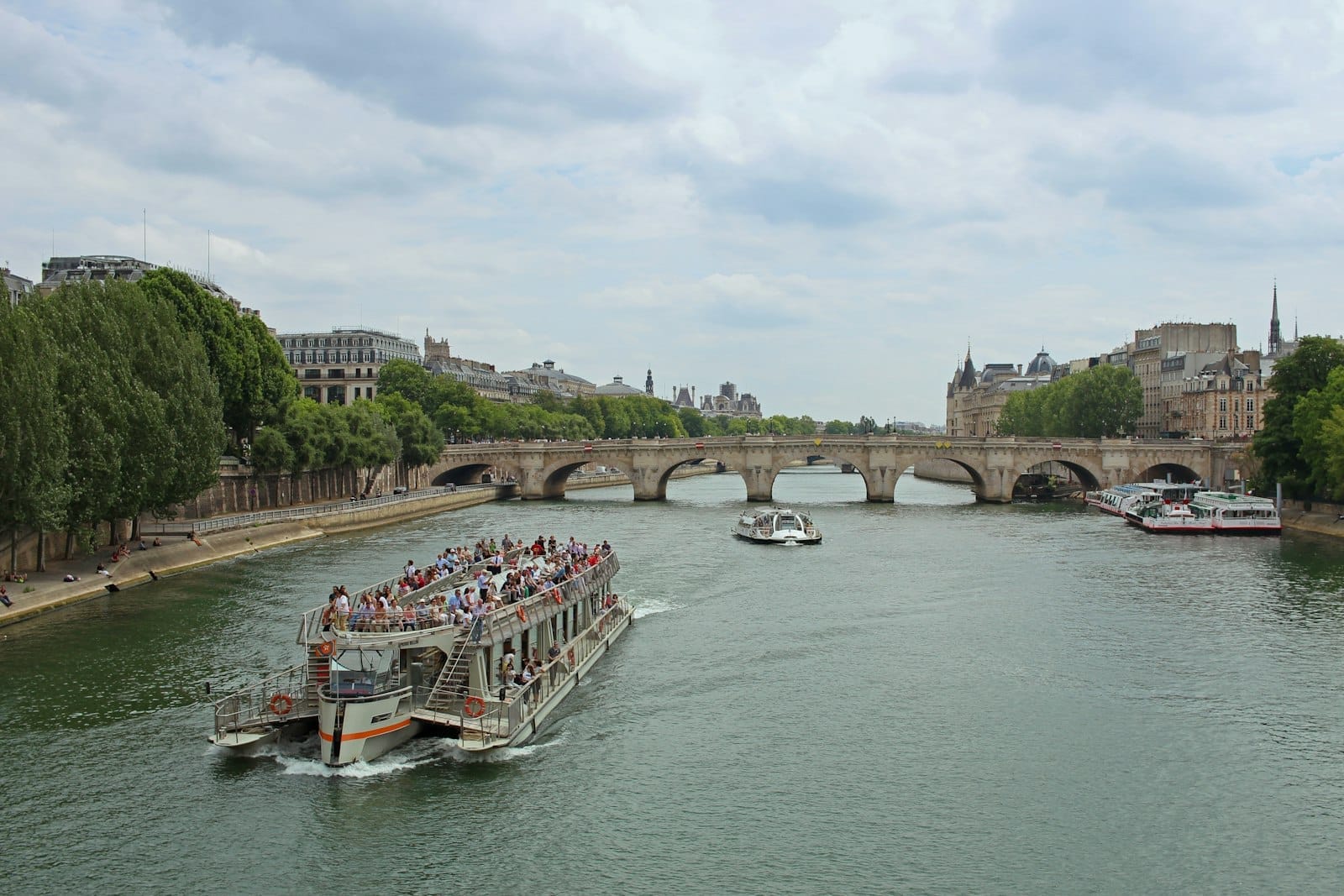
A Seine River Cruise offers the most iconic viewpoints in Paris from a single vantage point: the water. In roughly one hour, you pass the Eiffel Tower, Notre-Dame, the Louvre, and a succession of grand bridges. Here is what every operator, time slot, and ticket tier actually delivers.
Quick Facts
- Location
- Multiple departure points: Port de la Conférence (Pont de l'Alma, 8th), Square du Vert Galant (Pont Neuf, 1st), Port de la Bourdonnais (Eiffel Tower, 7th)
- Getting There
- Alma-Marceau (lines 9) for Bateaux-Mouches; Pont Neuf (line 7) for Vedettes du Pont Neuf; Bir-Hakeim (line 6) for Eiffel Tower departures
- Time Needed
- 1 hour (sightseeing cruise); 2–2.5 hours (lunch or dinner cruise)
- Cost
- Sightseeing cruises from €8/person (Bateaux-Mouches online); dinner cruises €85–€165 (Bateaux-Mouches); children's discounts and other operators' pricing should be verified with each operator
- Best for
- First-time visitors, couples, families with young children, photography, romantic evenings
- Official website
- www.bateaux-mouches.fr/en/cruise
Why the Seine Is the Best Orientation Tool in Paris
Paris was built facing its river. The grandest facades, the most celebrated bridges, and the most photographed monuments all orient themselves toward the Seine, which means that walking the streets around them gives you angles that architects never prioritised. A Seine River Cruise corrects this: you see the city the way it was designed to be seen, from the water, at eye level with the stone embankments that have been here since the medieval era.
In roughly one hour, a standard sightseeing cruise covers the central stretch of the river from the Pont de l'Alma to the Île Saint-Louis and back, passing the Eiffel Tower, the Musée d'Orsay, the Assemblée Nationale, the Musée de l'Orangerie terrace, the Louvre's river facade, the Conciergerie, and the twin towers of Notre-Dame. No single walk replicates that sequence.
💡 Local tip
Book online in advance: Bateaux-Mouches sightseeing tickets start at €8 per person online, a significant discount on walk-up pricing. Dinner cruise seats sell out days ahead on weekends and holidays — always reserve.
Choosing Your Operator: What Each One Actually Offers
Three operators dominate the market, and they are not interchangeable. Understanding what each does well saves you from paying for something that does not match what you want.
Bateaux-Mouches
Bateaux-Mouches is the largest and most recognisable fleet, departing from the Port de la Conférence near the Pont de l'Alma in the 8th arrondissement. Their open-top upper deck boats are the widest on the river, which makes them stable and easy to move around on, but also means they attract the largest tour groups. The audio commentary is available in multiple languages via headsets. Sightseeing cruises run daily throughout the year: schedule varies by season; verify current departure times directly with Bateaux-Mouches before booking. The cruise lasts approximately 1 hour 10 minutes.
Their evening dinner cruises depart at 8:30pm, return at approximately 10:45pm, and require smart dress — no sportswear, flip-flops, or baseball caps. If you are considering a dinner cruise, Bateaux-Mouches offers two menus (Excellence and Prestige) ranging from €85 to €165, accompanied by piano and violin. It is formal, it is classic, and it is exactly what many visitors want for a special occasion in Paris.
Vedettes du Pont Neuf
Vedettes du Pont Neuf has been operating since 1959 and boards from one of the most atmospheric spots in Paris: Square du Vert Galant, the triangular garden at the western tip of the Île de la Cité, directly beneath the Pont Neuf. Getting to the boarding point requires descending a stone staircase from street level into the garden, which itself feels like entering a different, quieter Paris. The Metro Pont Neuf on line 7 deposits you almost at the top of those stairs. Their standard cruise lasts approximately one hour; current pricing should be verified directly with the operator
Bateaux Parisiens
Bateaux Parisiens boards from Port de la Bourdonnais in the 7th arrondissement, right at the foot of the Eiffel Tower (Metro: Bir-Hakeim, line 6). If you are already visiting the Eiffel Tower and want to extend the morning into a river experience, this is the most convenient starting point. Their glass-enclosed boats offer shelter from wind and rain, a practical advantage in shoulder season. They also run lunch and dinner options.
ℹ️ Good to know
All three operators accept the Paris Museum Pass for discounts or free entry on sightseeing cruises — confirm the current terms with each operator before booking, as inclusions change seasonally.
Tickets & tours
Hand-picked options from our booking partner. Prices are indicative; availability and final rates are confirmed when you complete your booking.
Paris Essential dinner cruise at 6.15pm
From 99 €Instant confirmationFree cancellationSeine River cruise with French crepe tasting near the Eiffel Tower
From 25 €Instant confirmationFree cancellationSeine cruise tickets with return transportation from Disneyland Paris
From 75 €Instant confirmationFree cancellationLive music Seine cruise with champagne and gourmet dinner
From 161 €Instant confirmationFree cancellation
The Route: What You Will Actually See
The standard Bateaux-Mouches route departs from Pont de l'Alma, heads east toward Notre-Dame, then returns west past the Eiffel Tower before coming back to dock. On the eastbound leg, you pass the gilded dome of Les Invalides glowing above the Left Bank, the columned facade of the Assemblée Nationale, and the Musée d'Orsay — the former railway station whose massive clock faces are best appreciated from this angle. The river narrows slightly as you enter the channel between the Île de la Cité and the Left Bank, bringing you close enough to the stonework of the Conciergerie to see its medieval turrets in detail.
The turnaround point near the Arab World Institute gives you a view of the eastern tip of the Île Saint-Louis and the rear buttresses of Notre-Dame Cathedral. At the time of writing, Notre-Dame has reopened after its 2019 fire restoration, and the view from the water remains one of the most unobstructed ways to appreciate its full Gothic profile. On the return westbound leg, the Louvre's river-facing wing stretches for what feels like an impossible length along the Right Bank, and the Pont Alexandre III appears suddenly with its gold-leafed lampposts and ornate Art Nouveau statuary — the most photographed bridge in the city.
Note that the captain may adjust the route depending on the Seine's water level. In periods of heavy rainfall, higher water levels can affect how close the boats pass beneath certain bridges. This is rare but worth knowing if you are visiting in late autumn or after prolonged rain.
Timing: How the Experience Changes by Hour
Morning departures between 10am and noon offer the clearest light for photography, especially on the west-facing side of the boat on the return leg. The river reflects a cooler, sharper light in the morning, shadows are long and directional, and crowds on board are thinner. The quaysides still have their early rhythm: joggers, delivery trucks unloading at brasseries, the occasional fisherman on the lower embankment. This is the most atmospheric time of day to be on the water.
Midday and early afternoon are the busiest periods, particularly in summer. Boats fill quickly, tour groups board together, and the upper deck can feel crowded. The light is flatter and harsher for photography. If you are traveling with children or simply want the spectacle rather than a tranquil experience, this works fine — but arrive 15 minutes early to board without queuing too long.
The evening cruise, departing in the hour before sunset and running into dusk, is genuinely different. The city transitions from golden hour warmth to the blue hour that photographers plan their entire trip around. The Eiffel Tower's light show begins at nightfall and runs for five minutes at the top of every hour. Catching that sparkling display from the middle of the river, with the reflection shimmering across the water below, is one of those moments that Paris delivers with almost theatrical precision. The 9pm or 9:30pm departures (depending on season) reliably catch at least one light show.
💡 Local tip
For the evening light show: board the 9pm departure in high season. Sit on the upper deck on the port (left) side for the best unobstructed view of the Eiffel Tower on the westbound return leg.
Photography on the Water: Practical Advice
The Seine cruise is one of the top-performing photo spots in Paris precisely because it gives you angles unavailable from any street or bridge. A few practical notes: the boats vibrate and move, so faster shutter speeds work better than you might expect to need. Polarising filters are useful for cutting glare off the water surface. The glass-enclosed lower decks on some boats introduce reflections in your images — if photography is a priority, choose the open upper deck.
Wide-angle lenses suit the river well: the Louvre's facade is so long that a standard 50mm equivalent will struggle to capture it in a single frame. The Pont Alexandre III works better with a longer lens that compresses its decorative elements. For the Eiffel Tower at night, the light show's sparkle reads well even on a smartphone camera, provided you keep the device steady.
Honest Assessment: When It Works and When It Does Not
The Seine cruise is not the right activity for everyone, and it is worth being direct about this. If you have already spent several days in Paris, have walked the quays, visited the major monuments up close, and understand the city's layout, the cruise delivers diminishing returns. You are seeing the same landmarks from a different angle, with an audio commentary track that covers material you already know.
It also works poorly on overcast, rainy days. The grey light flattens everything, rain on the upper deck forces everyone below, and the views through wet glass are mediocre. Paris in rain has its own charm at street level, in cafes and covered passages, but a river cruise in sustained rain is not a good use of your time or money.
Where it genuinely excels is as an orientation experience for first-time visitors, as an evening activity for couples, and as a family option with children who would find a full day of museum visits overwhelming. It is also one of the few ways to understand the geographic logic of Paris at a glance: how the Seine divides the city, how the islands sit at its centre, and how the major monuments cluster along its banks. For that kind of overview, nothing on foot competes. Consider pairing it with a visit to Palais Royal or the Jardin des Tuileries afterward, both a short walk from the Right Bank quays.
⚠️ What to skip
Rainy or heavily overcast days significantly reduce the experience. If weather is poor, consider rescheduling or choosing an indoor alternative. Prices and hours listed here are based on operator information current to 2025 — verify directly with operators before booking, as both change seasonally.
Getting There and Practical Details
The three main embarkation points are spread across the central Seine, so the right choice depends on where you are staying. For a full overview of navigating the city's transport network, see the guide to getting around Paris. The Bateaux-Mouches pier at Port de la Conférence is a 5-minute walk from Alma-Marceau Metro station (line 9). The Vedettes du Pont Neuf boarding point at Square du Vert Galant requires descending stone stairs from street level — not suitable for passengers with significant mobility restrictions or pushchairs without assistance. The Bateaux Parisiens pier at Port de la Bourdonnais is flat and easily accessible from the Bir-Hakeim Metro station (line 6), with a pleasant riverside walk from the station.
Dress in layers. Even in summer, the river generates a noticeable breeze on the open upper deck, and the temperature on the water is consistently cooler than on land. In spring or autumn, a light jacket is not optional. Closed-toe shoes are practical on the metal deck surfaces, which can be slippery when wet.
For dinner cruises, smart dress is mandatory at Bateaux-Mouches: no sportswear, flip-flops, bermuda shorts, or baseball caps. Lunch cruises operate under a smart-casual standard. These rules are enforced at boarding.
Insider Tips
- The 10am first departure has the fewest passengers and the best morning light — ideal if photography is your goal. Walk-up queues are minimal, and the upper deck is yours to position freely.
- Vedettes du Pont Neuf boards from Square du Vert Galant, a secluded riverside garden that most visitors overlook entirely. Arrive 20 minutes early and sit in the garden before boarding — it is one of the most peaceful spots in central Paris.
- The Eiffel Tower's nightly light show (five minutes of sparkling LEDs at the top of each hour after dark) is best seen from the water at approximately the midpoint of the return westbound leg. The 9pm departure in high season reliably catches it.
- Bateaux-Mouches tickets purchased online offer a significant discount over walk-up prices and are valid for any same-day departure for one year after purchase — useful if you buy in advance and then decide to take an earlier or later boat.
- If you want a quieter, more local feel, Vedettes du Pont Neuf runs smaller boats and attracts fewer mass-tour groups than Bateaux-Mouches. The smaller scale makes it easier to move around and find a good viewing position.
Who Is Seine River Cruise For?
- First-time visitors who want a geographic overview of Paris in under 90 minutes
- Couples looking for a romantic evening with the Eiffel Tower light show
- Families with young children who need variety and cannot sustain full museum days
- Photography enthusiasts working the golden and blue hours from the water
- Travelers with limited mobility who want landmark views without extended walking
Nearby Attractions
Combine your visit with:
- Bois de Vincennes
Covering nearly 1,000 hectares on the eastern edge of Paris, the Bois de Vincennes is the city's largest green space, combining ancient woodland, three lakes, a botanical garden, a world-class zoo, and a medieval royal castle. It rewards both casual afternoon strollers and full-day explorers.
- Château de Fontainebleau
Older than Versailles and used by more French monarchs, the Château de Fontainebleau is a UNESCO World Heritage palace 55 km southeast of Paris. With over 1,900 rooms, free formal gardens, and a manageable crowd count compared to other royal sites, it rewards visitors who make the 40-minute train trip from Paris.
- Château de Vaux-le-Vicomte
Built between 1656 and 1661 for finance minister Nicolas Fouquet, Château de Vaux-le-Vicomte is the largest privately owned château in France. Its formal gardens, gilded state rooms, and extraordinary backstory make it one of the most rewarding half-day trips from Paris.
- Château de Vincennes
Rising at the eastern edge of Paris, Château de Vincennes is one of the most complete medieval royal fortresses in Europe. Home to France's tallest medieval keep and a stunning Gothic chapel, it rewards visitors who venture beyond the tourist centre with centuries of largely undisturbed royal history.