Bois de Vincennes: The Complete Guide to Paris's Vast Eastern Park
Covering nearly 1,000 hectares on the eastern edge of Paris, the Bois de Vincennes is the city's largest green space, combining ancient woodland, three lakes, a botanical garden, a world-class zoo, and a medieval royal castle. It rewards both casual afternoon strollers and full-day explorers.
Quick Facts
- Location
- Eastern edge of Paris, 12th arrondissement (75012)
- Getting There
- Métro Line 1, Château de Vincennes (main entry); Porte Dorée on Line 8 (zoo/Parc Floral side)
- Time Needed
- 2–3 hours for a focused visit; full day for park + castle + zoo
- Cost
- Park free; Parc Floral €3 (Apr–Sep); zoo and château require separate paid tickets
- Best for
- Families, cyclists, picnickers, history lovers, wildlife enthusiasts
- Official website
- www.paris.fr/lieux/2439-bois-de-vincennes
What the Bois de Vincennes Actually Is
The Bois de Vincennes is Paris's largest park, stretching across 995 hectares along the city's eastern boundary. It is nearly twice the size of New York's Central Park, and large enough that you can spend an entire day here without retracing your steps. This is not a manicured garden in the Tuileries sense: much of it is proper woodland, with dense canopy, unpaved forest trails, and three lakes substantial enough for rowing.
First mentioned in records as early as 847 AD, the land served as royal hunting grounds through the medieval period. Napoleon III and his city planner Haussmann transformed it into a public park between 1855 and 1866, reforesting it in the English romantic tradition. It was annexed to Paris in 1929 and today falls within the 12th arrondissement.
Within its boundaries you will find the Parc Floral de Paris, the Château de Vincennes (one of the largest surviving medieval fortresses in Europe), the Parc Zoologique de Paris (Paris Zoo), a Buddhist temple, a horse-racing track, a velodrome, a puppet theatre, and several cafés. Coming here expecting a simple stroll and discovering this density of things to do is a reliable Parisian experience.
💡 Local tip
The main park itself is free and open year-round, 24 hours. Individual attractions inside (Parc Floral, zoo, château interior) each charge separate fees and have seasonal hours. Plan which ones you want before arriving, especially if visiting with children.
The Park at Different Times of Day
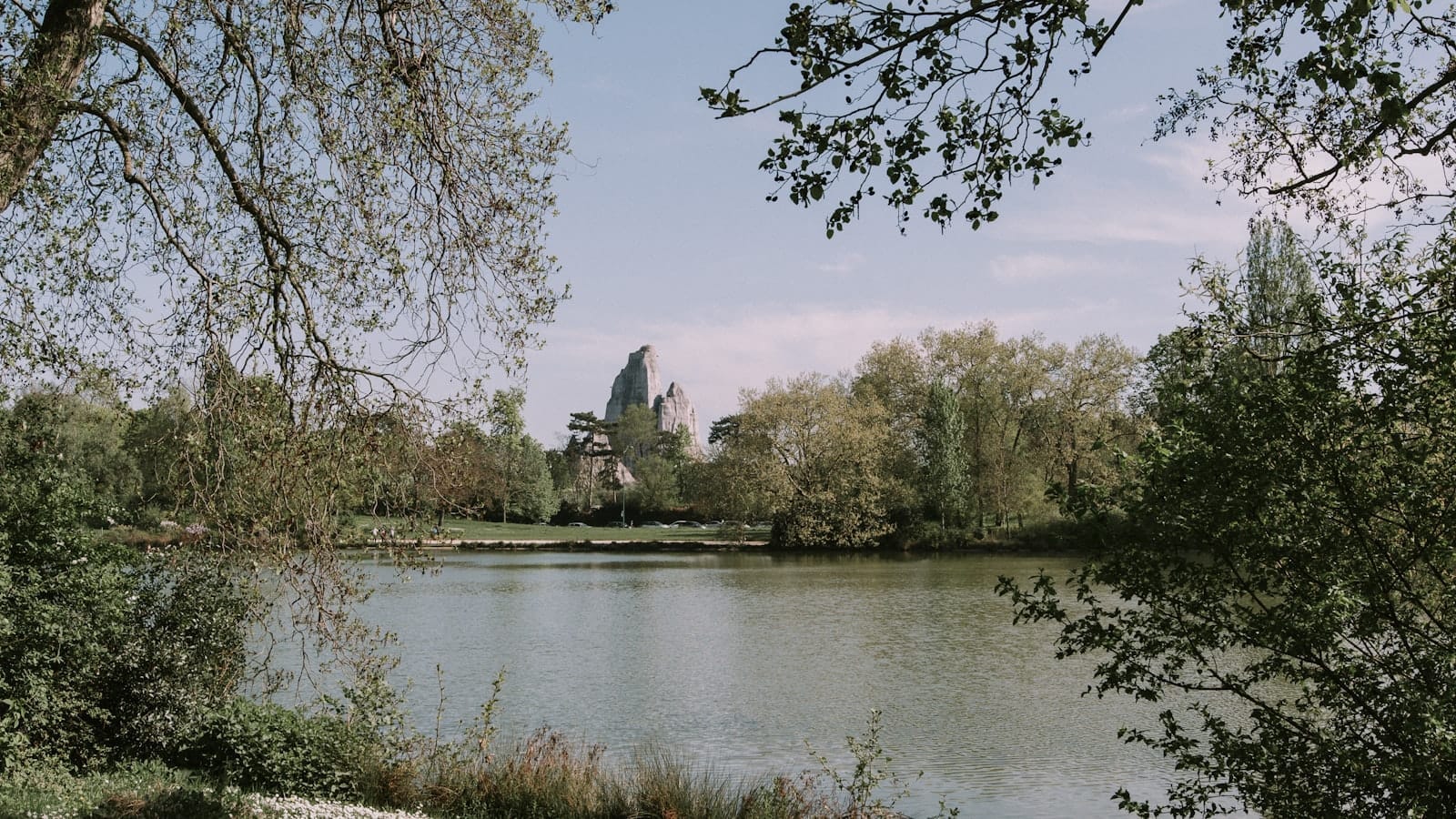
Early mornings here belong to joggers and dog walkers from the 12th arrondissement. The light through the oak and chestnut canopy is low and diffuse, and the lakes, particularly Lac Daumesnil, reflect the tree line with near-mirror clarity before any wind picks up. By late morning on weekends, families arrive with picnic blankets, lakeside paths fill with cyclists, and the Parc Floral draws visitors for its seasonal displays. The atmosphere stays relaxed rather than crowded, and in high summer the woodland shade makes this one of the cooler places in the city.
Late afternoon is the best window for photography. Western light catches the surface of Lac de Saint-Mandé and illuminates the Château de Vincennes towers in a warm, raking tone the midday sun does not produce. Boat hire on Lac Daumesnil runs until early evening in summer, making a late-afternoon row one of the quietly pleasurable things to do here.
Tickets & tours
Hand-picked options from our booking partner. Prices are indicative; availability and final rates are confirmed when you complete your booking.
Day trip to Chambord, Chenonceau and Amboise from Paris with wine tasting
From 235 €Instant confirmationFree cancellationVincennes Chateau de Vincennes Ticket and In-App Audio Tour
From 20 €Instant confirmationParis Essential dinner cruise at 6.15pm
From 99 €Instant confirmationFree cancellationEiffel Tower reserved elevator entrance to 2nd floor with walking tour and Seine cruise
From 94 €Instant confirmationFree cancellation
The Château de Vincennes: A Royal Fortress Often Overlooked
At the western tip of the park, directly beside the Métro exit, stands the medieval royal fortress that gave the whole area its name. The château's keep, built in the 14th century under Charles V, rises 52 metres and is one of the tallest medieval towers in France. The surrounding walls and moat are largely intact. Most visitors to Paris walk past photographs of Versailles without ever learning this structure exists.
Entry to the outer courtyard is free and worth the few minutes even if you do not pay for the interior. Peregrine falcons nest in the keep's upper stonework in spring and summer. The interior, managed by the Centre des Monuments Nationaux, requires a ticket and includes the Sainte-Chapelle de Vincennes, a Flamboyant Gothic chapel closely related in style to the more famous Sainte-Chapelle on the Île de la Cité.
ℹ️ Good to know
The Château de Vincennes has its own ticket pricing and opening hours managed separately from the park. Check the Centre des Monuments Nationaux website before visiting, as hours vary by season and the château occasionally closes for events.
Parc Floral and the Lakes: Two Contrasting Sides
The Parc Floral de Paris occupies 31 hectares within the Bois, operating as a botanical garden under the City of Paris since 1969. It hosts rotating seasonal plantings, a children's play area, minigolf, and outdoor summer concerts. Entry costs €2.60 for adults (€1.50 reduced) from April through September; winter entry is free, though the garden closes on certain public holidays.
The garden is planted for sequential colour across the year: tulips and narcissus in early spring, dahlias and water lilies through summer, and Japanese maples turning vivid orange-red in October. If you are interested in botanical Paris more broadly, it pairs well with a visit to the Jardin des Plantes in the 5th arrondissement, which has a different character (more formal, more scientific) but a similarly underappreciated depth.
The park's two main lakes, Lac Daumesnil and Lac de Saint-Mandé, anchor the western side. Rowing and pedal boats can be hired at Lac Daumesnil for around €14.80 per hour for one or two people. Two small islands in the lake, connected by footbridges, hold a Buddhist temple (Centre Bouddhiste de Paris) and a café-kiosk. These islands stay quiet even on busy weekends because many visitors simply do not notice them from the main path.
Cycling and Walking Routes
The Bois de Vincennes has over 80 kilometres of paths, including dedicated cycling tracks that loop through the forest and around the lakes. It is one of the few places in Paris where you can sustain a proper cycling rhythm without traffic lights breaking every minute. Vélib' stations at several park entrances make it easy to start and end here without bringing your own bike.
If you are planning a route, the lakeside loop around Lac Daumesnil (roughly 4 kilometres) is the most scenically rewarding and the most accessible on foot. The forest trails deeper into the park are quieter and less signposted; an offline map downloaded in advance is useful. For context on cycling routes across Paris more broadly, the getting around Paris guide covers Vélib' pricing, cycling infrastructure, and practical tips for navigating the city by bike.
⚠️ What to skip
Some of the unpaved forest paths become muddy and slippery after rain. Wear shoes with grip if visiting in autumn or winter, and avoid the wooded interior trails immediately after heavy precipitation.
The Zoo: Worth Adding to the Visit?
The Parc Zoologique de Paris reopened in 2014 after an extensive renovation and is a genuinely good modern zoo, organised into five biozones representing distinct global ecosystems: Sahel-Sudan savanna, Patagonia, tropical rainforest, and more. It covers 14.5 hectares within the Bois and houses around 180 species, operated by the Muséum National d'Histoire Naturelle. The nearest Métro is Porte Dorée on Line 8 (under 10 minutes on foot). Verify current ticket prices on the zoo's official website and book online during school holidays: queues at the gate can be long.
If you are planning a full family day combining the zoo with the rest of the Bois, check whether the Paris Museum Pass covers zoo admission at time of visit, and factor in that the zoo and the Parc Floral are on opposite sides of the park, roughly 30 minutes on foot from each other.
Getting There and Practical Logistics
The most straightforward entry point is Château de Vincennes station on Métro Line 1, the east-west axis that also serves the Louvre and the Champs-Élysées. From the exit, the park entrance and château are immediately visible. For the zoo, use Porte Dorée on Line 8 instead. Buses 46, 86, and 325 also serve stops adjacent to the park, and the T3a tram stops at Porte Dorée. Vélib' docking stations are available at multiple entrances; driving is possible but parking fills quickly on warm weekends.
The Bois de Vincennes sits at the eastern edge of Paris, roughly 20 minutes by Métro from the city centre. It fits naturally into an itinerary covering eastern Paris attractions: the Marché d'Aligre in the 12th is about 15 minutes by Métro, and Bercy Village is accessible via the Line 14 connection at Bercy station. For a full day in the east of Paris, see the 3-day Paris itinerary for sequencing ideas.
Honest Assessment: Who Will Love This, Who Won't
The Bois de Vincennes is not glamorous. It lacks the curated prettiness of the Jardin du Luxembourg and the grand axial geometry of the Tuileries. Many forest paths are utilitarian rather than scenic, and visitors expecting a formal garden may find the rural stretches underwhelming. If you have only one free afternoon and care primarily about aesthetics, the Luxembourg will deliver more per square metre.
Where the Bois de Vincennes excels is in scale, variety, and a quality of feeling genuinely unhurried. Families who want space, cyclists who want distance, picnickers who want room, and anyone curious about the medieval history at the western entrance will find it one of the more rewarding park visits in Paris. For how it compares to the city's other green spaces, the guide to the best parks and gardens in Paris covers the full range.
Insider Tips
- The two small islands in Lac Daumesnil are connected by footbridges and almost always quieter than the main lakeside path. The Buddhist temple on the larger island (Centre Bouddhiste de Paris) is open to respectful visitors.
- Peregrine falcons nest in the keep of the Château de Vincennes from late winter through summer. Stand in the outer courtyard and look up at the upper stonework in late afternoon: you may see them hunting above the battlements. Entry to the courtyard is free.
- The Parc Floral is free to enter in winter months (November through March), making autumn visits with peak foliage colour effectively costless. Confirm dates on the official Paris.fr page before visiting.
- Vélib' bikes picked up from a central Paris station can be ridden all the way to the Bois via the dedicated cycling infrastructure along the Coulée Verte / Promenade Plantée corridor, which runs through the 12th arrondissement and connects to the park's northern edge.
- The puppet theatre (Les Marionnettes du Parc Floral) charges around €5 per person and runs shows on Wednesdays, weekends, and school holidays. It is in French, but the physical comedy is accessible to children who do not speak the language.
Who Is Bois de Vincennes For?
- Families with young children who need open space, playgrounds, a zoo, and a puppet theatre within one outing
- Cyclists looking for a long, largely traffic-free route through proper woodland, connectable to the Promenade Plantée
- History enthusiasts interested in French medieval architecture who want to see the Château de Vincennes without the tour-group density of Versailles
- Picnickers and locals seeking a relaxed afternoon with lake views, rowing boats, and room to spread out
- Photographers working with natural light who want early-morning reflections on the lakes or late-afternoon light on the château towers
Nearby Attractions
Combine your visit with:
- Château de Fontainebleau
Older than Versailles and used by more French monarchs, the Château de Fontainebleau is a UNESCO World Heritage palace 55 km southeast of Paris. With over 1,900 rooms, free formal gardens, and a manageable crowd count compared to other royal sites, it rewards visitors who make the 40-minute train trip from Paris.
- Château de Vaux-le-Vicomte
Built between 1656 and 1661 for finance minister Nicolas Fouquet, Château de Vaux-le-Vicomte is the largest privately owned château in France. Its formal gardens, gilded state rooms, and extraordinary backstory make it one of the most rewarding half-day trips from Paris.
- Château de Vincennes
Rising at the eastern edge of Paris, Château de Vincennes is one of the most complete medieval royal fortresses in Europe. Home to France's tallest medieval keep and a stunning Gothic chapel, it rewards visitors who venture beyond the tourist centre with centuries of largely undisturbed royal history.
- Cité des Sciences et de l'Industrie
France's largest science and technology museum sits inside a landmark glass-and-steel building at the northern edge of Parc de la Villette. With interactive permanent galleries, a digital planetarium, an Argonaute submarine, and dedicated children's spaces, it rewards a solid half-day and punches well above the expectations of a typical museum visit.