Jardin des Tuileries: Paris's Royal Garden in the Heart of the City
Stretching approximately 800 metres between the Louvre and Place de la Concorde, the Jardin des Tuileries is one of the oldest and most significant public gardens in France. Designed by André Le Nôtre in 1664 and free to enter year-round, it offers formal French geometry, open terraces, historic sculptures, and a rare patch of calm in the middle of central Paris.
Quick Facts
- Location
- Place de la Concorde / 113 Rue de Rivoli, 75001 Paris (1st arrondissement)
- Getting There
- Tuileries (Line 1) or Concorde (Lines 1, 8, 12); also reachable from Palais Royal–Musée du Louvre (Lines 1, 7)
- Time Needed
- 45 minutes for a walk-through; 2+ hours if combining with nearby museums
- Cost
- Free entry year-round
- Best for
- Morning walks, sculpture lovers, picnics, photography, families with children
- Official website
- www.louvre.fr/decouvrir/les-jardins
What the Jardin des Tuileries Actually Is
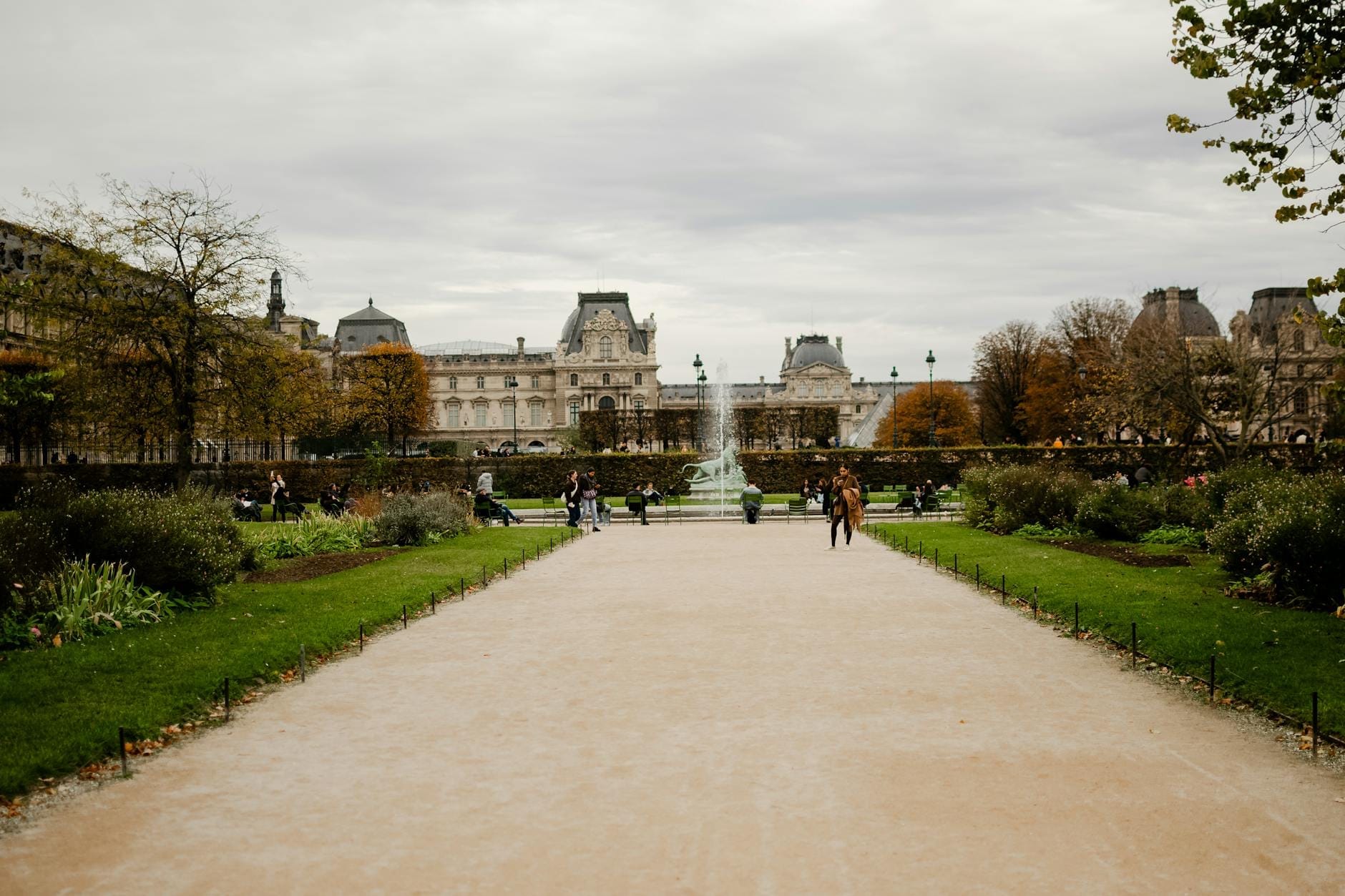
The Jardin des Tuileries is a formal French garden covering approximately 28 hectares along the northern bank of the Seine, running east to west from the Louvre to Place de la Concorde. It is not a park in the casual sense of the word. There are no meadows to sprawl on, no football pitches, and no jogging loops. What it offers instead is architectural precision: long gravel allées flanked by clipped linden trees, circular ornamental ponds where children sail rented toy boats, open terraces with unobstructed views toward the Eiffel Tower on clear days, and over 200 sculptures placed throughout the grounds — including works by Rodin and Maillol.
The garden connects two of the most significant sites in Paris: to the east, the Louvre Museum complex; to the west, the Place de la Concorde and the beginning of the Champs-Élysées axis. Walking through it is not just a pleasant detour. It is one of the great urban vistas of Europe, a straight line of civic ambition that has been largely intact since the 17th century.
💡 Local tip
Practical note: The garden has different closing times by season. In summer it stays open until 11:00 PM, making it a genuinely good option for an evening walk. In winter it closes earlier, around dusk. Opening time is 7:00 AM most of the year, 7:30 AM in the colder months.
Four Centuries of History Under Your Feet
The garden's origins date to 1564, when Catherine de' Medici, the Italian-born queen consort of Henri II, ordered the creation of a garden for the Tuileries Palace — a royal residence that once stood where the western end of the Louvre courtyard now opens. The name comes from the tileworks (tuileries) that previously occupied the land. The original garden was Italian in style, reflecting Catherine's Florentine background.
The transformation into what visitors see today came exactly a century later. In 1664, Louis XIV commissioned landscape architect André Le Nôtre — the same designer who would go on to reshape Versailles — to redesign the Tuileries. Le Nôtre imposed the rigorous French formal style: bilateral symmetry, terraces elevated above the central parterre, and long sight lines that frame the surrounding cityscape. The garden was opened to the public in 1667, making it one of the earliest royal gardens in Europe to admit ordinary Parisians.
The Tuileries Palace itself was destroyed by fire during the Paris Commune in 1871 and never rebuilt. Its absence is visible in the gap between the two Louvre wings. The garden survived, and today it is classified as a historic monument and managed by the Louvre's administration. For those interested in going deeper into that intertwined history, the Louvre Museum occupies the eastern edge of the same grounds.
Tickets & tours
Hand-picked options from our booking partner. Prices are indicative; availability and final rates are confirmed when you complete your booking.
Investigative visit, The Prisoner of the Bastille
From 14 €Instant confirmationFree cancellationPastry and chocolate tour in Saint-Germain-des-Pres neighborhood
From 109 €Instant confirmationFree cancellationWalking tour of Saint-Germain-des-Pres neighborhood
From 104 €Instant confirmationFree cancellationGuided tour of Les Invalides with Tomb of Napoleon
From 89 €Instant confirmation
How the Garden Changes Through the Day
Early morning, before 9:00 AM, the Tuileries has a quietness that feels almost private. Joggers move along the outer terraces. The gravel crunches underfoot with no background noise from tour groups. Light comes in low and golden from the east, casting long shadows from the plane trees along the northern terrace and illuminating the stone basins of the main round pond. This is when the garden best rewards the observer who slows down.
By mid-morning in spring and summer, the dynamic shifts noticeably. School groups arrive at the eastern entrance from the Louvre side. The toy boat concession at the main basin opens, and children line up for the wooden poles used to nudge their rented sailboats around the water. Café chairs fill up along the allées. It becomes a social space more than a contemplative one, which has its own appeal. The Tuileries is, at this hour, a good place to watch Parisians as much as tourists.
Late afternoon in summer brings a particular quality to the western terrace overlooking Place de la Concorde. The light turns warm and the obelisk of Luxor and the twin fountains of the Place become part of the view from the garden's elevated edge. In winter, the same terrace on a clear day offers an unobstructed look at a near-empty garden and a grey, low Paris sky — less dramatic perhaps, but far less crowded. The Ferris wheel that operates seasonally near the Concorde end adds a bit of color in the colder months.
The Sculptures and the Orangerie: What to Actually Look At
The garden's sculpture collection is frequently overlooked by visitors who treat the Tuileries as a transit corridor between monuments. This is a mistake. More than 200 works are placed throughout the grounds, including a series of bronze figures by Aristide Maillol along the central axis and individual pieces by Rodin. They are not roped off or set on platforms behind barriers. You walk among them at eye level, which creates a very different encounter than viewing the same artists' work in a museum.
At the garden's western end, two important museums occupy the terraced pavilions. The Musée de l'Orangerie sits on the Seine-side (southern) terrace and contains Monet's monumental Water Lilies panels — two oval rooms designed specifically for the paintings, which Monet donated to the French state. This is one of the most considered viewing experiences in Paris. The Jeu de Paume, on the opposite northern terrace, now functions as a contemporary photography and media arts space. Neither is included in the Tuileries' free admission; both require separate tickets.
ℹ️ Good to know
The Musée de l'Orangerie is included in the Paris Museum Pass. If you're planning several museum visits, check whether the pass makes financial sense for your itinerary.
Getting There and Getting Around Inside
The most convenient Metro stop for the garden's eastern (Louvre) entrance is Palais Royal–Musée du Louvre on Lines 1 and 7. For the western (Concorde) entrance, use Concorde on Lines 1, 8, and 12. The Tuileries stop on Line 1 exits directly into the middle of the garden — useful if you want to start in the centre rather than walk the full length.
The garden sits squarely in the 1st arrondissement, part of the broader Champs-Élysées and Trocadéro corridor. Walking the full east-west length from the Louvre Pyramid to Place de la Concorde takes roughly 15 minutes at a leisurely pace without stopping. Most visitors spend longer, either sitting at the basin or exploring the lateral terraces that run along the northern (Rue de Rivoli) and southern (riverside) edges.
The wide gravel paths throughout the garden are accessible for pushchairs and wheelchairs without significant difficulty. There are no cobblestone sections along the main allées, though the gravel surface can be loose after rain. The northern terrace running alongside Rue de Rivoli offers shade and a slightly elevated perspective over the central garden.
⚠️ What to skip
Photography note: The garden itself is open and easy to photograph at any time. However, the Orangerie and the Louvre exterior (Pyramid and Napoleon Courtyard) have specific rules about commercial photography. For casual tourists, there are no restrictions in the open garden.
Practical Walkthrough: A Suggested Route
Enter from the Concorde end in the morning for the best light. The western terrace gives you the full garden laid out ahead of you, with the Louvre visible at the far end. Walk the central gravel axis east, pausing at the round Grande Vasque basin at the midpoint — this is where the toy boats operate and where benches face inward for comfortable sitting. Continue east to the octagonal Grand Bassin, a second, larger pool closer to the Louvre end.
From the eastern end, the passage through the Arc de Triomphe du Carrousel leads into the Louvre's Napoleon Courtyard and the Pyramid. If a Louvre visit is on your schedule, this makes a natural transition. Alternatively, the Rue de Rivoli side of the garden has several cafés and the entrance to the covered Galerie du Carrousel shopping area beneath the Louvre. Across the river to the south, Musée d'Orsay is visible from the garden's southern terrace, about 10 minutes on foot once you cross the Seine.
Seasonal Considerations and Weather
Spring (April to June) and early autumn (September to October) are when the garden performs best. The chestnut and linden trees are in leaf, the flower beds along the parterre are planted and tended, and temperatures are mild enough to sit outside comfortably. These months align with Paris's wider travel sweet spot: better weather, longer daylight hours, and marginally fewer visitors than the July–August peak.
Summer is crowded, particularly in July when the Tuileries Fair (Fête des Tuileries) operates a funfair in the western section of the garden — rides, food stalls, and temporary attractions run for several weeks. This transforms that part of the garden significantly and is worth knowing about in advance if you are expecting the formal garden experience. For a broader look at timing a Paris trip, the best time to visit Paris guide covers seasonal trade-offs across the city.
In winter, the garden has a stripped-back quality that appeals to visitors who prefer to see the geometry of Le Nôtre's design without the softening effect of foliage. The bare branches of the clipped trees reveal the structure clearly. Fewer visitors means you can walk the full central axis without navigating around groups. Cold, clear days — which are not uncommon in Paris between November and February — offer the most photogenic light here.
Who Might Not Enjoy This
The Tuileries suits visitors who appreciate formal design, open space, and unhurried city walking. It is less suited to those looking for lush, informal parkland. If you want to sit on grass, throw a picnic blanket down, and spend an afternoon sprawled out, the Tuileries is not the right option — lawn access is mostly restricted and the ground is gravel throughout. The Jardin du Luxembourg in the 6th arrondissement has a more relaxed atmosphere and allows more casual use of its lawns. Similarly, if you are visiting with very young children who need room to run freely, the open but structured nature of the Tuileries can feel constraining.
Visitors who expect a 'wow' moment in the way that the Eiffel Tower or Sainte-Chapelle delivers one may find the garden underwhelming. Its quality is cumulative and spatial: it rewards slow walking and attention to detail rather than a single landmark payoff. Treat it as a connector between major sites and a place to decompress between museum visits, rather than a destination that justifies a special trip across the city.
Insider Tips
- The northern terrace path along Rue de Rivoli offers shade in summer and a slightly elevated view over the central garden — it is far less walked than the main axis and significantly quieter even on busy days.
- Toy boat rental at the Grand Bassin is cash-based and inexpensive. Lines form quickly after 10:00 AM on weekends in spring and summer. Arrive before opening or come on a weekday morning to avoid waiting.
- The garden's best photography angle for the full east-west axis is from the raised western terrace near the Concorde entrance, looking toward the Louvre. Shoot early morning facing east to get the light behind the Louvre façade, or at dusk facing west when the sky above Place de la Concorde turns orange.
- The Musée de l'Orangerie is inside the garden's boundary and is far less crowded than the Louvre or Musée d'Orsay. Booking an opening-time slot for the Monet rooms means you may have the oval halls almost entirely to yourself.
- During the Fête des Tuileries (typically July through August), the western third of the garden becomes a fairground. If this is not what you are looking for, enter from the Tuileries Metro stop and stay east of the main basin.
Who Is Jardin des Tuileries For?
- Architecture and design enthusiasts who want to understand French formal garden principles in their original urban setting
- Museum-goers linking the Louvre to the Musée d'Orsay or Orangerie and looking for a pleasant walking route between them
- Photographers working the golden-hour light along one of Paris's great civic axes
- Families with children aged 4 and up who enjoy the toy boat basin and open space to walk around
- Visitors who need a free, accessible, centrally located place to sit, rest, and observe the city between paid attractions
Nearby Attractions
Other things to see while in Champs-Élysées & Trocadéro:
- Arc de Triomphe
Standing 49.5 metres above Place Charles de Gaulle, the Arc de Triomphe de l'Étoile anchors the grandest axis in Paris. Its rooftop terrace delivers one of the city's great panoramas, while the base houses the Tomb of the Unknown Soldier — a living memorial renewed by flame every evening.
- Champs-Élysées
Stretching 1.91 km from Place de la Concorde to the Arc de Triomphe, the Avenue des Champs-Élysées is at once Paris's grandest promenade and its most debated street. Here is what to expect, when to go, and how to make the most of it.
- Crazy Horse Paris
Crazy Horse Paris has staged its distinctive blend of dance, light, and visual design on Avenue George V since 1951. The current show, 'Totally Crazy!', runs approximately 90 minutes and draws a mix of curious first-timers and loyal returning guests who appreciate its position between cabaret tradition and contemporary performance art.
- Grand Palais
Built for the 1900 Universal Exhibition and freshly reopened after a landmark renovation, the Grand Palais is one of the most spectacular public buildings in Europe. Its iron-and-glass nave stretches 240 metres and shelters world-class art exhibitions, cultural events, and the Palais de la Découverte science museum beneath a single soaring roof.