Jardin du Luxembourg: The Garden That Defines the Left Bank
Spread across 25.72 hectares in the heart of the 6th arrondissement, Jardin du Luxembourg is Paris's most refined public garden. Created in 1612 by Marie de Médicis, it blends French formal geometry with wilder English-style landscaping, 102 statues, a working orchard, and the grand Luxembourg Palace. Entry is free and the atmosphere shifts completely depending on the hour.
Quick Facts
- Location
- 15 Rue de Vaugirard, 75006 Paris (6th arrondissement)
- Getting There
- RER B: Luxembourg station (main entrance); Métro Odéon (lines 4 & 10); Métro Notre-Dame-des-Champs (line 12)
- Time Needed
- 1–3 hours; longer if picnicking or joining a guided tour
- Cost
- Free entry
- Best for
- Morning walkers, students, families with children, photography, picnic lunches
- Official website
- jardin.senat.fr
What Jardin du Luxembourg Actually Is
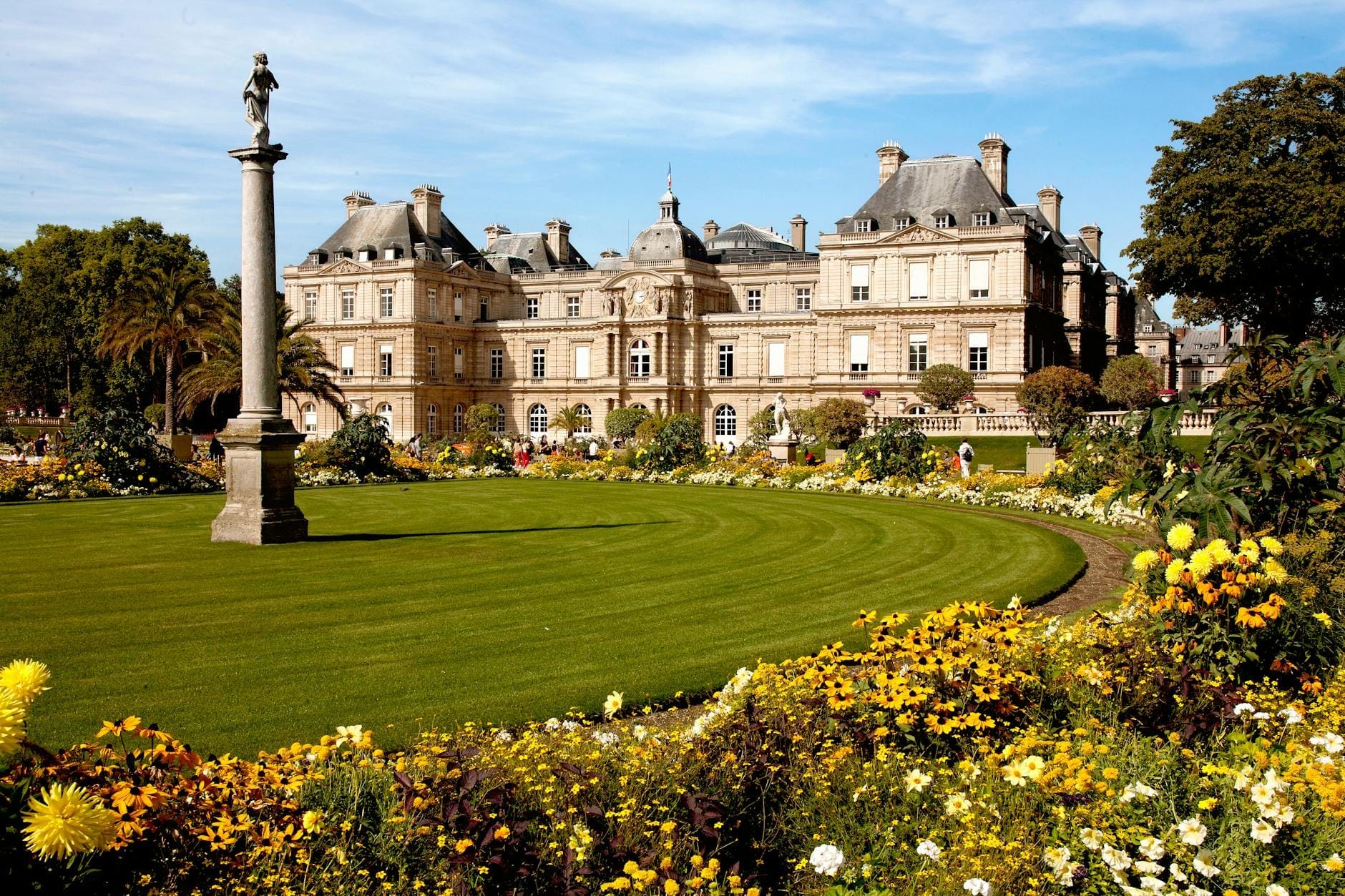
Jardin du Luxembourg is a 25.72-hectare public garden managed by the French Senate, whose palace occupies the northern edge of the grounds. Created in 1612 at the order of Marie de Médicis, who wanted a garden that echoed the Florentine parks of her childhood, the space has evolved over four centuries into something genuinely hard to categorize. It is formal enough to feel grand, but loose enough to feel lived-in. That tension is precisely what makes it so appealing.
The numbers help establish the scale: 3,000 trees, over 5,000 square metres of flower beds, an orchard maintaining more than 500 varieties of apple and pear, and 102 statues positioned across the grounds. The central octagonal basin, where children have been renting small wooden sailboats since the early 20th century, anchors the whole composition visually. The Luxembourg Palace behind it, now home to the French Senate, was built between 1615 and 1645 and is not open for regular public visits, though its facade dominates every photograph taken from the south lawn.
ℹ️ Good to know
Opening hours shift every two weeks to track sunrise and sunset. Generally expect gates to open between 7:30am and 8:15am and close between 4:30pm and 9:30pm depending on the season. Always check the current schedule at jardin.senat.fr before visiting in winter or early spring.
How the Garden Changes by Time of Day
Arriving at opening time, especially on a weekday, means sharing the paths with joggers looping the perimeter and older residents walking dogs before the no-dog rule is enforced. The light at this hour is low and raking, catching the metal frames of the green chairs scattered across the gravel and the dew on the grass borders. The flower beds, planted seasonally by the Senate's own horticultural team, look freshest before the afternoon sun fades their colour.
By mid-morning, the benches and metal chairs fill with a cross-section of Paris that few other places can match: students from the nearby Sorbonne reading paperbacks, tourists consulting maps, retired couples with baguettes, and the occasional chess player heading for the dedicated boards near the southwest corner. This is the window most photographers target for the iconic basin shot, with the palace reflected in still water before the wind picks up.
The lunch hour (noon to 2pm) brings the densest crowds in good weather. If you are visiting primarily for tranquility, arrive before 10am or after 4pm. Late afternoon in summer is particularly good: the long Paris light lasts well past 8pm, the crowds thin after 6pm, and the garden takes on a quieter, almost cinematic quality as the last orange glow hits the palace stonework.
💡 Local tip
The green metal chairs are free to move. Pick one up, drag it to the edge of the basin or into a patch of sun, and sit for as long as you like. This is not just permitted: it is the intended experience.
Tickets & tours
Hand-picked options from our booking partner. Prices are indicative; availability and final rates are confirmed when you complete your booking.
Luxembourg Garden walking tour
From 69 €Instant confirmationFree cancellationInvestigative visit, The Prisoner of the Bastille
From 14 €Instant confirmationFree cancellationParis Essential dinner cruise at 6.15pm
From 99 €Instant confirmationFree cancellationEiffel Tower reserved elevator entrance to 2nd floor with walking tour and Seine cruise
From 94 €Instant confirmationFree cancellation
History and Cultural Weight
The garden's origins are specifically Medici. Marie de Médicis, widowed queen regent of France, commissioned the garden and palace in 1612 partly as a political statement of permanence and partly as a homage to the Boboli Gardens in her native Florence. The Medici Fountain, tucked against the eastern wall of the palace in a long reflecting pool shaded by plane trees, is the most direct surviving link to that founding vision. It is one of the quietest corners of the entire garden and consistently overlooked by first-time visitors who stay near the central basin. The fountain sits within the broader context of Saint-Germain-des-Prés, a neighbourhood whose literary and intellectual identity runs deep.
During the French Revolution, the palace served as a prison. During World War II, it was requisitioned by the Luftwaffe as their Paris headquarters. The garden itself was partly converted to vegetable plots under occupation. None of this turbulence is visible today, but it layers meaning onto what looks, at a glance, like a serene ornamental park.
The 102 statues are not decorative filler. They include the Queens of France series along the main terrace, a Statue of Liberty study by Bartholdi (the sculptor of the New York original), and a memorial to the French Resistance. Reading the statues as you walk adds a slow, cumulative education in French history without entering a single museum.
Practical Walkthrough: What to See and in What Order
Enter from the RER B Luxembourg station exit and you step almost directly into the formal upper terrace, which gives an immediate overview of the whole garden sloping down toward the palace. This is the correct direction: start high, move toward the basin, then fan out to the edges.
From the central basin, walk west toward the orchard and beekeeping school. The orchard is managed by the Senate and is not accessible to the public directly, but the rows of trained espalier trees visible along the perimeter fencing are worth pausing at, especially in spring when they blossom. The beekeeping school, founded in 1856, runs courses for the public and is one of the few genuinely unusual features that most visitors never discover.
Circle back east to the Medici Fountain before leaving. Go in the late afternoon if you can: the plane trees channel the light into the pool and the carp that live there become visible just below the surface. From the garden's south exits, you are steps from the Panthéon and the Musée de Cluny, both worth adding to the same half-day.
💡 Local tip
Guided tours led by the Senate's own gardeners run on the first Wednesday of each month, April through October, at 9:30am from the Observatoire gate. These are conducted in French but provide access to areas not normally open to the public, including the orchard. Phone +33 1 42 34 25 32 for group bookings.
Families, Children, and Practical Logistics
Jardin du Luxembourg is one of the better options in Paris for families with young children, though it competes with Jardin des Tuileries for that role. The children's play area in the southwest section includes a carousel, puppet theatre (Marionnettes du Luxembourg), and a supervised sandpit area. A crèche operates from 2pm to 6pm between May and mid-September for children aged 18 months to 6 years. The wooden sailboat rentals at the central basin are a reliable draw for ages 3 to 10: the boats are pushed around the octagonal pool with long sticks and children take this extremely seriously.
Stroller access is generally good on the main gravel paths, though the gravel itself can make pushing harder than it looks on a map. The perimeter paths and the main terraced walkways are the most manageable routes. Public toilets are available within the garden, a detail worth knowing since options in this neighbourhood are limited.
Photography, Weather, and What Affects the Experience
The most-photographed view is the central basin with the palace behind it, taken from the upper terrace steps. It works in almost any season. In winter, the chairs are stacked and the fountain is often off, but the bare plane trees create a stark, graphic composition that summer obscures with foliage. In spring, the flower beds along the main allée are at their most colour-saturated. For dedicated photography, the garden appears in multiple entries in any Paris photography guide, and for good reason.
Rain affects the experience more than at covered attractions, obviously. The Medici Fountain's grotto and the tree-lined allées provide partial shelter, but there is no indoor component. That said, the garden after a light rain, when the gravel is dark and the paths empty, is unexpectedly atmospheric. Heavy rain means the gravel paths become uneven puddle fields; wear appropriate shoes.
This is not the right choice for visitors who want to cover many sights quickly. The garden rewards slow movement and unscheduled time. If your Paris itinerary is built around maximising attraction counts per day, a 20-minute loop past the basin will feel incomplete. Visitors who sit, read, watch, and wander for an hour or two will get the most out of it.
Getting There and Getting Around
The simplest access point is the RER B Luxembourg station, whose exit opens directly opposite the Observatoire gate on the garden's north side. From central Paris (Châtelet–Les Halles), the journey takes under 10 minutes. Métro Odéon (lines 4 and 10) is a 5-minute walk from the northeast corner of the garden via Rue de Médicis. Métro Notre-Dame-des-Champs (line 12) serves the south side. For visitors combining the garden with other Left Bank sights, the Paris transit network makes it straightforward to link with the Musée d'Orsay, the Latin Quarter, or Saint-Germain in a single morning.
The garden has multiple gates around its perimeter. The main formal entrance on Rue de Médicis and the Observatoire gate on Boulevard de l'Observatoire are the most used. Cycling and scooters are not permitted within the garden. The nearest Vélib' (public bicycle share) docking stations are on the surrounding streets.
Insider Tips
- The Medici Fountain is consistently missed by visitors who stick to the central basin. Walk to the northeast corner of the garden, past the palace's east wing, and follow the long reflecting pool. Go between 4pm and 6pm for the best light through the plane trees.
- The guided gardener tours (first Wednesday of each month, April–October, 9:30am from the Observatoire gate) reveal the orchard, beekeeping facilities, and horticultural techniques not visible from public paths. Conducted in French, but the visual access alone makes it worth joining.
- The metal chairs are intentionally movable. Move several together, face them toward the basin, and treat the space like an open-air living room. Security staff will not ask you to stop: this behaviour is expected and has been since the early 20th century.
- For the cleanest photographs of the palace and basin, position yourself on the upper terrace steps before 9am on a calm morning. After 10am, the basin rim fills with visitors and the water is rarely still.
- The southwest corner of the garden, past the orchard fencing and near the Rue Guynemer exit, is significantly quieter than the central areas at all hours. The benches along the beekeeping school perimeter are often empty even on busy summer afternoons.
Who Is Jardin du Luxembourg For?
- Slow travellers who want a genuine Parisian experience rather than another queued attraction
- Families with children aged 3 to 10 (sailboats, carousel, puppet theatre, supervised play area)
- Photographers targeting the palace-and-basin composition or intimate fountain shots
- First-time Paris visitors who want to understand the Left Bank's intellectual and residential character
- Anyone building a morning route through the 5th and 6th arrondissements combining the garden with the Panthéon or Musée de Cluny
Nearby Attractions
Other things to see while in Saint-Germain-des-Prés & the Latin Quarter:
- Catacombs of Paris
Twenty metres underground, the Catacombs of Paris hold the remains of more than six million people in a network of former limestone quarries beneath the 14th arrondissement. It is one of the most unusual historical sites in Europe, and one of the most crowded. Here is what visiting actually looks like.
- Jardin des Plantes
Founded in 1626 as a royal medicinal herb garden, the Jardin des Plantes is France's principal botanical garden and one of Paris's most underrated green spaces. Free to enter and open every day of the year, it combines formal flowerbeds, towering greenhouse pavilions, a zoo, and four natural history museums inside a single 28-hectare site on the left bank of the Seine.
- Latin Quarter (Saint-Michel)
The Latin Quarter is Paris's most historically layered neighborhood, stretching across the 5th and 6th arrondissements on the Left Bank. From the monumental Saint-Michel Fountain to streets that follow paths worn by Roman Lutetia, this is a district where two thousand years of intellectual and political life are woven into the stone. Entry is free, and it rewards exploration at any hour.
- Musée de Cluny (Medieval Museum)
The Musée de Cluny — officially the Musée national du Moyen Âge — holds one of the world's most complete collections of medieval art inside a 15th-century mansion built over 1st-century Roman baths. Its crown jewel, the Lady and the Unicorn tapestry cycle, is alone worth the admission.