Musée de l'Orangerie: Inside Monet's Water Lily Rooms (and What Else to See)
The Musée de l'Orangerie holds one of the most quietly powerful experiences in Paris: eight monumental Water Lily panels by Claude Monet, displayed in two oval rooms exactly as he envisioned them. Beyond the Nymphéas, a rich permanent collection of early 20th-century painting fills the lower level, making this compact museum well worth a deliberate visit.
Quick Facts
- Location
- Jardin des Tuileries, Place de la Concorde (côté Seine), 75001 Paris
- Getting There
- Métro Line 1 & 8 – Concorde (3-min walk); RER C – Musée d'Orsay (10-min walk)
- Time Needed
- 1.5 to 2.5 hours
- Cost
- €12.50 standard adult; free for under-18s and EU residents aged 18–25; free first Sunday of each month (reservation required)
- Best for
- Impressionist art lovers, photography enthusiasts, quiet museum seekers, repeat Paris visitors
- Official website
- www.musee-orangerie.fr/en
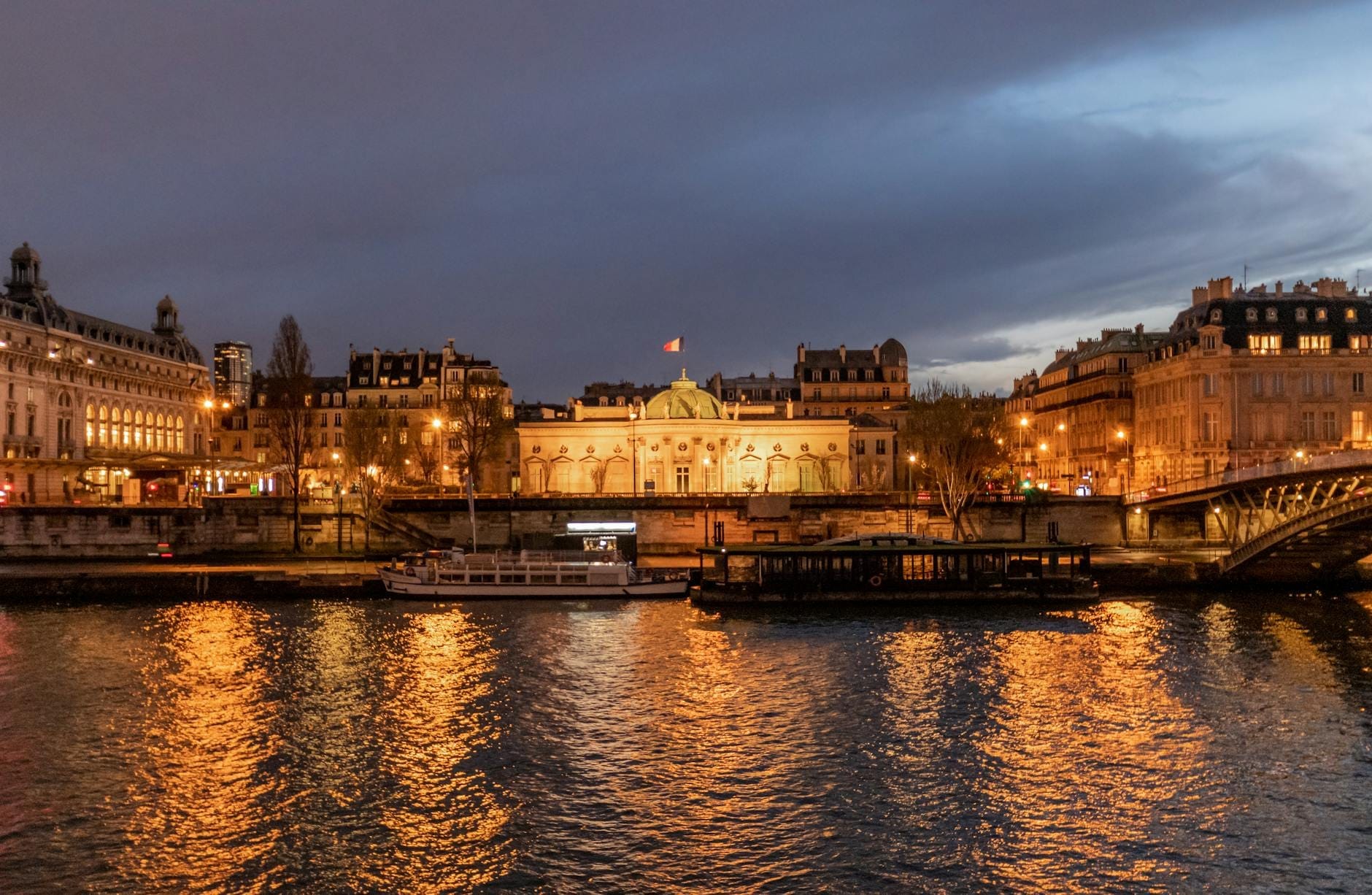
What the Musée de l'Orangerie Actually Is
The Musée de l'Orangerie sits in the southwest corner of the Jardin des Tuileries: a low stone building that most visitors walking between the Louvre and Place de la Concorde pass without a second glance. Inside, it holds two things: the eight enormous Water Lily panels that Claude Monet spent the last decade of his life creating, and the Walter-Guillaume Collection, one of the most coherent private art collections ever assembled in France.
The building dates to 1852, when Napoleon III commissioned it as a winter shelter for the orange trees of the Tuileries Garden. Architects Firmin Bourgeois and Louis Visconti designed a long neoclassical greenhouse along the Seine riverbank. It served various purposes before Monet, in a gift to the French state following World War I, proposed that his water lily paintings be installed here permanently. The museum opened in 1927, a few months after his death. Affiliated with the Musée d'Orsay since 2010, it covers roughly 6,300 square metres.
ℹ️ Good to know
The museum is closed on Tuesdays, December 25, May 1, and the morning of July 14. Standard hours are 9:00 to 18:00 daily except Tuesdays. On Fridays during temporary exhibition periods, the museum opens until 21:00, with reduced admission after 18:00.
The Oval Rooms: What Monet Actually Intended
From the ticket hall, a staircase leads up to the first of two elliptical rooms. Nothing fully prepares you for the scale. The Water Lily panels are not paintings in a conventional sense: they are continuous panoramas, each stretching between six and seventeen metres in width, mounted at eye level so that the horizon of water, light, and vegetation wraps around the entire room. There are no frames, no gaps between panels. Standing in the centre, the effect is total immersion.
Monet worked on the Nymphéas series from 1914 until his death in 1926, by which point he was almost completely blind. He collaborated with architect Camille Lefèvre on the oval rooms, insisting on natural overhead light filtered through frosted glass skylights. That decision is what makes the experience shift depending on when you visit. On an overcast morning, the blues and greens deepen into something muted and contemplative. On a bright afternoon, certain panels flare with reflected gold. The paintings change throughout the day because Monet built them to.
The second oval room holds four additional panels, including the 'Agapanthus' triptych and compositions where weeping willows trail into the water. Many visitors find this room quieter and linger longer. Benches run through both rooms. Sitting and looking slowly, rather than photographing immediately, is the most rewarding approach.
💡 Local tip
Photography without flash is permitted in the Nymphéas rooms. Weekday mornings at opening (9:00) offer the calmest atmosphere and the most natural light in the first oval room. Avoid weekend afternoons, when group tours cluster in the rooms simultaneously.
Tickets & tours
Hand-picked options from our booking partner. Prices are indicative; availability and final rates are confirmed when you complete your booking.
Musee d'Orsay Skip-the-Line Tickets and Guided Tour
From 59 €Instant confirmationFree cancellationSkip-the line guided tour of Musee Rodin
From 89 €Instant confirmationMusee d'Orsay entrance ticket with Seine river cruise
From 45 €Instant confirmationParis Musee d'Orsay tickets and in-app audio tour
From 35 €Instant confirmation
The Walter-Guillaume Collection: The Floor Most Visitors Rush Through
The lower level houses the Walter-Guillaume Collection, and it routinely gets treated as an afterthought. That is a mistake. Paul Guillaume was one of the most influential art dealers in early 20th-century Paris, championing Picasso, Matisse, Derain, Soutine, and Modigliani before those names became canonical. His wife Domenica later bequeathed the collection to the French state in 1959.
The lower galleries contain works by Cézanne, Renoir, Henri Rousseau, and Giorgio de Chirico alongside the artists Guillaume championed. Soutine's expressionist portraits, painted with a ferocity of brushwork, jar pleasantly against the serenity of the floor above. The Modigliani portraits are among the most psychologically arresting works in the museum: elongated faces, tilted necks, eyes rendered without pupils.
Note that works travel for international loans periodically. Check the museum website before your visit if specific pieces are a priority.
If the Walter-Guillaume Collection sparks appetite for more early modernist work, the Musée d'Orsay is a 15-minute walk east along the Seine, and the Picasso Museum Paris covers the trajectory of one of Guillaume's most important artists in far greater depth.
Getting There and Navigating the Building
The museum entrance faces the garden, not the riverbank. From Concorde Métro station (Lines 1 and 8), the walk takes roughly three minutes through the Tuileries gates. From Tuileries station (Line 1), the walk is slightly longer but passes through the full garden.
The Jardin des Tuileries makes a natural extension of the visit: it stretches from the Orangerie all the way to the Louvre, with fountains, sculpture, and café chairs along the central allée. Most visitors combine the museum with time in the garden before or after.
Inside, the layout is simple: tickets and coat check at ground level, Nymphéas rooms up one flight, Walter-Guillaume Collection on the lower level. A lift serves all floors. The museum shop near the exit carries art books, prints, and Monet-related merchandise.
💡 Local tip
Book tickets in advance at billetterie.musee-orangerie.fr. Walk-up tickets are available, but timed-entry slots sell out during peak season (April through October). Online booking also eliminates the ticket queue entirely.
Timing Your Visit: How the Experience Shifts by Hour
The first 45 minutes after opening on weekdays are the calmest. The Nymphéas rooms hold perhaps a dozen visitors rather than fifty, and the ambient sound drops to almost nothing. This is the window for anyone who wants to sit with the paintings rather than navigate around other people.
Midday and early afternoon on weekends draw the densest crowds, particularly in July and August. The oval rooms remain beautiful even when busy, but the meditative quality Monet designed them to produce becomes harder to access. The first Sunday of each month is free but often busier than a normal paid Saturday; arrive at opening or after 16:00 when groups have moved on.
Practical Details
Standard adult admission is €12.50. Under-18s enter free, as do EU residents aged 18 to 25 with valid ID. Admission is free on the first Sunday of each month, though a reservation is still required. The Paris Museum Pass covers entry and lets you skip the ticket queue. Audio guides cost an additional €5 and cover both collections well.
For visitors planning several museum visits, the Paris Museum Pass covers the Orangerie and dozens of other sites. Combining the Orangerie with the Musée Marmottan Monet in the 16th arrondissement creates a strong Impressionism-focused day: the Marmottan holds the world's largest Monet collection, including early canvases not represented here.
The museum is fully accessible by lift. Bag storage is available at the coat check. Photography without flash is permitted throughout the permanent collection. Who might want to skip it: those with very limited time who have not yet seen the main Paris landmarks, or travellers who need a large encyclopedic museum experience rather than a focused one.
The Surrounding Area
The Orangerie occupies one of the most strategically placed sites in Paris. To the east: the Tuileries Garden and the Louvre. To the west: the Place de la Concorde and, beyond it, the Champs-Élysées. Along the northern edge of the Tuileries, the Palais Royal is worth a 15-minute detour for its arcaded gardens and Daniel Buren's striped columns. The Champs-Élysées and Trocadéro area is the broader neighborhood, offering high-end shopping and major cultural institutions within easy walking distance.
Insider Tips
- The Jeu de Paume gallery sits directly opposite the Orangerie at the other end of the Tuileries terrace, showing contemporary photography and video art. If you have a Paris Museum Pass, check what is on there before or after your visit.
- On rainy or overcast days, the Nymphéas rooms become noticeably more atmospheric. The greys of the water surface and the cool blue-greens of the lily pads deepen. Some visitors deliberately choose grey-sky days for this reason.
- The museum runs family workshops and guided activities for children, booked separately through the museum website. These are a genuinely good option if you are visiting with young children who might otherwise struggle with the stillness required for the Nymphéas rooms.
- If you want to understand where the paintings came from, consider combining your visit with a day trip to Giverny, roughly 80 kilometres west of Paris, where Monet built the water garden that inspired the entire series.
- The rear garden terrace, accessible from the ground floor near the shop, offers a less-photographed view of the Seine riverbank and a quieter place to sit than the main Tuileries allée.
Who Is Musée de l'Orangerie For?
- Art lovers with a focused interest in Impressionism and early modernism
- Photographers seeking natural light and painterly compositions
- Return visitors to Paris who have covered the major sites and want depth over breadth
- Travellers who prefer compact, manageable museums over large, exhausting ones
- Anyone needing a quiet, contemplative counterpoint to a busy Paris itinerary
Nearby Attractions
Other things to see while in Champs-Élysées & Trocadéro:
- Arc de Triomphe
Standing 49.5 metres above Place Charles de Gaulle, the Arc de Triomphe de l'Étoile anchors the grandest axis in Paris. Its rooftop terrace delivers one of the city's great panoramas, while the base houses the Tomb of the Unknown Soldier — a living memorial renewed by flame every evening.
- Champs-Élysées
Stretching 1.91 km from Place de la Concorde to the Arc de Triomphe, the Avenue des Champs-Élysées is at once Paris's grandest promenade and its most debated street. Here is what to expect, when to go, and how to make the most of it.
- Crazy Horse Paris
Crazy Horse Paris has staged its distinctive blend of dance, light, and visual design on Avenue George V since 1951. The current show, 'Totally Crazy!', runs approximately 90 minutes and draws a mix of curious first-timers and loyal returning guests who appreciate its position between cabaret tradition and contemporary performance art.
- Grand Palais
Built for the 1900 Universal Exhibition and freshly reopened after a landmark renovation, the Grand Palais is one of the most spectacular public buildings in Europe. Its iron-and-glass nave stretches 240 metres and shelters world-class art exhibitions, cultural events, and the Palais de la Découverte science museum beneath a single soaring roof.