Musée Marmottan Monet: The World's Greatest Monet Collection
Tucked into a leafy corner of the 16th arrondissement, the Musée Marmottan Monet holds the largest collection of Claude Monet's work anywhere on earth, including the painting that gave Impressionism its name. Smaller and quieter than the Louvre or Orsay, it rewards visitors who want genuine depth over spectacle.
Quick Facts
- Location
- 2 Rue Louis-Boilly, 75016 Paris (16th arr., edge of Bois de Boulogne)
- Getting There
- Métro Line 9 – La Muette (5-min walk); RER C – Boulainvilliers (10-min walk); Bus 52 stop Musée Marmottan
- Time Needed
- 1.5–2.5 hours
- Cost
- Full: €16 / Concessions: €11 (students under 25 EU, under 18) / Free: disabled visitors, children under 7
- Best for
- Impressionism fans, quiet museum days, photography lovers, repeat Paris visitors
- Official website
- www.marmottan.fr
What the Musée Marmottan Monet Actually Is
The Musée Marmottan Monet is a dedicated fine art museum in Paris housing the world's largest collection of works by Claude Monet, with over 100 paintings spanning his entire career. Unlike the encyclopedic Orsay or the overwhelming scale of the Louvre, this is a focused, intimate institution where two hours can produce genuine familiarity with a single artist's full arc.
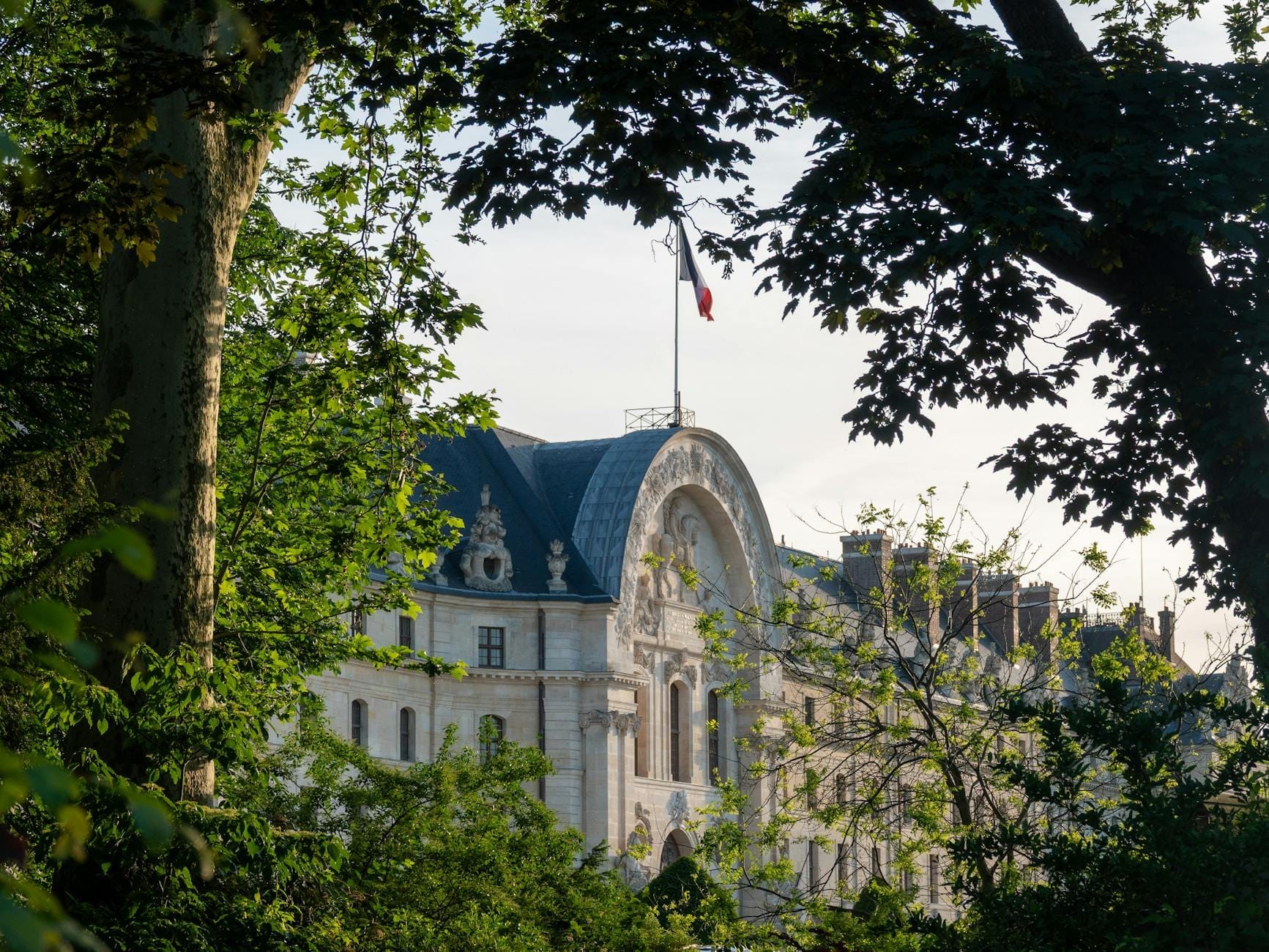
The building sets the tone before you see a single canvas. Originally a hunting lodge built for the Duke of Valmy in the early 19th century, it was purchased in 1882 by industrialist Jules Marmottan and transformed into an elegant townhouse for his Napoleonic-era art collection. When his son Paul died in 1932 with no direct heirs, the property passed to the Académie des Beaux-Arts. The museum opened to the public in 1934.
The transformation into a Monet shrine came in 1966, when Michel Monet, the painter's sole surviving son, bequeathed the entirety of his inherited collection to the museum. That single gift added over 65 Monet canvases and redefined the institution's identity. For contrast with Paris's other principal Impressionism venue, the Musée d'Orsay holds the broader survey: the Marmottan offers depth where the Orsay offers breadth.
💡 Local tip
Book tickets online in advance. Weekend mornings sell out faster than the museum's peripheral location might suggest, and on-site queues can add 20–30 minutes.
The Monet Gallery: The Reason Most People Come
The heart of the museum is an oval underground gallery purpose-built in 1971 to house Monet's largest canvases. Descending the staircase into it feels like entering a different atmospheric register: the ceiling lowers, the light shifts to a controlled warm tone, and suddenly you are standing among paintings measuring two metres or more, most from Monet's late Giverny period. The Nymphéas (Water Lilies) series dominates, but panels depicting the Japanese bridge, wisteria, and irises share the curved walls.
"Impression, Sunrise" hangs here too. Painted in Le Havre in 1872, this is the canvas whose title an art critic used mockingly to coin the word "Impressionism." It does not look like a manifesto. It looks like a working harbor at dawn, filtered through orange-tinted mist: two silhouetted rowboats, factory smokestacks dissolving into fog, a sun that is more smear than disc. Standing in front of the original produces a specific kind of quiet.
The painting was stolen in 1985 when armed thieves took nine works in a brazen daylight raid. All nine were recovered five years later in a villa in Corsica. The story is not advertised on the gallery walls, but it adds an unlikely layer of biography to an already remarkable object.
Because the collection exceeds 100 Monet works and wall space is finite, the museum rotates paintings in and out of display. What you see will differ slightly from visit to visit. For a different scale of water lily experience, the Musée de l'Orangerie houses Monet's monumental Nymphéas panels in two oval rooms the artist designed himself.
Tickets & tours
Hand-picked options from our booking partner. Prices are indicative; availability and final rates are confirmed when you complete your booking.
Guided visit Marmottan Monet Museum with skip-the-line
From 90 €Instant confirmationFree cancellationExcursion to Giverny and Marmottan Monet Museum
From 265 €Instant confirmationFree cancellationEntrance tickets to the Marmottan Monet Museum
From 15 €Instant confirmationVisit Monet's Giverny and Versailles in one day
From 137 €Instant confirmationFree cancellation
Beyond Monet: The Rest of the Collection
The ground floor and first floor rooms get less attention than they deserve. Paul Marmottan's original Empire-style collection includes furniture from the Tuileries Palace, marble busts of Napoleon's family, ornate candelabras, and a body of Flemish, Italian, and German Primitive paintings. These rooms feel like a wealthy private home: carved wood paneling, gilded mirrors, silk upholstery in deep greens and crimsons.
The museum also holds a significant body of work by Berthe Morisot, one of the most important figures in Impressionism and the movement's leading woman painter. Her canvases are lighter in palette and domestic in subject compared to Monet, and having them in the same building creates an instructive counterpoint. A 1940 gift from Victorine Donop de Monchy also brought eleven early Monet paintings collected by her father, Dr. Georges de Bellio, one of Monet's first patrons.
How the Experience Changes by Time of Day
Arrive at 10am on a weekday and the museum feels almost private. The entrance hall is cool, the staff unhurried, and the underground gallery can be nearly empty in the first hour. By 11:30am, tour groups begin arriving and the narrow staircase down to the lower gallery gets congested.
Thursday evenings, when the museum stays open until 9pm, offer a genuinely different atmosphere. Most tourist traffic clears by 7pm, and the artificial lighting in the underground gallery becomes the only light source. Colors read differently: the orange sun in "Impression, Sunrise" appears to glow against the surrounding blue-gray. A Thursday evening visit is worth prioritizing if your schedule allows.
Weekends between 11am and 2pm are the most congested. The underground gallery feels tight when more than 30 or 40 people occupy it simultaneously. If you must visit on a weekend, arrive at opening or come after 3pm.
ℹ️ Good to know
The museum is closed every Monday, as well as on May 1, December 25, and January 1. Galleries close 15 minutes before stated closing time.
Getting There and the Surrounding Area
The museum sits at 2 Rue Louis-Boilly, at the eastern edge of the Bois de Boulogne in the 16th arrondissement. This is one of Paris's quieter residential areas, and the contrast with the tourist centers near Notre-Dame or the Louvre is immediate. The streets near La Muette station are lined with patisseries and neighborhood cafes; the five-minute walk to the museum passes through calm, tree-shaded blocks.
The most direct route is Métro Line 9 to La Muette (5-minute walk). RER C to Boulainvilliers is a 10-minute walk. Bus 52 stops at Musée Marmottan directly. The Fondation Louis Vuitton is a 20-minute walk through the Bois de Boulogne, making a combined art day in western Paris straightforward.
⚠️ What to skip
This museum is not covered by the Paris Museum Pass. Budget the full admission separately, and check the official site for current prices before your visit.
Practical Notes and Who Should Skip This
Bags larger than a standard daypack must go into the cloakroom. Photography is permitted in most areas without flash, though temporary exhibitions may restrict this. The underground gallery's painting-focused lighting is difficult for smartphones: expect challenging exposures. The Jardin du Ranelagh, directly behind the museum, is a formal garden with benches and mature trees: a good post-visit decompression spot.
Travelers on a first trip with limited days may find the journey to the 16th impractical if they are working through central landmarks. If you want Monet but are pressed for time, the Musée de l'Orangerie is more centrally located near the Jardin des Tuileries. For visitors who find Impressionism broadly unengaging, the collection lacks the variety to hold interest for a full visit.
Accessibility: disabled visitors free. The ground floor is accessible; the underground gallery is reached by staircase. Contact the museum directly about lift access before visiting if mobility is a consideration.
Insider Tips
- Visit on a Thursday evening after 7pm: the day crowds have gone, and the underground gallery's artificial lighting makes the orange tones in 'Impression, Sunrise' read with unusual intensity.
- Start your visit on the ground floor with the Empire rooms rather than heading straight to the Monet gallery. You'll have the upper floors nearly to yourself while everyone else queues downstairs.
- The Jardin du Ranelagh directly behind the museum is a proper formal garden with benches, mature trees, and a small carousel. It's a genuinely pleasant place to decompress after the galleries and is almost never crowded.
- The collection rotates. If you want to see a specific Monet canvas, check the museum's current exhibitions page before your visit: not every painting is on display at all times.
- Combine the visit with the Fondation Louis Vuitton (20-minute walk through Bois de Boulogne) for a full day of art in western Paris without the tourist-center density.
Who Is Musée Marmottan Monet For?
- Monet devotees and Impressionism specialists wanting the fullest single-artist survey
- Repeat Paris visitors who have already covered the major central museums
- Travelers who prefer intimate galleries over large encyclopedic institutions
- Photography enthusiasts drawn to the underground gallery's painting-focused lighting
- Anyone looking for a calm, unhurried museum experience away from the tourist center
Nearby Attractions
Combine your visit with:
- Bois de Vincennes
Covering nearly 1,000 hectares on the eastern edge of Paris, the Bois de Vincennes is the city's largest green space, combining ancient woodland, three lakes, a botanical garden, a world-class zoo, and a medieval royal castle. It rewards both casual afternoon strollers and full-day explorers.
- Château de Fontainebleau
Older than Versailles and used by more French monarchs, the Château de Fontainebleau is a UNESCO World Heritage palace 55 km southeast of Paris. With over 1,900 rooms, free formal gardens, and a manageable crowd count compared to other royal sites, it rewards visitors who make the 40-minute train trip from Paris.
- Château de Vaux-le-Vicomte
Built between 1656 and 1661 for finance minister Nicolas Fouquet, Château de Vaux-le-Vicomte is the largest privately owned château in France. Its formal gardens, gilded state rooms, and extraordinary backstory make it one of the most rewarding half-day trips from Paris.
- Château de Vincennes
Rising at the eastern edge of Paris, Château de Vincennes is one of the most complete medieval royal fortresses in Europe. Home to France's tallest medieval keep and a stunning Gothic chapel, it rewards visitors who venture beyond the tourist centre with centuries of largely undisturbed royal history.