Île Saint-Louis: Paris's Most Elegant Island
An 11-hectare island in the heart of Paris, Île Saint-Louis feels like a separate city from the one surrounding it. With 17th-century mansions lining the quays, a single main street of independent shops and cafés, and no metro station by design, it offers a rare pocket of unhurried Paris just steps from Notre-Dame.
Quick Facts
- Location
- 75004 Paris, Seine river, 4th arrondissement
- Getting There
- Pont Marie (Métro Line 7), 5-min walk across the Seine
- Time Needed
- 1.5 to 3 hours
- Cost
- Free (open 24 hours)
- Best for
- Slow walks, architecture lovers, couples, photography
What Is Île Saint-Louis?
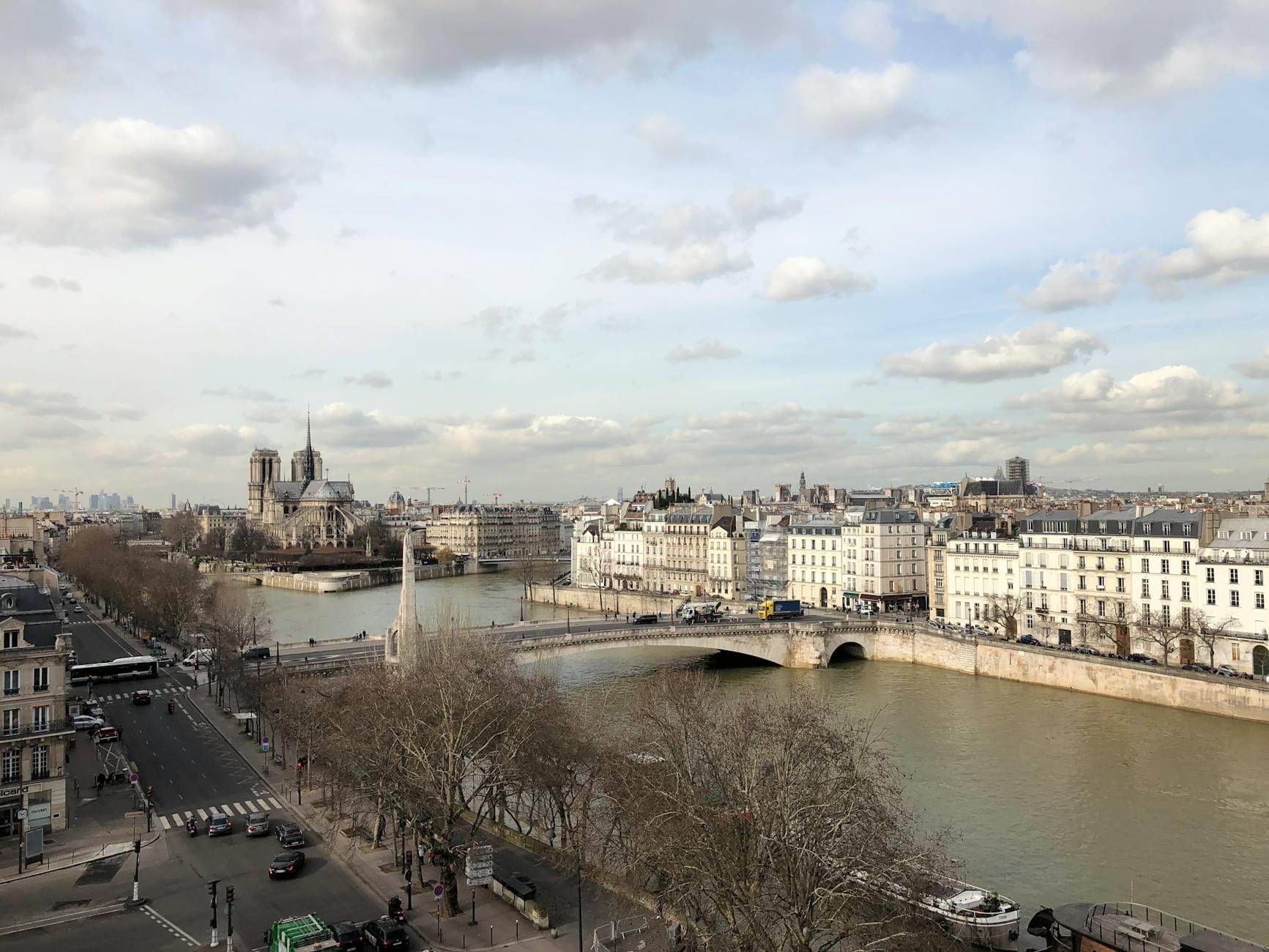
Île Saint-Louis is a natural island in the Seine, measuring just 11 hectares (27 acres) and stretching roughly 600 metres in length. It sits directly behind Notre-Dame Cathedral on Île de la Cité, connected to it by the Pont Saint-Louis, a short pedestrian bridge. Four bridges in total link the island to the surrounding city, but stepping onto any one of them immediately signals a change in pace.
Unlike nearly every other central neighbourhood in Paris, Île Saint-Louis has no metro station, no cinema, no bank branch, and no chain stores. This is not accidental. The island's residents have historically resisted development that would alter its residential character, and the result is a streetscape almost entirely intact since the 17th century. The stone facades, the iron balconies, and the narrow cobbled lanes look largely as they did three hundred years ago.
ℹ️ Good to know
Île Saint-Louis is free to visit at all times. There are no gates, no entry tickets, and no closing hours. It is a functioning residential neighbourhood, so standard courtesy applies on the quays and side streets.
A Brief History: From Marshland to Mansions
The island's story is a tale of calculated real-estate ambition. Before the 17th century, the area was actually two separate uninhabited islands used for grazing cattle and washing linen. In 1614, entrepreneur Christophe Marie struck a deal with Louis XIII to merge the two islands, construct the quays and connecting bridges, and subdivide the reclaimed land into building plots. In exchange, Marie was granted the right to collect bridge tolls for a period of years. The project was completed over roughly four decades, giving the island an unusually unified architectural character.
What emerged was an enclave of hôtels particuliers, the grand private townhouses built for aristocrats, financiers, and magistrates who wanted proximity to the royal court on Île de la Cité without the chaos of the Right Bank. The Hôtel de Lauzun at 17 Quai d'Anjou, built around 1657, became one of the most celebrated examples: its gilded ceilings and painted interiors later attracted writers including Charles Baudelaire and Théophile Gautier, who formed the Club des Hashischins there in the 1840s. It remains a listed historical monument.
The Church of Saint-Louis-en-l'Île, the island's only church, was begun in 1624 and consecrated in 1726. Its Baroque interior, topped by an unusual iron-and-stone spire added later, serves as a counterpoint to the Gothic grandeur just across the water. Former French president Georges Pompidou lived at 16 Quai de Béthune until 1974, underlining the island's long association with cultural and political power.
Tickets & tours
Hand-picked options from our booking partner. Prices are indicative; availability and final rates are confirmed when you complete your booking.
Montmartre sightseeing audio tour on mobile app
From 10 €Instant confirmationIle de la Cite and Notre Dame Cathedral small-group tour
From 65 €Instant confirmationFree cancellationPrivate tour of the Louvre, Notre-Dame and Cite & Saint-Louis Islands
From 285 €Instant confirmationFree cancellationLes Invalides and Army Museum priority tickets with audio tour on mobile app
From 29 €Instant confirmation
Walking the Island: What You'll Actually See
The island is small enough to walk from one end to the other in under ten minutes, but very few visitors do it that way. The main artery, Rue Saint-Louis-en-l'Île, runs lengthwise through the centre and holds most of the shops, restaurants, and cafés. For architecture, the quays are where the island reveals itself. Each of the four quays (Anjou, Bourbon, d'Orléans, and Béthune) faces a different direction and offers a distinct view: Quai d'Anjou looks north toward Le Marais, while Quai d'Orléans frames the rear towers of Notre-Dame with the Île de la Cité beyond.
The lower quays, reached by stone steps from street level, are a separate world from the tourist-facing main street. Here, locals sit on the stone embankments with wine glasses and paperbacks, and the traffic noise of central Paris is replaced by the sound of the river and passing bateaux. In summer, these ledges fill from late afternoon onward. In winter, you can often walk the lower quay alone, with mist off the water and the floodlit spires of Notre-Dame directly ahead.
💡 Local tip
Take the steps down to the lower quay on the Quai d'Orléans side for the closest ground-level view of Notre-Dame's flying buttresses across the water. Early morning, before 8 am, you may have the entire ledge to yourself.
The island also rewards those who ignore the main street entirely. Side streets like Rue Poulletier and Rue des Deux-Ponts cut across the width of the island and contain quieter residential blocks, small squares, and the kind of ordinary neighbourhood details (a bakery, a fromagerie, a pharmacy) that make clear this is a place where people actually live. About 4,400 residents call the island home, making it one of the most sought-after addresses in Paris. If you are interested in the wider context of this neighbourhood, the Île de la Cité area guide covers both islands and the surrounding Seine corridor.
Time of Day: How the Island Changes
Morning before 9 am belongs to the residents. Boulangeries open early, a handful of people walk dogs along the quays, and the light arrives low and golden from the east. This is the best time to photograph the stone facades without crowds or parked delivery vehicles cluttering the frame. The streets smell of fresh bread and the river, a combination that is hard to find anywhere else in the 4th arrondissement.
By mid-morning, tourists begin arriving from Notre-Dame via the Pont Saint-Louis. The main street fills gradually through the afternoon, peaking between noon and 5 pm. Weekend afternoons in July and August bring the heaviest density, particularly around the Berthillon ice cream shop. If you are visiting in peak summer and want a relaxed experience, aim for a weekday morning or the early evening, when the lunch crowd has dispersed but the island still has life.
Evenings shift the atmosphere again. The restaurant terraces on Rue Saint-Louis-en-l'Île fill, the overhead lights come on in the mansions, and the quays attract couples and small groups. After 9 pm, foot traffic thins considerably and the island takes on a quieter, more residential quality. The lower quays in autumn and winter, lit only by the city's ambient glow reflecting off the water, are among the most genuinely atmospheric spots in Paris.
Berthillon and the Food Scene
Berthillon at 31 Rue Saint-Louis-en-l'Île is the island's most famous institution, and it earns the reputation. Since the 1950s, the family-run glacier has been producing ice creams and sorbets from natural ingredients, with flavours rotating by season. The queue outside the original shop can stretch to 20 or 30 people on summer afternoons, but it moves quickly. Several nearby cafés also serve Berthillon ice cream at their counters, sometimes without the queue. The shop closes for several weeks in July and August for the owners' own holiday, which surprises many summer visitors.
⚠️ What to skip
Berthillon closes annually for several weeks during July and August. If an ice cream from the original shop is on your itinerary, check current opening dates before you visit.
Beyond Berthillon, the island has a concentrated but genuinely good food scene for its size. The Brasserie de l'Île Saint-Louis on Quai de Bourbon is a traditional Alsatian brasserie that has been operating for decades. Le Flore en l'Île on Quai d'Orléans offers a café-restaurant with a view directly facing Notre-Dame. Neither is cheap, but the quality holds. The rue also has a decent fromagerie and a wine shop that both cater largely to local residents rather than tourists.
Photography, Accessibility, and Practical Logistics
Île Saint-Louis is one of the better photography locations in central Paris precisely because its main street is narrow enough to capture full facades without a wide-angle lens, and because the quays offer unobstructed river compositions. The classic shots from Quai d'Orléans looking west toward the buttresses of Notre-Dame were made famous long before the 2019 fire; with the cathedral's ongoing restoration, the cranes visible from 2020 onward are gradually disappearing as reconstruction progresses. For more inspiration, the best photo spots in Paris guide includes several riverside angles from this island.
The island is largely walkable on flat ground, though the stone quay steps down to the lower embankment level have no ramp access and can be slippery when wet. The main street and upper quays are accessible by wheelchair. Side streets are narrow cobblestone in places. In rain, the lower quays can flood briefly during high-water periods in late autumn and winter; the city monitors Seine levels and will close embankment access when conditions require.
Getting here is straightforward. The closest metro station is Pont Marie on Line 7, a five-minute walk across the bridge of the same name from the island's eastern tip. Alternatively, walk across the Pont Saint-Louis directly from Notre-Dame on Île de la Cité, which takes under two minutes on foot. The RER B and C both stop at nearby Saint-Michel Notre-Dame, adding another approach from the Left Bank. There is no car parking on the island itself.
Visitors who are already planning a full day around the historic centre may find it useful to combine the island with a visit to Sainte-Chapelle on Île de la Cité, or with a walk through Le Marais just across the Pont Marie. The 3-day Paris itinerary pairs both islands with the surrounding neighbourhood in a logical half-day loop.
Is It Worth Your Time?
Île Saint-Louis is one of the few places in central Paris where the experience of the city slows down without requiring a metro ride to a distant neighbourhood. Its value is atmospheric rather than programmatic: there are no must-see museums here, no grand monuments that require timed entry, and no particular sight that will disappoint you if you miss it. What it offers is a sense of how Paris looked and felt before Haussmann's renovations transformed the rest of the city in the 19th century.
Visitors who need constant stimulation or who are working through a long checklist of major attractions may find the island feels thin on content after forty minutes. It is not the right choice if you only have one day in Paris and have not yet seen the Louvre, the Eiffel Tower, or Versailles. But for anyone on a second or third visit, for those who want to eat well and walk slowly, or for anyone who simply wants to sit on a stone ledge above the Seine with an ice cream and no particular plan, Île Saint-Louis pays off consistently and at no cost.
Insider Tips
- The Quai de Bourbon runs along the island's north side and is notably quieter than the tourist-facing Quai d'Orléans. Walk it in full to see the most intact row of 17th-century mansions on the island, with virtually no shops to interrupt the architecture.
- Berthillon's original shop closes for several weeks in high summer. A handful of cafés on the island serve their ice cream year-round; look for the Berthillon sign in café windows rather than joining the queue at the source.
- The steps down to the lower embankment on the Quai d'Orléans are steep and easy to miss. Once down, you are at water level with a direct sightline to the rear of Notre-Dame Cathedral, a perspective most visitors never find.
- The Hôtel de Lauzun at 17 Quai d'Anjou occasionally opens for guided tours through the City of Paris. Check the Paris Musées website for dates; access is limited and sells out quickly. The gilded interior is unlike anything else on the island.
- If you cross via the Pont Saint-Louis on a weekend afternoon, you will almost certainly encounter street musicians: the bridge's acoustics make it a regular performance spot. The sound carries across the water toward the Notre-Dame forecourt and is one of the island's more unexpected pleasures.
Who Is Île Saint-Louis For?
- Repeat visitors to Paris who have already covered the major monuments and want something slower
- Architecture and history enthusiasts interested in 17th-century Parisian urban planning
- Couples looking for riverside walks away from the main tourist corridors
- Photographers targeting golden-hour facades and Seine river compositions
- Families with children who want a calm, traffic-light stroll with ice cream at the end
Nearby Attractions
Other things to see while in Île de la Cité & Île Saint-Louis:
- Notre-Dame Cathedral
Cathédrale Notre-Dame de Paris reopened in December 2024 after five years of post-fire restoration. Standing on the Île de la Cité since 1163, this Gothic masterpiece is one of the most visited monuments in the world — and entry to the cathedral itself is free.
- Place Dauphine
Tucked into the western tip of Île de la Cité, Place Dauphine is a triangular 17th-century royal square where Parisians eat lunch under plane trees and time moves a little slower. Free to enter, largely off the tourist trail, and loaded with architectural and historical depth, it rewards anyone willing to stray five minutes from Notre-Dame.
- Pont Neuf
Completed in 1607, Pont Neuf is the oldest surviving bridge in Paris, stretching 232 metres across the Seine at the western tip of the Île de la Cité. Free, open at all hours, and layered with royal history and architectural detail, it rewards those who slow down and actually look.
- Sainte-Chapelle
Completed in 1248 for King Louis IX, Sainte-Chapelle is the finest example of Rayonnant Gothic architecture in France. Its upper chapel is essentially a skeleton of stone holding 15-metre walls of 13th-century stained glass that transform sunlight into cascading colour. No other medieval interior in Paris comes close.