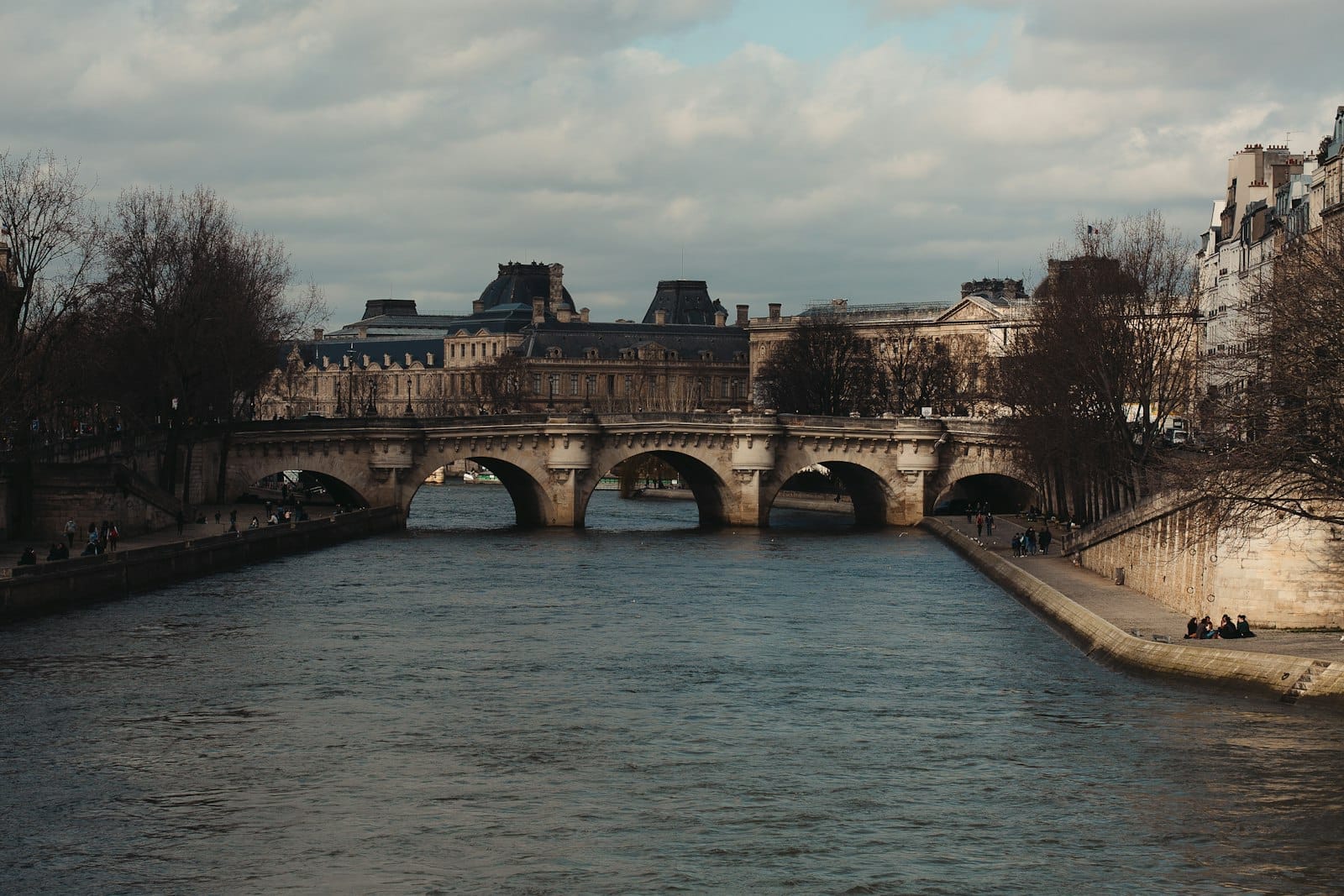
Île de la Cité and Île Saint-Louis sit at the geographic and historical centre of Paris, cradled by the Seine. One island holds the city's greatest Gothic monuments; the other preserves an almost village-like calm that feels completely removed from the tourist crowds just a bridge away.
These two islands in the Seine are where Paris began, and in many ways where it still feels most like itself. Île de la Cité carries the weight of roughly 2,000 years of history in its stones, from Roman Lutèce to the rebuilt spire of Notre-Dame. Île Saint-Louis, just a footbridge away, operates at a slower frequency altogether: narrow cobbled streets, handsome hôtels particuliers, and a single main street that draws a quiet, loyal crowd.
Orientation
The two islands occupy the exact centre of Paris, cradled within the curve of the Seine roughly equidistant from the Left Bank and the Right Bank. Île de la Cité, the larger of the two at about 22.5 hectares, straddles the 1st and 4th arrondissements and runs roughly west to east from the Pont Neuf to the eastern tip where the Pont de Sully begins. Île Saint-Louis sits immediately upstream, separated from its larger neighbour by a narrow channel crossed by the Pont Saint-Louis, and lies entirely within the 4th arrondissement. It measures roughly 525 metres long and 250 metres wide.
Think of Île de la Cité as a broad arrowhead pointing west into the river, with Notre-Dame at its eastern end, the Palais de Justice complex dominating the centre, and the triangular Square du Vert-Galant at the very tip of the Pont Neuf. Île Saint-Louis, by contrast, is a simple rectangle, oriented east-west, with its spine running along Rue Saint-Louis en l'Île from one end to the other.
Both islands connect to the rest of Paris via a web of bridges. Seven bridges in total serve the two islands, linking them to the Le Marais and the Right Bank to the north, and to the 5th arrondissement and Saint-Germain on the Left Bank to the south. The nearest major landmark to the south is the Latin Quarter, easily reached on foot in under ten minutes via the Petit Pont or Pont au Double.
Character & Atmosphere
Île de la Cité operates at two completely different speeds depending on where you stand. The western side, around the Palais de Justice and Sainte-Chapelle, belongs to lawyers, court officials, and tourists queuing for stained glass. The eastern end, dominated by the cathedral square and the quays that flank it, draws a more mixed crowd: school groups in the mornings, solo visitors circling the rebuilt apse of Notre-Dame in the afternoon, couples on the stone benches of Square Jean XXIII as the sun drops behind the Left Bank rooftops.
Early mornings before 9am are the best time to understand what these islands actually are: working, lived-in places. The flower and plant market (Marché aux Fleurs) on Place Louis-Lépine has been operating since the early 19th century, and by 7am the vendors are arranging potted herbs, cut flowers, and seasonal arrangements with the kind of focus that has nothing to do with tourism. On Sundays, the flower stalls make way for caged birds in what becomes the Marché aux Oiseaux, a tradition that feels entirely disconnected from the Instagram crowds that will arrive a few hours later.
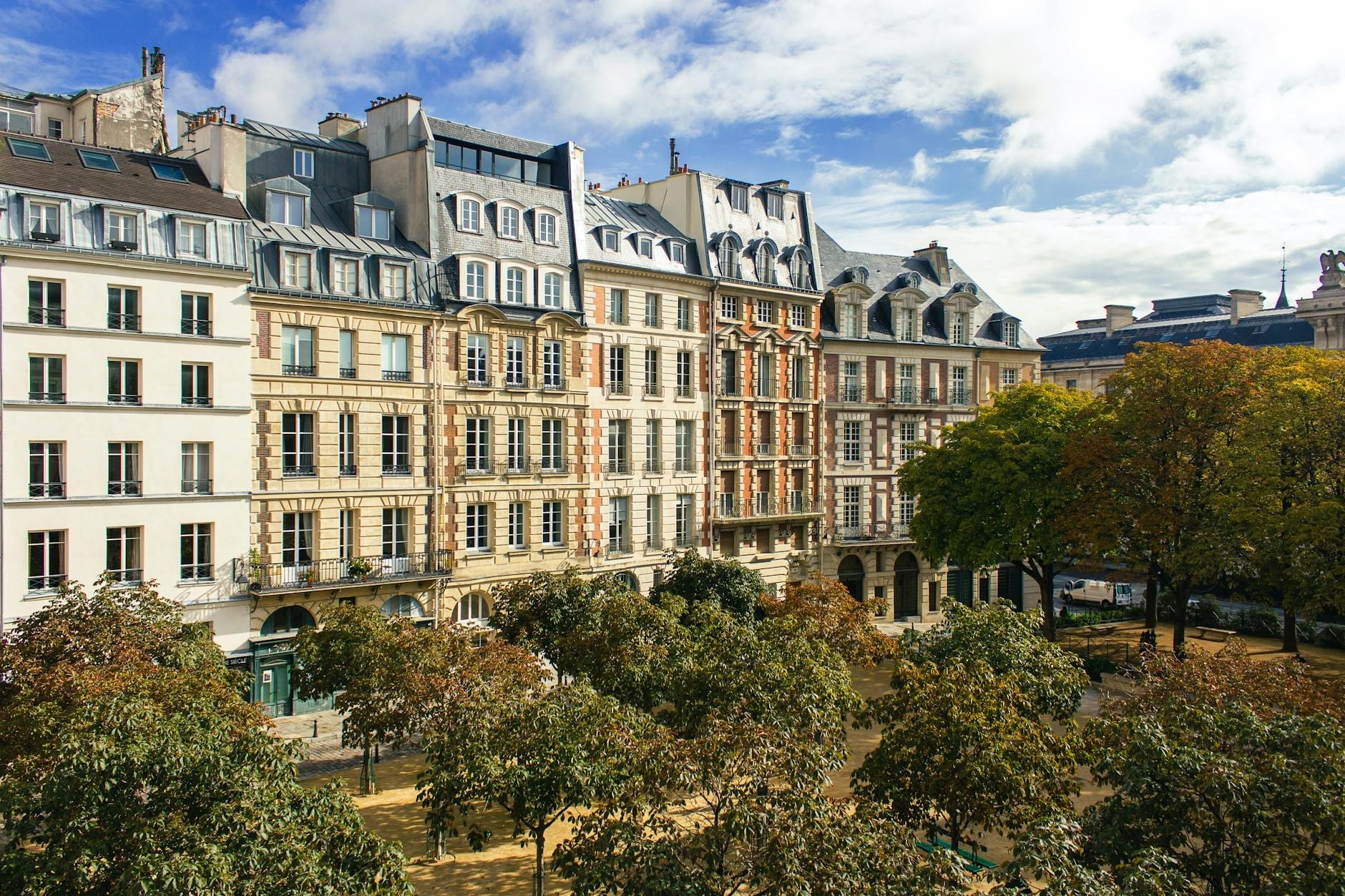
Île Saint-Louis tells a different story. Cross the Pont Saint-Louis from the chaos of the Notre-Dame forecourt and the noise drops almost immediately. The streets here are quieter than most residential side streets in the 4th arrondissement, let alone the tourist corridors nearby. Rue Saint-Louis en l'Île, the island's single main artery, is lined with fromageries, wine shops, delis, and a handful of restaurants that have been serving the same clientele for decades. The buildings are predominantly 17th-century hôtels particuliers, their facades unadorned and their courtyards hidden behind heavy wooden doors.
By midday in summer, the quais of Île Saint-Louis attract a loyal crowd of Parisians who spread picnic blankets on the stone steps leading down to the water's edge. This is the city's open-air living room: students, families, tourists who have escaped the guided-tour circuit, and older residents who have been doing this for forty years. The light on the water in the late afternoon, when the sun comes from the west and hits the pale stone quays directly, is something the photographs on your phone will completely fail to capture.
💡 Local tip
For the least crowded experience on Île de la Cité, arrive at Notre-Dame or Sainte-Chapelle when they open. By 10am in peak season, queues for Sainte-Chapelle can stretch across the Palais de Justice courtyard. Pre-booking tickets online saves significant waiting time.
What to See & Do
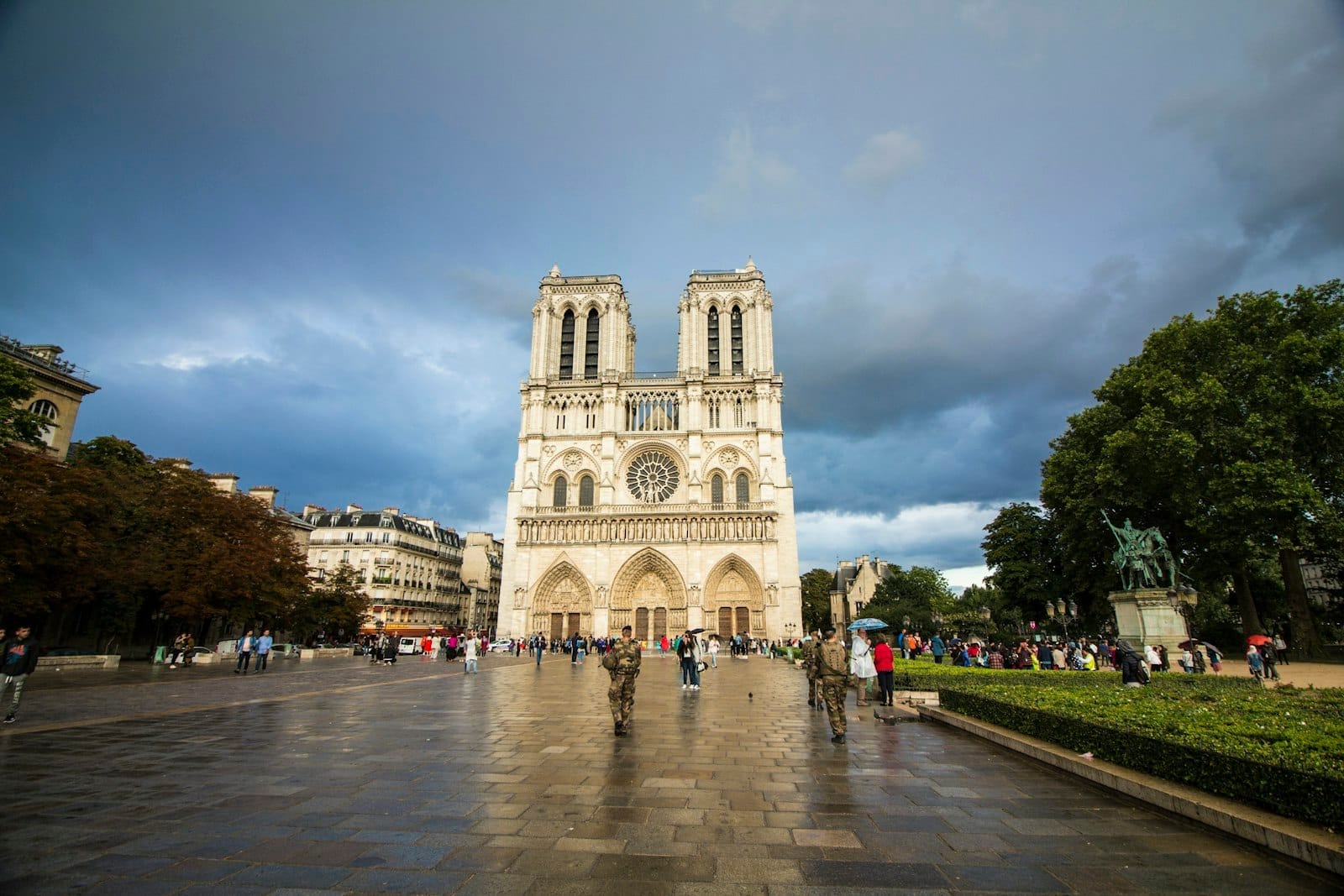
The most significant event in this neighbourhood in recent years has been the reopening of Notre-Dame Cathedral in December 2024, five years after the fire that destroyed its spire and roof. The restored interior is open daily, free of charge, with advance ticket reservations available to avoid queues. The rebuilt spire, faithfully replicating Viollet-le-Duc's 19th-century design, is visible from across much of central Paris and marks the island's eastern end with unmistakable clarity.
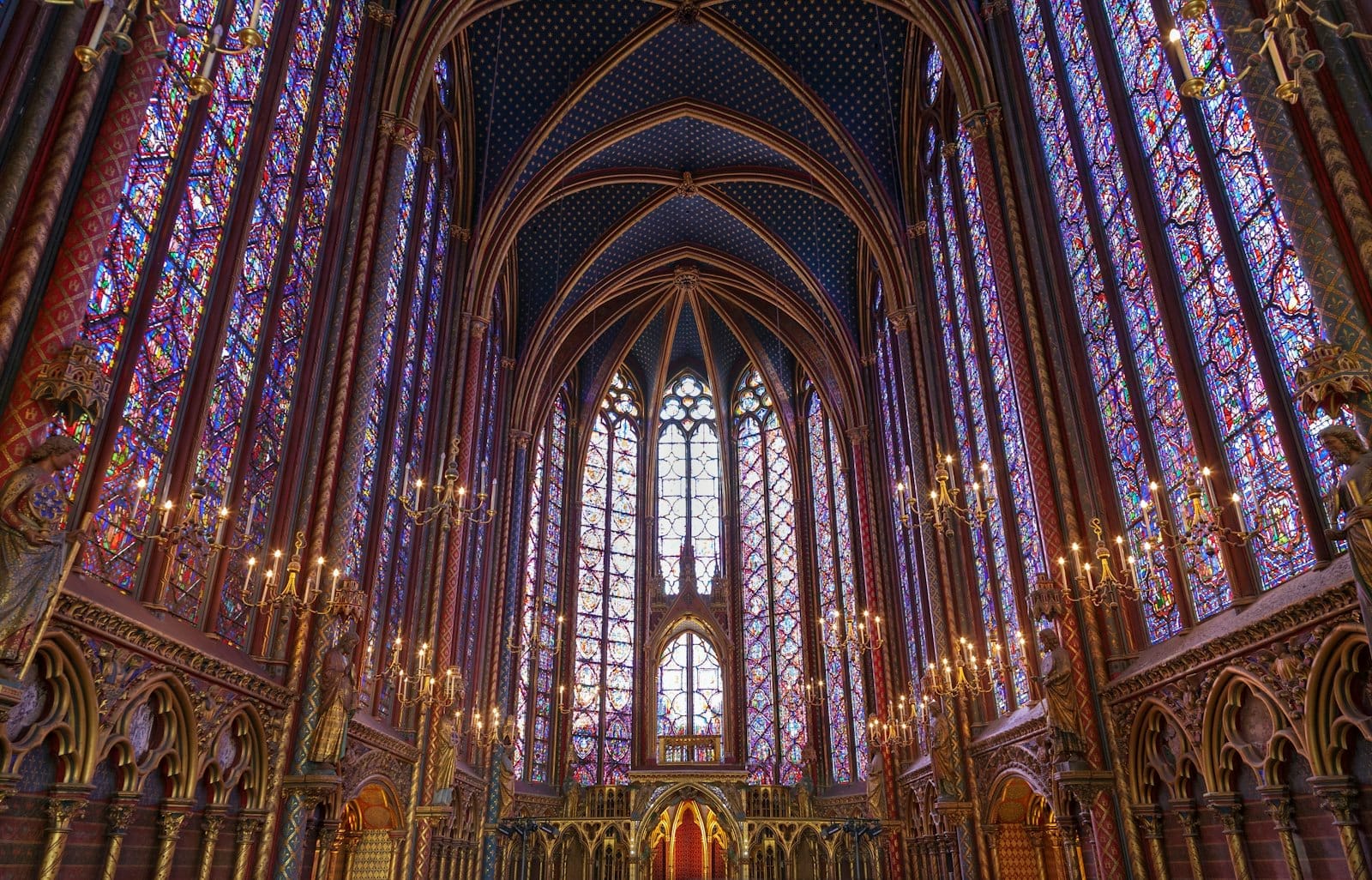
Within the Palais de Justice compound, Sainte-Chapelle stands as perhaps the single most extraordinary interior in Paris. Built by Louis IX beginning in 1241 to house Christ's Crown of Thorns, its upper chapel is essentially a cage of Gothic tracery filled with 1,113 scenes of stained glass spread across 15 soaring windows. The effect on a bright morning, when the light is refracted through deep blues and reds, has no equivalent in the city. Admission is €16 for EEA nationals and residents and €22 for non-EEA visitors, with free entry for EU residents under 26.
Adjacent to Sainte-Chapelle, the Conciergerie is the former royal palace turned revolutionary prison where Marie Antoinette was held before her execution. The reconstructed cell and courtroom interiors convey the atmosphere of the Terror years more effectively than any museum display. The building's medieval towers, visible from the riverside quays, are part of the most recognisable silhouette on the Seine. A combined ticket with Sainte-Chapelle is available and represents good value. For a broader look at the city's historical monuments, the Paris Museum Pass covers both sites and can eliminate the ticket queues entirely.
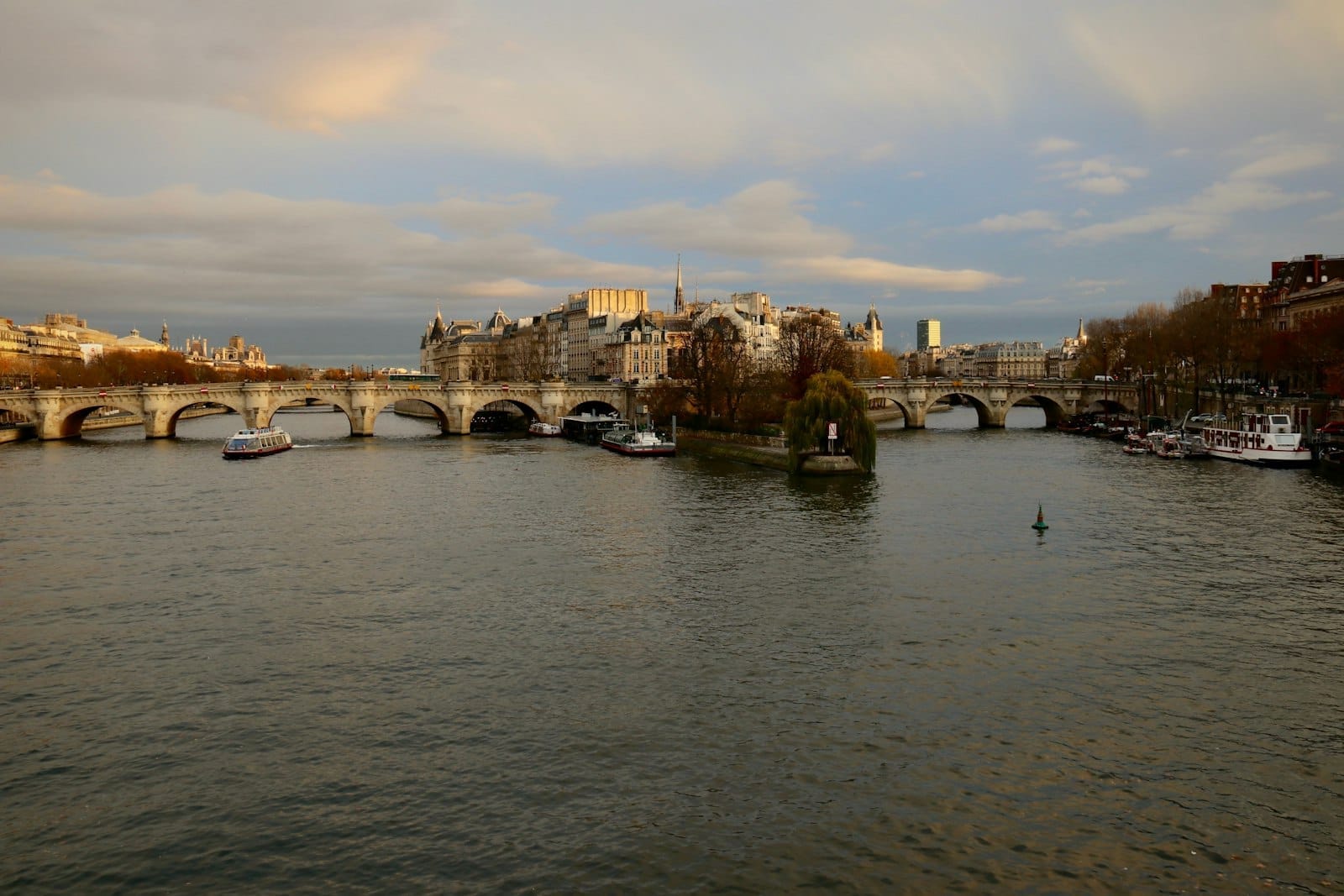
At the western tip of Île de la Cité, Pont Neuf is the oldest standing bridge in Paris, completed in 1607. The name is paradoxical: 'New Bridge' for the city's oldest crossing. Walk down the steps to the Square du Vert-Galant at the island's very tip for the best water-level view of the Seine in central Paris, with the Right Bank and Left Bank converging ahead of you. It is a favourite spot for an early morning coffee from a nearby boulangerie, eaten watching the river before the crowds arrive.
On Île Saint-Louis, the sights are less monumental but no less worth your time. The island itself is the attraction: a complete piece of 17th-century urban fabric that somehow survived Haussmann's transformations intact. The church of Saint-Louis-en-l'Île on Rue Saint-Louis en l'Île is largely overlooked but worth stepping inside for its gilded Baroque interior. The quais, particularly Quai de Béthune and Quai d'Anjou on the northern side, are lined with the kind of aristocratic townhouses that once housed Voltaire, Baudelaire, and the Polish royal family in exile.
Notre-Dame Cathedral: fully restored and reopened December 2024, free entry, advance booking recommended
Sainte-Chapelle: the greatest concentration of medieval stained glass anywhere; €16 EEA / €22 non-EEA in 2026
Conciergerie: revolutionary-era prison with original interiors, combined ticket with Sainte-Chapelle available
Marché aux Fleurs (Place Louis-Lépine): Paris's oldest flower market, Monday–Saturday; bird market on Sundays
Square du Vert-Galant: river-level terrace at the tip of Île de la Cité, free
Quai de Béthune and Quai d'Anjou: the finest hôtel particulier streetscapes on Île Saint-Louis
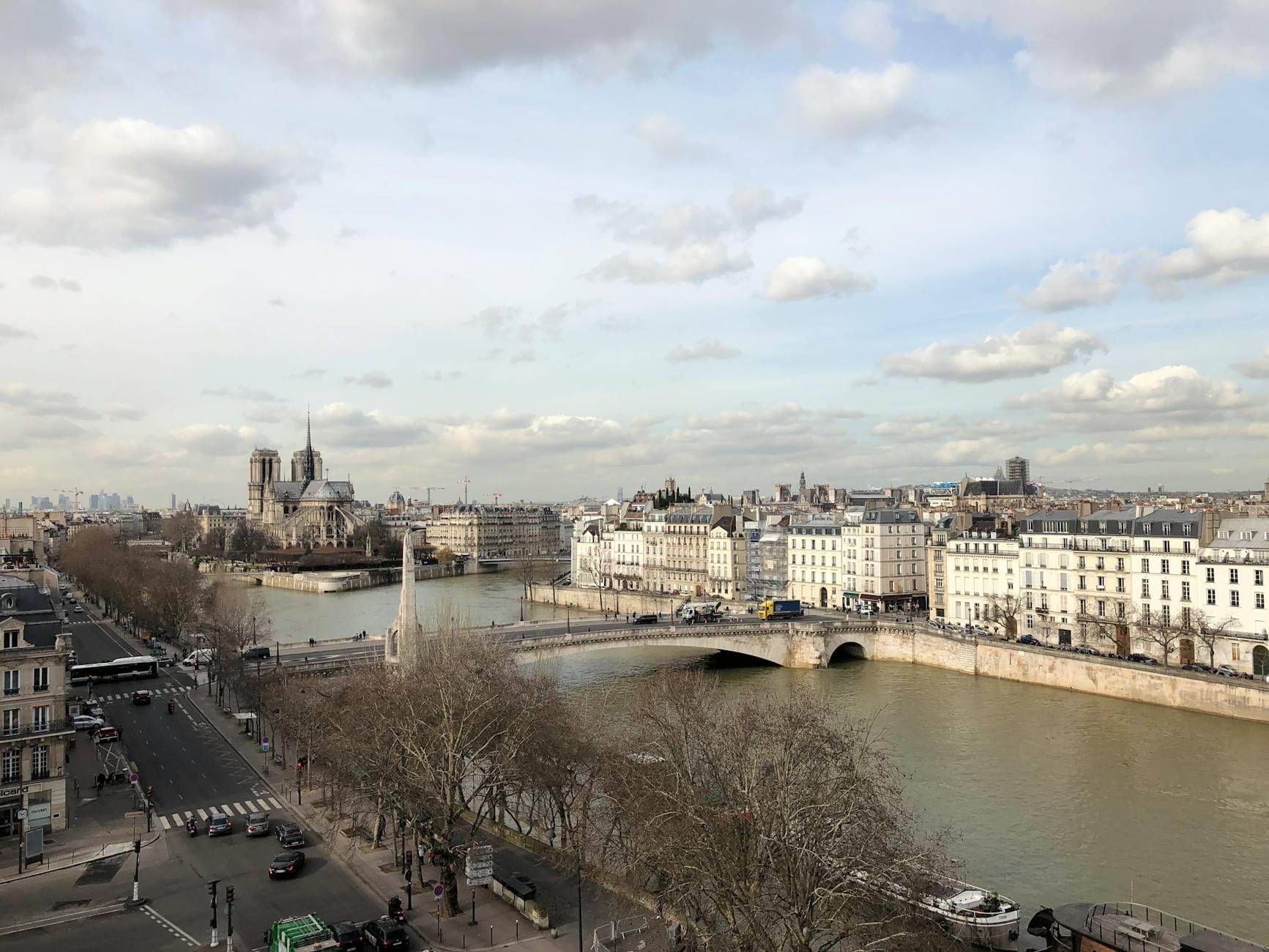
Pont de la Tournelle: the best vantage point for a full view of Notre-Dame's apse from the Left Bank side
ℹ️ Good to know
The Crypte Archéologique du Parvis Notre-Dame, located beneath the cathedral square, contains Roman and medieval remains excavated in the 1960s and 70s. It's rarely crowded and provides essential context for the islands' 2,000-year history. Check current opening times before visiting as hours vary seasonally.
Eating & Drinking
Île de la Cité proper has limited dining options worth seeking out: the streets immediately around Notre-Dame are heavy with tourist-trap crêperies and overpriced café terraces aimed at visitors who haven't yet worked out where to eat in Paris. The exceptions are the cafés on the quieter northern side of the island, around Quai de la Corse and Quai aux Fleurs, where a few neighbourhood addresses still operate at Parisian prices.
Île Saint-Louis is a different proposition entirely. Rue Saint-Louis en l'Île has a genuine food culture: a well-regarded fromagerie, a chocolatier, a wine merchant, and several small restaurants that rely on repeat local custom rather than tourist footfall. Portions are not large, prices are not cheap, and reservations are recommended for dinner at the more popular addresses. This is not a neighbourhood for budget eating, but the quality justifies the cost if you choose carefully.
The one food institution that visitors seek out on Île Saint-Louis is Berthillon, the glacier on Rue Saint-Louis en l'Île that has been producing artisan ice cream and sorbet on the island since 1954. The queues can extend down the street on summer weekends. The flavours are seasonal and genuine: wild strawberry, salted caramel, blackcurrant sorbet. The café seating inside is limited, so most people take a cone and walk to the quais. Note that Berthillon closes for several weeks in summer (typically August) and on Mondays and Tuesdays.
For a wider selection of eating options, particularly before or after visiting the monuments, the streets of Le Marais are a ten-minute walk across the Pont Marie or Pont de la Tournelle. Rue Saint-Antoine and the streets around Place des Vosges offer everything from quick falafel on Rue des Rosiers to proper sit-down bistros. Alternatively, crossing south via the Petit Pont puts you directly into the Latin Quarter, where competition between restaurants keeps quality up and prices more reasonable than on the islands themselves.
⚠️ What to skip
The cafés and restaurants with terrace tables directly facing the Notre-Dame forecourt charge a significant premium for the view. Coffee can cost three times the standard Parisian price. Walk one block in any direction and prices normalise considerably.
Getting There & Around
The most useful metro station for Île de la Cité is Cité (line 4), which exits directly onto the island near the Palais de Justice and Sainte-Chapelle. For Notre-Dame and the eastern end of the island, Saint-Michel (lines 4, RER B and C) on the Left Bank is often more convenient and involves a short walk across the Petit Pont or Pont au Double. Châtelet (lines 1, 7, 11, 14) on the Right Bank is a three-minute walk across Pont Notre-Dame to the island's northern quays.
Île Saint-Louis has no metro station of its own. The nearest options are Pont Marie (line 7) on the Right Bank, a two-minute walk across the bridge of the same name, or Sully-Morland (line 7) slightly further east. Both stations put you on the island in under five minutes on foot. The RER C stops at Saint-Michel-Notre-Dame, providing direct connections from the Eiffel Tower area and Musée d'Orsay, which is useful for travellers combining the islands with visits to the 7th arrondissement.
Both islands are small enough to walk end-to-end in 15 to 20 minutes. Cycling is possible but the narrow streets of Île Saint-Louis and the crowds around Notre-Dame make it impractical during busy periods. Vélib' (Paris's bike-share system) has stations on the surrounding quays of both banks. For context on navigating the wider city, the getting around Paris guide covers the full Métro, RER, and Vélib' network in detail.
A Seine river cruise passes both islands and provides a useful orientation to how the two islands sit within the river and in relation to the major monuments on either bank. Bateaux-Mouches and Vedettes du Pont Neuf both depart from points close to the islands; the latter boards directly from the quays beneath Pont Neuf at the western tip of Île de la Cité.
Where to Stay
Accommodation on the two islands is limited and occupies a specific niche: small boutique hotels and characterful residences in historic buildings. The trade-off is location versus practicality. There are no large chain hotels here, no Haussmann-era grand establishments, and no budget options. What you get is an address in one of the most historically significant and photogenic parts of Paris, with Notre-Dame or the Seine potentially visible from your window.
Île de la Cité itself has very few hotels given how much of its footprint is occupied by monuments, courts, and government buildings. The more realistic option for staying on the islands is Île Saint-Louis, where a handful of small hotels operate out of converted 17th-century townhouses on or near Rue Saint-Louis en l'Île. Rooms are typically compact, décor leans toward the classical, and the silence at night is striking given how close you are to some of the most visited streets in Europe.
The primary consideration for most visitors is whether the premium for an island address justifies itself. If you are focused primarily on the monuments of Île de la Cité and want to be within walking distance of Saint-Germain-des-Prés and Le Marais simultaneously, the answer is probably yes. If you are travelling with family, need accessibility, or prefer a neighbourhood with more dining and evening life on your doorstep, the 4th arrondissement on the Right Bank or the 5th on the Left Bank offer better value and more practical options. The broader where to stay in Paris guide covers both islands in the context of all central neighbourhoods.
Practical Notes
Both islands are extremely popular with tourists throughout the year, and the area around Notre-Dame in particular can reach saturation point on summer weekends. The reopening of the cathedral in December 2024 has increased visitor numbers significantly. Weekday mornings before 10am and late afternoons after 4pm are noticeably quieter than midday peaks.
There is minimal street-level commercial noise on Île Saint-Louis, which is part of its appeal, but this also means limited late-night eating options. Most restaurants close their kitchens by 10pm, and there are no clubs or late bars on the island. For evening entertainment, you are always going to be crossing a bridge.
For first-time visitors to Paris planning a broader itinerary, the islands work best as a half-day or full-day focus combined with the Latin Quarter to the south or Le Marais to the north. A practical 3-day Paris itinerary typically positions the islands on day one, pairing Notre-Dame with an afternoon walk through Le Marais and dinner near Place des Vosges. The Paris for first-timers guide explains how the islands fit into the wider city for those visiting for the first time.
ℹ️ Good to know
Île de la Cité is considered the official kilometre zero of France: the brass plaque set into the pavement in front of Notre-Dame marks the point from which all road distances in the country are measured. It's easy to walk past without noticing.
TL;DR
The historic birthplace of Paris: Île de la Cité holds Notre-Dame (reopened 2024), Sainte-Chapelle, and the Conciergerie within a compact area walkable in a single morning.
Île Saint-Louis offers a quiet contrast: 17th-century streetscapes, artisan food shops, and riverside quays that attract more Parisians than tourists, especially on weekday afternoons.
Best suited to: history and architecture enthusiasts, first-time Paris visitors wanting to anchor themselves in the city's monumental core, and anyone who values walkability to both the Left and Right Banks.
Be honest about the trade-offs: the Notre-Dame area is heavily visited, dining near the cathedral forecourt is overpriced, and Île Saint-Louis has very limited nightlife and late-dining options.
Plan around crowds: arrive at Sainte-Chapelle and Notre-Dame when they open, pre-book tickets online, and leave the quais of Île Saint-Louis for the late afternoon when the light and the atmosphere are at their best.
Top Attractions in Île de la Cité & Île Saint-Louis
Paris has over 130 museums, which makes choosing badly very easy. This guide cuts through the noise with a ranked, honest breakdown of the best museums in Paris, covering art, history, science, and design, with practical details on tickets, timing, and what to skip.
Paris has over 400 parks and gardens, ranging from formal French-style classics to wild woodland escapes. This guide covers the best green spaces across the city, with practical details on what to expect, when to go, and how to get the most out of each one.
Paris is one of the most photographed cities on earth, which means most visitors return home with the same ten images. This guide goes beyond Trocadéro to cover lesser-known vantage points, specific timing advice, and honest assessments of which spots are genuinely worth the effort.
Paris rewards visitors year-round, but the experience shifts dramatically depending on when you go. This guide breaks down each season honestly, covering temperatures, crowd levels, pricing, and the specific events and landscapes that make each period worth considering.
Paris rewards those who look down at it as much as those who walk through it. This guide covers every serious viewpoint in the city, from the famous towers to free terraces most visitors walk past, with honest advice on which are worth the queue and which are overrated.
Paris rewards those who venture beyond the périphérique. Whether you want royal grandeur at Versailles, Monet's living canvases at Giverny, or medieval forests at Fontainebleau, these are the best day trips from Paris — all reachable in under two hours.
Paris has one of the most comprehensive urban transport networks in the world. From the 16-line Métro to river buses and Vélib' bikes, this guide covers every realistic option — with real fares, practical advice, and honest warnings about what to avoid.
Paris rewards the curious traveler. Beyond the Eiffel Tower and Louvre queue, the city holds Roman ruins, forgotten neighborhoods, candlelit sewers, and park temples that most visitors never find. This guide covers 20 genuinely underrated experiences, with practical details on when to go, what to expect, and what to skip.
Planning your first trip to Paris? This guide covers everything you actually need: which arrondissements to stay in, how to get around without overpaying, which passes are worth buying, and how to avoid the most common rookie mistakes. Specific, honest, and built for real travelers.
Three days in Paris is enough to cover the iconic highlights, eat well, and still leave room to wander. This guide breaks down each day by neighborhood, flags what to pre-book, and tells you what to skip so you spend less time in queues and more time in the city.
The Paris Museum Pass covers 50+ museums and monuments, but it's not automatically the right choice for every visitor. This guide breaks down the real costs, savings thresholds, booking rules, and the cases where individual tickets beat the pass.
Paris has a reputation for draining wallets, but the reality is more nuanced. This guide breaks down real 2026 costs across transport, food, accommodation, and attractions, with practical strategies for visiting Paris on a budget without sacrificing the experience.
Paris works brilliantly for families, but only if you plan it right. This guide covers the best kid-friendly attractions, parks, museums, transport logistics, and honest advice on what to skip, so you can enjoy the city without the meltdowns.
Paris rewards visitors who go beyond the obvious itinerary. This guide covers the best things to do in Paris across every interest and budget, from world-class museums and Seine river cruises to neighbourhood markets, immersive art installations, and day trips worth the train fare.
Paris has more restaurants per square kilometer than almost any city on earth, which makes choosing one genuinely hard. This guide cuts through the noise with neighborhood-by-neighborhood recommendations, honest budget breakdowns, booking advice, and the dishes you should actually order.
Choosing where to stay in Paris shapes your entire trip. This guide breaks down the city's key neighborhoods by character, price, metro access, and who they suit best, so you can book with confidence rather than guesswork.