Best Views in Paris: Where to See the City from Above
Paris rewards those who look down at it as much as those who walk through it. This guide covers every serious viewpoint in the city, from the famous towers to free terraces most visitors walk past, with honest advice on which are worth the queue and which are overrated.
Plan and book this trip
Tools from our partner Travelpayouts help you compare flights and hotels. If you book through them, we may earn a commission at no extra cost to you.
Flights
Hotels map
TL;DR
- The best single panorama in Paris is from Montparnasse Tower: unobstructed 360-degree views with the Eiffel Tower in the frame, not absent from it.
- Three excellent viewpoints are completely free: the Galeries Lafayette rooftop, the Trocadéro terrace, and the steps of Sacré-Cœur Basilica.
- Sunset at Trocadéro is the most photographed moment in Paris — arrive 45 minutes early in summer or you will be standing behind three rows of tripods.
- If you are planning multiple paid attractions, check whether the Paris Museum Pass covers your chosen viewpoints before buying separately.
- Avoid high viewpoints in foggy winter conditions: visibility below 5 km reduces most panoramas to a grey blur.
The Classic Paid Viewpoints: What You Actually Get
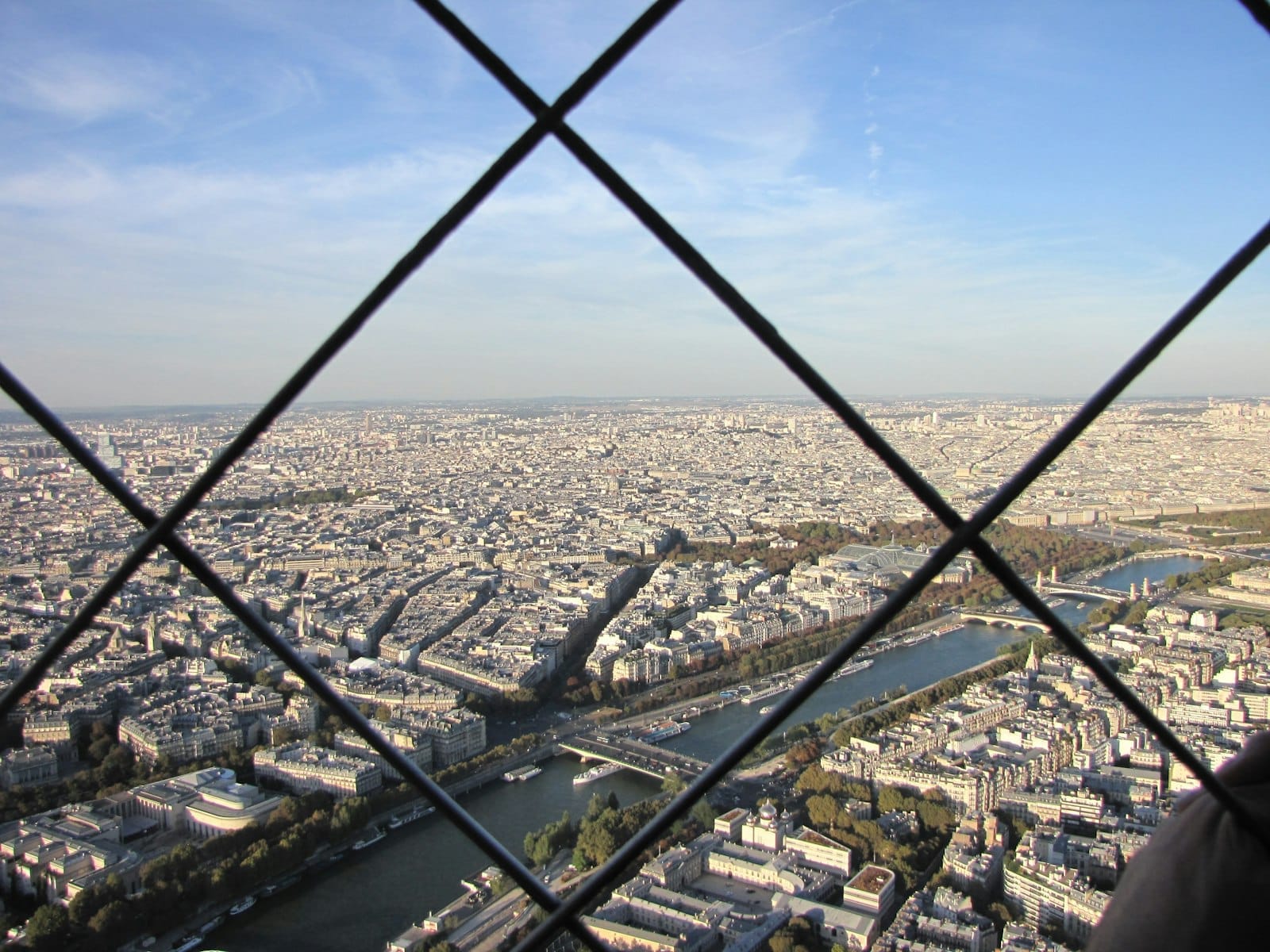
The Eiffel Tower is the obvious starting point for any conversation about Paris views, and the crowds reflect that. The second-floor platform at 115 metres gives you a solid mid-level panorama, while the summit at 276 metres offers genuine citywide sweep on a clear day. The catch that surprises first-timers: from the summit, you cannot see the Eiffel Tower itself. You are standing inside it. If getting the tower in your shot is the goal, you need a different vantage point entirely.
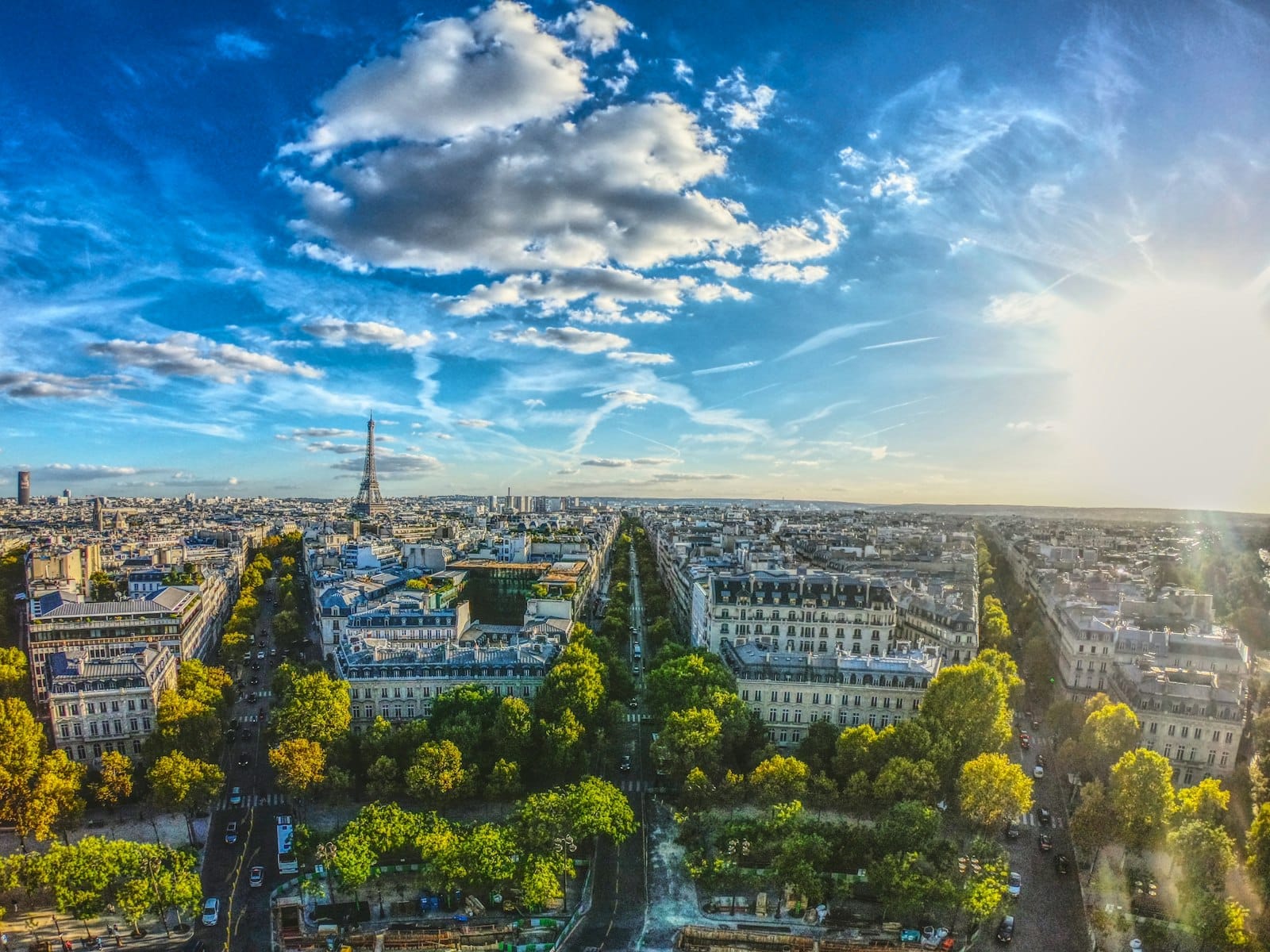
The Arc de Triomphe solves that problem directly. The rooftop terrace at 50 metres sits at the exact centre of the Étoile roundabout, giving you the Champs-Élysées stretching southeast toward the Louvre in one direction, and the Grande Arche de La Défense to the northwest. At dusk, the Eiffel Tower's light show appears at the far end of the avenue, which makes this the most dramatically composed night view in the city. Entry runs €16 in winter and €22 in summer (€16 on Wednesdays year-round); book in advance as timed-entry queues move slowly.
Montparnasse Tower is the viewpoint Parisians love to mock and tourists love once they get up there. The building is genuinely unattractive from street level, which is precisely why the view from the top is so good: it is the only central skyscraper, so there is nothing between you and an uninterrupted 360-degree panorama. The 56th-floor indoor observatory and the open roof terrace above it give you the Eiffel Tower, Notre-Dame, Sacré-Cœur, and the Seine all in one sweep. Adult entry is €21.50 (verify current pricing at the official Tour Montparnasse site). On a clear evening with a glass of champagne from the terrace bar, this is genuinely one of the best hours you can spend in Paris.
⚠️ What to skip
Do not visit Montparnasse Tower on a foggy or overcast day. The indoor observatory has no balcony on some levels, and if the cloud ceiling is low, you will pay €20 to look at grey mist. Check the weather forecast the morning of your visit and reschedule if needed.
The dome of Sacré-Cœur Basilica in Montmartre is a different experience from the steel-and-glass towers. The climb is via internal spiral staircase only, 300 steps, and the viewing gallery sits roughly 200 metres above sea level once you add the 83-metre dome to Montmartre's hill. Entry to the dome is around €8 for adults, €5 for children. The view south across the Paris basin is exceptional on a clear day, and you get a close-up look at the neighbourhood's rooftops and the tightly packed streets below. Worth doing if you are already at Sacré-Cœur; harder to justify as a standalone trip.
The Best Free Views in Paris
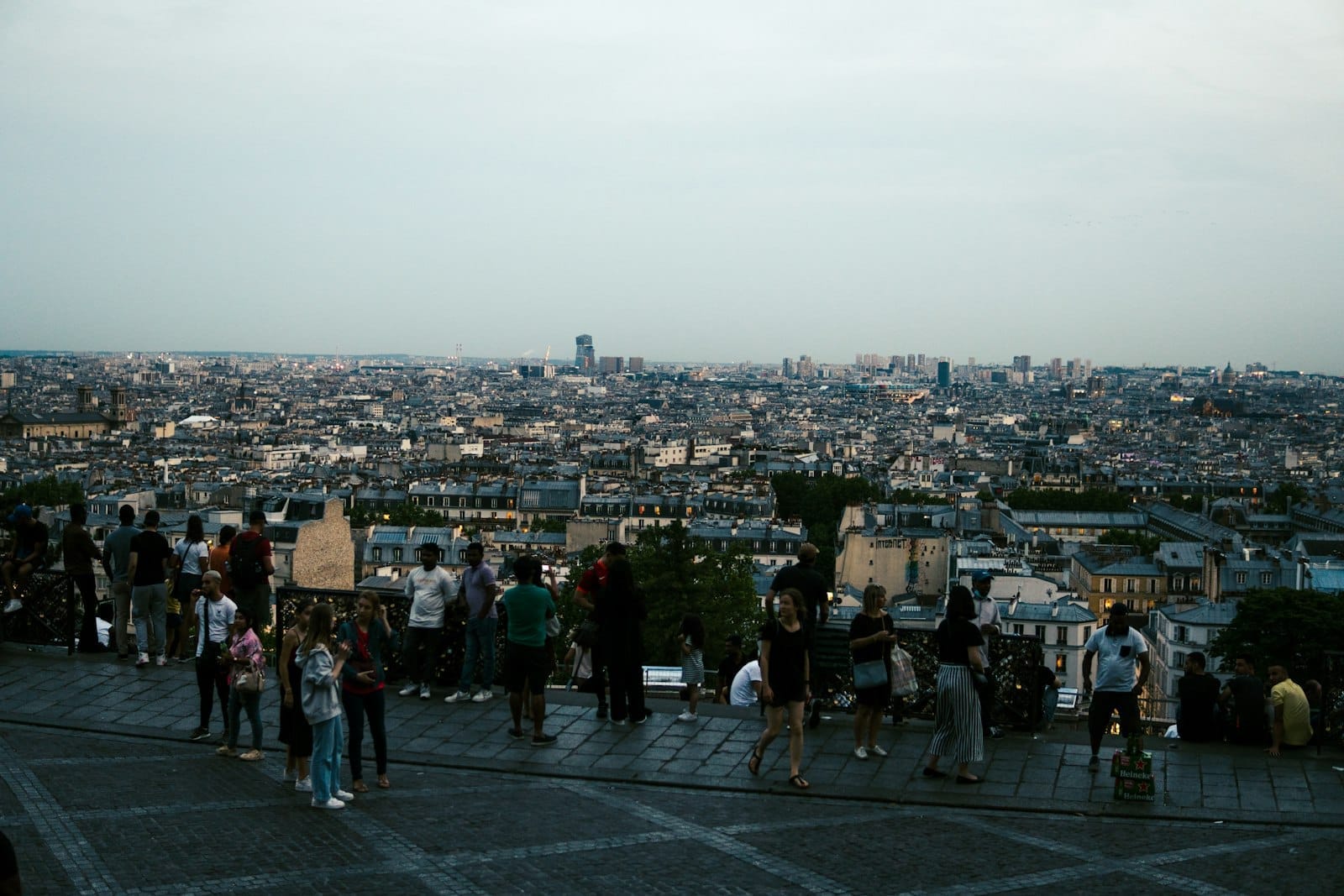
The steps and esplanade in front of Sacré-Cœur are completely free and offer one of the widest southward panoramas in the city. At sunset in spring and summer, the entire hillside fills with picnickers watching the sky change colour over the rooftops. It is genuinely beautiful and costs nothing except the climb up (or a funicular ride covered by a single Métro ticket, around €2.55). The one honest drawback: pickpockets work this area consistently. Keep bags closed and in front of you.
The Trocadéro terrace, directly across the Seine from the Eiffel Tower in the Champs-Élysées and Trocadéro area, is the most-photographed viewpoint in Paris and entry is free. The elevated terrace frames the tower perfectly above the Champ-de-Mars gardens and the Seine. At sunset this is one of the most impressive free sights in Europe, but it is extremely crowded from about April through October. Arrive by 8:30 PM in summer if you want any space. In winter, the crowds thin dramatically and you can often have the terrace nearly to yourself on a weekday morning.
The rooftop terrace at Galeries Lafayette Haussmann is the city's best-kept mainstream secret. Take the escalators to the top floor and walk out to a free open terrace with close-up views of the Palais Garnier's rooftop sculptures, the Haussmann boulevard grid, and a clear sightline to the Eiffel Tower on clear days. No ticket, no queue, no reservation. The only catch is that the terrace closes during inclement weather, and it keeps standard department store hours rather than extended tourist hours.
✨ Pro tip
The Galeries Lafayette rooftop is rarely mentioned in mainstream guides, which means it stays uncrowded even in peak summer. Combine it with a visit to the extraordinary Art Nouveau glass dome inside the building on the same trip.
- Trocadéro Esplanade Free, Eiffel Tower framed perfectly across the Seine. Best at sunset but extremely crowded April-October.
- Sacré-Cœur Steps Free, south-facing panorama over Paris basin. Busiest on warm evenings; pickpocket risk is real.
- Galeries Lafayette Rooftop Free, uncrowded, excellent views of Opéra Garnier and the Haussmann grid. Closes in bad weather.
- Palais Royal Gardens Ground level but the surrounding colonnades and central courtyard create an elegant enclosed perspective unique in the city.
- Pont de Bir-Hakeim Street level but elevated railway bridge over the Seine with the Eiffel Tower framed between the girders. A favourite of photographers.
Museum Rooftops and Overlooked Terraces
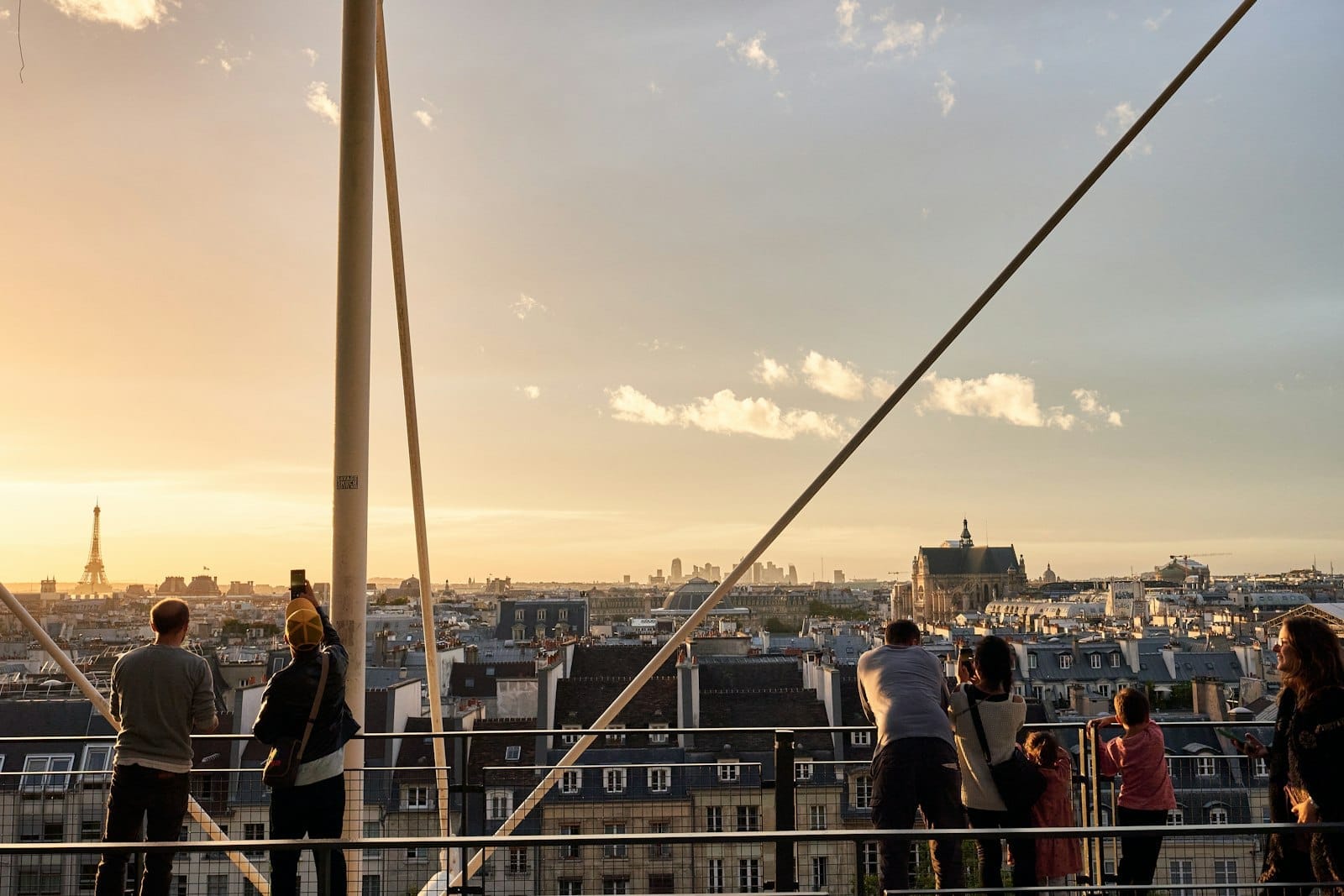
The Centre Pompidou's escalator tubes carry you up the outside of the building, giving you progressively improving views of the Marais rooftops, Notre-Dame Cathedral, and Sacré-Cœur as you rise. The top-level restaurant and bar have a proper terrace. Access to the top requires a museum ticket (€16 for adults), though the restaurant is accessible without one if you book a table. The view is genuinely good, and combining it with the Pompidou's collection makes the ticket price reasonable.
The terrace of the Musée d'Orsay is less discussed but the giant clock faces on the upper level look directly across the Seine toward the Louvre and Tuileries, framing the view through ornate clock mechanisms. It is inside the museum rather than a dedicated viewpoint, but if you are visiting the collection, it is worth pausing there for ten minutes. Similarly, the roof garden at the Pompidou and the balcony levels of the Palais de Tokyo offer unusual angles that most visitors do not bother seeking out.
Timing Your Visit: When Each Viewpoint Is Best
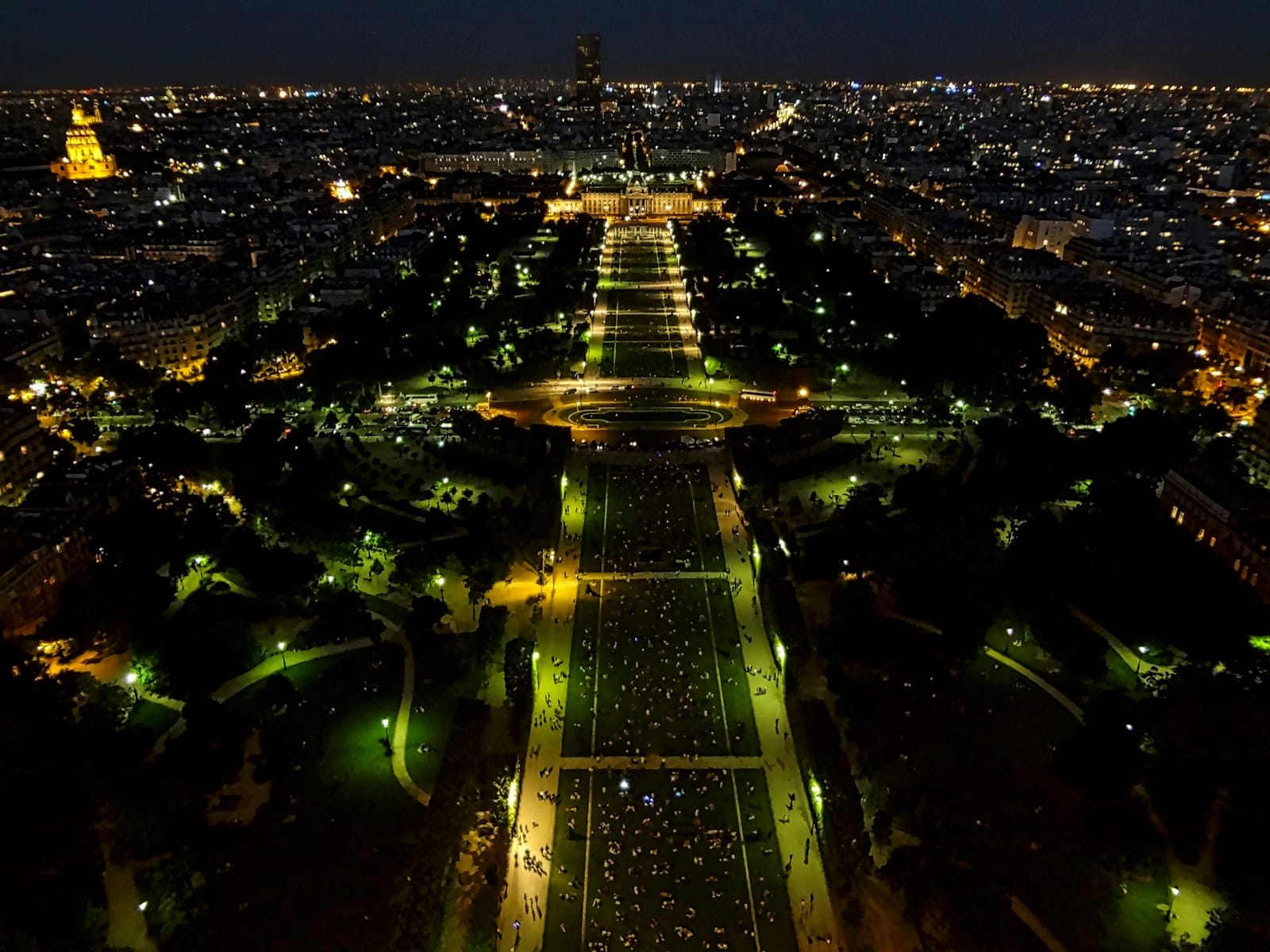
Timing matters more than the viewpoint itself in many cases. The Eiffel Tower's light show runs for five minutes at the top of each hour after dark — from dusk until midnight (1 a.m. in summer) — so the best window from the Arc de Triomphe or Trocadéro is the 20 minutes around each hour during that period. Missing the light show by ten minutes is a genuinely common frustration that a small amount of planning prevents.
Golden hour in Paris runs roughly 7:30-9:00 PM in midsummer and 4:30-6:00 PM in December. The soft angled light of the hour before sunset is when the limestone Haussmann facades turn amber and the Seine picks up the colour. This is when Trocadéro, the Pont de Bir-Hakeim, and the Sacré-Cœur steps are at their most spectacular. Midday light is flat and harsh for photography and the crowds are at their peak.
- Early morning (7-9 AM): Montparnasse Tower opens early and is nearly empty. Visibility is often best before haze builds. Eiffel Tower queues are shortest in the first hour.
- Midday: Avoid all paid viewpoints if crowds bother you. Useful for the free Galeries Lafayette rooftop when the store opens.
- Late afternoon: Arc de Triomphe from around 4 PM gives you both daylight city views and the transition to the Eiffel Tower light show.
- Sunset: Sacré-Cœur steps and Trocadéro are the peak moments. Arrive 30-45 minutes before the listed sunset time.
- After dark: Montparnasse Tower is exceptional, with the illuminated tower and city grid visible all the way to the périphérique.
💡 Local tip
Paris sits at latitude 48°N, which means summer days are very long. In late June, civil twilight does not end until around 11 PM. Plan your rooftop dinners and sunset viewpoints accordingly — 'sunset' in July is after 9:30 PM.
Which Viewpoints Are Worth the Money and Which Are Not
The honest version: not every paid viewpoint justifies its ticket price, and the most expensive is not always the best. The Eiffel Tower summit is the most expensive way to see Paris from above and, paradoxically, the least satisfying for photography because the tower itself is absent from every shot. The experience of being at the summit has its own logic, especially for first-timers, but purely as a viewpoint it ranks below both Montparnasse and the Arc de Triomphe.
Montparnasse Tower offers the best value among the paid options: roughly €20 for unobstructed 360-degree views including a direct sightline to the Eiffel Tower, with a terrace bar and far shorter queues than the tower itself. For budget-conscious visitors, combining the free Galeries Lafayette rooftop with the Sacré-Cœur steps and Trocadéro covers the three best free angles in the city without spending a euro on admission.
If you are visiting Paris with children, the Trocadéro is the easiest viewpoint logistically: wide open space, no tickets, no queues, no stairs. The Eiffel Tower lifts can be a long wait with young children in summer. Check the guide to Paris with kids for more practical logistics on managing the major sites with a family.
Seasonal Conditions and Practical Logistics
Paris has an oceanic climate with roughly 110 rainy days per year. Visibility from high viewpoints is genuinely variable, particularly from November through February when fog is common. The best months to visit Paris for reliable clear views are April through June and September through October. July and August offer long daylight hours but bring the largest crowds to every popular terrace.
For the major paid viewpoints, booking online in advance is strongly recommended from April through October. Walk-up queues at the Eiffel Tower can exceed two hours on summer weekends. The Arc de Triomphe is less extreme but still benefits from timed-entry booking. Montparnasse Tower rarely requires advance booking outside peak summer, which is another practical advantage. Most viewpoints keep extended hours in summer and shorter hours in winter, verify current times on official websites before visiting.
Getting around between viewpoints is straightforward on the Métro. Trocadéro is served by line 6 and line 9. The Arc de Triomphe is at Charles de Gaulle-Étoile (lines 1, 2, 6). Montparnasse Tower is steps from Montparnasse-Bienvenüe (lines 4, 6, 12, 13). Sacré-Cœur is best reached via the Abbesses station (line 12) followed by either the funicular or the hillside stairs. For a general orientation to the transport system, the guide to getting around Paris covers the Métro, RER, and walking logistics in detail.
FAQ
What is the best free view in Paris?
The Trocadéro esplanade and the steps of Sacré-Cœur Basilica are the two best free viewpoints. Trocadéro gives you a direct framed view of the Eiffel Tower across the Seine. Sacré-Cœur offers a wide south-facing panorama across the Paris basin. The Galeries Lafayette rooftop terrace is a close third and significantly less crowded than either.
Is the Montparnasse Tower view better than the Eiffel Tower?
For pure panoramic photography, yes. Montparnasse Tower has unobstructed 360-degree views that include the Eiffel Tower itself in the frame. From the Eiffel Tower summit, you are inside the tower so it does not appear in any of your shots. Montparnasse also has shorter queues and lower ticket prices. The Eiffel Tower experience has its own appeal as an iconic structure, but strictly as a viewpoint, Montparnasse wins.
When is the best time of day to visit Paris viewpoints?
Early morning (7-9 AM) for shortest queues and best visibility before haze builds. Sunset for the most dramatic light and the Eiffel Tower's hourly light show after dark. Avoid midday in summer: peak crowds and flat light. The golden hour before sunset is optimal for photography at Trocadéro and Sacré-Cœur.
Do I need to book Paris viewpoints in advance?
Yes for the Eiffel Tower and Arc de Triomphe from April through October; walk-up queues can exceed two hours on summer weekends. Montparnasse Tower is generally fine without a reservation except in peak summer. Free viewpoints like Trocadéro and Sacré-Cœur steps require no booking at all.
Which Paris viewpoint is best for seeing the Eiffel Tower light show?
The Arc de Triomphe rooftop terrace is the most dramatic: the illuminated Champs-Élysées stretches directly toward the sparkling tower. Trocadéro is closer and gives a more frontal view of the light show. Both work well; the Arc de Triomphe is less crowded after dark. The light show runs for five minutes at the top of each hour from dusk until midnight (1 a.m. in summer).