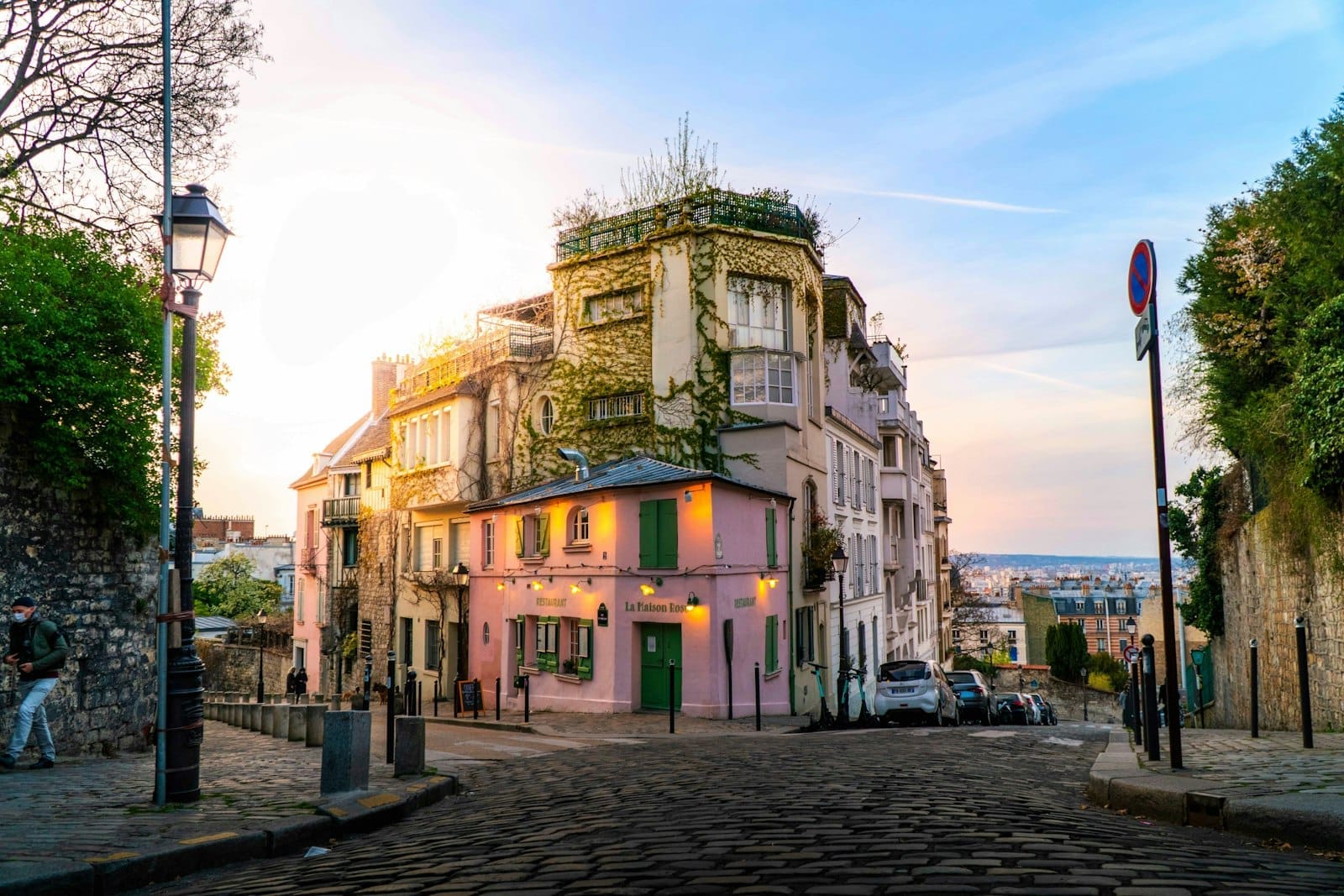
Montmartre occupies Paris's highest ground, a compact hilltop district in the 18th arrondissement where vine-covered slopes, cobbled lanes, and the gleaming dome of Sacré-Cœur coexist with portrait artists, souvenir sellers, and some of the city's most atmospheric café terraces. Its reputation as a former artists' village is well-earned, but the neighborhood has more layers than any postcard suggests.
Montmartre sits on a butte 130 metres above sea level, looking down at a city it was only formally joined to in 1860. It is the Paris that tourists picture and the Paris that locals either love or quietly avoid, a place where genuine village character survives just around the corner from its own tourist industry.
Orientation
Montmartre occupies the 18th arrondissement on Paris's northern Right Bank, rising steeply from the grands boulevards to a summit crowned by the white dome of Sacré-Cœur. The district covers roughly 60 hectares and forms an approximate triangle: the base runs along Boulevard de Clichy and Boulevard de Rochechouart to the south, the eastern edge follows Rue de Clignancourt, and the northern boundary is defined by Rue Caulaincourt and Rue Custine.
The hill itself divides Montmartre into two very different zones. The lower slopes and southern fringe, around the Blanche and Pigalle metro stations, belong to a strip of cabarets, sex shops, and tourist bars that has its own raw energy, especially after dark. Climb ten minutes uphill and the streets narrow, the crowds thin, and the atmosphere changes completely: this is the upper village, with its winding lanes, local boulangeries, and views across the entire city.
Montmartre borders Pigalle and Barbès-Rochechouart to the south, which connect to the 9th arrondissement and the Opéra district. To the east, the hill drops toward La Chapelle. Walking south from Sacré-Cœur, you can reach the Canal Saint-Martin area in about 30 minutes on foot, passing through some of the city's most genuinely mixed streets along the way.
ℹ️ Good to know
Montmartre was an independent commune until 1860, when Baron Haussmann's reorganization of Paris absorbed it into the city. That separation lasted long enough to give the hill its own identity, one it has never entirely lost.
Character & Atmosphere
Early morning is when Montmartre earns its reputation. Before 9 a.m., the Rue Lepic market street fills with the sound of café chairs scraping on stone and the smell of fresh bread from the local boulangeries. Locals walk dogs along Rue Caulaincourt. The vineyard on Rue des Saules, the Clos Montmartre, sits still and dewy in the low autumn light. Pigeons outnumber tourists by fifty to one.
By mid-morning that balance reverses. The steps below Sacré-Cœur fill steadily; Place du Tertre, the square where portrait artists set up their easels, becomes a corridor of canvases and price negotiations. The light here in the afternoon, particularly in spring and early autumn, is golden and diffuse, bouncing off the pale stone facades and giving the whole summit an almost theatrical glow.
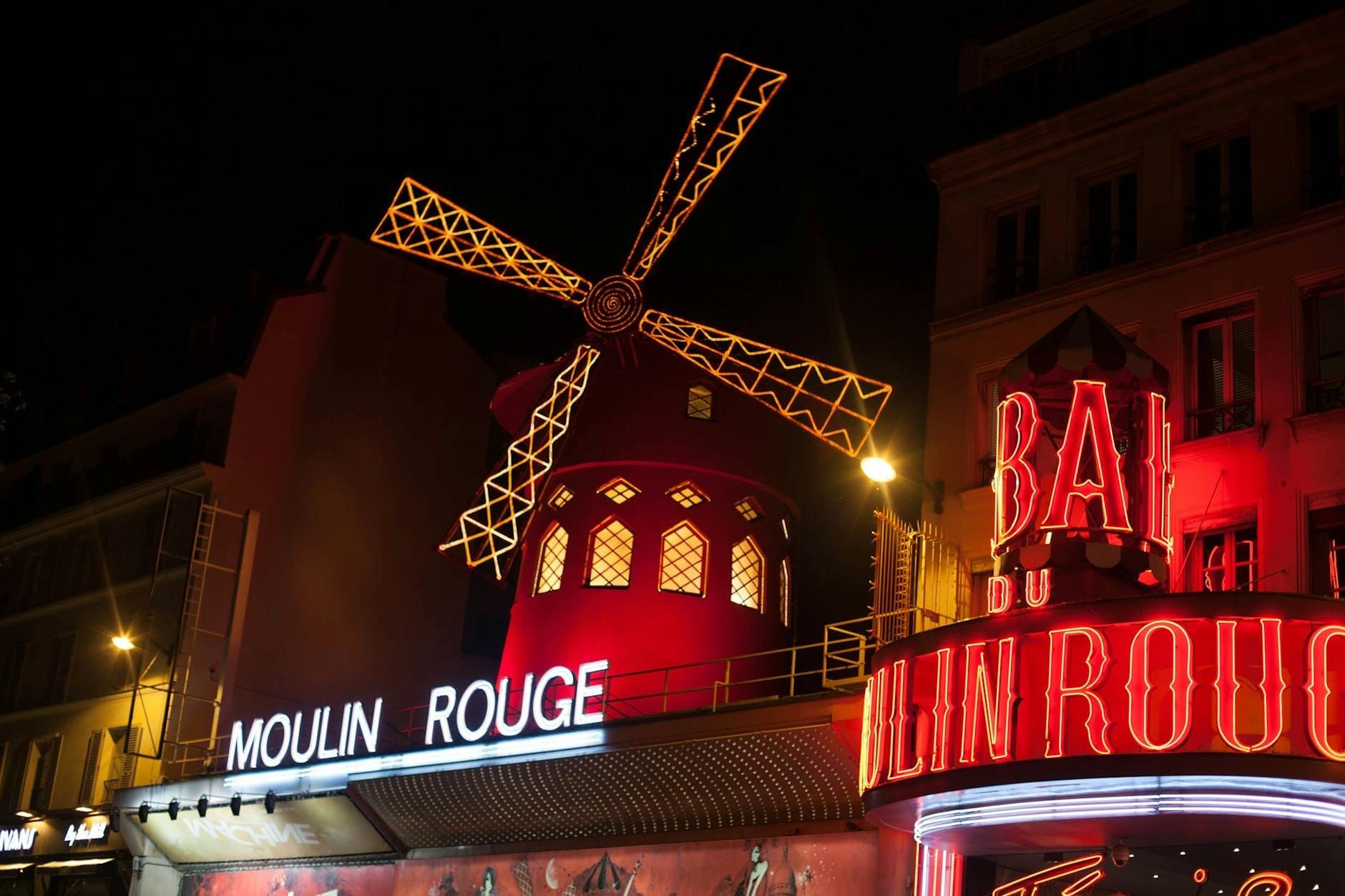
After dark, the neighborhood splits again. The summit and its surrounding streets go quiet quickly; the restaurants on Rue Lepic and Rue des Abbesses fill with a relaxed mix of locals and visitors. Down on Boulevard de Clichy, the Moulin Rouge neon lights up and the tourist buses appear. The Pigalle strip has its own late-night culture that leans toward clubs, bars, and the occasional friction with overaggressive touts. Knowing which Montmartre you want is half the planning.
The bohemian reputation is rooted in reality. Pablo Picasso, Henri Matisse, and Amedeo Modigliani all lived and worked here in the early twentieth century, drawn by cheap rents and the village atmosphere. Auguste Renoir painted in the garden of the Moulin de la Galette; Vincent van Gogh lived on Rue Lepic with his brother Theo. That era is gone, but the myth it left behind shapes how Montmartre presents itself today.
What to See & Do
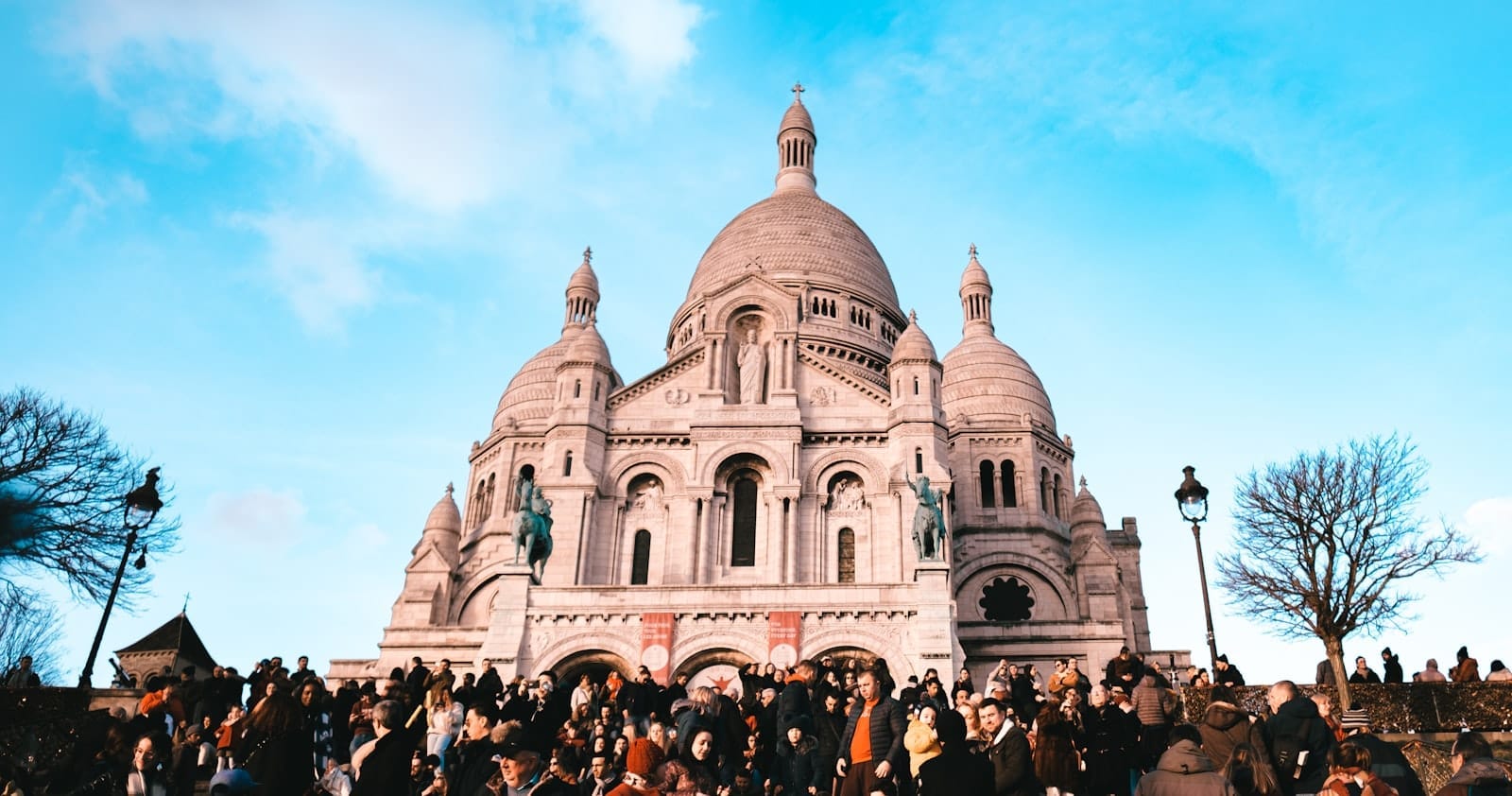
The Sacré-Cœur Basilica is the obvious anchor. The Romano-Byzantine church, built between 1875 and 1914 as a monument of national penance after the Franco-Prussian War, sits at one of Paris's highest natural points, around 130 metres. Entry to the basilica is free. The real draw, for most visitors, is the panorama from the parvis outside: on a clear day you can see 50 kilometres in every direction. Come before 10 a.m. or after 6 p.m. to avoid the peak crowd.
Place du Tertre, a short walk from the basilica, is simultaneously Montmartre's most photogenic square and its most cynical tourist trap. The portrait artists who work here are legitimate professionals; the prices are negotiable and the quality varies. It is worth walking through for the atmosphere, but resist pressure to sit unless you have agreed on a price in advance.
The Cimetière de Montmartre, on the western slope near Place de Clichy, spans 11 hectares and rewards a slow wander. Émile Zola was originally buried here before reinterment at the Panthéon; Edgar Degas is buried here permanently. For a broader tour of Paris's cultural institutions, the best museums in Paris guide covers key institutions that complement the artistic history you encounter on the hill.
Le Clos Montmartre: the last working vineyard in Paris, on Rue des Saules, harvested each October during the Fête des Vendanges festival
Lapin Agile cabaret: the historic venue on Rue des Saules where Picasso once paid his bar tab with paintings, still running shows most evenings
Saint-Pierre de Montmartre: one of the oldest churches in Paris, dating to 1147, standing in the shadow of Sacré-Cœur and usually empty of crowds
Rue Lepic: the main market street, at its liveliest on weekend mornings when fruit and vegetable stalls line both sides
💡 Local tip
If you want to photograph Place du Tertre or the Sacré-Cœur steps without a crowd, arrive by 8 a.m. The portrait artists set up later; delivery trucks are the only competition at that hour.
Eating & Drinking
The eating landscape in Montmartre divides sharply by location. Within 200 metres of Place du Tertre and the Sacré-Cœur steps, most restaurants are tourist-oriented: overpriced, average quality, with menus in six languages and a host standing outside. Walk five minutes downhill toward Rue des Abbesses or along Rue Lepic and the picture changes entirely.
Rue des Abbesses and its side streets form the best eating corridor in the neighborhood, with genuine French bistros, wine bars, and a small but well-curated selection of international options. Rue Lepic adds charcuterie shops, fromageries, and wine bars that serve as local gathering points on weekend evenings.
Coffee culture has improved significantly in the past decade. Several specialty coffee shops have opened around Abbesses alongside traditional café-tabacs still serving a proper crème and tartine for under five euros. For a broader picture of the Paris food scene, the Paris food and restaurant guide provides useful context on what to expect across different neighborhoods and price points.
Crêperies: affordable and widely available on the upper hill; quality varies but the best are worth a short queue
Natural wine bars: a small cluster around Abbesses draws a local crowd, particularly Thursday through Saturday evenings
Market street picnic: picking up cheese, bread, and charcuterie on Rue Lepic for a picnic on the Sacré-Cœur steps is cheaper and more atmospheric than most nearby restaurants
⚠️ What to skip
Avoid any restaurant that stations someone on the pavement to usher you inside, especially within sight of the Sacré-Cœur. Walk a block further and the options improve immediately.
Getting There & Around
The most practical metro access to upper Montmartre is via Abbesses station on Line 12, one of the deepest stations in the Paris network at 36 metres below ground. The elevator is essential if you want to avoid the spiral staircase. From Abbesses it is a five-minute uphill walk to Place du Tertre. Anvers station on Line 2 deposits you at the base of the steps leading to Sacré-Cœur, which you can climb on foot (about 220 steps) or ride the funicular. The funicular counts as one standard metro journey and uses the same T+ ticket, Navigo pass, or daily travel card. The full Paris transport guide covers fare details and zone explanations.
Blanche station on Line 2 is the best entry point if you are starting from the Moulin Rouge end or approaching from the Opéra area. Lamarck-Caulaincourt, also on Line 12, is the quietest and most local-feeling access point: it deposits you into the northern residential streets near Rue Caulaincourt, from which you can walk south through the vineyard and into the village core. This is the approach that feels least like arriving at a tourist attraction.
Taxis and ride-hailing services (Uber and Bolt both operate in Paris) can drop you at the base of the hill on Rue Lepic or on Rue Caulaincourt; none can access the narrow upper streets. Once on the hill, everything is on foot. The terrain is genuinely steep in places, particularly the steps approaching the basilica from the south. Comfortable shoes are not optional here.
Walking to Montmartre is possible and pleasant in good weather. From the Opéra district it takes about 20 minutes heading north up Rue des Martyrs. From the Canal Saint-Martin area, plan 25 to 30 minutes walking west and uphill. Travelers planning a full itinerary across Paris will find the 3-day Paris itinerary pairs Montmartre logically with other Right Bank neighborhoods.
Where to Stay
Staying in Montmartre makes most sense for travelers who want a residential, quieter base with good transit connections to central Paris. The neighborhood suits independent travelers and couples doing longer stays who want to feel embedded in a real quartier. First-time visitors to Paris may find it slightly inconvenient unless they plan to spend significant time in the north of the city. The Paris neighborhood accommodation guide lays out the trade-offs across all main areas clearly.
The best accommodation in Montmartre clusters around Abbesses and along the mid-slopes between Rue Lepic and Rue Caulaincourt. Hotels here tend toward boutique and independent properties; large chain hotels are rare. The Abbesses area offers the best balance: quiet enough at night to sleep well, close to the summit for morning light, and walkable to the metro for day trips.
Avoid booking accommodation on or immediately adjacent to Boulevard de Clichy and Boulevard de Rochechouart if you are a light sleeper. The Pigalle strip runs late, and the surroundings feel considerably less charming than the village streets 400 metres uphill. Budget travelers will find a slightly wider range of affordable hotels in Montmartre than in Le Marais or Saint-Germain-des-Prés.
💡 Local tip
If you are visiting in October, the Fête des Vendanges de Montmartre, the annual grape harvest festival at the Clos Montmartre vineyard, fills the streets with music, wine, and local celebration for a full weekend. Book accommodation months in advance for that period.
Safety & Practical Notes
Pickpocketing is a consistent problem in Montmartre, particularly on the steps leading to Sacré-Cœur and in the metro stations at Anvers and Abbesses. The Sacré-Cœur steps attract organized groups who use distraction techniques and petitions to get close to tourists. Keep your bag in front of you and avoid engaging with anyone approaching you with a clipboard or a wristband.
The Barbès-Rochechouart area immediately to the east of the southern boundary has a rougher atmosphere, particularly in the evenings. It is not a no-go zone, but it is noticeably different from the village streets uphill and is not somewhere to wander inattentively after dark. The Boulevard de Clichy strip has its own late-night tensions, primarily related to touts and overpriced venues.
Upper Montmartre, the streets around Abbesses, Rue Lepic, and the vineyard, is consistently safe at all hours and feels like a genuine neighborhood rather than a tourist zone. The contrast between the two atmospheres, separated by less than half a kilometre of elevation, is one of Montmartre's defining characteristics.
TL;DR
Montmartre is worth visiting for almost everyone, but worth staying in primarily for travelers who want residential character over central convenience.
The upper village around Abbesses and Rue Lepic is a different place from the tourist corridor around Sacré-Cœur: both are accessible on the same walk, but only one feels like real Paris.
Go early. The crowd arrives by 10 a.m. and peaks through mid-afternoon; mornings offer the best light, the quiet streets, and the neighborhood at its most livable.
Pickpocketing on the Sacré-Cœur steps is a persistent issue: keep bags secure and do not engage with anyone approaching you with a petition or a bracelet.
Best for: first-time Paris visitors wanting an iconic view, independent travelers seeking a quieter base, and anyone interested in French art history. Less suited to travelers prioritizing easy access to the Left Bank's main museums.
Paris has over 130 museums, which makes choosing badly very easy. This guide cuts through the noise with a ranked, honest breakdown of the best museums in Paris, covering art, history, science, and design, with practical details on tickets, timing, and what to skip.
Paris has over 400 parks and gardens, ranging from formal French-style classics to wild woodland escapes. This guide covers the best green spaces across the city, with practical details on what to expect, when to go, and how to get the most out of each one.
Paris is one of the most photographed cities on earth, which means most visitors return home with the same ten images. This guide goes beyond Trocadéro to cover lesser-known vantage points, specific timing advice, and honest assessments of which spots are genuinely worth the effort.
Paris rewards visitors year-round, but the experience shifts dramatically depending on when you go. This guide breaks down each season honestly, covering temperatures, crowd levels, pricing, and the specific events and landscapes that make each period worth considering.
Paris rewards those who look down at it as much as those who walk through it. This guide covers every serious viewpoint in the city, from the famous towers to free terraces most visitors walk past, with honest advice on which are worth the queue and which are overrated.
Paris rewards those who venture beyond the périphérique. Whether you want royal grandeur at Versailles, Monet's living canvases at Giverny, or medieval forests at Fontainebleau, these are the best day trips from Paris — all reachable in under two hours.
Paris has one of the most comprehensive urban transport networks in the world. From the 16-line Métro to river buses and Vélib' bikes, this guide covers every realistic option — with real fares, practical advice, and honest warnings about what to avoid.
Paris rewards the curious traveler. Beyond the Eiffel Tower and Louvre queue, the city holds Roman ruins, forgotten neighborhoods, candlelit sewers, and park temples that most visitors never find. This guide covers 20 genuinely underrated experiences, with practical details on when to go, what to expect, and what to skip.
Planning your first trip to Paris? This guide covers everything you actually need: which arrondissements to stay in, how to get around without overpaying, which passes are worth buying, and how to avoid the most common rookie mistakes. Specific, honest, and built for real travelers.
Three days in Paris is enough to cover the iconic highlights, eat well, and still leave room to wander. This guide breaks down each day by neighborhood, flags what to pre-book, and tells you what to skip so you spend less time in queues and more time in the city.
The Paris Museum Pass covers 50+ museums and monuments, but it's not automatically the right choice for every visitor. This guide breaks down the real costs, savings thresholds, booking rules, and the cases where individual tickets beat the pass.
Paris has a reputation for draining wallets, but the reality is more nuanced. This guide breaks down real 2026 costs across transport, food, accommodation, and attractions, with practical strategies for visiting Paris on a budget without sacrificing the experience.
Paris works brilliantly for families, but only if you plan it right. This guide covers the best kid-friendly attractions, parks, museums, transport logistics, and honest advice on what to skip, so you can enjoy the city without the meltdowns.
Paris rewards visitors who go beyond the obvious itinerary. This guide covers the best things to do in Paris across every interest and budget, from world-class museums and Seine river cruises to neighbourhood markets, immersive art installations, and day trips worth the train fare.
Paris has more restaurants per square kilometer than almost any city on earth, which makes choosing one genuinely hard. This guide cuts through the noise with neighborhood-by-neighborhood recommendations, honest budget breakdowns, booking advice, and the dishes you should actually order.
Choosing where to stay in Paris shapes your entire trip. This guide breaks down the city's key neighborhoods by character, price, metro access, and who they suit best, so you can book with confidence rather than guesswork.