Where to Stay in Paris: Best Neighborhoods & Hotels for Every Budget
Choosing where to stay in Paris shapes your entire trip. This guide breaks down the city's key neighborhoods by character, price, metro access, and who they suit best, so you can book with confidence rather than guesswork.
Plan and book this trip
Tools from our partner Travelpayouts help you compare flights and hotels. If you book through them, we may earn a commission at no extra cost to you.
Flights
Hotels map
TL;DR
- Le Marais (4th) is the most consistently well-rounded choice: central, walkable, and lively every day of the week. See the full Le Marais neighborhood guide for what's nearby.
- You do NOT need to stay near the Eiffel Tower. Paris's metro system connects every major neighborhood in under 20 minutes.
- Budget hotels start around €120-140/night in most central areas; mid-range runs €200-280; luxury from €450+.
- Spring (April-June) and autumn (September-October) offer the best combination of mild weather and manageable crowds. Check our best time to visit Paris guide for month-by-month details.
- Outer arrondissements like the 9th and 11th are genuinely local, well-connected, and noticeably cheaper than the 6th or 8th.
How Paris Is Organized (and Why It Matters for Booking)
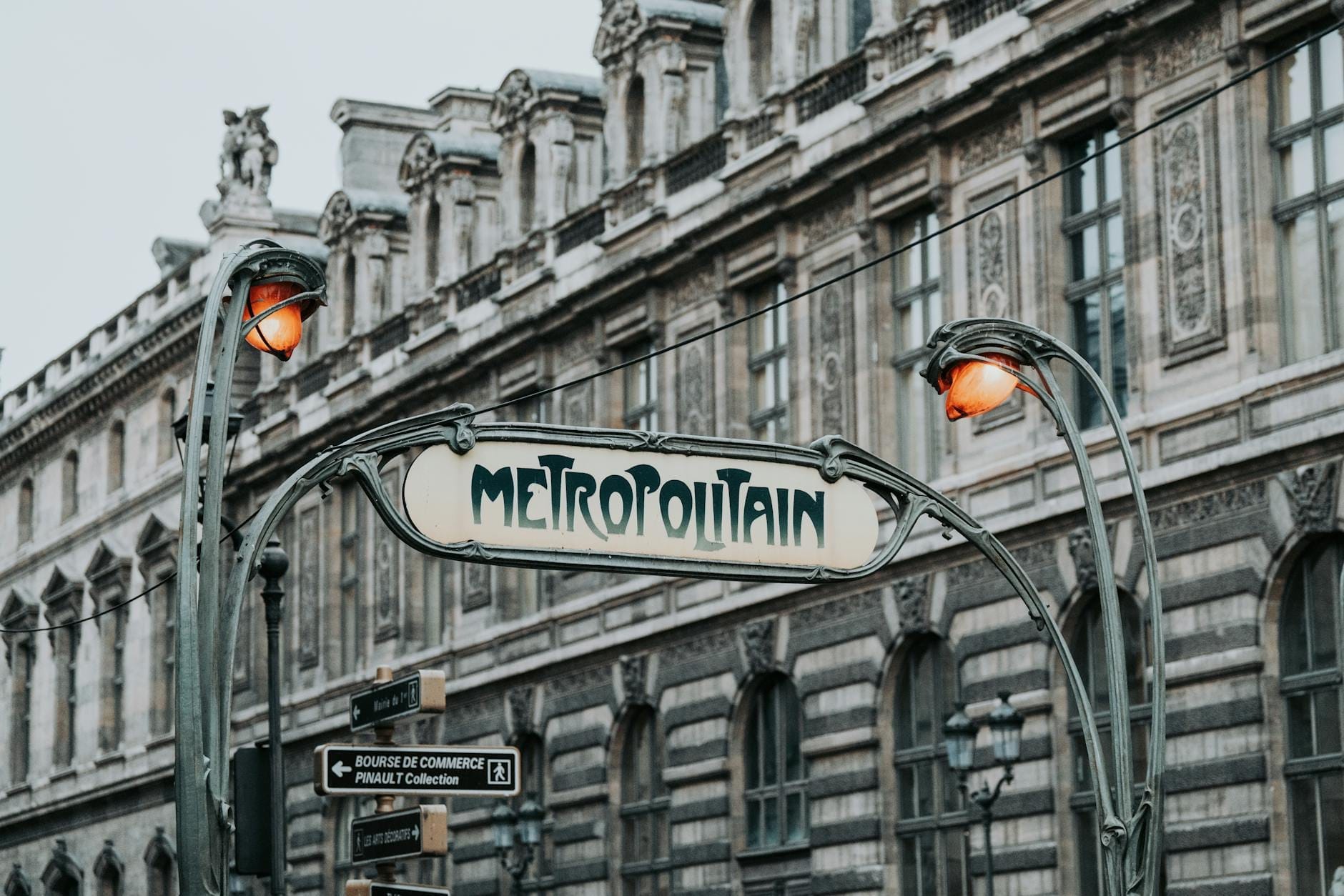
Paris is divided into 20 arrondissements, numbered 1 to 20 in a clockwise spiral from the city center. Each has a distinct personality, price point, and metro connectivity. The lower the arrondissement number, generally the more central and tourist-dense the area. The key practical implication: because the RATP metro network is so comprehensive, with 16 lines and hundreds of stations, your hotel's exact neighborhood matters far less than first-time visitors assume. A well-located hotel in the 11th is as useful as one in the 1st, often at 40% of the cost.
That said, neighborhood character absolutely affects your experience of the city. Staying in the elegant, government-heavy 7th arrondissement near the Eiffel Tower means quieter streets after 9pm and very few local grocery options. Staying in the 4th means stepping out into cafés, galleries, and Sunday markets. Both have the same metro access to the Louvre, but they feel completely different. This guide helps you match the right neighborhood to your actual travel style.
ℹ️ Good to know
Paris's city proper covers just 105 km² with a population of around 2 million. It's remarkably compact. Walking between many central neighborhoods takes 20-30 minutes. Don't overweight proximity to a single attraction when choosing your base.
The Best Neighborhoods to Stay In: An Honest Breakdown
Below are the neighborhoods that come up repeatedly for good reason. Each entry is honest about the drawbacks, not just the appeal.
- Le Marais (3rd & 4th Arrondissements) The single best all-around choice for most visitors. Medieval street grid, great food, galleries, strong LGBTQ+ scene, and the most animated Sundays in central Paris (most other central areas go quiet). A 10-minute walk reaches Notre-Dame. Metro: Saint-Paul, Hôtel de Ville, Bastille. Drawback: very crowded in summer, and some streets feel like a tourist circuit.
- Latin Quarter (5th Arrondissement) Best for families, students, and budget travelers. Home to the Sorbonne, the Panthéon, and Rue Mouffetard market street. The area has genuine residential life alongside tourist infrastructure. Streets can be noisy on weekend nights near the university bars. Mid-range hotels here typically run €150-220/night.
- Saint-Germain-des-Prés (6th Arrondissement) The 6th is Paris at its most polished. Literary café culture (Café de Flore, Les Deux Magots), independent bookshops, and a 10-15 minute walk to the Louvre or Musée d'Orsay. Hotels here lean upscale. It's quiet, safe, and very walkable. Drawback: expensive and occasionally feels more like a luxury mall than a lived-in neighborhood.
- Champs-Élysées & Golden Triangle (8th Arrondissement) Paris's most prestigious address and its most overpriced for what you get as a traveler. Designer boutiques, the Arc de Triomphe, and grand boulevards. Accommodation runs €350-700+/night for anything decent. Best reserved for travelers specifically here for fashion or business. The Champs-Élysées itself is more spectacle than daily-life neighborhood.
- Montmartre (18th Arrondissement) Photogenic, historic, and very steep. Great for first-timers who want that classic Paris visual, with Sacré-Cœur at the summit and cabaret history at every corner. But the area around the basilica is heavily tourist-trafficked, and the lower slopes near Pigalle require awareness after dark. Metro: Abbesses, Pigalle. Budget-friendly relative to central Paris.
- Bastille & Oberkampf (11th Arrondissement) The best choice for nightlife, street food, and an authentic local atmosphere. Fewer tourists, excellent metro connectivity (Bastille serves lines 1, 5, and 8), and some of Paris's best wine bars and natural restaurants. Hotels are genuinely cheaper here. Drawback: not the prettiest walk if you're just doing major monuments.
- Opéra & Grands Boulevards (9th Arrondissement) Underrated for its central location and local feel. The Palais Garnier opera house anchors the area, and the Galeries Lafayette department stores are here for shopping. Breakfast spots and bakeries are genuinely local rather than tourist-oriented. Good value mid-range hotels, excellent transport links.
⚠️ What to skip
Avoid booking hotels on the northern edge of the 18th arrondissement (near Porte de Clignancourt or Porte de la Chapelle) without research. These areas are distant from tourist sites and require more vigilance, particularly at night. The southern slopes of Montmartre near Abbesses are a completely different environment.
Neighborhood Comparison by Traveler Type
The 'best' neighborhood is entirely dependent on what you're actually doing in Paris. Here's a practical framework rather than a one-size-fits-all recommendation.
- First-time visitors Le Marais or Latin Quarter. Both are central, walkable to major sights, and give you a genuine sense of Paris without being purely tourist zones.
- Families with children Latin Quarter (5th) or Saint-Germain (6th). Quieter streets, proximity to the Jardin du Luxembourg, and a range of family-friendly restaurants.
- Honeymooners and couples Saint-Germain-des-Prés or Île Saint-Louis (4th). Île Saint-Louis in particular is an island of calm connected by six bridges to surrounding areas, genuinely romantic and often overlooked.
- Budget travelers Bastille/11th or Oberkampf, or the 9th near Opéra. Expect to pay €90-150/night for solid two-star options, compared to €180-250 for equivalent quality in the 6th.
- Art and culture focus Le Marais (Picasso Museum, Centre Pompidou nearby) or Saint-Germain (Musée d'Orsay, Musée Rodin within walking distance).
- Nightlife and food scene Bastille, Oberkampf (11th), or Canal Saint-Martin area (10th). These are where Parisians actually go out.
What Hotels Actually Cost in Paris
Paris hotel pricing is seasonal and highly variable. The figures below reflect 2025-2026 rates in central arrondissements (1st-8th) and should be treated as reference ranges. Summer (June-August) and major event periods can push prices 30-50% above these baselines. The city hosted the 2024 Olympics, which accelerated a broad price reset across the hotel market, and rates in prime areas have stabilized at notably higher levels than pre-2023.
- Budget (1-2 star, shared or small private rooms): €80-150/night in central Paris, €60-110 in outer arrondissements
- Mid-range (3 star, en suite, decent amenities): €160-280/night depending on neighborhood and season
- Upper-mid / boutique (4 star, design-led): €280-450/night
- Luxury (palace hotels, 5 star): €500-1,500+/night; Paris has some of Europe's most prestigious properties
One underrated option: apartments and short-term rentals through licensed platforms. For stays of 4+ nights with 2+ people, a well-located apartment in the 11th or 10th can work out to €80-120 per person per night, cheaper than mid-range hotels and with kitchen access. Always verify that listings comply with Paris's short-term rental regulations. For inspiration on how to stretch your budget further, see our guide to visiting Paris on a budget.
Transport, Proximity, and the Metro Advantage
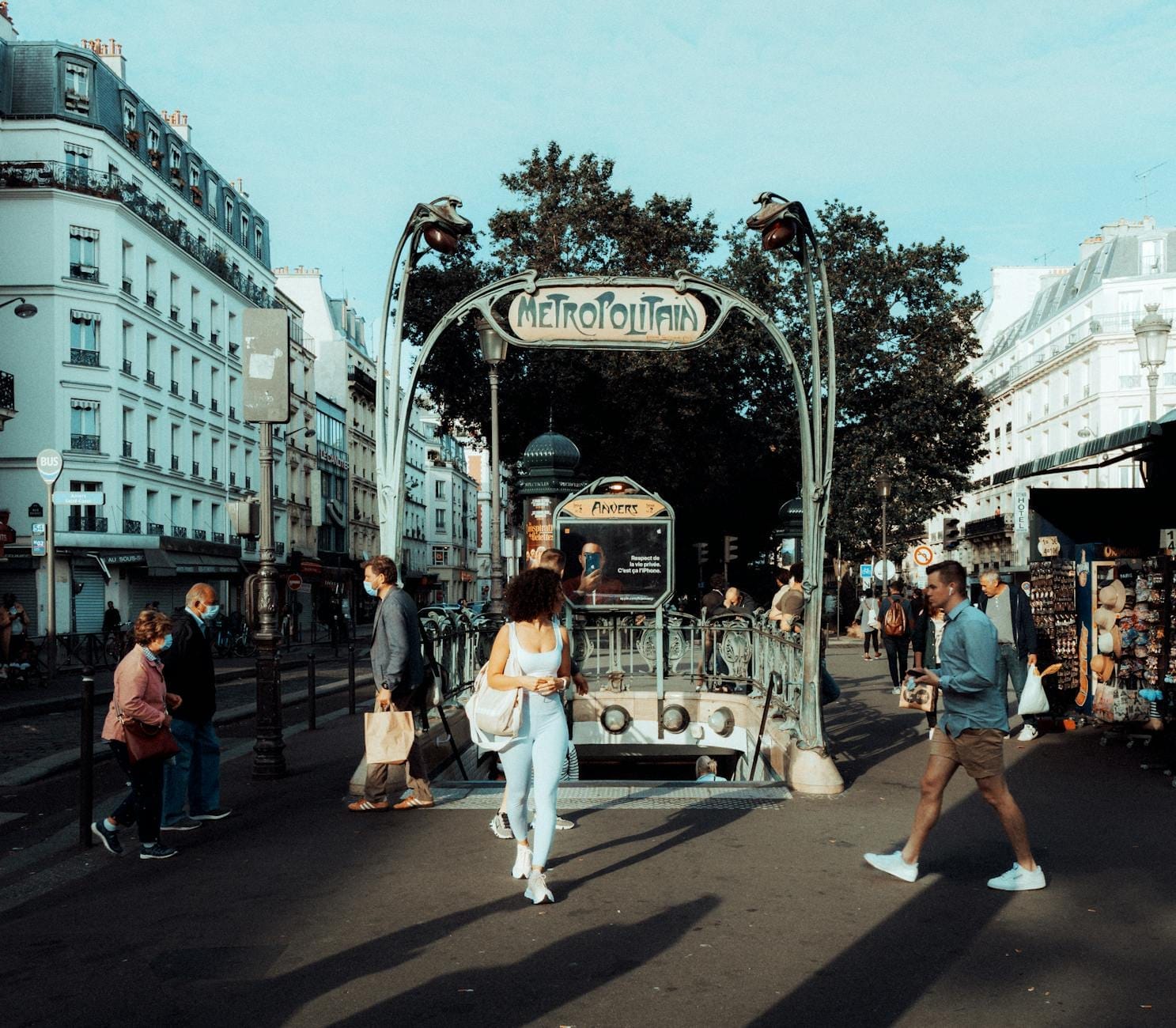
Paris's RATP metro is one of the densest urban rail networks in the world. Most central neighborhoods have a station within a 5-minute walk, and the average journey between arrondissements takes 10-20 minutes including walking time. This means the conventional wisdom about needing to stay 'near' a particular attraction is largely false. The more relevant question is whether your hotel is within a short walk of a metro station at all.
If you're arriving from Charles de Gaulle Airport (CDG), located around 25 km north of the city, the RER B train is the most practical option at €14 for the dedicated Paris Region <> Airports ticket (2026) — a direct 30-40 minute ride into central stations including Châtelet-Les Halles and Saint-Michel. A taxi runs the regulated flat rate (€56 right bank, €65 left bank) depending on destination. From Orly Airport (ORY), about 13 km south, the new Métro line 14 extension reaches central Paris in around 25 minutes for the standard €2.55 fare. Once in the city, load credit onto a Navigo Easy card or use Navigo Liberté+ for better per-trip value. For full logistics, see getting around Paris.
✨ Pro tip
For stays of 3+ days, a weekly Navigo pass (€32.40 in 2026, valid Monday-Sunday) pays for itself quickly if you're taking more than two metro trips per day. Buy it at any staffed metro station with a passport photo.
Seasonal Booking Strategy and What to Watch Out For
Paris is genuinely year-round as a destination, but when you go significantly affects both your experience and what you'll pay. Peak season runs June through August, when tourist density in central neighborhoods reaches its highest point, queues at major attractions are longest, and hotel prices peak. Spring (April-June) and autumn (September-October) are the most balanced: pleasant temperatures (10-20°C), manageable crowds, and better rates.
Winter (December-February) is underrated for city stays. Prices drop significantly, the Marais and Saint-Germain café culture comes into its own, and major museums are far less crowded. The exception is the Christmas-New Year window (roughly December 20 to January 2), when Paris sees a surge of international visitors and prices spike accordingly. For a detailed seasonal breakdown, consult our guide to the best time to visit Paris.
A few practical booking considerations: Le Marais hotels fill up quickly for Pride (late June) and major fashion weeks (January, March, September, October). The 8th and 9th arrondissements see corporate demand during trade shows at Paris Le Bourget and the Palais des Congrès, which can spike mid-week rates unpredictably. Booking 6-8 weeks out for shoulder season trips and 3-4 months out for summer is a reliable rule of thumb.
💡 Local tip
Sunday is the best day to be based in Le Marais. Most of Paris shuts down on Sunday afternoons, but the Marais remains lively with open shops, brunch spots, and the Marché des Enfants Rouges (one of the city's oldest covered markets). If your Paris weekend includes a Sunday, the 4th arrondissement earns its premium.
Paris rewards travelers who stay put and explore deeply rather than rushing between landmarks. If this is your first trip and you're trying to cover the key sights efficiently, the 3-day Paris itinerary can help you plan your base around what you actually want to see, rather than defaulting to the most expensive central option.
FAQ
Which Paris arrondissement is best for first-time visitors?
The 4th arrondissement (Le Marais) is the most consistently recommended for first-timers. It's central, walkable to Notre-Dame and the Seine, has excellent food and nightlife, and is one of the few areas that stays genuinely active on Sundays. The 5th (Latin Quarter) is a strong second choice, especially for families or those on a tighter budget.
Is it worth staying near the Eiffel Tower?
Generally, no. The 7th arrondissement is elegant but quiet after dark, with limited local dining options and higher hotel prices for what you get. The Eiffel Tower is easily reached from most central neighborhoods by metro (line 6 or line 8) in 15-20 minutes. The visual payoff of seeing it from your hotel window doesn't justify the premium for most travelers.
How much should I budget for a Paris hotel per night?
Budget for €120-150/night minimum for a decent private room in a central arrondissement. Mid-range hotels with good amenities run €180-280/night. Anything under €100/night in the 1st-8th arrondissements should be scrutinized carefully for size, noise, and cancellation policy. Outer neighborhoods (9th, 10th, 11th) offer better value at equivalent quality.
Is Montmartre a good place to stay in Paris?
It depends on your priorities. Montmartre's southern slopes around Abbesses are charming and relatively affordable, with a neighborhood feel that's distinct from the tourist core. The area near Sacré-Cœur itself is heavily trafficked during the day. The lower slopes near Pigalle require more awareness at night. It's a reasonable choice if you specifically want that village-on-a-hill atmosphere, but the metro connection to central Paris adds a few extra minutes compared to staying in the 4th or 6th.
What's the best Paris neighborhood for a quiet, local experience?
The 9th arrondissement (Opéra/Grands Boulevards) consistently surprises visitors with its combination of great transport links, local bakeries and wine bars, and almost no tourist congestion beyond the department store strip. The 11th (Bastille/Oberkampf) is another strong option: very Parisian in character, excellent restaurant scene, and noticeably fewer tour groups than the central arrondissements.