Galeries Lafayette Haussmann: The Paris Department Store Worth Visiting Even If You Don't Shop
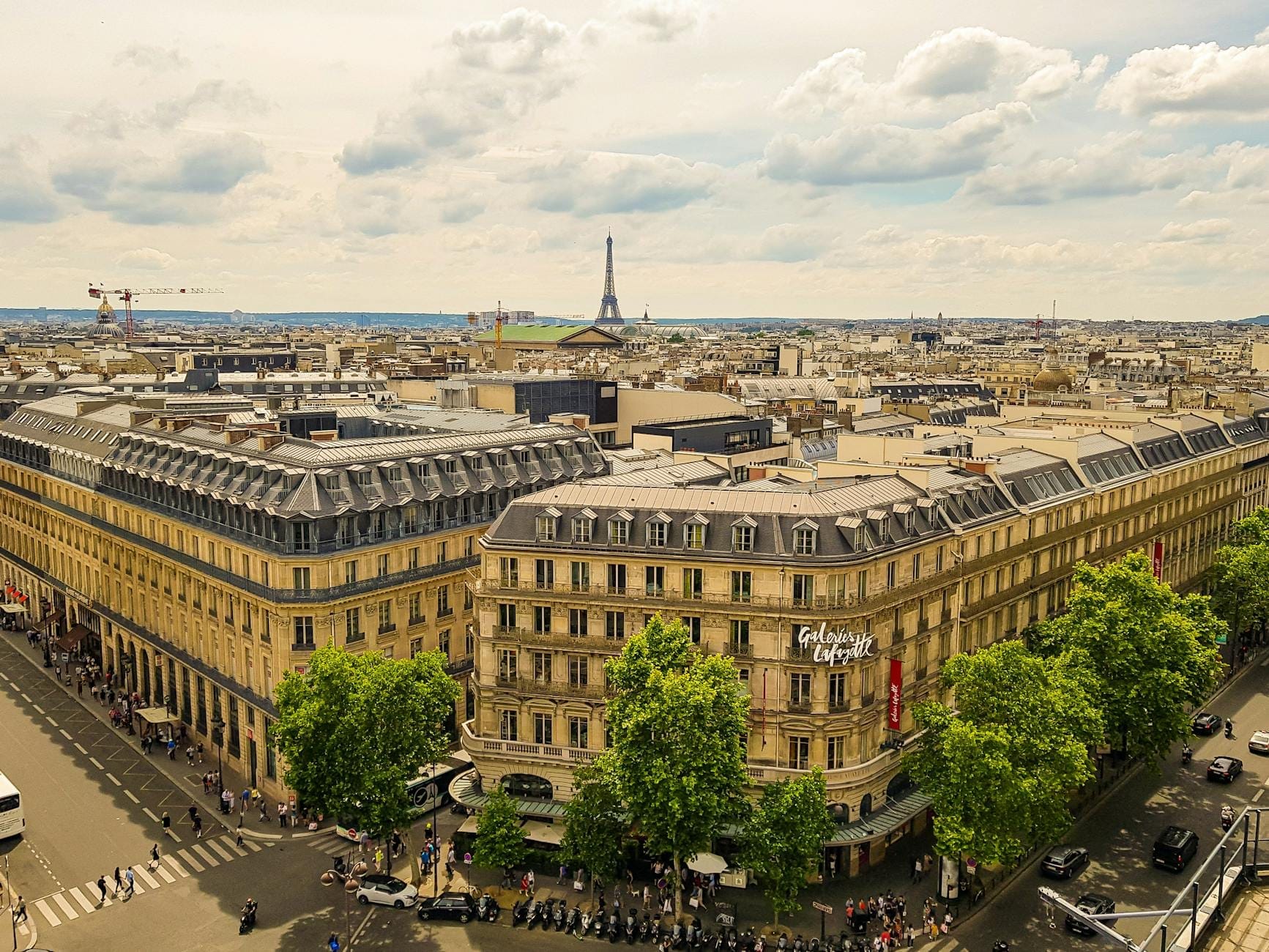
Galeries Lafayette Haussmann is a highly visited retail destination, but its 43-metre Art Nouveau glass dome and free rooftop terrace with panoramic Paris views make it worth a detour for non-shoppers too. Set at Boulevard Haussmann, with the landmark dome built in 1912, it spans three interconnected buildings across 70,000 square metres in the 9th arrondissement.
Quick Facts
- Location
- 40 Boulevard Haussmann, 75009 Paris (9th arrondissement)
- Getting There
- Métro Chaussée d'Antin – La Fayette (lines 7 & 9), 2-min walk
- Time Needed
- 1–3 hours depending on interest (rooftop only: 30 min)
- Cost
- Free entry; rooftop terrace free; shopping and dining at own expense
- Best for
- Architecture lovers, fashion shoppers, free Paris panoramas, first-time visitors
- Official website
- haussmann.galerieslafayette.com
What Galeries Lafayette Haussmann Actually Is
Most people know Galeries Lafayette Haussmann as a department store. That description is technically accurate and practically useless. This is a 70,000-square-metre retail city spread across three interconnected buildings: the Coupole (the main fashion building with the famous dome), the Gourmet Store next door, and the Homme building dedicated to menswear. Together they house more than 3,200 brands, ranging from fast-fashion staples to haute couture maisons, plus restaurants, a food hall, a champagne bar, and a rooftop with unobstructed views across the Paris skyline.
Founded in 1893 as a small lingerie shop by Théophile Bader and Alphonse Kahn, the store expanded to its current Boulevard Haussmann site and built the landmark dome in 1912. Today it draws around 35 million visitors per year, making it one of the most-visited sites in France, on par with the great museums. The fact that entry is completely free sets it apart from nearly every other major Paris attraction.
💡 Local tip
You don't need to buy anything to visit. The dome interior, the rooftop terrace, and the window displays are all free to see. Budget at least 30 minutes even if you have zero interest in shopping.
The Dome: An Architecture Lesson in Glass and Steel
The centrepiece of the Coupole building is a 43-metre-high Art Nouveau glass and steel dome, designed by master glassworker Jacques Gruber and completed in 1912. Standing at the ground floor and looking upward, you see ten gallery levels of wrought-iron balconies curving toward a stained-glass oculus, the whole structure flooded with natural light on a clear day. The colour palette shifts depending on the hour: cool blue-grey at opening time, warm amber in the early afternoon when sunlight hits the glass at an angle.
The dome is genuinely one of the finest examples of commercial Art Nouveau architecture in Europe, in the same conversation as the Grand Palais a few blocks west. Photographers shooting upward from the ground floor get a symmetrical, kaleidoscopic frame that regularly appears on travel feeds, but the shot is better on weekday mornings before 11:00, when the atrium is less crowded. A second, smaller dome sits above the men's fashion section in the adjacent building.
The surrounding neighbourhood deserves a look too. The Opéra and Grands Boulevards district was designed as part of Baron Haussmann's 19th-century transformation of Paris, and the wide boulevard outside the store was named after him. Walking east toward the Opéra after your visit takes about five minutes and leads directly to the Palais Garnier, one of the most ornate opera houses in the world.
Tickets & tours
Hand-picked options from our booking partner. Prices are indicative; availability and final rates are confirmed when you complete your booking.
Exclusive guided tour of the Galeries Lafayette Haussmann store
From 8 €Instant confirmationFree cancellationFashion Show at Galeries Lafayette
From 15 €Instant confirmationFree cancellationFrench macaron baking class at Galeries Lafayette
From 59 €Instant confirmationFree cancellationFerrandi bakers' secrets workshop at Galeries Lafayette Paris
From 130 €Instant confirmationFree cancellation
The Rooftop Terrace: The Best Free View in Central Paris
Take the elevators in the main Coupole building to the 7th floor, then follow the signs upward to the outdoor terrace. The view from the top is legitimately exceptional: the Eiffel Tower to the southwest, Sacré-Cœur to the north on the Montmartre hill, the Opéra Garnier rooftop ornaments directly below, and the unbroken geometry of Haussmann-era zinc rooftops spreading in every direction. There are no ticket booths, no queues, and no time limits.
The terrace has a restaurant and bar where you can order drinks or a meal with the view, but sitting at a table is not required to access the space. On clear evenings, the terrace offers a sunset vantage point that paid observation decks charge significantly more to provide. Come between 17:30 and 19:00 in summer for the best light. In winter the terrace remains accessible but can be genuinely cold, so bring a layer.
💡 Local tip
The free rooftop is one of the most overlooked panoramas in Paris. Unlike the Montparnasse Tower or Arc de Triomphe observation decks, there is no charge and typically no wait. Arrive on a clear day for Eiffel Tower sightlines.
If panoramic Paris views are a priority, compare this with other free or low-cost options. Our guide to the best views in Paris covers the full range, from paid decks to free vantage points across the city.
How to Navigate the Three Buildings
First-time visitors are frequently confused by the layout. The three buildings share a name but have separate entrances and distinct identities. The Coupole on the main boulevard is the fashion flagship, covering womenswear, cosmetics, accessories, and kidswear across ten floors. The Gourmet Store to the left as you face the building is a food hall that opens at 09:30 and stays open until 21:30, making it the best option for a self-service lunch or for picking up quality French food products. The Homme building handles all menswear and runs its own escalator system.
The Coupole's lower floors concentrate on accessible brands and cosmetics; the upper floors shift toward higher-end fashion and designer concessions. The basement connects to the Métro corridor, which means in wet weather you can arrive dry. Escalators are the primary vertical transport and can feel disorienting on first visit. The clearest landmarks are the dome itself (always visible from the balconies) and the red lift towers on each floor.
ℹ️ Good to know
Opening hours: Coupole and Homme stores 10:00–20:00 Monday–Saturday, 11:00–20:00 Sunday; Gourmet Store 09:30–21:30 daily. No seasonal closures are noted, but expect reduced trading on public holidays.
Visiting by Time of Day: How the Experience Changes
Weekday mornings between 10:00 and 11:30 are the calmest window. The dome atrium is quieter, staff are more available, and the cosmetics counters are navigable without crowds. This is the window to photograph the dome from the ground floor and to explore the food hall without queue pressure.
Midday to 15:00 on weekends is the most congested period, particularly on Saturdays in the fashion weeks (typically late January and late September). Escalators back up on the mid-floors, and the ground-floor cosmetics hall gets loud. If you're visiting purely for the dome and rooftop, this is the window to avoid.
Late afternoon, roughly 17:00 onward, sees a second wave of visitors but the light through the dome changes to warmer tones, and the rooftop terrace picks up an early-evening crowd drawn by drinks and the sunset. The Gourmet Store's later closing time (21:30) makes it a reasonable stop after dinner at one of the nearby restaurants on the Grands Boulevards.
The wider Opéra neighbourhood rewards a proper evening stroll. The covered passages of Paris, several of which are within walking distance, are best explored after the department stores close. Galerie Vivienne and Passage des Panoramas are both a 10-minute walk east.
Shopping Here: What's Worth Your Time and What Isn't
The cosmetics and fragrance floor in the Coupole building stocks one of the widest selections of French and international beauty brands under one roof in Paris, with trained brand consultants rather than commission-hungry salespeople. For beauty shopping, this is legitimately one of the most efficient places in the city.
The fashion floors carry a mix that skews toward the upper-middle market: think Sandro, Maje, Isabel Marant, and international brands alongside French designer concessions. Prices are full retail. There are no meaningful discounts except during the official French sales periods (Soldes), which run twice a year, in January and in June or July, subject to government-set dates.
Tax refund (détaxe) is available at a dedicated desk for non-EU visitors spending over the minimum threshold on eligible goods. The queue at this desk can be long in peak season; factor in 20–30 minutes if you plan to claim.
For a contrasting Paris shopping experience, the Saint-Ouen flea market is about 30 minutes north by Métro and offers antiques, vintage fashion, and furniture at negotiated prices, with no overlap at all in atmosphere or inventory.
Who Should Skip This and Who Should Prioritise It
Galeries Lafayette Haussmann is not for every traveller. If you dislike crowds, find retail environments stressful, or are working through a tight Paris itinerary focused on museums and monuments, the department store itself is skippable. The rooftop view, however, is worth the detour regardless of shopping inclination, and takes under 30 minutes including the ride up.
Travellers on a Paris budget will find that the store is easy to enter, hard to leave without spending. The Gourmet Store is particularly seductive if you're looking at high-quality French products, charcuterie, cheese, and pastries at prices that reflect the location. For budget-conscious visitors, window shopping the dome costs nothing.
First-time Paris visitors may want to anchor a morning here before walking down toward the Grands Boulevards and beyond. Our Paris first-timer's guide and the 3-day Paris itinerary both suggest how to fold the Opéra neighbourhood into a coherent day.
Insider Tips
- The weekly fashion show (usually free for visitors) takes place at the ground level of the Coupole building. Check the official website for current schedules, as days and times change seasonally.
- The rooftop terrace bar serves champagne by the glass. Even if you're not eating, ordering a drink gives you a reason to linger longer at the tables with the best Eiffel Tower sightlines.
- The Gourmet Store basement stocks vacuum-packed French cheeses and charcuterie suitable for carry-on luggage, making it one of the most practical last-day stops before flying home.
- For the cleanest upward dome photograph, stand at the central ground-floor atrium, shoot straight up with a wide-angle lens or in portrait mode, and go before 11:00 on a weekday when foot traffic through the frame is minimal.
- Non-EU shoppers: consolidate purchases across the Coupole, Homme, and Gourmet buildings on the same day, as the tax refund minimum threshold applies per transaction per store, not per building separately. Confirm current rules at the détaxe desk.
Who Is Galeries Lafayette Haussmann For?
- Architecture and design enthusiasts drawn to Art Nouveau interiors
- First-time Paris visitors wanting a free panoramic city view without queuing
- Fashion and cosmetics shoppers looking for breadth of French and international brands
- Food lovers browsing the Gourmet Store for high-quality French products to take home
- Travellers building a half-day in the Opéra-Grands Boulevards neighbourhood
Nearby Attractions
Other things to see while in Opéra & Grands Boulevards:
- Covered Passages of Paris
Paris's covered passages are 19th-century glass-roofed arcades that once revolutionized urban retail — and today offer one of the city's most atmospheric, free, and rain-proof walks. About 21 survive today, with around 20 others demolished historically, concentrated in the 1st and 2nd arrondissements near the Grands Boulevards and Palais Royal, each with its own character, shops, and stories.
- Le Grand Rex
Opened in 1932 and listed as a French historical monument, Le Grand Rex is Europe's largest cinema with 2,702 seats and an extraordinary Art Deco interior. Beyond regular screenings, the Rex Studios backstage tour takes you behind the projection booths, onto rooftop terraces, and into an interactive special-effects finale that surprises adults and delights children alike.
- Musée de la Vie Romantique
Set in painter Ary Scheffer's 1830 townhouse at the foot of Montmartre, the Musée de la Vie Romantique immerses visitors in the world of Chopin, George Sand, and the Romantic movement. Admission to the permanent collection is free, the rose-lined courtyard garden invites lingering, and the whole experience feels nothing like a conventional museum.
- Musée Jacquemart-André
Hidden in plain sight on Boulevard Haussmann, the Musée Jacquemart-André is a 19th-century private mansion that doubles as one of Paris's finest art museums. Its collection of Italian Renaissance masterpieces, Flemish paintings, and period furnishings survives exactly as its original owners intended.