Le Grand Rex: Inside Europe's Most Spectacular Cinema
Opened in 1932 and listed as a French historical monument, Le Grand Rex is Europe's largest cinema with 2,702 seats and an extraordinary Art Deco interior. Beyond regular screenings, the Rex Studios backstage tour takes you behind the projection booths, onto rooftop terraces, and into an interactive special-effects finale that surprises adults and delights children alike.
Quick Facts
- Location
- 1 Boulevard Poissonnière, 75002 Paris (Opéra / Grands Boulevards)
- Getting There
- Bonne Nouvelle (lines 8 & 9, 2-min walk) or Grands Boulevards (3-min walk)
- Time Needed
- 50 min (Rex Studios audio tour) or up to 2 hrs with guided cinema visit
- Cost
- Rex Studios tour: from €13.50 adult, €11 reduced; cinema tickets vary by session
- Best for
- Film fans, families, architecture lovers, and rainy-day explorers
- Official website
- www.legrandrex.com
What Le Grand Rex Actually Is
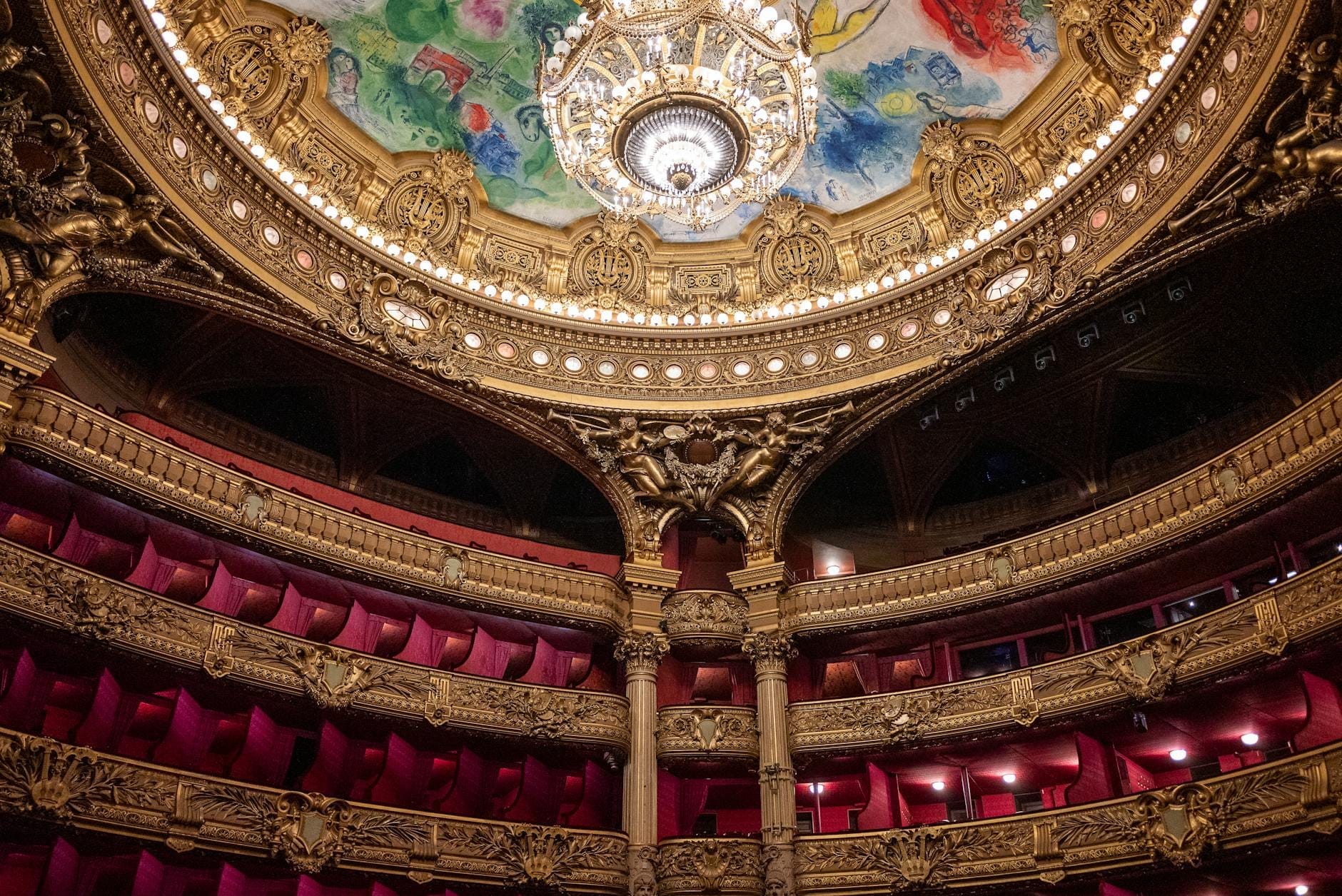
Le Grand Rex is not just a cinema. It is a piece of living architecture, a working cultural institution, and one of the great Art Deco interiors in Paris. Inaugurated on 8 December 1932, it holds the title of Europe's largest cinema, with its Grand Salle seating 2,702 people under a ceiling designed to evoke an open Mediterranean sky, complete with projected stars and subtle cloud effects. The building was listed as a French historical monument in 1981, and its facade underwent a significant renovation in 2022 to restore the original neon signage to its pre-war luminosity.
The boulevard frontage alone is worth a pause. Standing at the corner of Boulevard Poissonnière, the curved white facade rises with the confident geometry of the interwar period: clean horizontal bands, tall vertical fins, and that unmistakable illuminated crown visible from several blocks away at night. In the surrounding Grands Boulevards neighborhood, where 19th-century Haussmann grandeur dominates, Le Grand Rex reads as a bold cinematic interjection from another era.
💡 Local tip
If you are visiting primarily for the architecture and the backstage tour, not for a screening, the Rex Studios audio tour is the right ticket. It runs independently of film programming and is available most days. Check the schedule at legrandrex.com before you go, as tour hours vary.
The Rex Studios Backstage Tour: What to Expect
The Rex Studios tour, known officially as 'Rex Studios', is a roughly 50-minute self-guided audio experience that takes small groups into parts of the cinema invisible to regular ticket holders. The route passes through the projection rooms, where you can see both the original carbon-arc projectors from the 1930s and the modern digital rigs used for current screenings: 90 years of cinema technology arranged in the same space. The juxtaposition is genuinely interesting even if you have no particular technical knowledge of film.
The tour is available in French and English. The English narration is delivered via headset and is well-produced, with a tone that leans theatrical rather than academic, which suits the setting. You are guided through backstage corridors, up to the rooftop terraces with a view over the Grands Boulevards, and into spaces that feel like a film set from a mid-century thriller: narrow catwalks, heavy velvet curtains, steel gantries above the auditorium.
The finale is an interactive special-effects sequence in a small studio set. Visitors become 'participants' in a short film scene involving water sprays, sound effects, and moving set pieces. It is designed with children in mind but consistently catches adults off guard too. The whole thing is more playful than kitsch, landing somewhere between a theme park experience and a genuine insight into practical filmmaking. At the end, you can purchase the finished clip on a USB drive as a souvenir.
⚠️ What to skip
The special-effects finale involves light water sprays. If you are visiting in cold weather or with young children sensitive to sudden sounds and movement, be aware of this in advance. The effect is mild but genuinely unexpected.
Tickets & tours
Hand-picked options from our booking partner. Prices are indicative; availability and final rates are confirmed when you complete your booking.
Paris Essential dinner cruise at 6.15pm
From 99 €Instant confirmationFree cancellationEiffel Tower reserved elevator entrance to 2nd floor with walking tour and Seine cruise
From 94 €Instant confirmationFree cancellationBest of Paris city tour with Eiffel Tower lunch and Seine cruise
From 144 €Instant confirmationFree cancellationBike tour of Versailles Palace with skip-the-line tickets
From 109 €Instant confirmationFree cancellation
The Architecture and the Grand Salle
The interior of Le Grand Rex was designed by French architect Auguste Bluysen with interior decoration by Maurice Dufrêne in consultation with American atmospheric theatre pioneer John Eberson. Eberson's signature technique was the atmospheric ceiling: rather than a conventional painted surface, the auditorium is designed to simulate an outdoor environment, with the deep blue vault of the ceiling lit to suggest a night sky, small pinpoint lights replicating stars, and plasterwork along the walls styled as a Spanish-Moorish courtyard. Sitting inside the Grand Salle before a screening begins, the experience is genuinely disorienting in the best sense: you are indoors, but the ceiling tells you otherwise.
The sheer scale takes a moment to register. The Grand Salle has a seating capacity of 2,702, meaning that a sold-out performance here is the equivalent of a small concert hall. The acoustics were engineered for live performance as well as film, and Le Grand Rex continues to host major events including the Paris premiere circuit, comedy shows, and large-scale concerts. During December, the cinema's Christmas programming draws crowds that extend well down the boulevard.
For visitors interested in exploring more of Paris's architectural heritage in the same area, the Palais Garnier is a 15-minute walk southwest, and the covered passages of Paris including the Passage des Panoramas are within a few minutes on foot, offering a very different but equally layered 19th-century interior experience.
How the Experience Changes by Time of Day
Daytime visits to Le Grand Rex are quieter and better suited to the backstage tour. Morning tour slots, especially on weekdays, tend to run with smaller groups, which allows a more relaxed pace through the projection rooms and rooftop section. The Grands Boulevards themselves are less crowded before noon, which makes the walk from the metro more pleasant and gives you a cleaner view of the building's exterior.
Evening brings a different energy entirely. The neon signage on the facade illuminates the stretch of Boulevard Poissonnière in orange and red, and the pre-screening crowd gathers under the marquee with a distinct sense of occasion. If you are coming for a film, arriving 20 to 30 minutes early lets you take in the lobby, which retains original decorative detail including gilded plasterwork, curved stairways, and a sense of theatrical intention that multiplex cinemas have entirely abandoned. Weekends in December, when the cinema runs its seasonal film cycle, are the busiest and most atmospheric period of the year.
Getting There and Practical Notes
Le Grand Rex is located at 1 Boulevard Poissonnière, in the 2nd arrondissement. The closest metro station is Bonne Nouvelle on lines 8 and 9, which is a 2-minute walk. Grands Boulevards station on the same lines is about 3 minutes in the opposite direction. Buses 20, 32, and 39 also serve the immediate area. The building is straightforward to find: the illuminated facade is visible from the boulevard before you reach the address.
Ticket prices for the Rex Studios audio tour are from €13.50 for adults and €11 for reduced rate categories, which include visitors under 26, those aged 60 and over, students, and jobseekers. Children under 18 pay €6.50 for the audio-guided tour alone. A combined option pairing the guided cinema visit with the Rex Studios tour is available at a higher price point; check the official website for current combined pricing as it is updated seasonally. Cinema tickets are priced per session and vary by film and format.
The entrance is wheelchair accessible, and staff are trained to assist visitors with mobility needs. A detailed accessibility guide is available directly from the Paris Je T'Aime tourism site. Photography is permitted in most areas of the Rex Studios tour, though flash use in the auditorium is discouraged during screenings.
If you are planning a wider itinerary in the area, the Opéra and Grands Boulevards neighborhood rewards an afternoon of slow walking. The department stores of Galeries Lafayette are a 10-minute walk north, and the Passage des Panoramas, one of Paris's oldest surviving arcades, is just around the corner.
Is Le Grand Rex Worth Your Time?
For most visitors with an interest in architecture, film culture, or simply Paris as a city that takes its institutions seriously, the answer is yes. Le Grand Rex is not a passive attraction. You do not stand behind a rope and observe: the backstage tour puts you inside the machinery. The combination of genuine historical depth (a building from 1932 with almost all its original interior intent intact) and an interactive finale that actually delivers on its premise makes this one of the more satisfying 50-minute experiences available in Paris for under €15.
That said, if your interest in cinema is limited and you are traveling without children, the Rex Studios tour may feel slightly pitched at a younger audience in its theatrical framing. The special-effects segment is the culmination of the experience, and its appeal scales with how much you enjoy participation. Visitors expecting a serious film archive or a scholarly exhibition will find the tone lighter than anticipated. For pure architectural appreciation, the lobby and Grand Salle are accessible during screenings without the tour ticket.
For context on Paris's broader cultural landscape, see our guides to the best museums in Paris and things to do in Paris to help prioritize your days.
Insider Tips
- Book the Rex Studios tour in advance online during school holidays and December, when the cinema's seasonal programming draws large family crowds and same-day slots sell out by early afternoon.
- Arrive at the building after dark at least once, even if only briefly. The restored neon facade is one of the most photographed nighttime subjects in the Grands Boulevards area and looks entirely different from its daytime appearance.
- The rooftop terrace section of the guided tour offers an unusual elevated view over the Boulevard Poissonnière roofline. Bring a phone or camera with a wide lens; the perspective is not accessible any other way.
- If you are seeing a film, the Grand Salle seats at the center of the orchestra level (rows J through O, roughly) offer the best sightlines to the atmospheric ceiling while still giving a full view of the screen.
- The Rex Studios tour is included in the Go City Paris Pass, which can make it a worthwhile addition if you are already using that pass for multiple attractions on the same day.
Who Is Le Grand Rex For?
- Film enthusiasts who want to see the mechanics behind a century-old cinema, not just its screen
- Families with children aged 6 and up who will genuinely enjoy the interactive special-effects finale
- Architecture and Art Deco aficionados making a systematic tour of Paris's interwar buildings
- Rainy-day visitors looking for an indoor experience with real substance and a clear time commitment
- First-time Paris visitors who want a cultural experience that does not require hours or a prior knowledge of art history
Nearby Attractions
Other things to see while in Opéra & Grands Boulevards:
- Covered Passages of Paris
Paris's covered passages are 19th-century glass-roofed arcades that once revolutionized urban retail — and today offer one of the city's most atmospheric, free, and rain-proof walks. About 21 survive today, with around 20 others demolished historically, concentrated in the 1st and 2nd arrondissements near the Grands Boulevards and Palais Royal, each with its own character, shops, and stories.
- Galeries Lafayette Haussmann
Galeries Lafayette Haussmann is a highly visited retail destination, but its 43-metre Art Nouveau glass dome and free rooftop terrace with panoramic Paris views make it worth a detour for non-shoppers too. Set at Boulevard Haussmann, with the landmark dome built in 1912, it spans three interconnected buildings across 70,000 square metres in the 9th arrondissement.
- Musée de la Vie Romantique
Set in painter Ary Scheffer's 1830 townhouse at the foot of Montmartre, the Musée de la Vie Romantique immerses visitors in the world of Chopin, George Sand, and the Romantic movement. Admission to the permanent collection is free, the rose-lined courtyard garden invites lingering, and the whole experience feels nothing like a conventional museum.
- Musée Jacquemart-André
Hidden in plain sight on Boulevard Haussmann, the Musée Jacquemart-André is a 19th-century private mansion that doubles as one of Paris's finest art museums. Its collection of Italian Renaissance masterpieces, Flemish paintings, and period furnishings survives exactly as its original owners intended.