Opéra & Grands Boulevards sits at the heart of Paris's right bank, where Haussmann's wide avenues meet nineteenth-century theaters, legendary department stores, and a string of glass-roofed passages that have outlasted every fashion that swept through them. It is one of the city's most architecturally coherent neighborhoods, and one of its most underestimated.
Opéra & Grands Boulevards is where nineteenth-century Paris is best preserved at street level: wide Haussmannian avenues, gilded theater façades, and iron-and-glass shopping arcades that once set the standard for spectacle across Europe. The 9th arrondissement's northern half may lack the postcard romance of Montmartre or the Left Bank, but it rewards anyone willing to look up — and duck inside.
Orientation
The Opéra & Grands Boulevards neighborhood sits in Paris's 9th arrondissement, on the Seine's right bank roughly midway between the Louvre and Montmartre. Its spine is the chain of eight grands boulevards: Madeleine, Capucines, Italiens, Montmartre, Poissonnière, Bonne Nouvelle, Saint-Denis, and Saint-Martin. This arc of wide avenues was laid out in the 17th century and later amplified by Haussmann's 19th-century renovations, stretching from the Église de la Madeleine in the 8th arrondissement east to Place de la République, with the most visitor-relevant stretch concentrated between Opéra metro station and Bonne Nouvelle.
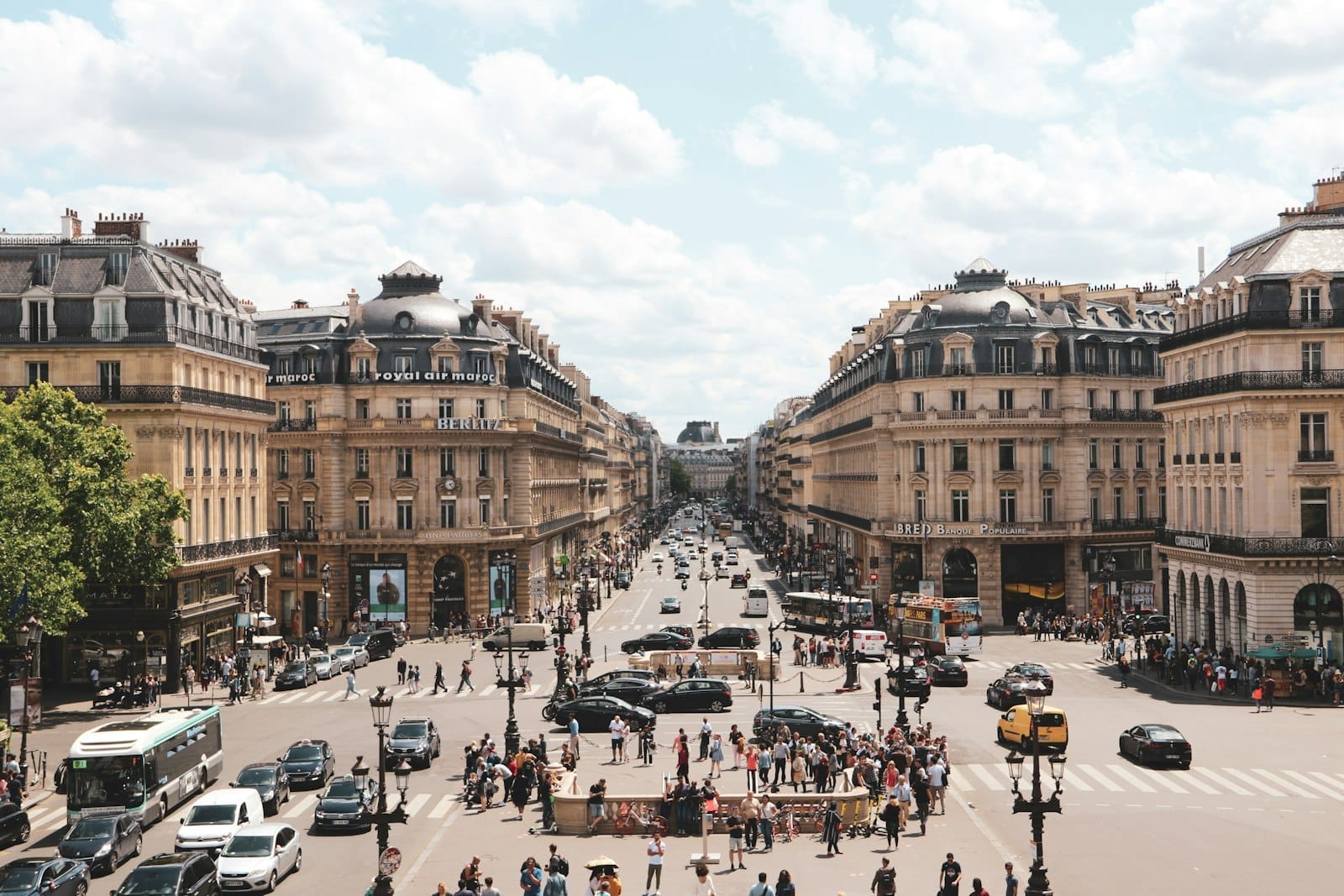
Place de l'Opéra anchors the western end, where Boulevard des Capucines and Boulevard des Italiens converge in front of the Palais Garnier. From here, Boulevard Haussmann runs westward through the department store district, while the grands boulevards themselves continue east. The 2nd arrondissement borders to the south and east, bringing the covered passages and the garment trade. To the north, the 9th fades into the quieter, more residential streets climbing toward Pigalle and the southern slopes of Montmartre.
This is not a neighborhood with obvious natural borders the way Île de la Cité or Canal Saint-Martin have. Instead it is defined by its infrastructure: the sweep of the boulevards, the density of metro stations, and the concentration of large-scale public buildings that give it an unmistakably urban, institutional weight. It is flat, easy to walk, and far better connected by transit than its slightly off-center position on the tourist map might suggest.
Character & Atmosphere
Early mornings here belong to the workers: café waiters stacking chairs outside brasseries on Boulevard des Italiens, delivery vans double-parked in front of the department stores on Haussmann, and commuters streaming out of Opéra station in numbers that make you realize this is, above all, a working district. The architecture is grandiose — broad pavements, carved stone façades, wrought-iron balconies on every floor — but the crowd using it is decidedly ordinary, which is part of its appeal.
By mid-morning the tone shifts. Tourists arrive at Galeries Lafayette and Printemps, tour groups position themselves in front of the opera house, and the shop fronts along the boulevards raise their shutters. The stretch of Boulevard des Capucines near the opera fills quickly; it can feel congested by 11am on a weekend. Walk one block north or south and the foot traffic drops sharply. Rue du Faubourg Montmartre, running north from the boulevards, is a good example: a street of fromageries, pharmacies, and lunch spots that Parisians actually use rather than perform for.
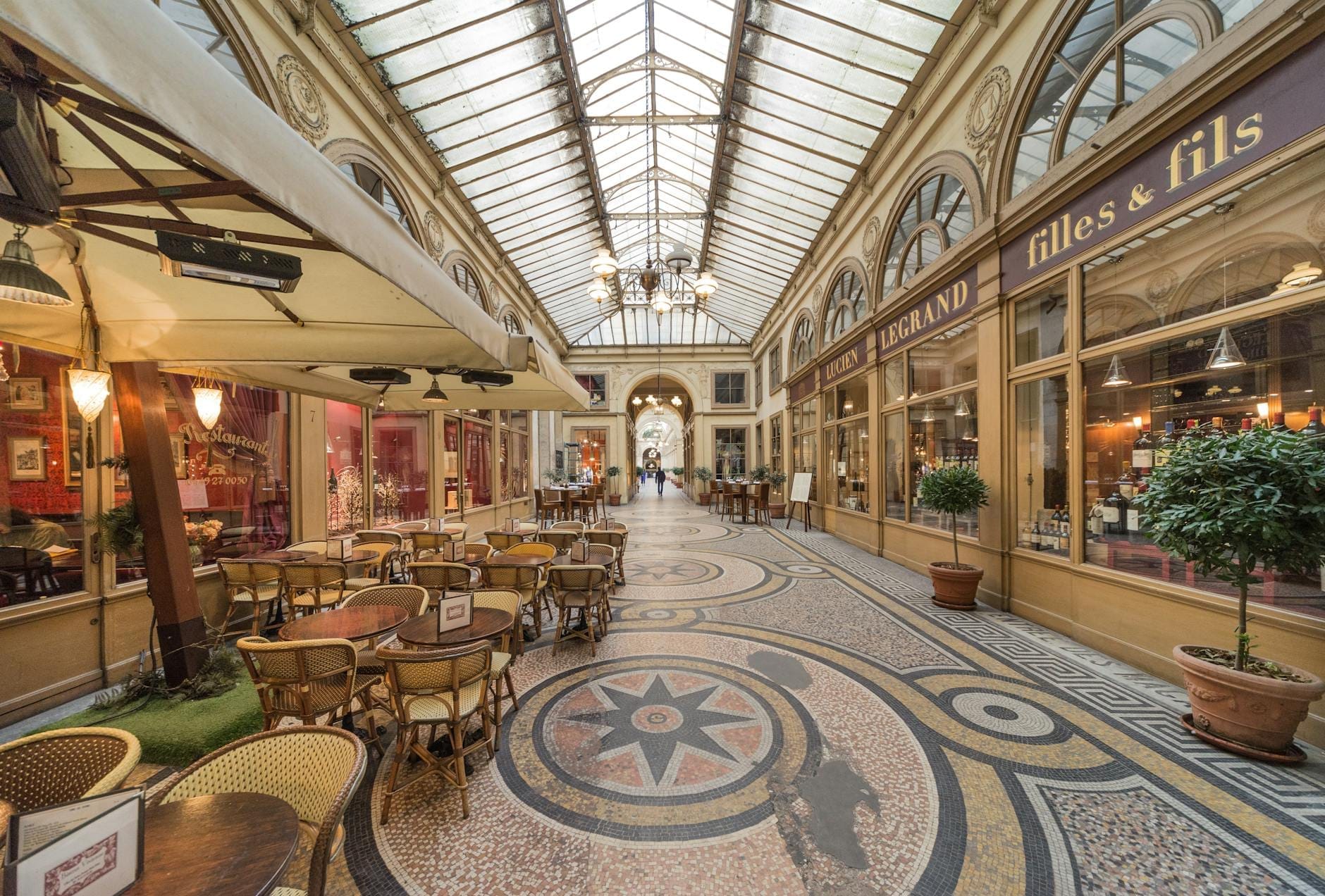
Afternoons in the covered passages are among the more distinctive experiences Paris offers. Passage Jouffroy and Passage Verdeau, running north-south between Boulevard Montmartre and Rue de la Grange Batelière, are lined with antiquarian bookshops, curio dealers, a wax museum, and a handful of old-fashioned tea rooms. The light filtering through the iron-and-glass roofs turns amber in the late afternoon, and the ambient sound drops to almost nothing — a striking contrast to the boulevard outside. These arcades were the forerunners of the modern shopping mall, and several survived into the present in a state of charming, slightly eccentric preservation.
After dark, the character of the area splits in two. The grands boulevards themselves stay lit and active well into the night, with cinema complexes, brasseries, and the occasional live music venue drawing a mixed crowd. The streets around the Folies Bergère on Rue Richer and the Opéra Comique on Place Boieldieu take on a more theatrical atmosphere on performance evenings, with well-dressed Parisians arriving by taxi and groups spilling out of restaurants nearby. The far eastern end of the boulevard chain, near Bonne Nouvelle, is quieter but not deserted, anchored by Le Grand Rex, one of the largest and most celebrated cinema halls in Europe.
ℹ️ Good to know
The neighborhood straddles the 2nd and 9th arrondissements depending on which block you are on. For practical purposes, visitors treat it as a single zone centered on the grands boulevards and the Opéra quarter, running roughly from Place de la Madeleine in the west to Place de la République in the east.
What to See & Do
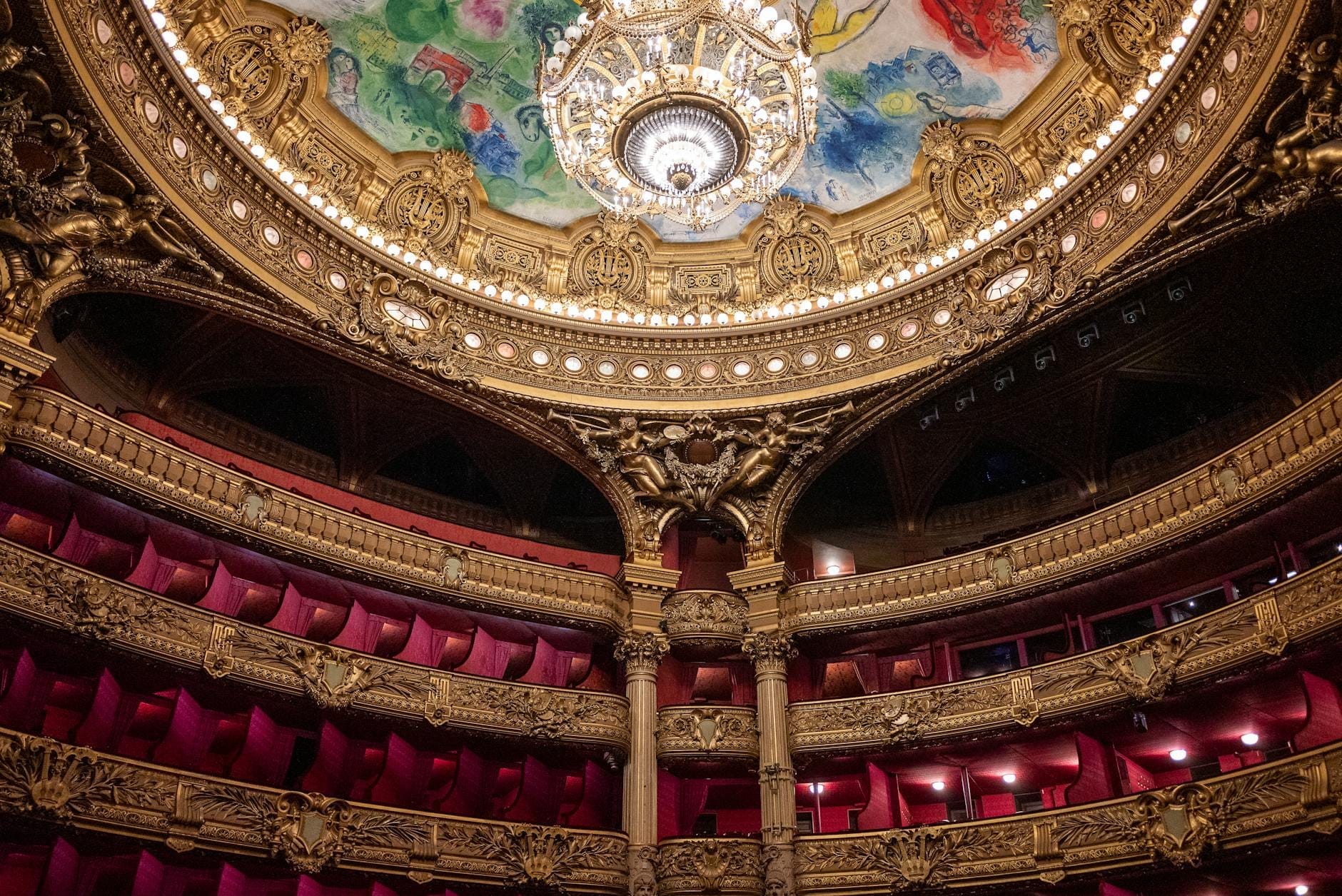
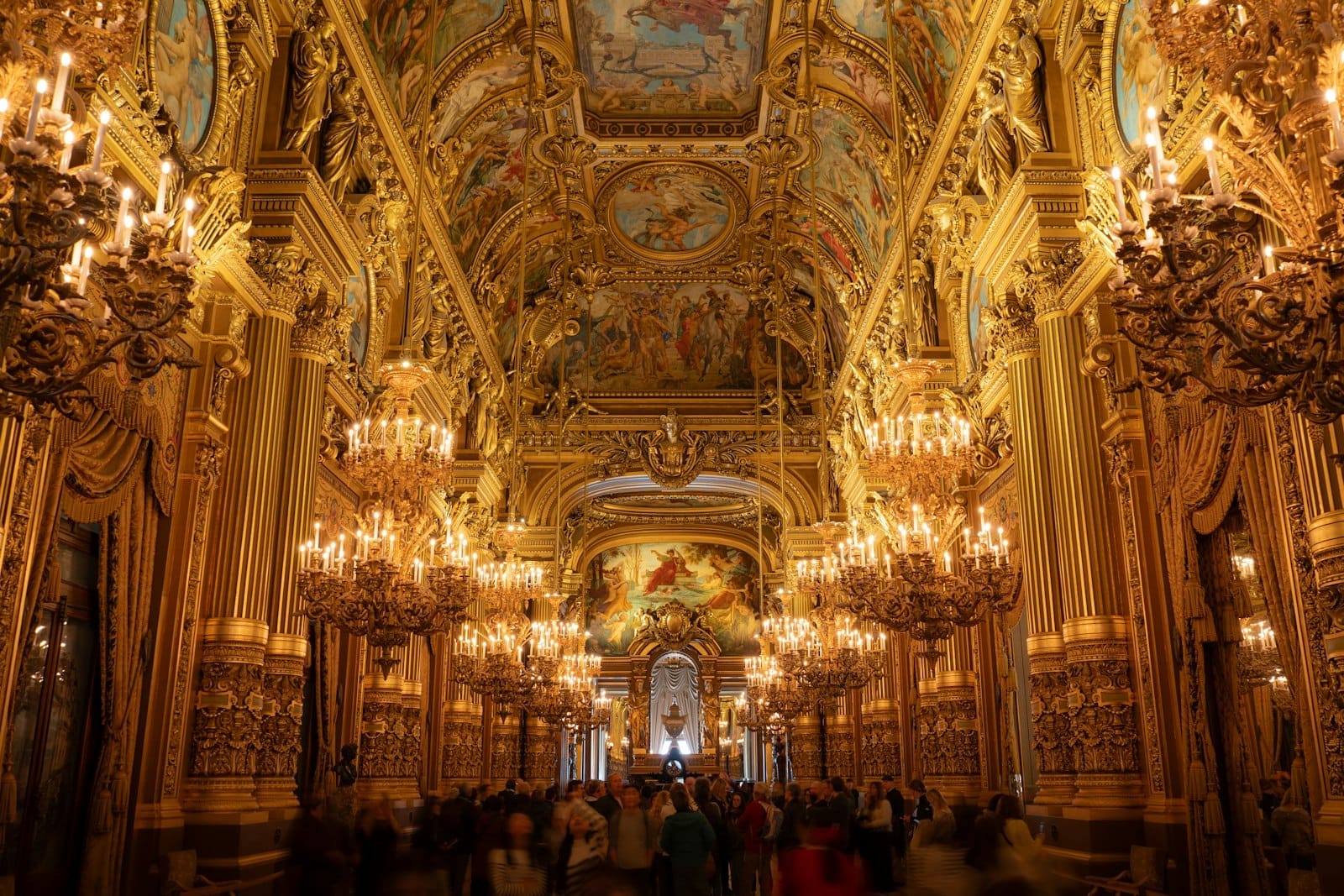
The Palais Garnier is the neighborhood's most important single building and one of the finest examples of Second Empire architecture anywhere in France. Inaugurated in 1875 after 15 years of construction, the opera house designed by Charles Garnier is open for self-guided visits daily from 10am (performance-permitting; last entry times vary). The grand staircase, the auditorium ceiling painted by Marc Chagall in 1964, and the underground lake that inspired Gaston Leroux's famous novel are all accessible during visits. Check the Palais Garnier attraction page for current ticket prices and performance schedules, as access may be restricted on matinée days.
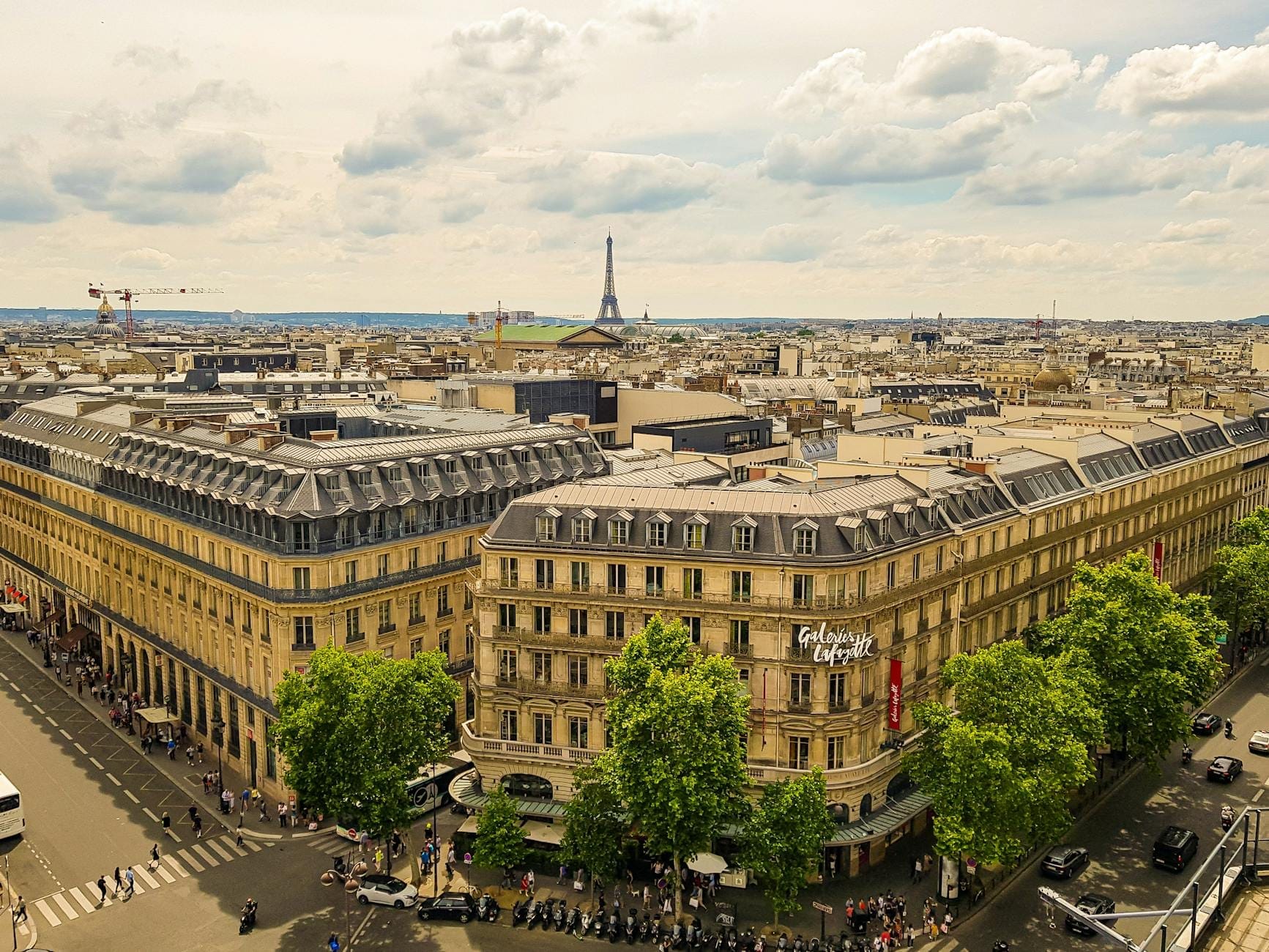
The department stores on Boulevard Haussmann are worth visiting even if shopping is not the priority. Galeries Lafayette Haussmann at number 40 has a Byzantine-style glass dome above its central atrium that is, genuinely, one of the more spectacular interior spaces in Paris, and the rooftop terrace offers a free panoramic view toward Sacré-Cœur and the Eiffel Tower. The store is open daily 10am to 8pm (hours vary by floor and season). Printemps, a few doors west, is slightly less crowded and has a comparable beauty hall and rooftop.
The covered passages are the neighborhood's most rewarding slow discovery. Passage des Panoramas (entered from Boulevard Montmartre) is the oldest surviving covered arcade in Paris, dating to 1799, and still has philately dealers and wine bars tucked into its galleried arms. A short walk east, Passage Jouffroy leads through to Passage Verdeau, creating an almost unbroken indoor route. The covered passages of Paris are easy to spend a half-day exploring, and the 9th arrondissement cluster is the most intact in the city.
Palais Garnier: self-guided visits daily 10am, performance-permitting; one of Europe's great opera interiors
Galeries Lafayette Haussmann: free entry to the dome and rooftop; open daily 10am-8pm (hours vary)
Passage des Panoramas: oldest covered arcade in Paris, dating to 1799; entered from Boulevard Montmartre
Passage Jouffroy and Passage Verdeau: antiques, books, and tea rooms in an amber-lit Belle-Époque interior
Folies Bergère on Rue Richer: historic music-hall venue, now hosting concerts and touring shows
Hôtel Drouot on Rue Drouot: Paris's main auction house, open to the public for previews and sales most weekday mornings
Le Grand Rex on Boulevard Poissonnière: a 1930s cinema palace with 2,700 seats and an art deco interior
For those tracing the area's artistic legacy, it is worth knowing that the impressionists spent considerable time in this part of Paris. Monet painted the Boulevard des Capucines from a window above Nadar's studio in 1873, and several of the cafés on Boulevard des Italiens were regular gathering places for writers and painters throughout the 19th century. The broader context of Parisian art history is covered in the best museums in Paris guide, including institutions within walking distance of the area.
Eating & Drinking
The food scene here is more varied than the department-store-and-tourist-brasserie reputation suggests, though you do need to know where to look. The boulevard-facing restaurants, particularly on Boulevard des Italiens and the stretch approaching Opéra, skew toward volume and convenience rather than quality — the menus are long, the prices are fair, and the food is adequate. That is a reasonable trade on a busy afternoon.
Move one or two streets back from the main arteries and the picture changes. Rue du Faubourg Montmartre is lined with good-value lunch spots ranging from traditional French brasseries to falafel counters, couscous restaurants, and pastry shops. The street has a genuine neighborhood rhythm to it, busy at lunch and calm by mid-afternoon. Rue Richer, running parallel a block to the north, became a low-key restaurant destination in the 2010s with a cluster of natural wine bars and modern French bistros.
The passages themselves have a few eating options worth knowing. Passage des Panoramas has restaurants with tables set directly in the arcade — eating there at lunch feels pleasantly theatrical, with the glass roof filtering daylight above and the occasional tourist pausing to take photographs while you eat. For coffee, the cafés around Place de l'Opéra tend to charge a premium; better to walk back to Rue du Faubourg Montmartre or find a counter seat at one of the smaller tabacs near Richelieu-Drouot.
In the evenings, the area around the Folies Bergère and Opéra Comique has a cluster of pre-theater restaurants doing set menus. Brasserie-style service, classic French cooking — sole meunière, steak frites, onion soup — at prices that reflect the captive dinner audience. Further east along the boulevards, near Bonne Nouvelle, the bar scene is younger and cheaper, with a concentration of late-opening venues catering to the cinema crowd from Le Grand Rex.
💡 Local tip
The food hall in the basement of Galeries Lafayette Haussmann (called Lafayette Gourmet) is one of the best places in the neighborhood to assemble a picnic or sample charcuterie, cheese, and pastries without sitting down. It gets very busy on Saturday afternoons — visit on a weekday morning instead.
Getting There & Around
This is one of the best-served neighborhoods in Paris for public transit. Place de l'Opéra is served by metro lines 3, 7, and 8, plus RER A via Auber station directly underneath the Palais Garnier. The Grands Boulevards station (lines 8 and 9) sits at the midpoint of the boulevard chain, and Richelieu-Drouot (lines 8 and 9) is useful for the passages. Bonne Nouvelle (lines 8 and 9) and Strasbourg-Saint-Denis (lines 4, 8, and 9) cover the eastern end.
From Charles de Gaulle airport, the RER B to Gare du Nord followed by metro line 4 south to Strasbourg-Saint-Denis is one option, though the simplest is the RER E directly to Haussmann-Saint-Lazare, a two-minute walk from the department stores. From Orly, the Orlyval plus RER B connection reaches the area via Châtelet. Full transit options from both airports are covered in the getting around Paris guide.
On foot, the neighborhood is genuinely flat and compact. Walking from Opéra station east to Bonne Nouvelle takes around 15 minutes at a comfortable pace along the main boulevard, passing all the major landmarks. From the Palais Garnier, the Louvre is around 20 minutes on foot south through the Palais Royal; the Marais is 25 to 30 minutes east. Vélib' bike-share stations are well distributed across the area and provide a useful alternative to walking the longer cross-city connections.
⚠️ What to skip
The streets immediately around Opéra station are among the most pickpocket-intensive in Paris, particularly on the steps of the Palais Garnier and inside the metro corridors at peak times. Keep bags fastened and in front of your body in crowds. This is a practical caution, not a reason to avoid the neighborhood.
Where to Stay
Staying in the Opéra & Grands Boulevards area makes particular sense for travelers who plan to use Paris as a base for multiple directions: the metro connections are fast to nearly every major attraction, and the RER links at Auber-Haussmann put Versailles, Disneyland Paris, and the airports within straightforward reach. It is a practical choice rather than a romantic one, and travelers who prioritize location efficiency over neighborhood atmosphere will do well here. For broader advice on which part of Paris suits your priorities, see the where to stay in Paris guide.
The most convenient zone for hotels is the block between Place de l'Opéra and Boulevard Haussmann, where mid-range and upper-end hotels cluster around the opera house and the department stores. This area is well lit, has good pavement-level activity in the evenings, and puts you within five minutes' walk of multiple metro lines. The streets further east along the boulevards, between Grands Boulevards station and Bonne Nouvelle, have a slightly grittier feel at night and offer cheaper accommodation, including budget hotels in the lower floors of Haussmann-era buildings.
Families traveling with children will find the neighborhood convenient but not especially tailored to young visitors. There are no major parks nearby, and the street-level noise from the boulevards can make rooms on lower floors loud well into the night. Request an upper-floor room facing a courtyard if quiet sleep is a priority.
Nearby Neighborhoods
The Opéra quarter connects naturally to several distinct areas of the city. To the north, crossing Boulevard de Rochechouart, you enter the southern edge of Montmartre, where the streets begin to climb and the atmosphere shifts from commercial to residential. To the west, Boulevard Haussmann leads directly to the luxury shopping and grand avenues of the Champs-Élysées and Trocadéro area, about 25 minutes on foot.
Heading south from the grands boulevards, you reach the 2nd arrondissement's covered passage district and then the 1st arrondissement and the Louvre within twenty minutes. Eastward, the boulevard chain ends near Place de la République, from which Canal Saint-Martin is a short walk north and Le Marais is a few minutes south. This cross-city connectivity is one of the area's genuine strengths as a base: no single neighborhood in Paris sits at the intersection of more different directions.
💡 Local tip
If you are visiting Paris for the first time and want to orient yourself quickly, an afternoon walk from Opéra east along the grands boulevards to République, then south through the Marais to Île de la Cité, gives you a cross-section of the city's architectural and social history in about three hours of walking. It is one of the most instructive routes in Paris and requires no museum entry.
TL;DR
Best for: travelers who want central transit connections, Belle-Époque architecture, shopping at Galeries Lafayette or Printemps, and access to the opera and theater scene.
Palais Garnier is open for self-guided visits daily from 10am and is one of the most impressive interiors in Paris, worth seeing regardless of whether you attend a performance.
The covered passages — Panoramas, Jouffroy, Verdeau — are the neighborhood's quietest and most atmospheric draw, best explored on a weekday afternoon.
Be aware of pickpocket risk around Opéra station and on the Palais Garnier steps; the area is otherwise safe and well-frequented at all hours.
Not ideal for travelers seeking a quiet, local residential feel: the grands boulevards are commercial, well-trafficked, and architecturally grand rather than intimate.
Paris has over 130 museums, which makes choosing badly very easy. This guide cuts through the noise with a ranked, honest breakdown of the best museums in Paris, covering art, history, science, and design, with practical details on tickets, timing, and what to skip.
Paris has over 400 parks and gardens, ranging from formal French-style classics to wild woodland escapes. This guide covers the best green spaces across the city, with practical details on what to expect, when to go, and how to get the most out of each one.
Paris is one of the most photographed cities on earth, which means most visitors return home with the same ten images. This guide goes beyond Trocadéro to cover lesser-known vantage points, specific timing advice, and honest assessments of which spots are genuinely worth the effort.
Paris rewards visitors year-round, but the experience shifts dramatically depending on when you go. This guide breaks down each season honestly, covering temperatures, crowd levels, pricing, and the specific events and landscapes that make each period worth considering.
Paris rewards those who look down at it as much as those who walk through it. This guide covers every serious viewpoint in the city, from the famous towers to free terraces most visitors walk past, with honest advice on which are worth the queue and which are overrated.
Paris rewards those who venture beyond the périphérique. Whether you want royal grandeur at Versailles, Monet's living canvases at Giverny, or medieval forests at Fontainebleau, these are the best day trips from Paris — all reachable in under two hours.
Paris has one of the most comprehensive urban transport networks in the world. From the 16-line Métro to river buses and Vélib' bikes, this guide covers every realistic option — with real fares, practical advice, and honest warnings about what to avoid.
Paris rewards the curious traveler. Beyond the Eiffel Tower and Louvre queue, the city holds Roman ruins, forgotten neighborhoods, candlelit sewers, and park temples that most visitors never find. This guide covers 20 genuinely underrated experiences, with practical details on when to go, what to expect, and what to skip.
Planning your first trip to Paris? This guide covers everything you actually need: which arrondissements to stay in, how to get around without overpaying, which passes are worth buying, and how to avoid the most common rookie mistakes. Specific, honest, and built for real travelers.
Three days in Paris is enough to cover the iconic highlights, eat well, and still leave room to wander. This guide breaks down each day by neighborhood, flags what to pre-book, and tells you what to skip so you spend less time in queues and more time in the city.
The Paris Museum Pass covers 50+ museums and monuments, but it's not automatically the right choice for every visitor. This guide breaks down the real costs, savings thresholds, booking rules, and the cases where individual tickets beat the pass.
Paris has a reputation for draining wallets, but the reality is more nuanced. This guide breaks down real 2026 costs across transport, food, accommodation, and attractions, with practical strategies for visiting Paris on a budget without sacrificing the experience.
Paris works brilliantly for families, but only if you plan it right. This guide covers the best kid-friendly attractions, parks, museums, transport logistics, and honest advice on what to skip, so you can enjoy the city without the meltdowns.
Paris rewards visitors who go beyond the obvious itinerary. This guide covers the best things to do in Paris across every interest and budget, from world-class museums and Seine river cruises to neighbourhood markets, immersive art installations, and day trips worth the train fare.
Paris has more restaurants per square kilometer than almost any city on earth, which makes choosing one genuinely hard. This guide cuts through the noise with neighborhood-by-neighborhood recommendations, honest budget breakdowns, booking advice, and the dishes you should actually order.
Choosing where to stay in Paris shapes your entire trip. This guide breaks down the city's key neighborhoods by character, price, metro access, and who they suit best, so you can book with confidence rather than guesswork.