Parc de Belleville: Paris's Highest Public Park and One of Its Best Free Views
At 108 metres above sea level, Parc de Belleville is the highest public park in Paris and one of the few places where you can watch the sun set behind the Eiffel Tower for free. Opened in 1988 on the historic Belleville hill, the park combines sweeping city panoramas, a 100-metre cascading waterfall, working Pinot Meunier vines, and a genuinely local atmosphere that the tourist-track parks of central Paris rarely deliver.
Quick Facts
- Location
- 47 rue des Couronnes, 20th arrondissement, Paris
- Getting There
- Métro Pyrénées (Line 11, top entrance via Rue Piat) or Couronnes (Line 2, lower entrance via Rue des Couronnes)
- Time Needed
- 1–2 hours
- Cost
- Free admission
- Best for
- Sunset views, families, local atmosphere, photography
- Official website
- www.paris.fr/equipements/parc-de-belleville-1806
What Is Parc de Belleville?
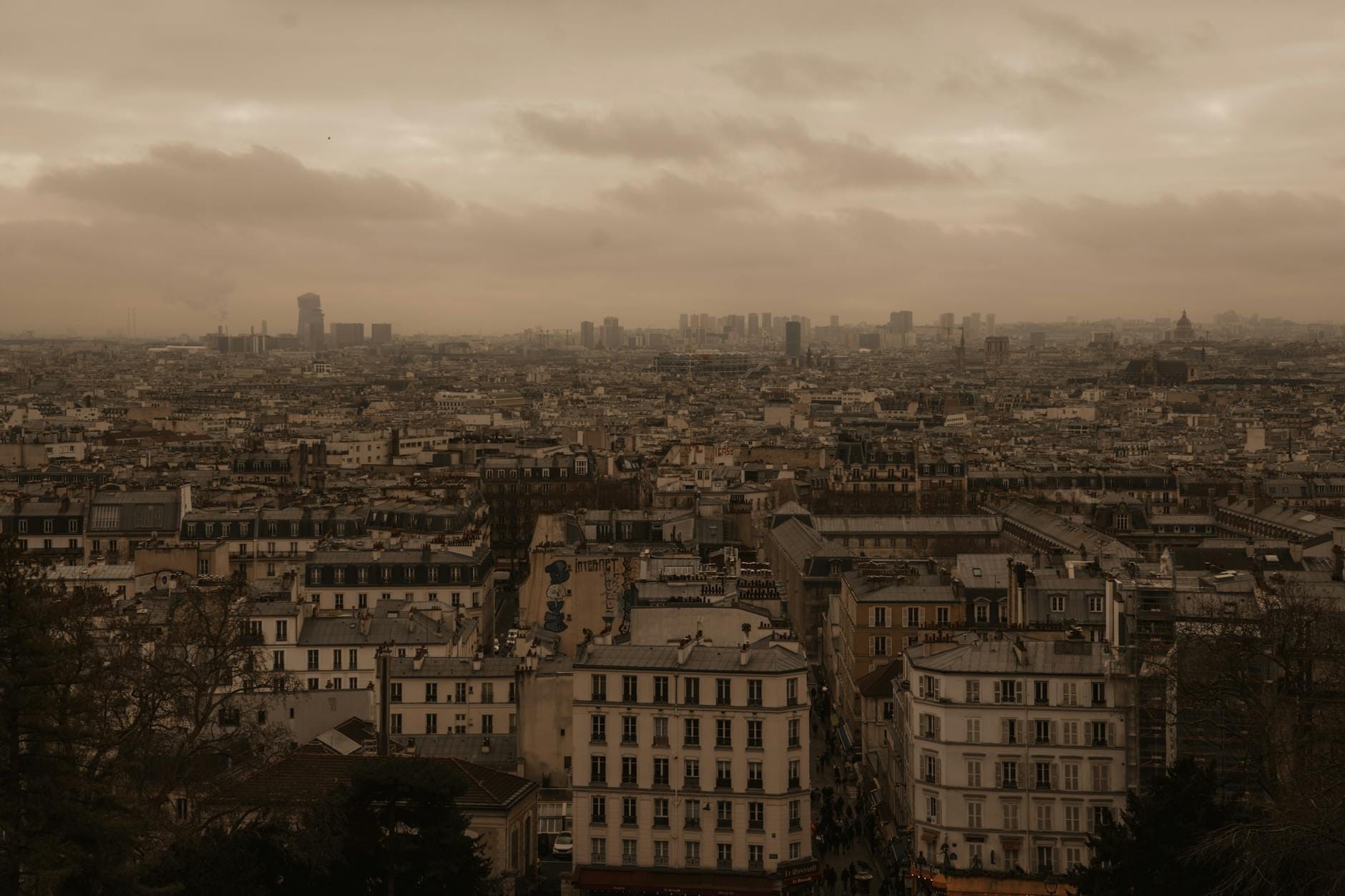
Parc de Belleville is a 4.5-hectare urban park in the 20th arrondissement, perched on the Belleville hill at 108 metres above sea level, making it the highest park in Paris. From its belvédère terrace at the summit, nearly 30 metres above the lower entrance, you get an unobstructed sweep of the skyline: the Eiffel Tower to the southwest, the Invalides dome, Notre-Dame Cathedral, the Centre Pompidou, and Tour Montparnasse all visible on a clear day. It is compact, terraced, and thoroughly local in character, which is precisely what separates it from the manicured royal gardens elsewhere in the city.
The park sits between two of the east side's most rewarding destinations: Parc des Buttes Chaumont to the north and Père Lachaise Cemetery to the south, making it a natural stop on an afternoon loop through the 19th and 20th arrondissements.
💡 Local tip
Arrive via Rue Piat at the top (Métro Pyrénées, Line 11) if your priority is the view: you step almost directly onto the belvédère. Enter from Rue des Couronnes (Métro Couronnes, Line 2) if you want to walk uphill through the park past the waterfall cascade.
The View: What You Actually See
The panoramic terrace at the summit largely delivers on its promise. On a clear morning, Haussmann's stone rooftops fill the middle ground, with the Eiffel Tower rising cleanly to the west and Sacré-Cœur visible to the north. Because no barriers obstruct the sight lines and the terrace is wide and unhurried, it is easier to orient yourself here than at most official viewpoints in the city. Haze significantly reduces what you see, so the best conditions are the hour before sunset on a clear spring or autumn day, when low-angle light catches the zinc rooftops.
The terrace faces west-southwest, making it ideal for golden-hour and sunset photography. For a broader comparison of Paris viewpoints, see the best views in Paris guide.
Tickets & tours
Hand-picked options from our booking partner. Prices are indicative; availability and final rates are confirmed when you complete your booking.
Traditional food tour in Montmartre neighborhood
From 85 €Instant confirmationFree cancellationPastry and chocolate tour in Saint-Germain-des-Pres neighborhood
From 109 €Instant confirmationFree cancellationGourmet food tour in Les Halles-Montorgueil neighborhood
From 129 €Instant confirmationFree cancellationPastry and chocolate tour in the Marais neighborhood
From 109 €Instant confirmationFree cancellation
How the Park Changes Through the Day
On weekday mornings, the park belongs almost entirely to the neighbourhood. Dog walkers take the shaded lower paths, elderly residents occupy benches near the ping-pong tables, and the air carries the faint mineral damp from the cascade. Foot traffic is light enough that you can hear the waterfall's 100-metre course without any crowd noise competing.
By midday on weekends in summer, groups of friends spread out on the accessible lawn. The terrace becomes more populated but rarely crowded in the way that Trocadéro or the Montparnasse Tower get. At dusk, the belvédère fills with a loose gathering of locals and in-the-know visitors. The Eiffel Tower sparkles on the hour after dark, visible from the terrace even at this distance.
⚠️ What to skip
Opening hours are seasonal. In summer (May–August): Monday to Friday 8:00 am–9:30 pm; weekends 9:00 am–9:30 pm. In winter, weekday closing can be as early as 5:45 pm. Check hours before planning a sunset visit.
The Cascade, the Vines, and the Details Worth Noticing
The waterfall running down the park's central spine is 100 metres long, the longest cascade in Paris. It is not a single dramatic drop but a series of linked pools and runnels channelling water down through the terraces. The sound of moving water is present throughout most of the park and gives it a calmer atmosphere than the surrounding streets would suggest.
Near the top of the park, 140 vines of Pinot Meunier and Chardonnay grow in a small terraced plot. Each plant produces around 2 to 3 kilos of grapes annually. The harvest takes place in October and reflects a history that runs much deeper than the park itself: Belleville hill was wine country for centuries, supplying Paris with wine from vineyards that spread across the hill before the city annexed the village in 1860.
The belvédère pavilion at the summit is decorated with street art, refreshed periodically, which fits the neighbourhood's longstanding reputation for outdoor murals. At the summit level, the Maison de l'Air is a small museum dedicated to air quality and atmospheric science, aimed partly at schoolchildren but worth a brief stop if it is open.
The Neighborhood: History and Character
The streets surrounding the park form one of the most genuinely mixed urban neighbourhoods in Paris. Rue de Belleville, running down the hill from the park's northern edge, is lined with Chinese and Vietnamese restaurants, Tunisian pastry shops, and Moroccan grocers operating alongside old-fashioned French tabacs. Before Haussmann's 19th-century reconstruction displaced thousands of poor residents outward to the city's periphery, Belleville was an independent commune known for its cheap wine and open-air guinguettes. After annexation in 1860, it became one of Paris's most politically active neighbourhoods, playing a significant role in the Paris Commune of 1871.
ℹ️ Good to know
Édith Piaf, France's most celebrated chanteuse, was born in the Belleville neighbourhood in 1915. A plaque on Rue de Belleville marks the traditional birthplace, though the precise address has long been disputed by historians.
Exploring the streets around the park on foot, particularly Rue Vilin, Rue des Envierges, and Passage Julien-Lacroix, reveals a texture of the city that visitors who arrive only for the view tend to miss. The area is part of the broader Canal Saint-Martin and Belleville district, which rewards a few unplanned hours of wandering.
Getting There, Accessibility, and What to Bring
Take Line 11 to Pyrénées for the top entrance (walk down Rue de la Mare, then onto Rue Piat, under five minutes). Take Line 2 to Couronnes for the lower entrance on Rue des Couronnes, which gives you the full uphill walk through the cascade. Accessibility is a genuine limitation: the park's steep terraces are connected by multiple flights of stone stairs with no lift. Visitors with mobility limitations should enter from Rue Piat, where the summit terrace is flat and fully accessible.
Wear shoes with grip; the stone stairways are slippery in wet weather. The park has no café or food kiosk, so bring water and snacks if you are staying for sunset. The closest bakeries and supermarkets are on Rue de Belleville, two minutes from the lower entrance.
Who Should Visit, and Who Might Skip It
Parc de Belleville rewards visitors already exploring the 20th arrondissement or looking for a free panorama that most tourists overlook. It pairs naturally with Père Lachaise Cemetery (15 minutes on foot) or the street-art murals of Ménilmontant. If you are travelling with young children, the wooden playground and cascades give them plenty of space while adults take in the view.
If you are on a tight central-Paris itinerary and have already committed to a monument rooftop, the travel time to the 20th arrondissement may not be justified purely for the view. The panorama here is genuine but different in character from being atop a landmark: wider, quieter, and without the framing that a monument's height provides. Visitors who prioritise convenience over authenticity will find the experience less compelling.
If the 20th feels too far for your schedule, Sacré-Cœur Basilica in Montmartre offers a comparable elevated panorama that is easier to reach from central Paris, though considerably more crowded.
Insider Tips
- The best time to reach the belvédère is 45 minutes before sunset on a clear day. The crowd is thin, the light is at its most flattering, and the Eiffel Tower's nightly sparkle show begins just after dark, visible from the terrace.
- Enter from Rue Piat at the top (Métro Pyrénées) rather than climbing from Rue des Couronnes if your knees or time are limited. You get the view immediately and then walk downhill through the park, which is far more pleasant than the climb.
- The Maison de l'Air museum at the summit is free and rarely visited. Check if it is open before you arrive; it sometimes provides a slightly higher vantage point than the standard belvédère terrace.
- The park's 140 vines are harvested in October each year. Visit in early autumn and you will find the grapes fully ripened on the terraced plot near the summit.
- For affordable food before or after your visit, walk down Rue de Belleville for some of the best-value Vietnamese, Chinese, and North African cooking in Paris, at prices noticeably lower than in the central arrondissements.
Who Is Belleville For?
- Budget travellers wanting a premium city panorama without paying for monument entry
- Photographers looking for a west-facing sunset vantage point away from tourist crowds
- Families with young children combining playground time with a skyline view
- Travellers curious about multicultural, working-class Paris beyond the historic centre
- Anyone building an itinerary around Père Lachaise Cemetery or Parc des Buttes Chaumont
Nearby Attractions
Other things to see while in Canal Saint-Martin & Belleville:
- Atelier des Lumières
Housed in a 3,300 m² cast-iron foundry dating to 1835, Atelier des Lumières projects monumental digital exhibitions across every surface. It is one of Paris's most distinctive cultural venues, combining industrial architecture with cutting-edge visual storytelling.
- Canal Saint-Martin
Stretching 4.6 kilometres through the 10th arrondissement, Canal Saint-Martin offers iron footbridges, plane-tree avenues, and a neighbourhood that balances old Parisian working-class grit with a modern creative scene. Whether you stroll its quays on a Sunday afternoon or join a boat cruise through its nine locks, this is one of the city's most rewarding free experiences.
- Parc des Buttes-Chaumont
Built on the bones of a limestone quarry and a former execution ground, Parc des Buttes-Chaumont is a 25-hectare landscape of cliffs, grottos, and a lake-island temple that most tourists never find. Free to enter, beloved by locals, and genuinely unlike any other park in the city.
- Père Lachaise Cemetery
The Cimetière du Père-Lachaise is the world's most visited cemetery and Paris's largest green space in the east of the city. Free to enter and spanning 44 hectares of sloping paths, sculpted tombs, and ancient chestnut trees, it rewards visitors who treat it as both an open-air museum and a place of genuine contemplation.