Canal Saint-Martin: Paris's Most Cinematic Waterway
Stretching 4.6 kilometres through the 10th arrondissement, Canal Saint-Martin offers iron footbridges, plane-tree avenues, and a neighbourhood that balances old Parisian working-class grit with a modern creative scene. Whether you stroll its quays on a Sunday afternoon or join a boat cruise through its nine locks, this is one of the city's most rewarding free experiences.
Quick Facts
- Location
- Quai de Valmy / Quai de Jemmapes, 75010 Paris (10th arr.)
- Getting There
- Jacques Bonsergent (Line 5) or République (Lines 3, 5, 8, 9, 11) or Goncourt (Line 11)
- Time Needed
- 1.5–3 hours on foot; 2.5 hours by boat cruise
- Cost
- Free to walk; boat cruises via Canauxrama from approx. €22 (adults)
- Best for
- Slow afternoon walks, photography, neighbourhood café culture, families
- Official website
- www.canauxrama.com/en/cruise/cruises-canal-saint-martin.html
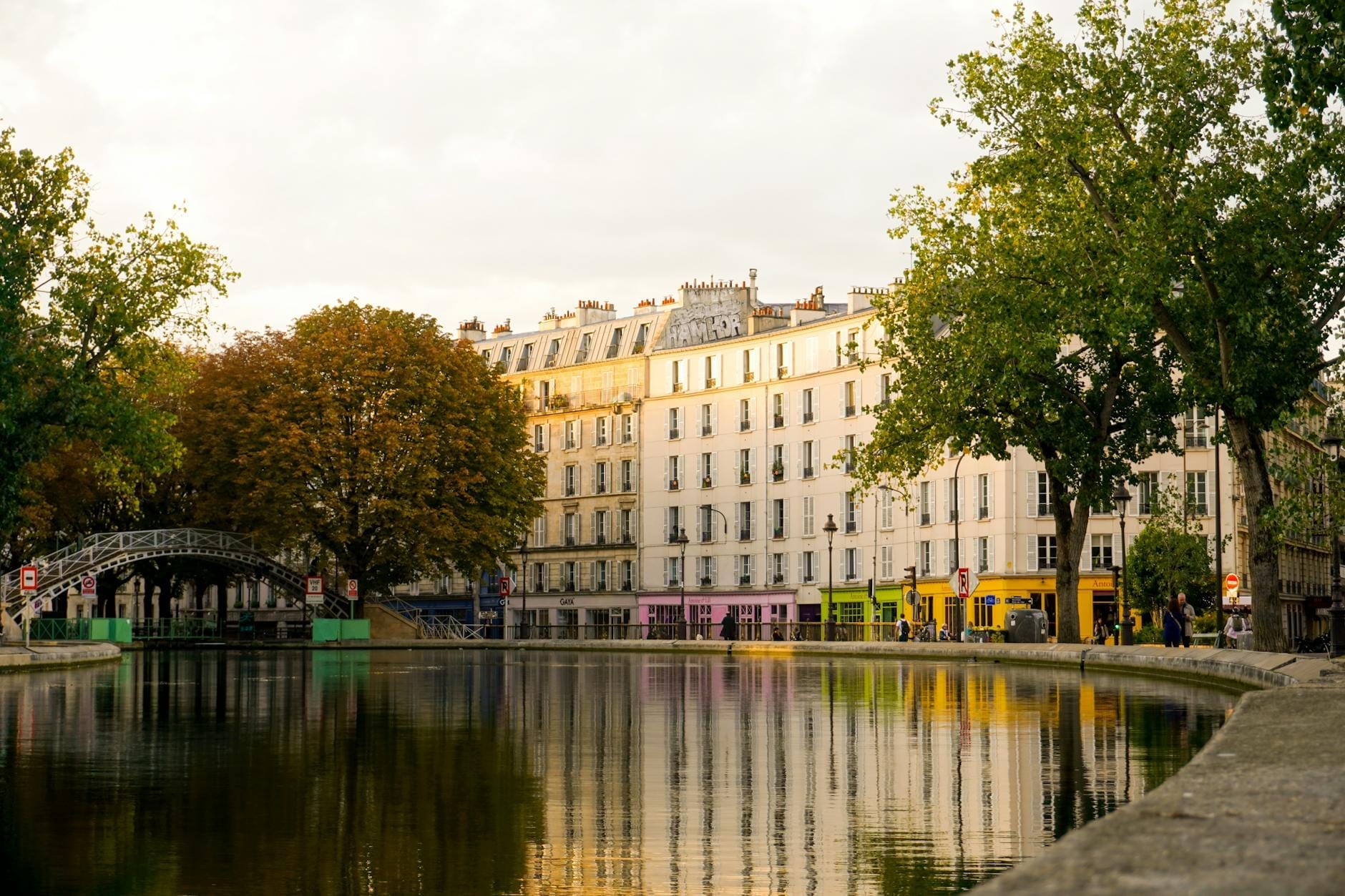
What Canal Saint-Martin Actually Is
Canal Saint-Martin is a 4.6-kilometre waterway that cuts through the 10th arrondissement of Paris, running from the Bassin de la Villette in the north to the Port de l'Arsenal, which connects to the Seine near Place de la Bastille in the south. Ordered by Napoleon I in 1802 as a supply of fresh water to the city, it took more than two decades to build, finally opening in 1825. Today, the canal is a designated Historical Monument of France (since 1993) and one of the most photogenic stretches of urban water in Europe.
What makes it unusual is its engineering. The canal descends 25 metres over its length through nine locks, and roughly half (about 2 kilometres, between Rue du Faubourg du Temple and the entrance to Port de l'Arsenal) runs completely underground through tunnels covered over in the mid-19th century. Above that buried section sits the Boulevard Richard-Lenoir, a wide tree-lined boulevard popular with joggers and weekend market-goers. The visible, above-ground stretch along Quai de Valmy and Quai de Jemmapes is where visitors spend their time.
ℹ️ Good to know
The canal is freely accessible 24/7 as a public waterway. You do not need a ticket to walk the quays. Boat cruises through the locks require a booking in advance, especially on weekends.
The Walk: From Stalingrad to République
The most rewarding route starts at the double lock at Place de Stalingrad, where the canal exits the Bassin de la Villette through two grand iron gates. From here, the water flows south flanked by rows of mature plane trees whose roots have lifted sections of the cobblestone path into gentle ridges. The trees form an almost continuous canopy over the quays in summer, filtering the light into patches on the water below.
Seven swing bridges and several arched iron footbridges cross the canal along this stretch. The most photographed is the Passerelle Alibert, a pedestrian footbridge near the Hôpital Saint-Louis whose cast-iron railings and symmetrical arches frame perfect reflections on still mornings. Arrive before 9am on a weekday and the reflections are undisturbed. By midday on a sunny Saturday, groups are picnicking along both banks and the light shifts dramatically.
The walk south takes about 45 minutes at a relaxed pace, passing the locks at Écluse des Récollets and Écluse du Temple. Watching a lock cycle in operation, with boats slowly rising or sinking while lock-keepers manually crank the sluice gates, is one of those simple pleasures that travellers who skip the canal entirely miss. If this kind of slow infrastructure appeals, the Canal de l'Ourcq to the north offers a longer, quieter version of the same experience.
Tickets & tours
Hand-picked options from our booking partner. Prices are indicative; availability and final rates are confirmed when you complete your booking.
Cruise on Canal Saint-Martin and Seine River from La Villette Park
From 25 €Instant confirmationFree cancellationCruise on the Seine River and Canal Saint-Martin from Orsay Museum
From 25 €Instant confirmationFree cancellationNormandy D-Day beaches with Juno Beach, bunkers and Canadian cemetery from Paris
From 220 €Instant confirmationFree cancellationParis Essential dinner cruise at 6.15pm
From 99 €Instant confirmationFree cancellation
Time of Day: How the Canal Changes
Early mornings on a weekday are genuinely quiet. A few cyclists, a boulangerie delivery van, the sound of the lock gates and water. The light is low and directional, and the canal surface reflects the iron bridges in near-perfect symmetry. This is the window serious photographers come for.
By late morning, the cafés along Quai de Valmy open their terrasses. The neighbourhood has a strong independent café culture: flat whites, natural wine by the glass, chalkboard menus in French with no translation. This is not a tourist corridor in the way Rue de Rivoli is. Most of the people sitting outside are locals who live in the surrounding streets of the 10th. That changes somewhat in summer, when the canal attracts a younger, mixed crowd for evening picnics. By 7pm on a warm evening, both quays are lined with people sitting on the stone edges, feet dangling above the water.
💡 Local tip
Sunday mornings between 10am and 2pm are the most atmospheric time to visit: the road running alongside Quai de Valmy is closed to traffic, the light is soft, and the neighbourhood moves at a half-speed that feels distinctly Parisian.
Winter light is cold and flat, but the canal takes on a different kind of beauty: fewer people, fallen leaves drifting on the water, the smell of rain on stone. If the temperature drops far enough (rare in Paris), locals have historically skated on the frozen surface, though this has not happened since the cold winter of 1985.
Historical and Cultural Context
Napoleon's original motivation for building the canal was practical: Paris in the early 19th century was suffering from chronic water shortages and the Seine was badly polluted. The canal drew cleaner water from the Ourcq river north of the city, supplying public fountains across Paris. It also served as a freight route, carrying stone, wine, and grain into the heart of the city.
By the mid-20th century, the canal had fallen into neglect. Freight traffic declined as road transport expanded, and the surrounding 10th arrondissement became one of Paris's poorer working-class districts. The iconic 1938 film Hôtel du Nord, directed by Marcel Carné and starring Arletty, was set on its banks and cemented the canal's image as gritty and atmospheric in equal measure. That film is still referenced in the neighbourhood today: the building that stood in as the hotel is still there on Quai de Jemmapes, now a restaurant.
The canal's rehabilitation came gradually from the 1990s onward, accelerating through the 2000s as artists, designers, and independent retailers moved into the area. It is now one of the clearest examples of Paris's neighbourhood transformation outside of Le Marais: rents have risen, the character has softened, and the cafés serve specialty coffee, but the physical fabric of the streets remains largely intact.
Taking a Boat Cruise Through the Locks
Walking the canal gives you one experience; travelling through it by boat gives you another. Canauxrama, the main operator, runs cruises that pass through all nine locks between the Bassin de la Villette and the Port de l'Arsenal, including the underground section that pedestrians never see. The boat moves slowly enough that the mechanics of each lock gate are fully visible from the deck, and a commentary (in French and English) explains the canal's history as you travel.
The full cruise takes approximately 2.5 hours. You board at Quai de Valmy (or the Bassin de la Villette end, depending on the route direction) and disembark near Bastille. Adult tickets are priced from around €22; check the Canauxrama website directly for current pricing and timetables, as schedules vary significantly by season. Book at least a day ahead in spring and summer; the boats fill quickly on weekends.
⚠️ What to skip
The underground section of the canal is not accessible on foot or by bicycle. The only way to see it is by booking a boat cruise. It is also darker and cooler than the open sections, so bring a light layer even in summer.
Practical Walkthrough: Getting There and Getting Around
The easiest Metro access is Jacques Bonsergent on Line 5, which deposits you directly onto Quai de Valmy near the midpoint of the canal. From République (Lines 3, 5, 8, 9, 11), it is a five-minute walk north. By bike, the quays are flat and easy; the Vélib' bike-share network has several docking stations along both banks.
The towpaths on both sides of the canal are paved and generally in good condition, though tree roots have created uneven sections in places. The quay level (the main pedestrian path) is fully walkable, but crossing from one bank to the other requires using one of the swing bridges or footbridges, which are not all ramped. Travellers with pushchairs or wheelchairs should note that some bridge access requires steps. The path itself is flat throughout.
There are no large visitor facilities at the canal itself: no café kiosks, no official information points, and no toilets on the quay. The neighbourhood, however, is dense with independent cafés and restaurants along both banks. For a longer day out combining the canal with the surrounding area, the Canal Saint-Martin and Belleville district has enough to fill a full afternoon, particularly if you extend north toward the Bassin de la Villette.
Photography Tips
The canal's most photographed elements are its iron footbridges, the staircase locks, and the plane tree reflections on still water. The Passerelle Alibert and the lock at Écluse des Récollets are the two best set-pieces. For reflections, you need calm water (early morning before boat traffic begins) and overcast or soft directional light. The bridges look best from water level on the quay, not from above.
The canal also works well as a backdrop for street photography: the independent shops along Quai de Valmy, the lock-keepers' iron huts, the peeling painted signs on older buildings. If canal photography appeals to you, the best photo spots in Paris guide covers additional locations that pair well with a Canal Saint-Martin visit.
Who Should Skip It (And Why)
Travellers who are primarily interested in Paris's monumental architecture or major museums may find the canal underwhelming. There are no grand buildings along its banks, no formal gardens, and no exhibits. It is a working urban waterway with a neighbourhood feel, not a showcase attraction. If you have only one or two days in Paris and are prioritising the Louvre, Versailles, or the Eiffel Tower area, the canal will likely feel like a detour rather than a highlight.
Similarly, visitors who are uncomfortable with unstructured, self-directed experiences may prefer something with more obvious waypoints. The canal rewards slow observation rather than efficient sightseeing. If that is not your travel style, the Seine river cruise offers a comparable waterway experience with more commentary and clear start and end points.
Insider Tips
- The locks operate on a schedule controlled by lock-keepers. If you want to watch a boat pass through a lock, position yourself at Écluse des Récollets or Écluse du Temple around 10am or 3pm, when boat traffic is most consistent.
- The stretch of Quai de Valmy between Rue Beaurepaire and Rue des Vinaigriers has the highest concentration of independent cafés and concept stores. It is more interesting architecturally than the northern section near Stalingrad.
- On the first Sunday of each month (and some Sundays in summer), Quai de Valmy is fully closed to traffic, making it substantially more pleasant on foot. Check Paris city announcements for the schedule.
- The Hôtel du Nord building at 102 Quai de Jemmapes is now a restaurant. The food is decent but the real reason to stop is the façade, unchanged since the 1938 film of the same name was shot here.
- If you want to extend the walk north, the Bassin de la Villette is a 10-minute walk past the Stalingrad lock and offers open water, outdoor ping-pong tables in summer, and floating cinemas in the warmer months.
Who Is Canal Saint-Martin For?
- Photographers looking for reflections, iron architecture, and street texture with minimal crowds in the early morning
- Travellers on a second or third Paris visit who have covered the major monuments and want to understand how the city actually lives
- Families with children who will enjoy watching the lock gates operate and the boat traffic passing through
- Slow walkers who prefer a linear, flat route with cafés and stops built naturally along the way
- Film history enthusiasts interested in the canal's role in classic French cinema
Nearby Attractions
Other things to see while in Canal Saint-Martin & Belleville:
- Atelier des Lumières
Housed in a 3,300 m² cast-iron foundry dating to 1835, Atelier des Lumières projects monumental digital exhibitions across every surface. It is one of Paris's most distinctive cultural venues, combining industrial architecture with cutting-edge visual storytelling.
- Belleville
At 108 metres above sea level, Parc de Belleville is the highest public park in Paris and one of the few places where you can watch the sun set behind the Eiffel Tower for free. Opened in 1988 on the historic Belleville hill, the park combines sweeping city panoramas, a 100-metre cascading waterfall, working Pinot Meunier vines, and a genuinely local atmosphere that the tourist-track parks of central Paris rarely deliver.
- Parc des Buttes-Chaumont
Built on the bones of a limestone quarry and a former execution ground, Parc des Buttes-Chaumont is a 25-hectare landscape of cliffs, grottos, and a lake-island temple that most tourists never find. Free to enter, beloved by locals, and genuinely unlike any other park in the city.
- Père Lachaise Cemetery
The Cimetière du Père-Lachaise is the world's most visited cemetery and Paris's largest green space in the east of the city. Free to enter and spanning 44 hectares of sloping paths, sculpted tombs, and ancient chestnut trees, it rewards visitors who treat it as both an open-air museum and a place of genuine contemplation.