Parc Montsouris: Paris's Quiet South-Side Park Worth the Detour
Set in the 14th arrondissement and a favourite of Sorbonne students and south Paris locals, Parc Montsouris is a 15-hectare English-style landscape park built under Napoleon III. Its artificial lake, rare tree species, and meteorological observatory make it one of the city's most layered green spaces. Entry is free.
Quick Facts
- Location
- 2 rue Gazan, 75014 Paris (14th arrondissement)
- Getting There
- RER B: Cité Universitaire (4-min walk); Metro: Porte d'Orléans (14), Alésia (4), Mairie de Montrouge (4); Bus: 21, 67, PC
- Time Needed
- 1–2 hours
- Cost
- Free entry
- Best for
- Picnics, slow mornings, birdwatching, escaping the tourist crowd
- Official website
- www.paris.fr/equipements/parc-montsouris-1810
What Parc Montsouris Actually Is
Parc Montsouris sits in the 14th arrondissement, roughly 4 kilometres south of the Seine, far enough from the tourist corridor that most first-time visitors never find it. That is precisely its appeal. The park covers around 15 hectares of gently rolling terrain shaped in the English landscape style, with curved paths, sloped lawns, a central lake, and tree canopies thick enough to block out city noise. It opened in 1869, though construction continued until 1878, making it one of the last major parks commissioned under Napoleon III's modernisation of Paris.
The design came from Jean-Charles Alphand, the same engineer-landscape architect who shaped the Bois de Boulogne and the Parc des Buttes-Chaumont. Like those parks, Montsouris was conceived to give working-class Parisians access to green space at a time when the city's rapid industrialisation was erasing gardens from residential neighbourhoods. Today it serves a different but equally local crowd: students from the adjacent Cité Universitaire de Paris and families from the surrounding streets who treat it as a backyard.
💡 Local tip
The park has four entrances: avenue Reille, rue Gazan, boulevard Jourdan, and rue Nansouty. The rue Gazan entrance (also the official address) drops you close to the upper lawns and the best viewpoints down toward the lake.
The Lake, the Birds, and the Opening Day Catastrophe
The centrepiece of Parc Montsouris is its artificial lake, roughly one hectare in size, sitting in the lower section of the park. In May 1878, in front of assembled crowds, the lake drained completely in a single day due to a plumbing error. The engineer responsible for the waterworks later took his own life. The lake was repaired and has held water ever since, but the story has become one of those pieces of Paris urban folklore that locals know by heart.
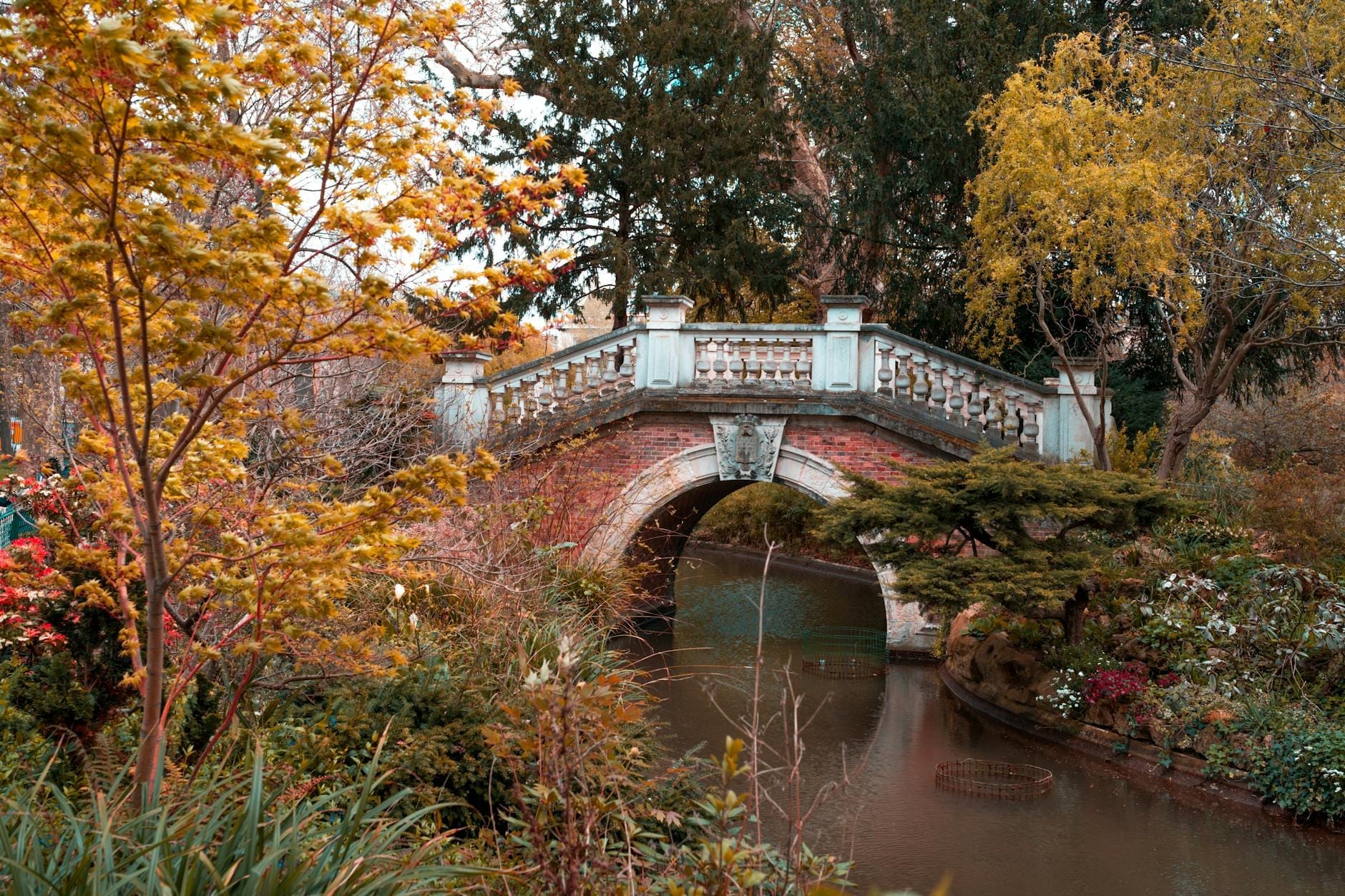
Today the lake supports around forty species of waterfowl. Ducks, Canada geese, grey herons, and moorhens use the small central island as shelter, and patient visitors standing quietly at the water's edge will see the herons fishing from the shallows in early morning. Florida red-eared slider turtles, introduced at some point in the park's history, regularly sun themselves on the stones along the shore. In spring, the combination of bird activity and the soft light coming through the surrounding willows makes the lake the most photographed corner of the park.
Tickets & tours
Hand-picked options from our booking partner. Prices are indicative; availability and final rates are confirmed when you complete your booking.
Parc Asterix Ticket with round-trip transport from Paris
From 112 €Instant confirmationFree cancellationRound-trip transportation from Paris to Parc Asterix
From 52 €Instant confirmationFree cancellationRound-trip transportation from Paris to Parc Asterix
From 52 €Instant confirmationFree cancellationParc Asterix ticket with round-trip transport from Paris
From 112 €Instant confirmationFree cancellation
How the Park Changes Through the Day
Early mornings at Parc Montsouris belong to joggers. The park's internal circuit, which follows the curves of the hillside, is one of the few genuinely comfortable running routes in south Paris, with enough gradient change to work the legs without becoming a strenuous hike. Between 7am and 9am on weekdays the atmosphere is quiet and purposeful. Vendors and strollers have not yet arrived.
Midday brings a different crowd: students from the Cité Universitaire spreading out across the upper lawns with books and lunch. The grass here, when dry, has the quality of a broad open field rather than a manicured lawn, and groups tend to spread out with reasonable space between them. There is no café inside the park itself, so visitors arrive with their own food. This actually preserves the atmosphere: without a terrace anchoring people to one spot, the park feels democratic and unhurried.
Late afternoons in summer, especially from 5pm onward, are the most socially active hours. Families arrive after school, older residents set up on benches near the lake, and the light through the trees shifts to the warm side. Sunset is technically visible from the upper paths, but the park closes shortly after dark depending on the season, so check hours before a late visit.
ℹ️ Good to know
Opening hours vary significantly by season. In summer (May–August) the park closes at 9:30pm. From late October through February it closes as early as 5:45pm. Always check current hours on paris.fr before planning an evening visit.
Hidden Details: The Meridian Stone and the Weather Station
Most visitors walk past the Paris Meridian marker without noticing it. The stone marks the line of the Paris Meridian, which once served as France's prime meridian before Greenwich was standardised internationally. The Montsouris marker — the Mire du Sud, set up in the early nineteenth century — is dedicated to the cartographer Cassini. The name of Napoleon was erased from the stone after the Restoration of the Monarchy, leaving a gap in the inscription that gives the monument a quietly defaced, historically resonant quality.
In the lower section of the park stands a meteorological station that has been recording Paris's climate data since 1872. The current building is a reconstruction of the Bardo Palace of the Bey of Tunisia, originally built for the 1867 Universal Exposition on the Champ de Mars and relocated here afterward. The station is not open to visitors, but it remains in active scientific use, and its records represent one of the longest continuous weather datasets in France. Walking past it, the building reads as architectural oddity, an ornate Moorish structure incongruously anchored in a south Paris public park.
The Trees and What to Look For Botanically
Parc Montsouris is home to several rare or unusual tree species that reward attention from visitors with any interest in urban botany. The Princess tree (Paulownia tomentosa), Pride of India (Lagerstroemia indica), and Silk trees (Albizia julibrissin) appear in different corners of the park. In late spring the Princess tree produces clusters of purple flowers before the leaves fully emerge, creating a brief and startling display that most visitors photograph without knowing what they are looking at.
The overall green structure of Montsouris is denser and more varied than the Jardin du Luxembourg, which prioritises formal geometry. Here, the English landscape approach means the planting follows the terrain rather than imposing order on it. This makes the park feel larger than its 15 hectares suggest, because sight lines are constantly interrupted by tree groups rather than opening up across flat parterres.
Getting There and Practical Logistics
The most straightforward approach is by RER B to Cité Universitaire station, a four-minute walk from the boulevard Jourdan entrance. The station connects directly to Gare du Nord, Charles de Gaulle Airport, and central Paris, which makes combining Montsouris with a visit to the Latin Quarter or Montparnasse practical without backtracking.
Bus lines 21, 67, and the PC (peripheral circular line) also serve the park perimeter. For those already in the south of the city, the park pairs naturally with a walk along the Promenade Plantée or a visit to the Catacombs of Paris, which are around 20 minutes on foot to the northwest via rue d'Alésia.
Accessibility is reasonable for a hillside park. The four main entrances all offer level access, and adapted toilets are available at the rue Nansouty exit. The internal paths are paved or compacted gravel on the main circuits, though some of the narrower routes across the slopes are not suitable for wheelchairs or pushchairs.
Photography Notes
The best photography conditions at Parc Montsouris arrive in the hour after the park opens in the morning, when mist sometimes sits over the lake surface and the heron population is actively feeding. In autumn, the mix of deciduous tree colour reflected in the lake is the park's most visually striking moment. Summer light is harsh by late morning, and the open lawns can feel overexposed in midday photographs.
For skyline photography, there are no signature Paris landmarks visible from inside the park, which makes this a poor choice if that is the priority. The best photo spots in Paris for iconic views involve different parts of the city. Montsouris works best for natural, quiet, human-scale photography: people reading on lawns, birds on water, the Tunisian pavilion framed through branches.
Who Should Skip This Park
Visitors on a tight two-day Paris schedule should probably use that time elsewhere. Parc Montsouris rewards a slow, unhurried visit, and it lacks the monumental architecture or landmark status of the Jardin des Tuileries or the Palais Royal garden. Travellers primarily interested in covered attractions, shopping, or nightlife will find little to hold their attention here. The park also does not have an on-site café or restaurant, so those looking for a sit-down experience in a garden setting should consider the Luxembourg gardens instead, which offer more amenity infrastructure.
That said, for anyone spending four or more days in Paris, or for those deliberately seeking the city that Parisians actually inhabit rather than the one designed for tourists, Montsouris is hard to beat. It sits in the same part of the city as the Rue Mouffetard market and the Panthéon, making a half-day circuit of the 14th and 5th arrondissements a coherent and rewarding itinerary.
Insider Tips
- The upper lawn near the avenue Reille entrance is the least crowded section on weekday afternoons and gets the last direct sunlight before the tree canopy takes over. This is the best spot for a quiet read or a low-key picnic.
- The Paris Meridian stone inside the park is easy to miss. From the rue Gazan entrance, follow the main path downhill and look for it set close to the left-hand path before you reach the lake level.
- In winter, when the park closes as early as 5:45pm, the light at 3pm over the lake surface can be unusually clear and photogenic. The bird population is also calmer and more concentrated near the water in colder months.
- The Cité Universitaire campus directly across boulevard Jourdan is worth a quick walk-through after the park. Its collection of 1920s–1930s international student residences, each built in the architectural style of a different country, is genuinely strange and rarely covered in guidebooks.
- Avoid arriving by bike with the expectation of cycling inside the park. Cycling is not permitted on the internal paths. Vélib' stations are available on boulevard Jourdan just outside.
Who Is Parc Montsouris For?
- Families with young children who need grass, open space, and a duck-filled lake without paying for a structured attraction
- Repeat Paris visitors looking for the city beyond the postcard circuit
- Solo travellers who want a quiet morning walk with local rather than tourist atmosphere
- Birdwatchers and anyone with an interest in urban ecology or unusual tree species
- Runners seeking a scenic park circuit away from the crowds of the Luxembourg gardens
Nearby Attractions
Combine your visit with:
- Bois de Vincennes
Covering nearly 1,000 hectares on the eastern edge of Paris, the Bois de Vincennes is the city's largest green space, combining ancient woodland, three lakes, a botanical garden, a world-class zoo, and a medieval royal castle. It rewards both casual afternoon strollers and full-day explorers.
- Château de Fontainebleau
Older than Versailles and used by more French monarchs, the Château de Fontainebleau is a UNESCO World Heritage palace 55 km southeast of Paris. With over 1,900 rooms, free formal gardens, and a manageable crowd count compared to other royal sites, it rewards visitors who make the 40-minute train trip from Paris.
- Château de Vaux-le-Vicomte
Built between 1656 and 1661 for finance minister Nicolas Fouquet, Château de Vaux-le-Vicomte is the largest privately owned château in France. Its formal gardens, gilded state rooms, and extraordinary backstory make it one of the most rewarding half-day trips from Paris.
- Château de Vincennes
Rising at the eastern edge of Paris, Château de Vincennes is one of the most complete medieval royal fortresses in Europe. Home to France's tallest medieval keep and a stunning Gothic chapel, it rewards visitors who venture beyond the tourist centre with centuries of largely undisturbed royal history.