La Promenade Plantée: Paris's Rooftop Garden Walk Above Bastille
Long before New York's High Line existed, Paris had this: 4.7 kilometres of gardens, rose trellises, and bamboo groves built atop a disused 19th-century railway viaduct. The Promenade Plantée, officially the Coulée verte René-Dumont, runs east from Bastille through the 12th arrondissement to the edge of the Bois de Vincennes, free of charge.
Quick Facts
- Location
- Avenue Daumesnil, 12th arrondissement, Paris (starts near Bastille/Opéra Bastille)
- Getting There
- Métro Bastille (Lines 1, 5, 8); Métro Ledru-Rollin (Line 8) for mid-route access
- Time Needed
- 1.5–3 hours for the full 4.7 km walk; 45 min for the elevated Viaduc section only
- Cost
- Free
- Best for
- Walkers, photographers, picnickers, architecture enthusiasts
- Official website
- www.paris.fr/lieux/coulee-verte-rene-dumont-1772
What Is the Promenade Plantée?
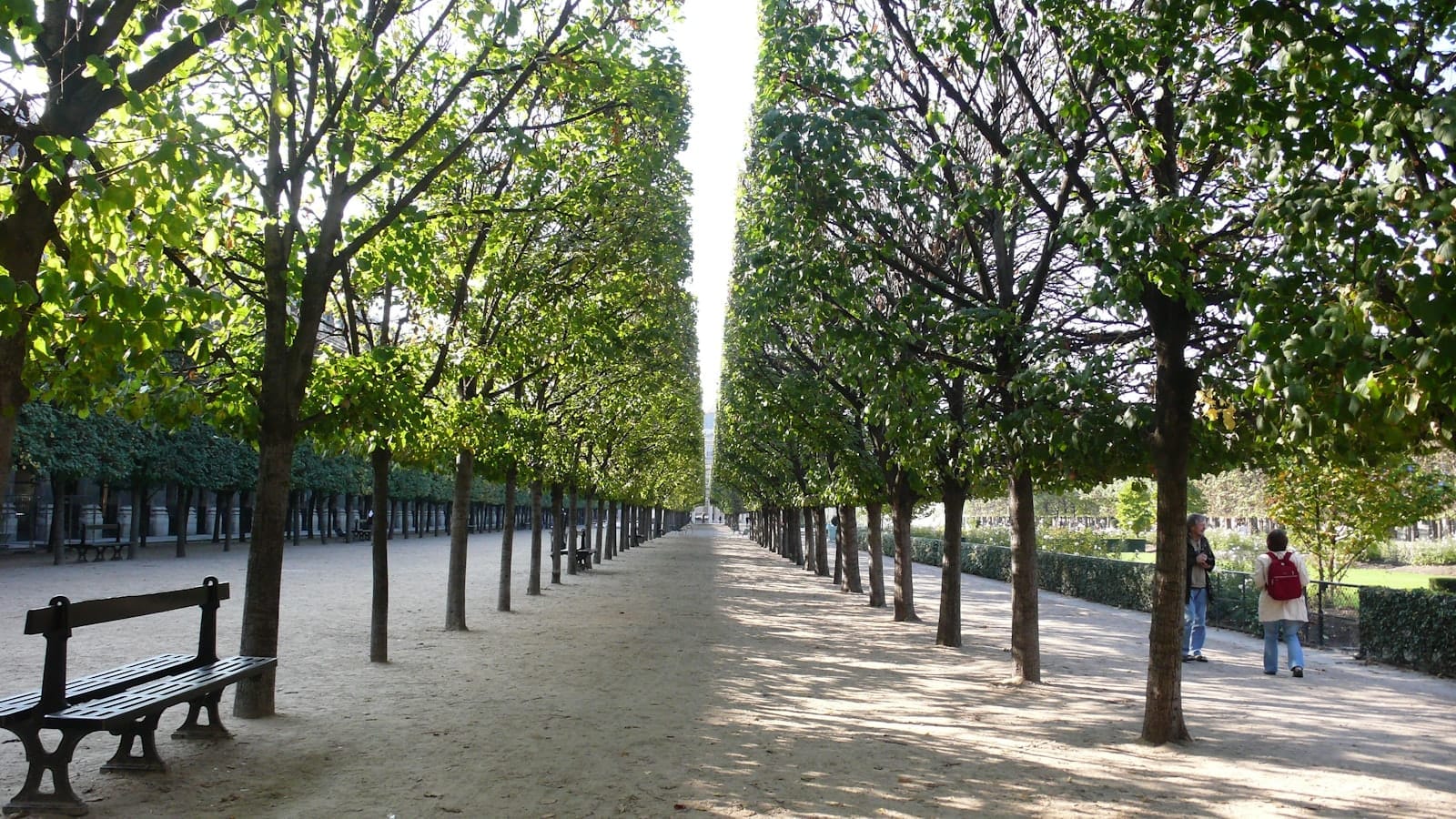
The Promenade Plantée, officially renamed the Coulée verte René-Dumont in 2013, is a linear park built on the elevated arches and rail bed of the old Vincennes railway line, which ran through eastern Paris from 1859 until its closure in 1969. When the tracks fell silent, the viaduct sat abandoned for over two decades before landscape architects Jacques Vergely and Philippe Mathieux transformed it into a 4.5-kilometre corridor of greenery. It opened in 1993, predating New York's High Line by 16 years, and is credited as the blueprint for the global rails-to-trails movement. The name honours René Dumont, a French agronomist and the country's first ecological presidential candidate in 1974.
💡 Local tip
Enter at the Bastille end via the staircase on rue de Lyon near the Viaduc des Arts archways. The rooftop views and rose trellises open up within the first five minutes, making it the most rewarding direction to walk.
What You Actually See: Four Sections, Four Atmospheres
The route divides into four distinct zones. The most dramatic is the elevated Viaduc section, where the path sits roughly 8–10 metres above Avenue Daumesnil on the original 19th-century stone arches. From here, the 12th arrondissement spreads out at an unfamiliar angle: Haussmann facades at eye level, zinc rooftops, chimney pots, and the occasional Parisian framed at a desk with shutters open. Trellised climbing roses line both railings, and in late May their bloom adds a faint sweetness to the air above the city traffic below.
After roughly 1.5 kilometres, the path descends to street level at the Jardin de Reuilly, a broad public garden where the neighbourhood gathers on warm afternoons: children, retirees on benches, groups spreading picnic blankets with complete ease. A suspended footbridge offers a brief raised view over the lawn before the path continues east through old railway cuttings, bamboo groves, hornbeam tunnels, and a stretch of plane trees. This lower section is quieter, greener, and feels more like a proper nature corridor than a tourist attraction.
The walk ends at a spiral staircase descending to the boulevard Périphérique, with the Bois de Vincennes just beyond. Plan the return by Métro rather than on foot unless you have a full afternoon free.
Tickets & tours
Hand-picked options from our booking partner. Prices are indicative; availability and final rates are confirmed when you complete your booking.
Investigative visit, The Prisoner of the Bastille
From 14 €Instant confirmationFree cancellationParis Essential dinner cruise at 6.15pm
From 99 €Instant confirmationFree cancellationEiffel Tower reserved elevator entrance to 2nd floor with walking tour and Seine cruise
From 94 €Instant confirmationFree cancellationBest of Paris city tour with Eiffel Tower lunch and Seine cruise
From 144 €Instant confirmationFree cancellation
Below the Arches: The Viaduc des Arts
The 71 vaulted archways beneath the elevated section were converted into the Viaduc des Arts, a collection of artisan workshops and specialist studios along Avenue Daumesnil. Furniture restorers, violin makers, textile designers, and jewellers work behind glass fronts, some with studio doors open to the street. It is not a shopping mall or a market: it is a working craft quarter where the craft itself is the attraction.
The staircase up to the park path is located directly above the archways, so you pass through the Viaduc des Arts without any detour. Worth a slow 10-minute look at street level even if you skip the walk above.
Morning, Midday, Dusk: Visiting at the Right Hour
Between 7am and 9am in summer the elevated section belongs mostly to joggers. The eastward light is direct and warm, the city noise below has not yet peaked, and the trellises are almost always empty of other walkers. This is the best window if solitude or photography matters to you.
Midday on weekends draws couples, families, and tourists, and the narrow elevated path can feel genuinely congested near the water features and rest pavilions between noon and 2pm on sunny Saturdays. A weekday visit, or arriving before 9am, resolves this entirely.
Late autumn afternoons are underrated. The plane trees turn gold, the light goes oblique and soft, and the crowd thins to mostly local residents walking home. The park closes at dusk: summer hours run roughly 7am to 9:30pm, and winter hours from 8am to around 5:45pm. Spring and autumn fall between those extremes, tracking daylight.
⚠️ What to skip
The park closes at dusk and a park attendant does a closing sweep before locking the gates. In winter, closing can be as early as 5:45pm. Arriving after 4pm from November to January risks a shortened visit.
Getting There and Getting Around
Walk east from Bastille Métro (Lines 1, 5, 8) along rue de Lyon for about five minutes. The staircase access to the elevated path is on your left, marked by the Viaduc des Arts arches below. A lift is at 34 rue de Lyon/rue Jacques-Hillairet, though its reliability is inconsistent. If step-free access is a firm requirement, enter from the ground-level section near Métro Daumesnil (Lines 6, 8): join the path at the Jardin de Reuilly and walk west, using the ramp rather than stairs. The park has no facilities, cafés, or vendors along its length, so bring water.
Multiple Métro stops on Line 8 (Ledru-Rollin, Reuilly-Diderot, Daumesnil) give you entry and exit points along the full route, making it easy to walk just a section. See the Paris public transport guide for fare and route details.
Photography and What to Frame
Shoot westward toward Bastille in the early morning: the light is behind you, the facades are illuminated, and the trellis railings frame the shot. Late afternoon eastward light filters through the bamboo on the lower section and catches the moisture in the air on cool days. The viaduct arches themselves, photographed from street level on Avenue Daumesnil, are striking in almost any light.
This is not a sweeping-panorama location. For the classic elevated Paris vista, the Sacré-Cœur Basilica terrace or the best viewpoints in Paris will serve better. What the Promenade Plantée offers instead is intimacy: rooftop textures, canopy light, and city geometry at an angle tourists rarely find.
Who Should Skip This Walk
If Paris is a two-day trip and the Louvre and Eiffel Tower are still unchecked, the Promenade Plantée is not the best use of those hours. It sits in the 12th arrondissement, away from the central cluster of monuments, and requires a dedicated Métro trip east. It also does not deliver the quick, dense experience that makes a three-day Paris itinerary efficient.
Travellers with significant mobility limitations should check lift status before going, as the step-free access points are not consistently operational. And despite the Le Marais neighbourhood connection at its western edge, the promenade corridor itself is largely residential rather than tourist-dense, with few shops or cafés accessible en route.
Insider Tips
- The Viaduc des Arts workshops keep roughly gallery hours, Tuesday to Saturday. Do not go on a Monday if visiting the artisan studios is part of the plan.
- Mid-route entry via Métro Reuilly-Diderot (Line 8) lets you join at the Jardin de Reuilly section without climbing any stairs, useful for testing accessibility before committing to the full walk.
- The climbing roses on the elevated section bloom in late May and early June. This is the most photogenic time of year on the viaduct, but it also draws stronger weekend crowds.
- Bring a picnic. There are no food vendors along the route. Pick up supplies from any boulangerie on Avenue Daumesnil at street level before climbing up.
- Combine the walk with the Marché d'Aligre, one of Paris's best daily street markets, located 12 minutes on foot south of the Bastille entrance. Go on a weekend morning when both the market and the park are at their peak.
Who Is La Promenade Plantée For?
- Walkers and joggers who want a car-free, green corridor through an unscripted Paris neighbourhood
- Photographers who prefer texture and intimate city geometry over grand panoramas
- Repeat visitors to Paris who have covered the central monuments and want a different experience
- Families with older children able to manage stairs and a longer walk, with the Jardin de Reuilly lawn as a natural midpoint rest stop
- Architecture and urban design enthusiasts drawn to adaptive reuse of 19th-century railway infrastructure
Nearby Attractions
Other things to see while in Le Marais:
- Musée Carnavalet
Spread across two connected 16th-century Marais mansions, the Musée Carnavalet – Histoire de Paris holds over 640,000 objects tracing the city from prehistoric river settlements to the 20th century. Entry to the permanent collection is free, making it one of the most rewarding and underused museums in Paris.
- Musée des Arts et Métiers
Tucked into a converted medieval abbey on the edge of Le Marais, the Musée des Arts et Métiers holds nearly 80,000 objects charting the full arc of human invention, from 17th-century scientific instruments to Foucault's Pendulum swinging beneath Gothic vaults. It is one of the oldest science and technology museums in the world, and consistently one of the most underrated rooms in Paris.
- Picasso Museum Paris
Housed in the grand Hôtel Salé in Le Marais, the Musée national Picasso-Paris holds one of the world's most comprehensive collections of Picasso's work, spanning nearly eight decades of creativity. With over 5,000 works and 200,000 archival documents, it is the most authoritative single-artist museum in Paris.
- Place des Vosges
Built under Henri IV and inaugurated in 1612, Place des Vosges is the oldest planned square in Paris. Its 36 symmetrical red-brick pavilions frame a formal garden where locals read, children play, and visitors slow down. Admission to the square is free.