Musée Carnavalet: The Full Story of Paris, Told for Free
Spread across two connected 16th-century Marais mansions, the Musée Carnavalet – Histoire de Paris holds over 640,000 objects tracing the city from prehistoric river settlements to the 20th century. Entry to the permanent collection is free, making it one of the most rewarding and underused museums in Paris.
Quick Facts
- Location
- 23 Rue de Sévigné, 75003/75004 Paris (Le Marais)
- Getting There
- Saint-Paul (Line 1) or Chemin Vert (Line 8)
- Time Needed
- 2–3 hours for highlights; 4+ for completists
- Cost
- Free (permanent collection); fee for temporary exhibitions
- Best for
- History lovers, architecture fans, free-museum seekers
- Official website
- www.carnavalet.paris.fr/en
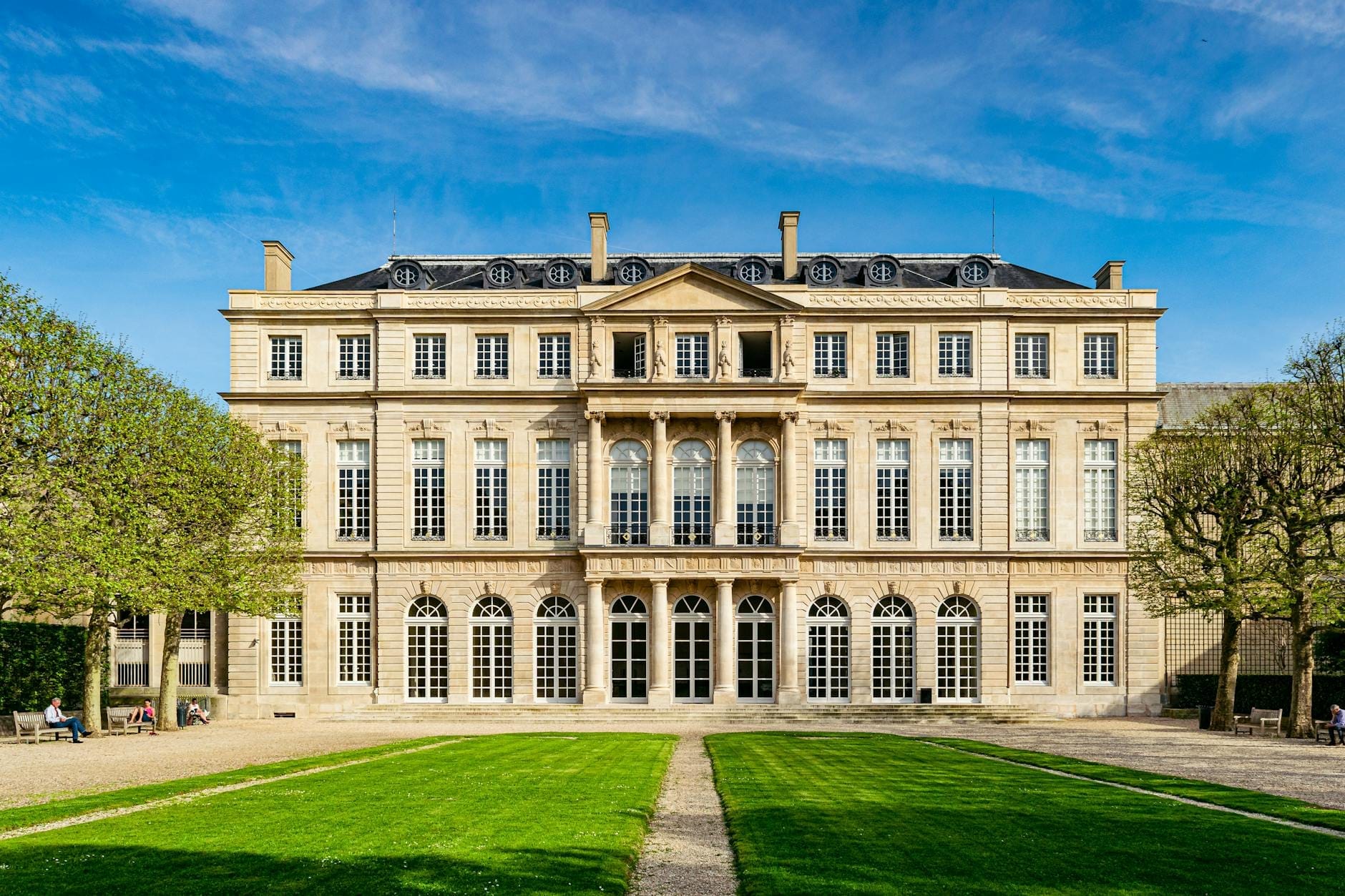
What Is the Musée Carnavalet?
The Musée Carnavalet – Histoire de Paris is the oldest museum dedicated to the history of the French capital, and it sits exactly where you would want it to sit: inside Le Marais, one of the few districts where medieval street plans and Renaissance architecture survived Haussmann's 19th-century demolitions largely intact.
The museum occupies two connected private mansions: the Hôtel Carnavalet, dating to around 1548, and the adjacent Hôtel Le Peletier de Saint-Fargeau, a late-17th-century structure annexed in the 1880s to double the display space. The city of Paris acquired the Hôtel Carnavalet in 1866 and opened the museum to the public in 1880. Walking through its galleries is, in a real sense, walking through the Le Marais neighborhood's own architectural history.
The permanent collection spans over 640,000 objects: Neolithic dugout canoes recovered from the Seine, Roman-era artefacts from ancient Lutetia, Revolutionary-era memorabilia, Art Nouveau interiors transplanted wholesale from demolished buildings, and room reconstructions from every major period of Parisian design. Entry to all of it is free.
💡 Local tip
The permanent collection requires no booking and no ticket. If a temporary exhibition is running, those spaces do require advance online booking — availability can sell out, so reserve before you arrive.
The Buildings Are Part of the Collection
Before examining a single display case, pay attention to the architecture around you. The Hôtel Carnavalet is a rare mid-16th-century Parisian mansion that retains much of its original carved stone façade, including bas-reliefs attributed to Jean Goujon, a leading sculptor of the French Renaissance. The ground-floor courtyard, open to the sky and lined with cobblestones, feels insulated from the surrounding streets — a pre-boulevard Paris preserved in stone.
The Hôtel Le Peletier de Saint-Fargeau, named for the revolutionary politician assassinated there in 1793, is architecturally more restrained but connects seamlessly through interior passages. The contrast between the two buildings tracks a century of shifting Parisian taste from Renaissance ornamentation to classical sobriety.
A major renovation completed in 2021 brought improved lighting and reorganised circulation throughout both buildings. Carved ceilings, painted beams, and original fireplaces remain in situ, preserving the sense that the mansions themselves are exhibits, not merely containers for them.
Tickets & tours
Hand-picked options from our booking partner. Prices are indicative; availability and final rates are confirmed when you complete your booking.
Musee d'Orsay Skip-the-Line Tickets and Guided Tour
From 59 €Instant confirmationFree cancellationSkip-the line guided tour of Musee Rodin
From 89 €Instant confirmationMusee d'Orsay entrance ticket with Seine river cruise
From 45 €Instant confirmationParis Musee d'Orsay tickets and in-app audio tour
From 35 €Instant confirmation
Navigating the Permanent Collection
The collection moves roughly chronologically across the two buildings, from prehistory on the ground floor through Roman Lutetia, the medieval and Renaissance periods, the Ancien Régime, the Revolution, and on to the Belle Époque. The layout of two interconnected mansions means you will occasionally double back — this is a feature, not a flaw.
The prehistoric gallery anchors the collection with genuine Neolithic pirogues excavated from the Seine, reframing Paris as a river settlement millennia before it became a capital. The Roman rooms include carved stone, pottery, and coins that place the origins of the city well south of today's central arrondissements.
The 18th-century rooms are the most theatrically furnished: portrait paintings, decorative arts of extraordinary refinement, and personal objects connected to Voltaire and Rousseau. The Revolution rooms tighten the focus sharply — the key to the Bastille, locks of Marie-Antoinette's hair in a small locket, and prints documenting the radical reshaping of Parisian public space between 1789 and 1799.
On the upper floors, the reconstructed Art Nouveau interiors demand attention. The complete jewellery shop interior designed by Alphonse Mucha for Georges Fouquet in 1901 was transferred piece by piece from its original address on Rue Royale when the building was demolished. It is one of the most intact examples of total Art Nouveau design in Paris, housed inside a free museum.
ℹ️ Good to know
The Fouquet jewellery shop interior by Alphonse Mucha (upper floor) is easily the most overlooked room in the museum. Allow 10–15 minutes and look at every surface — ceiling, floor, display cases, and door handles.
Timing Your Visit
Tuesday and Wednesday mornings shortly after 10 am offer the quietest experience. The courtyards are cool and uncrowded, and natural light in the Hôtel Carnavalet — diffuse and soft before the sun clears the roofline — is ideal for photographing the carved stone reliefs. By midday on weekends in summer, visitor numbers climb noticeably, and temporary exhibition spaces see the highest congestion.
School groups are common on weekday mornings from October to May. If you arrive on a busy afternoon, start at the upper floors and work downward against the general crowd flow. The prehistoric and Roman rooms on the ground floor remain calm at almost any hour. Late afternoon, as the last-entry time at 5:15 pm approaches, crowds thin and the courtyard gardens are pleasant as the day cools — but exhibition rooms begin closing at 5:45 pm, so plan accordingly.
Getting There and Practical Details
The visitor entrance is at 23 Rue de Sévigné, 75003/75004 Paris. The closest Metro stop is Saint-Paul (Line 1), roughly a 7-minute walk through Le Marais. Chemin Vert (Line 8) approaches from the opposite direction at a similar distance. Pont-Marie (Line 7) is slightly further but makes for a pleasant walk along Rue Saint-Antoine. Vélib' bike-share stations are clustered throughout the surrounding streets.
The museum is open Tuesday to Sunday, 10 am to 6 pm. It is closed Mondays, January 1, May 1, and December 25. On December 24 and 31, rooms close at 5 pm. No luggage or large backpacks are permitted — only handbag-sized bags after a visual security check, and there is no left-luggage facility on site. The building is fully wheelchair accessible. Photography without flash is permitted throughout the permanent collection. For a broader overview of how this museum fits alongside Paris's other options, see the guide to the Paris Museum Pass — note that the Carnavalet's permanent collection is free regardless of pass status.
⚠️ What to skip
No luggage or oversized bags are accepted and there is no cloakroom. If you are arriving directly from a train station, store your bags at your accommodation or a left-luggage service before visiting.
Who Will Get the Most From This Museum (and Who Might Not)
The Carnavalet rewards visitors who want depth on a single subject: the history of Paris as a city. It is not a general encyclopedic museum. If your priority is Impressionist painting, the Musée d'Orsay is the right choice. If you want ancient Mediterranean civilisations, the Louvre's antiquities collections go far deeper. The Carnavalet's authority lies in objects — guild signs, political pamphlets, demolished interiors, architectural salvage — that no broader institution would bother to preserve.
Visitors hoping for a quick 45-minute pass-through may find the scale (over 100 rooms across two buildings) disorienting. There are no included audio guides with free admission, though the museum's app provides contextual notes for key works. English labelling in the permanent collection is adequate but uneven. Older children with an interest in the French Revolution or Parisian history will find specific rooms genuinely gripping; the experience is less suited to young children without considerable patience.
After the museum, the Place des Vosges is a 5-minute walk, and the Maison de Victor Hugo on its northeast corner is also free to enter. For the broader context of where this museum fits within Le Marais and the surrounding district, the Paris for first-timers guide covers how to sequence a day in the area.
Insider Tips
- The courtyard of the Hôtel Carnavalet can be entered even when the museum is closed — walk through on a quiet morning to see the Renaissance stone carvings attributed to Jean Goujon without the pressure of a gallery visit.
- The Fouquet jewellery shop interior by Alphonse Mucha (upper floor) is the room most visitors rush past. Examine the door handles, the ceiling, and the mosaic floor — every surface was designed as a unified whole.
- Free admission applies throughout the year regardless of any temporary exhibitions running alongside. You can enter the permanent collection at no cost, then decide at the door whether to add a paid temporary show.
- Start at the top floor and descend: this puts you ahead of the upward crowd flow and lets you linger in the most popular Revolution and 18th-century rooms after earlier visitors have moved through.
- The small garden courtyard between the two buildings offers a quiet rest stop with benches — easy to miss if you follow the main circulation arrows without pausing to look around.
Who Is Musée Carnavalet For?
- History enthusiasts wanting context before exploring Paris's streets and monuments
- Architecture lovers drawn to intact 16th- and 17th-century Parisian private mansions
- Budget and free-museum travellers looking for a rewarding half-day without admission costs
- Repeat visitors to Paris who have already covered the major ticketed attractions
- Older children and families with a specific interest in the French Revolution or Parisian urban history
Nearby Attractions
Other things to see while in Le Marais:
- La Promenade Plantée
Long before New York's High Line existed, Paris had this: 4.7 kilometres of gardens, rose trellises, and bamboo groves built atop a disused 19th-century railway viaduct. The Promenade Plantée, officially the Coulée verte René-Dumont, runs east from Bastille through the 12th arrondissement to the edge of the Bois de Vincennes, free of charge.
- Musée des Arts et Métiers
Tucked into a converted medieval abbey on the edge of Le Marais, the Musée des Arts et Métiers holds nearly 80,000 objects charting the full arc of human invention, from 17th-century scientific instruments to Foucault's Pendulum swinging beneath Gothic vaults. It is one of the oldest science and technology museums in the world, and consistently one of the most underrated rooms in Paris.
- Picasso Museum Paris
Housed in the grand Hôtel Salé in Le Marais, the Musée national Picasso-Paris holds one of the world's most comprehensive collections of Picasso's work, spanning nearly eight decades of creativity. With over 5,000 works and 200,000 archival documents, it is the most authoritative single-artist museum in Paris.
- Place des Vosges
Built under Henri IV and inaugurated in 1612, Place des Vosges is the oldest planned square in Paris. Its 36 symmetrical red-brick pavilions frame a formal garden where locals read, children play, and visitors slow down. Admission to the square is free.