Musée des Arts et Métiers: Paris's Best Museum You've Never Heard Of
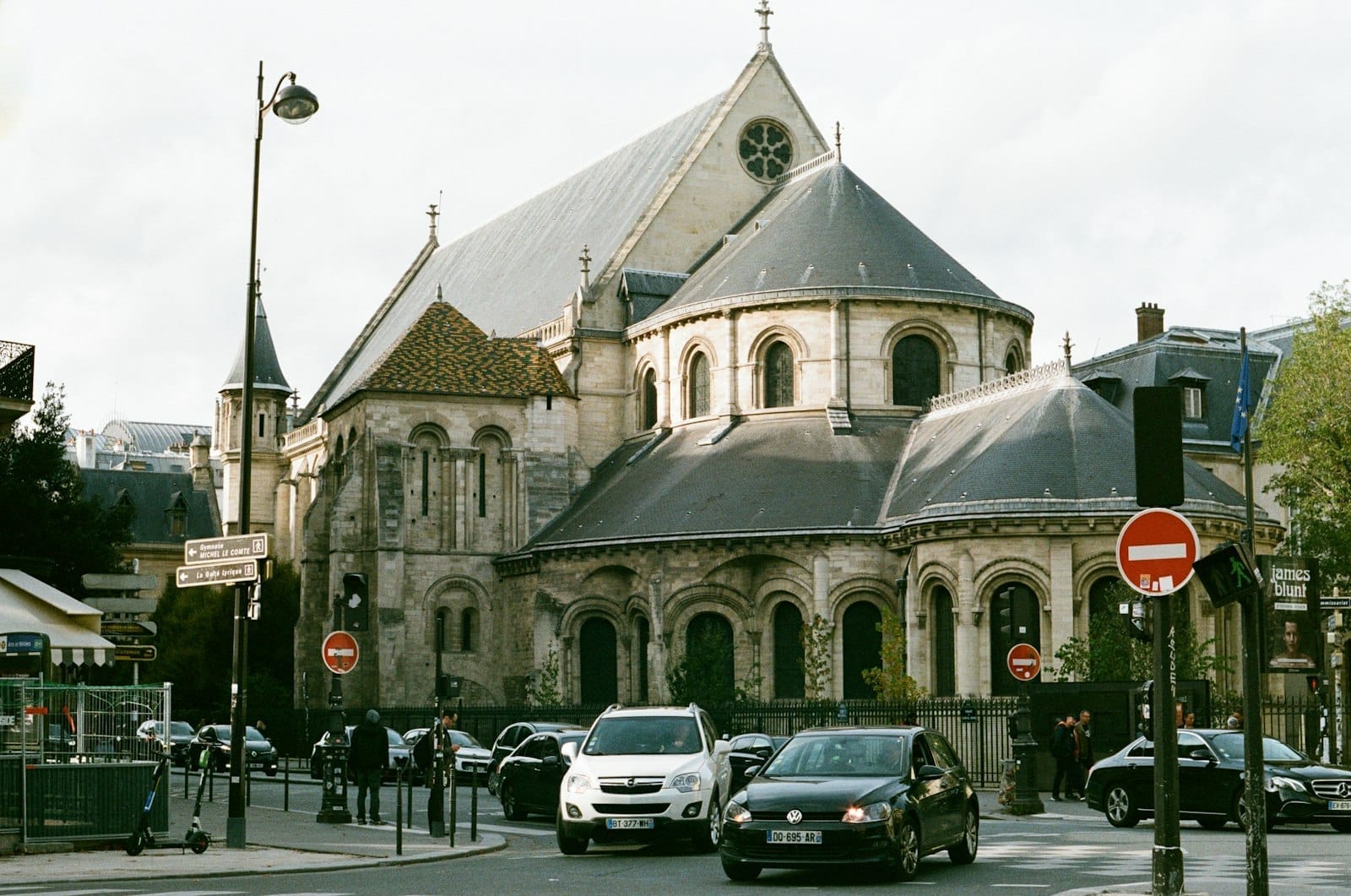
Tucked into a converted medieval abbey on the edge of Le Marais, the Musée des Arts et Métiers holds nearly 80,000 objects charting the full arc of human invention, from 17th-century scientific instruments to Foucault's Pendulum swinging beneath Gothic vaults. It is one of the oldest science and technology museums in the world, and consistently one of the most underrated rooms in Paris.
Quick Facts
- Location
- 60 rue Réaumur, 75003 Paris (3rd arrondissement, Le Marais)
- Getting There
- Métro Arts et Métiers (lines 3 & 11) or Réaumur-Sébastopol (lines 3 & 4); Bus 20, 38, 39
- Time Needed
- 2–3 hours for the permanent collection; add 1 hour for a temporary exhibition
- Cost
- Full €12 / Reduced €9; Free for under-26s (EU and non-EU), 1st Sundays, and Fridays 6–9pm. Paris Museum Pass accepted.
- Best for
- History lovers, science and engineering enthusiasts, architecture fans, rainy-day visits
- Official website
- www.arts-et-metiers.net/musee/visitor-information
Why the Musée des Arts et Métiers Deserves Your Time
Most visitors to Le Marais walk right past the Musée des Arts et Métiers on their way to the Pompidou or Place des Vosges. That is their loss. Founded in 1794 by Abbé Henri Grégoire as the Conservatoire national des arts et métiers, this is one of the oldest museums of science and technology in the world, and the building it occupies, the former Abbaye de Saint-Martin-des-Champs, predates the French Revolution by several centuries. The combination of medieval stonework and suspended flying machines is not a gimmick. It is genuinely spectacular.
The collection spans seven thematic domains: scientific instruments, materials, energy, mechanics, construction, communication, and transport. Across 10,000 square metres and roughly 80,000 objects, it tells the story of how humans figured things out, from early mechanical clocks to Blériot's monoplane, from Lavoisier's chemistry equipment to early cinema projectors. Unlike many Parisian museums, it never feels overwhelmed by its own prestige. The visitor density stays manageable, the labels are informative without being academic, and there is almost always something in the corner that makes you stop and look twice.
💡 Local tip
Free entry on Fridays from 6pm to 9pm (last entry 8:30pm) and on the first Sunday of every month. These are the least crowded slots of the week.
The Building: A Medieval Abbey Repurposed for the Age of Reason
Before you look at a single exhibit, take a moment to understand where you are standing. The Abbaye de Saint-Martin-des-Champs was founded in the 11th century and became a Cluniac priory that sat just beyond the northern walls of medieval Paris. By the time of the Revolution, it had been operating for nearly 700 years. Grégoire's idea was radical for its time: convert this religious institution into a public repository for tools, machines, models, and prototypes that had driven industrial and scientific progress.
The refectory, completed around 1230, is among the finest examples of Gothic architecture surviving in Paris. Its ribbed vaulting, slender columns, and tall lancet windows were designed by Pierre de Montreuil, the same architect credited with the upper chapel of the Sainte-Chapelle. Today it houses the transport collection, and the effect of seeing early automobiles and motorcycles beneath those medieval arches is genuinely disorienting in the best possible way.
The church itself, at the far end of the museum circuit, is where the full drama of the space lands hardest. Foucault's pendulum, the one used by Léon Foucault in 1851 to demonstrate the Earth's rotation, hangs from the choir vault. Combined with the Sainte-Chapelle's visual DNA in the architecture around it, this room earns its reputation as one of the most atmospheric indoor spaces in Paris.
Tickets & tours
Hand-picked options from our booking partner. Prices are indicative; availability and final rates are confirmed when you complete your booking.
Museum of Decorative Arts ticket and Paris city audio tour
From 20 €Instant confirmationFree cancellationLes Invalides and Army Museum priority tickets with audio tour on mobile app
From 29 €Instant confirmationArmy Museum Invalides and Napoleon Tomb tickets
From 15 €Instant confirmationMusee d'Orsay Skip-the-Line Tickets and Guided Tour
From 59 €Instant confirmationFree cancellation
Moving Through the Seven Collections
The museum is organized chronologically and thematically across three floors, and the layout rewards a deliberate pace. Rushing through in under an hour means missing the texture of the place. Plan for at least two hours, and ideally three if you want to read the labels and explore the temporary exhibition spaces.
The scientific instruments section, on the ground floor, contains some of the oldest and most precise objects in the collection: astrolabes, surveying tools, and Lavoisier's personal chemistry equipment from the 18th century. The materials and energy rooms trace the development of industrial processes, with working models of early steam engines and textile machines that make the Industrial Revolution feel immediate rather than abstract.
The mechanics and construction sections on the upper floors are where the more visually dramatic exhibits cluster. Scale models of bridges, early turbines, and precision measurement tools fill the cases. The communication gallery covers printing presses, early telegraphs, and the Lumière brothers' Cinématographe, one of the most important objects in film history. The transport hall, in the Gothic refectory, ends the circuit on a high note. Blériot's Type XI monoplane, the aircraft in which Louis Blériot crossed the English Channel in 1909, hangs overhead. Below it sit early automobiles, Cugnot's 1770 steam-powered fardier, often cited as the world's first self-propelled vehicle, and a 19th-century velocipede.
ℹ️ Good to know
Audio guides are available on-site in multiple languages for an additional fee. The museum's free app also provides commentary for key objects, though Wi-Fi in parts of the building can be patchy.
When to Visit and What to Expect at Different Times
Tuesday through Thursday mornings, especially before noon, are the quietest windows. School groups occasionally arrive mid-morning on weekdays, filling the mechanics and energy galleries with noise, but they tend to move quickly and clear out by lunch. Weekends between 11am and 2pm are the busiest periods, particularly on first Sundays when entry is free and families arrive in numbers.
The Friday evening slot, 6pm to 9pm, is the sleeper pick. Entry is free, the galleries are largely empty, and the lighting in the Gothic church, dim and warm in the evening, makes Foucault's Pendulum look extraordinary. The trade-off is that the café and some ticket desk services close earlier, so plan accordingly.
Weather has almost no bearing on a visit here, which makes the museum an excellent anchor for a rainy Paris day. The interior is climate-controlled and fully enclosed. Summer visitors escaping the heat of a July afternoon will find the stone-walled rooms noticeably cooler than the street outside.
Getting There and Getting Around Le Marais
The museum's dedicated Métro station, Arts et Métiers, serves both line 3 and line 11, making it easy to reach from most parts of central Paris. The station itself is worth a look: the line 11 platform is lined with copper-riveted panels and porthole windows in a steampunk aesthetic commissioned for the bicentennial of the museum in 1994. From the station, the museum entrance on rue Réaumur is a two-minute walk. The surrounding quarter sits at the northern edge of Le Marais, which means a visit pairs naturally with the covered passages nearby or a walk south toward Place des Vosges.
If you are building a day around this part of the city, the Musée Carnavalet is a 15-minute walk south and covers Paris's own history from prehistory to the present. The covered passages of Paris are within easy reach to the west, along the Grands Boulevards. Combine them for a full morning without ever stepping on a tourist treadmill.
💡 Local tip
The museum entrance on rue Réaumur is easy to miss. Look for the stone arch set into the building's facade rather than a prominent modern sign. The garden courtyard just inside the gate is a good spot to orient yourself before entering.
Practical Visitor Notes
Opening hours are Tuesday to Sunday, 10am to 6pm. On Fridays, the museum stays open until 9pm. It is closed on Mondays and on public holidays including January 1, May 1, and December 25. The Paris Museum Pass is accepted, which makes this an efficient inclusion if you are visiting multiple museums. Ticket prices for 2025 are €12 full price and €9 reduced, covering both permanent and temporary exhibitions simultaneously.
Under-26s from EU and non-EU countries enter free. Job seekers, disabled visitors, and their accompanying companions also benefit from free admission. Photography without flash is generally permitted throughout the permanent collection.
The museum is wheelchair accessible throughout, with accommodations available for visitors with hearing, visual, and cognitive disabilities. The ground-floor rooms and the Gothic church are the most accessible areas; some display cases in upper galleries are positioned at standard standing height, which may limit close reading for visitors using wheelchairs.
If you are considering whether the Paris Museum Pass is worthwhile for your trip, the Musée des Arts et Métiers is one of the more compelling inclusions alongside larger institutions. The Paris Museum Pass guide covers the full calculation in detail.
Who Will Love This Museum, and Who Might Not
This is a museum for people who find the history of how things were made as interesting as the things themselves. Engineers, architects, designers, and anyone who grew up taking apart machines will find something to hold their attention on almost every floor. Parents with older children, roughly 9 and above, will find the hands-on models and large mechanical displays engaging. Toddlers, however, will find very little to interact with, and the fragile exhibits in the scientific instruments gallery require that children be well supervised.
Visitors looking for the kind of emotional, aesthetically rich experience offered by the Impressionist collections at the Musée d'Orsay or Musée de l'Orangerie will find this museum's register different: it rewards curiosity and patience more than immediate visual impact. First-time visitors to Paris with only two or three days who are not specifically interested in science or technology history may want to prioritize the major art collections first and save this for a return trip or a longer stay.
For those building a first-time itinerary, the 3-day Paris itinerary offers a balanced framework that slots this museum in as a half-day addition to a Le Marais morning.
Insider Tips
- The line 11 platform at Arts et Métiers Métro station was redesigned in 1994 with copper panels and porthole windows referencing Jules Verne's Nautilus. It is one of the most unusual Métro platforms in Paris and takes 30 seconds to appreciate.
- Foucault's Pendulum in the church was the original pendulum used in Léon Foucault's 1851 demonstration. Stand near it quietly for a few minutes and you can watch the bob's direction shift slightly relative to the markers on the floor.
- The museum café, accessed through the courtyard garden, is a good option for a quiet midday break. It is far less crowded than the cafés along rue Réaumur and is shaded in summer.
- The temporary exhibition spaces on the upper floors often run programs connected to contemporary technology and design, which can make the permanent collection's historical arc feel more pointed and relevant. Check the website before visiting.
- If you are visiting on a budget, combine the free Friday evening slot here with a walk through the Marais afterward. Most of the neighborhood's shops and restaurants stay open late, and the quarter looks different, quieter and more local, after 7pm.
Who Is Musée des Arts et Métiers For?
- Science, engineering, and design enthusiasts who want depth over spectacle
- Architecture lovers drawn to medieval French Gothic interiors
- Repeat Paris visitors ready to move beyond the main circuit
- Families with school-age children curious about how machines and inventions work
- Rainy-day visitors looking for a full half-day of indoor exploration
Nearby Attractions
Other things to see while in Le Marais:
- La Promenade Plantée
Long before New York's High Line existed, Paris had this: 4.7 kilometres of gardens, rose trellises, and bamboo groves built atop a disused 19th-century railway viaduct. The Promenade Plantée, officially the Coulée verte René-Dumont, runs east from Bastille through the 12th arrondissement to the edge of the Bois de Vincennes, free of charge.
- Musée Carnavalet
Spread across two connected 16th-century Marais mansions, the Musée Carnavalet – Histoire de Paris holds over 640,000 objects tracing the city from prehistoric river settlements to the 20th century. Entry to the permanent collection is free, making it one of the most rewarding and underused museums in Paris.
- Picasso Museum Paris
Housed in the grand Hôtel Salé in Le Marais, the Musée national Picasso-Paris holds one of the world's most comprehensive collections of Picasso's work, spanning nearly eight decades of creativity. With over 5,000 works and 200,000 archival documents, it is the most authoritative single-artist museum in Paris.
- Place des Vosges
Built under Henri IV and inaugurated in 1612, Place des Vosges is the oldest planned square in Paris. Its 36 symmetrical red-brick pavilions frame a formal garden where locals read, children play, and visitors slow down. Admission to the square is free.