Philharmonie de Paris: World-Class Music in a Landmark Building
Opened in 2015 and designed by Jean Nouvel, the Philharmonie de Paris is one of Europe's great concert halls, combining extraordinary acoustics with bold architecture. Set inside Parc de la Villette, it hosts around 500 concerts a season alongside music exhibitions, family programs, and a rooftop terrace with panoramic city views.
Quick Facts
- Location
- 221 avenue Jean-Jaurès, 75019 Paris, Parc de la Villette
- Getting There
- Métro Line 5 – Porte de Pantin (2-min walk)
- Time Needed
- 2–4 hours for a concert evening; 1–2 hours for exhibitions only
- Cost
- Concerts from approx. €10–€100+ depending on performance; exhibitions and family spaces priced separately
- Best for
- Classical music lovers, architecture enthusiasts, families with children
- Official website
- philharmoniedeparis.fr/en
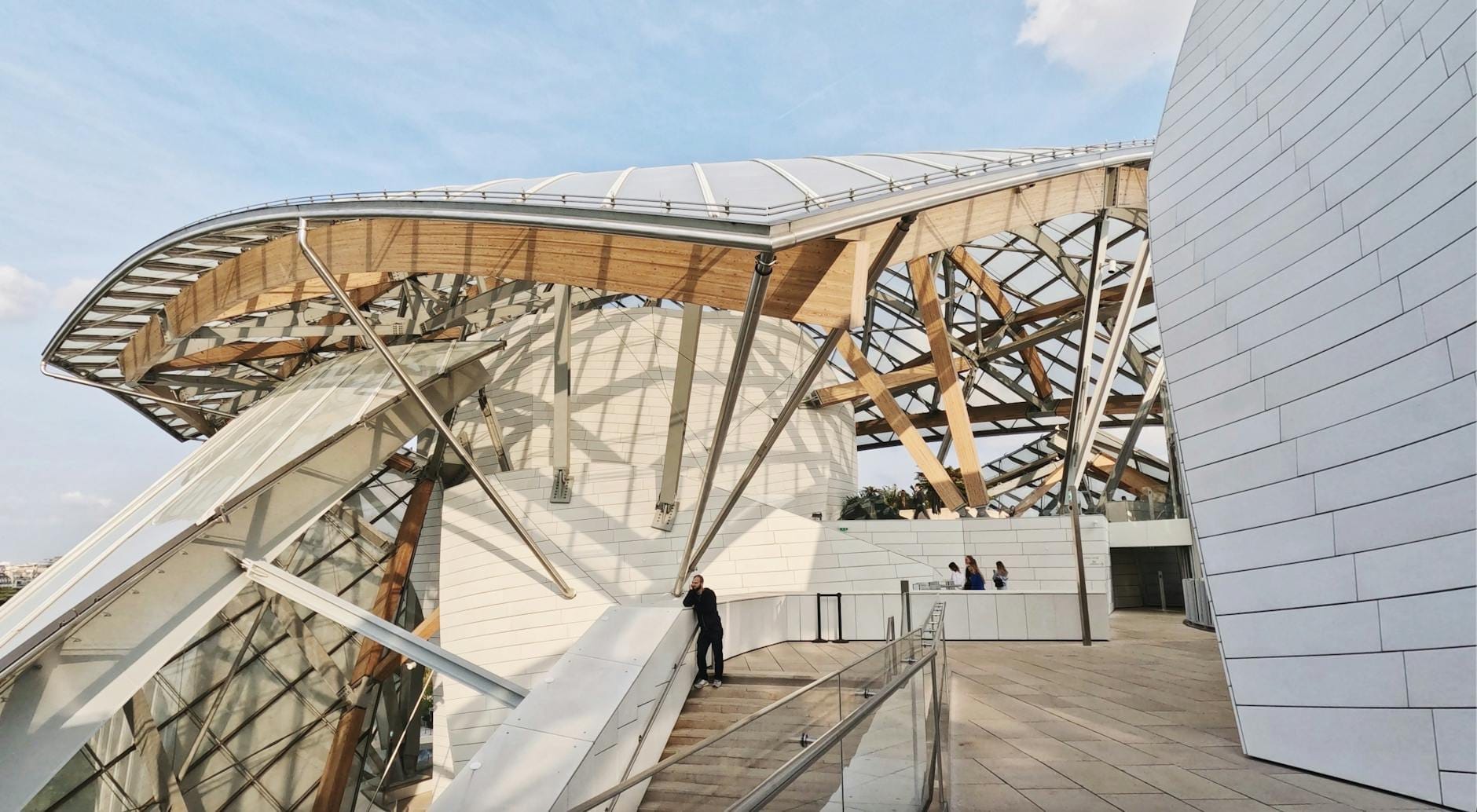
What Is the Philharmonie de Paris?
The Philharmonie de Paris is France's premier concert venue for orchestral and contemporary music, anchoring the cultural campus of Parc de la Villette in the 19th arrondissement. Inaugurated on January 14, 2015, it was designed by Jean Nouvel and stands 52 metres tall, clad in interlocking aluminium panels that shift colour with the light. The complex covers more than 20,000 square metres, encompassing four performance halls, exhibition galleries, music workshops, and the Philharmonie des enfants, a dedicated space for children.
The venue operates alongside the adjacent Cité de la musique, formerly La Cité de la Musique, together forming a single institution under the Philharmonie de Paris umbrella. This makes the La Villette campus one of the most ambitious music complexes in Europe. For visitors extending their day into the park, the Cité des Sciences et de l'Industrie sits just five minutes away on foot.
The Architecture: Jean Nouvel's Silver Mountain
Arriving at the Philharmonie for the first time, most visitors pause at the exterior before they even reach the doors. From the avenue Jean-Jaurès side, the building reads as a low-slung wave of aluminium scales, almost feather-like up close, with each panel angled slightly differently so the facade shimmers as you move around it. From the park, the structure rises more dramatically, its upper tiers stepping upward like a hillside. Nouvel described the building as a living organism that changes with its observers, and that is not far from the truth.
A rooftop terrace wraps around the upper levels and is accessible to visitors during certain opening periods, offering unobstructed views across Parc de la Villette and, on clear days, toward the skyline of central Paris. This terrace is genuinely underused by visitors who arrive just for concerts and head straight inside, making it one of the more rewarding free-ish additions to a visit. Check the website for dates when rooftop access is available, as it is not always open independently of events.
💡 Local tip
Before a concert, arrive 30–45 minutes early and walk the ramps and foyers inside. The interior circulation is designed as a continuous spiral promenade, and the views into the Grande salle from upper-level galleries are worth the extra time.
Tickets & tours
Hand-picked options from our booking partner. Prices are indicative; availability and final rates are confirmed when you complete your booking.
Paris Essential dinner cruise at 6.15pm
From 99 €Instant confirmationFree cancellationBest of Paris city tour with Eiffel Tower lunch and Seine cruise
From 144 €Instant confirmationFree cancellationBest of Paris guided bike tour
From 45 €Instant confirmationFree cancellationSeine cruise tickets with return transportation from Disneyland Paris
From 75 €Instant confirmationFree cancellation
The Grande Salle Pierre Boulez: Sound as Architecture
The centrepiece is the Grande salle Pierre Boulez, named for the French composer and conductor who championed the project for decades before his death in 2016. Seating around 2,400 people, the hall is designed as an enveloping auditorium: the stage sits near the centre, with tiered seating wrapping on all sides. The effect is radically different from a traditional proscenium hall. The orchestra sounds as if it is performing inside the room with you rather than projecting from a distance.
The acoustics were engineered by Nagata Acoustics, whose portfolio includes celebrated halls in Tokyo and San Francisco. Every surface and angle was tuned to deliver warmth in the lower frequencies and precision in the upper registers. In practice, upper-tier seats, often the cheapest in the house, can be more acoustically immersive than front stalls. Proximity to the stage does not equal the best listening experience here.
Programming runs September through June and covers Beethoven symphonies by the resident Orchestre de Paris alongside world music, electronic concerts, jazz, and crossover events. Around 500 concerts take place annually across all four halls. The Salle des concerts in the Cité de la musique building handles chamber music and smaller-format evenings.
ℹ️ Good to know
The Orchestre de Paris is the hall's resident ensemble, but the Philharmonie also regularly hosts the Berlin Philharmonic, Vienna Philharmonic, and leading soloists during its international series. Booking several weeks in advance is advisable for flagship events.
Exhibitions and the Musée de la Musique
The Philharmonie de Paris is not only a concert venue. The Cité de la musique wing houses the Musée de la musique, a permanent collection of over 1,000 musical instruments spanning five centuries, from 16th-century lutes and baroque harpsichords to rare electric guitars and synthesisers. The displays are well-lit and clearly labelled in French and English, with audio stations that let you hear each instrument played. It is genuinely engaging even for visitors with no formal music education.
Temporary exhibitions rotate throughout the year and have covered subjects from David Bowie to the history of jazz and the roots of electronic music, produced to a high curatorial standard with loans from international institutions. For visitors drawn to cultural exhibitions rather than live performance, the Philharmonie is worth visiting independently of any concert. For broader context on Paris's museum landscape, the best museums in Paris guide is a useful starting point.
Philharmonie des Enfants: Music for Young Visitors
Opened in 2021, the Philharmonie des enfants is a 1,000-square-metre interactive space designed specifically for children aged 4 to 10. It is spread across several themed rooms where children can conduct a virtual orchestra, explore how instruments produce sound through vibration, experiment with rhythm, and compose short melodies on digital stations. The space was designed with the same architectural seriousness as the main halls, using colour, scale, and tactile materials to make abstract musical concepts physical and immediate.
This is a purposefully designed educational attraction that holds up on its own terms for a family afternoon, not a token children's corner. Book timed entry online in advance, particularly during French school holidays, as slots fill quickly. For further family-friendly ideas across the city, the Paris with kids guide covers the broader options.
Getting There, Timing, and Practical Details
The Philharmonie de Paris sits at the edge of Parc de la Villette along avenue Jean-Jaurès. The most direct route from central Paris is Métro Line 5 to Porte de Pantin, which deposits you at the main entrance in under two minutes on foot. From the northern end of the park, Métro Line 7 to Porte de la Villette is also walkable in around 10–12 minutes through the park itself, a pleasant approach if the weather is good.
The surrounding district of La Villette is one of Paris's most underrated cultural quarters. Between the Philharmonie, the Cité des Sciences, the open lawns of the park, and the Canal de l'Ourcq along the northern edge, there is enough for a full day. Pairing an afternoon museum visit with an evening concert is the most efficient way to use the journey.
⚠️ What to skip
The Philharmonie is largely closed on Mondays, and some sections reduce hours during August. Museum and concert hours operate on separate schedules. Always check the official calendar at philharmoniedeparis.fr before visiting.
Concert tickets range from around €10 for family-format events to €100 or more for premium seats at headline orchestral evenings. Discounts are available for under-28s, students, and holders of certain social benefit cards. Museum and exhibition tickets are priced separately. A combined afternoon visit to the museum followed by an evening concert makes excellent use of a single trip out here.
💡 Local tip
Under-28s can access significant discounts on concert tickets at the Philharmonie, sometimes reducing prices by 50% or more. Create a free account on the website and select the relevant category at checkout.
Is It Worth the Trip?
For music lovers, the Philharmonie de Paris is unambiguously one of the great concert experiences in Europe. The acoustics in the Grande salle Pierre Boulez are exceptional and the programming is consistently ambitious. If you are in Paris during the concert season (September to June) and have any interest in orchestral music, attending a performance here should rank as a priority, not an afterthought.
For visitors with no strong interest in classical music, the Musée de la musique, rotating exhibitions, and Philharmonie des enfants still reward the trip. The architecture alone is reason enough for some. That said, visitors focused primarily on central Paris landmarks may find the 20-minute metro ride harder to justify unless they build a full day around the park. The Parc de la Villette is large, largely free, and pairs naturally with any visit here.
Dress code is smart casual for most concerts. There is no strict formal requirement, but very casual attire can feel conspicuous on premiere evenings. The venue is fully accessible by wheelchair, with lifts throughout and dedicated seating areas in all halls.
Insider Tips
- Seats in the upper tiers of the Grande salle Pierre Boulez are among the most affordable and acoustically interesting in the house. The surround design means bass frequencies envelop you from above and below, which front stalls seats simply do not replicate.
- The rooftop terrace offers one of the better views of northeastern Paris available without a paid observation deck. Access is sometimes available before or after concerts and on certain museum opening days, worth checking the schedule in advance.
- The Philharmonie des enfants books out fast during French school holidays (vacances scolaires). If visiting with children aged 4–10 between February and April or July, reserve timed entry online at least a week ahead.
- Free lunchtime concerts and open rehearsals are occasionally offered, particularly earlier in the season. These appear on the calendar with short notice, so follow the Philharmonie's social channels or check the online agenda weekly if you are staying in Paris for several days.
- Combine a Philharmonie visit with a walk along the Canal de l'Ourcq, which runs just north of the park. The towpath is calm on weekday mornings, lined with barges and local joggers, and leads toward the quieter reaches of the 19th arrondissement that most visitors never see.
Who Is Philharmonie de Paris For?
- Classical music enthusiasts seeking world-class orchestral performances in exceptional acoustics
- Architecture lovers drawn to Jean Nouvel's boldest completed building in Paris
- Families with children aged 4–10 looking for a genuinely immersive cultural experience
- Cultural tourists who want exhibition depth alongside live performance in a single visit
- Visitors spending time in La Villette or the 19th arrondissement who want a full-day cultural itinerary
Nearby Attractions
Other things to see while in La Villette & Northeast Paris:
- Canal de l'Ourcq
Stretching 108 km from the Bassin de la Villette into the Seine-et-Marne countryside, Canal de l'Ourcq is where Parisians actually spend their weekends. This is not a postcard canal. It is a working waterway with a genuine neighbourhood feel, electric boat rentals, seasonal festivals, and some of the city's most unhurried people-watching.
- Parc de la Villette
Parc de la Villette is a 55.5-hectare post-industrial landscape in northeast Paris where a former slaughterhouse became one of Europe's most inventive public spaces. Designed by architect Bernard Tschumi, it combines serious cultural institutions with free open-air lawns, canal paths, children's playgrounds, and a summer cinema. Entry to the park itself is free, making it one of the best-value days out in the city.