Best Things to Do in Cádiz, Spain: The Definitive Guide
Cádiz is one of Andalusia's most rewarding cities, and most of its best experiences are packed into a compact, walkable old town on a narrow Atlantic peninsula. This guide covers the top sights, beaches, food markets, and cultural stops — with honest advice on what's worth your time and what to skip.
Plan and book this trip
Tools from our partner Travelpayouts help you compare flights and hotels. If you book through them, we may earn a commission at no extra cost to you.
Flights
Hotels map
TL;DR
- The historic old town is compact and walkable — most major sights are within 20-30 minutes on foot. Start with the old town walking tour to orient yourself.
- The Cathedral, Torre Tavira, and the Roman Theatre are the three non-negotiable sights for first-time visitors. Torre Tavira entry is around €8; the Roman Theatre is free.
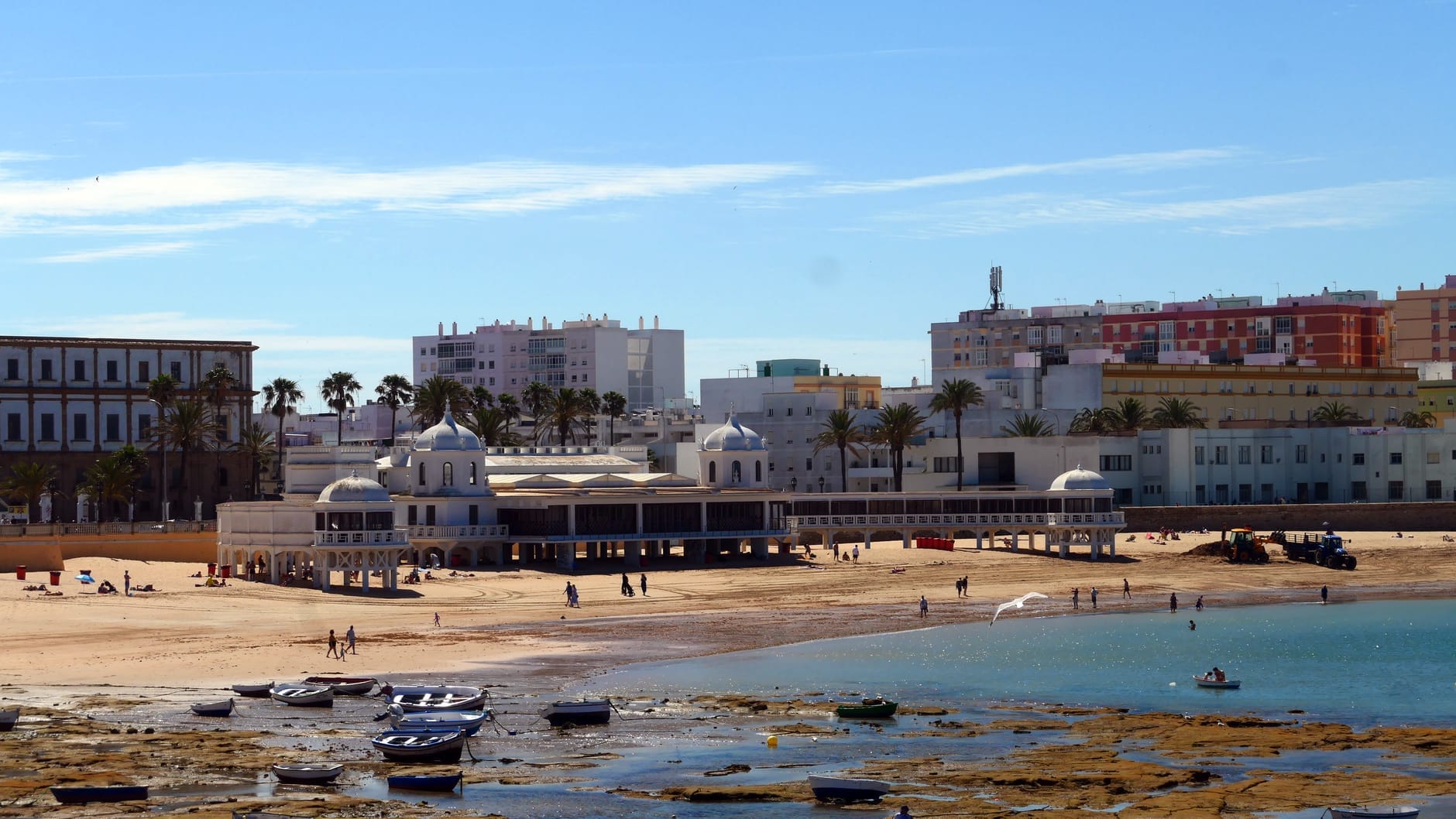
- La Caleta beach is the city's most scenic urban beach — flanked by two historic castles and best visited in the early morning or late afternoon to avoid summer crowds.
- Cádiz is not just a beach destination. The Mercado Central, the fortified sea walls, and the old quarter neighborhoods like El Pópulo offer as much character as the coastline.
- Spring (April-June) and early autumn (September-October) are the best times to visit. July and August are hot, crowded, and expensive.
The Old Town Sights You Shouldn't Miss
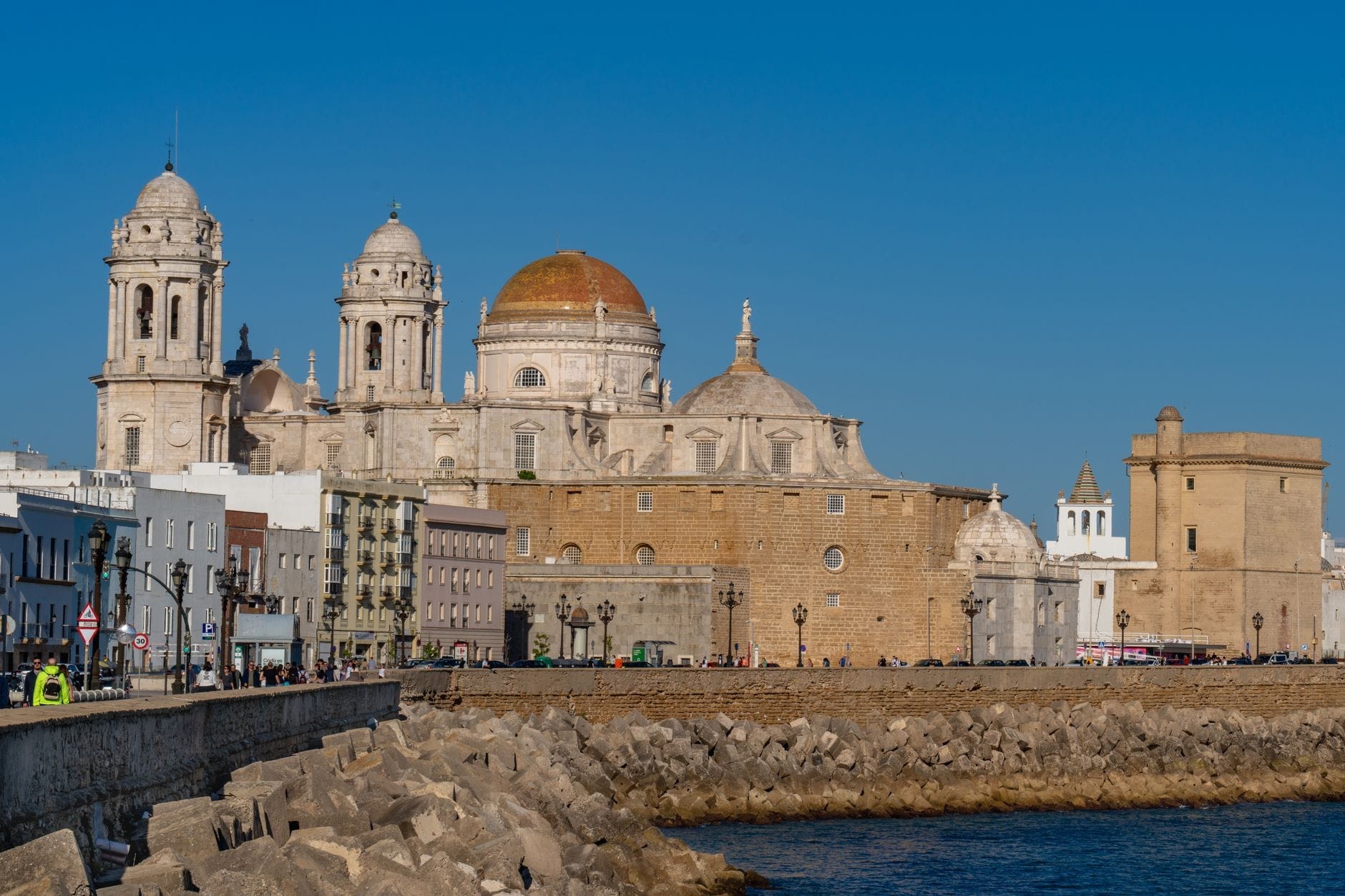
Cádiz Spain's historic core sits on a narrow Atlantic peninsula, which means the entire old city is about 3 kilometers from tip to base. That geography is your friend: you can walk from the Cathedral to the sea walls to the market to the Roman Theatre without needing a bus or taxi. The Centro Histórico rewards slow exploration, but you need a few anchors to structure your day.
The Cádiz Cathedral is the obvious starting point. Built over most of the 18th century, it blends baroque and neoclassical styles in a way that's rare in Spain, and its golden dome is the city's defining skyline feature. The interior is worth the entry fee, but if you're watching your budget, the view from the surrounding plaza is nearly as satisfying.
A short walk inland, Torre Tavira is the highest watchtower in the old city. The Camera Obscura at the top projects a real-time panoramic image of the city onto a concave table — it sounds gimmicky but is genuinely impressive on a clear day. Entry is around €8. Climb it in the late morning before the light gets too harsh.
💡 Local tip
If you plan to visit the Cathedral, Torre Tavira, and the Museo de Cádiz in one day, check for combination ticket options at each venue — buying them separately often costs more. Arrive at the Cathedral right when it opens to avoid coach groups.
The Roman Theatre dates to the 1st century AD and is one of the largest Roman theatres discovered on the Iberian Peninsula. Entry is free, which makes it one of the best-value stops in the city. The site is partially excavated and sits embedded into the medieval urban fabric of the El Pópulo quarter — the juxtaposition of Roman stone and narrow Andalusian alleys is striking.
La Caleta and the Waterfront
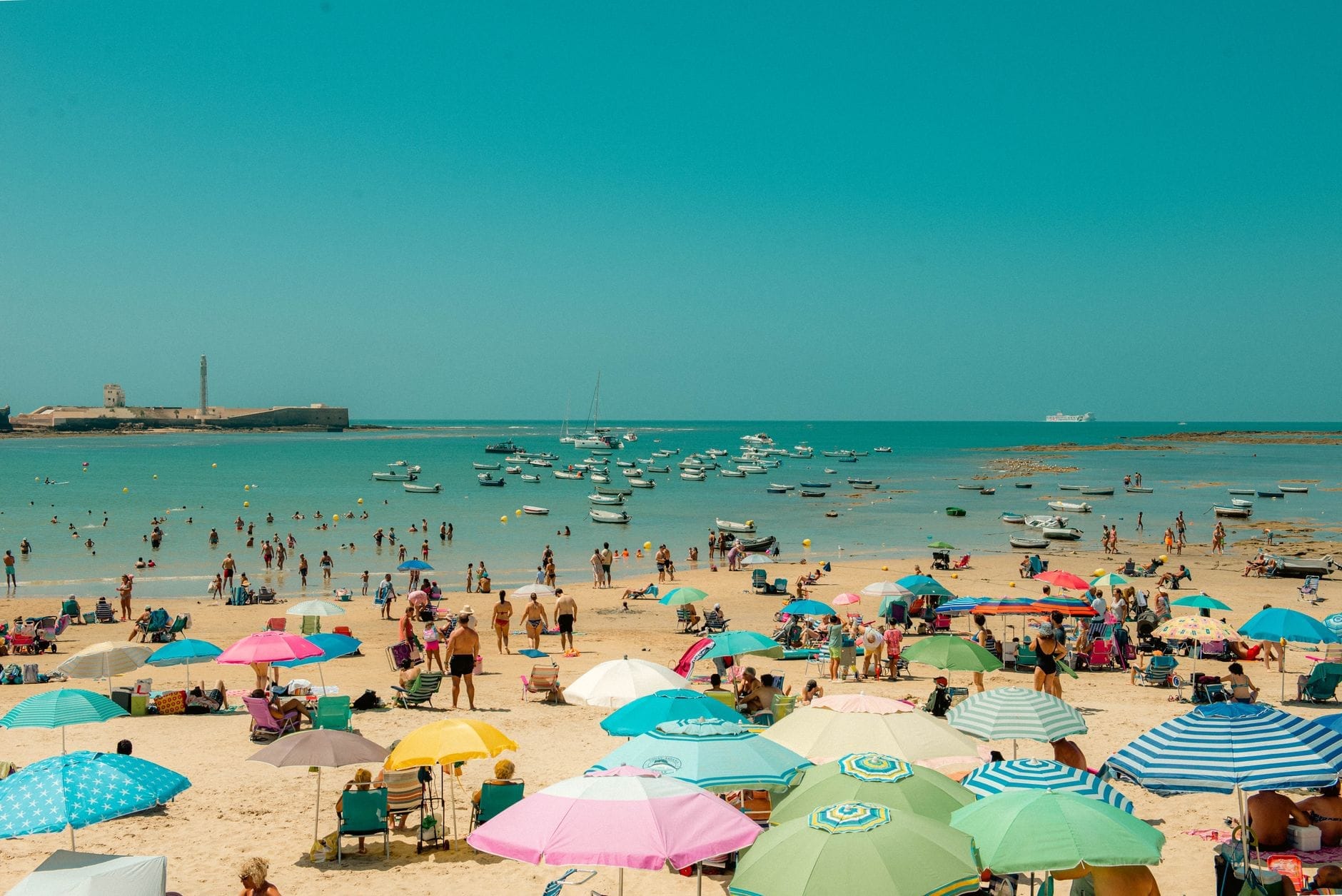
Playa de la Caleta is the beach that defines Cádiz's identity more than any other. It sits between two historic fortifications — the Castillo de San Sebastián to the west and the Castillo de Santa Catalina to the east — and faces the open Atlantic. In summer it gets packed with locals and visitors alike, so arrive before 10am or return after 6pm to find space.
The Castillo de San Sebastián sits on a small island connected to the mainland by a causeway. The walk out along the causeway at sunset is one of the city's great free experiences — the light over the Atlantic at that hour is genuinely spectacular. The Castillo de Santa Catalina on the opposite headland hosts cultural events and exhibitions throughout the year.
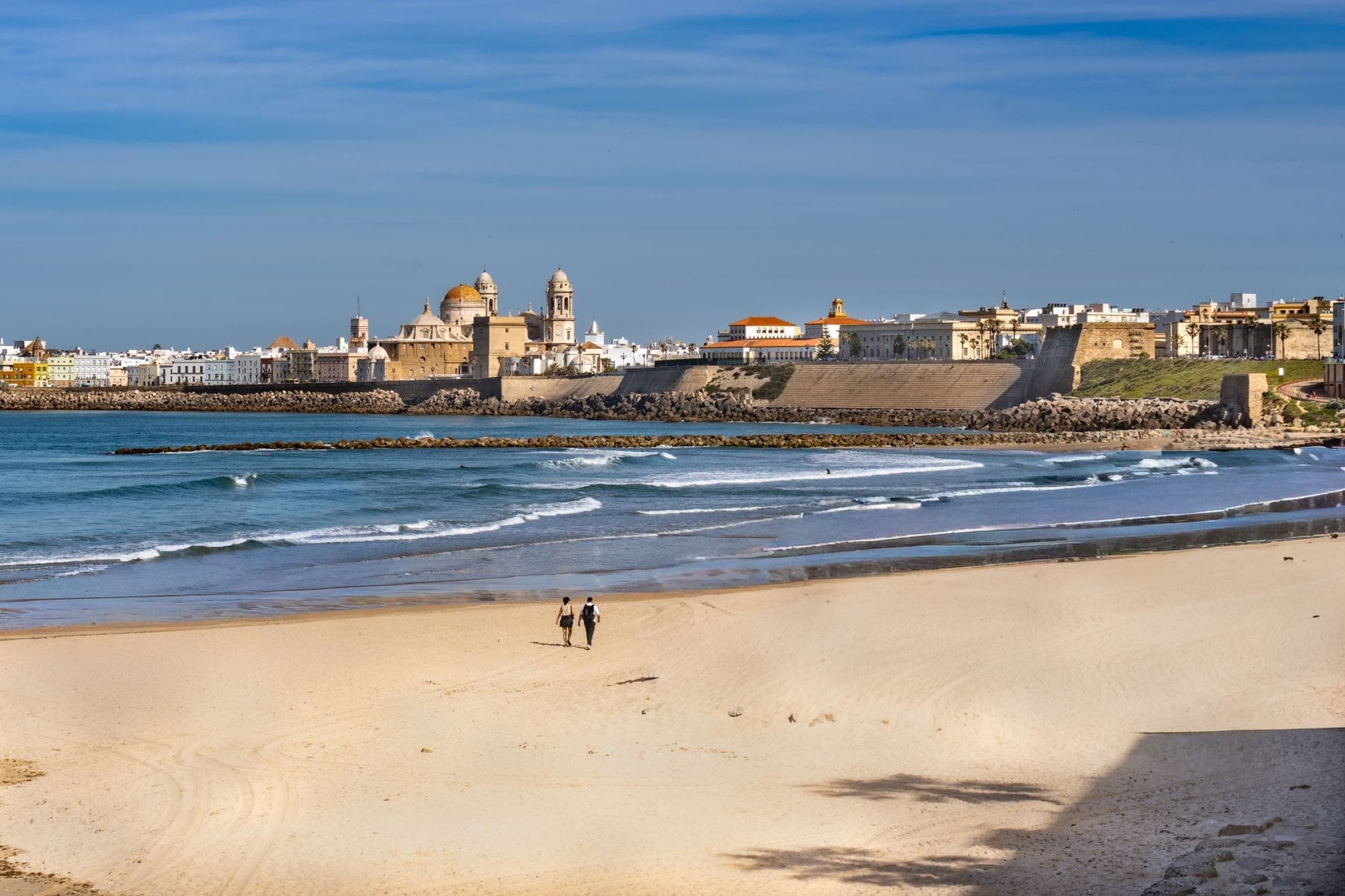
Following the coastline south from La Caleta, the Campo del Sur promenade runs along the southern sea wall with close-up views of the Cathedral dome. This stretch is quieter than the beach side of the city, lined with defensive walls and old stone architecture. It connects naturally to the fortified sections of the Murallas de Cádiz, which are free to walk.
⚠️ What to skip
Playa de la Victoria — the longer beach on the Atlantic side of the isthmus — is popular with Spanish families in summer but is a 25-minute walk or short bus ride from the old town. It's a proper sandy beach and better for a full beach day, but it lacks the historic atmosphere of La Caleta. Don't confuse the two.
Markets, Food, and the Best Eating Experiences

The Mercado Central de Abastos is where Cádiz residents actually shop. The seafood section in particular is worth the visit even if you're not cooking — the variety of Atlantic fish, shellfish, and cured goods on display tells you more about local food culture than any restaurant menu. Get there before noon; most vendors begin packing up by early afternoon.
For eating, the streets around La Viña are the most reliable neighborhood for traditional tapas bars. This quarter is closely associated with Carnival culture and everyday gaditano life. Expect chipirones (small squid), tortillitas de camarones (shrimp fritters), and fresh tuna preparations. Prices at traditional tapas bars are reasonable by Spanish standards.
- Tortillitas de camarones Cádiz's signature snack: crispy, lacy fritters made with tiny transparent shrimp and chickpea flour. Found in almost every traditional bar in the old town.
- Atún de almadraba Bluefin tuna caught using the ancient almadraba trap method in the Strait of Gibraltar. Available in season (April-June) and considered a local delicacy.
- Pescaíto frito Mixed fried fish — the Andalusian fry technique produces a remarkably clean, light result. Order it at a traditional freiduría (fry shop) rather than a tourist restaurant.
For a deeper understanding of what to eat and where to find it, the Cádiz food guide breaks down the local cuisine neighborhood by neighborhood, with specific recommendations on market vendors and traditional restaurants worth seeking out.
History, Culture, and the Sights That Go Deeper
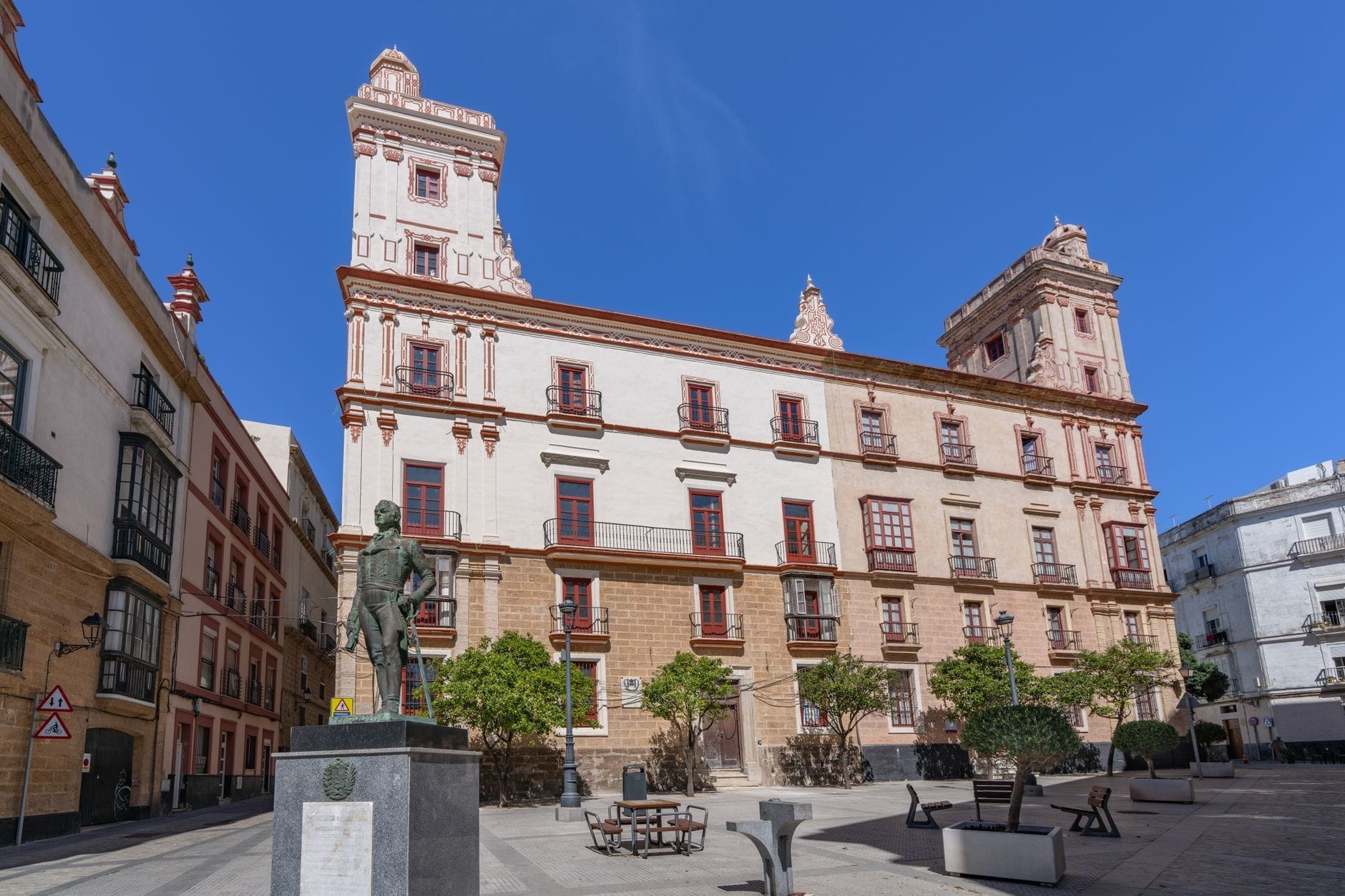
Cádiz has significant archaeological depth, and several sites reward visitors who go beyond the headline attractions. The Museo de Cádiz on Plaza de Mina holds Phoenician sarcophagi, Roman artifacts, and a collection of paintings by Zurbarán. It's one of the better provincial museums in Andalusia, and entry is free for EU citizens.
The Oratorio de San Felipe Neri is historically significant as the site where Spain's first liberal constitution was proclaimed in 1812. The building itself is an elegant oval church, and the context makes it one of the more intellectually interesting stops in the old town. A short walk away, the Oratorio de la Santa Cueva contains three paintings attributed to Goya in a small but atmospheric underground chapel.
The neighborhood of El Pópulo is one of the oldest parts of the city, and its narrow medieval streets contain the Arcos Medievales — two surviving medieval gateways that mark the original boundaries of the quarter. Walking through this area in the early morning, before the tourists arrive, gives a sense of the city's layered history that no museum can replicate.
✨ Pro tip
Cádiz's Carnaval (usually February or early March) is one of the most distinctive festivals in Spain. The satirical singing groups (chirigotas and comparsas) that perform during Carnival are a uniquely gaditano tradition. If you're visiting around that period, book accommodation at least two months in advance — the city fills up completely. Check the dedicated Cádiz Carnival guide for dates and logistics.
Viewpoints, Plazas, and Green Spaces
Beyond the towers and sea walls, Cádiz has several plazas and parks that deserve time. Parque Genovés on the western tip of the peninsula is the city's main public garden, with century-old trees, a small pond, and Atlantic views. It's a good place to decompress after a morning of sightseeing, particularly in spring when the flowering trees are at their best.
Plaza de San Juan de Dios is the main civic square, flanked by the Ayuntamiento de Cádiz — the neoclassical city hall with a striking facade. The square functions as the social center of the old town and is a natural place to start or end a day. The nearby Plaza de las Flores is smaller and more intimate, surrounded by flower stalls and traditional café terraces.
- Torre Tavira: best panoramic views in the old town, Camera Obscura included, around €8 entry
- Campo del Sur: free coastal promenade with Cathedral views, best in the late afternoon
- Parque Genovés: the city's main park, free entry, excellent in spring
- Alameda de Apodaca: a tree-lined promenade on the northern sea wall, quieter than the main beaches
- Puertas de Tierra: the monumental gateway marking the land entrance to the old city, free to see
Planning Your Visit: Practical Advice
Cádiz has no airport of its own. The nearest airports are Jerez de la Frontera and Seville. From both, you can reach central Cádiz by train or a combination of taxi and rail. Jerez is closer; Seville has more international connections. Budget extra travel time if arriving on a weekend, when rail connections can be less frequent.
The old town is best explored on foot. The peninsula is small enough that a bicycle is practical for covering more ground without getting stuck in traffic. Parking a car in the old town is genuinely difficult and largely unnecessary. Most visitors staying in the old town don't need a vehicle at all. For planning how to divide your time across two days, the 2 days in Cádiz itinerary gives a structured approach to the key sights.
Most nationalities can enter Spain visa-free for up to 90 days as part of the Schengen Area. Spain uses the euro. The emergency number throughout Spain is 112. For detailed advice on timing your trip around weather and crowds, the best time to visit Cádiz guide covers seasonal trade-offs in full.
- April to June Ideal for sightseeing. Mild temperatures (around 19-24°C), manageable crowds, and spring light that makes the Cathedral dome glow. Almadraba tuna season begins in April.
- July to August Hot, crowded, and expensive. Beach crowds peak. The old town can feel overwhelming midday. Not recommended for those prioritizing cultural sightseeing.
- September to October The sea is still warm from summer, the crowds have thinned, and the weather remains pleasant. One of the best windows for combining beaches and old town exploration.
- February to March Carnival season. The city transforms completely. Expect noise, celebration, and packed accommodation. Book months in advance if visiting during Carnaval.
FAQ
How many days do you need in Cádiz, Spain?
Two full days is enough to cover the main sights comfortably: the Cathedral, Torre Tavira, Roman Theatre, La Caleta beach, the Mercado Central, and a few key museums. Three days allows for a slower pace, day trips to nearby towns like Jerez, and proper time in the neighborhoods. One day is possible but rushed.
Is Cádiz worth visiting, or is it just a beach town?
Cádiz is far more than a beach destination. The old town holds Roman ruins, an 18th-century cathedral, medieval quarters, significant museums, and a distinct local culture shaped by centuries of Atlantic trade. The beaches are good, but they're one part of a much richer picture. Most visitors who come expecting only beaches leave surprised by the depth of the city.
What is the best area to stay in Cádiz?
Staying inside the old town (Casco Antiguo) puts you within walking distance of nearly everything. The areas around the Cathedral, Plaza de San Juan de Dios, and La Viña neighborhood are the most convenient. The Playa de la Victoria area is further from the historic sights but better for a beach-focused stay. For a full breakdown, check the where to stay in Cádiz guide.
When is the Cádiz Carnival and how does it affect visitors?
Cádiz Carnival (Carnaval de Cádiz) usually takes place in February or early March — the exact dates shift each year. It's one of the most distinctive festivals in Spain, known for satirical singing groups called chirigotas. During Carnival, accommodation fills completely and prices spike. Book at least two months in advance if you plan to attend.
Can you do a day trip from Cádiz to Jerez?
Yes, Jerez de la Frontera is easily reached from Cádiz by train in around 30–45 minutes. It's a natural complement to a Cádiz trip, with its own old town, sherry bodegas, and the Royal Andalusian School of Equestrian Art. A half-day is sufficient for a focused Jerez visit; a full day lets you do it properly.