Plaza de San Juan de Dios: The Heart of Cádiz's Historic Centre
Plaza de San Juan de Dios is the primary civic square of Cádiz's old town, positioned where the port meets the city's political core. Anchored by the neoclassical Ayuntamiento and a 19th-century statue of statesman Sigismundo Moret, it serves as both a daily gathering point for locals and the natural starting point for any visit to the historic centre. Entry is free, and the square is open around the clock.
Quick Facts
- Location
- Plaza de San Juan de Dios, Centro Histórico, Cádiz, Spain
- Getting There
- 10-minute walk from the Cádiz train station; central to the old town pedestrian network
- Time Needed
- 20–45 minutes, or longer if using it as a base for nearby sites
- Cost
- Free – public square, no admission
- Best for
- First-time visitors orienting themselves, architecture watchers, evening passers-by
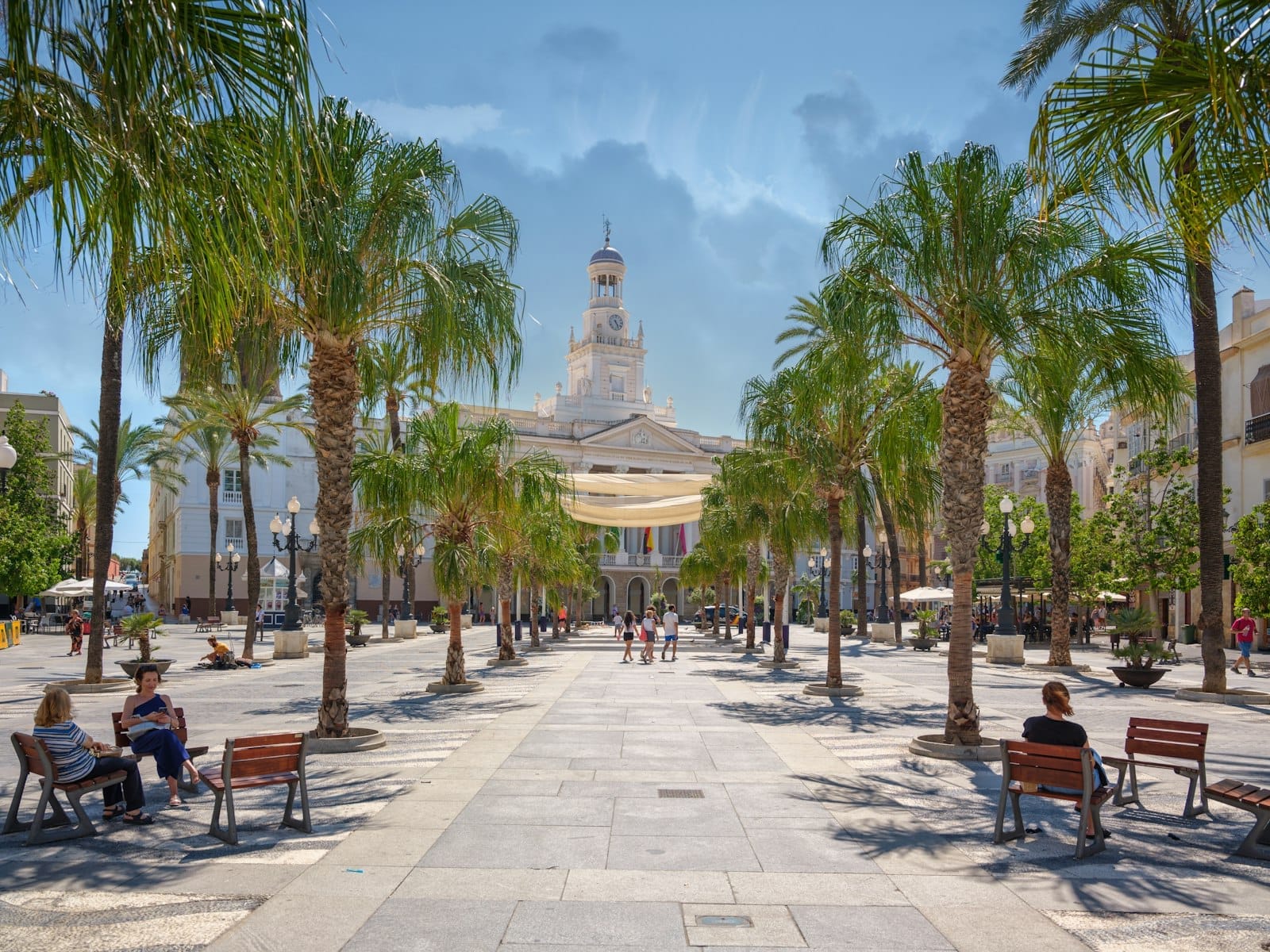
What Is Plaza de San Juan de Dios?
Plaza de San Juan de Dios is the main civic square of Cádiz's historic centre, occupying a flat, open expanse between the city's working port and the neoclassical facade of the Ayuntamiento de Cádiz. For centuries it served as the commercial and administrative nerve of the city, known historically as La Corredera, a name that suggests a corridor of trade and movement. Today it remains the most legible landmark for orienting yourself within the old walled city.
The square has been a formal urban space since at least the 16th century, which places it among the older continuously used public plazas in Andalusia. It sits within the Centro Histórico of Cádiz, a compact peninsula where the density of history per square metre is unusually high. If you arrive in Cádiz by train and walk toward the water, you will reach this square almost automatically.
💡 Local tip
The square was pedestrianized in 2012, which removed car traffic and made it considerably more comfortable to move through, especially during busy periods. The paved surface is level, and the space is wheelchair accessible.
The Architecture That Frames the Square
The dominant structure on the square is the Ayuntamiento de Cádiz, the city hall. Its neoclassical facade, completed in stages during the 19th and early 20th centuries, rises in a symmetrical composition of arched colonnades, pilasters, and a central clock tower. The stonework is the pale, slightly sandy-toned limestone characteristic of Cádiz, which catches morning light in a way that shifts noticeably with the hour.
Standing in the square and looking toward the Ayuntamiento, the building reads as broader than tall, with a measured horizontality that reflects the neoclassical preference for civic restraint over dramatic height. The ground-floor arcade runs along the full width of the facade, creating a covered walkway that provides shade and shelter. On the plaza side of this arcade, benches and cafe tables often appear in the cooler months.
At the centre of the square stands the bronze statue of Sigismundo Moret, the liberal Spanish statesman who served twice as President of the Council of Ministers in the early 20th century. The statue has been in place since 1909, and while it is not the most visited monument in Cádiz, it anchors the spatial geometry of the square and gives visitors a natural focal point when crossing the open paving.
Tickets & tours
Hand-picked options from our booking partner. Prices are indicative; availability and final rates are confirmed when you complete your booking.
Historical Roman Cadiz guided walking tour
From 22 €Instant confirmationFree cancellationDay trip to Tarifa, Vejer, and the Bolonia beach from the Cadiz Bay
From 59 €Instant confirmationFree cancellationWinery tour with tasting of three wines in Sanlucar
From 18 €Instant confirmationFree cancellationWinery tour and wine tasting in Chiclana de la Frontera in Cadiz
From 25 €Instant confirmationFree cancellation
How the Square Changes Through the Day
Early morning on Plaza de San Juan de Dios is quiet in a way that lets the architecture breathe. The limestone facade of the Ayuntamiento takes on a warm, raked tone in low morning light, and pigeons occupy the paving with some confidence. A handful of workers cross through, and the handful of bars at the square's edges begin setting out chairs. The air carries a faint saltiness from the nearby port, and the sound of seagulls overhead is constant.
By late morning the square accumulates a mixed crowd: residents heading toward the Mercado Central, tourists consulting maps, and city workers taking short cuts through the pedestrianized space. In summer, the open paving gets direct overhead sun with limited shade except under the Ayuntamiento arcade. Bringing water during July and August is not optional.
Late afternoon and early evening mark the most interesting window to visit. The light shifts to a warmer horizontal quality, the Ayuntamiento facade glows, and the square fills with the sort of unhurried movement characteristic of Spanish cities at that hour. Bars and cafes around the perimeter come alive, and the square functions less as a thoroughfare and more as a destination in itself.
⚠️ What to skip
In summer (July–August), midday temperatures on the square can be intense. The paving radiates heat and shade is limited to the Ayuntamiento arcade. Visit before 10am or after 6pm for comfort.
Historical and Cultural Context
The square's pre-2012 name, La Corredera, was common to many Andalusian city squares used as general markets and gathering spaces. In Cádiz, the location next to the port meant it was a hinge point between the mercantile activity of the waterfront and the administrative centre of the city. Goods arriving from the Americas during Cádiz's prominence as a key Atlantic port would have passed through or near this space, making it one of the more economically charged public areas in 18th-century Spain.
That commercial and political history is part of what makes the square worth approaching with some attention rather than simply crossing on the way elsewhere. The broader context of Cádiz's role in Spanish and Atlantic history is covered in detail in the Cádiz history guide, which traces the city from its Phoenician foundations through the transatlantic trade era and the 1812 Constitution.
The Church of San Juan de Dios, which originally gave the square its name, is no longer the dominant visual presence it once was. The Ayuntamiento has become the primary architectural landmark, but the square's religious naming reflects how early modern Spanish urban spaces were typically organized around both civic and ecclesiastical functions.
Using the Square as a Navigational Base
Plaza de San Juan de Dios works well as a starting point for the old town, and the Cádiz old town walking tour naturally passes through or begins here. From the square, the main pedestrian artery through the historic centre is quickly accessible, leading toward the Cathedral quarter and the network of narrower streets that defines the Casco Antiguo's character.
A short walk east takes you toward the Cathedral of Cádiz and the oldest quarters of the city. North along the port-facing street, the promenade opens up. If you are planning a full day in the old town, the square functions as a reliable return point because it is the most straightforward landmark to navigate back to from almost any direction within the historic core.
The square also sits close to bus stops that serve routes across the city, and the main taxi rank near the port is a short walk away. For visitors arriving on day trips or on a tighter schedule, getting orientated here first before heading into the denser interior streets saves significant time.
Photography and Practical Notes
The Ayuntamiento facade photographs best from the far side of the square in morning or late afternoon light. At midday, the overhead sun flattens the texture of the stone. Wide-angle lenses handle the full facade well from within the square, but the building is broad enough that getting the entire composition at street level requires some distance. The statue of Moret in the foreground with the Ayuntamiento behind is a classic compositional choice.
There are no photography restrictions in this public space. During special events, including the February Carnival season, the square serves as one of the key gathering and procession points in the old town, and visual access can be limited by crowds. If you are visiting during Carnival, arriving early gives you significantly better sight lines.
Carnival in Cádiz is one of the most significant in Spain, and the square becomes particularly animated during that period. The Cádiz Carnival guide explains the full schedule, the key locations, and how to navigate the crowds effectively.
ℹ️ Good to know
The square is entirely paved, open, and flat. It is accessible to wheelchair users and those with pushchairs. No steps or barriers interrupt the pedestrian surface following the 2012 renovation.
Insider Tips
- The arcade of the Ayuntamiento provides the only reliable shade on the square during summer afternoons. If you need a shaded pause, that is where to head.
- The bars on the square's perimeter are convenient but tend to price slightly above the city average, reflecting foot traffic from tourists. Walk two streets back into the historic centre and prices drop noticeably.
- During weekday mornings, the square is far quieter than on weekend afternoons, and the architecture is easier to appreciate without crowds crossing your view constantly.
- The port is immediately adjacent, and if you walk to the water's edge from the square, you get a clear sense of the city's physical relationship with the sea, something the square itself does not fully reveal.
- For the best photograph of the Ayuntamiento facade, come around 8am in summer or 9am in spring and autumn, when the light is low and warm and the paving is mostly empty.
Who Is Plaza de San Juan de Dios For?
- First-time visitors to Cádiz who need a clear starting point before navigating the old town
- Architecture enthusiasts interested in Andalusian neoclassical civic buildings
- Travellers doing a self-guided walking tour of the historic centre
- Photographers looking for well-framed civic architecture in natural light
- Evening walkers who want a central, lively space with bar and cafe access
Nearby Attractions
Other things to see while in Centro Histórico (Old Town):
- Alameda Apodaca
Alameda Apodaca is a protected Romantic-era promenade running along the northern sea wall of Cádiz's old town. Free, open at all hours, and overlooking the Bay of Cádiz, it offers one of the most atmospheric walks in the city — with very little effort required.
- Antiguo Hospital de Mujeres
Founded in 1677 and rebuilt in grand 18th-century baroque style, the Antiguo Hospital de Mujeres is one of Cádiz's most architecturally significant buildings. Today it is managed as a visitable monument linked to the Diocese of Cádiz y Ceuta, opening its twin patios and chapel to visitors for a modest entry fee, offering a rare glimpse into the city's golden-age ambitions.
- Ayuntamiento de Cádiz (City Hall)
The Ayuntamiento de Cádiz stands as one of the most photographed facades in Andalusia's oldest provincial capital. Begun in 1799 and shaped by two distinct architectural phases, it anchors the central plaza of Cádiz's historic core and speaks directly to the city's 19th-century ambitions. This guide covers what to see, when to go, and how the building fits into a walk through the old town.
- Calle Ancha
Calle Ancha cuts through the historic center of Cádiz as its widest and most storied street. Free to walk at any hour, it offers a concentrated dose of Baroque architecture, political history, and the kind of unhurried street life that defines this Atlantic city.