Cádiz History: A Traveler's Guide to 3,000 Years
Cádiz carries more than three millennia of history within a compact peninsula on Spain's Atlantic coast. This guide traces the city's Phoenician roots, Roman grandeur, Age of Exploration wealth, and constitutional legacy — and tells you exactly where to see each layer of that history in person.
Plan and book this trip
Tools from our partner Travelpayouts help you compare flights and hotels. If you book through them, we may earn a commission at no extra cost to you.
Flights
Hotels map
TL;DR
- Cádiz was founded by Phoenician traders as Gadir, likely in the 9th century BC, making it one of the oldest continuously inhabited cities in Western Europe — though that exact claim is debated.
- The city passed through Carthaginian, Roman, Visigothic, Moorish, and Castilian hands before becoming Spain's gateway to the Americas in the 18th century.
- The best places to see this history in person include the Roman Theatre, the Cathedral, and the Oratorio de San Felipe Neri where the 1812 Constitution was proclaimed.
- Spring (April–June) and early autumn (September–October) are the best seasons for historical sightseeing — summer heat on exposed Roman ruins or the cathedral rooftop can be punishing.
- Check our Cádiz Old Town walking tour to combine the city's key historical sites into a single well-paced route.
Gadir: The Phoenician Origin of Cádiz
The story of Cádiz begins with Phoenician traders from Tyre, who established a settlement they called Gadir, meaning 'enclosed place' or 'walled fortress' in their language. Classical sources, including texts by Velleius Paterculus, give a traditional founding date of around 1100–1104 BC. Modern archaeology is more cautious: physical evidence currently points to Phoenician presence in the bay from roughly the 9th century BC. Both dates get referenced in local museums and tourist literature, so don't be surprised if you see conflicting figures on the same street.
The Phoenicians chose the site strategically. The narrow peninsula offered natural protection, access to Atlantic fishing grounds rich in tuna, and a staging post for trade routes stretching from the Mediterranean toward the British Isles and West Africa. Gadir was not a backwater colony — it was a serious commercial hub, and its position at the edge of the known ancient world gave it outsized importance for centuries.
ℹ️ Good to know
The claim that Cádiz is the 'oldest city in Europe' is repeated widely in travel guides and on-site signage, but historians note it depends heavily on definitions: 'oldest' vs. 'oldest continuously inhabited,' and 'Europe' vs. 'Western Europe.' Treat it as a strong historical distinction, not an absolute fact, and you'll avoid the awkward moment when a more informed traveler in your group pushes back.
From Carthage to Rome: The Ancient City of Gades
By the 5th century BC, Carthage had extended its influence across much of the western Mediterranean, and Gadir fell under Carthaginian control. That relationship lasted until the Second Punic War, when Rome took the city in 206 BC and renamed it Gades. Under Roman rule, Gades flourished into one of the wealthiest cities in the entire empire outside of Rome and Alexandria. Its population at its Roman peak reportedly exceeded 100,000 — remarkable for a settlement built on a narrow sandbar.
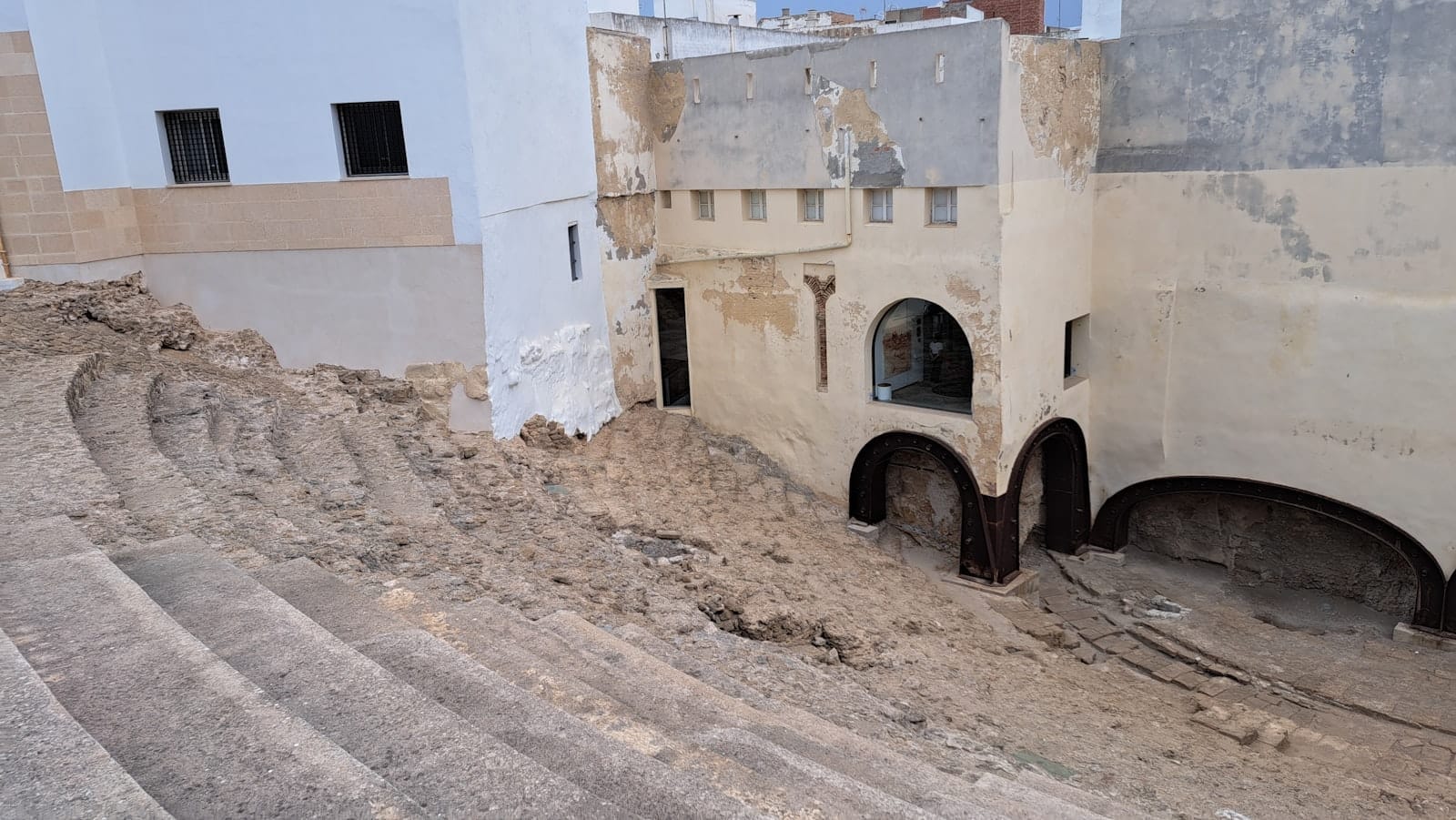
Julius Caesar served as quaestor in Gades and reportedly wept before a statue of Alexander the Great at a temple here, lamenting that he had accomplished so little at the same age. The city produced multiple Roman consuls and senators. Today, the most tangible remnant of that era is the Roman Theatre of Cádiz, discovered only in 1980 during construction work and still partially excavated. Its scale — it could hold roughly 10,000 spectators — gives a clear sense of how significant Gades really was.
💡 Local tip
The Roman Theatre visitor centre is free to enter and provides good contextual panels in English and Spanish. The excavation is ongoing, so what you see today may differ from photos taken even a few years ago. Allocate 45–60 minutes here, not the 20 minutes most itineraries suggest.
Medieval Cádiz: Moors, Reconquest, and a City Charter
After Rome's decline, Cádiz passed through Visigothic hands and was then taken by Moorish forces in the early 8th century as part of the rapid Islamic conquest of the Iberian Peninsula. Under Moorish rule the city was known as Qādis, the name that eventually became 'Cádiz' in Castilian Spanish. The Moorish period lasted over five centuries, though Cádiz during this era was relatively minor compared to the great Andalusian cities of Córdoba, Seville, and Granada.
Alfonso X of Castile recaptured the city in 1262 and granted it a city charter in 1265. That political act integrated Cádiz into the Crown of Castile and set the stage for its later role as Spain's Atlantic gateway. The medieval street pattern that Alfonso X inherited and adapted survives in part in the Barrio El Pópulo, Cádiz's oldest surviving quarter. Walking its lanes, you'll notice the compressed scale — buildings close enough to touch across the street — that reflects both the original Phoenician density and centuries of building within a confined peninsula.
- Arcos Medievales de El Pópulo Three surviving medieval gates that once formed part of the inner city walls — one of the few physical traces of post-Roman, pre-Bourbon Cádiz.
- Iglesia de Santa Cruz Built on the site of a mosque after the Reconquest, this church carries layers of the city's religious transitions and is the oldest Christian church in Cádiz.
- Barrio La Viña While largely associated today with Carnival culture, La Viña also preserves the working-class urban fabric of medieval Cádiz and sits adjacent to La Caleta beach, used as a harbour since antiquity.
The Age of Exploration: When Cádiz Controlled Trade with the Americas
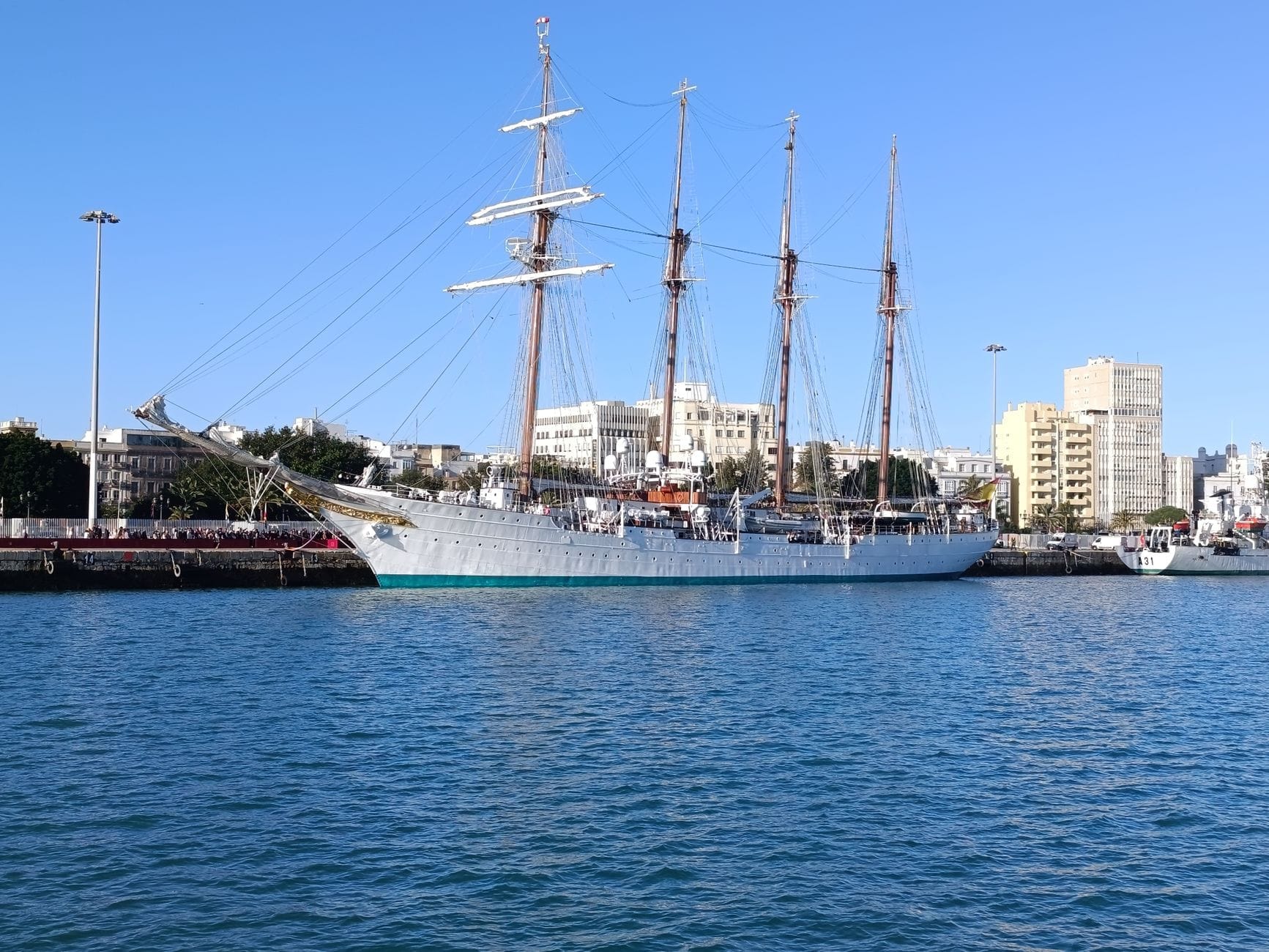
The discovery of the Americas transformed Cádiz from a respectable regional port into one of the most strategically important cities in the world. Christopher Columbus departed from Cádiz on his second voyage in 1493, and the city's deep-water harbour made it the logical choice for increasingly large fleets crossing the Atlantic. By the early 18th century, Cádiz held a near-monopoly on Spanish trade with the Americas — a status formalised when the Casa de Contratación (the institution regulating colonial trade) was transferred from Seville to Cádiz in 1717.
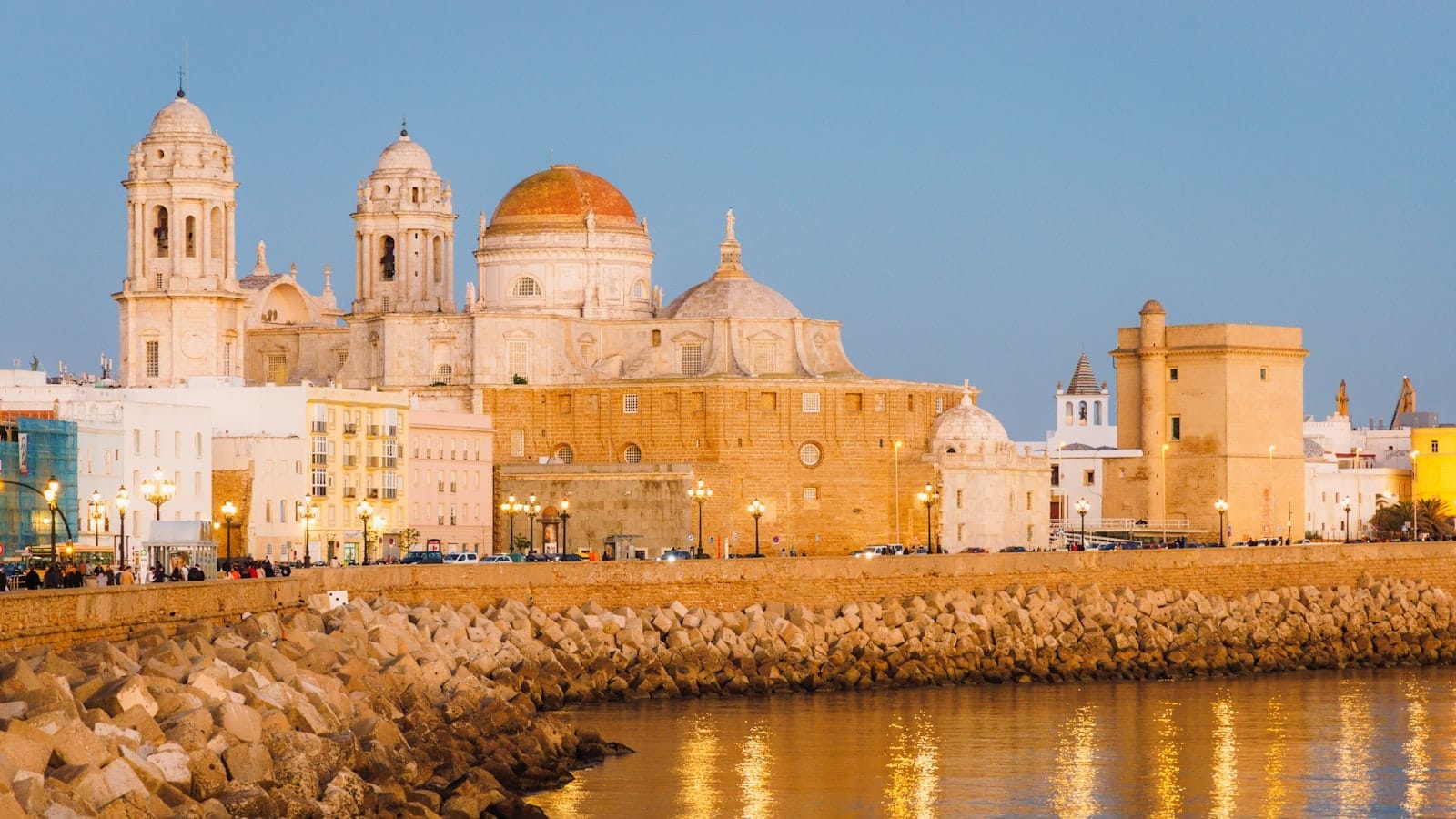
This monopoly funded an extraordinary building boom. The Baroque cathedral you see dominating the waterfront today was started in 1722 and took over a century to complete. The merchant palaces lining the old town streets, the watchtowers (torres miradores) built by wealthy traders to spot their incoming ships, and the Neoclassical public architecture all date from this period of Atlantic wealth. Cádiz in the 18th century was genuinely cosmopolitan — home to Flemish, Genoese, French, and Irish merchants alongside the established Castilian and Andalusian population.
The best surviving example of those commercial watchtowers is the Torre Tavira, the tallest of the roughly 160 towers that once punctuated the Cádiz skyline. It houses a camera obscura and gives 360-degree views over the rooftops — an excellent way to understand the city's geography before exploring at street level. The Museo de Cádiz holds Phoenician sarcophagi alongside Zurbarán canvases collected during the city's mercantile peak, making it arguably the most efficient single stop for understanding Cádiz across multiple eras.
The 1812 Constitution: Cádiz as Spain's Liberal Capital
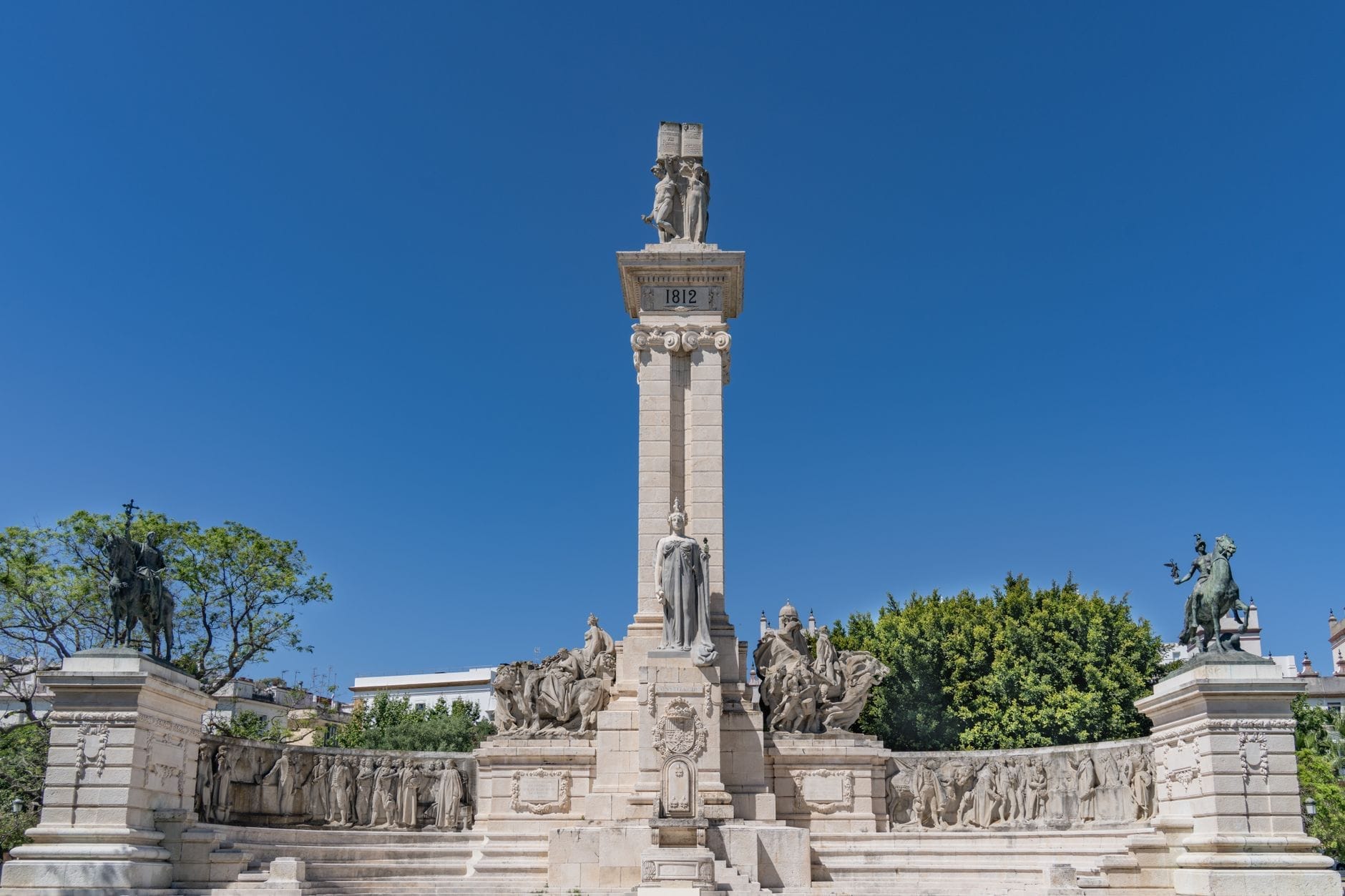
The Napoleonic invasion of Spain in 1808 and the subsequent Peninsular War produced one of the most consequential episodes in Cádiz's history. While French forces occupied most of Spain, Cádiz held out — protected by its geography and a British naval blockade. The city became Spain's de facto capital from 1810 to 1813, hosting the Cortes (parliament) that drafted and proclaimed Spain's first liberal constitution on 19 March 1812.
The document, known as La Pepa (proclaimed on 19 March 1812, the Feast day of Saint Joseph), was radical for its time: it established national sovereignty, abolished feudalism, and guaranteed civil liberties. The sessions took place in the Oratorio de San Felipe Neri, an oval Baroque church in the old town that remains open to visitors. The building feels surprisingly intimate for a site of such political importance — the painted galleries where deputies sat are still intact, and the scale makes the drama of those debates easy to imagine.
✨ Pro tip
The Oratorio de San Felipe Neri is genuinely one of the most historically significant buildings in Spain and rarely crowded. Combine it with the nearby Plaza de San Juan de Dios and the Ayuntamiento for an efficient circuit through Cádiz's constitutional-era heritage in under two hours.
How to Experience Cádiz's History in Practice
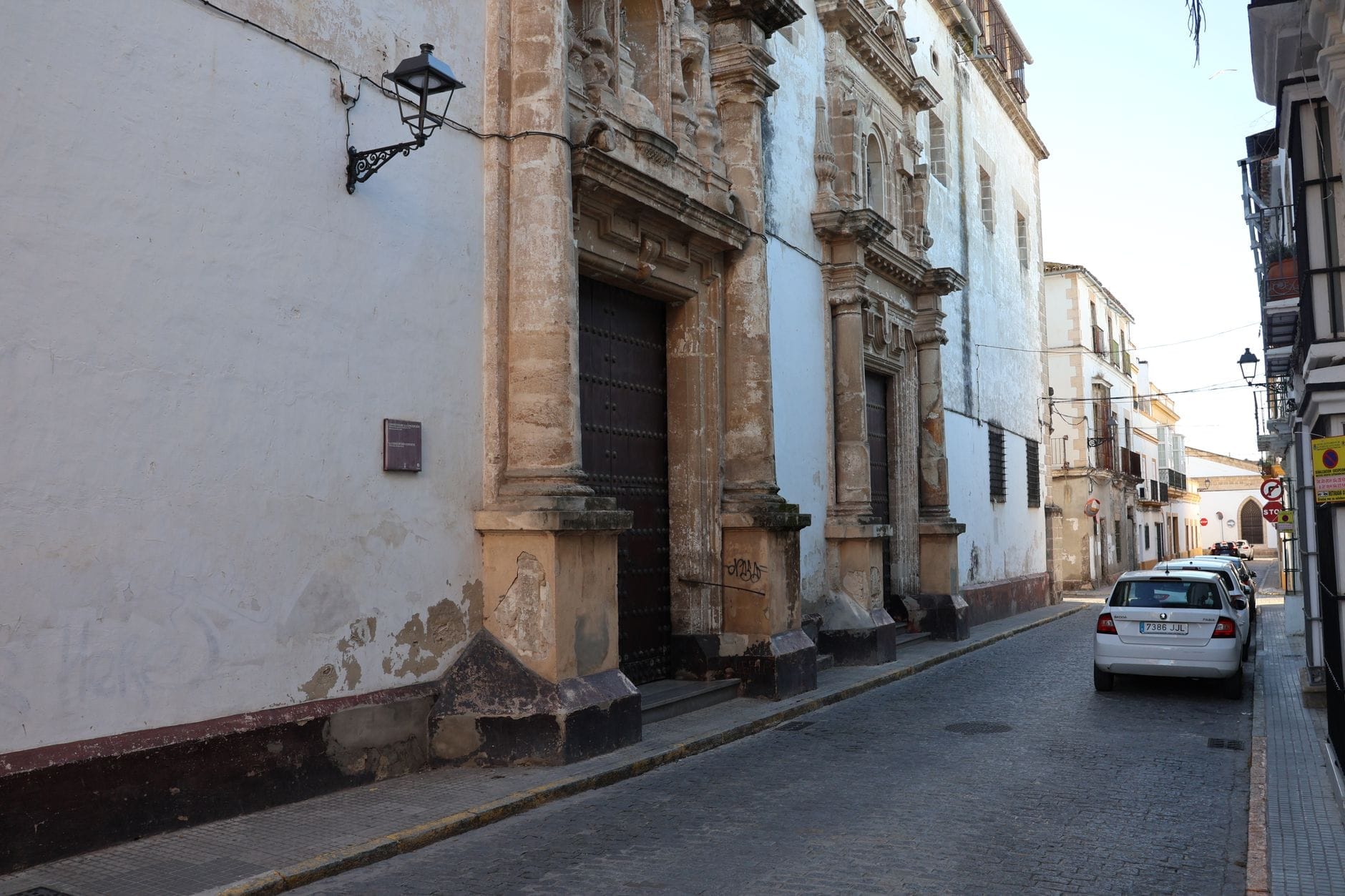
Cádiz rewards slow, layered exploration rather than a checklist approach. The old town is compact enough to walk entirely, but because each neighbourhood carries a different historical period, it's worth understanding the sequence before you start. El Pópulo represents medieval and pre-Roman foundations; the cathedral quarter reflects 18th-century Atlantic wealth; the constitutional sites cluster in the central old town; and the Roman Theatre sits at the eastern edge closest to the modern city.
For a structured approach, the Cádiz Old Town walking tour covers most key heritage sites in a logical sequence. If you have two days, the 2 days in Cádiz itinerary allocates time for both historical depth and the city's beaches and food scene — the combination most visitors find satisfying without feeling rushed.
- Visit the Roman Theatre and Museo de Cádiz in the morning before heat builds — both involve outdoor sections or rooftop exposure.
- The Oratorio de San Felipe Neri and surrounding constitutional-era sites are best mid-morning when light enters the church well.
- Torre Tavira is most rewarding in the hour before sunset, when the Atlantic light on the cathedral dome is at its best.
- Avoid the Cathedral interior during the midday tourist peak in July and August — queues can stretch 30–40 minutes.
- The Barrio El Pópulo is at its best on weekday mornings when it functions as a real neighbourhood rather than a tourist set piece.
⚠️ What to skip
Ticket prices, opening hours, and free-entry days at Cádiz's museums and monuments change regularly. The Museo de Cádiz, Roman Theatre, and Cathedral each have their own schedules that differ seasonally. Always check the official municipal or regional tourism portal (andalucia.org) before visiting rather than relying on printed guides or travel blogs — information goes out of date quickly.
Seasonal timing matters significantly for history-focused visitors. Spring and early autumn offer the most comfortable conditions for extended outdoor exploration of sites like the city walls and Campo del Sur promenade, where Roman-era foundations are visible in sections. Summer is viable but requires starting early and retreating indoors from roughly 1pm to 5pm. For a full breakdown of seasonal trade-offs, the best time to visit Cádiz guide covers all the variables.
FAQ
Is Cádiz really the oldest city in Europe?
Cádiz is widely described as one of the oldest continuously inhabited cities in Western Europe, with Phoenician origins dating to at least the 9th century BC and possibly earlier. However, the precise claim of 'oldest in Europe' is contested and depends on definitions — 'oldest' versus 'oldest continuously inhabited,' and the geographic scope of 'Europe.' It's a historically significant distinction, but treat the superlative with some caution when you see it on museum panels.
Where is the best place to see Roman-era Cádiz?
The Roman Theatre of Cádiz (Teatro Romano) is the primary surviving Roman structure and has a free visitor centre explaining the excavation. The Museo de Cádiz also holds significant Roman-era artefacts including Phoenician sarcophagi and items from Gades. Some Roman foundations are also visible in sections of the old town walls.
What happened to Cádiz during the Napoleonic Wars?
Cádiz was one of the few Spanish cities not occupied by French forces during the Peninsular War (1808–1814). Protected by its geography and British naval support, it became Spain's de facto capital from 1810 to 1813 and hosted the Cortes that proclaimed Spain's first liberal constitution on 19 March 1812. The Oratorio de San Felipe Neri, where the sessions took place, is open to visitors today.
How long do I need to see Cádiz's main historical sites?
A focused history itinerary covering the Roman Theatre, Museo de Cádiz, Barrio El Pópulo, Oratorio de San Felipe Neri, and Torre Tavira realistically takes a full day at a comfortable pace. If you add the Cathedral and the constitutional-era plazas, two days is the more honest minimum. Rushing all of it into a half-day produces a superficial experience.
When did Cádiz lose its trade monopoly with the Americas?
Spain's system of restricted colonial trade, which gave Cádiz its monopoly from 1717, was gradually liberalised in the late 18th century and effectively ended with Spanish American independence movements in the early 19th century. The city's economic decline from this period explains why so much of its 18th-century architecture survived intact — there wasn't enough subsequent wealth to demolish and rebuild.