Murallas de Cádiz: Walking the City Walls of Cádiz's Historic Core
The Murallas de Cádiz are the layered defensive fortifications that once sealed Cádiz against the Atlantic and its rivals. Stretching from the inland Puerta de Tierra gateway to the sea-facing bastions, these free-access walls form one of the most rewarding walks in the old city, combining military history, coastal views, and the everyday rhythms of Cádiz life.
Quick Facts
- Location
- Centro Histórico, Cádiz — Puerta de Tierra to Baluarte de San Carlos
- Getting There
- Cádiz main train/bus station is a short walk from Puerta de Tierra; the gateway is the pedestrian entrance to the old city
- Time Needed
- 1–2 hours for a relaxed walk along the accessible sections
- Cost
- Free (exterior walls and Puerta de Tierra public area)
- Best for
- History enthusiasts, walkers, photographers, and anyone arriving by train into Cádiz
- Official website
- en.andalucia.org/listing/murallas-de-puerta-tierra/17130101
What the Murallas de Cádiz Actually Are
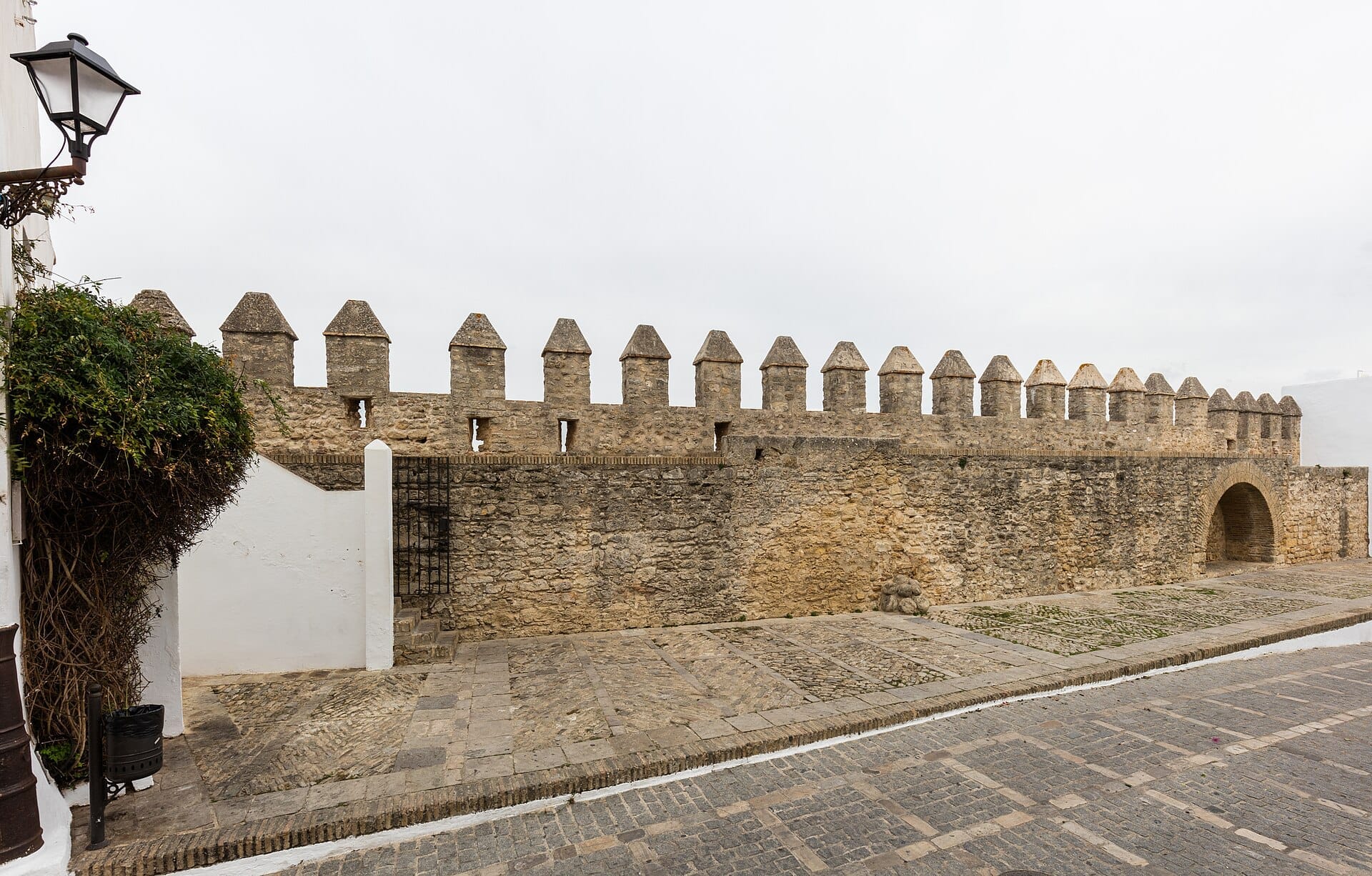
The Murallas de Cádiz is not a single continuous wall you walk end to end. It is a system of interconnected fortifications, gateways, bastions, and sea-facing ramparts that encircled what was, for much of modern history, one of the most strategically important ports in the Atlantic world. Today, several sections survive in varying states of preservation, and a meaningful portion of that defensive perimeter is freely accessible to visitors on foot.
The most prominent surviving landmark within this system is the Puerta de Tierra, the monumental 18th-century gateway that marks the landward entrance to the old city peninsula. It is one of the first landmarks many visitors notice when arriving by train or bus, and it sets the architectural tone for everything beyond it. Reopened to the public in 2013 after restoration work, the Puerta de Tierra now allows visitors to explore its central vault, an interior turret, and an upper walkway that gives a clear view across the isthmus separating the old city from the modern mainland.
💡 Local tip
If you arrive at Cádiz by train or bus, walk straight toward the old city and you will pass directly through or beside the Puerta de Tierra. Do not rush past it. Stop, look up, and spend fifteen minutes exploring the gateway before heading further into the historic centre.
Further along the southern edge of the peninsula, the Baluarte y Murallas de San Carlos, a late 18th-century defensive bastion near the Plaza de España, represents another significant surviving section. While less dramatic in height than the inland gateway, the San Carlos walls give a clear sense of how the city was designed to resist naval attack from multiple angles simultaneously.
The Puerta de Tierra: Military Architecture at the City Threshold
Built in the 18th century, the Puerta de Tierra was designed as the sole land crossing into what was effectively a fortified island. The name translates simply as Gate of the Land, which underscores how Cádiz thought of itself: the city faced the sea, and the land behind it was something to be defended against, not welcomed. The gateway's thick stone construction, rusticated archways, and flanking bastions reflect the military engineering priorities of Bourbon Spain, a period when Cádiz controlled much of Spain's trade with the Americas and was consequently a target of enormous strategic value.
The upper walkway accessible from the restored interior offers a low but revealing vantage point. To the east, you look back across the narrow isthmus toward the modern city and the rail terminus. To the west, you look into the compressed street grid of the old peninsula, where the cathedral dome is usually visible above the rooftops. It is a useful orientation moment for any first-time visitor, and the scale of the gateway itself, standing here between the old world and the new, communicates the city's historical self-image more clearly than any museum panel.
The Puerta de Tierra sits at the edge of the Centro Histórico, making it the natural starting point for any walking tour of the old city. If you plan to cover major monuments in a single day, it pairs naturally with the Puertas de Tierra complex and the surrounding defensive perimeter.
Tickets & tours
Live prices and dates from our booking partner. If you book, we may earn a commission at no extra cost to you.
Historical Roman Cadiz guided walking tour
From 22 €Instant confirmationFree cancellationDay trip to Tarifa, Vejer, and the Bolonia beach from the Cadiz Bay
From 59 €Instant confirmationFree cancellationWinery tour and wine tasting in Chiclana de la Frontera in Cadiz
From 25 €Instant confirmationFree cancellationGuided tour of medieval Cadiz landmarks and history
From 30 €Instant confirmationFree cancellation
Walking the Walls: What the Route Feels Like
The experience of walking along the surviving wall sections changes significantly depending on where you are and what time of day you visit. In the morning, the light comes from the east and falls flat against the landward face of the Puerta de Tierra, bringing out the texture of the honey-coloured stone. By mid-afternoon, the Atlantic glare off the water makes the sea-facing bastions uncomfortable without sunglasses, but the quality of light for photography becomes dramatic and directional.
Along the Campo del Sur, the southern seafront promenade, the wall's lower courses merge almost imperceptibly with the natural rock shelf that forms the peninsula's edge. Locals use this stretch for morning runs and evening walks. The smell here is pure Atlantic: salt, kelp exposed at low tide, and occasionally the diesel of a fishing vessel returning to port. The stone underfoot shifts from smooth municipal pavement to rougher, older surfaces where the wall base has been left largely in its original state.
The walk along the sea-facing edge connects naturally to the broader Campo del Sur route and eventually to the area around Castillo de Santa Catalina and Castillo de San Sebastián at the far western tip of the peninsula. Those castles are separate fortifications from the walls, but they were part of the same integrated defensive system.
In the early evening, families gather along the lower wall sections near the sea. Children climb the stone ledges while older residents sit on the benches placed along the promenade. It is an unscripted, unhurried scene, and it illustrates why the walls feel like a living part of the city rather than a roped-off monument.
Historical Context: Why These Walls Existed
Cádiz sits on a narrow peninsula extending into the Atlantic, a geography that made it both naturally defensible and perpetually vulnerable to naval attack. The city's control over trans-Atlantic trade routes during the 17th and 18th centuries made it one of the wealthiest and most contested ports in Europe. The fortification system visitors see today reflects primarily the Bourbon period of the 18th century, when the Spanish crown invested heavily in upgrading the city's defences following repeated attacks and raids by British, Dutch, and other rival forces.
The Puerta de Tierra specifically was constructed to replace earlier, less imposing medieval access points. Its design combined ceremonial function with genuine military utility: thick enough to withstand cannon fire, grand enough to project authority to arriving travellers and merchants. The bastion system along the sea walls followed the principles of Vauban-influenced military engineering that spread across European fortifications during this period, using angled geometry to eliminate blind spots and deflect artillery.
For a deeper understanding of Cádiz's history from Phoenician settlement through the modern era, the Cádiz history guide provides useful context before you walk the walls.
Practical Walkthrough: Getting There and Getting Around
Access to the walls requires no planning or advance booking. The Puerta de Tierra is unmissable if you arrive by rail or intercity bus, as both the train station and the main bus terminal sit within a short walk of the gateway. From the station, follow the road or pedestrian path west toward the old city and the gate is directly ahead of you.
The upper walkway at Puerta de Tierra is accessible via a staircase inside the restored structure. Note that this involves steps with no lift alternative, so visitors with mobility limitations may be restricted to the ground-level arch and courtyard area, which is still worth seeing. The exterior sections of the wall along Campo del Sur are at street and promenade level, generally flat, and fully accessible by wheelchair or pushchair.
ℹ️ Good to know
No ticket is required for the outdoor wall sections or the Puerta de Tierra public area. The interior of the gateway has been open to visitors since its 2013 restoration, but always check locally for any temporary closures, as conservation work on historic masonry can restrict access with little advance notice.
Wear comfortable shoes with grip. The older stone surfaces near the sea can be slippery when wet or covered with morning dew, and some sections of the wall base involve uneven paving. There is no formal guided tour of the walls as a standalone product, though walking tours of the old city often begin or end at the Puerta de Tierra. If you want commentary rather than independent exploration, joining a city walking tour is the most practical option.
A useful companion to this walk is the Cádiz old town walking tour guide, which traces a route through the historic centre that incorporates several sections of the surviving fortifications alongside major monuments.
Photography, Light, and Managing Expectations
The Murallas de Cádiz photograph well but require some patience with timing. The Puerta de Tierra faces roughly east-west on its two main facades, meaning morning light (before 10am) hits the landward face cleanly, while afternoon light works better for the old-city-facing arch. The sea walls along Campo del Sur benefit from the golden-hour light in the final hour before sunset, when the stone turns from grey-white to warm amber.
Be honest with yourself about what this attraction delivers. The walls are not a Dubrovnik-style elevated promenade with panoramic views from above. The Cádiz fortifications are low, largely at or near street level, and their power is felt through mass and texture rather than altitude. Visitors hoping for a dramatic bird's-eye panorama of the city should head instead to the Torre Tavira or the Cathedral tower. The walls reward those who slow down and look closely at the stone, the construction joints, the repair patches from different centuries, and the way the city has grown up against and around its own defences.
For elevated views across the city and its fortifications from a different angle, the Torre Tavira offers the highest accessible viewpoint in the old city.
Who Will Enjoy This Most, and Who Might Not
The walls suit travellers who appreciate the texture of history in physical form: people who find meaning in the weight of old stone, the scale of defensive architecture, and the connection between geography and historical events. Architecture enthusiasts, military history readers, and anyone with a serious interest in the development of early modern European fortifications will find the Puerta de Tierra particularly rewarding.
Families with children can enjoy the outdoor sections easily, especially along the seafront where the space is open and children can move freely. The Puerta de Tierra turret tends to fascinate children precisely because it looks like what it is: a fortified tower with thick walls and narrow windows designed to channel cannon fire.
Travellers expecting a fully signposted heritage trail with interpretation panels at every turn will be disappointed. The walls are largely unmarked as a unified attraction. You bring your own context, or you visit with a guide. Those on a tight schedule who have already covered major monuments might find the walls feel repetitive when combined with visits to the nearby castles. And visitors primarily focused on beaches, food markets, or nightlife will find the walls a pleasant backdrop but not a compelling destination in themselves.
Insider Tips
- Arrive at the Puerta de Tierra in the first hour after the station opens in the morning and you will often have the upper walkway entirely to yourself. Tour groups tend to arrive mid-morning and make the interior noticeably more crowded.
- The section of wall nearest the Baluarte de San Carlos, close to the Plaza de España, is less visited than the Puerta de Tierra but arguably shows the defensive logic of the system more clearly. The angled bastions are visible here in plan form, and the scale of the construction is easier to read without surrounding foot traffic.
- If rain has fallen recently, wait before climbing the interior staircase at Puerta de Tierra. The upper walkway stone can hold moisture and become slippery underfoot, and there is no handrail on every section.
- The best single photograph of the Puerta de Tierra from the outside is taken from a slight angle from the east, about fifty metres back, in morning light. A head-on shot compresses the gateway's depth and makes it look flat; the angle reveals the thickness of the walls and the flanking towers.
- Combine the wall walk with a stop at the Mercado Central de Abastos, a short walk inside the old city from the Puerta de Tierra. It is best visited before midday, making it a natural second stop after you have cleared the gateway on your way in.
Who Is Murallas de Cádiz (City Walls) For?
- First-time visitors arriving by train who want to enter the old city with historical awareness rather than just passing through
- Architecture and military history enthusiasts drawn to Bourbon-era Spanish defensive engineering
- Photographers working in morning or late-afternoon light looking for textured, low-traffic stone subjects
- Walkers who want a leisurely route connecting the inland gateway to the seafront promenade without paying any admission fees
- Families with older children who engage well with the physical scale and purpose of fortified structures
Nearby Attractions
Other things to see while in Centro Histórico (Old Town):
- Alameda Apodaca
Alameda Apodaca is a protected Romantic-era promenade running along the northern sea wall of Cádiz's old town. Free, open at all hours, and overlooking the Bay of Cádiz, it offers one of the most atmospheric walks in the city — with very little effort required.
- Antiguo Hospital de Mujeres
Founded in 1677 and rebuilt in grand 18th-century baroque style, the Antiguo Hospital de Mujeres is one of Cádiz's most architecturally significant buildings. Today it is managed as a visitable monument linked to the Diocese of Cádiz y Ceuta, opening its twin patios and chapel to visitors for a modest entry fee, offering a rare glimpse into the city's golden-age ambitions.
- Ayuntamiento de Cádiz (City Hall)
The Ayuntamiento de Cádiz stands as one of the most photographed facades in Andalusia's oldest provincial capital. Begun in 1799 and shaped by two distinct architectural phases, it anchors the central plaza of Cádiz's historic core and speaks directly to the city's 19th-century ambitions. This guide covers what to see, when to go, and how the building fits into a walk through the old town.
- Calle Ancha
Calle Ancha cuts through the historic center of Cádiz as its widest and most storied street. Free to walk at any hour, it offers a concentrated dose of Baroque architecture, political history, and the kind of unhurried street life that defines this Atlantic city.
Planning a trip? Discover personalized activities with the Nomado app.