Campo del Sur: Cádiz's Cathedral-Backed Seafront Walk
Campo del Sur is the sweeping coastal avenue that traces the southern edge of Cádiz's historic peninsula, stretching roughly 1.5 km along the Atlantic. Free, open at all hours, and framed by the city's cathedral dome on one end and ancient sea walls on the other, it is one of the most rewarding walks in the old town.
Quick Facts
- Location
- Avenida Campo del Sur, 11002 Cádiz – southern seafront of the historic center
- Getting There
- Short walk from Cádiz Cathedral; reachable by city bus to the historic center or via adjacent Aparcamiento Campo del Sur garage
- Time Needed
- 30–60 minutes for the full promenade; longer if you stop to photograph or sit
- Cost
- Free – public promenade, open 24 hours year-round
- Best for
- Sunrise walks, cathedral photography, joggers, families with strollers, and anyone seeking open ocean air without a beach
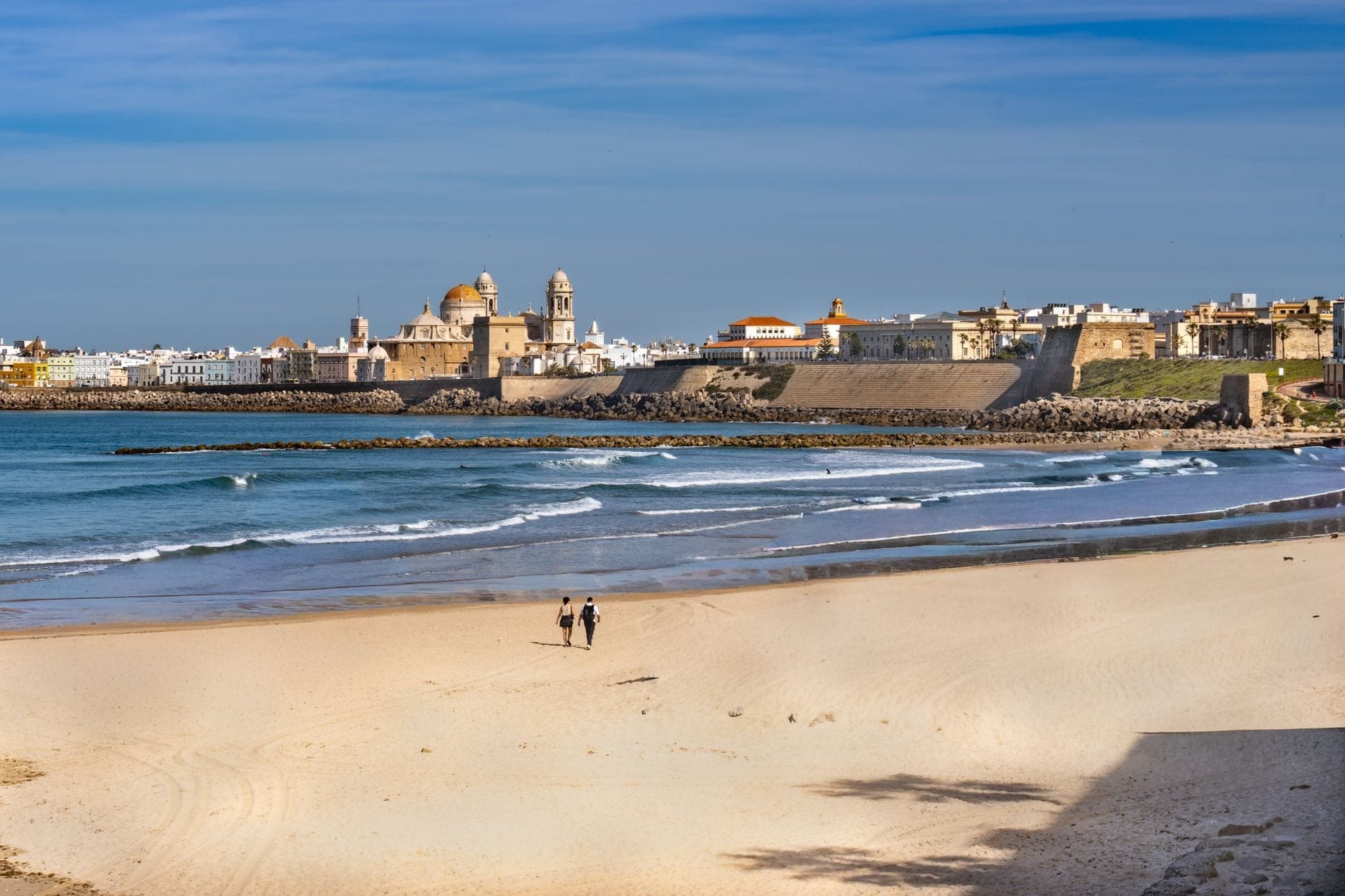
What Campo del Sur Actually Is
Campo del Sur is not a park, a plaza, or a promenade in the manicured resort sense. It is a wide coastal avenue and seafront walkway that forms the entire southern rim of Cádiz's old town peninsula, with the Atlantic pressing hard against the sea walls on one side and the dense, low-rise fabric of the historic center on the other. The road itself carries light traffic, but most of the experience belongs to the broad pavement strip between the buildings and the sea, where the wind off the ocean is almost always present and the smell of salt never quite disappears.
The walk covers approximately 1.5 km from end to end, following a curve that reflects the natural shape of the peninsula's southern tip. The sea here faces toward what locals call the Mar del Vendaval, a name that translates loosely as the Gale Sea, a reference to the strong southwesterly winds that push in from the Atlantic. On calm days this is poetry. On windy ones it is genuinely dramatic, with spray lifting over the stone parapet and the sound of the ocean filling the whole street.
💡 Local tip
The promenade is fully paved, step-free, and wide enough for wheelchairs, strollers, and cyclists throughout its length. No ticket, no gate, no time limit.
The Cathedral End: Where Most Visitors Start
The most photographed section of Campo del Sur begins near the Cádiz Cathedral, whose yellow-tiled baroque dome rises directly above the promenade at its eastern anchor. From the sea wall at this point, you get the view that appears on most travel images of the city: the dome reflected in the flat surface of the Atlantic on still days, or silhouetted against a pale sky at dusk. It is genuinely striking, and it takes about thirty seconds to understand why this is one of the most reproduced angles in Cádiz.
The cathedral was built between 1722 and 1838, funded largely by trade revenues flowing through what was then one of Spain's most commercially powerful ports. Standing at the Campo del Sur wall, you are looking at the seaward face of a building that took over a century to complete, and the scale of it only becomes fully apparent when you are this close to the waterline. The dome's golden-yellow ceramic tiles shift color noticeably across the day, from pale cream in midmorning light to a warm amber in the late afternoon.
Just behind the cathedral, the narrow lanes of the old town begin immediately. The El Pópulo quarter is only steps away, one of the oldest surviving residential neighborhoods in Cádiz, where medieval arches still frame street entrances and the architecture compresses into something much older and quieter than the baroque grandeur visible from the waterfront.
Tickets & tours
Hand-picked options from our booking partner. Prices are indicative; availability and final rates are confirmed when you complete your booking.
Historical Roman Cadiz guided walking tour
From 22 €Instant confirmationFree cancellationDay trip to Tarifa, Vejer, and the Bolonia beach from the Cadiz Bay
From 59 €Instant confirmationFree cancellationWinery tour with tasting of three wines in Sanlucar
From 18 €Instant confirmationFree cancellationWinery tour and wine tasting in Chiclana de la Frontera in Cadiz
From 25 €Instant confirmationFree cancellation
Walking the Length: What You Pass
Moving westward along the avenue, the character of the walk shifts. The cathedral disappears behind you, the buildings to your left become more residential, and the sea wall becomes the main feature. The stonework along this stretch is old, weathered by Atlantic weather over many generations, and in several sections you can see the texture of it up close: rough-cut limestone blocks, darkened at the base by salt and spray, with iron railings above that are perpetually in some stage of rust and repainting.
Small benches appear at intervals, most of them occupied in the late afternoon by local residents who use the promenade the way locals use it everywhere: as an extension of daily life, not as a tourist attraction. You will see elderly couples sitting in silence watching the water, teenagers on bicycles, and joggers making use of the flat, uninterrupted surface. This is not a place that performs for visitors, which is part of what makes it feel real.
At the western end, Campo del Sur effectively connects toward the area around Playa de la Caleta, the sheltered cove beach tucked between two old castles that is the most distinctly local beach in Cádiz. The promenade does not reach the beach directly, but the two belong to the same continuous waterfront experience along the peninsula's southern and western edges.
Time of Day: How the Experience Changes
Early morning, before 8am, is when Campo del Sur belongs mostly to runners and dog walkers. The light at this hour hits the cathedral dome at a low angle and the sea is often flat and silver-gray. There is almost no traffic and almost no noise except the wind and the water. For photography, this window is difficult to beat, particularly for anyone wanting the cathedral view without other people in the frame.
Midday in summer is the one time the promenade becomes less pleasant. The southern exposure means there is no shade on the seaward side, and the sun reflects off both the water and the pale stone with intensity. Temperatures in July and August regularly exceed 30°C, and without shelter the walk feels exposed. If you are visiting in peak summer, save this walk for the evening.
Late afternoon into sunset is the most popular window and, on most days, justifiably so. The light softens, the wind often eases, and the cathedral dome takes on its richest color. The promenade fills gradually but never feels crowded in the way that narrow old-town streets do. Sunsets here face roughly southwest, over open water, with no buildings obstructing the horizon on the ocean side.
⚠️ What to skip
On days when the Levante or Vendaval winds are blowing strongly, the sea spray can reach the walkway and the wind makes conversation difficult. Check the local forecast if you are planning to sit or photograph here for an extended period.
Historical and Urban Context
The sea walls that Campo del Sur runs alongside are part of the broader fortification system that once enclosed the entire old town peninsula. Cádiz's position on a narrow spit of land surrounded almost entirely by water made its defensive architecture both essential and architecturally distinctive. The city walls that survive in various sections around the peninsula represent centuries of Spanish military engineering, built and rebuilt from the medieval period through the 18th century.
The southern exposure of Campo del Sur also places it in an interesting historical position: this was the side of the city that faced the Atlantic approaches, and the coastline here witnessed several significant episodes in Cádiz's maritime history, including the period when the city served as the primary port for trade with the Americas and the base for Spanish naval operations. That context is not announced by any prominent signage along the promenade, which is typical of Cádiz: the history is embedded in the fabric rather than interpreted for visitors.
For a deeper understanding of the city's maritime and cultural past, the Museo de Cádiz holds the most comprehensive collection in the city and is a logical pairing with a Campo del Sur walk on the same morning or afternoon.
Practical Walkthrough and Logistics
The promenade has no formal entrance or starting point. Most visitors approach from the cathedral side, walking east from the historic center, or arrive by car using the Aparcamiento Campo del Sur underground garage, which is open 24 hours and sits directly adjacent to the promenade near the cathedral. Parking costs €0.033 per minute, with a full-day rate of €17.60 based on current published tariffs, though these figures should be verified at time of visit as pricing can change.
City buses serve the historic center, though the narrow streets mean stops are sometimes a few minutes walk from the waterfront itself. The entire promenade is flat and fully accessible, with no steps or uneven surfaces along the main walkway. Strollers and wheelchairs move without difficulty. There are no public facilities directly on the promenade, but cafes and bars are immediately available on the adjacent streets.
Campo del Sur fits naturally into a broader walking circuit of the old town. Combine it with the Torre Tavira for elevated views of the same roofscape you walk beside, or pair it with the Mercado Central de Abastos for a morning that balances the open seafront with the compressed energy of Cádiz's main food market.
Who Might Not Enjoy This Walk
Campo del Sur is a promenade, not a destination with ticketed attractions or programmed entertainment. Travelers expecting interactive museums, guided history, or a formal sightseeing structure will find it unremarkable. In peak summer heat, anyone sensitive to sun and wind exposure without shade should plan carefully. The walk also lacks the social energy of Cádiz's plazas and market areas, so visitors who prefer the compressed life of the old town streets may find the open coastal avenue feels quieter than they want.
It is also worth being honest that the cathedral view, while genuinely impressive, is reproduced so widely in travel imagery that some visitors arrive expecting something more dramatic than a wide urban street along the sea. The experience here is atmospheric and calm rather than spectacular, and that distinction matters for managing expectations.
Insider Tips
- The single best photography position for the cathedral dome is from the sea wall directly south of the apse, in the first 200 meters of the promenade from the eastern end. Arrive before 8am in spring or autumn for soft light and an empty frame.
- If the wind is coming from the southwest, the spray can reach the wall-side pavement even on days without rain. Wear shoes you do not mind getting slightly wet and keep camera equipment covered.
- The benches on the seaward side of the promenade are almost always occupied by locals from around 6pm onward. If you want a seat with an unobstructed ocean view, arrive before the early evening.
- The stretch of Campo del Sur closest to the cathedral also has some of the best angles for shooting the baroque towers and dome against a clear sky without cluttered foregrounds. Position yourself low, near the wall base, to minimize road and pavement in the frame.
- The promenade connects naturally westward to the La Caleta area. Walk the full length rather than turning back, and you arrive at one of Cádiz's most distinctive beach coves, framed by two small castles, without needing any transport.
Who Is Campo del Sur For?
- Photographers wanting the classic cathedral-and-sea composition in early morning light
- Joggers and cyclists looking for a flat, uninterrupted seafront route through the old town
- Families with strollers or young children who need a wide, traffic-light route
- Travelers who want to understand the physical shape and scale of Cádiz's peninsula
- Anyone seeking a quiet outdoor space away from the old town's narrower, more crowded streets
Nearby Attractions
Other things to see while in Centro Histórico (Old Town):
- Alameda Apodaca
Alameda Apodaca is a protected Romantic-era promenade running along the northern sea wall of Cádiz's old town. Free, open at all hours, and overlooking the Bay of Cádiz, it offers one of the most atmospheric walks in the city — with very little effort required.
- Antiguo Hospital de Mujeres
Founded in 1677 and rebuilt in grand 18th-century baroque style, the Antiguo Hospital de Mujeres is one of Cádiz's most architecturally significant buildings. Today it is managed as a visitable monument linked to the Diocese of Cádiz y Ceuta, opening its twin patios and chapel to visitors for a modest entry fee, offering a rare glimpse into the city's golden-age ambitions.
- Ayuntamiento de Cádiz (City Hall)
The Ayuntamiento de Cádiz stands as one of the most photographed facades in Andalusia's oldest provincial capital. Begun in 1799 and shaped by two distinct architectural phases, it anchors the central plaza of Cádiz's historic core and speaks directly to the city's 19th-century ambitions. This guide covers what to see, when to go, and how the building fits into a walk through the old town.
- Calle Ancha
Calle Ancha cuts through the historic center of Cádiz as its widest and most storied street. Free to walk at any hour, it offers a concentrated dose of Baroque architecture, political history, and the kind of unhurried street life that defines this Atlantic city.