Torre Tavira: Cádiz's Historic Watchtower and Camera Obscura
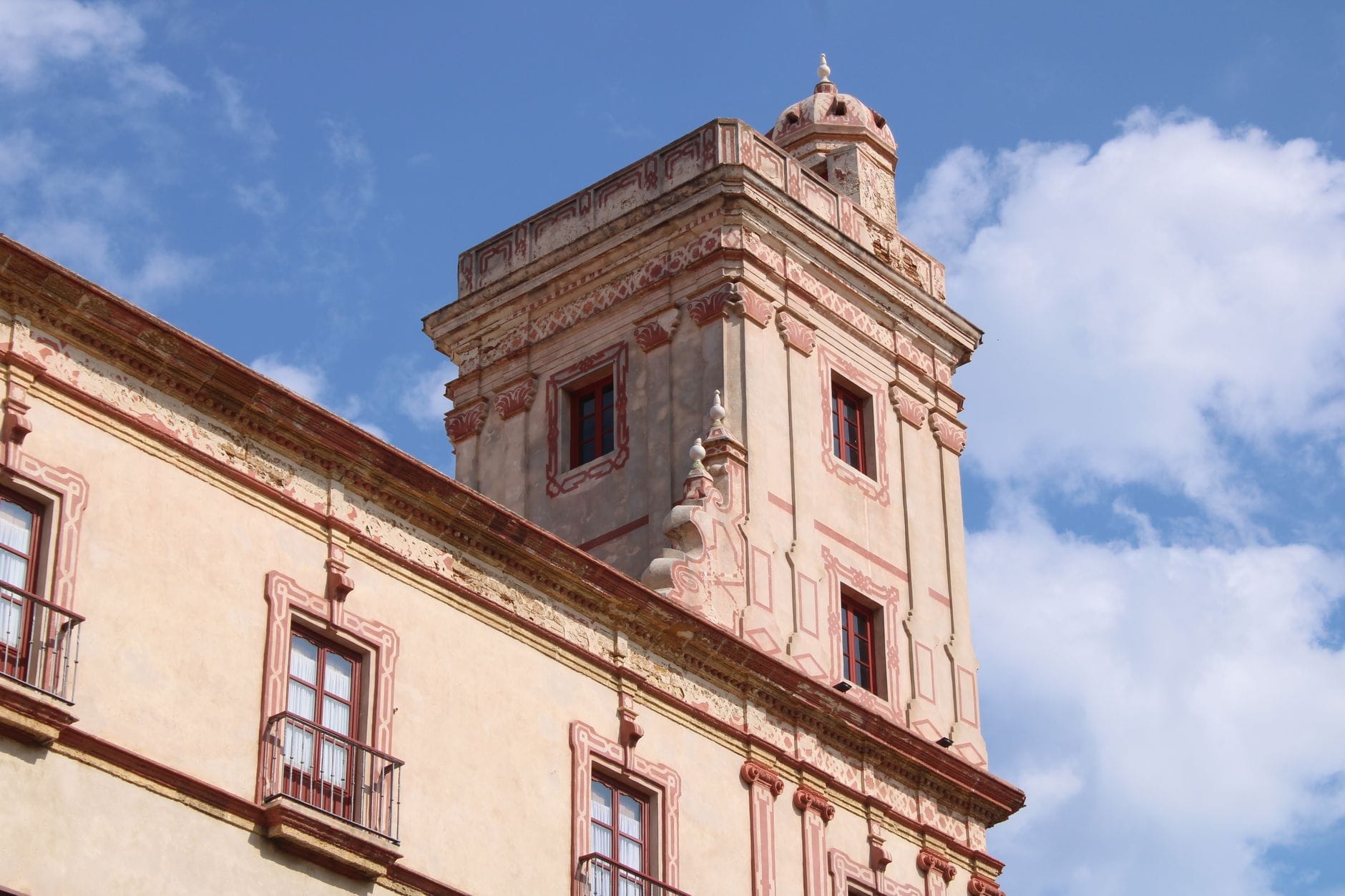
Rising about 45 metres above the old city, Torre Tavira was the official watchtower of the Port of Cádiz from 1778 and now houses a Camera Obscura. The rooftop panorama takes in the cathedral dome, the Atlantic, and the full sweep of the historic peninsula in a single glance.
Quick Facts
- Location
- Calle Marqués del Real Tesoro 10, Centro Histórico, Cádiz
- Getting There
- Walk from Plaza de San Juan de Dios or the central bus stops on Avenida Ramón de Carranza
- Time Needed
- 45 minutes; allow extra time if you linger on the rooftop
- Cost
- €8 general; €6 reduced (over 65s, students, groups of 10+, people with disabilities)
- Best for
- Panoramic views, historical context, photography, first-time visitors to Cádiz
- Official website
- torretavira.com
What Torre Tavira Actually Is
Torre Tavira is not a cathedral tower or a castle keep. It is a merchant's watchtower, and understanding that distinction changes how you experience it. During the 18th century, Cádiz was one of the wealthiest trading ports in the world, handling much of Spain's commerce with the Americas. Wealthy merchants and trading houses needed to track the movement of ships in the bay to know when their cargo was arriving, so they built towers on top of their palaces. At the peak of this era, Cádiz had more than 160 of these towers. Torre Tavira was designated the official watchtower of the Port of Cádiz in 1778, giving its operators the authority to signal the arrival and departure of vessels to the rest of the city.
Today it is the tallest surviving tower in the old town, standing roughly 45 metres above sea level. The palace that houses it, the Palacio de los Marqueses de Recaño, dates to 1730 and has been classified as a Property of Cultural Interest by the Junta de Andalucía since 2005. The tower itself has a rectangular plan with two floors, each ringed by balconies oriented to the cardinal points, topped by a smaller lookout platform open to the sky.
ℹ️ Good to know
Advance booking is required. Visits are capacity-controlled and tickets can be reserved through the official website at torretavira.com. Walk-up access is not guaranteed, especially in summer and on weekends.
The Camera Obscura: More Impressive Than It Sounds
The phrase 'camera obscura' tends to produce mild interest at best. In practice, the one at Torre Tavira is genuinely surprising. A convex lens and a system of mirrors project a live, real-time image of the city onto a concave white table roughly a metre in diameter, inside a darkened room at the top of the tower. What appears on that table is not a photograph or a recording: it is the actual city, in real time, with pigeons crossing rooftops, boats moving in the bay, and tourists walking across plazas. The effect is somewhere between a satellite image and a snow globe, with an unusual depth and colour that screens cannot replicate.
A guide operates each session, rotating the lens system and narrating what appears on the projection table. The session lasts around 10 to 15 minutes per group, so timing your arrival to catch a fresh session is worth doing. Groups cycle through the dark chamber quickly, and the whole experience works best when the sun is strong and the sky is clear. On overcast days, the projection loses contrast and some detail, though it remains functional.
💡 Local tip
Go on a clear morning when the sun is at a good angle for the lens. Midday light in summer produces the sharpest projection. Avoid visiting on heavily overcast days if the Camera Obscura is your main reason for coming.
Tickets & tours
Hand-picked options from our booking partner. Prices are indicative; availability and final rates are confirmed when you complete your booking.
Historical Roman Cadiz guided walking tour
From 22 €Instant confirmationFree cancellationDay trip to Tarifa, Vejer, and the Bolonia beach from the Cadiz Bay
From 59 €Instant confirmationFree cancellationWinery tour with tasting of three wines in Sanlucar
From 18 €Instant confirmationFree cancellationWinery tour and wine tasting in Chiclana de la Frontera in Cadiz
From 25 €Instant confirmationFree cancellation
The Rooftop: Cádiz in 360 Degrees
After the Camera Obscura session, visitors climb to the open-air lookout platform. The view from here is, without qualification, the best single viewpoint in the city. Because Torre Tavira sits at the highest point of the old town, there is no taller building to interrupt the sightline in any direction. To the south and west, the dome of the cathedral anchors the skyline above a dense pack of white and ochre rooftops. To the north and east, the bay stretches toward the mainland, with the Bridge of the Constitution visible on clear days. To the west, the Atlantic opens beyond the city walls.
The rooftop is compact, essentially a square platform with a low protective railing, so it fills quickly with visitors from the same timed group. Arriving early in the morning, before 11:00, means you will share it with fewer people and catch softer light that flatters the limestone buildings below. Late afternoon light, particularly in the hour before closing in summer, turns the cathedral dome a warm amber and makes for strong photography. For a broader overview of the best vantage points across the city, the Cádiz viewpoints guide covers where each one excels and when to visit.
Wind is a consistent feature of this platform. Cádiz is exposed to Atlantic weather on multiple sides and the old town channels air upward between its narrow streets. Even on warm days at street level, the rooftop can feel genuinely cold in autumn and winter. A light jacket or layer is worth carrying regardless of the season.
Getting There and Practical Logistics
Torre Tavira is on Calle Marqués del Real Tesoro 10, in the heart of the historic center. The street is narrow and easy to miss from the main pedestrian routes, but a five-minute walk from the central market or the cathedral will get you there. The area around it is part of the old town grid, with streets too narrow for regular traffic, so you will be arriving on foot regardless of where you are staying.
Opening hours run from 10:00 to 18:00 between October and April, and from 10:00 to 20:00 between May and September. Last admission is one hour before closing. The tower is closed on 25 December, 1 January, and 6 January. General admission is €8, with a reduced rate of €6 for visitors over 65, students with valid ID, large or single-parent families, groups of more than 10, and people with disabilities. The visit itself takes around 45 minutes. If you are planning a broader itinerary, the old town walking tour routes naturally past the tower and several other key sites within a short walk.
The tower involves multiple flights of stairs with no elevator access confirmed on the official site. The steps are narrow and uneven in sections, which is consistent with an 18th-century palace staircase. Visitors with limited mobility should contact the attraction directly before booking, as the official site does not publish detailed step-free access information.
Historical Context: Why So Many Towers?
The tower-building era in Cádiz was a direct result of the city's economic position. After the Casa de Contratación, the body controlling trade with the Spanish colonies in the Americas, was moved from Seville to Cádiz in 1717, the city became a major gateway for colonial commerce. Merchants competed for commercial advantage, and knowing a ship was arriving before your rivals did translated directly into profit. The towers were functional, competitive infrastructure, not architectural vanity. Understanding this makes the panorama from the top feel different: you are standing where a lookout once tracked cargo ships and signalled the streets below. For more on how this trading history shaped the physical city, the Cádiz history guide covers the broader arc from the Phoenician period through to the modern city.
The Palacio de los Marqueses de Recaño itself is a well-preserved example of Baroque civil architecture. The interior courtyard and staircase retain original decorative stonework, and the transition from the domestic ground floor to the working tower above gives the building an unusual layered character. Most visitors move through quickly on their way to the rooftop, but it rewards a slower look.
What to Combine It With
Torre Tavira sits close to several of the historic center's most significant buildings. The Cathedral of Cádiz is a short walk to the south and offers a completely different physical experience of the city: you are inside the building that dominates the skyline from the tower. The Mercado Central de Abastos is close by and makes a logical stop before or after the tower visit, particularly in the morning when the market is at its most active.
The Oratorio de San Felipe Neri, where the liberal Spanish Constitution of 1812 was proclaimed, is also within easy walking distance and adds a layer of political history to a morning in the old town. For first-time visitors trying to structure their time efficiently, the 2-day Cádiz itinerary groups these sites logically to minimize backtracking.
Who Should Think Twice
The visit is short, the space is confined, and the price is moderate but not trivial. Travelers who are primarily interested in beaches or food culture may find the 45 minutes and €8 better spent elsewhere. The Camera Obscura, while genuinely interesting, is the kind of attraction that lands differently depending on your expectations: if you walk in having oversold it to yourself, you may walk out underwhelmed. If you go in simply curious, it is one of the more genuinely unusual things you can do in an Andalusian city. Visitors with significant mobility limitations should check accessibility directly, as the historic staircase is steep and not easily bypassed.
Insider Tips
- Book tickets online before you arrive, particularly from June through September. The capacity restrictions are real, and showing up without a reservation on a busy weekend means you may not get in that day.
- The Camera Obscura session works best with direct sunlight. If the weather is grey, the rooftop view is still worth the visit, but manage expectations about the projection quality in the dark chamber.
- Carry a layer for the rooftop even in summer. The platform is fully exposed to the Atlantic and the wind at height is noticeably stronger than at street level below.
- Morning visits before 11:00 mean softer light and smaller groups on the platform. Late afternoon in summer, roughly 18:00 to 19:00, gives warm golden light on the cathedral dome for photography but the platform will be more crowded.
- The palace interior and staircase are themselves worth a slow look as you climb. Most visitors rush past the Baroque stonework and courtyard details to reach the top, which means these features are often uncrowded and quiet.
Who Is Torre Tavira For?
- First-time visitors to Cádiz wanting the clearest possible orientation to the city's layout
- History and architecture enthusiasts interested in the trading-port era of 18th-century Cádiz
- Photographers seeking the widest unobstructed rooftop panorama in the old town
- Travelers who enjoy unusual optical or scientific curiosities alongside standard sightseeing
- Anyone combining a half-day itinerary through the historic center with multiple nearby monuments
Nearby Attractions
Other things to see while in Centro Histórico (Old Town):
- Alameda Apodaca
Alameda Apodaca is a protected Romantic-era promenade running along the northern sea wall of Cádiz's old town. Free, open at all hours, and overlooking the Bay of Cádiz, it offers one of the most atmospheric walks in the city — with very little effort required.
- Antiguo Hospital de Mujeres
Founded in 1677 and rebuilt in grand 18th-century baroque style, the Antiguo Hospital de Mujeres is one of Cádiz's most architecturally significant buildings. Today it is managed as a visitable monument linked to the Diocese of Cádiz y Ceuta, opening its twin patios and chapel to visitors for a modest entry fee, offering a rare glimpse into the city's golden-age ambitions.
- Ayuntamiento de Cádiz (City Hall)
The Ayuntamiento de Cádiz stands as one of the most photographed facades in Andalusia's oldest provincial capital. Begun in 1799 and shaped by two distinct architectural phases, it anchors the central plaza of Cádiz's historic core and speaks directly to the city's 19th-century ambitions. This guide covers what to see, when to go, and how the building fits into a walk through the old town.
- Calle Ancha
Calle Ancha cuts through the historic center of Cádiz as its widest and most storied street. Free to walk at any hour, it offers a concentrated dose of Baroque architecture, political history, and the kind of unhurried street life that defines this Atlantic city.