Cádiz Old Town Walking Tour: The Complete Self-Guided Route
Cádiz Old Town packs Roman ruins, baroque cathedrals, medieval quarters, seafront promenades, and one of Andalusia's best markets into a peninsula you can cross on foot in under 20 minutes. This self-guided walking tour maps the essential route, tells you what each stop is actually worth, and gives you the practical details to do it without a guide.
Plan and book this trip
Tools from our partner Travelpayouts help you compare flights and hotels. If you book through them, we may earn a commission at no extra cost to you.
Flights
Hotels map
TL;DR
- The core Old Town route runs roughly 4-5 km and takes 2.5 to 4 hours depending on how long you linger at each stop.
- Start at Plaza de San Juan de Dios and finish at La Caleta Beach for a logical west-to-east flow that avoids backtracking.
- Self-guided apps (Questo from €4.99, GPSmyCity free tier) add GPS navigation and context without locking you into a fixed departure time.
- April to June and September to October offer the most comfortable walking conditions; July and August can be intense on the open seafront stretches.
- The Old Town is genuinely compact, but the street grid in El Pópulo and La Viña is confusing enough that navigation help is worth having.
Why Walk Cádiz Old Town Without a Guide
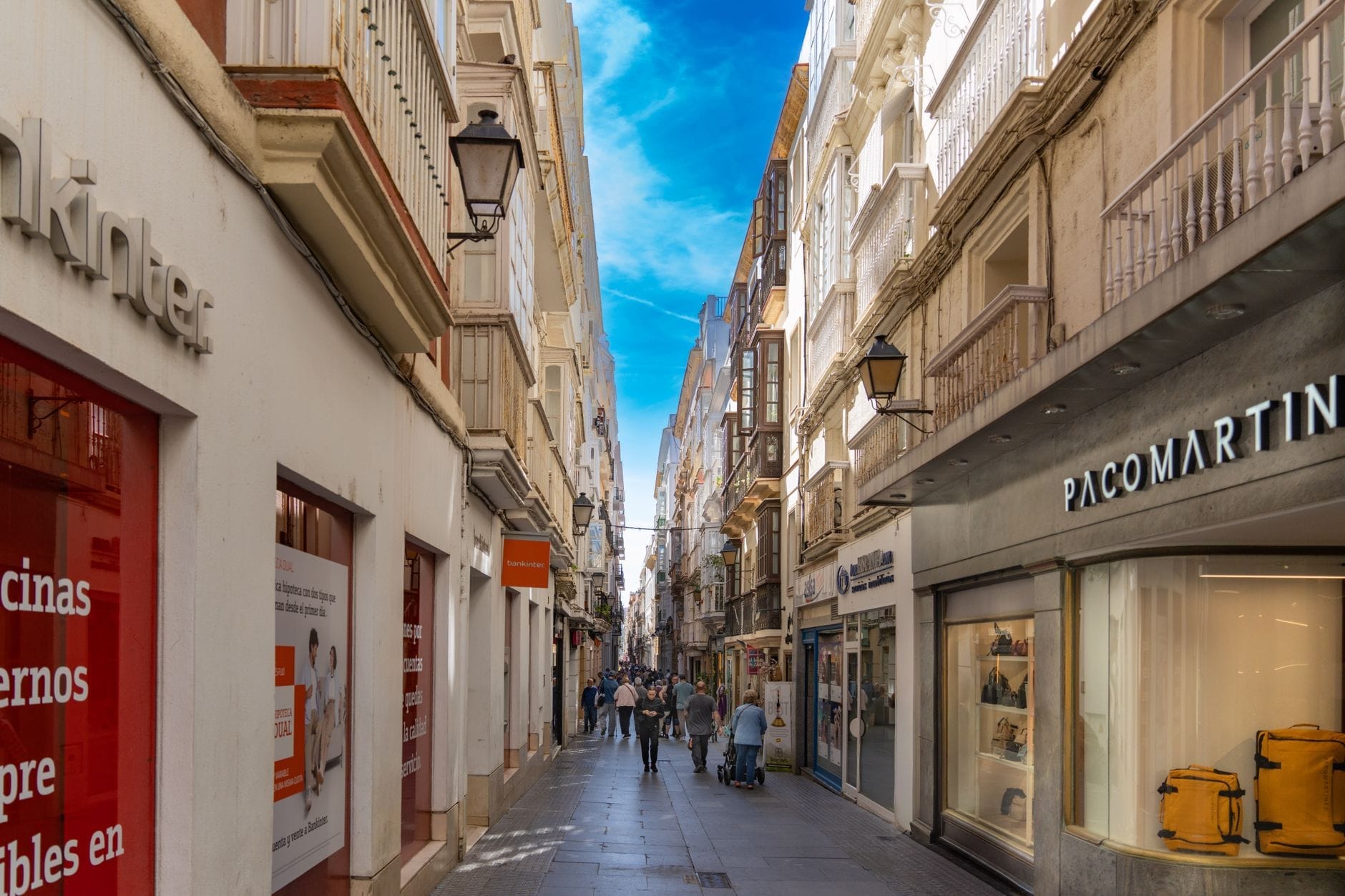
Cádiz Spain is one of the few cities in Andalusia where self-guided exploration is genuinely superior to a group tour. The Old Town sits on a narrow peninsula roughly 1.5 km wide, so you are never far from anything, and the streets are almost entirely pedestrian-friendly. A guided group tour means waiting for stragglers, skipping stops you actually want to linger at, and being funneled past restaurants and shops that have commercial arrangements with the tour operator. Walking it yourself means stopping for 20 minutes at the Roman Theater if the archaeology interests you, or pushing straight through to the cathedral if it doesn't.
The self-guided format also suits Cádiz's rhythm. This is not a city that operates on tourist time: locals eat late, plazas fill up from early evening, and the Mercado Central de Abastos closes by early afternoon. A flexible itinerary lets you align your route with when each place is actually worth visiting, rather than arriving at the market at 4pm to find it shuttered.
💡 Local tip
Download your navigation app before you arrive. Much of Cádiz Old Town has weak mobile data coverage in the narrow interior streets. GPSmyCity routes work offline once downloaded; Questo requires a data connection for some features.
The Route: Stop by Stop

The most logical starting point is Plaza de San Juan de Dios, the large square near the port where most buses arrive and taxis drop off. From here, the Ayuntamiento (City Hall) faces you and there are cafés to grab coffee before you start walking. It takes about two minutes on foot to reach the entrance to El Pópulo from this square.
- Stop 1: Plaza de San Juan de Dios Start here. Orientation square, good cafés, City Hall facade worth a look. Allow 10-15 minutes.
- Stop 2: El Pópulo and the Arcos Medievales Cádiz's oldest surviving quarter, with medieval arched gateways and tight stone streets. The Roman Theater sits inside this neighborhood. Allow 20-30 minutes.
- Stop 3: Teatro Romano de Cádiz One of the largest Roman theaters in Spain, partially excavated and open to visitors. Free entry. Allow 20-30 minutes.
- Stop 4: Catedral de Cádiz and Plaza de la Catedral The dominant baroque-neoclassical cathedral is the city's most photographed landmark. Paid entry to the interior and tower. Allow 30-45 minutes if going inside.
- Stop 5: Mercado Central de Abastos Ten minutes' walk north of the cathedral. Best visited between 9am and 1pm when traders are active. Excellent for a mid-walk snack break. Allow 20-30 minutes.
- Stop 6: Plaza de las Flores Flower market square, a short walk from the Mercado. More photogenic in the morning when stalls are open. Allow 10 minutes.
- Stop 7: La Viña and Campo del Sur The working-class seafront neighborhood most associated with Carnival culture, followed by the promenade walk along the southern coast. Allow 20-30 minutes.
- Stop 8: La Caleta Beach The natural endpoint of the route. Small urban beach flanked by two sea fortresses. Best at sunset. Allow as long as you want.
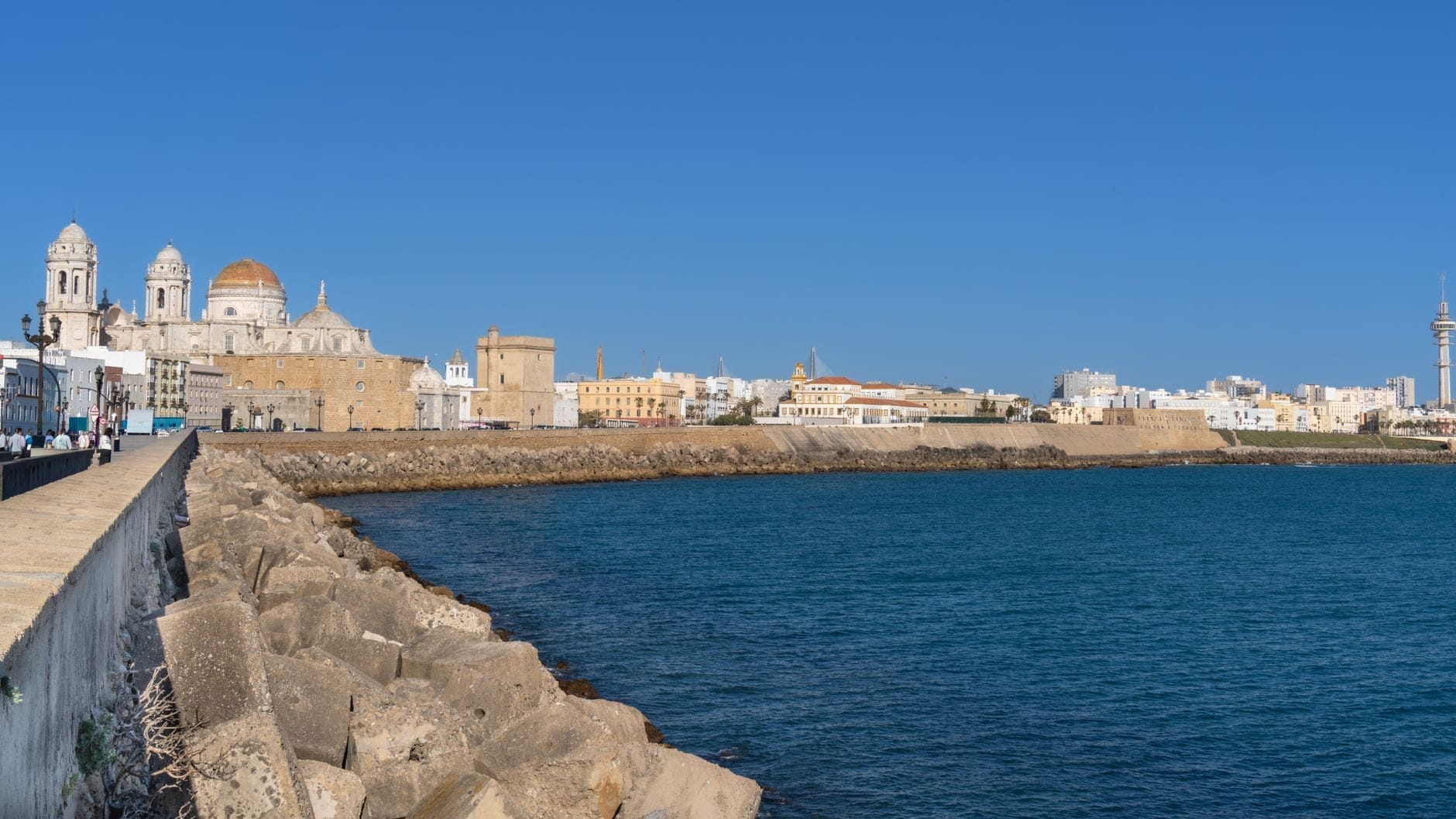
Between La Viña and La Caleta, the Campo del Sur promenade gives you an uninterrupted view of the cathedral dome from the sea side, which is the angle most photographers prefer over the plaza view. Walk this stretch slowly: the city wall, the water, and the cathedral roofline all line up from here.
✨ Pro tip
If you only have time for one tower view over the Old Town, choose Torre Tavira over the cathedral tower. It is the highest point in the Old Town, has a camera obscura that projects a live 360-degree image of the city, and typically has shorter queues than the cathedral.
Key Landmarks in Detail
The Teatro Romano de Cádiz is chronically underrated on the standard tourist circuit. Built in the 1st century BC, it seated around 10,000 people and is partially built into the walls of El Pópulo neighborhood, meaning you can see layers of Roman foundation literally supporting medieval construction above. Entry is free, and the on-site interpretation is decent. It doesn't take long, but it reframes everything else you see in the Old Town.
The Catedral de Cádiz took over a century to build, which explains its hybrid baroque-neoclassical style. The interior is less cluttered than many Spanish cathedrals, which actually makes the scale easier to read. Composer Manuel de Falla is buried in the crypt. The cathedral tower offers views over the rooftops, though the climb is steep and narrow. Ticket prices and hours change seasonally, so check the official site before visiting.
The Torre Tavira is worth the entry fee specifically for the camera obscura demonstration, which runs at regular intervals throughout the day. Cádiz had over 160 watchtowers in its 18th-century trading heyday, built so merchants could spot their ships arriving from the Americas. Torre Tavira is the tallest surviving example and the one with the most developed visitor experience.
For context on everything you are walking past, spend 30-40 minutes at the Museo de Cádiz before or after the route. The archaeology floor covers Phoenician through Roman periods and includes two remarkable Phoenician sarcophagi found in the city. The fine arts floor has a Zurbarán series that rivals what you'd find in a major national museum. Entry is free for EU citizens; non-EU visitors pay a small fee.
Self-Guided Apps and Navigation Options
Three practical options exist for navigating the Old Town without a guide, each with different trade-offs.
- Questo (from €4.99 per person) Game-style quests with clues and challenges at each stop. Works well for travelers who want engagement rather than just directions. No booking required, start anytime. Typical routes run 60-120 minutes, so plan extra time if you want to actually enter buildings.
- GPSmyCity (free basic tier) More traditional turn-by-turn GPS walking route. Downloadable offline, which matters in the narrow streets of El Pópulo where signal drops. Good for people who want navigation without gamification.
- Google Maps offline + this guide Download the Cádiz Old Town area offline, pin each stop in advance, and use this guide for the context at each location. Totally free, completely flexible, no app required beyond what you already have.
⚠️ What to skip
Free walking tours in Cádiz do exist and depart from Plaza de San Juan de Dios, but departure times are fixed (typically late morning) and groups can be large. They work on tips, so the 'free' label is slightly misleading. If you want the flexibility to linger or move fast, the self-guided format is a better fit.
Timing, Seasons, and Practical Logistics
The best time to start this walk is between 9am and 10am. This gets you to the Mercado Central while it is active, avoids the midday heat in summer, and positions you at La Caleta for early afternoon with time to swim if you want. Starting after noon in July or August means walking exposed coastal sections in peak heat, which is genuinely unpleasant.
April through June and September through October are the most comfortable months for this route. Daytime temperatures typically sit between 19°C and 26°C, and the Atlantic keeps things cooler than inland Andalusia. For more detail on how seasons affect what you can do in the city, see the best time to visit Cádiz guide.
The walk itself is almost entirely flat. Cádiz Old Town sits at sea level on a peninsula, so there are no significant inclines. The main physical challenge is heat and sun exposure on the Campo del Sur promenade, where there is no shade for several hundred meters. Wear sunscreen and carry water, particularly from May onwards.
If you are combining this walk with a day trip from Seville or Jerez, note that the train journey from Seville takes around 1.5 to 2 hours. Arriving by 9:30am gives you enough time to complete the full route before the last comfortable trains back. For logistics on that connection, see the Cádiz and Jerez day trip guide.
What to Eat and Where to Stop Along the Route
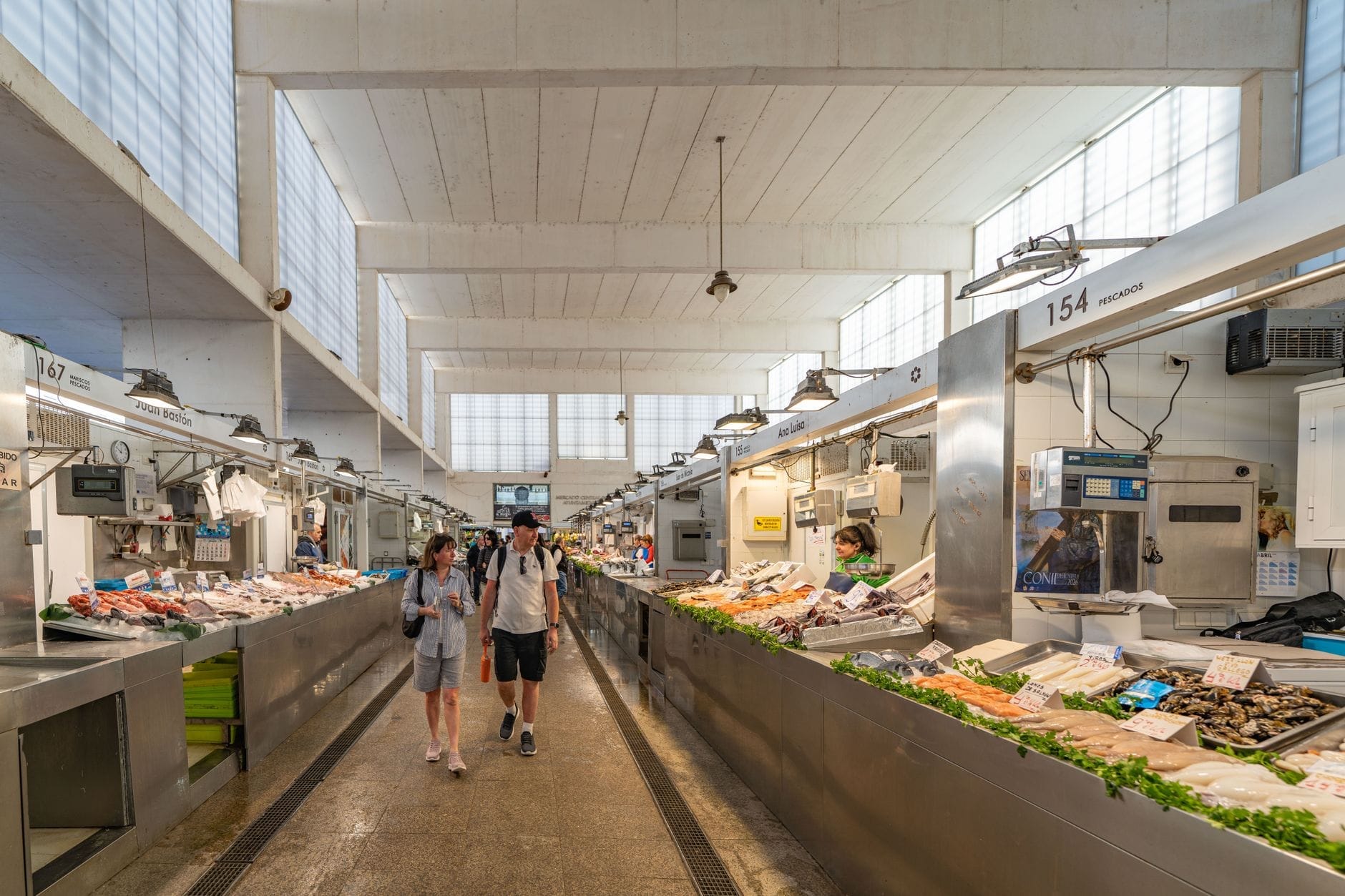
The Mercado Central de Abastos is the best mid-walk food stop, full stop. The inner market hall has bars serving fresh seafood, tortillitas de camarones (shrimp fritters, the local specialty), and cold drinks at non-tourist prices. This is where Cádiz residents actually shop, not a sanitized food market for visitors. For a deeper look at what and where to eat across the city, the Cádiz food guide covers the full picture.
Around Plaza de las Flores, the surrounding streets have straightforward café options for coffee and pastry. La Viña, the neighborhood just before La Caleta, is packed with small bars and freidurías (fried fish shops) that are worth a stop. Avoid anything with a laminated photo menu near the cathedral plaza: prices are significantly higher and quality is lower.
FAQ
How long does the Cádiz Old Town walking tour take?
The core route covers roughly 4-5 km and takes between 2.5 and 4 hours depending on how many landmarks you enter. If you visit the cathedral, Torre Tavira, and the Roman Theater properly, budget the full 4 hours. A faster pass hitting only exteriors and plazas can be done in under 2 hours.
Is Cádiz Old Town easy to walk without a guide?
Yes, with one caveat: the medieval street grid in El Pópulo and La Viña is genuinely disorienting, and some streets look identical. Having offline maps or a downloaded route on GPSmyCity prevents the 10-15 minutes of wrong turns that most first-time visitors experience in those neighborhoods.
What is the best starting point for a Cádiz Old Town walking tour?
Plaza de San Juan de Dios near the port is the practical starting point: buses stop here, taxis drop off here, and there are cafés to start the day. From there, the route flows logically west toward La Caleta without doubling back.
Are there free walking tours in Cádiz?
Yes, tip-based free walking tours operate from Plaza de San Juan de Dios, typically departing late morning. They are not truly free since guides work on tips, and groups can be large. Self-guided apps like Questo (from €4.99) or GPSmyCity offer more flexibility if you want to control your pace.
Can I do the Cádiz Old Town walk in winter?
Yes, and in some ways winter is underrated for this route. Crowds are minimal, temperatures are mild (rarely below 10°C), and the landmarks are less congested. The main risk is rain, which hits most frequently between November and February. The seafront sections of the route are exposed and uncomfortable in wet weather, but the rest is navigable.