El Pópulo is the medieval heart of Cádiz, wedged between the Ayuntamiento and the Cathedral with streets that have been walked for over two thousand years. This compact barrio holds the Roman Theatre, two historic city gates, and the old cathedral, all within a few minutes of each other. It is the most historically layered neighborhood in a city already dense with history.
El Pópulo is the oldest surviving neighborhood in Cádiz, a tight grid of cobbled lanes where Roman foundations sit beneath Baroque facades and medieval arches still mark the old city boundaries. Compact enough to cross in ten minutes, it rewards slow walking and careful looking, with more archaeological and architectural weight per square metre than almost anywhere else in Andalusia.
Orientation: Where El Pópulo Sits in Cádiz
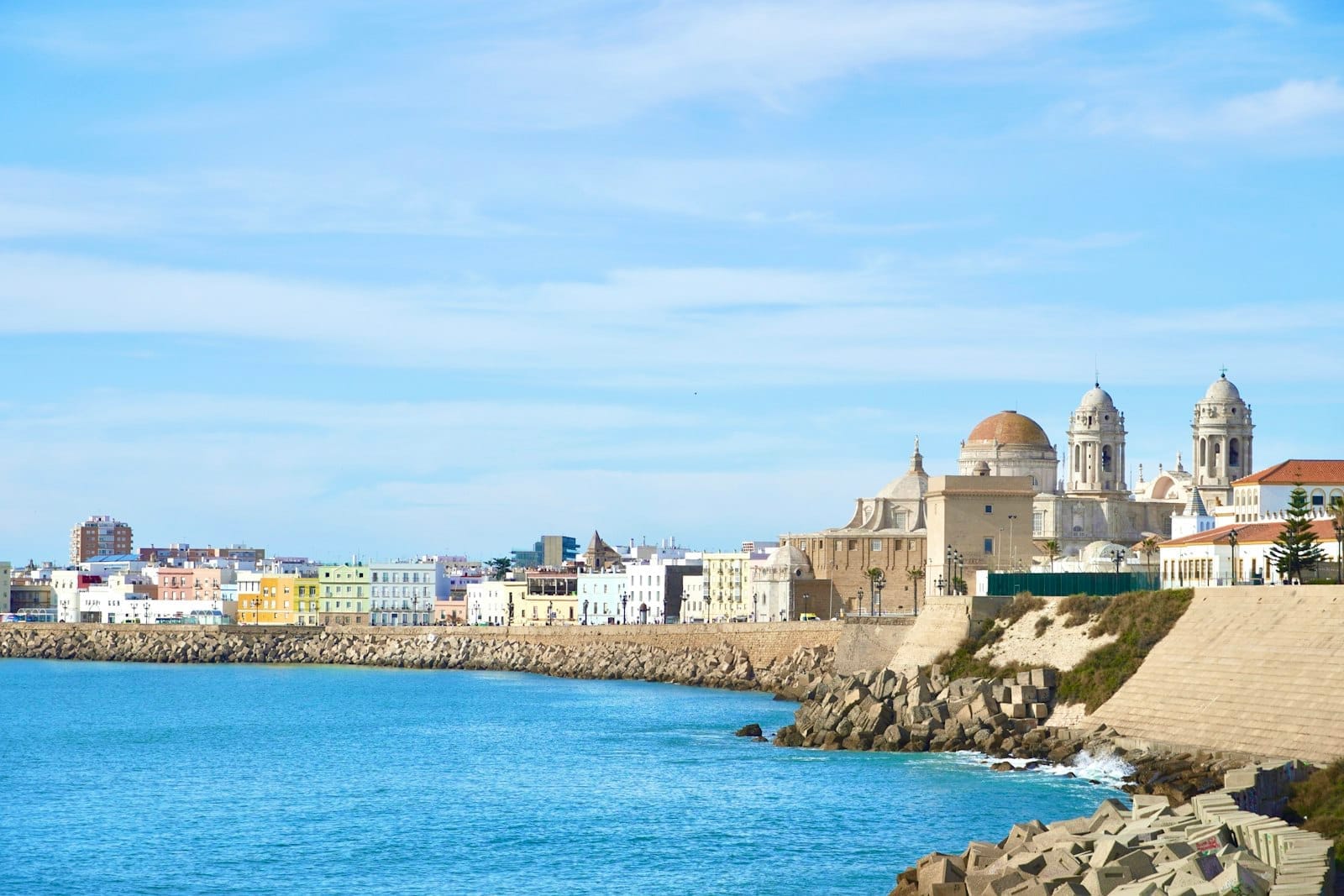
El Pópulo occupies the southeastern wedge of the old town peninsula, the narrowest and most historically significant corner of what locals call the Casco Antiguo. Its western edge runs along Plaza de San Juan de Dios, where the Ayuntamiento faces the port. Its eastern and southern boundary is defined by the Cathedral and the waterfront promenade of Campo del Sur. To the north, the neighborhood transitions gradually into the Santa María quarter, though the boundary is more felt than formally marked.
The barrio is physically small, perhaps three or four blocks across, but it is the oldest urban core in the city. Understanding El Pópulo means understanding that the rest of Cádiz grew outward from here. The broader historic centre of Cádiz surrounds it on all sides, but El Pópulo has a distinct internal logic: narrower streets, lower buildings, and a street plan that still follows a medieval layout rather than the more orderly grid laid down during the city's 18th-century commercial boom.
The Plazuela de San Martín sits at the approximate heart of the barrio and serves as a useful reference point. From here, the Cathedral dome is visible to the south, the arch of the Arco del Pópulo is a short walk to the east toward the port, and the streets leading north toward the Mercado Central are a few minutes on foot. Everything in El Pópulo is walkable from everything else.
Character and Atmosphere
Early morning in El Pópulo is the best time to grasp how old this place actually is. Before the tour groups arrive and before the cathedral opens its doors to a queue, the streets are almost empty. The cobblestones are still damp from overnight cleaning, the shuttered bars have chairs stacked outside, and the silence has a particular quality, absorbed by the thick stone walls of buildings that have been standing for centuries. In the narrow lanes around the Roman Theatre, you can look down through street-level grates at the excavated Roman stonework below and feel the full weight of the city's layered past.
By mid-morning, the neighborhood shifts register. Visitors begin filtering in from Plaza de San Juan de Dios, tour guides assemble near the arches, and the few resident-focused bars start pulling espresso. The streets are narrow enough that even modest foot traffic creates a sense of movement and activity. The light, especially in spring and autumn, does something remarkable here: it falls at a steep angle through the gaps between buildings, throwing one side of each street into deep shadow while the opposite facade glows gold.
Afternoons can feel paradoxically quiet for such a central location. Many of the small bars and cafes close for a few hours, residents retreat indoors, and the neighborhood briefly reverts to something close to its daytime residential calm. This is actually an ideal time to walk the area without distraction. By early evening, the tapas bars reopen and the squares fill with a mixed crowd of locals and visitors. El Pópulo does not have the all-night energy of La Viña to the west, but it is not dead after dark either. The bars around the cathedral and along the lanes connecting to Santa María stay lively until late.
💡 Local tip
Visit the Roman Theatre viewing platform when it is open according to the current official schedule. The site is free to enter, staff are usually available to explain the excavation, and outside peak hours you will likely have the space almost entirely to yourself.
What to See and Do
El Pópulo is, before anything else, an open-air archaeology and architecture experience. The density of significant monuments within such a small area is genuinely unusual, and the barrio rewards a patient, unscheduled approach over a checklist mentality.
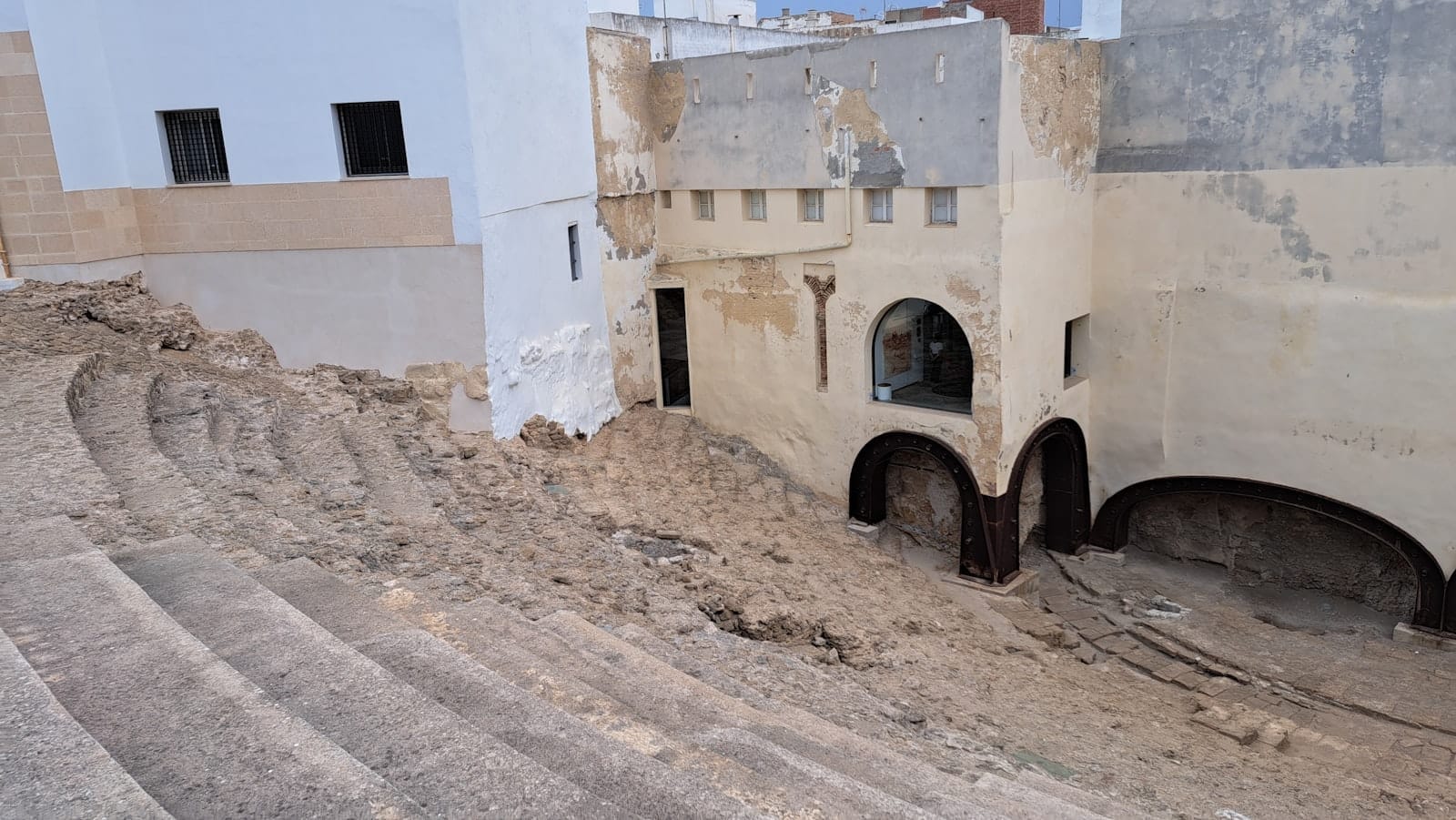
The Roman Theatre of Cádiz is the most significant archaeological site in the neighborhood and one of the largest Roman theatres on the Iberian Peninsula. Dating from the 1st century BC, it was rediscovered in 1980 during construction work and is still being excavated. The interpretation centre provides useful context, and the physical remains, viewed from the purpose-built walkway, give a visceral sense of how Roman Gades (as the city was then known) was organised.
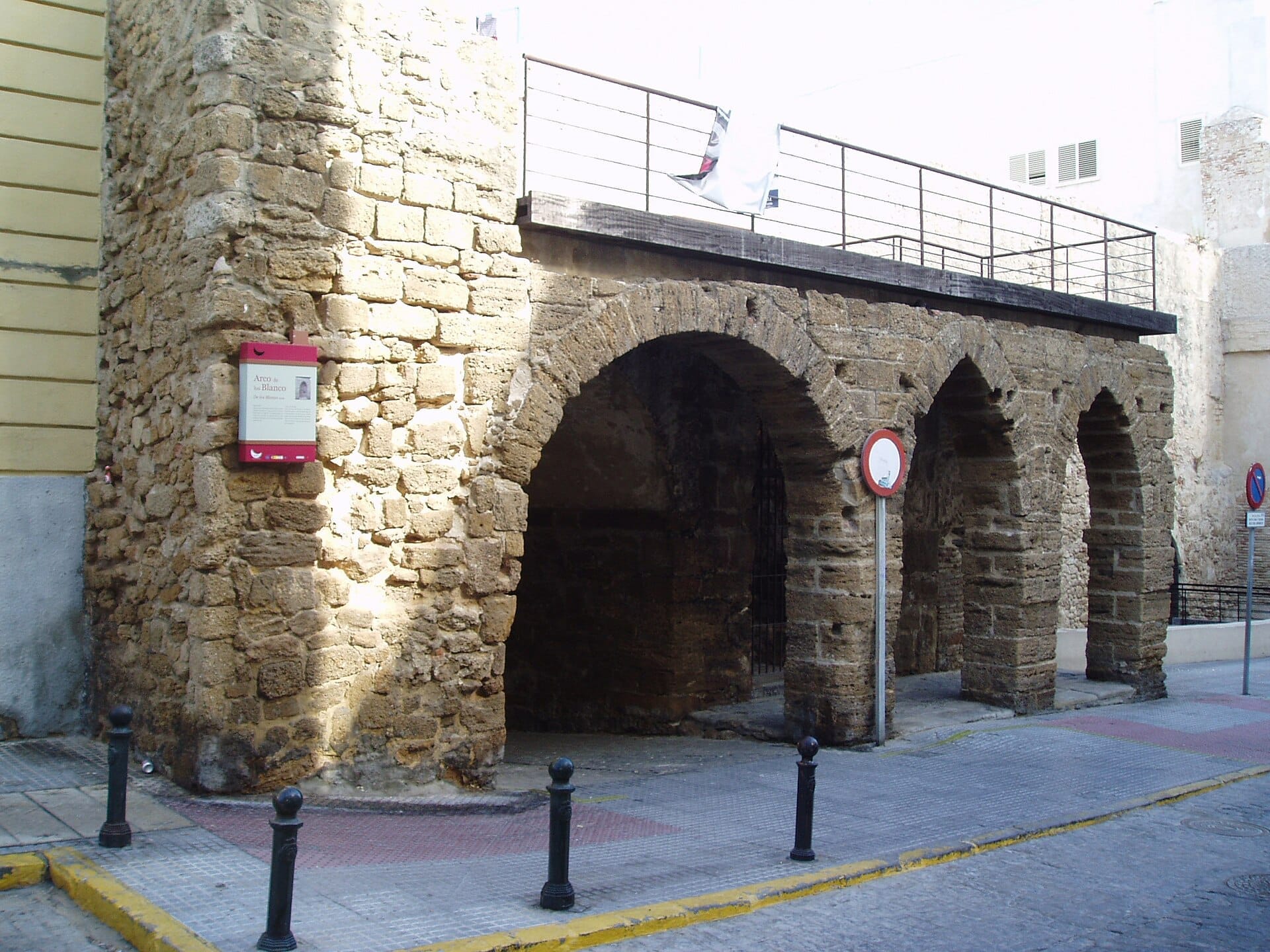
The two surviving medieval arches, the Arco del Pópulo and the Arco de los Blancos, mark what were once the gated entrances to the walled barrio. Both are designated as medieval arches of El Pópulo and classified as Bienes de Interés Cultural. The Arco del Pópulo, which once served as the Puerta del Mar connecting the city to the port, is particularly photogenic in the early morning when the light catches the stonework from the east.
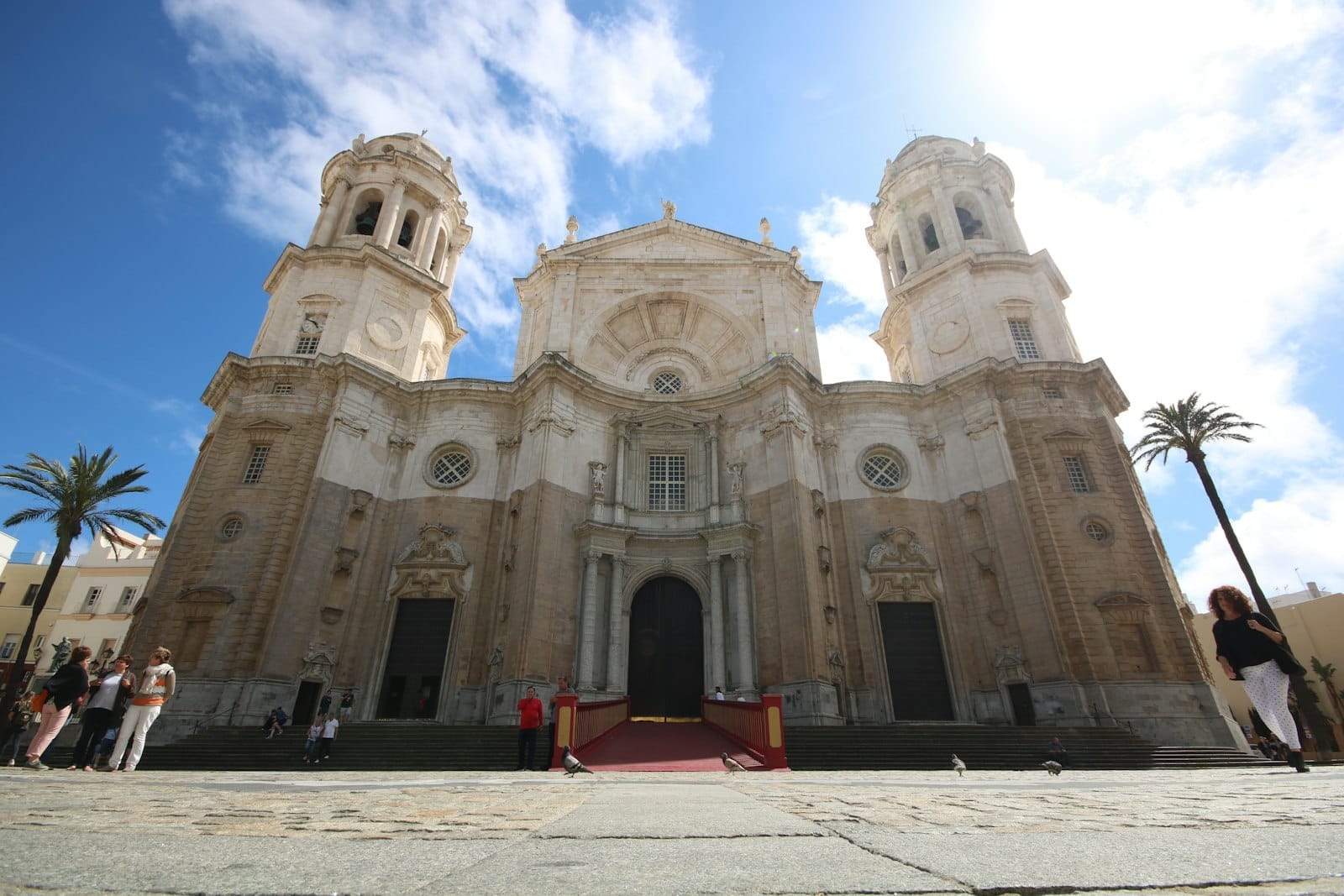
The Iglesia de Santa Cruz — known as the old cathedral — stands on the site of a mosque that was itself built on earlier Roman foundations. It predates the larger Catedral Nueva by several centuries and has a more intimate, worn quality that many visitors find more moving than its famous neighbour. The Catedral de Cádiz itself sits just on the boundary of El Pópulo, and its yellow dome is visible from almost anywhere in the barrio. Climbing its tower gives the best elevated view of the neighbourhood's roofscape.
Roman Theatre of Cádiz: free entry, check current opening hours, interpretation centre on site
Arco del Pópulo and Arco de los Blancos: medieval city gates, best viewed on foot
Iglesia de Santa Cruz: the original cathedral, smaller and less crowded than the Catedral Nueva
Catedral de Cádiz: tower access for panoramic views over El Pópulo and the bay
Plazuela de San Martín: the neighbourhood's central square, good for orientation
Plaza de San Juan de Dios: the main civic square just outside the barrio's western edge, anchored by the Ayuntamiento
If you want a structured introduction to the area before exploring independently, the Cádiz old town walking tour covers the key monuments of El Pópulo alongside the wider historic centre and is a reliable way to build context before wandering on your own.
Eating and Drinking
El Pópulo is not a destination dining neighbourhood in the way that some of its neighbours are. It does not have the concentration of seafood restaurants you find along the waterfront, or the neighbourhood-bar energy of La Viña. What it does have is a scattering of genuinely local tapas bars that cater to residents and workers rather than primarily to tourists, particularly in the streets running north from the Roman Theatre toward the Mercado Central.
The Mercado Central de Abastos is a short walk north of El Pópulo's core and deserves a morning visit. This is a working food market rather than a tourist-facing experience, and the stalls carry the full range of Cádiz's local produce: Atlantic fish and shellfish, Iberian pork, seasonal vegetables, local cheeses, and the fino and manzanilla sherries that are the standard drink throughout this corner of Andalusia. Arrive before 11am for the best selection.
The tapas bars around the cathedral square and along the pedestrian lanes within the barrio tend toward traditional Cádiz cuisine: tortillitas de camarones (crispy prawn fritters), cazón en adobo (marinated dogfish), and jamón on small plates. Prices are generally reasonable given the central location, though the handful of places directly facing the Cathedral lean slightly more toward tourist pricing. Walk one street back in any direction and the prices drop noticeably.
For a broader picture of what and where to eat across Cádiz, the Cádiz food guide covers the city's culinary traditions in detail, including the best places to try local specialities without paying inflated tourist-area prices.
ℹ️ Good to know
Fino and manzanilla sherry are the default aperitif wines in Cádiz, served chilled in small glasses alongside tapas. In El Pópulo's local bars, ordering a glass of either with a tapa is the standard way to eat and drink, and it costs far less than ordering from a menu.
Getting There and Around
El Pópulo sits at the edge of the old town closest to the port and the main approaches into the historic centre from the east, which means it is often the first part of the Casco Antiguo that visitors enter. Coming from the Cádiz train station, the walk takes approximately 10 to 15 minutes along the port-side road, passing the Puertas de Tierra (the old city walls) and then continuing through the commercial streets of the newer city before arriving at Plaza de San Juan de Dios on the barrio's western edge.
The nearest bus stops are the Mercado stop (around five minutes' walk from the heart of El Pópulo) and Plaza de España (around seven to nine minutes). Urban and interurban bus lines 2, 7, M-010, M-060, and M-960 all have stops within walking range. The Puertas de Tierra serves as the main transit hub for buses entering the old town, and from there El Pópulo is a ten-minute walk heading southeast through the historic centre.
Within El Pópulo itself, all movement is on foot. The streets are too narrow for vehicle access in most of the barrio's interior, and there is no reason to use transport once you are inside the neighbourhood. The entire area can be crossed in under ten minutes at a normal pace, though actually exploring it thoroughly takes considerably longer. Flat terrain throughout makes it accessible for most mobility levels, though the cobblestone surfaces are uneven in places.
⚠️ What to skip
Navigation apps sometimes struggle with the narrow internal lanes of El Pópulo. If you lose orientation, use the Cathedral dome as a landmark: it is visible above the roofline from most points in the barrio, and orienting yourself to it will quickly re-establish your position.
Where to Stay
El Pópulo itself has limited accommodation compared to the wider historic centre. What does exist tends toward small guesthouses and independently run apartments rather than hotels, reflecting the residential character of the neighbourhood. Staying here means trading the convenience of nearby services for the experience of sleeping in the oldest part of Cádiz, which is a reasonable trade for the right kind of traveller.
For visitors who want to be close to the main monuments without being in El Pópulo itself, the streets immediately around Plaza de San Juan de Dios and along the edge of the Barrio La Viña offer more accommodation options with easy walking access to El Pópulo. The where to stay in Cádiz guide covers the full range of options across the city's different neighbourhoods and is the best starting point for accommodation decisions.
The neighbourhood is generally quiet at night relative to the livelier parts of the old town, which makes it suitable for travellers who want a central location without the noise of the bar areas around La Viña or the main commercial streets. That said, the streets immediately adjacent to the Cathedral can carry foot traffic and ambient noise until relatively late in the evening during peak season.
Safety and Practical Notes
El Pópulo is generally safe for visitors at all hours. Standard urban precautions apply, particularly in crowded areas around the Cathedral and the main squares: keep bags in front of you, avoid leaving valuables visible, and pay attention in areas with dense foot traffic. No specific high-risk zones within the barrio are identified in available travel guidance.
The narrow streets can feel disorienting on a first visit, especially after dark when the monument lighting creates contrasting pools of bright and very dark space. Stick to the main pedestrian lanes after dark if you are unfamiliar with the layout, and note that some of the smaller side streets have limited lighting. The neighbourhood is active enough that you are rarely genuinely alone in the central lanes, but the more peripheral streets are quieter.
In terms of timing your visit, El Pópulo is at its most atmospheric and least crowded outside of peak summer months. The best time to visit Cádiz is generally considered to be April through June and September through October, when temperatures are moderate and the streets are not at full tourist capacity.
TL;DR
El Pópulo is the medieval and Roman core of Cádiz, containing the city's oldest streets, two preserved medieval gates, the Roman Theatre, and the original cathedral — all within a walkable area of a few blocks.
Best for: history-focused travellers, architecture enthusiasts, and anyone wanting to understand how Cádiz grew from its ancient origins.
Not ideal for: visitors primarily interested in beaches, nightlife, or shopping — the neighbourhood has limited facilities beyond monuments and a handful of bars.
Visit in the early morning for the best light on the stone facades and the fewest other visitors at the Roman Theatre and the medieval arches.
Everything in El Pópulo is on foot; it connects directly to Plaza de San Juan de Dios, the Cathedral, and the wider historic centre, making it a natural starting point for any exploration of old Cádiz.
Two days is exactly the right amount of time to experience Cádiz's ancient streets, golden beaches, and seafront fortresses. This itinerary organises the city's best sights into a logical, walkable weekend, from the cathedral and Roman theatre on Day 1 to La Caleta and the coastal walk on Day 2.
Cádiz enjoys one of Spain's most agreeable climates, with over 3,000 sunshine hours a year and Atlantic breezes that soften summer heat. But the best time to visit Cádiz depends entirely on what you're after: quiet sightseeing, beach days, Carnival madness, or winter-sun escape. This guide breaks it all down by season, event, and activity type.
Cádiz sits on a narrow peninsula almost entirely surrounded by the Atlantic, giving it one of the most varied coastlines in southern Spain. This guide covers the best beaches in Cádiz city and across the Costa de la Luz province, with honest assessments of crowd levels, water conditions, access logistics, and what each beach is actually good for.
Cádiz Carnival is the biggest event in the city's calendar and the most important mainland carnival in Spain. This guide covers dates, the COAC competition, pre-carnival food events, costume culture, booking logistics, and what to expect on the ground in February.
Cádiz is one of flamenco's true birthplaces, not a footnote to Seville or Granada. This guide covers the best tablaos, local peñas, seasonal festivals, honest price breakdowns, and practical booking advice for seeing genuine flamenco in Cádiz, Spain.
Cádiz, Spain has one of the most distinctive food cultures on the Iberian Peninsula. This guide covers the essential dishes to try, where to eat them, how much to pay, and when to go for the freshest seasonal ingredients straight from the Atlantic.
Cádiz carries more than three millennia of history within a compact peninsula on Spain's Atlantic coast. This guide traces the city's Phoenician roots, Roman grandeur, Age of Exploration wealth, and constitutional legacy — and tells you exactly where to see each layer of that history in person.
July and August bring relentless sun, warm Atlantic waters, and peak crowds to Cádiz, Spain. This guide breaks down the climate realities, the best beaches, how to handle the heat, and whether summer is actually the right time for your trip.
Jerez de la Frontera sits just 22 km from Cádiz by rail, making it one of the most rewarding day trips in Andalusia. This guide covers every transport option, the best things to do once you arrive, and honest advice on making the most of your time in Spain's sherry capital.
Cádiz Old Town packs Roman ruins, baroque cathedrals, medieval quarters, seafront promenades, and one of Andalusia's best markets into a peninsula you can cross on foot in under 20 minutes. This self-guided walking tour maps the essential route, tells you what each stop is actually worth, and gives you the practical details to do it without a guide.
Cádiz sits on a narrow Atlantic peninsula, which means extraordinary views are never far away. This guide covers the city's finest viewpoints, from paid rooftop towers to free coastal walks where the ocean frames everything.
Cádiz is one of Andalusia's most compelling coastal cities, packed with Atlantic beaches, Roman ruins, and a genuinely walkable old town. But is it right for your trip? Here's an honest, detailed look at what the city delivers and where it falls short.
Cádiz is one of Andalusia's most rewarding cities, and most of its best experiences are packed into a compact, walkable old town on a narrow Atlantic peninsula. This guide covers the top sights, beaches, food markets, and cultural stops — with honest advice on what's worth your time and what to skip.
Choosing where to stay in Cádiz Spain shapes your entire trip. This guide breaks down the city's main accommodation zones, names specific hotels with honest price context, and tells you exactly when to book and what to avoid.