Arco del Pópulo: Cádiz's Medieval Gateway to Its Oldest Quarter
The Arco del Pópulo is a 12th-century Almohad arch that once marked the main entrance to Cádiz's oldest quarter. Free to pass through at any hour, this street-level monument is both a working passageway and one of the most atmospheric historical traces left in the city's old town.
Quick Facts
- Location
- Arco del Pópulo, s/n, Cádiz, Spain
- Getting There
- Walk from Plaza de San Juan de Dios or the Cathedral area.
- Time Needed
- 15–30 minutes at the arch itself; more time if you explore El Pópulo
- Cost
- Free — no ticket, no hours, no barrier
- Best for
- History lovers, architecture enthusiasts, photography, slow walkers exploring the old town
- Official website
- http://turismo.cadiz.es
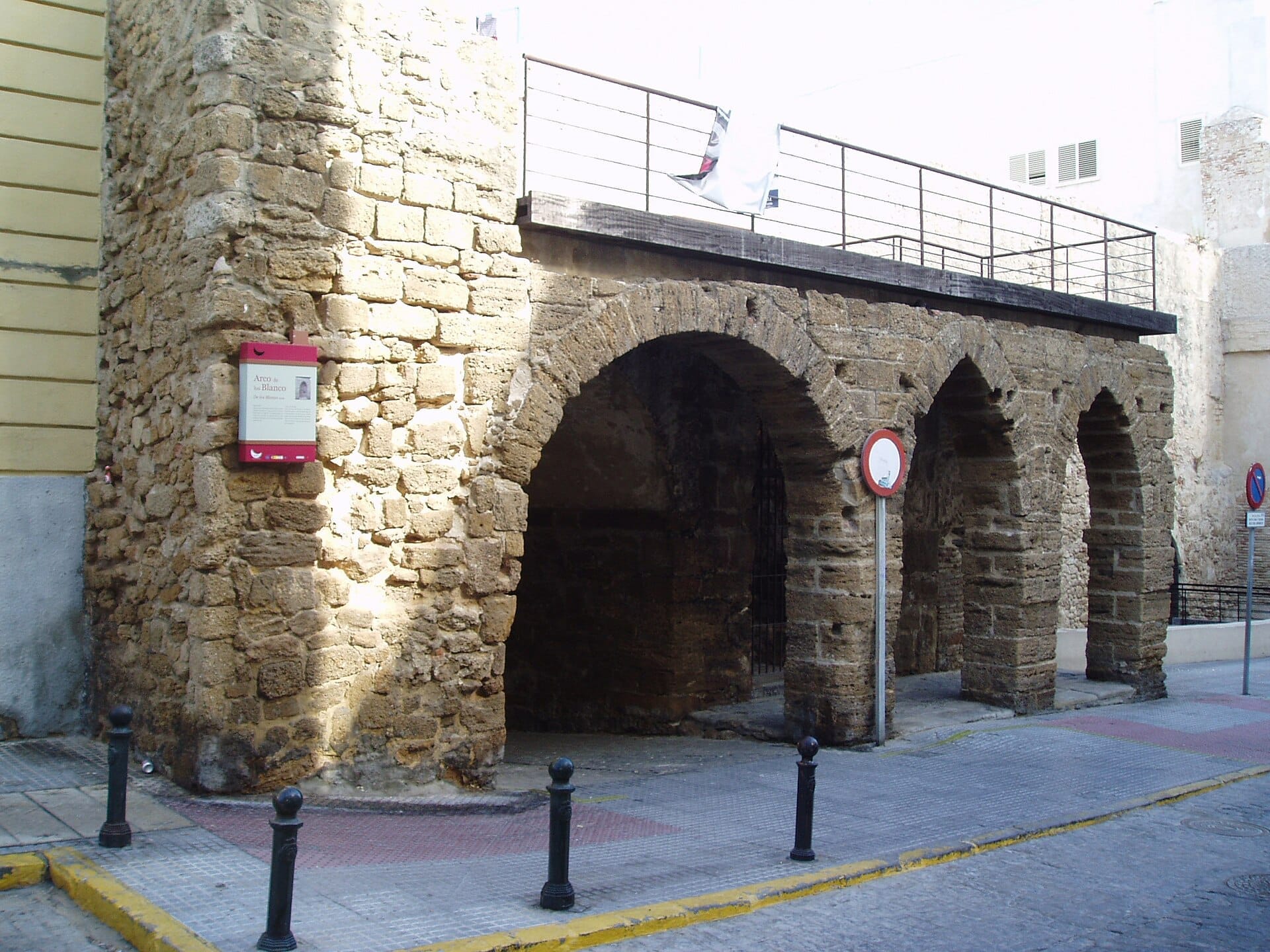
What the Arco del Pópulo Actually Is
The Arco del Pópulo is not a museum you enter or a monument you queue for. It is a medieval stone arch that still functions as a pedestrian passageway, sitting at the edge of the Barrio El Pópulo, the oldest surviving residential quarter in Cádiz. You walk under it to move between the neighborhood and the rest of the historic center, just as residents have done for centuries. That ordinariness is precisely what makes it striking.
The arch dates to the 12th century, built during the Almohad period when a Berber Muslim dynasty controlled much of the Iberian peninsula. It formed part of the city's medieval fortifications, marking a formal entry point into the walled core. In the early 17th century, a chapel dedicated to Nuestra Señora del Pópulo was constructed directly against the arch, creating a corridor-like space where the sacred and the structural overlap. The chapel wall and the arch now form a kind of compressed passageway that feels far older than anything else in the immediate area.
ℹ️ Good to know
The Arco del Pópulo is accessible 24 hours a day, 7 days a week. There is no admission fee and no ticket needed. It is a public street-level monument.
The Experience of Passing Through
The arch is low and narrow by modern standards. Stone overhead, worn flagstones underfoot, and the faint smell of old mortar and damp from the chapel wall to one side. On a warm afternoon, the shadow inside the arch offers a sudden drop in temperature compared to the sun-bleached plazas on either side. It takes perhaps four or five seconds to walk through, but most visitors slow down instinctively. The stonework at eye level still shows the texture of its medieval construction, unpolished and unrestored in the way that makes it feel genuinely old rather than reconstructed.
In the early morning, before 9am, the passageway is nearly empty. The light in Barrio El Pópulo is soft at that hour, and the narrow streets on the far side of the arch are quiet enough to hear your own footsteps. By mid-morning, foot traffic picks up as visitors route themselves from Plaza de San Juan de Dios toward the Cathedral, and the arch becomes a regular crossing point. Late afternoon, particularly in summer, can be congested with tour groups moving through the old town. If you want a photograph without other people in the frame, early morning or after 8pm in the evening are your best options.
💡 Local tip
For the best photography, position yourself outside the arch looking through toward El Pópulo in the morning when light enters from the east. The compression of the passage frames the narrow street beyond with strong contrast.
Tickets & tours
Hand-picked options from our booking partner. Prices are indicative; availability and final rates are confirmed when you complete your booking.
Historical Roman Cadiz guided walking tour
From 22 €Instant confirmationFree cancellationDay trip to Tarifa, Vejer, and the Bolonia beach from the Cadiz Bay
From 59 €Instant confirmationFree cancellationWinery tour with tasting of three wines in Sanlucar
From 18 €Instant confirmationFree cancellationWinery tour and wine tasting in Chiclana de la Frontera in Cadiz
From 25 €Instant confirmationFree cancellation
Historical and Architectural Context
Cádiz has been inhabited since antiquity, and El Pópulo represents one of the clearest surviving pieces of evidence for its medieval layering. The Almohad dynasty, which controlled the city from the 12th century until the Christian Reconquista in 1262, left very little standing architecture across Andalusia. The Arco del Pópulo is therefore not a minor curiosity. It is one of the few physical remnants of that period in the city, sitting alongside the remnants of the Roman theatre a short distance away.
The Barrio El Pópulo itself is the oldest part of the city, and for centuries it contained key civic and commercial routes. The arch you walk through today was the gate that controlled access to that area. For more on how this quarter fits into the wider historic center, the Cádiz history guide provides useful context on the city's layered past.
The chapel addition in the early 17th century is worth examining on its own terms. By placing a religious structure against a gate originally built for military control, the builders created an interesting compression: a threshold that is simultaneously defensive, sacred, and civic. The figure of Nuestra Señora del Pópulo, the neighborhood's patron, still occupies this space, which gives the passageway a dual identity that street-level heritage rarely holds.
Getting There and Orienting Yourself
The arch is positioned at the edge of the Barrio El Pópulo, a few minutes' walk from both the main waterfront square and the Cathedral. From Plaza de San Juan de Dios, walk south and slightly inland for roughly five minutes. From the Cathedral of Cádiz, the arch is about three minutes on foot heading toward the port side of the old town. Most visitors encounter it naturally while walking between these two landmarks.
There is no dedicated parking nearby, and the old town is not practical for driving in any case. The entire area is pedestrianized or has very restricted vehicle access. Comfortable walking shoes are sensible given the uneven stone surfaces throughout El Pópulo, particularly if you intend to explore the quarter's interior streets after passing through the arch.
Accessibility through the arch itself may be limited for wheelchair users due to its medieval dimensions and the uneven stone underfoot. No official accessibility statement has been published for this monument, and the structure's age means adaptation is constrained. Visitors with mobility needs should assess the approach from photos before committing to this specific route through the neighborhood.
Combining the Arch with a Walk Through El Pópulo
Passing through the arch takes seconds. What makes the visit worthwhile is what comes after. The Barrio El Pópulo is a compact but dense quarter of medieval lanes, small plazas, and buildings that carry clear evidence of occupation across multiple centuries. The streets inside are narrow enough that two people with extended arms could nearly touch the walls on either side, and the building heights create shadow for most of the morning.
A short walk from the arch leads to the Roman theatre of Cádiz, one of the largest Roman theatres on the Iberian peninsula, which was only excavated in the latter part of the 20th century. The proximity of a Roman theatre, a medieval Almohad arch, and a 17th-century chapel within a few hundred meters of each other gives the El Pópulo quarter a density of historical layering that most European cities with larger tourist infrastructure would market far more aggressively.
For a structured way to connect these sites with others across the old town, the Cádiz old town walking tour guide covers a logical route that includes El Pópulo alongside the Cathedral quarter and the waterfront.
Honest Assessment: What This Is and Isn't
The Arco del Pópulo will not occupy a full morning. It is not a site with exhibits, guides, or significant interior space. Visitors who expect a formal heritage experience, a visitor center, or interpretive panels will be disappointed. There is essentially no on-site explanation of what the arch is, when it was built, or what significance the chapel holds. You are looking at a stone arch that most locals walk through without pausing.
For travelers with genuine interest in medieval architecture, Andalusian history, or the texture of cities that have accumulated centuries without aggressive renovation, this is a serious attraction. For travelers whose priority is checked-off sights, optimized schedules, or photogenic exteriors with clear signage, the arch may feel underwhelming without the context provided by prior reading. It rewards those who arrive already curious.
⚠️ What to skip
There is almost no on-site interpretation at the arch. If you want to understand what you are looking at, read about the Almohad period and El Pópulo's history before you arrive, not after.
Insider Tips
- Stand inside the passageway and look up at the join between the original Almohad stonework and the later chapel addition. The difference in masonry technique and stone color between the 12th-century arch and the 17th-century chapel wall is visible to the naked eye.
- The small plaza on the El Pópulo side of the arch, rather than the more trafficked outer approach, tends to be quieter and gives a better sense of the neighborhood's enclosed, medieval character.
- Visit after 8pm in summer when the day-trippers have largely left and residents are back in the streets. El Pópulo has a noticeably different atmosphere in the evening: slower, more local, and much less crowded.
- The arch is best photographed from the outside looking in rather than the reverse. The compression of the passage, with the narrow El Pópulo street visible beyond, makes for a stronger composition than shooting outward toward the more open areas near the port.
- Combine the arch with the Roman theatre visit on the same short walk. The theatre entrance is only a few minutes away, and seeing both in sequence gives a concrete sense of how many distinct historical periods have left physical traces in this single small quarter.
Who Is Arcos Medievales de El Pópulo For?
- History and architecture enthusiasts who want to touch medieval Andalusia without a ticket queue
- Photographers looking for compressed, textured urban passages in strong morning or evening light
- Walkers using El Pópulo as a route between the Cathedral and the port waterfront
- Travelers following a structured old town walk who want to understand Cádiz's neighborhood layers
- Anyone curious about the Almohad period in southern Spain beyond the better-known monuments in Seville or Granada
Nearby Attractions
Other things to see while in Barrio de El Pópulo:
- Iglesia de Santa Cruz (Catedral Vieja)
Built in the mid-13th century during the reign of King Alfonso X, the Iglesia de Santa Cruz served as the cathedral of Cádiz for nearly six centuries before a newer cathedral took its place. Today this quietly powerful church in the El Pópulo quarter stands as one of the oldest and most layered religious sites in the city, though structural issues announced in early 2026 led to a definitive closure for cultural and visitor activity, meaning visitors must verify any possible access before arriving.
- Teatro Romano de Cádiz
The Teatro Romano de Cádiz, also known as the Theatrum Balbi, is one of the largest and oldest Roman theatres in Spain. Built in the 1st century BC in the ancient city of Gades, it lay buried beneath medieval streets for centuries before being rediscovered in 1980. Entry is free, and the interpretation centre brings two millennia of layered history into sharp focus.