Teatro Romano de Cádiz: Inside One of Spain's Oldest Roman Theatres
The Teatro Romano de Cádiz, also known as the Theatrum Balbi, is one of the largest and oldest Roman theatres in Spain. Built in the 1st century BC in the ancient city of Gades, it lay buried beneath medieval streets for centuries before being rediscovered in 1980. Entry is free, and the interpretation centre brings two millennia of layered history into sharp focus.
Quick Facts
- Location
- Calle Mesón, 12, El Pópulo quarter, Cádiz Old Town
- Getting There
- On foot from Cádiz Cathedral (5 min walk); within the pedestrian historic centre
- Time Needed
- 45–90 minutes
- Cost
- Free admission
- Best for
- History enthusiasts, archaeology lovers, curious walkers
What You're Actually Looking At
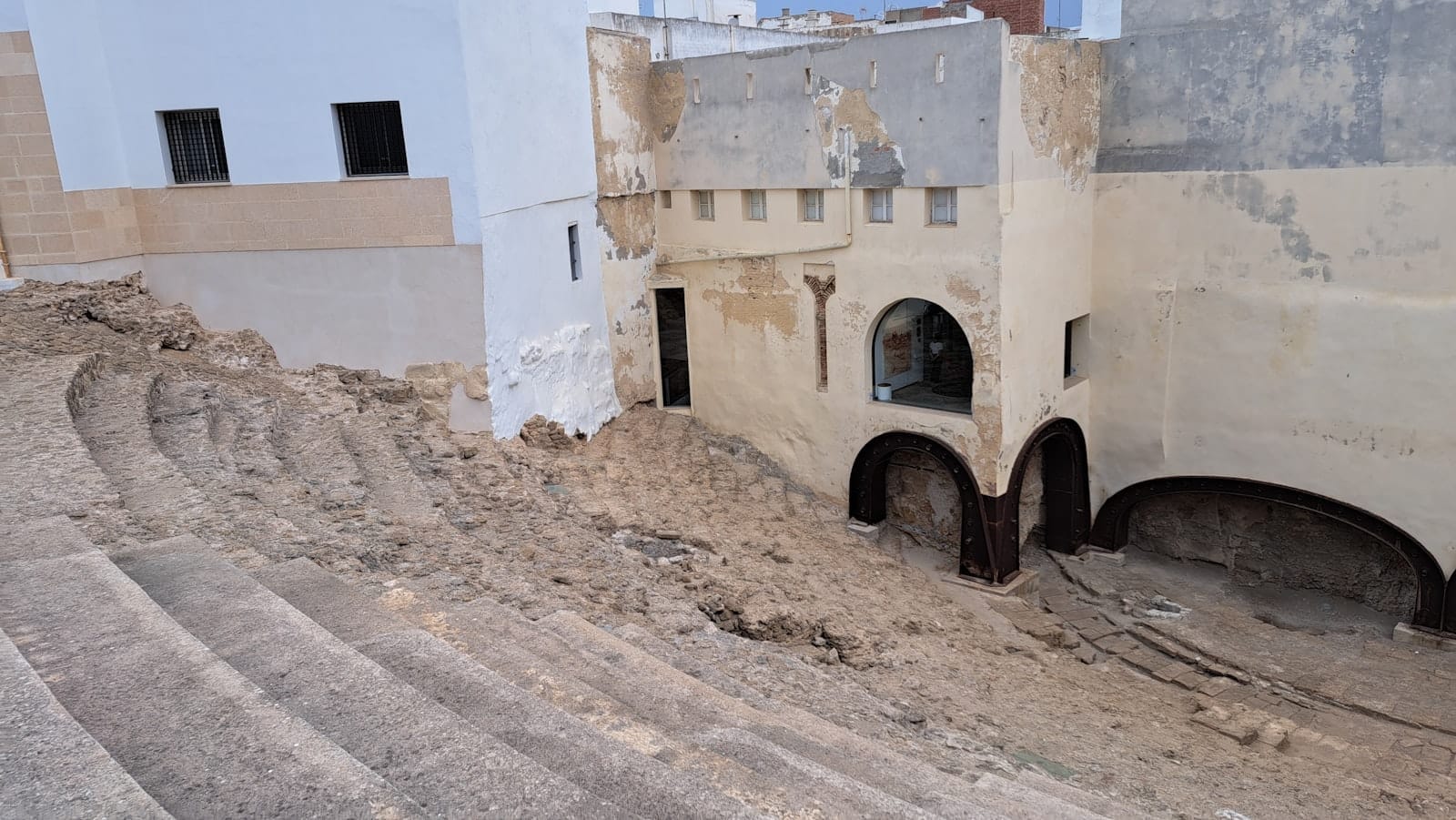
The Teatro Romano de Cádiz, officially the Enclave Arqueológico del Teatro Romano de Cádiz and sometimes called the Theatrum Balbi, is an archaeological site and interpretation centre built around the exposed remains of a monumental Roman theatre. The structure dates to the 1st century BC, making it the oldest and second largest Roman theatre conserved in Spain. Its cavea — the semicircular auditorium — stretches about 120 metres in diameter and was designed to hold approximately 10,000 spectators, a number that rivals the population of many modern Andalusian towns.
Standing at the viewing platforms inside, you look down onto tiers of stone seating, original column drums, and the outlines of corridors that once guided Roman audiences to their seats. The sheer scale is disorienting at first. This was not a modest municipal theatre. It was a statement of power, commissioned by Lucius Cornelius Balbus the Younger, a native of Gades (ancient Cádiz) who became one of Rome's wealthiest and most connected citizens, and who built the theatre to serve the expanding Neapolis quarter of the city.
ℹ️ Good to know
Entry to the indoor interpretation centre is free. Check the Junta de Andalucía's official page before visiting, as opening hours vary by season and may be affected by ongoing conservation work and temporary closure of the outdoor archaeological area.
The Story Buried Beneath El Pópulo
The theatre's long disappearance is almost as remarkable as the structure itself. After the Roman period, Cádiz contracted severely. The theatre fell out of use between the 3rd and 4th centuries AD, and what had been a public spectacle venue was gradually repurposed: first as storerooms and stabling, then as housing. Walls were built directly over the Roman stonework. A Moorish fort was later constructed on the site, and after the Christian reconquest under Alfonso X, the medieval city of El Pópulo grew up directly on top of the theatre's footprint.
For roughly 1,600 years, the theatre simply ceased to exist in public consciousness. It was rediscovered in 1980 during excavations in the El Pópulo district, one of the most consequential archaeological finds in modern Cádiz. Subsequent decades of work have gradually peeled back the medieval layers, though the excavation remains ongoing. Sections of the ancient auditorium are still embedded beneath standing buildings, which is part of what makes the site unusual: it is not a clean, fully exposed ruin but an active dig that coexists with the living neighbourhood around it.
The neighbourhood context matters. El Pópulo is one of Cádiz's oldest quarters, a tight grid of narrow lanes wedged between the cathedral and the sea walls, and the Roman theatre sits at its heart. Walking here from the Cathedral of Cádiz takes under five minutes, but the shift in atmosphere is immediate: fewer tourists, more laundry on balconies, and the faint smell of salt air threading through the alleys.
Tickets & tours
Hand-picked options from our booking partner. Prices are indicative; availability and final rates are confirmed when you complete your booking.
Historical Roman Cadiz guided walking tour
From 22 €Instant confirmationFree cancellationDay trip to Tarifa, Vejer, and the Bolonia beach from the Cadiz Bay
From 59 €Instant confirmationFree cancellationWinery tour and wine tasting in Chiclana de la Frontera in Cadiz
From 25 €Instant confirmationFree cancellationGuided tour of medieval Cadiz landmarks and history
From 30 €Instant confirmationFree cancellation
The Interpretation Centre: What to Expect Inside
The visit divides into two parts. The interpretation centre — Centro de Interpretación del Theatrum Balbi — is a modern museum space built to explain the site's history, the excavation process, and the social world of Roman Gades. Displays cover the biography of Balbus, the mechanics of Roman theatrical performance, and the architectural techniques used in the original construction. Information panels are available in both Spanish and English.
The exhibits are well-curated without being overwhelming. For a free attraction, the quality of presentation is genuinely high: scale models show how the theatre would have looked at its peak, and recovered artefacts give texture to what can otherwise feel like an abstract pile of stones. Plan around 30 to 45 minutes for the interior, more if you read every panel closely.
From the centre, visitors move to viewing areas overlooking the excavated remains. The contrast between the ancient stonework and the surrounding medieval and modern city is stark and worth lingering over. Early morning visits, before tour groups arrive, allow for quieter observation. Midday in summer can be uncomfortable at the outdoor sections given the lack of shade, so morning or late afternoon visits are preferable from May through September.
💡 Local tip
Arrive in the first hour after opening on weekday mornings if you want the site largely to yourself. Weekend afternoons see more foot traffic, particularly when cruise ships are in port.
Practical Walkthrough and Accessibility
The site is located at Calle Mesón, 12, in the El Pópulo quarter. There is no dedicated car park attached to the site; parking within the historic centre is extremely limited. The most practical approach is to arrive on foot from the central bus stops or from the area around Plaza de San Juan de Dios, which is a roughly five-minute walk. The historic centre is almost entirely pedestrianised, so this is the standard way most visitors arrive.
Wheelchair users can access parts of the museum space, but not all areas of the site are fully accessible due to the nature of the excavation terrain. Families with pushchairs should note that strollers must be left at the front desk, and the one-way entry system means you will need to exit and re-enter to retrieve them. Wear comfortable shoes; the uneven surfaces around the excavated areas are not suitable for heels or thin-soled footwear.
Photography of the ruins and interpretation centre is generally permitted. The viewing platforms provide the clearest angles on the cavea. For wider context on exploring the historic centre on foot, the Cádiz old town walking tour incorporates the Roman theatre along with other key sites in El Pópulo and the surrounding barrios.
How the Experience Changes Through the Day
Morning light enters the El Pópulo streets from the east and catches the pale stone of the theatre ruins cleanly. At this hour, the neighbourhood is going about its own business: residents heading to the market, delivery vehicles squeezing through alleys too narrow for comfort, the sound of a television from an upper window. The theatre feels like a secret that the city has simply grown accustomed to keeping.
By late morning, the site begins to attract guided groups, often attached to city walking tours or cruise excursions. The interpretation centre can feel crowded when two or three groups overlap in the same space. If you visit during peak months (July and August), arriving right at opening gives you the best chance of an unhurried experience. In autumn and spring, the timing is less critical, and the outdoor sections are genuinely pleasant in the mild Cádiz air.
The theatre is most atmospheric in early evening, when the low light throws the stone tiers into relief and the crowds have thinned. Whether the site is open at that hour depends on the current season schedule and any ongoing restoration closures, so check in advance. If you have extra time afterward, the medieval arches of El Pópulo and the Iglesia de Santa Cruz are both within a short walk and together make for a coherent afternoon in the old quarter.
Is It Worth Your Time? An Honest Assessment
For anyone with even a passing interest in Roman history, this is one of the more substantial free sites in southern Spain. The scale of the theatre surprises most visitors who arrive expecting something modest. The interpretation centre adds real context rather than simply labelling stones, and the setting inside El Pópulo gives the visit a texture that polished, fully restored Roman sites often lack.
That said, the site will disappoint visitors expecting a fully excavated, walk-through Roman theatre. Large sections remain buried. The exposed portions are impressive but partial. If you have already visited the Roman theatres at Mérida or Cartagena, you will notice immediately that this one is a more fragmentary experience. The Theatrum Balbi's significance lies partly in what it represents for Cádiz's history, and understanding that history enriches the visit considerably.
Those with very limited time in Cádiz and no particular interest in archaeology might prioritise other experiences, though the free admission removes any financial barrier to a quick look. The full guide to things to do in Cádiz can help with prioritising your itinerary across the city.
⚠️ What to skip
Parts of the excavation may be closed temporarily due to ongoing conservation or restoration work, and the Roman Theatre itself is currently closed for a long-term restoration programme. The site is managed by the Junta de Andalucía and updates are posted on their official page. Always check before making a special trip.
Insider Tips
- The roof terrace or upper viewing level of the interpretation centre (where available) offers one of the few elevated perspectives on the theatre's full footprint — take the time to go up rather than rushing through at ground level.
- Cross-reference your visit with the Museo de Cádiz, which holds artefacts excavated from Gades including Roman-period pieces that complement what you see at the theatre site.
- Weekday morning visits mid-week (Tuesday to Thursday) consistently see the lowest visitor numbers, even in high season.
- The streets immediately surrounding the theatre in El Pópulo are among the least tourist-trafficked in Cádiz's old town. Take ten minutes to walk the alleys north of the site before or after your visit — the neighbourhood repays unhurried attention.
- Opening hours can shift between winter and summer schedules by an hour or more. The Junta de Andalucía website is the only reliable source for current times; third-party sites frequently carry outdated information.
Who Is Teatro Romano de Cádiz For?
- History and archaeology enthusiasts looking for substantive Roman heritage beyond the well-trodden circuits
- Travellers combining the visit with a walking loop through El Pópulo and the Cathedral district
- Budget-conscious visitors seeking free, high-quality cultural content
- Visitors wanting to understand Cádiz's depth as an ancient city, beyond its Atlantic beaches and Baroque architecture
- Families with older children interested in how cities are excavated and interpreted
Nearby Attractions
Other things to see while in Barrio de El Pópulo:
- Arcos Medievales de El Pópulo
The Arco del Pópulo is a 12th-century Almohad arch that once marked the main entrance to Cádiz's oldest quarter. Free to pass through at any hour, this street-level monument is both a working passageway and one of the most atmospheric historical traces left in the city's old town.
- Iglesia de Santa Cruz (Catedral Vieja)
Built in the mid-13th century during the reign of King Alfonso X, the Iglesia de Santa Cruz served as the cathedral of Cádiz for nearly six centuries before a newer cathedral took its place. Today this quietly powerful church in the El Pópulo quarter stands as one of the oldest and most layered religious sites in the city, though structural issues announced in early 2026 led to a definitive closure for cultural and visitor activity, meaning visitors must verify any possible access before arriving.