Iglesia de Santa Cruz (Catedral Vieja): Cádiz's Original Cathedral
Built in the mid-13th century during the reign of King Alfonso X, the Iglesia de Santa Cruz served as the cathedral of Cádiz for nearly six centuries before a newer cathedral took its place. Today this quietly powerful church in the El Pópulo quarter stands as one of the oldest and most layered religious sites in the city, though structural issues announced in early 2026 led to a definitive closure for cultural and visitor activity, meaning visitors must verify any possible access before arriving.
Quick Facts
- Location
- Plaza de Fray Félix, Barrio El Pópulo, Cádiz
- Getting There
- 10-15 min walk from Cádiz train station; pedestrian streets throughout El Pópulo
- Time Needed
- 15–30 minutes (exterior only while closed)
- Cost
- Closed to visitors in 2026 (verify access)
- Best for
- History, architecture, religious heritage, quiet reflection
- Official website
- www.obispadocadizyceuta.es/parroquias/santa-cruz-cadiz
What the Iglesia de Santa Cruz Actually Is
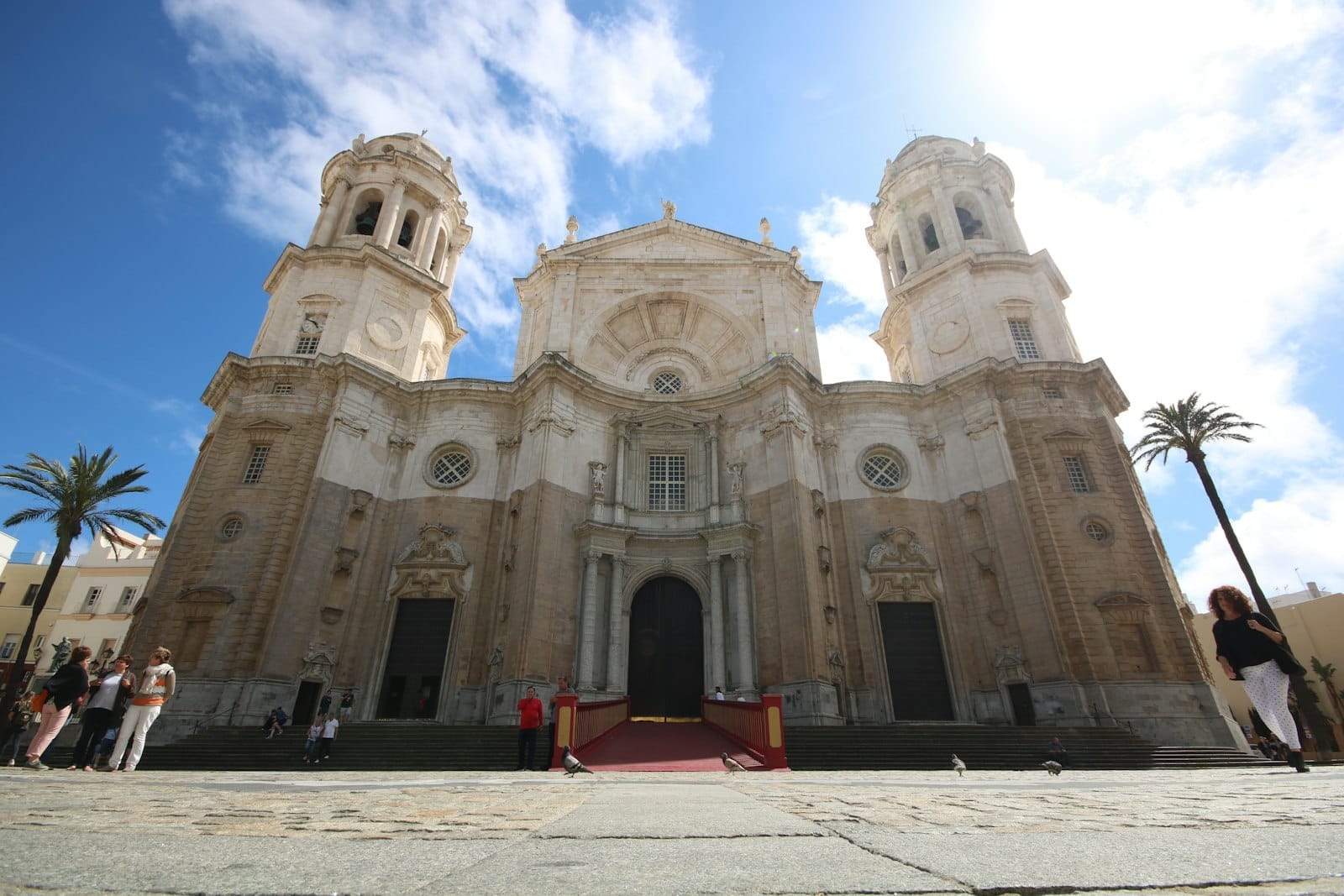
The Iglesia de Santa Cruz, known locally as the Catedral Vieja (Old Cathedral), is one of the most historically significant religious buildings in Cádiz. It sits on the Plaza de Fray Félix in the ancient El Pópulo quarter, tucked between narrow lanes that feel untouched by the last few centuries. For most visitors arriving via the newer cathedral or the seafront, this church remains off the main circuit — though in 2026 it is closed to cultural visitors, so plan around the exterior and the surrounding quarter rather than assuming interior access.
The building's origins trace back to 1262–1263, during the reign of King Alfonso X of Castile and the papacy of Urban IV. That date alone gives it a different weight than most churches in the region. It was constructed in a Gothic-Mudéjar style, reflecting the architectural hybridity that characterized Castilian religious building shortly after the Reconquista pushed into this southernmost corner of the peninsula. The church served as the official cathedral of Cádiz until 1838, when the episcopal seat transferred to the new cathedral on the other side of the historic centre. Since then, it has functioned as a parish church.
⚠️ What to skip
Important: In early 2026, the parish announced a definitive closure of the Iglesia de Santa Cruz for cultural and visitor activity due to structural problems and water infiltration inside the temple. Liturgical functions have been relocated to other temples. Before planning a visit, check current access status directly with the Diocese of Cádiz y Ceuta or the Cádiz tourism office.
Layers of History in Stone
What you see when you look at the facade today is not what Alfonso X commissioned. The church was substantially rebuilt in the 17th century, emerging in a mannerist and baroque style that overlaid much of the original Gothic-Mudéjar structure. This makes the building an accidental archive: its exterior and interior carry centuries of adaptation, each layer placed over the last by a city that kept growing in wealth and ambition while the church at its core remained.
The baroque reworking brought a more formal geometry to the entrance and interior volumes, with the heaviness and drama typical of Counter-Reformation church design. But traces of the earlier spirit remain in the proportions and in the way the building relates to the square in front of it. Standing in Plaza de Fray Félix, the church reads as older than it looks, partly because of the scale of the surrounding El Pópulo streets and partly because the stonework carries the kind of patina that lighter-tourist areas rarely allow to develop.
El Pópulo itself adds context. It is a medieval quarter of Cádiz's old town and the oldest surviving urban fabric in the city. Walking here from the New Cathedral takes about five minutes, but the atmosphere shifts noticeably. The streets narrow, the light changes, and the residential character of the neighbourhood makes the Santa Cruz feel less like a monument and more like a working part of the city's life.
Tickets & tours
Hand-picked options from our booking partner. Prices are indicative; availability and final rates are confirmed when you complete your booking.
Historical Roman Cadiz guided walking tour
From 22 €Instant confirmationFree cancellationDay trip to Tarifa, Vejer, and the Bolonia beach from the Cadiz Bay
From 59 €Instant confirmationFree cancellationWinery tour with tasting of three wines in Sanlucar
From 18 €Instant confirmationFree cancellationWinery tour and wine tasting in Chiclana de la Frontera in Cadiz
From 25 €Instant confirmationFree cancellation
The Experience of Visiting: What You Actually See
Assuming the church is accessible, visits are unhurried and unpressured. There is no ticket desk, no queue, and no audio guide rack by the entrance. You walk in from the square, let your eyes adjust to the interior light, and the space opens around you. The baroque interior has the characteristic sobriety of Spanish religious architecture: dark wood, stone surfaces worn smooth at the edges, and altarpieces that reward slow looking.
The morning hours tend to bring the best interior light. As the sun works its way around the building, the quality of illumination inside shifts, and the stained glass and stone surfaces read differently. Mass attendance and quiet individual prayer are common in the midday and late afternoon windows, so the atmosphere at those hours is noticeably more reverential than a typical tourist church.
The plaza outside is small and residential. You are unlikely to share it with more than a handful of other visitors at any given time, even in high season. This is not an attraction that draws crowds, which means the experience is genuinely quiet: no recorded commentary playing from a speaker, no tour group narration bouncing off the walls.
How to Reach It and How to Time Your Visit
The church sits in the heart of El Pópulo, which is walkable from almost every part of the old city. From Cádiz railway station, allow around 10 minutes on foot through the historic centre. The surrounding streets are pedestrian-friendly and compact. There is no dedicated public transport stop immediately outside; the most logical approach is to walk from the central bus or train hubs and treat the route as part of the experience.
The walk through El Pópulo itself is worthwhile. The medieval arches of El Pópulo are a few minutes away, and the Roman Theatre of Cádiz sits nearby, making this corner of the old town one of the densest concentrations of historical heritage in the city. A single morning or afternoon in El Pópulo can cover several significant sites without retracing steps.
💡 Local tip
Combine a visit here with the Roman Theatre just a few minutes' walk away and the medieval arches of El Pópulo. These three sites share the same narrow-lane atmosphere and can be explored in sequence in under two hours, with the Roman Theatre and arches within about a two-minute walk.
Before the 2026 structural closure, the church operated on a parish schedule: closed Mondays, open Tuesday through Thursday in two sessions (11:00–13:00 and 17:30–20:30), with adjusted hours on Fridays, Saturdays, and Sundays. Mass was celebrated in the evenings on weekdays, with feast-day masses at 11:00. These details describe the historical schedule only; given the announced closure, they should not be treated as current operational information. Contact the Diocese or the local tourism office directly before planning a visit.
Architectural Detail Worth Noticing
The transition from Gothic-Mudéjar to mannerist-baroque that the building underwent in the 17th century is visible to anyone who looks carefully. The original 13th-century structure was built in a style that blended Christian spatial logic with Moorish craft traditions, a combination that appears across Andalusia in the buildings that went up in the generations immediately following the Reconquista. The later reconstruction smoothed some of that hybridity into the more uniform language of Counter-Reformation baroque, but the building's proportions and its relationship to the surrounding square still carry something of the earlier logic.
The facade, while restrained by the standards of Andalusian baroque, has a solidity that the newer cathedral lacks. Where the 18th-century cathedral across the historic centre is theatrical and grand, the Santa Cruz reads as more austere. That austerity is itself a form of character: it tells you something about the era in which the current structure was built and about the city's changing relationship to its own religious life over four centuries.
Who This Suits, and Who Should Consider Skipping It
This is a church for people who find meaning in layered history rather than spectacle. If you are drawn to the idea that a building has been a functioning religious site since the 13th century, that kings and fishermen and merchants have stood in roughly the same space across 760 years, then the Iglesia de Santa Cruz delivers that feeling more directly than many better-known sites. It is also a good counterpoint to the grander scale of the New Cathedral or the formal interiors of the Oratorio de San Felipe Neri.
Visitors primarily interested in visual drama, interactive exhibits, or rooftop views will likely find this stop underwhelming. The church does not have the panoramic payoff of the Torre Tavira, the narrative richness of a dedicated museum, or the raw scale of the cathedral. It is a quiet building in a quiet square. If your visit to Cádiz is short and you need to prioritize, the Santa Cruz is not the first stop to put on the list. But for anyone spending more than a day in the city and willing to slow down for something understated, it is the kind of place that stays with you.
Given the 2026 structural closure, this is also not a site you can count on as part of a fixed itinerary right now. Plan flexibly and build your visit around the surrounding neighbourhood rather than the church alone. The El Pópulo quarter rewards exploration regardless of what is open on any given day.
Insider Tips
- The plaza in front of the church (Plaza de Fray Félix) is small and rarely crowded. Even when the church itself is closed, the square gives you the full external read of the building and a sense of its relationship to the medieval neighbourhood around it.
- The structural closure announced in 2026 may lead to a longer-term restoration project. Check local Cádiz news sources or the Diocese of Cádiz y Ceuta website for updates, as a restored version of the church could become a more formally visitor-ready attraction in the future.
- Morning light hits the facade most directly and makes the stone textures easier to photograph. By mid-afternoon, the narrow surrounding streets put the facade in shadow.
- The Roman Theatre and the medieval arches of El Pópulo are within a two-minute walk. Build a 90-minute loop through the whole quarter rather than treating the church as a standalone destination.
- If in the future the church is again accessible for mass, attending an evening service (typically around 20:00–20:30 based on past schedules) would be one of the quieter and more atmospheric ways to experience the interior without the feel of tourist traffic.
Who Is Iglesia de Santa Cruz (Catedral Vieja) For?
- History-focused travellers who want depth over spectacle
- Architecture enthusiasts interested in Gothic-Mudéjar and baroque transitions
- Visitors spending two or more days in Cádiz with time to explore El Pópulo thoroughly
- Those who want to understand how the city's religious geography shifted over six centuries
- Travellers looking for a quiet counterpoint to the New Cathedral's grandeur
Nearby Attractions
Other things to see while in Barrio de El Pópulo:
- Arcos Medievales de El Pópulo
The Arco del Pópulo is a 12th-century Almohad arch that once marked the main entrance to Cádiz's oldest quarter. Free to pass through at any hour, this street-level monument is both a working passageway and one of the most atmospheric historical traces left in the city's old town.
- Teatro Romano de Cádiz
The Teatro Romano de Cádiz, also known as the Theatrum Balbi, is one of the largest and oldest Roman theatres in Spain. Built in the 1st century BC in the ancient city of Gades, it lay buried beneath medieval streets for centuries before being rediscovered in 1980. Entry is free, and the interpretation centre brings two millennia of layered history into sharp focus.