Cádiz Carnival: The Complete Visitor Guide to Spain's Greatest Street Festival
Cádiz Carnival is the biggest event in the city's calendar and the most important mainland carnival in Spain. This guide covers dates, the COAC competition, pre-carnival food events, costume culture, booking logistics, and what to expect on the ground in February.
Plan and book this trip
Tools from our partner Travelpayouts help you compare flights and hotels. If you book through them, we may earn a commission at no extra cost to you.
Flights
Hotels map
TL;DR
- Cádiz Carnival runs for roughly 10–11 days in February, spanning two weekends before Ash Wednesday — exact dates shift each year, so verify with the Ayuntamiento de Cádiz.
- The carnival's identity is musical and satirical, not just parades: the chirigotas, coros, and comparsas performing in plazas and the Gran Teatro Falla are the main event.
- Most street events are free; COAC competition tickets at Gran Teatro Falla are paid and sell out fast — book through official municipal channels as soon as dates are announced.
- Accommodation in the historic centre sells out months in advance — check where to stay in Cádiz early and book as soon as carnival dates are confirmed.
- February evenings are cool and windy on the Atlantic peninsula — pack layers even if daytime feels mild.
What Makes Cádiz Carnival Different
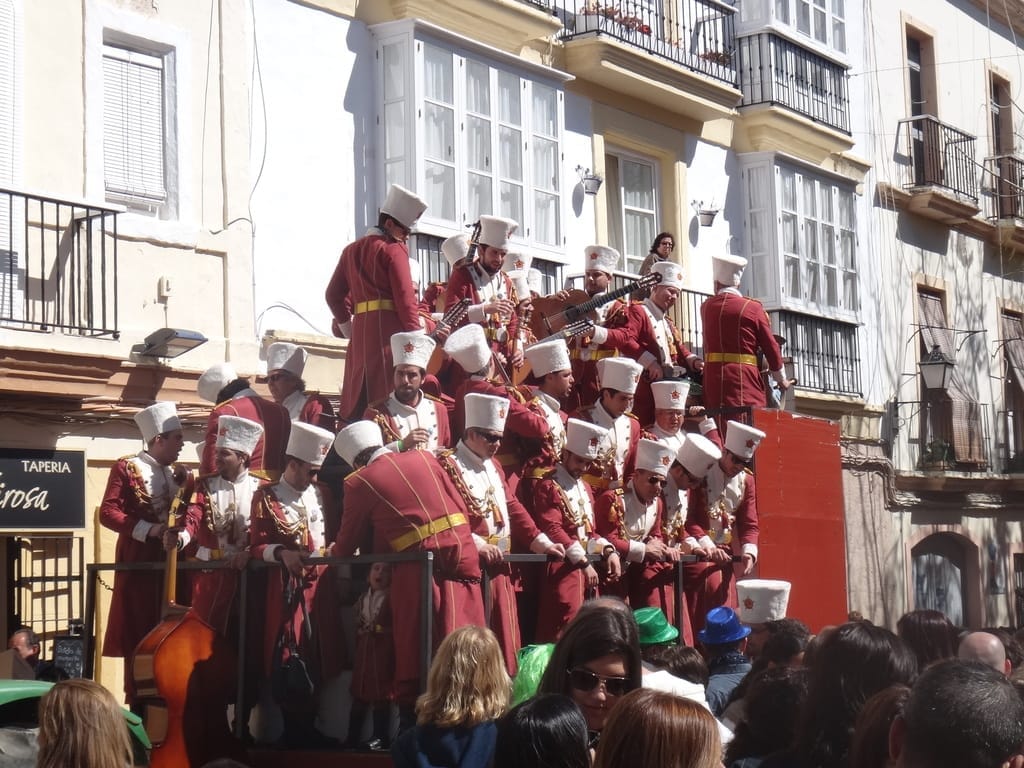
Cádiz Carnival is not Venice, not Rio, and not Tenerife. While those carnivals trade on spectacle and visual excess, Cádiz trades on wit. The festival's soul is the chirigota: a group of singers dressed in matching costumes who perform original satirical songs skewering politicians, local scandals, and Spanish society at large. Think sharp political comedy delivered in tight four-part harmony, usually in the street, usually at midnight, often to a crowd of several hundred people who already know every lyric.
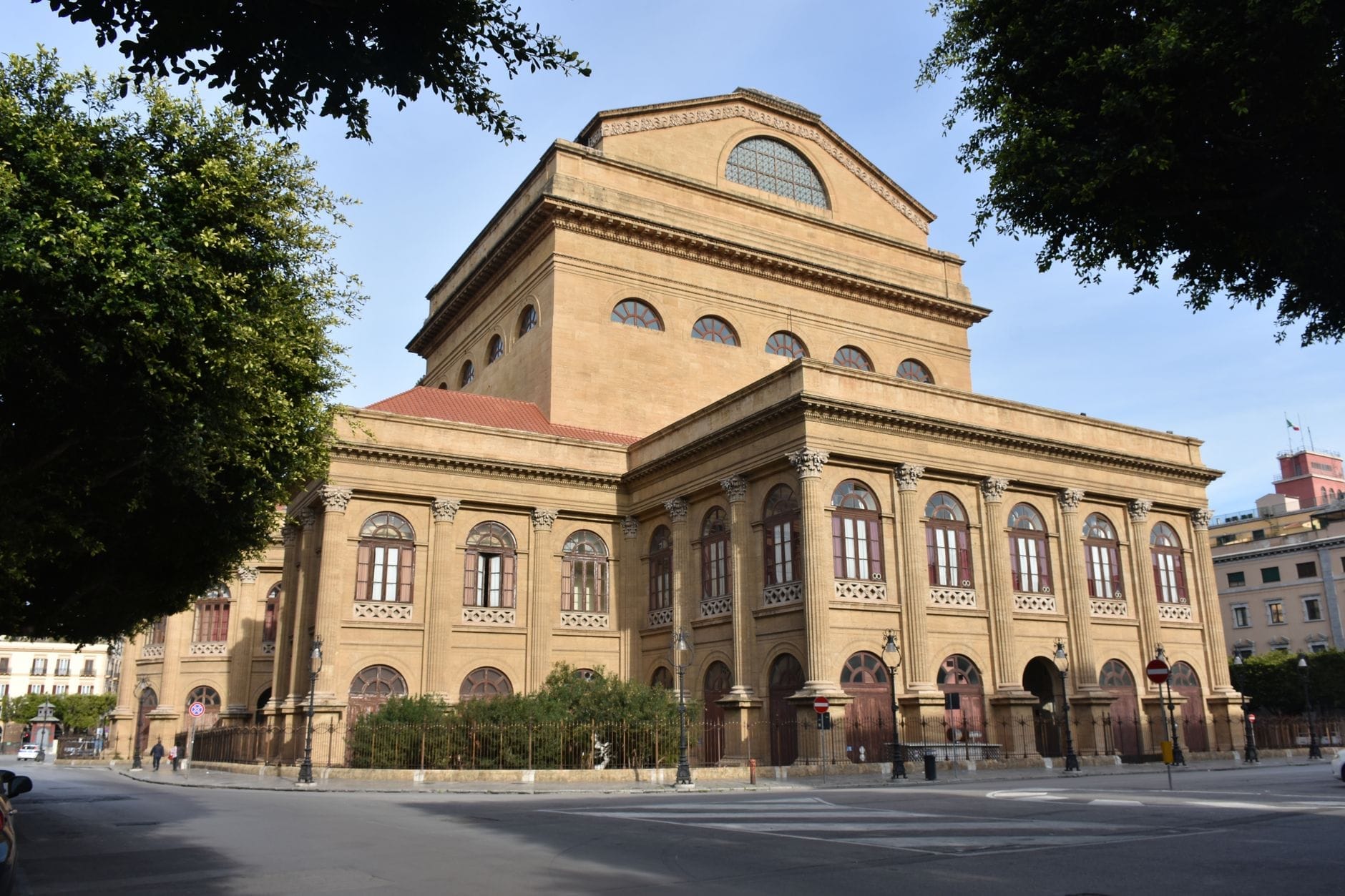
This musical tradition separates Cádiz from every other carnival in Spain. The Concurso Oficial de Agrupaciones Carnavalescas, known universally as the COAC, is a formal competition held at the Gran Teatro Falla over several weeks before the street carnival begins. Groups compete across four categories: chirigotas (comic, irreverent), comparsas (more lyrical and poetic), coros (large groups performing from decorated floats), and cuartetos (four-person sketch groups). The competition is broadcast nationally and is treated locally with the seriousness of a sporting final.
ℹ️ Good to know
The Cádiz Carnival was officially banned under Franco's dictatorship after the Civil War, from the early 1940s onward. Cádiz resisted more than most Spanish cities, with groups continuing to perform unofficially under the guise of 'murgas' or other permitted gatherings. This history of defiance is inseparable from the carnival's satirical character — and why gaditanos take the art form so personally.
The carnival takes place almost entirely within the historic centre of Cádiz, a compact peninsula where everything is within walking distance. The main action concentrates around Plaza San Juan de Dios, Gran Teatro Falla, and the streets of La Viña neighbourhood, which is considered the spiritual home of Cádiz Carnival.
Carnival Dates and Programme Structure
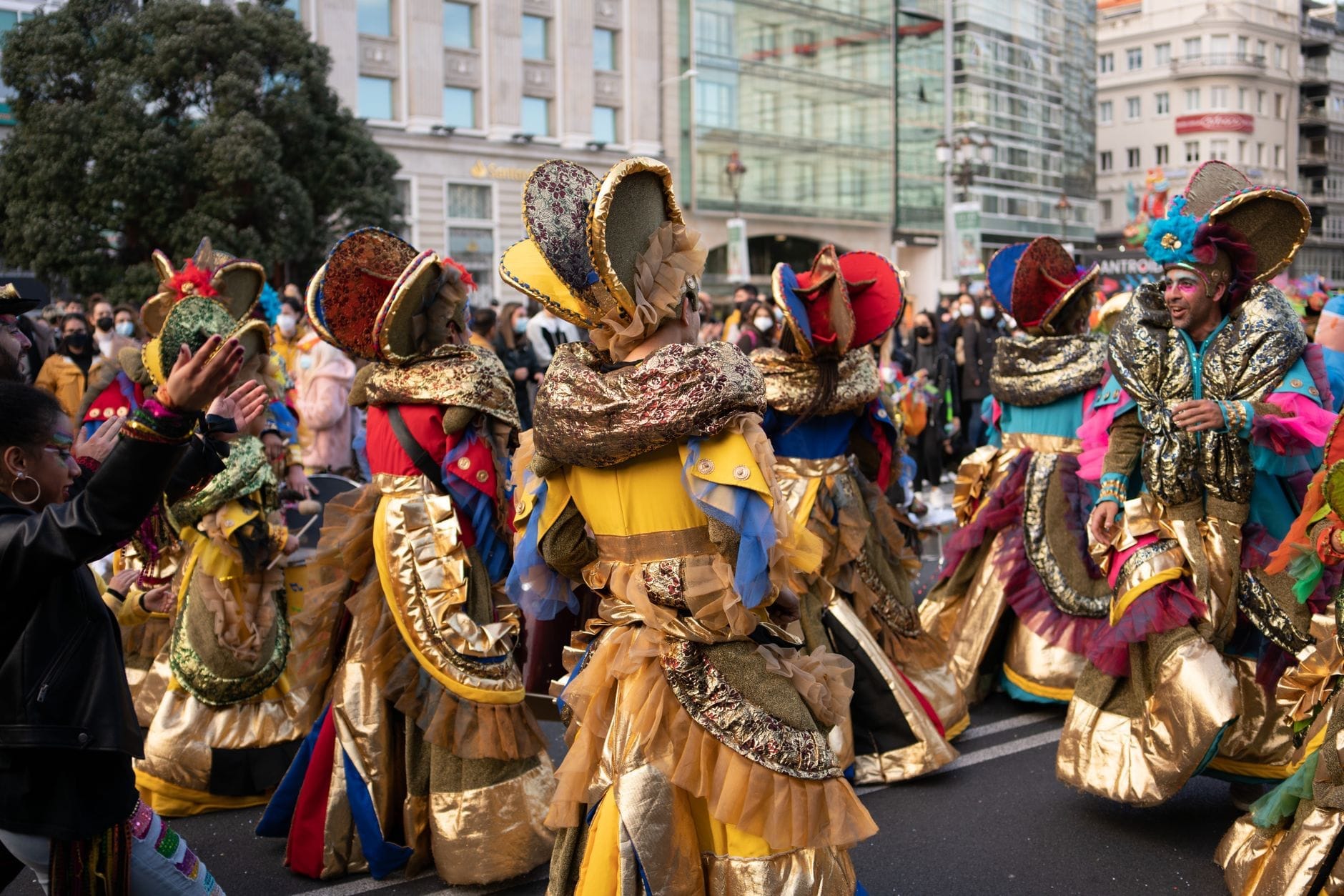
The carnival is anchored to the Catholic calendar, ending before Ash Wednesday. In practice, the full programme spans two weekends in February, with the first weekend marking the official opening and the second weekend containing the biggest street events. The COAC competition at Gran Teatro Falla begins several weeks earlier, in late January or early February depending on the year.
For 2027, traveller guides and tourism sources list core street-carnival dates around 4–14 February. For 2026, official programmes set the main carnival period from Thursday 12 to Sunday 22 February, with key street events concentrated on the weekends within those dates. These dates are set by the Ayuntamiento de Cádiz and the final official programme should always be confirmed directly through municipal channels or the Junta de Andalucía events page before booking anything.
- COAC Competition (Gran Teatro Falla) Begins late January or early February. Ticketed event with multiple heats and finals across all four group categories. Televised nationally. The true beating heart of Cádiz Carnival culture.
- Pre-Carnival Gastronomic Events Free street food events in January and early February — the Pestiñada (pastries, Plaza Fragela), Ostionada (oysters, Plaza San Antonio), Erizada (sea urchin), Mejillonada (mussels), Gambada (shrimp), and Chicharronada (pork crackling) around Plaza de la Catedral and Peña La Perla.
- First Weekend: Official Opening The Pregón (opening speech) marks the official start. Carnival groups begin performing in plazas and on street corners. Fancy dress is common from this point forward.
- Midweek Slightly calmer than the weekends, but still active. Children's carnival events and daytime activities run throughout the week.
- Second Weekend: Peak Carnival The Gran Cabalgata (main parade) and the Coros parade are the highlights. Expect the largest crowds of the entire festival on these two days.
- Closing: Entierro de la Sardina The carnival traditionally ends with the Entierro de la Sardina (Burial of the Sardine) or, in Cádiz, an equivalent closing ceremony. Crowds thin sharply after the final Sunday.
⚠️ What to skip
Multiple non-official travel sites publish carnival date estimates months in advance, and these frequently differ from the final municipal programme. Always confirm dates at cadiz.es or the official Andalucía tourism events listing before booking flights or hotels.
Tickets, Costs, and What's Actually Free
The best news about Cádiz Carnival: the vast majority of it costs nothing. The street performances by chirigotas and other groups, the parades, the plaza parties, the gastronomic events — all free. Cádiz is a working-class city that takes genuine pride in the accessibility of its carnival. You can have a full, memorable experience without buying a single ticket.
The main exception is the COAC at Gran Teatro Falla. Tickets for individual heats and finals are in high demand and sell through the Ayuntamiento de Cádiz and Gran Teatro Falla ticketing systems. Prices vary by category and stage of the competition; check official municipal channels for each edition's pricing when announced. Seats for the finals are the hardest to get and often sell out within hours of going on sale.
✨ Pro tip
If COAC tickets sell out, do not despair. On any carnival evening, you will find unofficial street performances by competing and non-competing groups in Plaza del Tío de la Tiza, around the Barrio La Viña, and in the side streets near Gran Teatro Falla. These spontaneous performances, called 'ilegales', are often as entertaining as the official competition and completely free.
Beyond tickets, budget for food and drink. Carnival in Cádiz runs late — groups perform until 3am or later on weekends — so plan for several rounds of tapas and drinks across the old town. The Cádiz food scene is excellent year-round, but carnival adds extra street stalls and temporary bars to the usual options. The pre-carnival gastronomic events offer free tastings of local seafood, which helps offset costs.
Costumes, Culture, and How to Participate
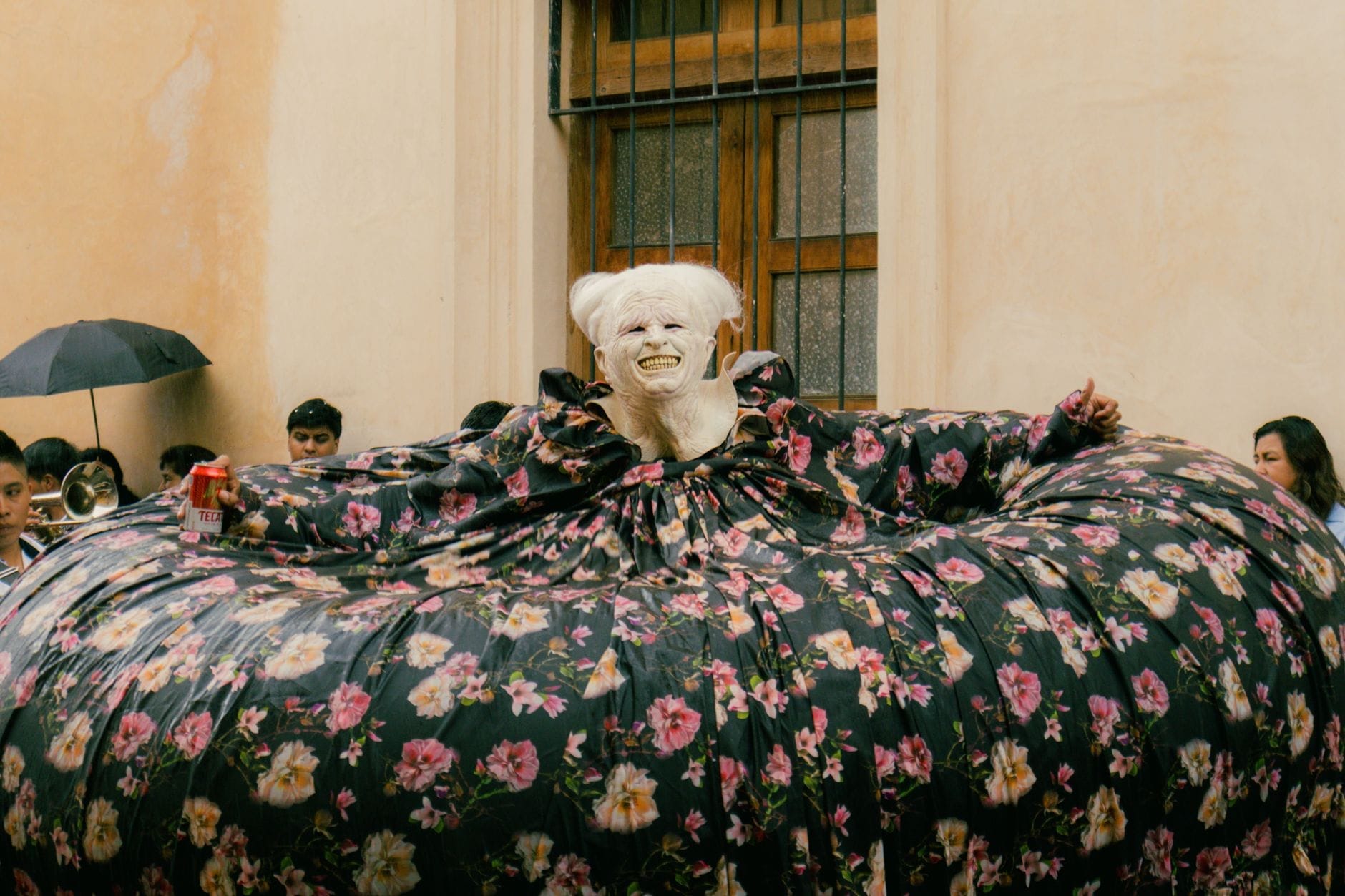
Fancy dress is not obligatory, but the expectation in Cádiz is stronger than at most carnivals. On the main parade days and the first Saturday, the majority of people on the streets are in costume. Groups of friends and families plan matching themed outfits, called 'tipos', months in advance. Walking around in ordinary clothes on the busiest days will make you feel conspicuous in a way that wearing a simple costume will not.
Costumes range from elaborate group themes requiring custom-made outfits to simple wigs and face paint bought from the many street vendors that set up around the old town in the days before carnival. If you want to go beyond the basics, costume shops in Cádiz and online Spanish retailers start stocking Carnival items from December. Locals plan months ahead, so if you want something specific, do the same.
The neighbourhood most associated with carnival participation is Barrio La Viña, the traditional working-class quarter behind the cathedral. Many of the most respected carnival groups originate here, and the neighbourhood has the highest concentration of street performances and informal gatherings during festival days. If you want to find the most authentic corner of the carnival, head to La Viña on a Friday or Saturday evening.
Logistics: Getting There, Getting Around, and Where to Stay

Cádiz sits at the end of a narrow Atlantic peninsula, which creates a natural bottleneck during carnival. The city's population of around 114,000 swells enormously on peak weekend days. Roads onto the peninsula back up badly; private cars are impractical and parking is extremely limited. Train is the best option by a significant margin.
The closest airports are Jerez de la Frontera and Seville. From Seville, regular trains run to Cádiz in approximately 1 hour 45 minutes; from Jerez the journey is around 40 minutes. Both routes deposit you at Cádiz train station on the edge of the old town, within walking distance of most carnival activity. For the broader context of getting to and around the city, the Cádiz to Jerez connection is worth understanding if you are combining stops.
- Book accommodation in the historic centre (Casco Antiguo) or as close as possible — you will be on your feet until late and taxi availability during peak carnival nights is limited.
- Hotels and apartments near the old town sell out 2–4 months before carnival for peak weekend nights. Weekend nights command significant price premiums over weekday stays.
- Arriving mid-week rather than the first Friday gives you slightly lower accommodation prices and easier logistics, while still allowing you to catch the full second weekend.
- Pack layers: February in Cádiz averages mild daytime temperatures but the Atlantic wind off the coast makes evenings feel significantly colder, especially in open plazas.
- Many bars and restaurants operate extended hours during carnival but close unexpectedly when owners join the street celebrations — have backup food options and carry cash.
For detailed neighbourhood-by-neighbourhood accommodation options, the complete Cádiz accommodation guide covers price ranges, proximity to key carnival venues, and what each area feels like during peak season. If you are visiting specifically for carnival but want to explore the city beyond the festival, the Cádiz old town walking tour route works well in the quieter morning hours before carnival activity picks up each day.
Common Mistakes and Honest Caveats
Cádiz Carnival is genuinely special, but a few expectations need calibrating before you go. First, if you do not speak Spanish, you will miss a significant portion of what makes the festival meaningful. The chirigotas perform in Andalusian Spanish, at speed, packed with local slang and current political references. The humour is sharp and contextual. Non-Spanish speakers can still enjoy the spectacle, the atmosphere, and the parades, but they will be watching from the outside of something whose core is linguistic.
Second, peak days in the historic centre are extremely crowded. The narrow streets of the old town were not designed for the volume of visitors that descend on the first and last weekends. Moving between plazas takes much longer than Google Maps suggests. Toilets are scarce. This is not a festival that rewards an itinerary; it rewards wandering, patience, and a willingness to stop wherever something interesting is happening.
💡 Local tip
The midweek days of carnival are significantly less crowded than the weekends and offer a more relaxed way to experience the festival. Groups still perform in the streets, the gastronomic events continue, and you can actually move through the old town without shoulder-to-shoulder crowds. For first-time visitors who find large crowds stressful, arriving on a Tuesday or Wednesday and leaving before the final Saturday is a legitimate strategy.
Finally, carnival is only one part of what Cádiz offers. The city has a genuinely impressive historic core, excellent beaches, and a food culture that deserves more than one rushed evening. If your schedule allows, build in at least one full non-carnival day to see the Cathedral, walk the Torre Tavira viewpoint, and explore El Pópulo, one of the city's oldest quarters. The best time to visit Cádiz guide explains what the city looks like outside of carnival season if you are considering a return trip.
FAQ
When exactly is Cádiz Carnival 2026 and 2027?
Cádiz Carnival is tied to the Catholic calendar and falls in the weeks before Ash Wednesday each February. For 2026, official programmes place the main carnival period from Thursday 12 to Sunday 22 February, with the COAC Grand Final on Friday 13 February and the principal street events over the two intervening weekends. For 2027, guides currently list approximately 4–14 February. Because the final programme is set by the Ayuntamiento de Cádiz, always confirm dates at cadiz.es or the Junta de Andalucía events page before booking.
Do I need tickets for Cádiz Carnival?
Most of the festival is completely free, including all street performances, parades, and gastronomic events. The main ticketed component is the COAC competition at Gran Teatro Falla, where groups compete in the official contest. Tickets are sold through the Ayuntamiento de Cádiz ticketing system and sell out quickly. Check official municipal channels for pricing and on-sale dates for each year's edition.
What is a chirigota and why does it matter?
A chirigota is a small group (typically 10–15 people) who perform original satirical songs in matching costumes. They mock politicians, current events, and local life with sharp, fast humour delivered in Andalusian Spanish. The chirigota is the central art form of Cádiz Carnival and what distinguishes it from other Spanish and European carnivals that focus primarily on parades and costumes.
Is Cádiz Carnival suitable for families with children?
Yes, with some planning. The daytime and early evening programme includes dedicated children's events, costume competitions for kids, and the gastronomic street events which are family-friendly. The late-night street carnival (from midnight onwards on weekends) is adult-oriented and very crowded. Families typically do best arriving in the early evening, enjoying the atmosphere in the plazas, and leaving before the late-night chaos begins.
How far in advance should I book accommodation for Cádiz Carnival?
For peak weekend nights — particularly the first Saturday and the final Saturday of carnival — book at least 2–4 months in advance, ideally earlier. Hotels and apartments in the historic centre sell out first. Midweek nights are easier to secure but still benefit from advance booking. Prices for carnival weekends are significantly higher than normal February rates.