Gran Teatro Falla: Cádiz's Grand Stage and Carnival Heartbeat
The Gran Teatro Falla is Cádiz's principal performance venue, a striking neo-Mudéjar brick building that has anchored the city's cultural life since 1910. Best known internationally as the venue for the Cádiz Carnival competitions, it also hosts opera, theatre, and concerts throughout the year.
Quick Facts
- Location
- Plaza Fragela s/n, 11003 Cádiz (Old Town / Centro Histórico)
- Getting There
- Walkable from most Old Town hotels; city buses stop within a short walk. No metro in Cádiz.
- Time Needed
- 15–20 min to see the exterior; 2–3 hours for a full performance
- Cost
- Exterior: free. Performance tickets vary by event — check the official programme for prices in EUR
- Best for
- Architecture lovers, Carnival visitors, theatre and opera fans, cultural travellers
- Official website
- http://laciudad.cadiz.es/programacion-gran-teatro-falla.asp
What Is the Gran Teatro Falla?
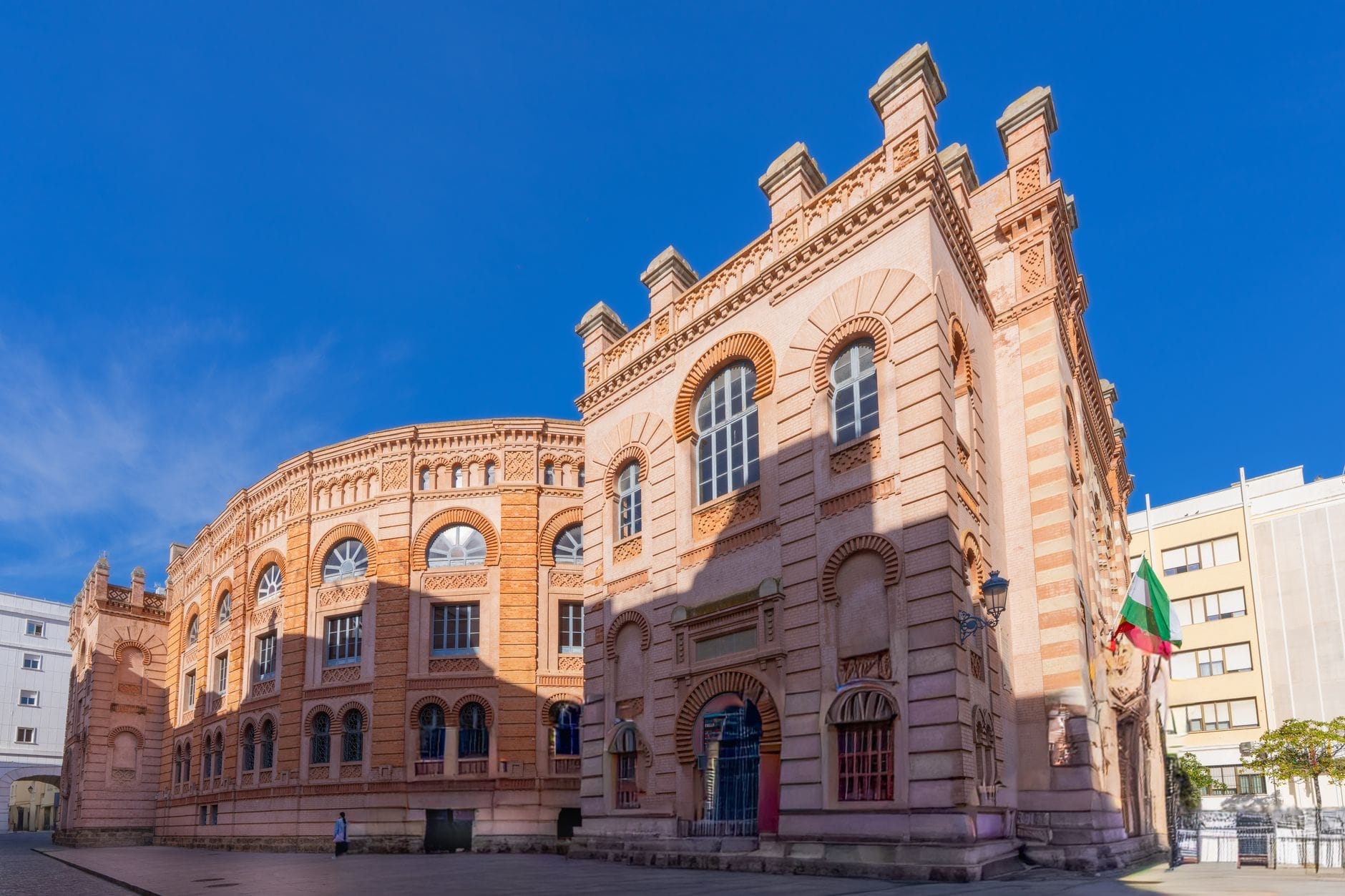
The Gran Teatro Falla is Cádiz's main civic theatre, a 1,214-seat performance hall that sits on Plaza Fragela in the historic core of the city. Its exterior is impossible to miss: three turreted towers and arched facades built in red brick, following the neo-Mudéjar style that was fashionable in late-19th-century Spanish public architecture. The building is not a museum or a static monument. It is a working theatre, hosting everything from Andalusian opera nights to stand-up comedy, and above all, the legendary competitions of the Cádiz Carnival, which fill the house for weeks each February.
For travellers moving through Cádiz's Old Town, the theatre's facade alone justifies a short detour. But if you time your visit around a performance, you step inside one of the most emotionally charged performance spaces in southern Spain.
History: From Ashes to Neo-Mudéjar Icon
The story of this theatre begins with destruction. A fire in 1881 gutted the original Gran Teatro de Cádiz that had occupied this site, leaving a gap in the city's cultural life that took decades to fill. Construction of the current building began in 1884, but progress was slow. It was not until 1905 that the structure was completed, and the theatre formally opened to the public in 1910 with a performance of Francisco Asenjo Barbieri's opera "Los diamantes de la corona."
In 1926, the theatre was renamed Gran Teatro Falla in honour of Manuel de Falla, the composer born in Cádiz who would become one of the defining figures in 20th-century Spanish classical music. The renaming was both a civic tribute and a cultural statement: Cádiz claiming its most celebrated musical son for posterity.
The neo-Mudéjar style the architects chose draws on Islamic Andalusian architectural motifs filtered through 19th-century Spanish Romanticism. Horseshoe arches, geometric brick patterning, and the distinctive towers give the building a silhouette unlike any other in Cádiz, where most historic structures tend toward baroque or neoclassical forms. If you are interested in how architecture shaped the city's identity across different eras, the Cádiz Cathedral and the Oratorio de San Felipe Neri offer strong contrasts nearby.
Tickets & tours
Hand-picked options from our booking partner. Prices are indicative; availability and final rates are confirmed when you complete your booking.
Historical Roman Cadiz guided walking tour
From 22 €Instant confirmationFree cancellationDay trip to Tarifa, Vejer, and the Bolonia beach from the Cadiz Bay
From 59 €Instant confirmationFree cancellationWinery tour with tasting of three wines in Sanlucar
From 18 €Instant confirmationFree cancellationWinery tour and wine tasting in Chiclana de la Frontera in Cadiz
From 25 €Instant confirmationFree cancellation
The Exterior: What You See from Plaza Fragela
Plaza Fragela is a calm, relatively unhurried square. On a weekday morning, the space fills with local residents crossing between the Old Town and the university faculty of medicine that occupies the adjacent building. There is no ticketing queue, no souvenir kiosk, and no crowd management rope. You can stand directly in front of the main facade and study the brickwork at close range, which rewards attention.
The three towers are the defining element. Each is slightly different in profile, and the brickwork shifts from flat planes to ornamental relief as the eye travels upward. In morning light, the warm red of the brick reads almost orange against a pale sky. In the blue hour before sunset, the same walls turn a deeper terracotta and the arched recesses fall into shadow, producing the kind of image that works particularly well in photography without any special technique required.
💡 Local tip
Photography tip: Position yourself at the far end of Plaza Fragela, near the garden benches, to capture all three towers in a single frame. Late afternoon light from the west strikes the main facade directly. The surrounding trees provide natural framing without blocking the towers.
Attending a Performance: The Interior Experience
The auditorium seats approximately 1,214 people across stalls, boxes, dress circle, and upper gallery. The stage is substantial, with dimensions that allow full opera and theatrical productions without compromise. The interior decoration follows the same Mudéjar vocabulary as the exterior, with ornamental detail on the boxes and ceiling that rewards an unhurried look before the performance begins.
Sound behaviour in the auditorium is generally praised. Voices carry cleanly to the upper gallery, and the design ensures that even seats in the side boxes retain good sightlines to the stage. That said, the upper gallery can feel warm in summer, so lightweight clothing is advisable for evening performances between June and September.
The annual programme spans classical concerts, theatrical productions, flamenco, and comedy. For visitors with a particular interest in flamenco's place in Cádiz culture, the Cádiz flamenco guide explains how the art form is embedded in the city's neighbourhoods as well as its formal stages.
ℹ️ Good to know
Box office hours: Tuesday to Friday, 10:30–13:30 and 17:30–20:00. Saturdays, Sundays, Mondays, and public holidays: one hour before the performance only. The box office closes during official Carnival week and Holy Week. From mid-February and from late June to late August 2026, morning-only hours apply (Tuesday–Friday, 10:30–13:30). Always check the official programme before visiting, as schedules change.
Carnival at the Falla: The Event That Defines the Theatre
If there is one context in which the Gran Teatro Falla becomes genuinely irreplaceable, it is the Cádiz Carnival. Every February, the theatre hosts the official competition rounds, where choral groups called chirigotas, comparsas, coros, and cuartetos compete across several weeks of evening sessions. The Carnival of Cádiz is not a parade-and-costume event in the conventional tourist sense. At its core, it is a tradition of satirical sung poetry, and the Falla is where that competition reaches its most formal and intensely contested expression.
The atmosphere during Carnival rounds is unlike any other theatrical event in Spain. The audience participates actively: groups have dedicated fans who follow them through every round, and the house reacts in real time to each verse, each punchline, each musical flourish. Tickets for the semifinal and final rounds sell out quickly. If attending is a priority, plan well in advance.
For a full account of timing, ticket strategy, and what to expect across the Carnival period, the Cádiz Carnival guide covers the competition structure and the street festivities that run parallel to the Falla rounds. The neighbourhood of La Viña immediately south of the theatre is the traditional heartland of Carnival culture in the city.
⚠️ What to skip
The box office closes entirely during official Carnival week. Tickets for competition rounds must be purchased in advance through the official programme or authorised vendors. Do not expect walk-up availability for popular sessions.
Practical Visit Information
The theatre sits on Plaza Fragela, also referenced as Plaza del Falla, at postcode 11003 Cádiz. It is a short walk from the main pedestrian spine of the Old Town and easily reachable on foot from most accommodation within the historic centre. Cádiz does not have a metro system; city buses serve the Old Town but the compact size of the peninsula means walking is the default for most visitors.
The building is stated to comply with Andalusian regional disability access legislation (Ley 4/2017 de 25 de septiembre), meaning adaptations for visitors with mobility needs are in place. If you have specific access requirements, contact the box office directly before attending a performance to confirm arrangements.
Ticket prices are event-specific and are not published as a fixed tariff. Current listings and online ticket links are maintained on the Ayuntamiento de Cádiz's official programme page. For context on when to plan a broader Cádiz visit around cultural events, the best time to visit Cádiz guide covers the seasonal calendar in detail.
Who Should Skip This Attraction
Travellers who are in Cádiz for a single day focused on beaches and sea views will find the theatre's exterior worth a glance but may not have time or inclination to attend a performance. The building does not offer general interior access outside of scheduled events, so visitors expecting to walk through the auditorium freely will be disappointed. There are no permanent exhibits, no guided tours listed in public sources, and no café or interpretive centre attached to the venue.
The Carnival competition sessions are conducted entirely in Spanish, with local dialect, slang, and topical political references at the centre of the humour. Non-Spanish speakers attending these events will appreciate the spectacle of the performance but will miss most of the lyrical content, which is where the real artistry lies. For a general theatrical performance in opera or classical music, the language barrier is less relevant.
Insider Tips
- The side streets flanking Plaza Fragela see very little tourist traffic even in peak season. Walking around the full perimeter of the building takes under five minutes and reveals brickwork detail on the side and rear facades that most visitors never see.
- For Carnival competition tickets, follow the official Ayuntamiento de Cádiz programming announcements from November onward. Popular rounds sell out within hours of tickets going on sale, and secondary market prices climb sharply.
- If you attend an evening performance in summer, the upper gallery can become uncomfortable in the second half. A small handheld fan, which is sold widely in Old Town shops, is worth carrying.
- The box office operates morning-only hours from late June through late August 2026. If you want to buy in person during summer, arrive before 13:30 Tuesday to Friday or you will find it closed regardless of the advertised evening hours.
- Plaza Fragela has benches and shade, making it a reasonable rest stop between the Parque Genovés and the Old Town centre. The square is calm enough at midday that you can sit and observe the theatre facade without any commercial pressure.
Who Is Gran Teatro Falla For?
- Architecture enthusiasts interested in neo-Mudéjar design and 19th-century Spanish public buildings
- Visitors timing their trip around the Cádiz Carnival who want to attend the official competition rounds
- Travellers with an interest in Spanish classical music and the legacy of Manuel de Falla
- Theatre and opera attendees looking for a distinctive venue outside the major Spanish capitals
- Anyone doing a thorough walking tour of the Old Town who wants to understand how civic culture shaped the city's built environment
Nearby Attractions
Other things to see while in Centro Histórico (Old Town):
- Alameda Apodaca
Alameda Apodaca is a protected Romantic-era promenade running along the northern sea wall of Cádiz's old town. Free, open at all hours, and overlooking the Bay of Cádiz, it offers one of the most atmospheric walks in the city — with very little effort required.
- Antiguo Hospital de Mujeres
Founded in 1677 and rebuilt in grand 18th-century baroque style, the Antiguo Hospital de Mujeres is one of Cádiz's most architecturally significant buildings. Today it is managed as a visitable monument linked to the Diocese of Cádiz y Ceuta, opening its twin patios and chapel to visitors for a modest entry fee, offering a rare glimpse into the city's golden-age ambitions.
- Ayuntamiento de Cádiz (City Hall)
The Ayuntamiento de Cádiz stands as one of the most photographed facades in Andalusia's oldest provincial capital. Begun in 1799 and shaped by two distinct architectural phases, it anchors the central plaza of Cádiz's historic core and speaks directly to the city's 19th-century ambitions. This guide covers what to see, when to go, and how the building fits into a walk through the old town.
- Calle Ancha
Calle Ancha cuts through the historic center of Cádiz as its widest and most storied street. Free to walk at any hour, it offers a concentrated dose of Baroque architecture, political history, and the kind of unhurried street life that defines this Atlantic city.