Where to Stay in Cádiz: Best Areas & Hotels Guide
Choosing where to stay in Cádiz Spain shapes your entire trip. This guide breaks down the city's main accommodation zones, names specific hotels with honest price context, and tells you exactly when to book and what to avoid.
Plan and book this trip
Tools from our partner Travelpayouts help you compare flights and hotels. If you book through them, we may earn a commission at no extra cost to you.
Flights
Hotels map
TL;DR
- The Old Town (Casco Histórico) is the top choice for first-timers: central, walkable, and full of character. See the Cádiz Old Town walking tour guide for what's within reach on foot.
- Playa de la Victoria suits families and sun-seekers who want modern hotels and direct beach access without sacrificing city proximity.
- Cádiz is compact: the Old Town and main beaches are connected by promenade and city bus, so no area leaves you stranded.
- Book well ahead for summer (June–September) and Carnival: occupancy spikes sharply and prices follow.
- Mid-range boutique hotels in the historic centre typically run €100–€200 per night; expect more for seafront 4-star properties in peak season.
Understanding Cádiz's Layout Before You Book

Cádiz sits on a narrow peninsula jutting into the Atlantic, which means the city is more compressed than most Spanish provincial capitals. With a population of around 115,000, it's not a sprawling metropolis. The historic centre, the main beaches, and the train station are all within roughly 3–4 kilometres of each other. That compactness is a genuine advantage when choosing accommodation: there's no "wrong" side of town in the way there might be in Seville or Málaga.
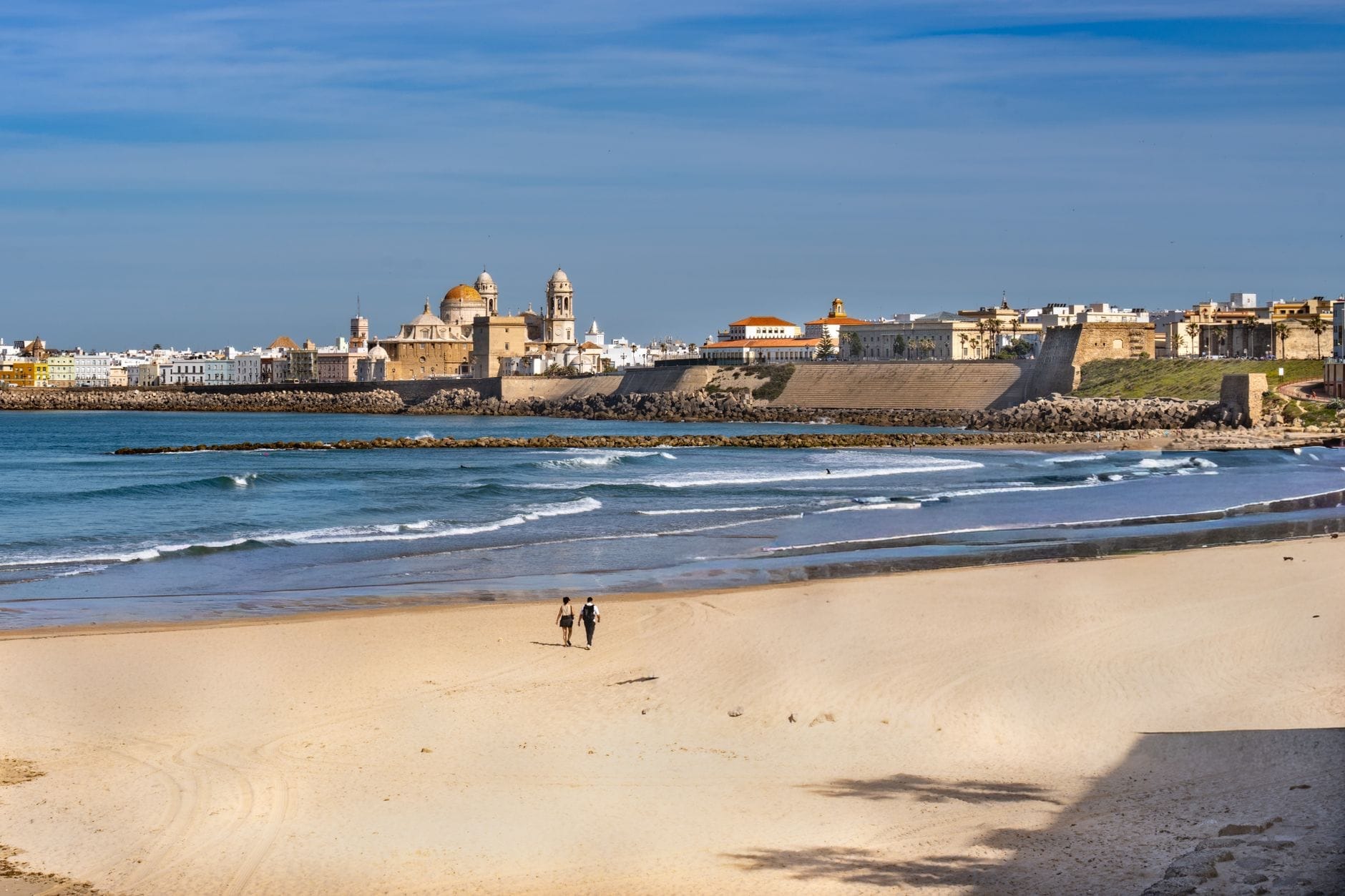
The city divides naturally into two lodging zones. The first is the historic centre, which includes the ancient quarters of El Pópulo, La Viña, and Santa María. The second is the modern seafront strip around Playa de la Victoria, which runs along the Atlantic side of the peninsula. Both have merit, and they're closer together than most visitors expect.
ℹ️ Good to know
A common misconception: beachfront hotels are not far from the Old Town. Playa de la Victoria and the historic centre are connected by the Paseo Marítimo and a city bus service. You don't have to choose between history and beaches — in Cádiz, you can have both from either base.
Staying in the Old Town: Character, Convenience, and Crowds

The Casco Histórico is where most first-time visitors to Cádiz Spain want to be, and for good reason. Staying here puts you within walking distance of the Cádiz Cathedral, the Torre Tavira, the Mercado Central de Abastos, and a dense concentration of tapas bars. Evenings here are social and lively, especially around Plaza San Juan de Dios and the waterfront promenades.
Hotels in the Old Town range from small heritage guesthouses to polished boutique properties. Street noise is a real consideration: the historic centre's narrow calles carry sound, and rooms facing busy plazas can be noisy until late. Always ask for an interior room or one on a quieter side street if you're a light sleeper.
- Hotel Argantonio A small, traditionally decorated hotel tucked into the Old Town, usually priced lower than larger seafront properties. Ideal for travellers who want atmosphere over amenities.
- Hotel Casa de las Cuatro Torres A restored 17th-century townhouse with port views, typically in the €100–€180 per night range. One of the more distinctive stays in Cádiz for history enthusiasts.
- Hotel Olom A boutique option near the Cathedral with a rooftop pool — a real bonus in summer. Expect to pay around €120–€200 per night depending on season.
⚠️ What to skip
Parking in the Old Town is extremely limited and expensive. If you're arriving by car, factor in the cost of a nearby car park or consider dropping luggage before parking outside the historic centre. Most Old Town hotels cannot provide on-site parking.
Staying by the Beach: Playa de la Victoria and the Seafront Strip

The Atlantic-facing side of the peninsula, centred on Playa de la Victoria, is where you'll find Cádiz's modern hotel infrastructure. This is the zone that works best for families, longer stays, and anyone who wants to spend significant time at the beach without commuting back across the city.
The seafront strip is more functional than characterful. Streets are wider, buildings are newer, and the atmosphere is closer to a Spanish resort town than a historic Andalusian city. That's not a criticism — it's just the honest trade-off. You get more space, easier parking, and often better hotel facilities (pools, larger rooms, fitness centres), but you'll travel to reach the most historically interesting parts of the city.
- Parador de Cádiz The flagship property on the seafront, a contemporary 4-star parador near Parque Genovés with a pool and Atlantic views. Rates typically start around €150–€250 per night and rise steeply in July and August. Worth it for the location and facilities.
- Hotel Monte Puertatierra A modern hotel positioned between the historic centre and the beach zone, usually mid-range priced. A practical compromise for travellers who want both worlds without paying premium Old Town rates.
✨ Pro tip
The Paseo Marítimo connects the Victoria beach strip to the Old Town on foot in around 20–25 minutes. The Paseo Marítimo connects the Victoria beach strip to the Old Town on foot in around 20–25 minutes. Walking it at sunset is one of the better free experiences in Cádiz. If your hotel is on the seafront, build that walk into your first evening. If your hotel is on the seafront, build that walk into your first evening.
Which Area Is Right for You? An Honest Comparison
The choice between the Old Town and the beachfront comes down to what you want to prioritise, not to any significant difference in convenience. Cádiz is small enough that both areas are viable bases for any itinerary.
- Old Town: best for First-time visitors, short stays (1–3 nights), culture-focused trips, travellers without a car, Carnival attendees. You'll walk everywhere, eat better, and absorb more of what makes Cádiz distinctive.
- Playa de la Victoria area: best for Families with young children, beach holiday stays of 4+ nights, travellers arriving by car, and anyone who wants larger hotel rooms with better facilities. Less atmosphere, more practicality.
- Boutique and design hotels: not just the Old Town It's worth knowing that characterful accommodation isn't confined to the historic centre. Several boutique and design-led properties exist along the seafront and in transition areas between the two zones.
If you have two full days in the city, the Old Town base is almost always the better call. The guide to spending 2 days in Cádiz assumes an Old Town base precisely because the concentration of sights, food, and atmosphere is highest there. For longer stays or family trips, the beachfront strip earns its place.
When to Book and What Prices to Expect
Seasonal timing matters more in Cádiz than in many comparable Andalusian cities. The best time to visit Cádiz for accommodation value is April to early June and September to October. Temperatures in those windows are comfortable (roughly 19–26°C during the day), crowds are manageable, and hotel rates are meaningfully lower than in peak summer.
June through September is peak season. Daytime temperatures regularly reach 24–30°C, the city fills with Spanish domestic tourists alongside international visitors, and rates at well-regarded hotels can double compared to spring. The Parador, in particular, reaches its highest prices in July and August. Book at least 6–8 weeks ahead for summer stays; 10–12 weeks is safer for seafront properties.
The other time to book extremely early is during Cádiz Carnival, which takes place in February or early March depending on the year. Carnival is one of the largest and most celebrated in Spain, and accommodation across the entire city sells out months in advance. Arriving without a reservation during Carnival is not a viable strategy.
💡 Local tip
For Carnival bookings, aim to reserve at least 3–4 months ahead, and accept that prices will be significantly higher than normal February rates. Hostels and smaller guesthouses fill up before the larger hotels, so don't assume budget options will remain available.
Practical Booking Advice and Getting to Your Hotel

Cádiz does not have its own commercial airport. The two nearest options are Jerez de la Frontera airport (the closer of the two) and Seville airport. From either, the most practical onward connection to Cádiz is by train or bus. Direct rail services connect Seville and Jerez to Cádiz station, which sits at the edge of the historic centre and within walking distance of most Old Town hotels.
The train station's location is a genuine asset: arriving by rail from Seville or Jerez, you step out almost directly into the historic centre. If you're driving, note that the Old Town's narrow medieval streets were not designed for cars. Most visitors park at the edges of the historic centre or in one of the paid car parks near Puertas de Tierra and walk in. Seafront hotels generally have better access for drivers.
Most nationalities can enter Spain without a visa for stays of up to 90 days within the Schengen Area. Spain uses the Euro (EUR). For more logistical context on the city, the broader things to do in Cádiz guide covers transport, neighbourhoods, and day trip options including the popular Cádiz to Jerez day trip.
FAQ
What is the best area to stay in Cádiz for first-time visitors?
The historic centre (Casco Histórico) is the most practical and rewarding base for first visits. It's compact, walkable, and within easy reach of the city's main sights, markets, and restaurants. The quarters of El Pópulo, La Viña, and around the Cathedral are all strong options within the Old Town.
Are hotels in Cádiz expensive?
Prices vary significantly by season. Boutique hotels in the Old Town typically run €100–€200 per night; the Parador de Cádiz on the seafront can exceed €250 in peak summer. Spring and autumn offer better value, with the same hotels often 30–50% cheaper than their July and August rates.
How far is Cádiz from Seville, and is it worth doing as a day trip?
Cádiz is roughly 120 km from Seville by road, with direct trains taking around 1 hour 40 minutes to 2 hours. Many visitors do make it a day trip from Seville, but staying overnight in Cádiz allows you to see the city at its most atmospheric — early morning and evening, when day-trippers have left.
When should I book accommodation in Cádiz?
For summer (June–August), book 6–10 weeks in advance. For Carnival (February/March), book 3–4 months ahead as the entire city sells out. Spring and autumn are more flexible, but boutique properties with limited rooms can still fill up on weekends.
Is it better to stay near the beach or in the Old Town in Cádiz?
For most travellers, the Old Town wins for atmosphere and convenience on shorter trips. The beachfront area around Playa de la Victoria makes more sense for families or longer beach-focused stays. Importantly, Cádiz is compact enough that neither location cuts you off from the other — the two zones are connected by a coastal promenade walkable in around 20–25 minutes.