Cádiz in Summer: What to Expect in July & August
July and August bring relentless sun, warm Atlantic waters, and peak crowds to Cádiz, Spain. This guide breaks down the climate realities, the best beaches, how to handle the heat, and whether summer is actually the right time for your trip.
Plan and book this trip
Tools from our partner Travelpayouts help you compare flights and hotels. If you book through them, we may earn a commission at no extra cost to you.
Flights
Hotels map
TL;DR
- July and August are hot and completely dry in Cádiz, with daytime highs around 28–29°C and virtually zero rainfall.
- The Atlantic coastline keeps Cádiz significantly cooler than inland Andalusia — expect sea breezes and swimmable 22–23°C water at Playa de la Caleta and Playa de la Victoria.
- Summer is peak season: accommodation prices rise, the old town fills with visitors, and early booking is essential.
- If you prefer fewer crowds and milder temperatures, April–June and September–October are better windows — see our best time to visit Cádiz guide for a full comparison.
- Midday heat (12:00–16:00) is best spent indoors or at the beach with serious sun protection; UV levels peak in August.
The Summer Climate: What the Numbers Actually Mean
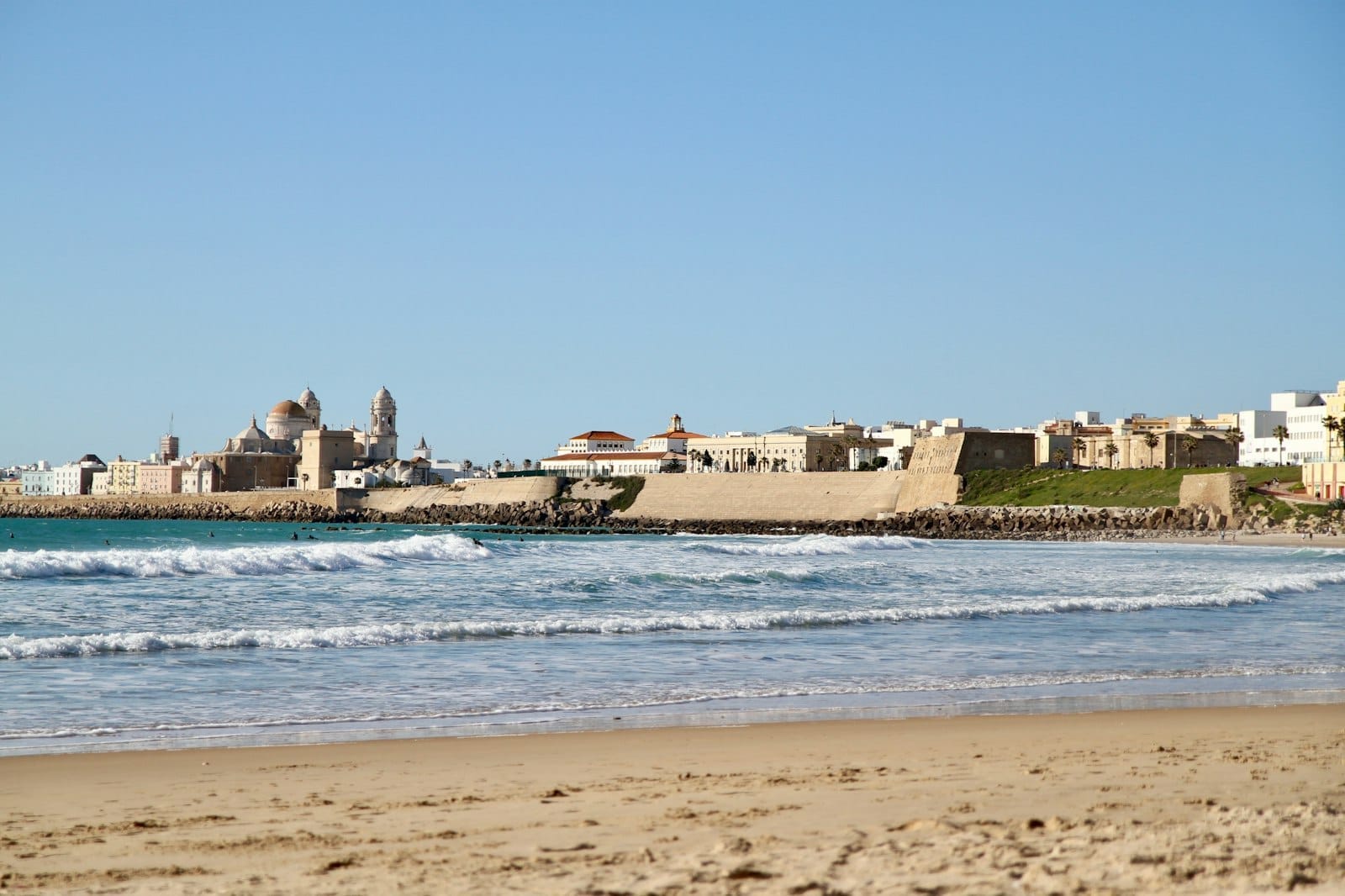
Cádiz in summer is defined by two things: relentless sunshine and Atlantic breezes that stop temperatures from becoming unbearable. July averages around 25°C overall, with daytime highs of 28–29°C and overnight lows hovering near 21°C. August is typically the hottest month, nudging highs closer to 29–30°C, though the Atlantic location prevents the extreme spikes you see inland. Compare this to Seville or Córdoba, which regularly hit 38–42°C in July, and the difference is significant. Cádiz is a coastal city on a narrow peninsula, and the sea moderates everything.
Rainfall in July and August is essentially zero. Weather records show an average of 0 mm across both months, with no meaningful rainy days. You can plan outdoor activities without any weather contingency. Sunshine hours are exceptional: July averages around 14 hours of sunlight per day, which means long evenings and golden-hour light that stretches past 21:00. The sea temperature reaches 22°C in July and 23°C in August, warmer than many expect from the Atlantic.
⚠️ What to skip
UV levels are classified as 'high' through August. Factor 30+ sunscreen, a hat, and sunglasses are not optional if you're spending time at the beach or walking the old town. Midday sun between 12:00 and 16:00 is intense — locals avoid prolonged outdoor exposure during this window.
One consistent feature of Cádiz summers that surprises first-time visitors is the wind. The Levante and Poniente winds blow off the Atlantic with some regularity, creating a natural cooling effect that makes 29°C feel far more tolerable than the same temperature in a still, inland environment. This same wind can make some beaches choppy at times, but it also keeps the air fresh and prevents the oppressive humidity you get in other coastal regions.
Beaches in Summer: Where to Go and What to Expect
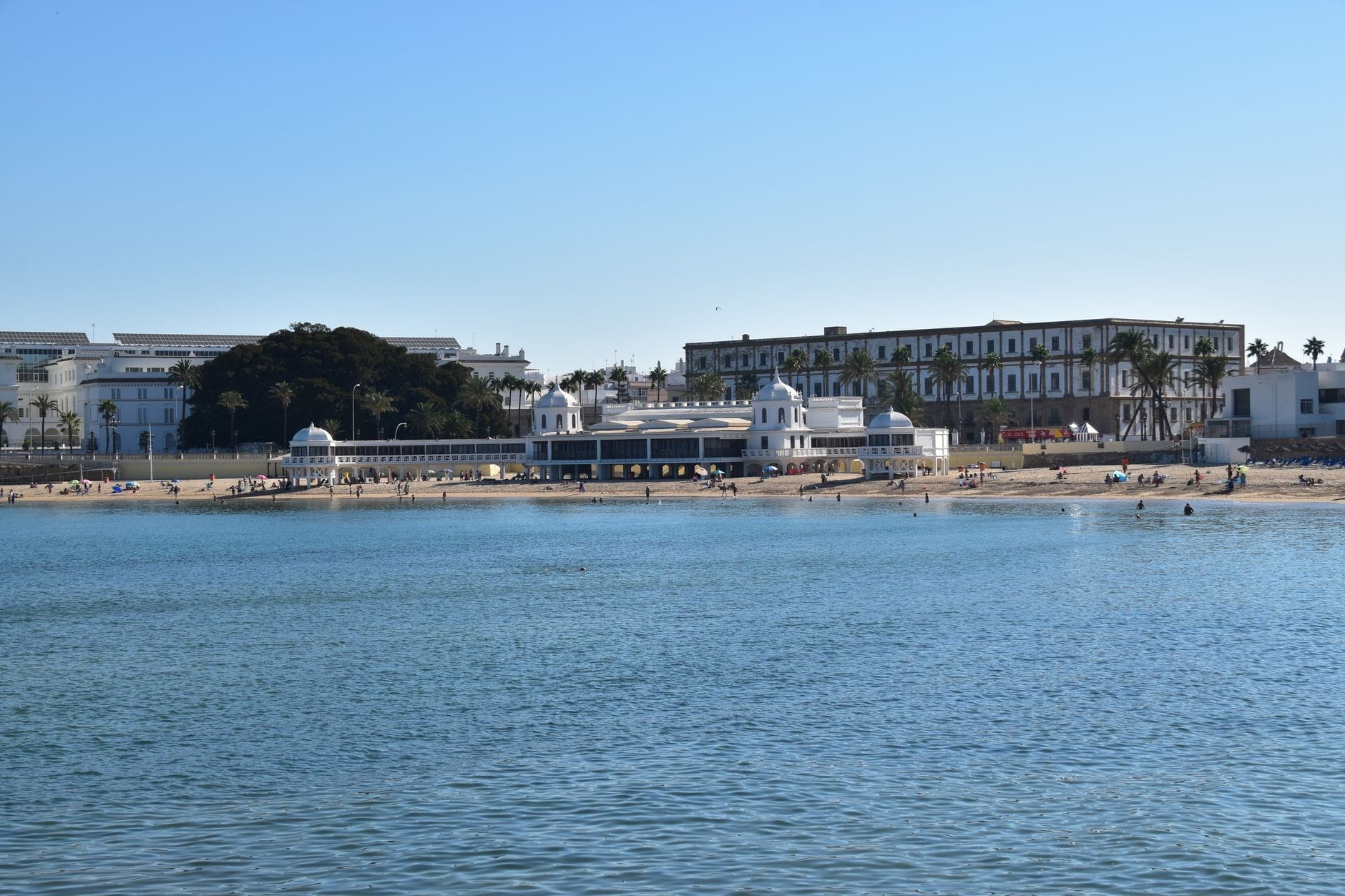
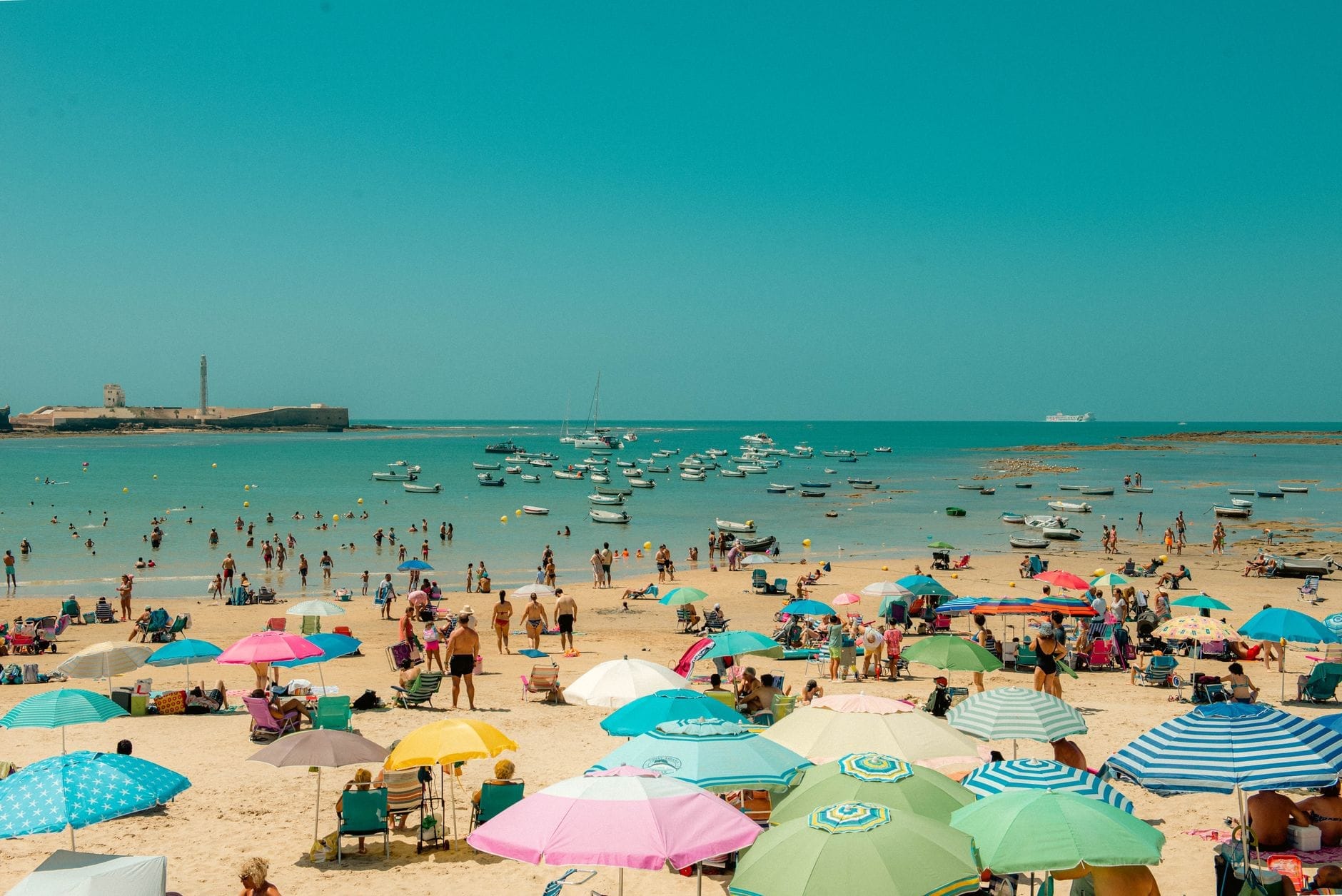
Beaches are the central draw in summer, and Cádiz has two very different options. Playa de la CaletaBeaches are the central draw in summer, and Cádiz has two very different options. Playa de la Caleta sits inside the old town, framed by two historic castles. It's compact, atmospheric, and enormously popular with locals and visitors alike. In July and August, it fills up fast — by 11:00 on a weekend, finding a spot is a competitive exercise. Go early (before 10:00) or arrive in the evening when the light is spectacular and the crowds thin slightly.
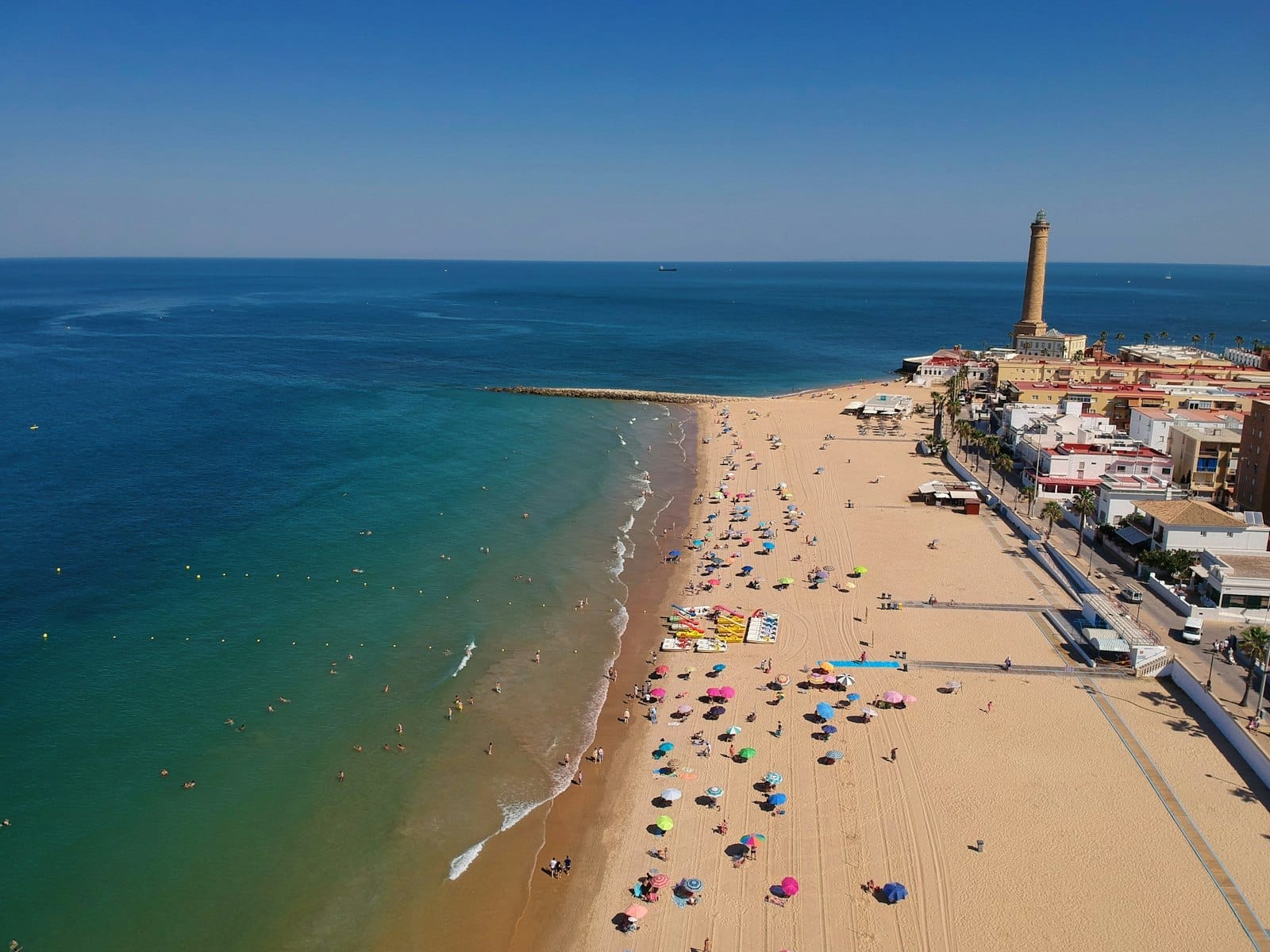
For more space, Playa de la Victoria stretches for several kilometres along the newer part of the city. It's broader, better equipped with facilities, and draws a mix of families, younger crowds, and serious sunbathers. It never feels quite as intimate as La Caleta but the extra space makes it more manageable in peak summer. Check our complete Cádiz beaches guide for a detailed breakdown of both and the smaller options in between.
💡 Local tip
Weekday mornings before 10:00 are the best time to visit La Caleta in summer. Spanish families tend to arrive at the beach around midday or later, so early risers get the best spots with minimal competition.
Crowds, Costs, and the Reality of Peak Season
July and August are unambiguously peak season in Cádiz. The city has a permanent population of around 114,000, and in summer that number swells considerably with Spanish domestic tourists, particularly families from Seville, Madrid, and across Andalusia. International visitors add to the mix, though Cádiz draws fewer package-holiday crowds than the Costa del Sol, which means the atmosphere stays more authentically Andalusian even in high season.
The practical consequences of peak season are real. Accommodation prices rise significantly compared to spring or autumn, and the best options book out weeks or months in advance. Budget hotels and rental apartments near the old town or La Caleta fill up fastest. If you're travelling in August specifically, booking at least 6–8 weeks ahead is sensible, and earlier if you want any flexibility. Restaurants in the old town get crowded during dinner hours (21:00–23:00), and waits for popular spots are common without a reservation.
- Accommodation Expect summer prices 30–50% higher than spring. Book directly or through reliable platforms at least 6 weeks ahead for August. The old town and La Caleta area command a premium.
- Restaurants Book ahead for dinner at any well-reviewed spot. Walk-ins are possible early (20:00) or late (23:00+), but the 21:00–22:30 slot fills fast in peak weeks.
- Attractions Major sites like the Catedral de Cádiz and Torre Tavira can develop queues mid-morning. Arriving at opening time (typically 10:00) or after 17:00 saves waiting.
- Beaches Playa de la Caleta reaches capacity by midday on weekends. Playa de la Victoria offers more breathing room but also gets genuinely busy in August.
What to Do During the Summer Heat
The key to enjoying summer in Cádiz is adapting to the local rhythm rather than fighting it. The city operates on a schedule that makes complete sense climatically: mornings are for activity, the midday hours (roughly 13:00–17:00) are for eating, resting, or sheltering indoors, and late afternoons through evenings are when the city really comes alive again. This is not laziness — it's practical intelligence about the heat. Use the cooler morning hours for the old town walking tour and save beach time for late morning or late afternoon when the sun angle drops.
The Mercado Central de Abastos is one of the best midday refuges in the city. The covered market stays relatively cool, the atmosphere is local and unpretentious, and the fresh seafood on display tells you exactly what to order for lunch at one of the market bars. It typically operates in the morning until around 14:00–15:00, so plan accordingly.
Indoors, the Museo de Cádiz and the Catedral de Cádiz provide air-conditioned relief while delivering genuine historical and architectural depth. The Torre Tavira, with its camera obscura, is worth doing in the morning heat since the climb is short and the views across the city are excellent. For the evenings, the Paseo Marítimo becomes a natural gathering place after sunset, with families, cyclists, and everyone else taking advantage of the cooler air.
✨ Pro tip
Cádiz's narrow old town streets offer significant shade even at midday — the urban layout was designed for exactly this climate. Staying inside the historic core during peak heat hours is far more comfortable than being on open ground near the beaches or newer districts.
Summer Food, Drink, and Evening Culture
Summer is a strong season for Cádiz's food culture. The Cádiz food scene revolves around fresh seafood year-round, but summer produces particularly good chipirones (small squid), ortiguillas (sea anemones, a local specialty), and the ubiquitous pescaíto frito — small fried fish eaten from paper cones, often standing up. The neighbourhood of La Viña is the place to find unpretentious bars serving exactly this kind of food, and it gets lively in summer evenings.
Fino and manzanilla sherries are the local aperitif, served very cold and well-suited to hot weather. A small glass typically costs around 1.50–2.50 EUR at a local bar. The combination of cold sherry and fried anchovies in the shade is one of those genuinely good experiences that Cádiz delivers reliably in summer.
- Eat dinner late: kitchens typically open at 20:30–21:00 and the best atmosphere builds after 21:30.
- Book restaurant tables at least a day ahead for weekends in July and August.
- Bar El Faro, La Marea, and the bars inside and around the Mercado Central are consistently reliable without being tourist traps.
- Avoid restaurants with picture menus and English-language touts on Plaza de San Juan de Dios — quality and value drop sharply in these spots.
- Tinto de verano (red wine with lemon soda) is lighter and cheaper than sangria, and locals actually drink it.
Getting to Cádiz in Summer and Getting Around
Cádiz does not have its own commercial airport. The two practical options are Jerez de la Frontera Airport (the closer of the two) and Seville Airport (larger, with more international connections). From Jerez, the combination of taxi or bus to Jerez station and then a RENFE train to Cádiz works well and takes under an hour total. From Seville, RENFE runs regular services direct to Cádiz with a journey time of around 1.5–2 hours depending on the service. In summer, train services fill up on Friday afternoons and Sunday evenings, so booking tickets in advance through the RENFE website is advisable.
Within Cádiz itself, the old town is compact enough that walking is the primary mode of transport for most visitors. The narrow streets are not suited to cars in any case. Urban buses cover the newer districts including the Playa de la Victoria area. The Bay of Cádiz catamaran ferry connects the city with El Puerto de Santa María and Rota, which can be useful for day trips or for visitors arriving from those towns. Summer ferry schedules are managed by the Consorcio de Transportes Bahía de Cádiz. Bicycle rental is available and the flat terrain around the Paseo Marítimo and towards Playa de la Victoria is well-suited to cycling.
ℹ️ Good to know
Cádiz operates on Central European Summer Time (CEST, UTC+2) during July and August. Spain's emergency number is 112. Most nationalities from outside the EU can enter Spain visa-free for up to 90 days within the Schengen Area, but always verify the current requirements for your nationality before travelling.
FAQ
Is Cádiz too hot in July and August?
For most visitors, no. Daytime highs in July and August reach around 28–29°C, which is warm but significantly cooler than inland Andalusia. The Atlantic sea breezes make a real difference. That said, if you're sensitive to heat or planning to spend time walking rather than at the beach, April–June or September–October will be more comfortable.
Is the Atlantic Ocean warm enough to swim in Cádiz in summer?
Yes. Sea temperatures reach 22°C in July and 23°C in August, which most people find comfortable for swimming. It's cooler than the Mediterranean, but not cold. The water is also cleaner and clearer than many Mediterranean beach destinations at peak season.
How crowded does Cádiz get in July and August?
It gets genuinely busy, particularly in August when Spanish domestic tourism peaks. The old town, La Caleta beach, and popular restaurants fill up. It's not overwhelmingly crowded in the way some European beach destinations become, but you'll need to book accommodation and restaurants ahead and adjust expectations for beach space.
What are the best things to do in Cádiz in summer?
Beach mornings at La Caleta or Playa de la Victoria, followed by a long lunch at a market bar, then a siesta or indoor sightseeing during peak heat, and evenings exploring the old town and waterfront. The Torre Tavira, Museo de Cádiz, and cathedral are good daytime alternatives when the heat peaks. Sunset from the city walls or the Paseo Marítimo is consistently excellent in summer.
Should I visit Cádiz in summer or wait for shoulder season?
It depends on your priorities. Summer offers guaranteed sun, warm water, and lively evening atmosphere — it's the best time for a beach-focused trip. Shoulder season (April–June or September–October) gives milder temperatures, lower prices, and significantly fewer people at major sites. If you want a deeper cultural experience of the old town without fighting crowds, shoulder season wins. If you want beach holidays with long evenings, summer delivers.