Plaza de las Flores, Cádiz: The Flower Square Worth Stopping For
Officially named Plaza de Topete but universally known as Plaza de las Flores, this compact square in the heart of Cádiz's old town is where flower vendors, café terraces, and three centuries of architecture converge. It costs nothing to visit, looks best in the morning, and sits within easy walking distance of the cathedral and central market.
Quick Facts
- Location
- Plaza de las Flores, 11005 Cádiz – historic centre, where Calle Columela ends
- Getting There
- On foot from the cathedral (5 min) or Mercado Central de Abastos (3 min); no direct bus stop needed
- Time Needed
- 15–30 minutes to absorb the square; longer if you sit at a café
- Cost
- Free – public square, no tickets required
- Best for
- Morning walks, architecture spotters, photography, combining with a market visit
What Is Plaza de las Flores?
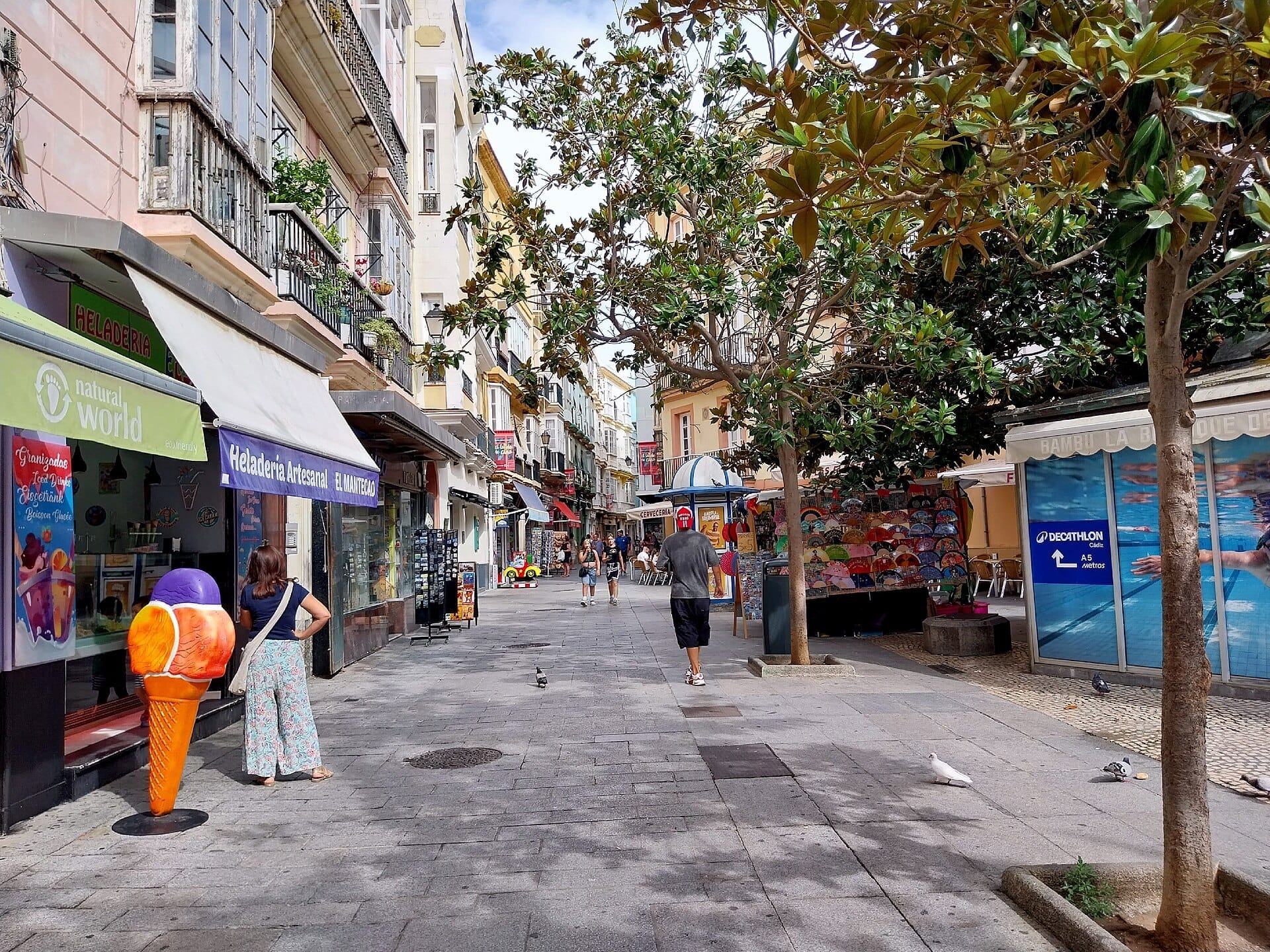
Plaza de las Flores sits at the end of Calle Columela, one of the main pedestrian shopping streets in Cádiz's historic centre. Its official name on maps and street signs is Plaza de Topete, honouring a 19th-century Spanish naval admiral, but nobody in Cádiz calls it that. The informal name comes from the flower stalls that have occupied the square for generations. They are still there, and that detail alone tells you something about how the city relates to this place.
The square is small by Andalusian standards, which works in its favour. It feels like a room rather than a thoroughfare: enclosed on three sides by buildings of genuine architectural interest, open enough for light to pour in from the south. It functions simultaneously as a social meeting point, a commercial node, and an outdoor gallery of Cádiz architectural styles spanning roughly 200 years.
💡 Local tip
Combine this stop with a visit to the Mercado Central de Abastos, a three-minute walk away. Go to the market first (it winds down after noon), then linger at the square over a coffee once the vendors are at full intensity.
The Architecture: Three Buildings Worth Examining
The dominant structure on the square is the former Correos y Telégrafos building, inaugurated in 1930. It occupies the site of the old Convento de los Descalzos, and its construction marked a deliberate break with the surrounding vernacular. The architect chose an eclectic regionalist style: load-bearing brick, arched openings, and surfaces decorated with glazed ceramic tiles in earthy reds and ochres. Next to the pale stone and stucco of the neighbouring buildings, it reads as deliberately theatrical. It now operates as the main post office, and the contrast between its early 20th-century confidence and the quieter Baroque surroundings is part of what makes the square visually interesting.
The building at No. 1, dating from 1746, is a textbook example of Gaditan Baroque. Cádiz developed its own version of the Baroque style during the 18th century, when the city was handling much of Spain's Atlantic trade and the money showed in its architecture: elaborate stone portals, carved balconies, and façades that balance ornament with restraint. The upper floor is particularly well preserved.
At No. 12, look for the work attributed to Torcuato Benjumeda, the Cádiz-born neoclassical architect who also contributed to the city's cathedral and several civic buildings. His signature here is a row of giant Doric pilasters running up the upper body of the façade, a more austere gesture that contrasts with the Baroque neighbour next door. If you are tracking Benjumeda's footprint across the city, this is one of the easier examples to study at close range.
Tickets & tours
Hand-picked options from our booking partner. Prices are indicative; availability and final rates are confirmed when you complete your booking.
Historical Roman Cadiz guided walking tour
From 22 €Instant confirmationFree cancellationDay trip to Tarifa, Vejer, and the Bolonia beach from the Cadiz Bay
From 59 €Instant confirmationFree cancellationWinery tour with tasting of three wines in Sanlucar
From 18 €Instant confirmationFree cancellationWinery tour and wine tasting in Chiclana de la Frontera in Cadiz
From 25 €Instant confirmationFree cancellation
How the Square Changes Through the Day
Early morning, before 9am, the square belongs almost entirely to locals. Delivery vans nudge down the surrounding lanes, café staff set out chairs, and the flower stall vendors begin arranging their stock. The scent at this hour is genuinely noticeable: cut stems, damp soil, and the faint salt edge that follows you everywhere in Cádiz's old town. The light at this time is low and directional, which makes the ceramic details on the post office building glow in a way that photographs well.
From mid-morning to early afternoon, foot traffic picks up significantly as shoppers move between Calle Columela and the market. The square operates as a natural junction. Café terraces fill with people taking a break from errands, and the flower stalls draw a steady stream of buyers, many of them older residents picking up arrangements for the week. This is the most photogenic window if you want the square at full life, though it can feel tight around the stalls.
In the evening, the atmosphere shifts toward socialising. The café chairs fill again for the pre-dinner hour, and the square takes on the unhurried pace that characterises the Cádiz old town after dark. Crowds here are lighter than at larger squares, which many visitors find preferable.
ℹ️ Good to know
The post office (Correos) on the square operates Monday to Friday 08:30–20:30 and Saturday 09:30–13:00, and is closed on Sunday. The square itself has no closing time.
The Flower Stalls: What They Actually Sell
The vendors stock cut flowers, potted plants, and seasonal arrangements. The selection shifts with the time of year: in spring, the display is at its most theatrical, with colours that compete for attention from across the square. In winter, the stalls become more restrained but remain open. These are working market stalls, not decorative props, and prices are aimed at local buyers rather than tourists. If you want to pick up something for an apartment rental or just want a closer look at how Cádiz goes about its daily business, this is a low-key but pleasingly authentic detail.
For context on how outdoor commerce and daily life play out elsewhere in the old town, the Mercado Central de Abastos a few minutes' walk away offers a fuller picture of the city's food and market culture.
Fitting the Square Into a Wider Walk
Plaza de las Flores is not a destination that demands a special journey. Its value is as a component of a longer walk through the old town, and its location makes it an obvious link between several more substantial attractions. The Catedral de Cádiz is roughly five minutes on foot heading south, and the route between them passes through some of the tightest and most evocative lanes in the historic centre.
To the north, Calle Columela connects the square directly to the main commercial grid of the city centre. West of the square, you are within easy reach of Torre Tavira, the highest point in the old town and the place to orient yourself if you want to understand how the historic centre sits on the peninsula. If you are following a structured route, the Cádiz old town walking tour covers Plaza de las Flores as part of a logical sequence through the centre's key stops.
The flat, pedestrianised approach from all main directions makes the square accessible on foot without difficulty. The surface of the square itself is level, with no steps at the main entry points. Anyone travelling with a pram or a wheelchair should find the approach and the square itself manageable, though the narrowness of some surrounding lanes can create friction during busy periods.
Honest Assessment: Who Should Skip This
If you have limited time in Cádiz and are trying to prioritise, Plaza de las Flores should sit in the second tier of your list, not the first. It is not a major monument. It has no museum, no paid experience, and no single sight that rewards a long detour. Travellers whose time is tight and who have not yet seen the cathedral, the Torre Tavira, or the waterfront are better served by those first.
The square is also not ideal for visitors who are primarily here for beaches or outdoor experience. Its appeal is urban and architectural, best appreciated by those who enjoy reading a city through its buildings and daily routines. If that sounds like you, it fits neatly into the broader picture painted by the history of Cádiz, where layers of architectural style track the city's shifting fortunes across three centuries.
Photography Notes
The square photographs best in two windows: early morning, when the low sun catches the ceramic tiles on the post office building and the flower stalls are just being set up with their full colour range; and late afternoon in autumn or winter, when the warm light flattens across the Baroque façade of No. 1 without the hard shadows of a summer midday. Summer midday should be avoided for photography as the overhead light loses all the texture in the stonework.
The square is compact enough that a standard wide-angle lens or a smartphone captures the full scene without difficulty. For architectural detail shots of the post office ceramics or Benjumeda's pilasters at No. 12, a short telephoto focal length or digital zoom works better than standing directly beneath. The flower stalls make strong foreground subjects for compositions that frame the post office building behind them.
Insider Tips
- The flower stalls are busiest and best-stocked on weekday mornings. By early afternoon they begin to pack down, and on Sundays the selection is reduced significantly.
- The post office building is open to the public during its operating hours. Step inside for a moment: the interior retains original early 20th-century postal hall details that are rarely mentioned in visitor guides.
- If you are visiting in February, the square takes on a different character during Cádiz Carnival. Costume groups pass through it as part of their routes through the old town, and the flower stalls sometimes carry carnation arrangements in carnival colours.
- Calle Columela, which ends at the square, is a solid option for picking up quality local ceramics and food products. It is more local-facing than the shops immediately around the cathedral.
- The café chairs on the south side of the square offer a good sightline to both the post office building and the Baroque façade of No. 1 simultaneously. It is the best single spot to sit and read the square as a whole.
Who Is Plaza de las Flores For?
- Architecture enthusiasts interested in Cádiz's Baroque and early 20th-century eclectic styles
- Travellers building a half-day walking route through the historic centre
- Photographers wanting a compact, photogenic scene with local activity
- Visitors combining a morning market run with a coffee stop
- Anyone who wants to experience ordinary Cádiz daily life rather than purely tourist-facing spaces
Nearby Attractions
Other things to see while in Centro Histórico (Old Town):
- Alameda Apodaca
Alameda Apodaca is a protected Romantic-era promenade running along the northern sea wall of Cádiz's old town. Free, open at all hours, and overlooking the Bay of Cádiz, it offers one of the most atmospheric walks in the city — with very little effort required.
- Antiguo Hospital de Mujeres
Founded in 1677 and rebuilt in grand 18th-century baroque style, the Antiguo Hospital de Mujeres is one of Cádiz's most architecturally significant buildings. Today it is managed as a visitable monument linked to the Diocese of Cádiz y Ceuta, opening its twin patios and chapel to visitors for a modest entry fee, offering a rare glimpse into the city's golden-age ambitions.
- Ayuntamiento de Cádiz (City Hall)
The Ayuntamiento de Cádiz stands as one of the most photographed facades in Andalusia's oldest provincial capital. Begun in 1799 and shaped by two distinct architectural phases, it anchors the central plaza of Cádiz's historic core and speaks directly to the city's 19th-century ambitions. This guide covers what to see, when to go, and how the building fits into a walk through the old town.
- Calle Ancha
Calle Ancha cuts through the historic center of Cádiz as its widest and most storied street. Free to walk at any hour, it offers a concentrated dose of Baroque architecture, political history, and the kind of unhurried street life that defines this Atlantic city.