Parque Genovés: Cádiz's Seafront Botanical Garden
Parque Genovés is a protected historic garden tucked against the old city walls of Cádiz, with origins dating to the 18th century. Declared an Asset of Cultural Interest in 2004, this free, open-access park offers shaded paths, exotic flora, and Atlantic sea breezes just minutes from the cathedral. It rewards visitors who slow down and pay attention.
Quick Facts
- Location
- Av. Dr. Gómez Ulla s/n, 11003 Cádiz — historic center, near the sea walls
- Getting There
- 10–15 min walk from the Cathedral along the seafront promenade toward Paseo de Santa Bárbara
- Time Needed
- 30–60 minutes for a relaxed visit; longer if you're a plant enthusiast
- Cost
- Free entry
- Best for
- Morning walks, families, photography, escaping the midday heat
What Parque Genovés Actually Is
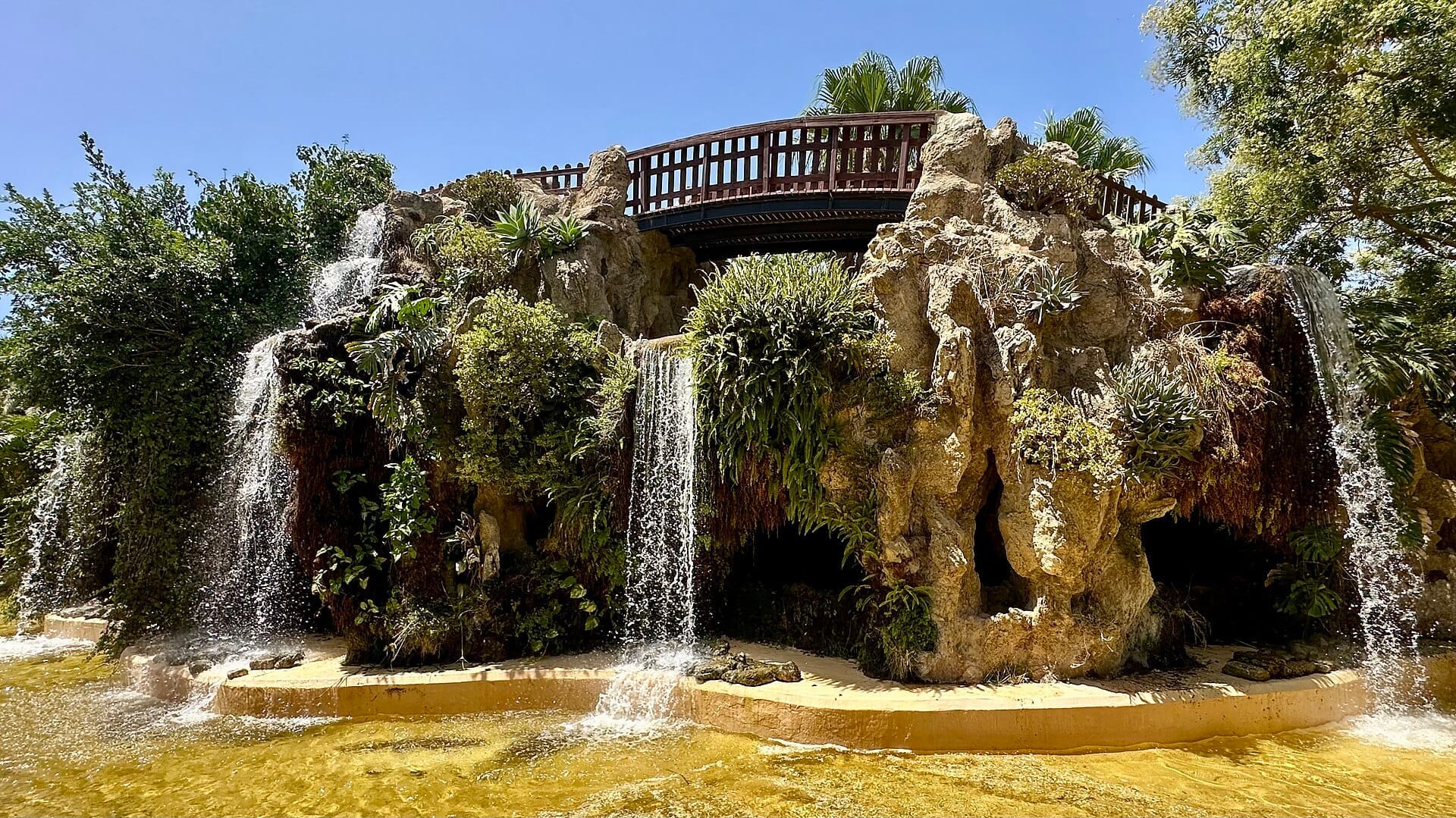
Parque Genovés is a botanical garden and historic public park pressed up against the sea walls of Cádiz's old city, bounded by Paseo de Santa Bárbara and Avenida Duque de Nájera. Its trapezoidal footprint is modest, but the density of what grows inside is striking: tall palms, dragon trees, century-old ficus, and subtropical species that thrive in the mild Atlantic microclimate. The garden is classified as a Bien de Interés Cultural (Asset of Cultural Interest) by the Junta de Andalucía — a designation it received in 2004 — which places it in the same legal protection category as major monuments.
Entry is free. The park opens daily at 08:00, closing at sunset in cooler months and at 22:30 in summer. That extended summer closing time matters: this is genuinely one of the best places in the city to sit after dinner when the temperature finally drops.
💡 Local tip
Arrive before 09:30 on weekday mornings for the quietest experience. By mid-morning on weekends, families with children and dog walkers fill the main paths.
A Garden With More History Than Most Visitors Realize
The land here has been cultivated as a public green space since the 18th century. It was remodeled several times before its transformation into the structured garden visitors see today, completed in August 1892, driven by the Valencian gardener Gerónimo Genovés y Puig, whose surname the park now carries.
That late 19th-century redesign reflected the Romantic garden movement fashionable across Europe at the time: winding secondary paths that break from the main axes, exotic species collected from tropical and subtropical climates, decorative benches and sculptural elements placed at intervals. The design philosophy was about controlled surprise — each turn revealing a different canopy height or plant texture. More than 130 years later, the bones of that design are still readable.
Understanding this history changes how you walk through it. This isn't a city park thrown together to fill space between buildings. It was a deliberate civic statement by a mid-sized Atlantic port city at a specific moment in its cultural life. For broader historical context on the city itself, the Cádiz history guide provides useful background on what the city was experiencing in the 1890s.
Tickets & tours
Hand-picked options from our booking partner. Prices are indicative; availability and final rates are confirmed when you complete your booking.
Historical Roman Cadiz guided walking tour
From 22 €Instant confirmationFree cancellationDay trip to Tarifa, Vejer, and the Bolonia beach from the Cadiz Bay
From 59 €Instant confirmationFree cancellationWinery tour with tasting of three wines in Sanlucar
From 18 €Instant confirmationFree cancellationWinery tour and wine tasting in Chiclana de la Frontera in Cadiz
From 25 €Instant confirmationFree cancellation
What You'll See Inside
The main entrance draws you onto a wide central avenue flanked by tall palms whose fronds catch the Atlantic wind. The sound is constant and specific: a dry papery rustle above your head, interrupted by sparrows and the occasional ring-necked parakeet, a species that has colonized several Andalusian city parks in recent decades. The light is filtered in a way that's unusual for a coastal city — the canopy overhead is thick enough that even at midday the park floor stays relatively cool.
The secondary paths are narrower and shadier, lined with ficus whose root systems have lifted sections of paving over the years. Dragon trees (Dracaena draco) stand at several points in the garden: ancient-looking, with their candelabra branching and rust-orange trunk scars. There are also specimens of araucaria, large-leafed tropical plants, and several species you won't easily identify without a botanical guide. The park functions as a living collection, not just a decorative green space.
A small pond and decorative fountain elements punctuate the interior. The pond attracts ducks and the occasional grey heron in cooler months. In summer, the water feature is primarily visual rather than active, but the surrounding shaded corners remain among the coolest spots in this part of the old city.
How the Experience Changes by Time of Day
Early mornings, between 08:00 and 09:30, belong to local residents. Older gaditanos do their daily walk on the main avenue at a deliberate pace. Joggers cut through on their way toward the sea walls. The light at this hour comes in low from the east, catching the palm trunks in a way that makes them glow amber. It's the best photography window by some distance.
Midday in summer is when the park proves its value as shelter. The city outside bakes on the reflective stone of the old streets, but inside the botanical garden the temperature is noticeably lower under the dense canopy. Benches in the shaded secondary paths stay occupied throughout siesta hours by people reading, napping, or simply waiting out the heat.
Late afternoon and early evening are the most social hours. Families arrive after 18:00. Children use the open areas near the central axis. The park transitions from a quiet refuge to a lively neighborhood gathering point without ever feeling crowded in the way that nearby plazas can. By sunset, the quality of light through the palms is exceptional — photographers specifically time visits around this window.
ℹ️ Good to know
In winter, the park closes at sunset, which falls around 18:00–18:30. If you're planning a late visit between November and February, check sunset times before going.
Location and How It Fits Into a Wider Walk
Parque Genovés sits at the northwestern corner of the old city peninsula, which makes it a natural waypoint on any walk that follows the sea walls. From the Cathedral, the logical route heads west along Campo del Sur, continuing past the castle approaches and arriving at the park via the seafront promenade. The entire walk from the Cathedral to the park takes around 15 minutes at a relaxed pace and passes several significant landmarks along the way.
Just beyond the park's northern edge, the city walls open toward the area near Castillo de Santa Catalina and the sweep of Playa de la Caleta. Including the park as a midpoint on this coastal walk is logical and adds a contrasting texture to what is otherwise an open, exposed seafront route.
For a structured approach to walking this part of the city, the Cádiz old town walking tour covers the route in detail with timing estimates.
Practical Notes for Visitors
No ticket or reservation is required. The park is a public urban space with free, open access during operating hours. Dogs are permitted but must be kept on a leash throughout the garden.
The main avenues are level and wide enough for pushchairs and wheelchairs. Some secondary paths have uneven paving where tree roots have caused lifting, so visitors with mobility limitations may find it easier to stay on the central axes. There is no formal accessibility map available, but the central avenue circuit alone covers the majority of the park's highlights without requiring the narrower side paths.
Shade is the park's most practical asset in summer. Bring water if you're combining this with a longer coastal walk, and wear comfortable shoes if you plan to explore the secondary paths. Photography benefits from a wide-angle lens for the full canopy shots and something with reach for birds in the higher branches.
⚠️ What to skip
The park is exposed to Atlantic wind, which can be strong even on sunny days. In winter and spring, a light jacket is worth carrying even when the sky looks clear.
An Honest Assessment
Parque Genovés is not a destination in itself for most visitors. If you've allocated two days in Cádiz and haven't yet seen the Cathedral, the Mercado Central, or the sea walls, the park shouldn't displace those. What it does exceptionally well is function as a pause: a place to walk through slowly between larger sites, to sit on a shaded bench without spending money, and to see the city at a human rather than tourist scale.
Visitors who are primarily interested in nightlife, food scenes, or architecture-heavy sightseeing may find 20 minutes here is enough. Plant enthusiasts and anyone with an interest in historic garden design could spend considerably longer. For the broader picture of what else is worth your time in the city, the things to do in Cádiz guide helps with prioritization.
Insider Tips
- The best photographs of the park's canopy are taken from the secondary paths looking upward toward the palms, not from the main avenue. Go in early morning for the light quality.
- In summer, the park benches nearest the sea wall edge catch the afternoon Atlantic breeze. They fill up after 19:00 — arrive a bit earlier to claim one.
- If you visit during the spring flowering period (April to May), the fragrance inside the park is noticeably different from the street outside. Several of the subtropical species bloom during this window.
- The park connects naturally to the seafront walk toward Playa de la Caleta. Combining both in a single early-morning or late-afternoon loop is more rewarding than treating each as a separate stop.
- The park was declared an Asset of Cultural Interest in 2004, but almost no visitor information material emphasizes this. It means any significant alteration to the garden requires formal cultural heritage approval — which helps explain why the 1892 layout remains largely intact.
Who Is Parque Genovés For?
- Travelers wanting shade and a rest point during a coastal walking route
- Families with young children looking for open, safe outdoor space
- Plant enthusiasts and anyone interested in 19th-century Romantic garden design
- Photographers, particularly in early morning or late afternoon light
- Visitors looking for a free, unhurried space away from the city's more trafficked plazas
Nearby Attractions
Other things to see while in Centro Histórico (Old Town):
- Alameda Apodaca
Alameda Apodaca is a protected Romantic-era promenade running along the northern sea wall of Cádiz's old town. Free, open at all hours, and overlooking the Bay of Cádiz, it offers one of the most atmospheric walks in the city — with very little effort required.
- Antiguo Hospital de Mujeres
Founded in 1677 and rebuilt in grand 18th-century baroque style, the Antiguo Hospital de Mujeres is one of Cádiz's most architecturally significant buildings. Today it is managed as a visitable monument linked to the Diocese of Cádiz y Ceuta, opening its twin patios and chapel to visitors for a modest entry fee, offering a rare glimpse into the city's golden-age ambitions.
- Ayuntamiento de Cádiz (City Hall)
The Ayuntamiento de Cádiz stands as one of the most photographed facades in Andalusia's oldest provincial capital. Begun in 1799 and shaped by two distinct architectural phases, it anchors the central plaza of Cádiz's historic core and speaks directly to the city's 19th-century ambitions. This guide covers what to see, when to go, and how the building fits into a walk through the old town.
- Calle Ancha
Calle Ancha cuts through the historic center of Cádiz as its widest and most storied street. Free to walk at any hour, it offers a concentrated dose of Baroque architecture, political history, and the kind of unhurried street life that defines this Atlantic city.