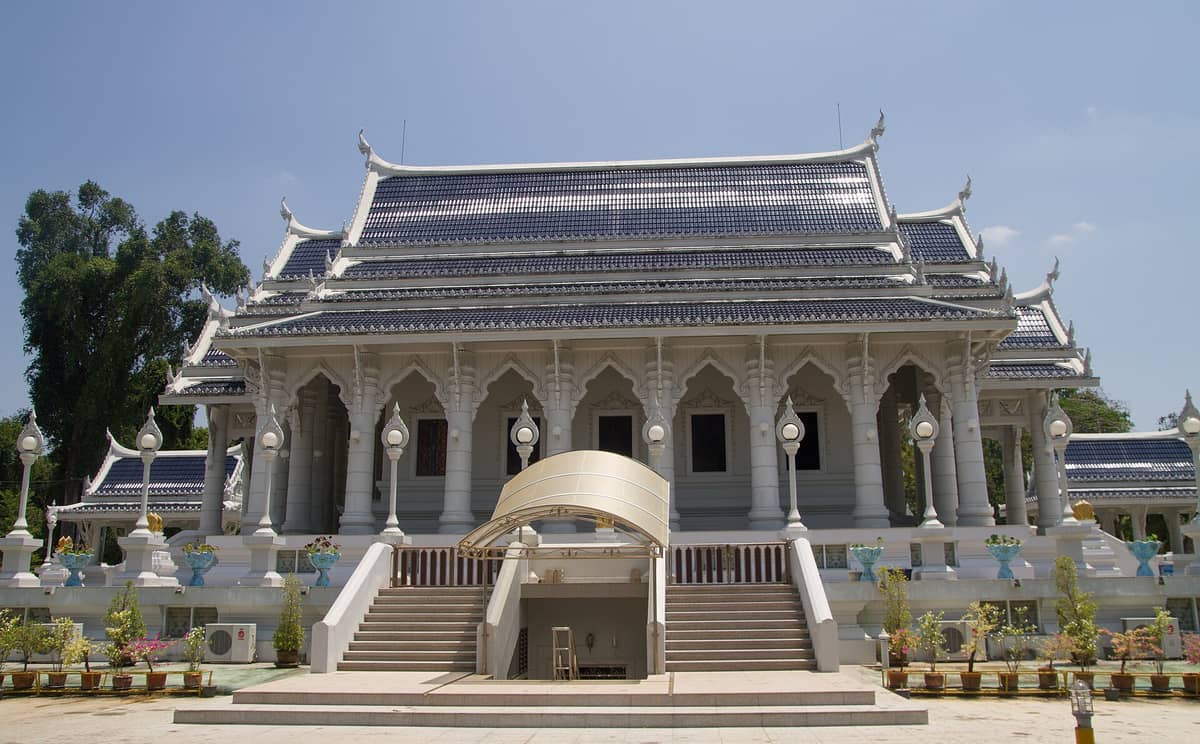
Krabi Town sits on the Krabi River estuary and serves as the provincial capital of Krabi Province. Unlike the resort beaches to the west, it runs on local commerce, morning markets, and ferry logistics, making it the practical and cultural heart of the region.
Krabi Town is where the province does its actual living. Inland from the famous beaches, set along a mangrove-lined river, it is a working Thai provincial capital with a temple on a hill, a night market on the waterfront, and a pace that has nothing to do with sun loungers or longtail boats.
Orientation
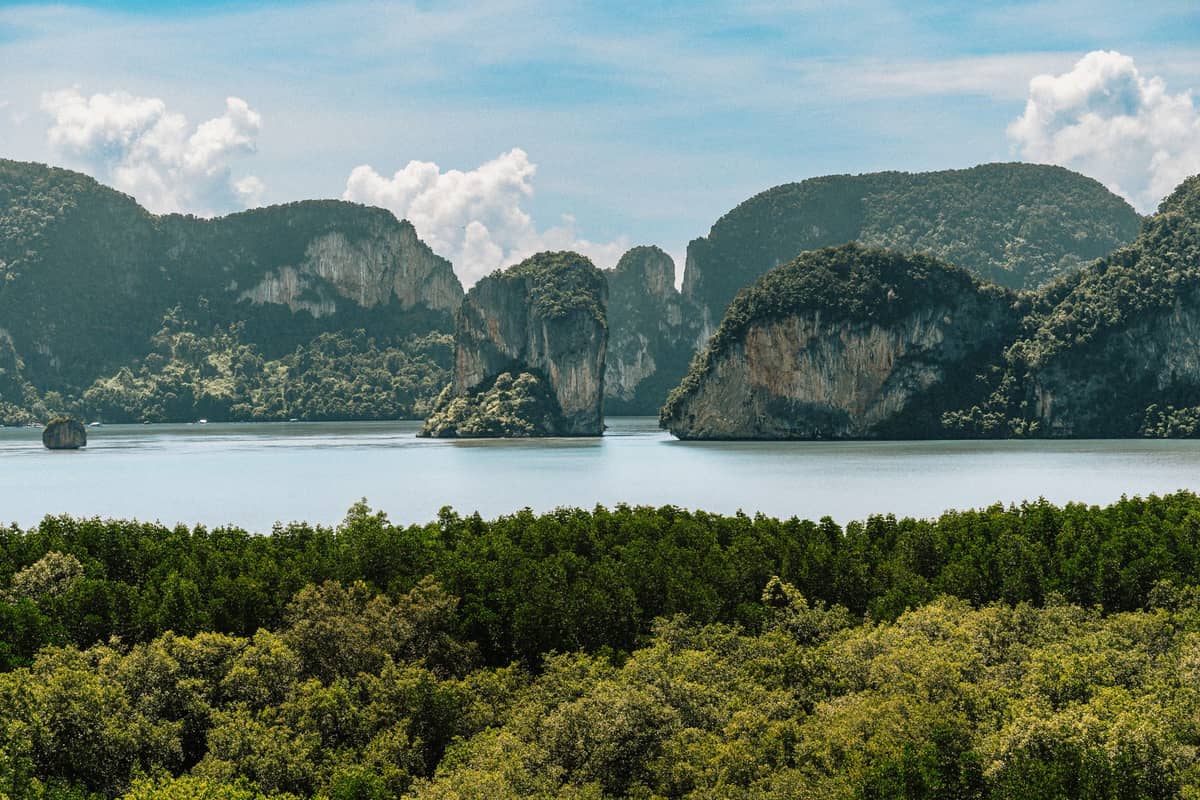
Krabi Town occupies the eastern bank of the Krabi River estuary, roughly 15 kilometres from the open coast. It is the administrative capital of Krabi Province, which covers 5,323 square kilometres of southern Thailand including the Andaman coastline, the Phi Phi Islands, and Koh Lanta. The town itself is compact and largely flat, sandwiched between the river to the west and a ridge of limestone karst to the east, the same dramatic geology that defines the whole province.
The main civic axis runs roughly north-south along Maharaj Road, which parallels the river. Chao Fah Park and the Klong Jilad Pier sit at the southern end near the waterfront, while the older commercial district, known locally as Talat Kao (the Old Market area), occupies the northern stretch near the main bus station. Wat Kaew Korawaram, the town's principal temple, rises on a hillside just east of the centre and is visible from much of the lower town.
Krabi Town's position makes it the region's transit nucleus. Klong Jilad Pier handles ferries to Koh Phi Phi and Koh Lanta. Songthaews (shared pickup trucks) and minivans depart from near the bus station for Ao Nang, Railay's mainland departure point at Krabi Town Pier, and the airport. Krabi International Airport (KBV) is approximately 9 kilometres away, usually 20-30 minutes by road.
Character and Atmosphere
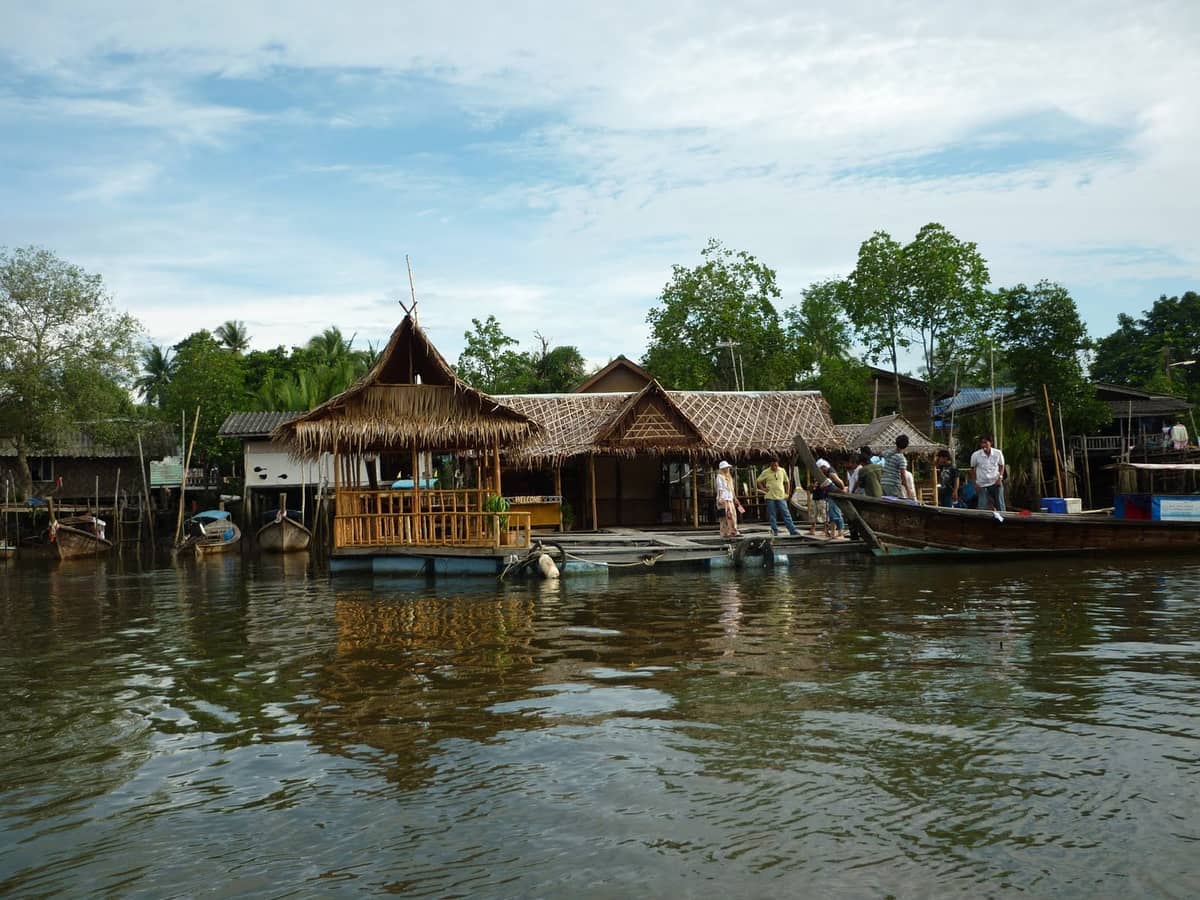
The character of Krabi Town shifts considerably across the day, and understanding those shifts is the key to appreciating it. Before 8am, the town belongs to its residents. Vendors push carts of fresh fruit along Maharaj Road. The riverside morning market near Chao Fah Park draws locals buying grilled pork skewers, coconut sticky rice in banana leaf, and coffee from shophouse counters. The air carries river humidity and charcoal smoke. The light is low and golden across the mangroves.
By mid-morning, the town's functional side takes over. Government offices, hardware shops, pharmacies, and motorbike repair yards dominate the streets behind the main road. Tourists pass through but rarely linger, which is partly the point: Krabi Town is genuinely inhabited in a way that Ao Nang, 30 to 45 minutes west, is not. The shophouses along Utarakit Road, with their faded paint and potted plants on upper balconies, give a sense of a southern Thai town that has existed for generations without being designed for foreign visitors.
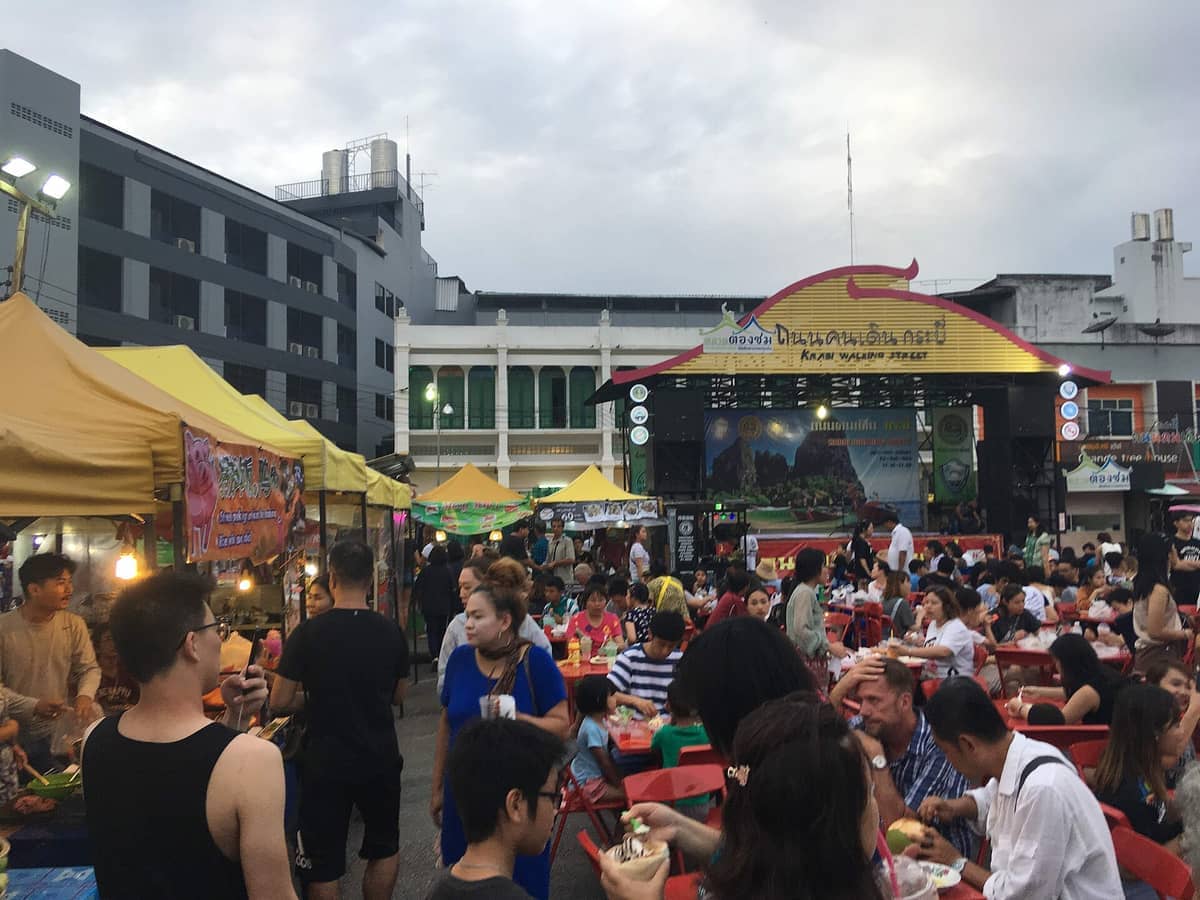
Evenings animate the riverfront. The Krabi Town Walking Street and the Night Market at Chao Fah Park draw a mix of local families and travelers looking for something other than beach bars. By 9pm the market crowd thins and the town quiets quickly. Unlike Ao Nang or Koh Phi Phi, Krabi Town has no meaningful nightlife strip. After 10pm, the streets are largely empty except for the odd convenience store still lit up.
ℹ️ Good to know
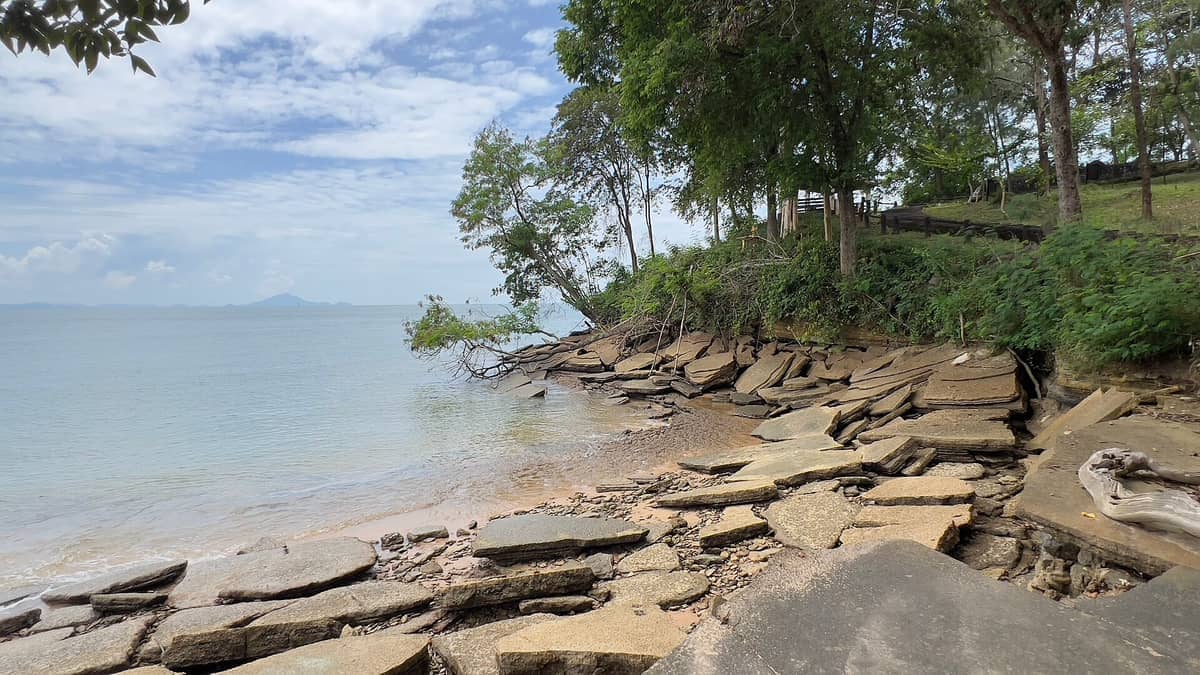
Krabi Town is not a beach destination. There is no swimming beach in the town itself. Travelers who arrive expecting sand and sea should plan for a songthaew or minivan ride to Ao Nang or a ferry to the islands.
What to See and Do
The single most striking thing in Krabi Town costs nothing. Wat Kaew Korawaram sits above the town on a limestone outcrop, reached by a short naga-flanked staircase of roughly 100 steps. From the top, the view over the river, the mangroves, and the surrounding karst hills gives a clear sense of the geography that makes Krabi Province what it is. The temple itself is active, well-maintained, and free to enter, though visitors should dress modestly: covered shoulders and knees are required.
The riverside promenade at Chao Fah Park is best in the early morning or at dusk, when the light softens the karst silhouettes across the water. The park is small but popular with locals for exercise walks. A few hundred metres north along the waterfront, the area around the Old Market (Talat Kao) retains some original shophouse architecture and a slower commercial pace than the main tourist drag. The Krabi Town Night Market occupies the riverside promenade near Chao Fah Park on weekend evenings, and the Krabi Walking Street adds to the Friday and Saturday evening activity in the same general area.
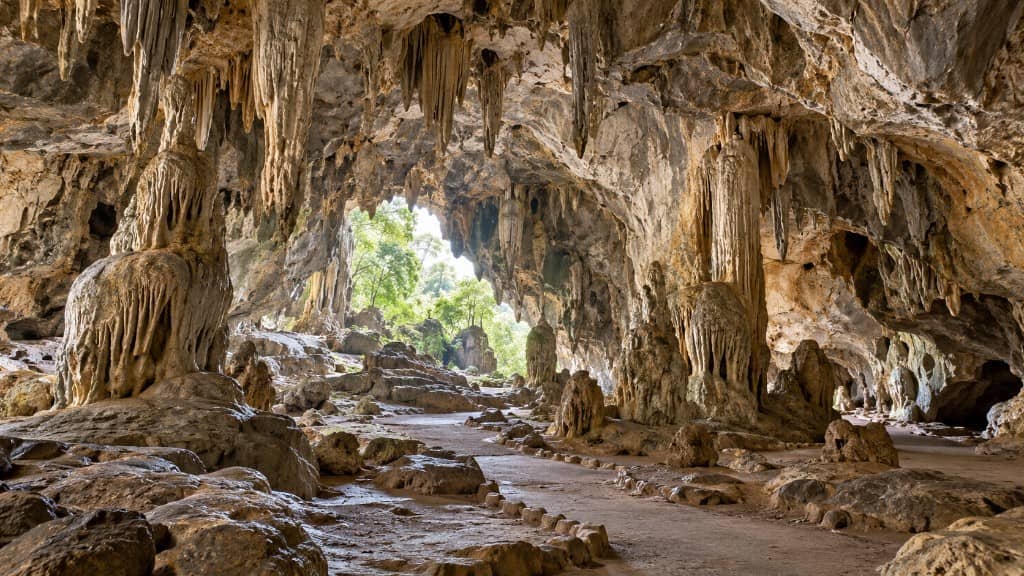
For a half-day trip that stays manageable, Khao Khanab Nam is a pair of steep limestone karst hills rising directly from the Krabi River just east of town. Long-tail boat trips from the riverside pier circle these hills and enter the caves inside them, where stalactites, fossils, and old human remains have been found. It is the kind of attraction that is genuinely interesting rather than just photogenic, and accessible in 30 minutes from town.
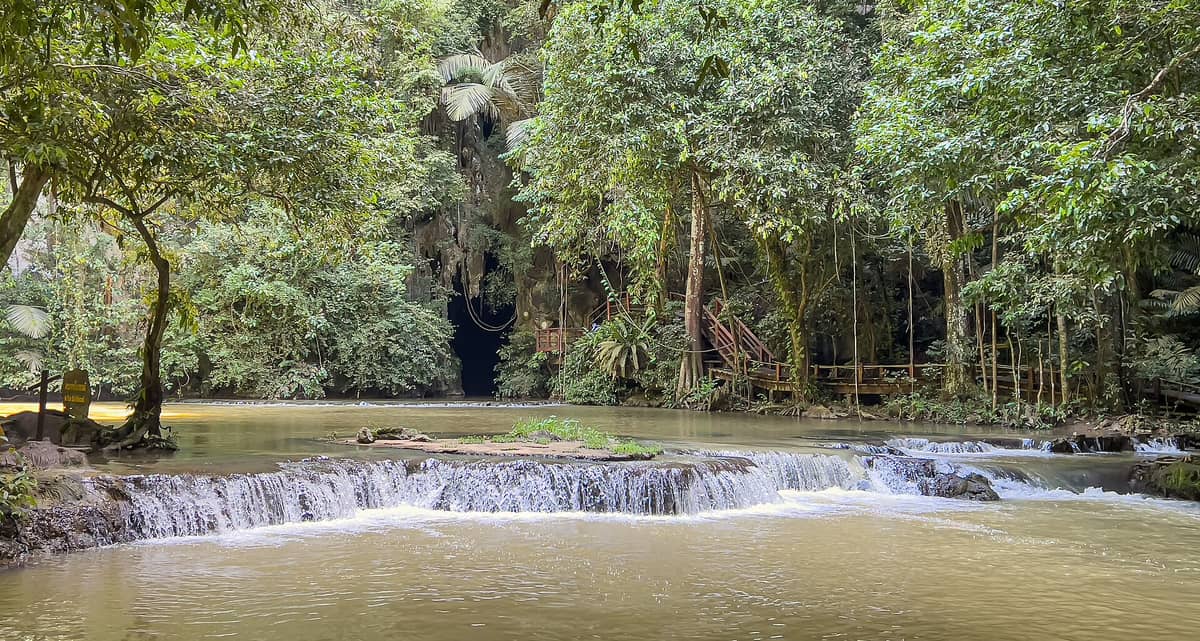
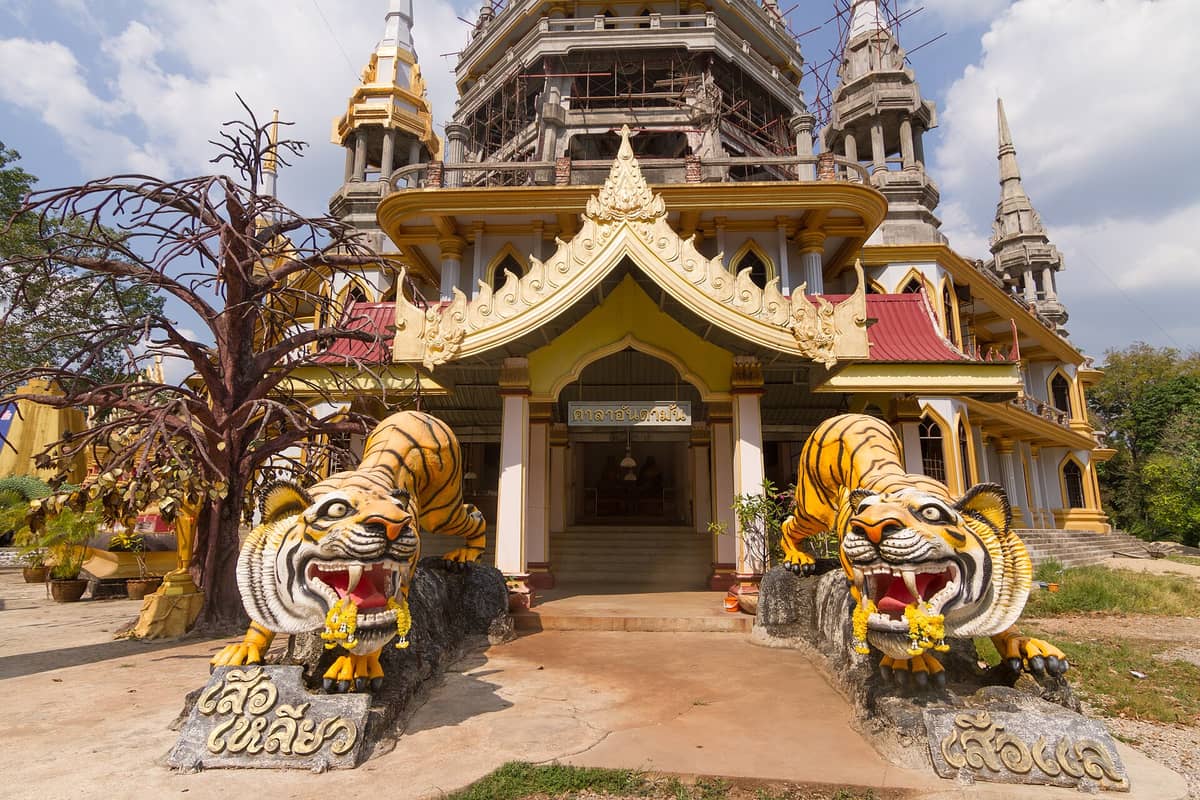
Krabi Town is also the most practical base for inland excursions into the province. The Tiger Cave Temple (Wat Tham Seua) is about 9 kilometres northeast of the centre: a serious climb of 1,237 steps to a summit shrine with panoramic views over the rice fields and limestone landscape. For cooler, greener escapes, Emerald Pool and the hot springs at Khlong Thom lie roughly 45-60 kilometres south and are usually visited as a day trip from Krabi Town.
Wat Kaew Korawaram: free hilltop temple with river views, 10-minute walk from the town centre
Khao Khanab Nam: twin karst hills with cave interiors, reached by longtail boat from the riverside pier
Chao Fah Park and the riverside promenade: best at sunrise or late afternoon
Krabi Town Walking Street and Night Market: Friday and Saturday evenings near Chao Fah Park
Tiger Cave Temple (Wat Tham Seua): 9 km northeast, requires fitness for the climb
Day trips to Emerald Pool and Khlong Thom hot springs: about 45-60 km south
Eating and Drinking
The food in Krabi Town is some of the most honest value in the province. This is where people who live and work in Krabi eat, which keeps quality up and prices grounded. The street food scene in Krabi Town centers on the morning market near Chao Fah Park, the daytime hawker stalls along Maharaj Road, and the evening market clusters on weekends. Expect to pay 50-80 THB for a plate of rice with southern Thai curry, a bowl of boat noodles, or a serving of pad kra pao.
Southern Thai cooking is noticeably spicier and more coconut-forward than central Thai cuisine, and Krabi Town is a good place to eat it without tourist-menu adjustments. Massaman curry, kaeng tai pla (a pungent fish-based curry), and fresh seafood from the Andaman coast appear regularly in the local restaurants behind the main road. Halal food is available from several Muslim-owned shops and stalls near the mosque, reflecting the southern Thai demographic mix.
The Night Market and Walking Street on Fridays and Saturdays offer grilled corn, mango sticky rice, satay, fresh-squeezed juices, and various Thai snacks in an open-air setting. This is genuinely the most relaxed and affordable way to eat well in the evening. Sit-down restaurants catering to international tourists exist along Utarakit Road and in the guesthouses around the pier, with menus that include Western breakfasts, pasta, and pizza alongside Thai dishes. Prices at these spots run 150-350 THB per main course.
Coffee culture has taken hold in Krabi Town over the past decade. Several small cafes near the riverside and around the walking street area serve proper espresso drinks and Thai iced coffee. These tend to fill up mid-morning with a local office crowd. Beer is widely available at restaurants and convenience stores. There are no dedicated cocktail bars or rooftop venues in Krabi Town itself.
💡 Local tip
The morning market near Chao Fah Park runs from roughly 6am to 9am and is the best single stop for an authentic, cheap local breakfast. Arrive before 8am for the widest selection. Vendors sell out quickly.
Getting There and Around
Krabi International Airport (KBV) is approximately 9 kilometres from the town centre. Airport buses run to Krabi Bus Station (also called Taladkao Bus Station), with indicative fares around 100 THB per person, though fares and schedules should be confirmed before travel as they can change. Taxis and Grab rides cover the same route in 20-30 minutes. Pre-booked private transfers are also available. Full logistics are covered in the Krabi airport guide.
Within Krabi Town, the centre is compact enough to walk. Maharaj Road and Utarakit Road are the main pedestrian axes, and the pier, market area, temple base, and most accommodation sit within a 15-20 minute walk of each other. For trips to Ao Nang (around 20 km west), songthaews depart regularly from near the bus station and cost approximately 50-60 THB per person. For Railay, take a songthaew toward Ao Nang and transfer to a longtail boat, or take a longtail directly from the Krabi Town pier depending on the tide and season.
Ferries to Koh Phi Phi and Koh Lanta depart from Klong Jilad Pier at the southern end of the waterfront. Ferry schedules are seasonal and change between peak and low season, so check current departure times at the pier or through a guesthouse. Grab operates in Krabi Town for local rides, though availability is less reliable than in a major city. Motorbike taxis and tuk-tuks fill the gap for short trips.
Travelers arriving from Bangkok by bus use Krabi Bus Station as their entry point. From Phuket, minivans and buses take approximately 2.5-3 hours depending on the service. The complete guide to getting around Krabi covers songthaew routes, ferry schedules, and the logic of using Krabi Town as a base for island-hopping.
⚠️ What to skip
Krabi has no metro or passenger rail system. There is no intercity train service to Krabi Town. All ground transport is road or ferry-based. Confirm all ferry and bus times before you rely on them, especially during the May-October rainy season when services can be reduced.
Where to Stay
Krabi Town is a legitimate base, not just a transit stop, though it suits a specific kind of traveler. Those who want to eat local, move around the province efficiently, and avoid paying beach-resort prices will find it practical and affordable. Budget guesthouses and mid-range hotels cluster along Utarakit Road and the side streets near Chao Fah Park and Klong Jilad Pier. This strip puts you within walking distance of the night market, the ferry pier, and the songthaew stop for Ao Nang. For a broader comparison of where to base yourself in the province, the Krabi accommodation guide lays out the trade-offs between Krabi Town, Ao Nang, and the islands.
The town's hotels range from basic fan-room guesthouses under 500 THB per night to comfortable mid-range options with pools and air conditioning in the 1,000-2,500 THB range. There are no international luxury resorts in Krabi Town itself: that category is concentrated at Tubkaek and Klong Muang north of Ao Nang. If you are on a genuinely tight budget and want to use Krabi as a jumping-off point for day trips and island-hopping, Krabi Town is the most cost-effective base in the province.
Be aware that rooms near the night market area can be noisy on Friday and Saturday evenings. The streets around the pier are busiest in the morning when ferry traffic moves through. The quietest accommodation tends to be one or two blocks east of the main waterfront road, toward the base of the limestone hills. Traffic noise from motorbikes can also be an issue on main roads regardless of the time of day.
Honest Drawbacks
Krabi Town is not a destination in the way that Railay or Koh Lanta are. If your primary reason for visiting Krabi Province is beaches, clear water, and island scenery, staying in the town means paying for transit every time you want those things. Ao Nang gives faster access to boat departures and beach life, while Klong Muang offers quieter, resort-style isolation. Krabi Town wins on price and practicality, but you will spend money on songthaews and taxis that a traveler staying at the beach would not.
The town's traffic can be chaotic on main roads, particularly around the market areas and the bus station during peak morning hours. Sidewalks are inconsistent: some sections are well-maintained, others are blocked by parked motorbikes or in poor repair. Exercise ordinary caution with valuables in crowded market settings, and take care crossing roads where motorbike traffic moves unpredictably. For any serious concerns, Thailand's Tourist Police number is 1155.
First-time visitors to Krabi Province who want beach time, island access, and a sense of the local culture would do well to split their stay: a night or two in Krabi Town for orientation and markets, then move to Ao Nang or the islands. The Krabi 3-day itinerary structures this kind of approach clearly.
TL;DR
Krabi Town is the provincial capital and transit hub: a real Thai working town, not a resort, with markets, a riverside promenade, and a hilltop temple as its main draws.
Best suited to budget travelers, those who prefer local food and atmosphere over tourist infrastructure, and anyone using Krabi as a base for day trips to the islands and inland attractions.
The ferry pier at Klong Jilad connects the town to Koh Phi Phi and Koh Lanta; songthaews run regularly to Ao Nang and the airport.
No beaches in town: plan at least one transfer to Ao Nang, Railay, or the islands for swimming and coastal scenery.
Honest trade-off: lower prices and authentic local life, but more logistics required to reach the beaches and attractions that make Krabi Province famous.
Bangkok to Krabi is one of Thailand's most-traveled long-distance routes, and there are three main ways to do it: fly, take the overnight bus, or combine a southern-line train with a road transfer. This guide breaks down every option with real costs, journey times, and the real trade-offs so you can pick the right route for your trip.
Krabi Province has more great beaches than most travelers can visit in a single trip, spread across the mainland coast, the Railay Peninsula, Koh Phi Phi, and Koh Lanta. This guide ranks and compares the best, so you can choose the right beach for your style.
Krabi's weather shapes everything from island hopping to hotel rates. This guide breaks down every month of the year so you know exactly when to go, when to save money, and what to realistically expect from Thailand's most dramatic coastline.
Krabi is one of southern Thailand's best bases for day trips, with stunning islands, jungle waterfalls, sacred temples, and sea caves all within reach. This guide covers the top destinations you can explore in a single day, from the legendary Phi Phi Islands to the serene mangroves of Ao Tha Lane.
Krabi Province spans coastline, islands, and inland jungle with no metro or rail network. This guide covers every transport option, from airport minivans and local songthaews to long-tail boats and ferries, so you can move around without overpaying or getting stranded at the wrong pier.
Three days in Krabi, Thailand is enough to hit the highlights without rushing — if you plan smart. This itinerary covers Railay Peninsula, island day trips, Krabi Town's underrated food scene, and the key logistics most guides get wrong.
Krabi International Airport (KBV) is a manageable gateway, but the transfer options are genuinely confusing if you haven't researched them. This guide breaks down every transport option from the airport, with realistic fare ranges, journey times, and tips for avoiding the most common mistakes.
Krabi Province offers some of southern Thailand's most accessible and rewarding dive experiences, from shallow coral gardens off Ao Nang to advanced wreck dives and world-class drift sites. This guide covers the best dive sites, how to choose a course, what operators charge, and a clear take on when diving here is worth it.
Most visitors to Krabi stick to Ao Nang, Railay, and the Phi Phi day trip. But the province holds far more: ancient fishing villages, mineral-fed jungle pools, empty beaches, and islands with no roads. This guide points you to the places worth the extra effort.
Krabi's limestone karst landscape delivers some of Southeast Asia's most dramatic hiking. From the roughly 1,240-step climb to Tiger Cave Temple's panoramic summit to the rope-assisted scramble into Railay Lagoon, these are the best trails, viewpoints, and jungle walks across the province.
Krabi Province offers one of Southeast Asia's most compelling honeymoon settings: limestone karsts rising from turquoise water, car-free beach peninsulas, and islands that feel genuinely remote even in peak season. This guide covers where to stay, what to do, and how to plan a honeymoon in Krabi that goes beyond the standard tourist trail.
December marks the start of Krabi's drier travel season, bringing warm temperatures, calmer seas, and the year's biggest tourist crowds. Here's everything you need to plan your trip, from realistic weather expectations to the best activities and where to stay.
Krabi's rainy season runs from May to October, but it's rarely the washout people fear. This guide covers what the southwest monsoon actually means for your trip: which activities hold up, which boat routes get disrupted, where prices drop, and how to plan around the weather without wasting your time or money.
Krabi Thailand sits at the centre of one of Southeast Asia's great island-hopping regions. This guide breaks down every major route, from the classic Four Islands trip to the quieter Hong Islands circuit, with real pricing, seasonal warnings, and booking tips to help you plan smarter.
Five days is enough time to experience the best of Krabi Thailand without rushing. This itinerary balances iconic beaches, island excursions, jungle trails, and local culture — with practical logistics, realistic cost breakdowns, and advice on what to skip.
Krabi Thailand offers some of Southeast Asia's most dramatic paddling terrain: limestone karsts rising from calm water, mangrove labyrinths, and island lagoons accessible only by kayak. This guide covers the top routes, tour formats, seasonal conditions, and practical advice to help you choose the right experience.
Koh Lanta is one of the most rewarding islands in Krabi Province, and getting there is straightforward once you know which transport option suits your trip. This guide covers minivans, ferries, speedboats, fares, journey times, and the key details that booking platforms often leave out.
Krabi Province offers some of Southeast Asia's most dramatic luxury settings, from cliffside villas at Railay to private pool suites on Koh Lanta. This guide breaks down where to stay, what to do, and how to get the most from a high-end trip to Krabi, Thailand, without falling for overhyped options.
Krabi's after-dark scene spreads across several distinct areas, each with its own vibe, price point, and closing time. This guide covers Ao Nang, Krabi Town, and Railay so you know exactly where to go, what to spend, and what to skip.
Krabi, Thailand can devour a travel budget faster than most visitors expect, or stretch it surprisingly far if you know where the price traps are. This guide covers transport, accommodation, food, beaches, and island trips with realistic cost breakdowns and no fluff.
Planning a Koh Phi Phi day trip from Krabi? This guide covers ferry routes, speedboat tours, Maya Bay access, park fees, seasonal closures, and the practical details that most travel sites gloss over. Know what you're booking before you pay.
Krabi Thailand is one of Southeast Asia's most rewarding destinations, but a handful of well-worn scams and avoidable risks can derail a trip fast. This guide covers the real threats, practical precautions, and emergency contacts you need before you go.
Krabi Province has some of Thailand's finest snorkeling, with clear Andaman water, limestone island scenery, and healthy reefs accessible from multiple departure points. This guide covers the best snorkeling spots by area, what to expect underwater, and how to plan your trips from Ao Nang, Koh Lanta, and beyond.
Krabi Thailand's street food scene runs the full spectrum from southern Thai curries ladled out of giant woks to fresh-caught seafood grilled on the spot. This guide covers the best dishes, the top markets, neighborhood-by-neighborhood options, and practical tips for eating well without getting burned by tourist pricing.
Two of Thailand's most-visited southern destinations, Krabi and Phuket sit on the same Andaman coastline but offer very different experiences. This guide breaks down the key differences across scenery, access, budget, beaches, and travel style so you can decide which one belongs on your itinerary.
Krabi Province has the beaches, islands, and outdoor adventures that make it one of Thailand's best destinations for families. This guide covers the top kid-friendly activities, where to base yourself, how to get around with children, and what to watch out for so your family holiday runs smoothly.
Krabi Province offers one of the most geographically varied destinations in southern Thailand, from mainland karst scenery and inland waterfalls to boat-access beaches and remote islands. But is it right for you? This guide cuts through the hype and gives you a clear-eyed look at what Krabi delivers, what it doesn't, and who should actually go.
Phuket and Krabi are neighboring provinces in southern Thailand, yet getting between them takes more planning than most travelers expect. This guide breaks down every realistic option, from shared minivans to scenic ferries, with candid assessments of cost, comfort, and when each makes sense.
Krabi, Thailand is one of Southeast Asia's top rock climbing destinations, with hundreds of bolted limestone routes at Railay and Tonsai. This guide covers beginner courses, operator prices, the best season to climb, and what nobody tells you before you book.
Krabi Province packs limestone cliffs, emerald lagoons, jungle temples, and some of Thailand's finest beaches into one compact destination. This guide covers the best things to do in Krabi across beaches, islands, inland attractions, and adventure activities, with practical notes on pricing, seasonality, and what tour operators often skip.
Krabi Thailand covers a sprawling province of limestone coast, islands, and inland jungle. Choosing the wrong base can cost you hours of unnecessary travel. This guide breaks down every major area, who each one suits, and what to realistically expect from your accommodation.