Krabi Aquarium (Coastal Fisheries Research Center): A Realistic Guide
The Krabi Aquarium is the public-facing side of a working government fisheries research facility near Sai Thai, south of Krabi Town. Admission is free, the setting is genuinely local, and it pairs naturally with a visit to nearby Shell Fossil Beach. This guide helps you decide if it belongs on your itinerary.
Quick Facts
- Location
- 141 Moo 6, Sai Thai Subdistrict, Mueang Krabi District — near Ao Nam Mao, south of Krabi Town
- Getting There
- Taxi or tuk-tuk from Krabi Town; songthaew toward Shell Fossil Beach from Ao Nang also passes nearby
- Time Needed
- 45–90 minutes
- Cost
- Reported free entry; optional donations accepted. Verify on arrival as pricing can change.
- Best for
- Families with young children, budget travelers, curious visitors combining with Shell Fossil Beach
What the Krabi Aquarium Actually Is
Most visitors know it as the Krabi Aquarium, but the official name is the Krabi Coastal Fisheries Research and Development Center. That distinction matters. This is not a purpose-built tourist aquarium with theatrical tank tunnels and feeding shows. It is a working government research facility operated by Thailand's Department of Fisheries, with a modest public exhibition area that has been opened to visitors. The experience is closer to visiting a university marine lab than an urban aquarium attraction.
That context shapes everything: the scale, the presentation, the atmosphere, and the audience. On most days the visitors are a mix of Thai school groups, local families, and the occasional foreign traveler who has done their research. The facility focuses on the coastal fisheries of the Andaman Sea, with tanks and enclosures housing species native to the waters around Krabi Province.
ℹ️ Good to know
Visitor hours are reported as daily 09:00–16:30. These are not official government-published times and may change without notice. Call ahead or check locally before making the trip, especially outside peak season.
The Setting: Mangroves, Salt Air, and a Quiet Shoreline
The center sits near Ao Nam Mao, a tidal bay fringed by mangrove forest south of Krabi Town. If you arrive by road from town or from the direction of Shell Fossil Beach, you will notice the landscape shift noticeably: the air smells of sea mud and salt, the roadside opens out toward water, and the density of the tourist strip disappears entirely. It feels like a part of Krabi that most international visitors never reach.
The grounds themselves have a functional, unpolished quality. There are shaded walkways, open-air tanks for larger species, and a low building housing the interior display tanks. Morning light hitting the water in the outdoor enclosures makes for pleasant viewing conditions. By early afternoon, the concrete paths can get uncomfortably hot under direct sun, so morning visits are significantly more comfortable.
The surrounding coastal area rewards a short detour. Krabi Fossil Shell Beach is only a short distance away and many visitors combine both stops into a single half-day loop from town, which is a practical way to see two genuinely local sites without the Ao Nang tourist infrastructure.
Tickets & tours
Live prices and dates from our booking partner. If you book, we may earn a commission at no extra cost to you.
Daily Cooking Class at Thai Cookery School in Krabi
From 42 €Instant confirmationFree cancellation7 islands speedboat excursion from Krabi
From 41 €Instant confirmationFree cancellationSpeedboat Tour to Hong Island Archipelago from Krabi
From 34 €Instant confirmationFree cancellationPhi Phi archipelago and Krabi 4 Islands full‑day speedboat tour
From 0 €Instant confirmationFree cancellation
What You Will See Inside
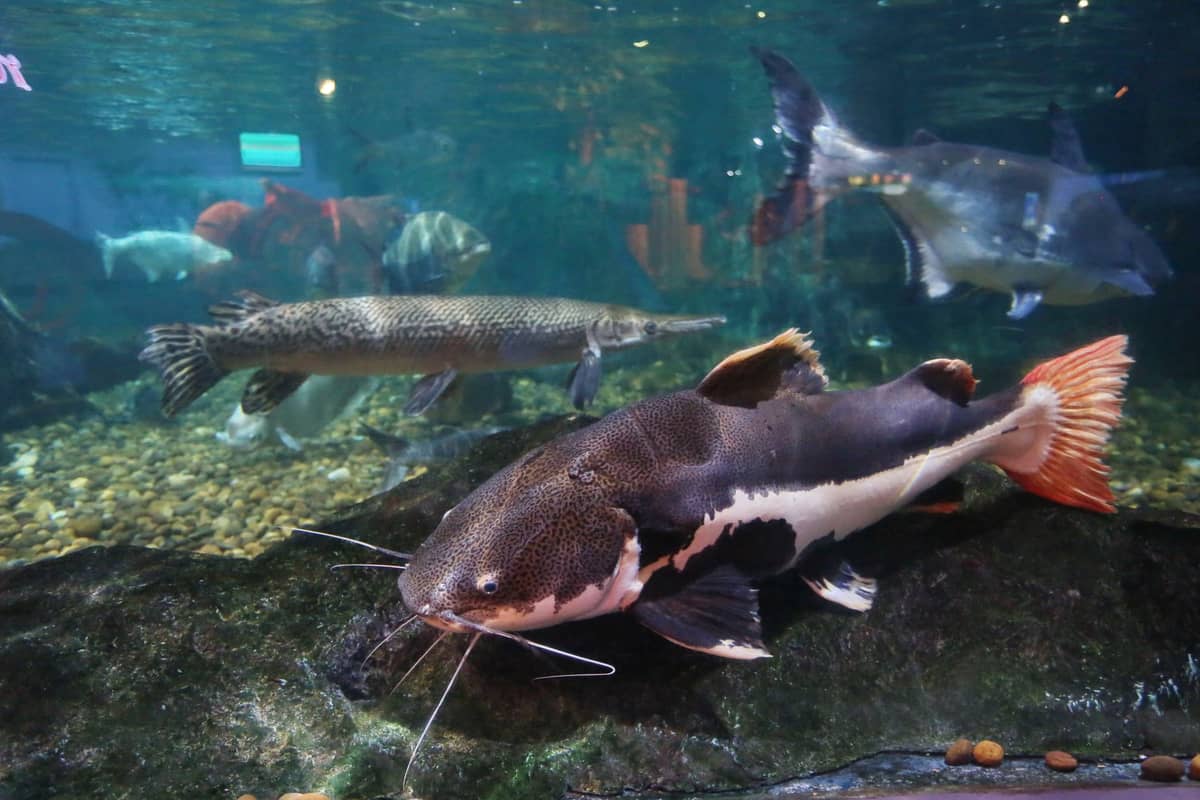
The display areas include tanks holding species typical of the Andaman coastal zone: small sharks, rays, sea turtles, reef fish, and various invertebrates. One of the more specific highlights is a breeding collection of clownfish, with visitor listings noting more than 13 clownfish species kept at the facility. For children who have watched animated fish movies, these tanks tend to generate reliable enthusiasm.
Outdoor enclosures hold larger animals, including sea turtles. These enclosures are part of conservation and breeding programs rather than display-only exhibits, which gives the center a purpose beyond tourism. The labeling throughout the facility is primarily in Thai, with limited English signage, so non-Thai speakers will get more out of it if they research the species beforehand or visit with a Thai-speaking companion.
💡 Local tip
Bring a light layer or stay close to the interior tanks if you visit between 11:00 and 14:00. The outdoor sections offer minimal shade and the equatorial sun is intense year-round in Krabi.
Getting There: No Direct Transit, But It Is Manageable
Krabi has no metro or passenger rail network. Getting to the aquarium requires either a taxi, tuk-tuk, or motorbike taxi from Krabi Town, or catching a songthaew (shared pickup truck) heading toward Shell Fossil Beach from the Ao Nang direction. Grab, the ride-hailing app, operates in Krabi and is often the most straightforward option for international visitors who want a fixed-price arrangement without negotiation.
If you are staying in Krabi Town, the center is close enough that a tuk-tuk ride takes under 15 minutes depending on traffic. From Ao Nang, plan for 20–30 minutes. There is no reliable public transport that stops directly at the entrance, so some walking may be required from the nearest road.
Is It Worth the Trip? An Honest Assessment
The Krabi Aquarium fills a specific gap rather than a general one. For families traveling with children between roughly 3 and 12 years old, a free entry point with live marine animals and open-air grounds is a genuine find in a region where most activities involve boat trips or hiking. Children who are too young for long island excursions, or who are not strong swimmers, get to engage with the marine environment of the Andaman Sea without any of those physical demands.
For adult travelers without children, the calculus is different. The facility is modest in scope and the presentation is basic. Visitors who have been to well-funded public aquariums elsewhere may find the scale underwhelming. The lack of English-language interpretation reduces the educational value for non-Thai speakers. If your available time in Krabi is limited, the aquarium competes with experiences like boat trips to nearby islands, kayaking through sea caves, or hiking up to significant viewpoints.
Travelers who prioritize dramatic natural encounters should note that snorkeling and diving in the waters off Krabi Province offer direct encounters with many of the same species in their actual habitat. For context on what is possible in the water, the Krabi snorkeling guide covers the realistic options and what to expect at different sites.
Photography and Practicalities
Photography inside the tank areas requires patience. The interior tanks are not brightly lit by tourism-grade standards, so smartphone cameras tend to struggle with motion blur and color accuracy. A device with a decent low-light mode will produce noticeably better results. The outdoor enclosures in morning light are the more photogenic areas, particularly the turtle pools, where natural daylight provides workable conditions without glass reflections to contend with.
No verified information about wheelchair access or accessibility facilities at the center was available at the time of writing. Travelers with mobility requirements should contact the facility directly before visiting, as the outdoor areas involve uneven paving and steps between sections.
The center sits in the same general zone as a cluster of other accessible Krabi Town-area sights. The Khao Khanab Nam twin limestone peaks on the Krabi River, accessible by longtail boat from the town pier, make a natural pairing for a longer morning out of Krabi Town without requiring an all-day excursion.
Who Should Probably Skip This
Travelers with fewer than three days in Krabi and a standard bucket list of beaches, viewpoints, and island trips will find the aquarium difficult to justify unless they specifically enjoy this type of facility. The same is true for solo travelers or couples without children whose priorities lean toward dramatic landscapes or outdoor activity.
If your main interest is marine life, a day trip to the outer islands will almost certainly deliver more memorable encounters than any display tank. The Krabi island hopping guide outlines how to structure those trips logistically, including which islands are genuinely worth the travel time.
Insider Tips
- Arrive before 10:00 to avoid the heat on the outdoor paths and to be there before school group visits, which tend to arrive mid-morning and can make the smaller tank areas feel crowded.
- The clownfish breeding tanks are a genuine highlight and more varied than most visitors expect. Take your time here rather than rushing through to the larger outdoor enclosures.
- Combine the visit with Shell Fossil Beach in the same half-day. Both sites are free, close to each other, and represent a genuinely local side of Krabi that most tourists on package tours never see.
- Entry is reported as free with optional donations, but carry small-denomination Thai baht notes to contribute if the facility has made the trip worthwhile. The facility operates on a government budget and visitor support helps.
- Thai-speaking companions or a translation app will significantly improve your experience, as the majority of informational signage is in Thai only.
Who Is Krabi Aquarium For?
- Families with young children who want a manageable, low-cost morning activity
- Budget travelers looking for free attractions near Krabi Town
- Visitors combining a loop with Shell Fossil Beach for a local half-day
- Travelers interested in Thailand's coastal fisheries and marine conservation work
- Rainy-season visitors needing indoor or partially sheltered activity options
Nearby Attractions
Other things to see while in Krabi Town:
- Ao Tha Lane & Mangrove Forest
Ao Tha Lane, also listed officially as Tha Lane Bay, is a tidal bay in Khao Thong Subdistrict where dense mangrove forest meets sheer karst cliffs. The only meaningful way to explore it is by kayak, paddling through narrow channels where the canopy closes overhead and the water turns dark green. It is quieter and less commercialized than most of Krabi's headline attractions.
- Huai To Waterfall
Huai To Waterfall (Nam Tok Huai To) is a multi-tiered cascade tucked inside Khao Phanom Bencha National Park, roughly 20 km north of Krabi Town. A short forest walk leads through dense tropical vegetation to a series of pools fed by cool mountain water, making it one of the most accessible natural retreats on the Krabi mainland.
- Khao Khanab Nam Caves
Two sheer limestone towers rising roughly 100 metres above the Krabi River, Khao Khanab Nam is the geological signature of Krabi Town. A short long-tail boat ride from Chao Fah Pier leads into cave chambers that served as a Japanese military camp in World War II and contain fossilised remains estimated to be millions of years old.
- Khao Phanom Bencha National Park
Khao Phanom Bencha National Park is Krabi's inland rainforest reserve, protecting steep limestone peaks, a dramatic five-tier waterfall, and dense jungle habitat roughly 20 km north of Krabi Town. It rewards early risers with cool air, birdsong, and cascading water, but trails beyond the lower falls require preparation and a degree of fitness.
Planning a trip? Discover personalized activities with the Nomado app.